

Heat- and pollution-tolerant avenue and shade tree
Silver Lime · Tilia tomentosa
Where a large-canopy street or parkland specimen has to withstand compacted soils, reflected urban heat and prolonged drought, this silver-leaved linden answers the brief while carrying a fragrant midsummer flower phase that most avenue trees lack.
About this Species
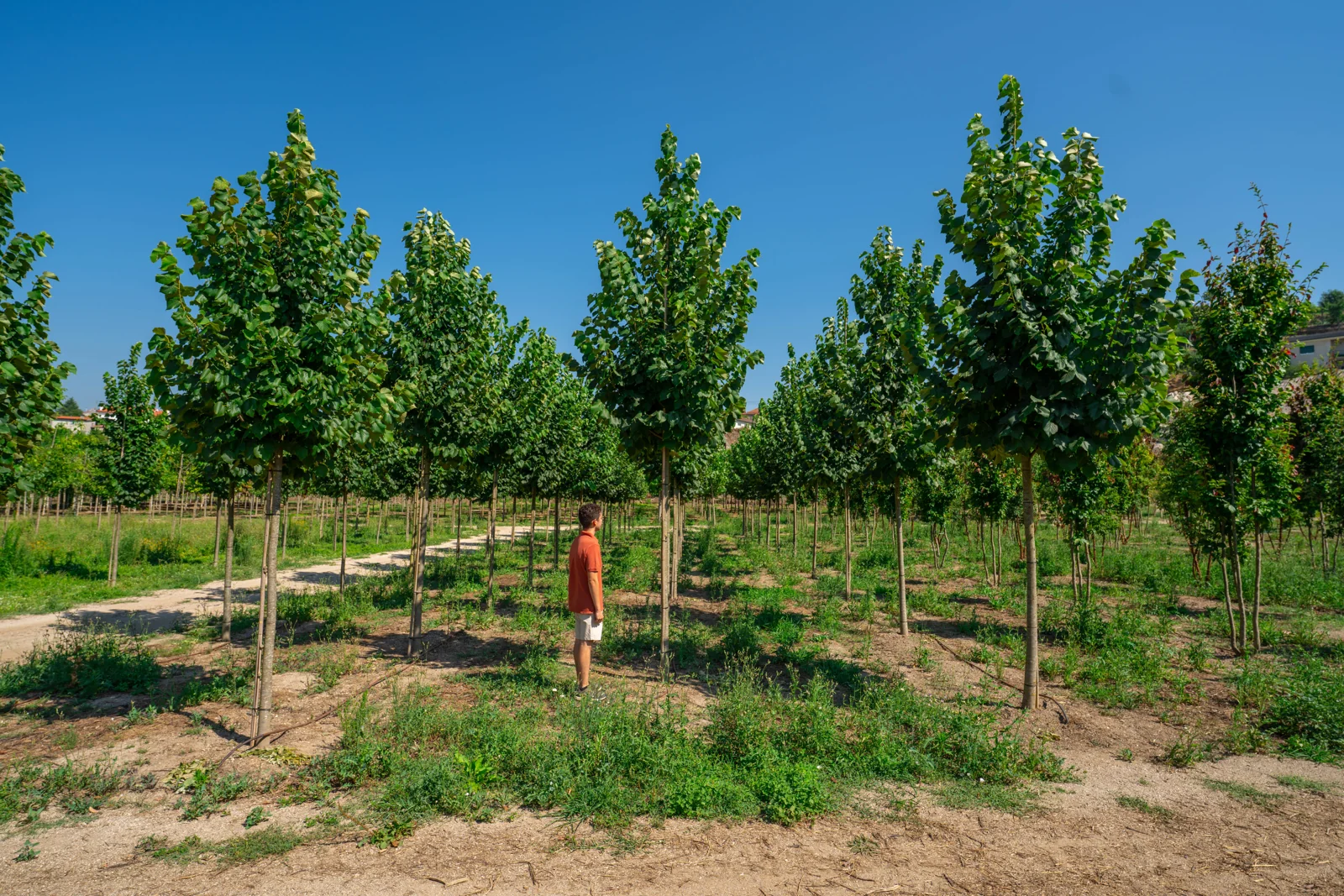
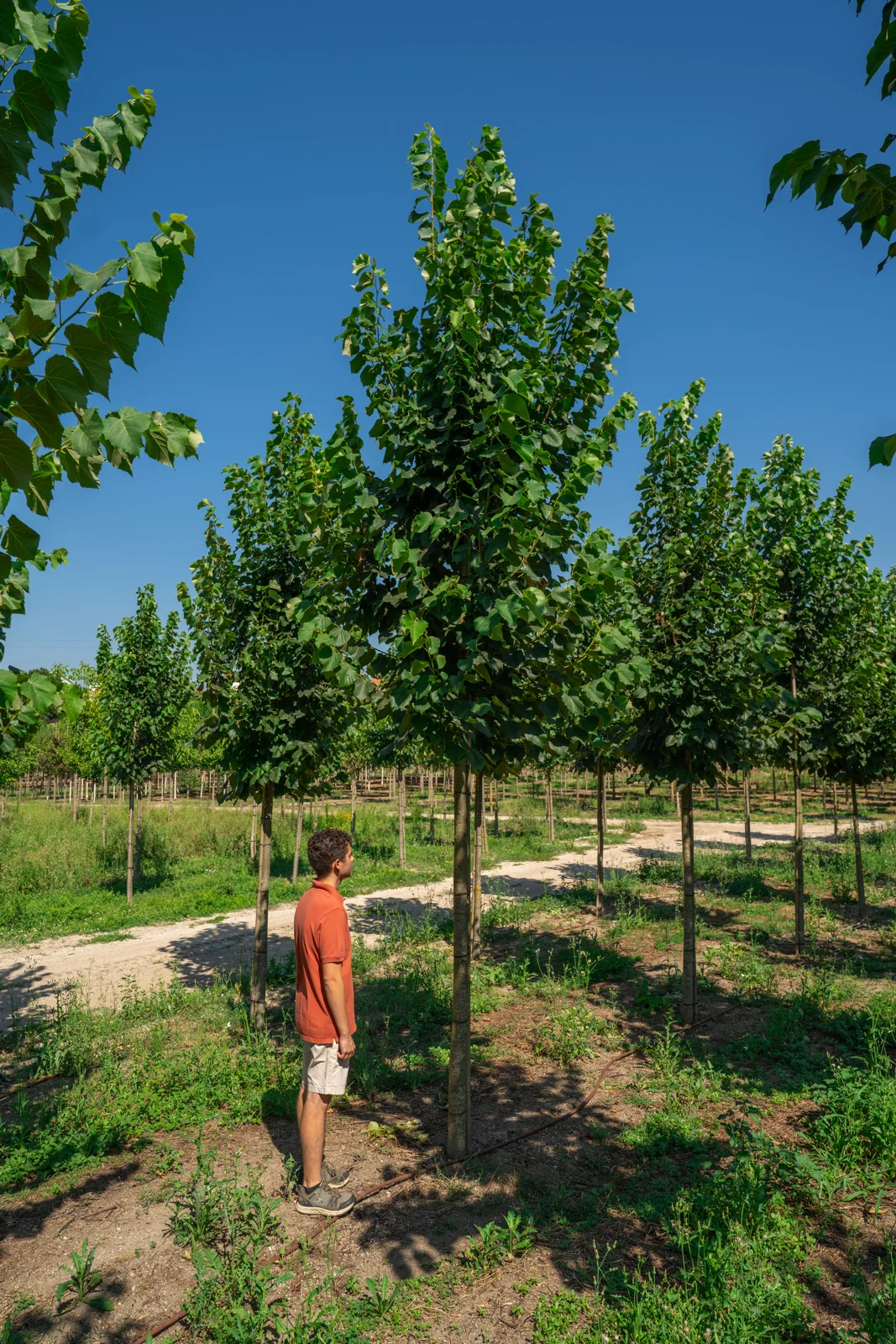
The crown opens conical when young and broadens to a dense, rounded canopy of 15 to 25 m, with a single straight leader that suits formal alignments and solitary parkland use alike. Foliage is glossy green above and densely white-tomentose beneath, so the canopy silvers in moving air and reads as a paler, more luminous mass than common lime; the same hairy…
Read more
Show less
The crown opens conical when young and broadens to a dense, rounded canopy of 15 to 25 m, with a single straight leader that suits formal alignments and solitary parkland use alike. Foliage is glossy green above and densely white-tomentose beneath, so the canopy silvers in moving air and reads as a paler, more luminous mass than common lime; the same hairy underside reduces aphid colonisation and the sooty honeydew that disfigures Tilia cordata and T. x europaea in street use.
Hardiness is rarely the limiting factor here. The species is reliably winter-hardy to roughly minus 30 degC (USDA zone 4), so it performs across the full cool-temperate range, from the Atlantic seaboard through the Pannonian basin to southern Scandinavia and the inland Baltic, without winter protection. Its real distinction is the upper end: a moderately deep root system gives it genuine tolerance of summer maxima above 35 degC and of soil compaction and air pollution, which is why it holds condition in tree pits and heat-island sites where Acer platanoides and Fraxinus decline.
Drought tolerance is moderate rather than absolute. Established specimens carry dry continental summers and below-average rainfall years well, but on free-draining sites with under about 500 mm annual rainfall they hold colour and growth better with irrigation through the first three summers while the root system extends. The species accepts loam, clay and alkaline soils, asks only for reasonable drainage, and tolerates root-zone disturbance better than most large limes.
The pale cream flowers open in July and August, later than other Tilia and strongly scented, drawing bees through a period when little else is in flower; foliage turns soft yellow before leaf fall. Note that flowering litter and spent bracts fall over paving, a routine consideration for hard-landscape siting rather than a fault. As a long-lived framework tree for avenues, civic squares and estate planting, it offers the structural role specifiers reach Platanus and Tilia for, with markedly better heat and pollution endurance.



Advice on this species
Want to know more about Tilia tomentosa?
Tell us about your project and we'll advise you on this species — where it thrives, which size makes sense, and what to expect once planted.
- Produção própria
- Exemplares adultos
- Resposta em 1–2 dias
Sem compromisso · orçamento personalizado