

Narrow columnar evergreen for formal structure and screening
English Yew ‘Fastigiata Robusta’ · Taxus baccata ‘Fastigiata Robusta’
Tightly fastigiate and densely clothed, this clipped-or-unclipped column gives vertical evergreen structure where width is constrained: avenue rhythm, formal accents, and year-round screens. A defensible specification across most of temperate Europe, hardy well into continental winters.
Key Facts
About this Cultivar
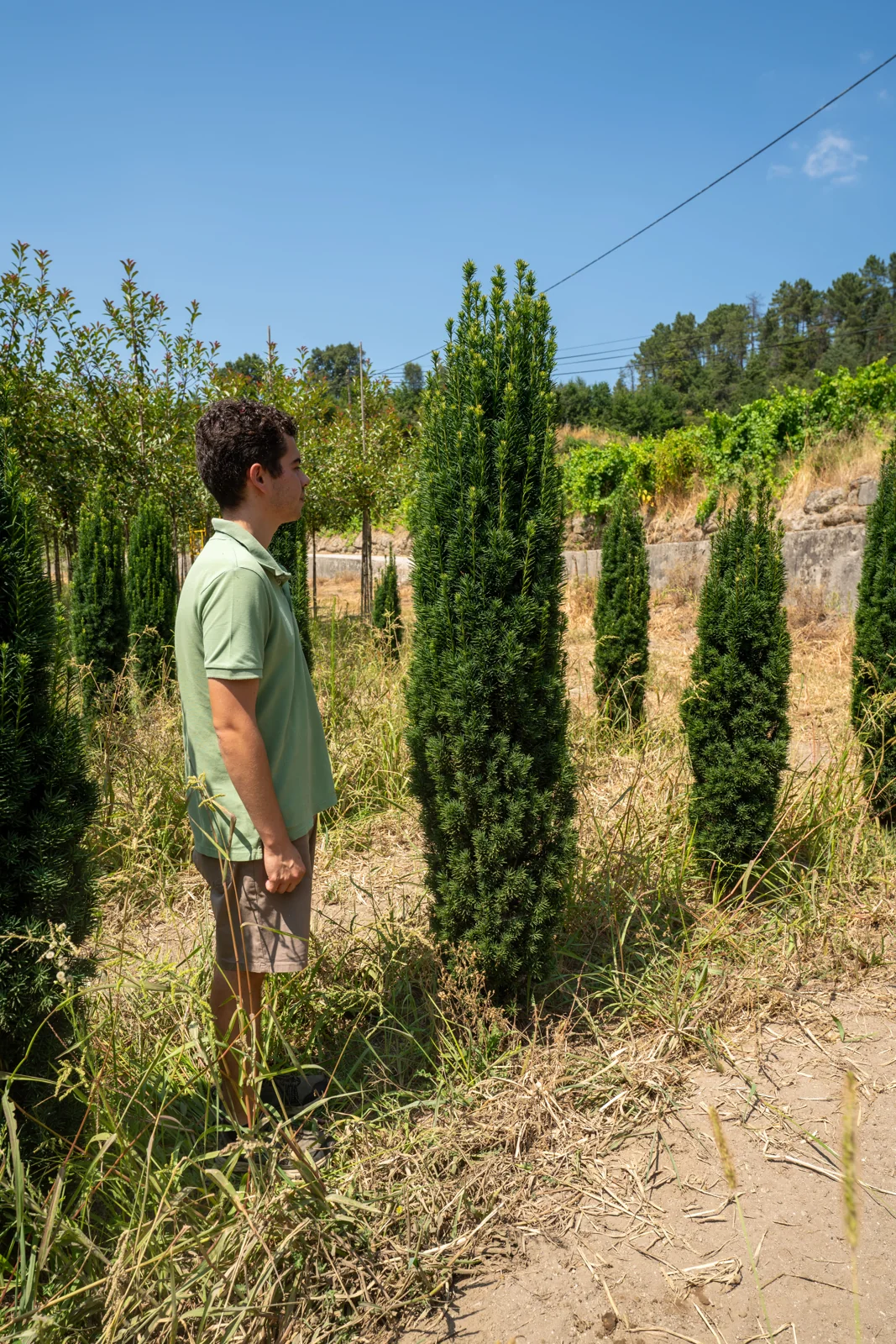
The form is the specification. Branches are held close and upright, producing a markedly tighter, more erect column than the familiar 'Fastigiata', so the tree reads as a clean vertical even at calibre. Foliage is dark, glossy, near-black green and longer in the needle than the type, giving dense cover that holds light and casts deep shade. This density is…
Read more
Show less
The form is the specification. Branches are held close and upright, producing a markedly tighter, more erect column than the familiar 'Fastigiata', so the tree reads as a clean vertical even at calibre. Foliage is dark, glossy, near-black green and longer in the needle than the type, giving dense cover that holds light and casts deep shade. This density is what makes it useful for narrow screens, repeated formal accents, and the architectural spine of structured plantings.
Winter hardiness is broad: reliable to about minus 20 °C (USDA zone 6), placing it comfortably across the Atlantic seaboard, the temperate continental interior, and inland to a line through Poland and the western Pannonian basin. It withstands prolonged summer heat above 35 °C where roots have depth and moisture, and tolerates dry spells once established, though it is not a low-water species in the Mediterranean sense. Performance holds across cool-temperate and warm-temperate European schemes alike.
The genuine limits are at the root, not the thermometer. The species is intolerant of waterlogged or poorly drained ground, where root rot follows, so assured drainage matters more than soil type. It is otherwise adaptable across loam, clay, and calcareous soils, and ranks among the best evergreens for chalk. In exposed continental or coastal positions, cold drying wind can scorch foliage; a sheltered aspect repays itself.
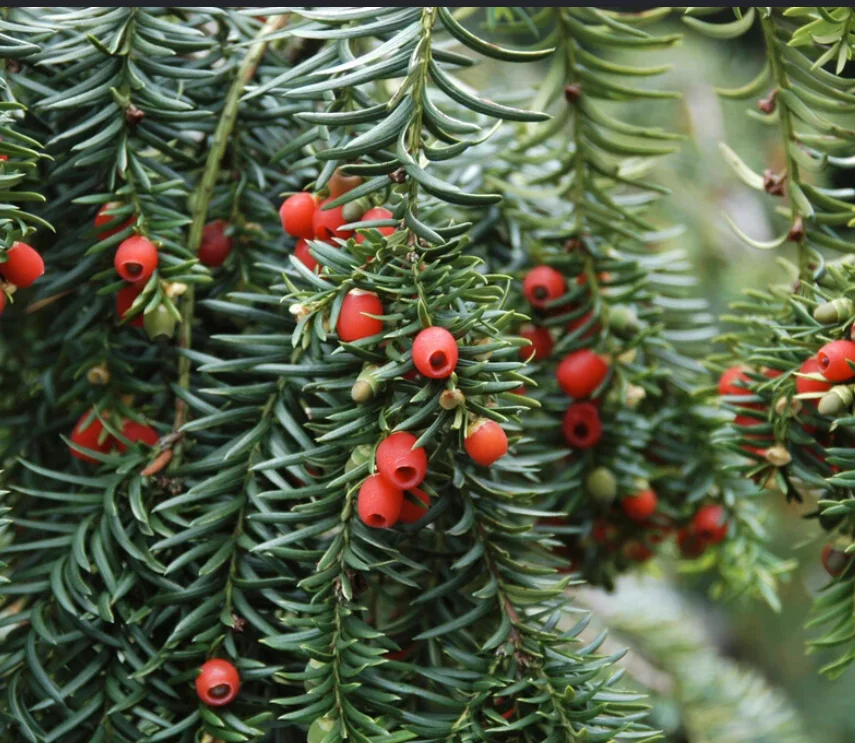
Light is flexible in a way few conifers match: full sun through to deep shade, which makes it specifiable on the shaded north side of a building or beneath a high canopy where most evergreens thin out. Conspicuous spring flowers are followed in late summer by fleshy red arils on female plants, adding seasonal interest and supporting birds. All parts are toxic if ingested, a relevant note for schemes with livestock or unsupervised children.
Growth is slow and the wood long-lived, so the column established now is a multi-decade structure. It clips exceptionally well, sustaining tight formal lines or topiary for generations, yet needs nothing beyond an annual late-summer trim to hold its shape.
Advice on this species
Want to know more about Taxus baccata 'Fastigiata Robusta'?
Tell us about your project and we'll advise you on this species — where it thrives, which size makes sense, and what to expect once planted.
- Produção própria
- Exemplares adultos
- Resposta em 1–2 dias
Sem compromisso · orçamento personalizado