

Narrow-crowned street tree, cold-hardy and pollution-tolerant
Callery Pear ‘Chanticleer’ · Pyrus calleryana ‘Chanticleer’
Where a tight planting pit needs vertical canopy without lateral spread, this narrow ornamental pear earns its place: a dense conical to columnar crown, spring blossom, and reddish autumn foliage, on a frame that withstands compacted urban soils.
Key Facts
About this Cultivar
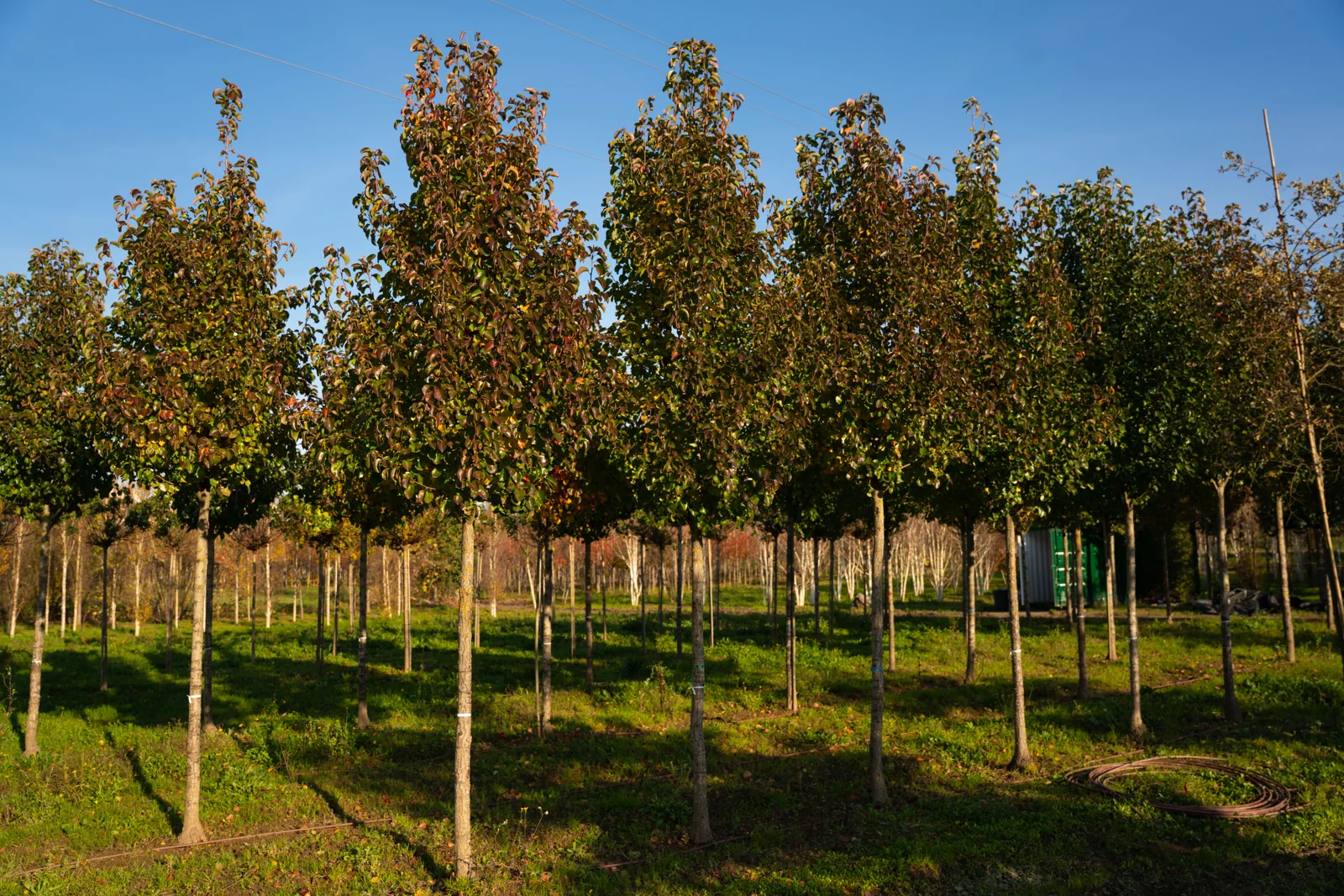
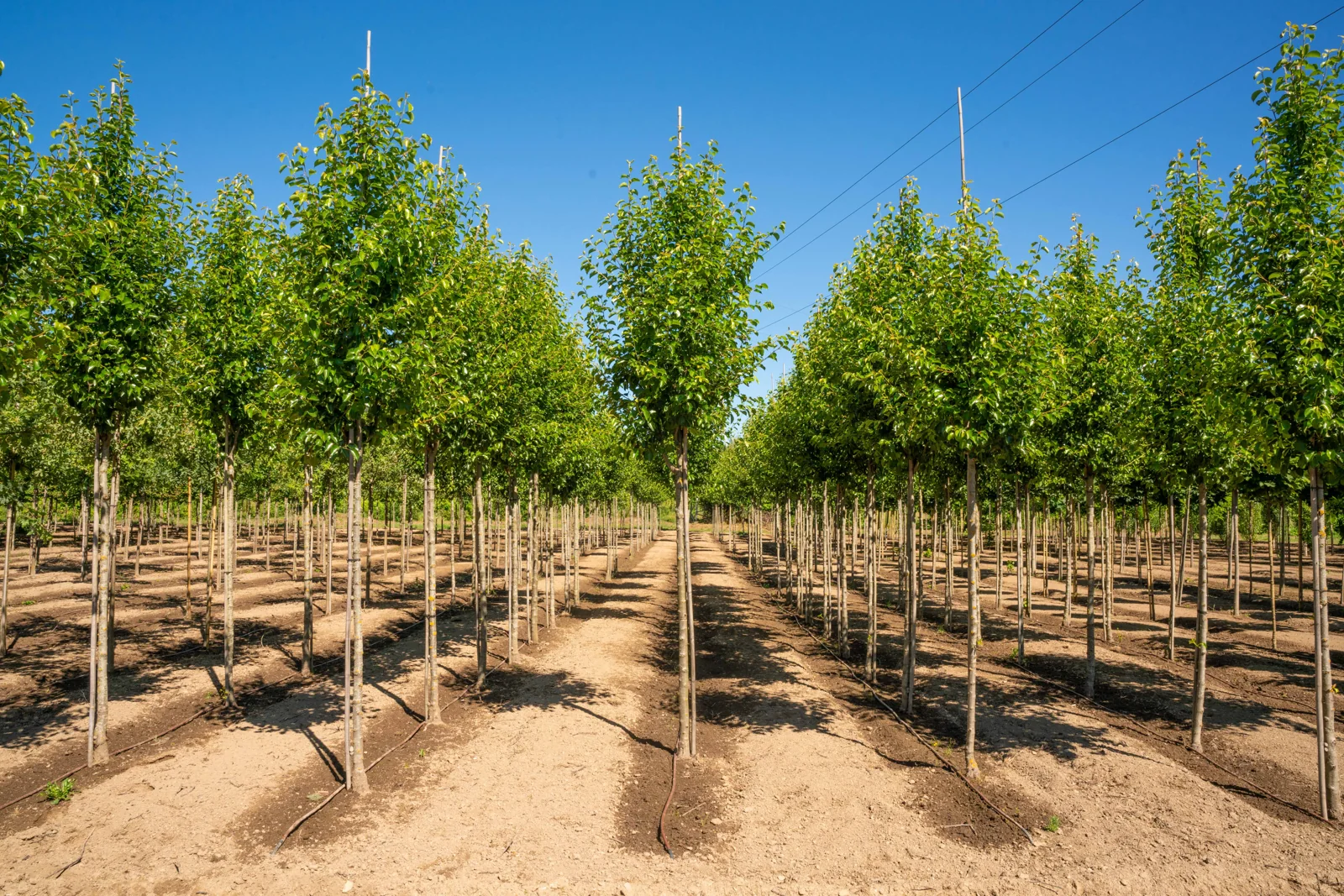
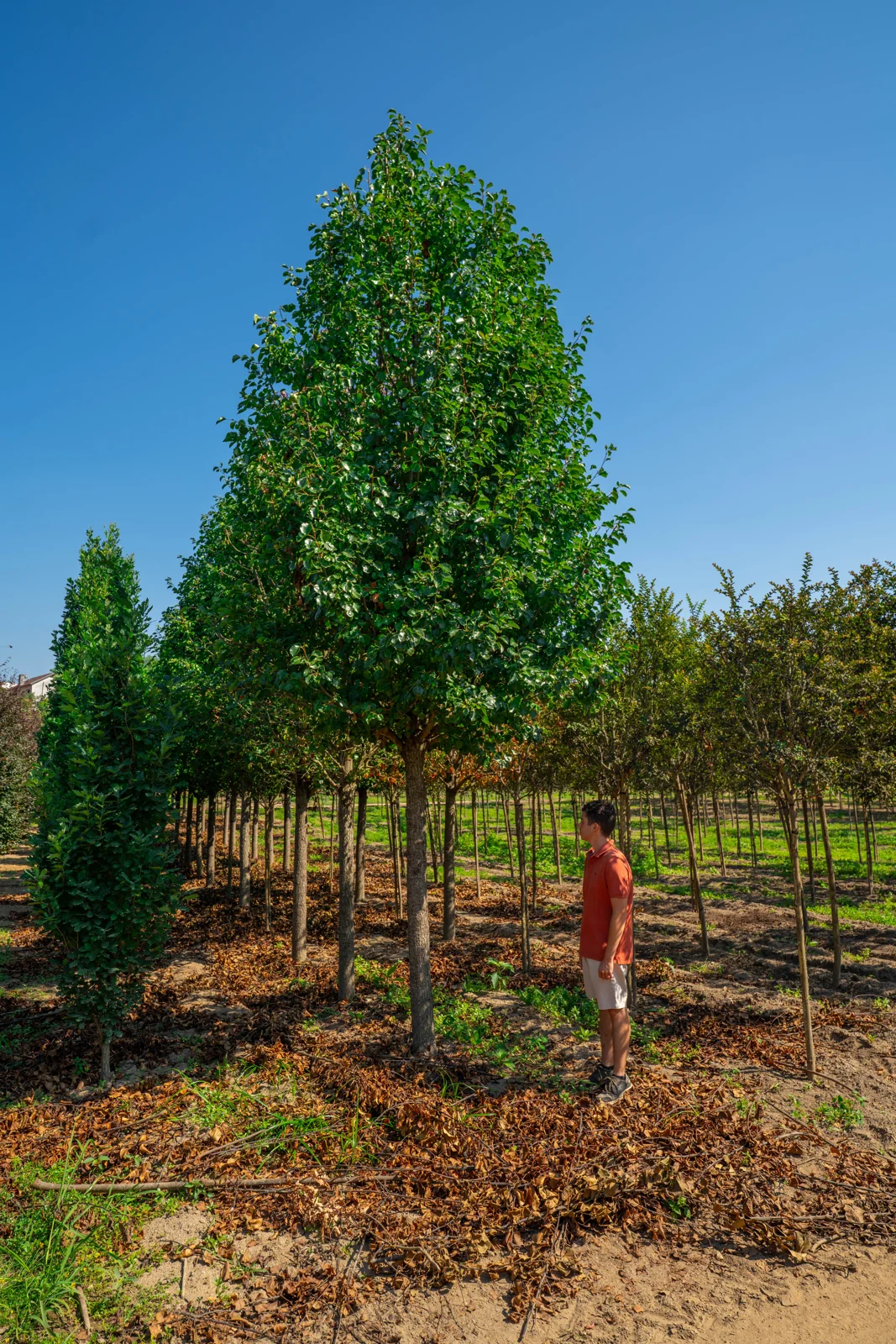
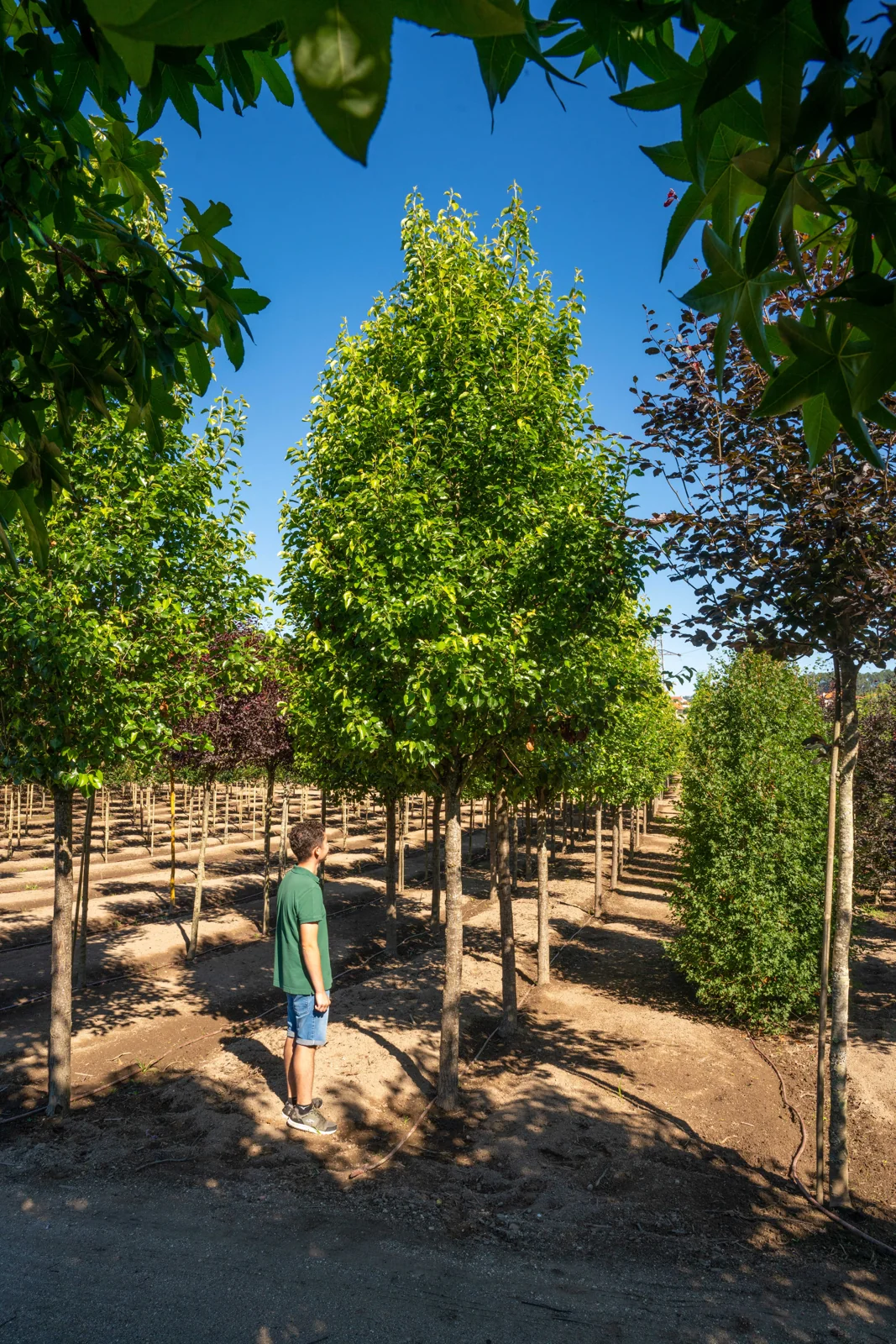
The defining character of this cultivar is its form. Where the parent species spreads broadly, 'Chanticleer' holds a dense, narrowly conical to columnar crown, typically 10 to 12 metres tall and only 4 to 6 metres wide at maturity. That tight footprint is what recommends it for confined planting pits, avenue alignments, and any scheme where vertical…
Read more
Show less
The defining character of this cultivar is its form. Where the parent species spreads broadly, 'Chanticleer' holds a dense, narrowly conical to columnar crown, typically 10 to 12 metres tall and only 4 to 6 metres wide at maturity. That tight footprint is what recommends it for confined planting pits, avenue alignments, and any scheme where vertical structure is wanted without lateral encroachment over carriageway or facade.
Hardiness is a genuine strength here, and the reason it travels well across the continent. The cultivar is reliably winter-hardy to roughly minus 26 degrees Celsius (USDA zone 5a), with sound performance reported well into zone 4, so it carries through the central European interior and southern Scandinavia, not only the Atlantic and Mediterranean fringe. It is equally heat-tolerant, holding form under prolonged summer maxima above 35 degrees Celsius once the root system is established, which gives it an unusually broad working envelope from the Aegean coast to the Baltic.
Site tolerance underpins its standing as an urban street tree. A deep, adaptable root system carries moderate drought once established and accepts acidic through alkaline soils, sandy or heavy clay alike, provided drainage is sound; waterlogged ground is the one condition to design out. It also withstands compacted soils, road salt at moderate levels, and airborne urban pollution, which is the cluster of traits a specifier weighs for tree pits and car-park plantings.
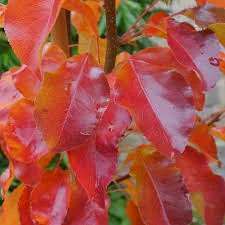
The ornamental sequence runs from abundant white spring blossom, useful to early pollinators, through glossy dark summer foliage to reddish-purple autumn colour that holds late in the season. Fruit is small and inconspicuous, so litter is not a concern over paving. Within the broader Pyrus calleryana group, fire blight resistance is good, though the species is not immune; routine formative pruning addresses the narrow branch unions inherent to upright Callery pear selections.
Advice on this species
Want to know more about Pyrus calleryana 'Chanticleer'?
Tell us about your project and we'll advise you on this species — where it thrives, which size makes sense, and what to expect once planted.
- Produção própria
- Exemplares adultos
- Resposta em 1–2 dias
Sem compromisso · orçamento personalizado