

Double-flowered cherry for spring avenues and parkland
Japanese Cherry ‘Kanzan’ · Prunus serrulata ‘Kanzan’
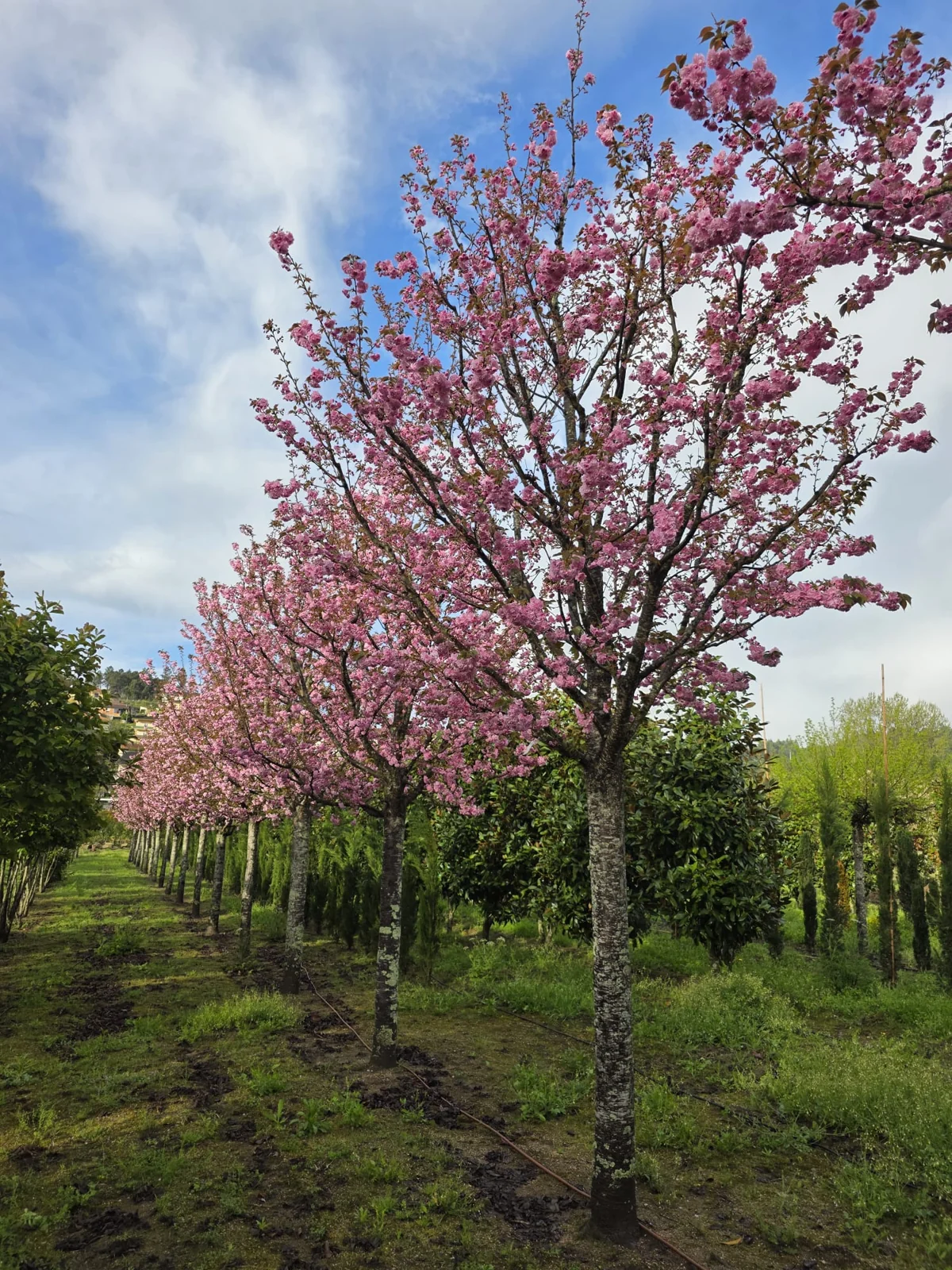
Few deciduous specimens deliver a stronger seasonal event: dense clusters of double pink blossom in April and May, carried on a stiffly ascending, vase-shaped crown that broadens to a rounded canopy as the tree matures.
Key Facts
About this Cultivar
Among the most widely planted ornamental cherries in Europe, this cultivar is specified almost entirely for its spring display. The double, deep-pink flowers open in April and May in dense clusters of two to five, covering the bare branches before the leaves expand. Young foliage emerges bronze, deepens to dark green through summer, and turns orange and…
Read more
Show less
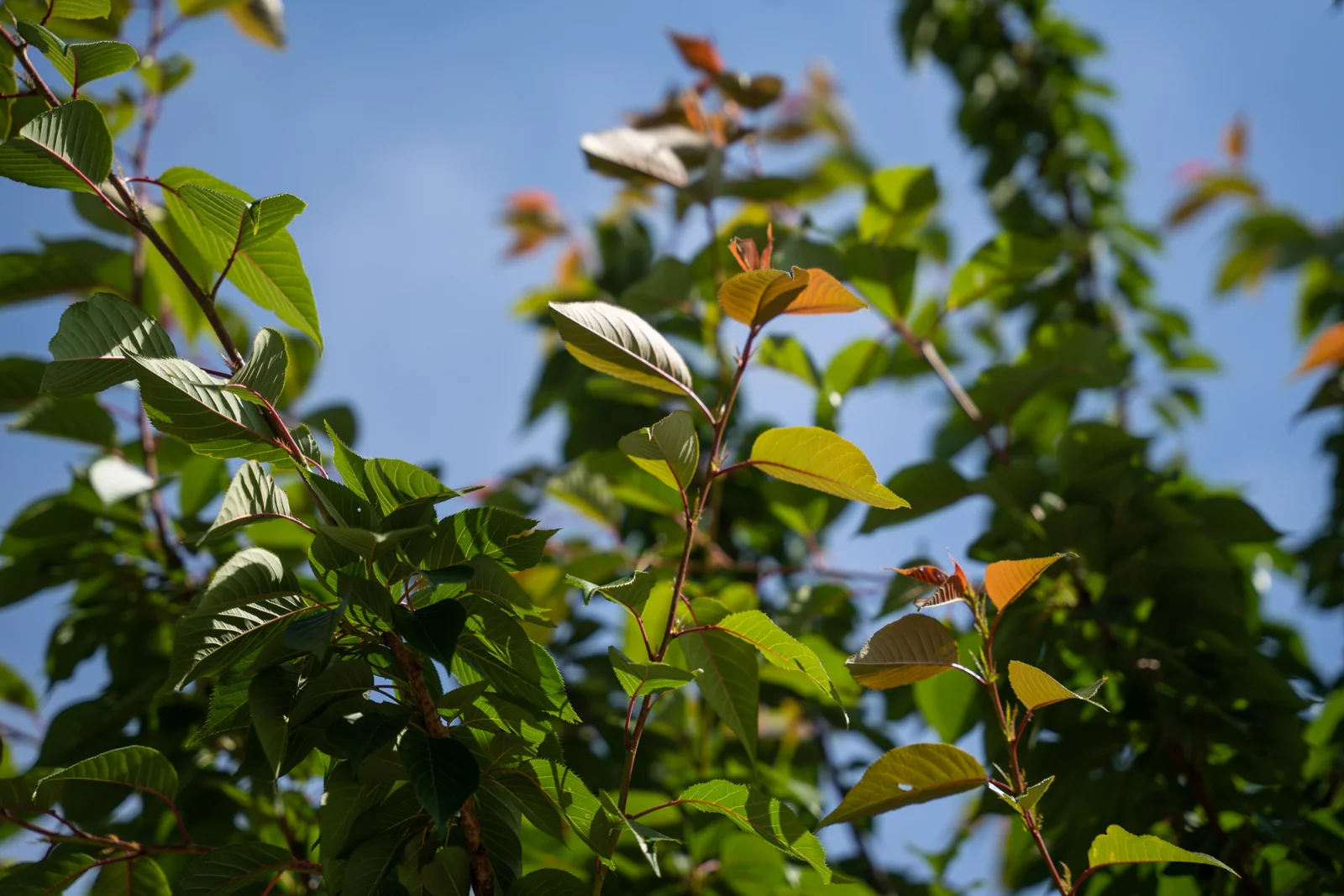
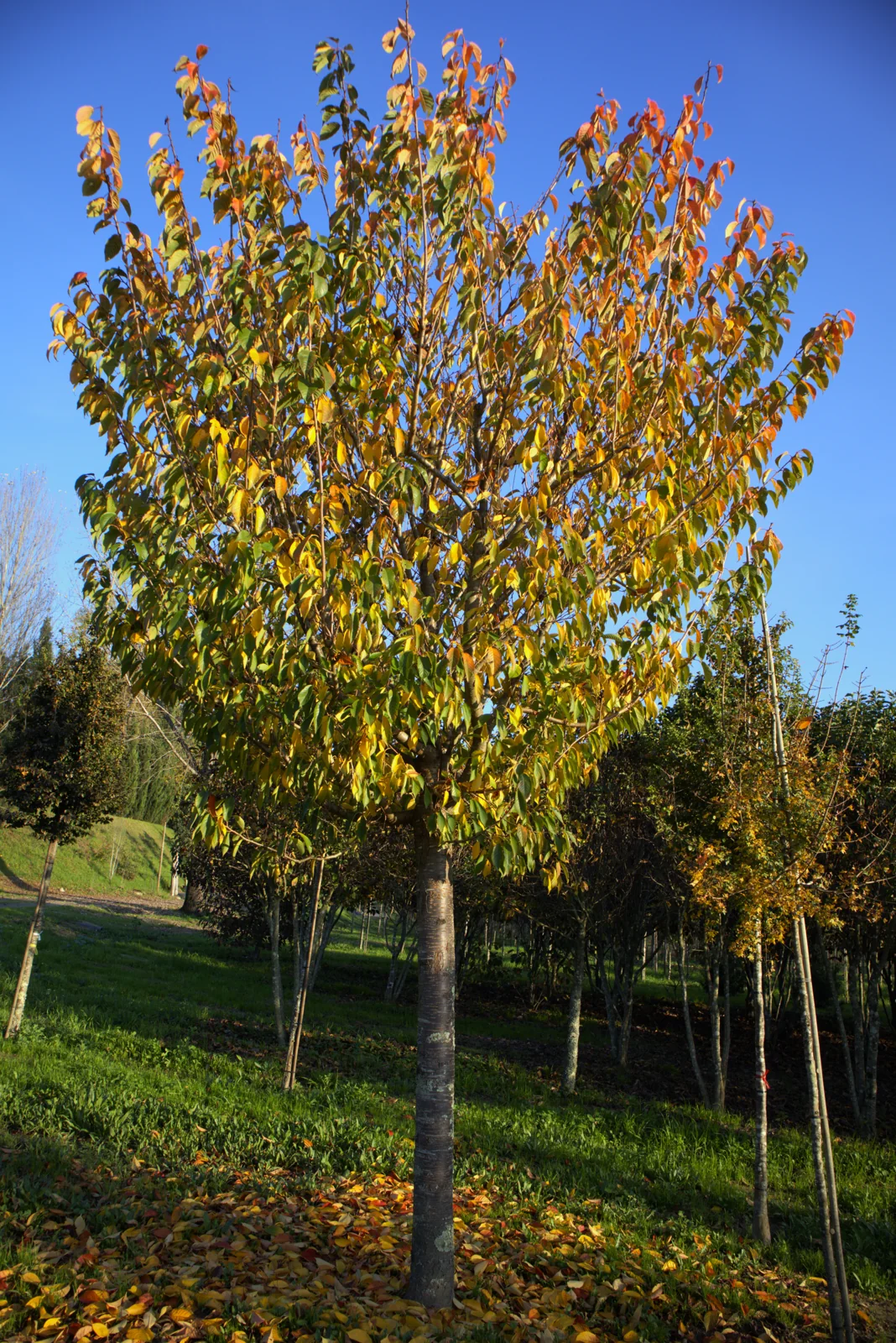
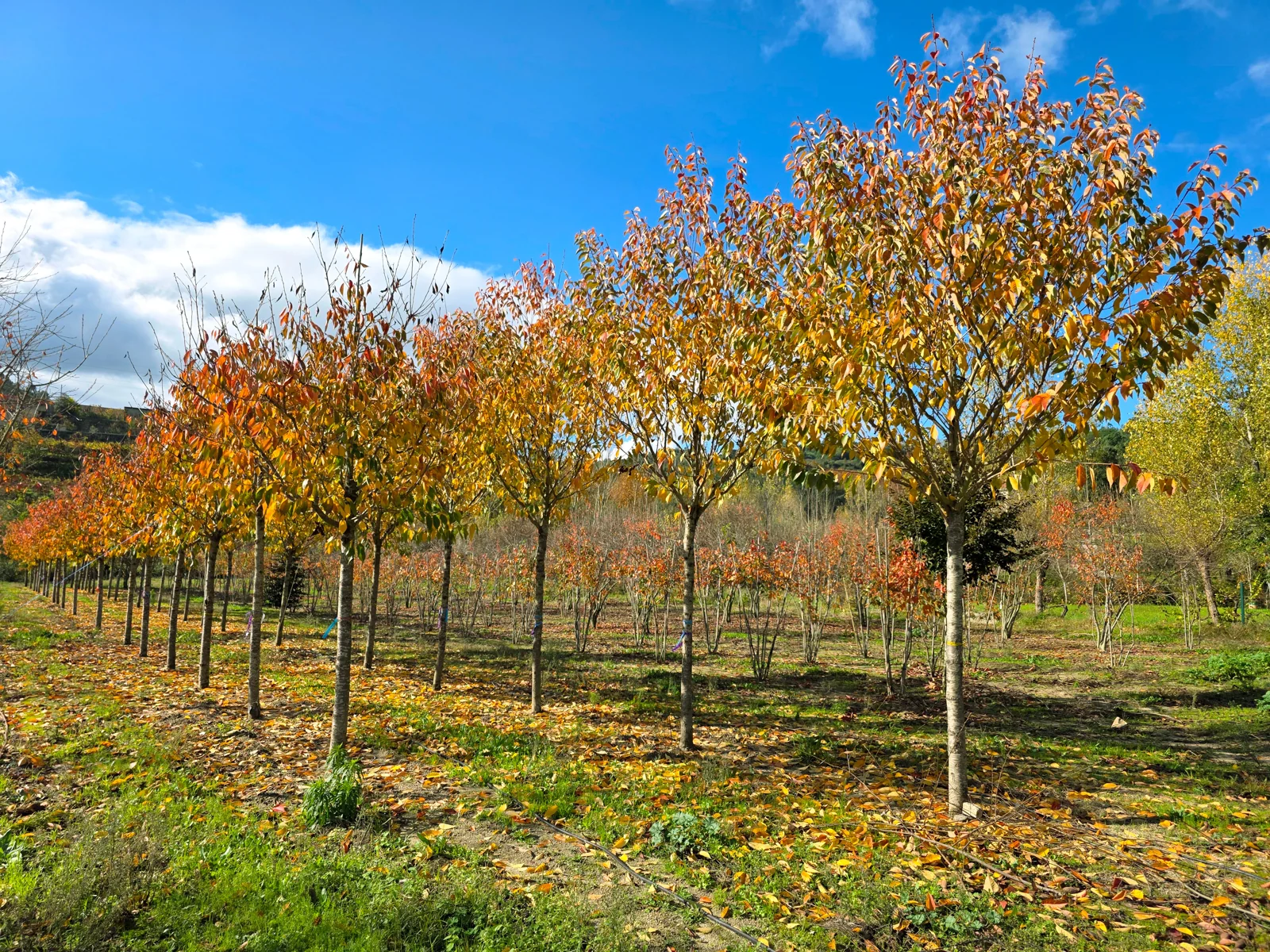
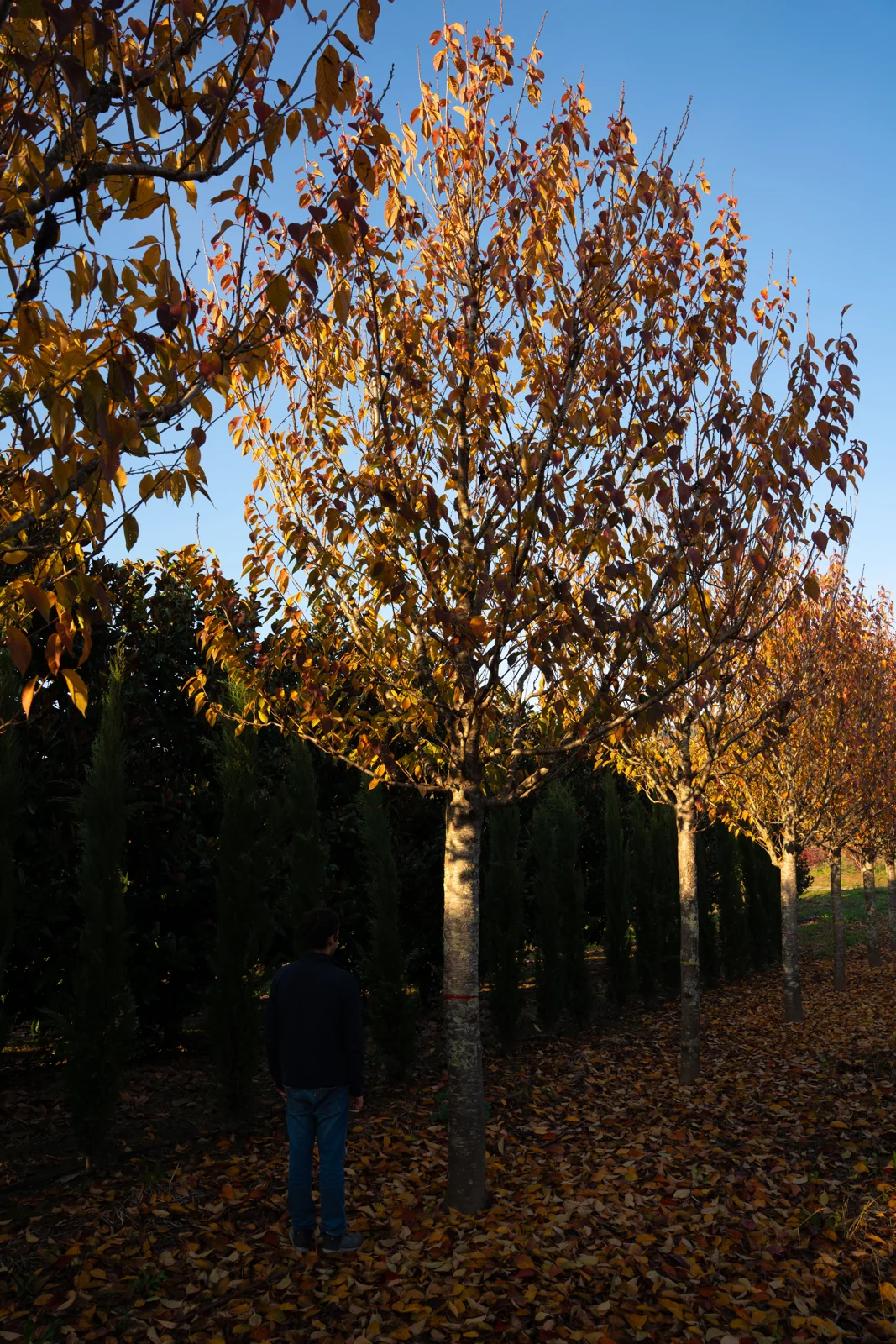
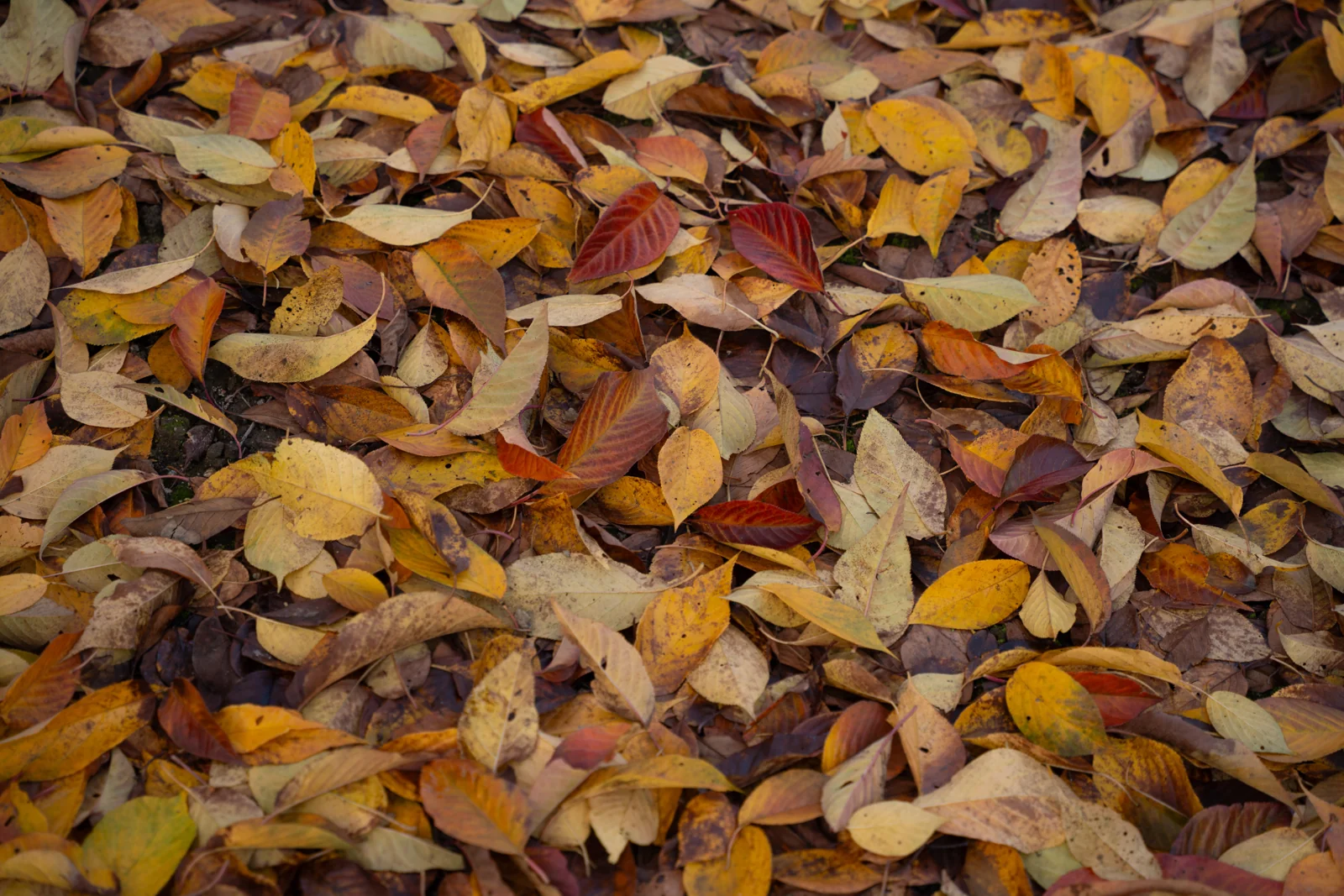
Among the most widely planted ornamental cherries in Europe, this cultivar is specified almost entirely for its spring display. The double, deep-pink flowers open in April and May in dense clusters of two to five, covering the bare branches before the leaves expand. Young foliage emerges bronze, deepens to dark green through summer, and turns orange and coppery in autumn, giving a secondary season of interest in public and private schemes alike. Fruit is negligible, which removes the litter and staining problems associated with fruiting cherries in paved settings.
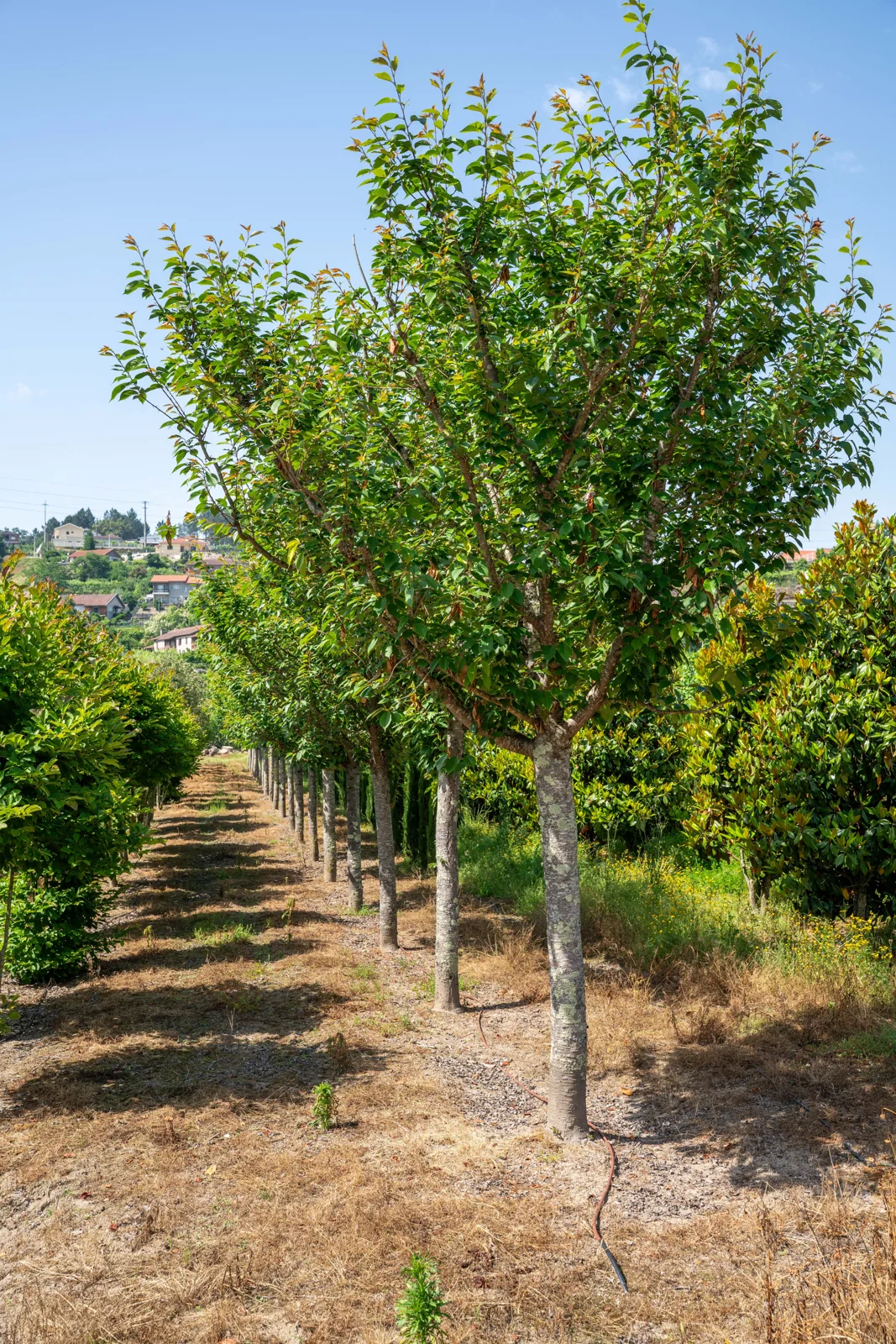
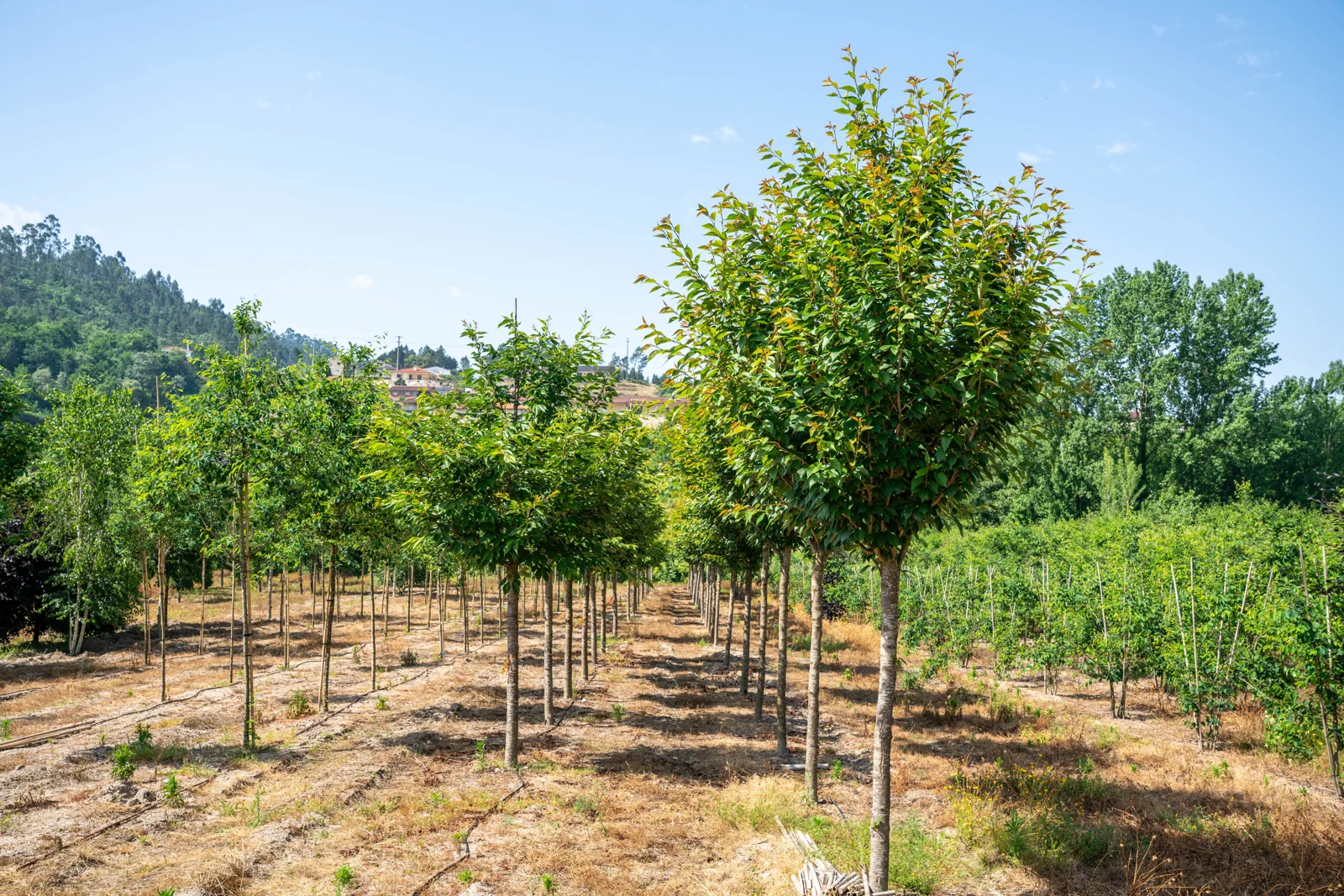
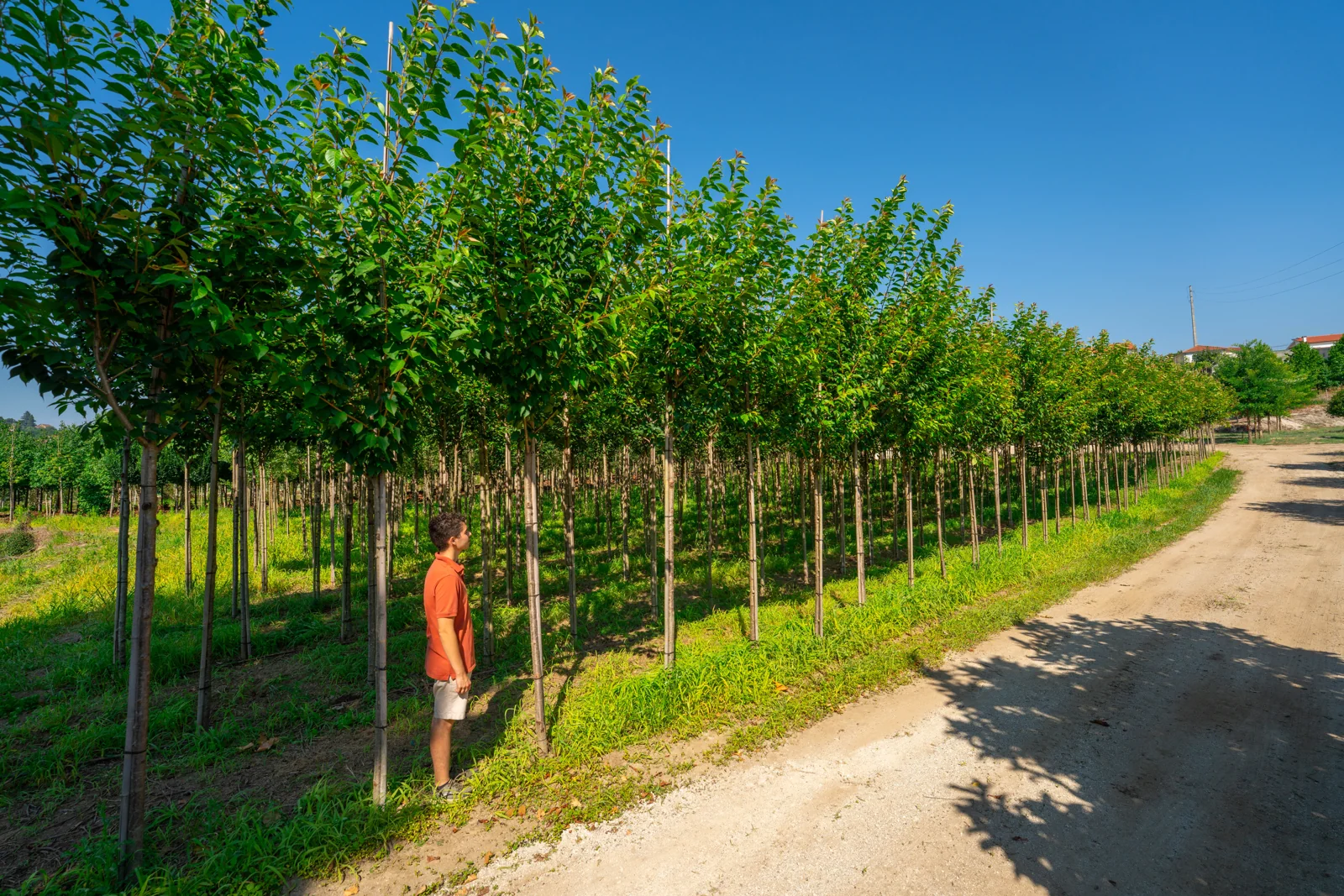
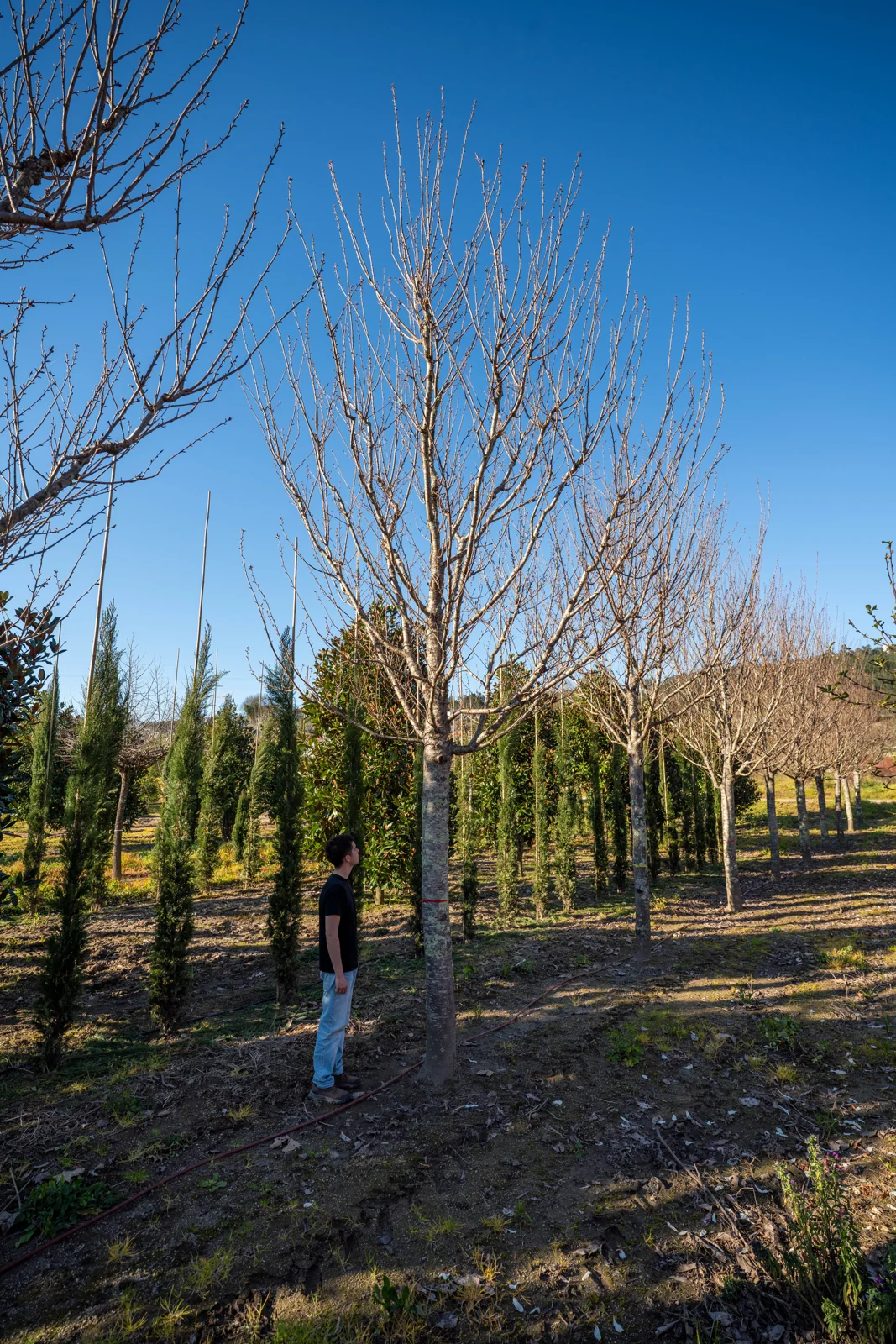
The habit is distinctive and load-bearing for specification. Young trees are stiffly upright and vase-shaped, widening with age into a broad, rounded crown reaching roughly 6 to 10 metres in height and 5 to 8 metres across. This narrow-to-spreading progression suits avenue and street planting, where the early upright form clears pedestrian and vehicle envelopes before the canopy develops overhead.
Winter hardiness is the cultivar's strongest pan-European credential: reliable to around minus 23 degrees Celsius (USDA zone 5b) and tolerant of zone 5a in sheltered positions, it performs across the Atlantic seaboard, the Continental interior, the Po valley, and southern Scandinavia, with no northern or eastern European limit of practical concern for this catalogue. Growth is moderate, and the tree adapts well to urban conditions, fertile clay, sandy, and slightly acidic soils provided drainage is assured.
Drought tolerance is limited, which is the principal siting constraint. In hot, dry summers above 35 degrees Celsius, and on free-draining or compacted urban substrates, give it assured soil moisture and supplementary irrigation through establishment and prolonged dry spells. A full-sun position carries the heaviest flowering; light shade is accepted at some cost to display.
Reaching for the familiar, it occupies the flowering-specimen role that Malus and ornamental Prunus fill in the shared European urban canon, but with a heavier, more architectural blossom and a cleaner, fruitless finish in trafficked spaces.
Advice on this species
Want to know more about Prunus serrulata 'Kanzan'?
Tell us about your project and we'll advise you on this species — where it thrives, which size makes sense, and what to expect once planted.
- Produção própria
- Exemplares adultos
- Resposta em 1–2 dias
Sem compromisso · orçamento personalizado