

Narrow-leaved evergreen for clipped structure and screens
Portuguese Laurel ‘Angustifolia’ · Prunus lusitanica ‘Angustifolia’
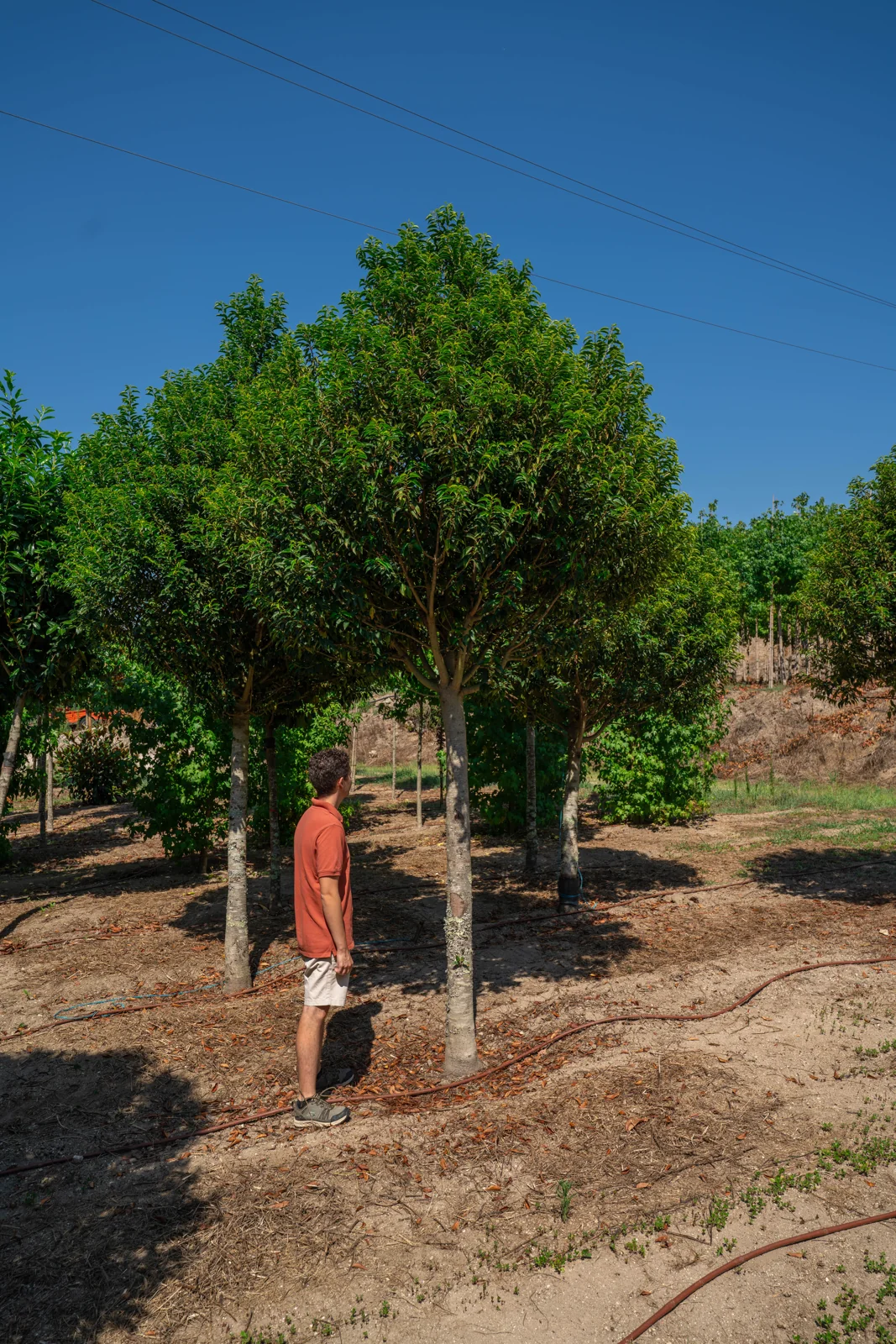
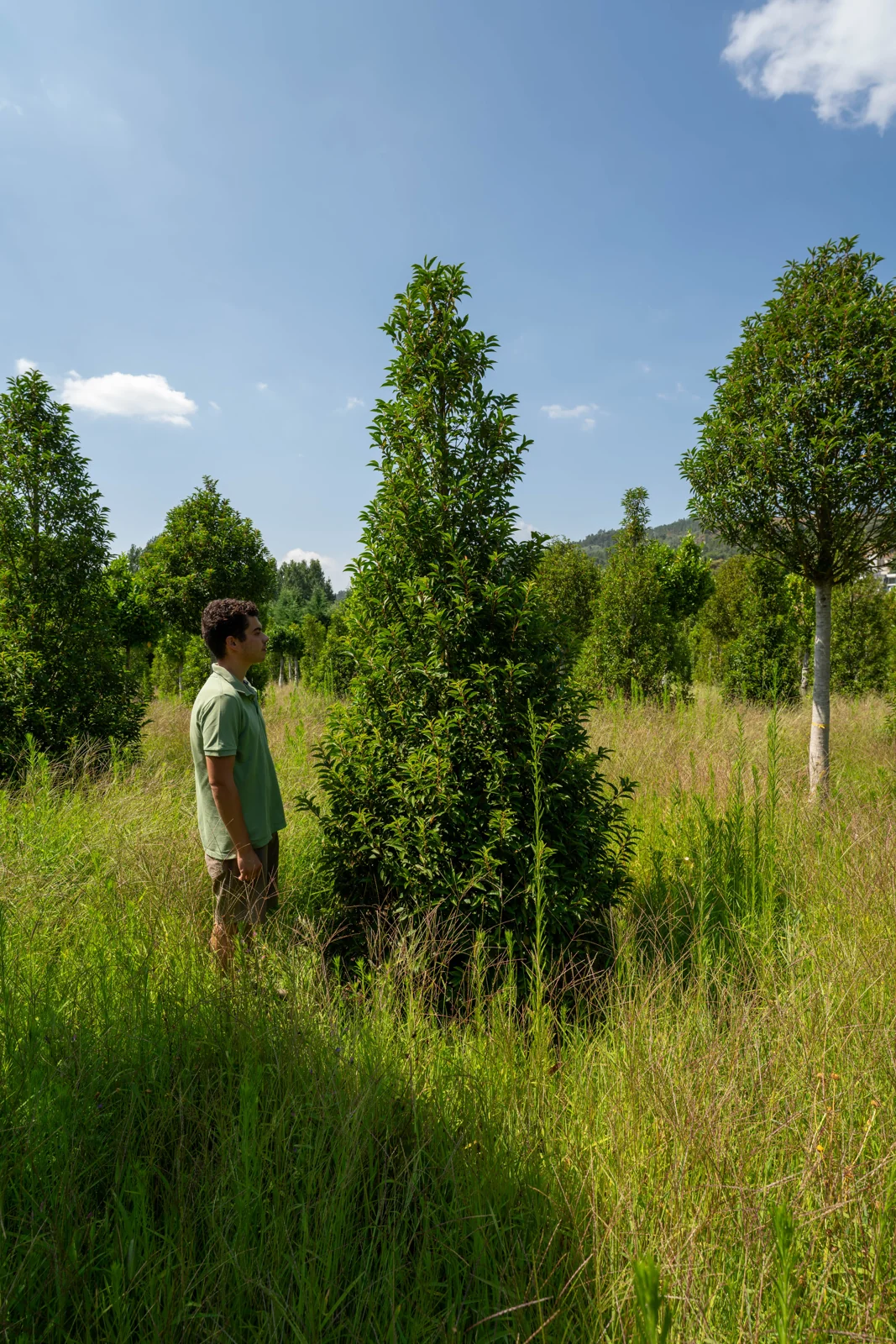
Where a scheme needs dense evergreen structure that takes the shears, this narrow-leaved selection holds a tighter, more upright crown than the type, reaching four to six metres with glossy dark foliage held year-round.
About this Cultivar
The narrow-leaved form of the Portuguese laurel differs from the type in its slimmer, more elongated leaves and a denser, more upright crown, qualities that make it read as a refined evergreen mass rather than a loose bush. Left unpruned it settles at roughly four to six metres tall and two to three metres across; clipped, it holds a compact wall of glossy…
Read more
Show less
The narrow-leaved form of the Portuguese laurel differs from the type in its slimmer, more elongated leaves and a denser, more upright crown, qualities that make it read as a refined evergreen mass rather than a loose bush. Left unpruned it settles at roughly four to six metres tall and two to three metres across; clipped, it holds a compact wall of glossy dark green foliage through every season. It tolerates hard pruning well, which is why it suits formal hedging, high screens, and single clipped specimens where year-round structure is the brief.
Winter hardiness is the species' decisive selection variable for this market. It is reliably evergreen to about minus 15 degrees Celsius (USDA zone 7a), measurably hardier than the common cherry laurel, with foliage scorch and dieback the risk below that threshold rather than outright loss. This places it across USDA zone 8 and milder zone 7 sites: the Atlantic seaboard, coastal Netherlands and Belgium, much of the British Isles, the Po valley, and the warmer Mediterranean and Aegean coasts. In continental zone 7a and colder, plant it in a sheltered position with shelter from cold drying winds, and treat reliable performance east of central Europe or in exposed upland sites as marginal.
It accepts full sun or partial shade and a wide range of soils, including clay, provided drainage is sound; standing winter wet is the condition to avoid. Once a deep root system is established it carries short summer drought, though it is moderately rather than strongly drought-tolerant and rewards irrigation through prolonged dry spells. Salt tolerance is moderate, sufficient for many near-coastal positions with some shelter.
In late spring and early summer it carries erect racemes of small fragrant white flowers that draw bees, followed by dark drupes valued by birds. The disease and pest profile is sound, the main watchpoint being silver leaf where pruning wounds are left open in damp conditions, which is managed by cutting in dry weather.
Advice on this species
Want to know more about Prunus lusitanica 'Angustifolia'?
Tell us about your project and we'll advise you on this species — where it thrives, which size makes sense, and what to expect once planted.
- Produção própria
- Exemplares adultos
- Resposta em 1–2 dias
Sem compromisso · orçamento personalizado