

Resilient urban canopy for street and avenue planting
London Plane · Platanus × hispanica
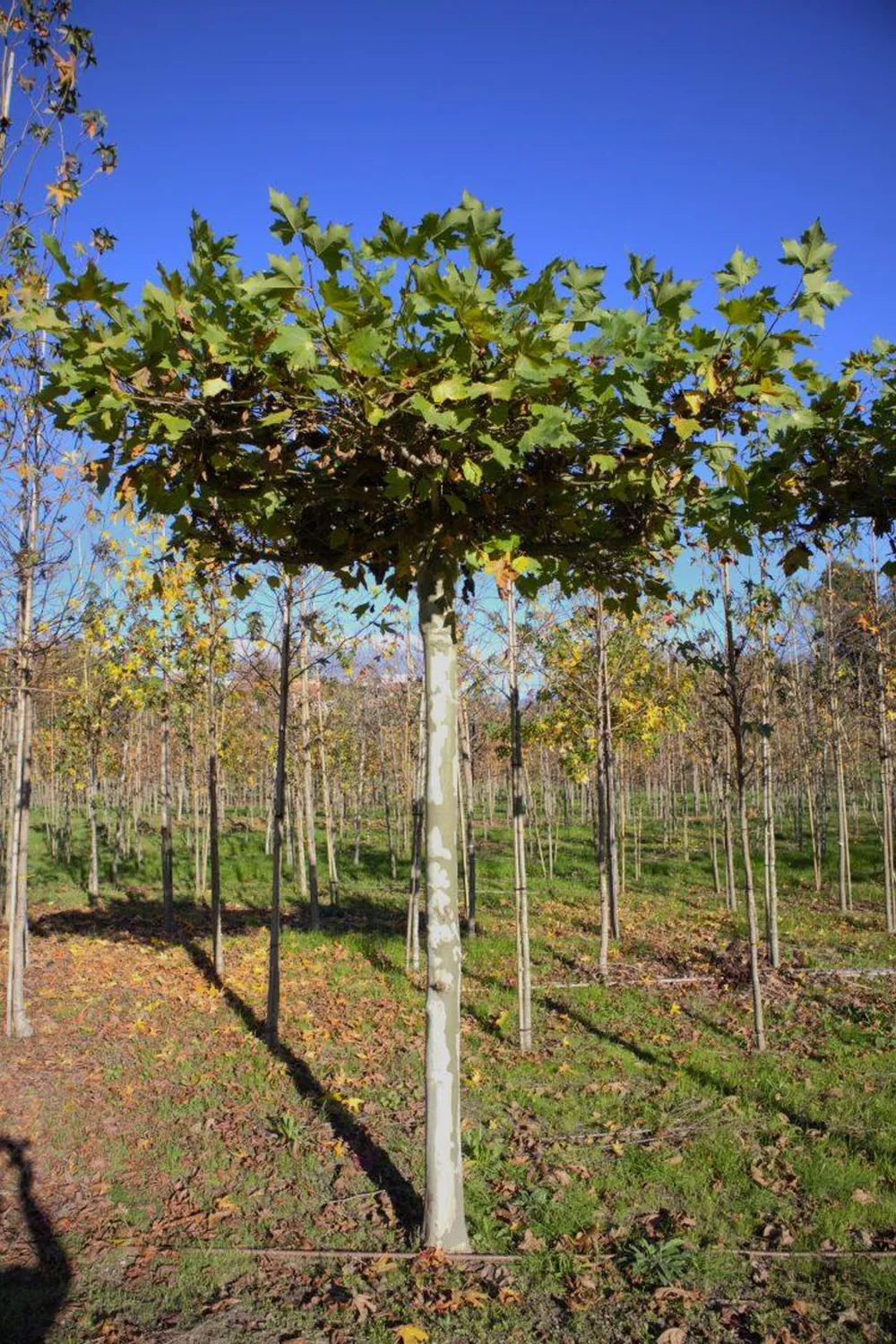
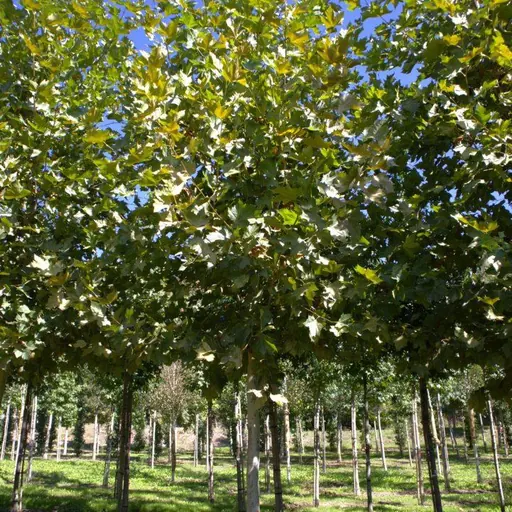
Among the most dependable large-canopy specimens for hard urban sites, this maple-leaved hybrid carries a broad, spreading crown over compacted soils, restricted root runs and polluted air, settling quickly into avenues, parks and infrastructure plantings where lesser trees struggle.
About this Species
Few deciduous trees match this hybrid for sheer urban tolerance. The fast growth and open, spreading crown deliver substantial shade within a few seasons, while an accommodating root system copes with compacted, poorly aerated soils and the confined root volumes of tree pits. Mature specimens reach roughly 20 to 35 metres tall with a 15 to 25 metre spread,…
Read more
Show less
Few deciduous trees match this hybrid for sheer urban tolerance. The fast growth and open, spreading crown deliver substantial shade within a few seasons, while an accommodating root system copes with compacted, poorly aerated soils and the confined root volumes of tree pits. Mature specimens reach roughly 20 to 35 metres tall with a 15 to 25 metre spread, so siting must allow for a large eventual canopy.
The climate range is unusually wide, which is what makes the tree defensible across most of the continent. It is reliably winter-hardy to around minus 30 degrees Celsius and performs through warm-temperate zones, tolerating both prolonged summer heat above 35 degrees Celsius and the dry continental summers of Central and Eastern Europe. Drought tolerance is moderate once established; on the driest sites supplementary irrigation through the first summers secures establishment. This breadth means the species is plantable from the Aegean coast to southern Scandinavia, and well inland across the Pannonian basin, without the cold-limit caveats most Mediterranean taxa carry.
Site adaptability is the practical case for specification. The tree withstands urban pollution, salt-laden coastal wind and seasonal waterlogging, and accepts a wide soil range from loam and clay to moist or well-drained ground. Light shade is tolerated, though full sun gives the densest crown.
Two points warrant attention at specification. The species is susceptible to canker stain, which can be fatal where pruning hygiene is poor, and to anthracnose in cool, wet springs; the disease-resistant clones now widespread in the European trade address both, and root vigour means pits near pavements and services should be planned accordingly. The exfoliating bark, mottling cream and olive beneath flaking light-brown plates, carries strong winter structure, and the large maple-shaped leaves turn yellow-brown before falling.



Advice on this species
Want to know more about Platanus × hispanica?
Tell us about your project and we'll advise you on this species — where it thrives, which size makes sense, and what to expect once planted.
- Produção própria
- Exemplares adultos
- Resposta em 1–2 dias
Sem compromisso · orçamento personalizado