

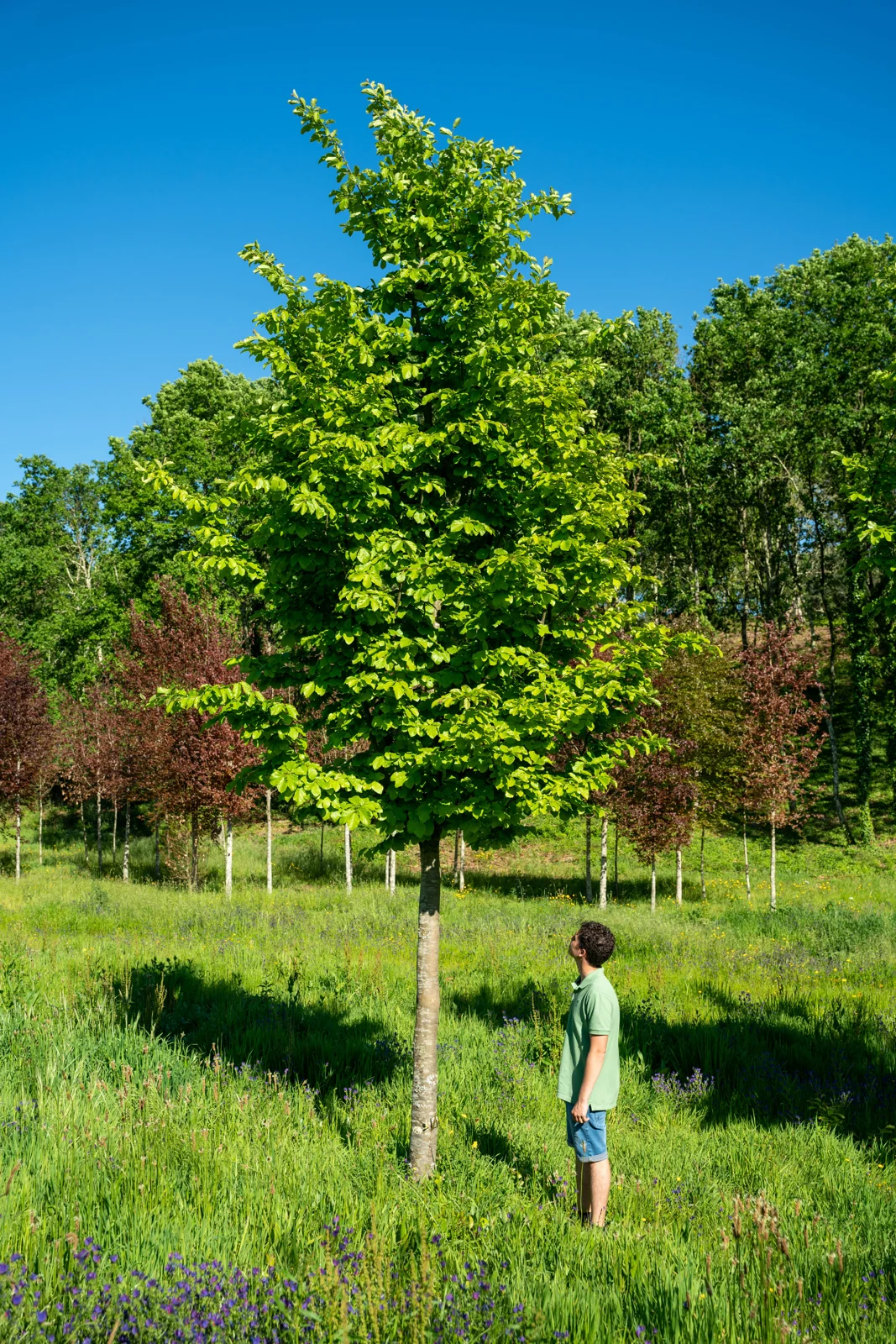
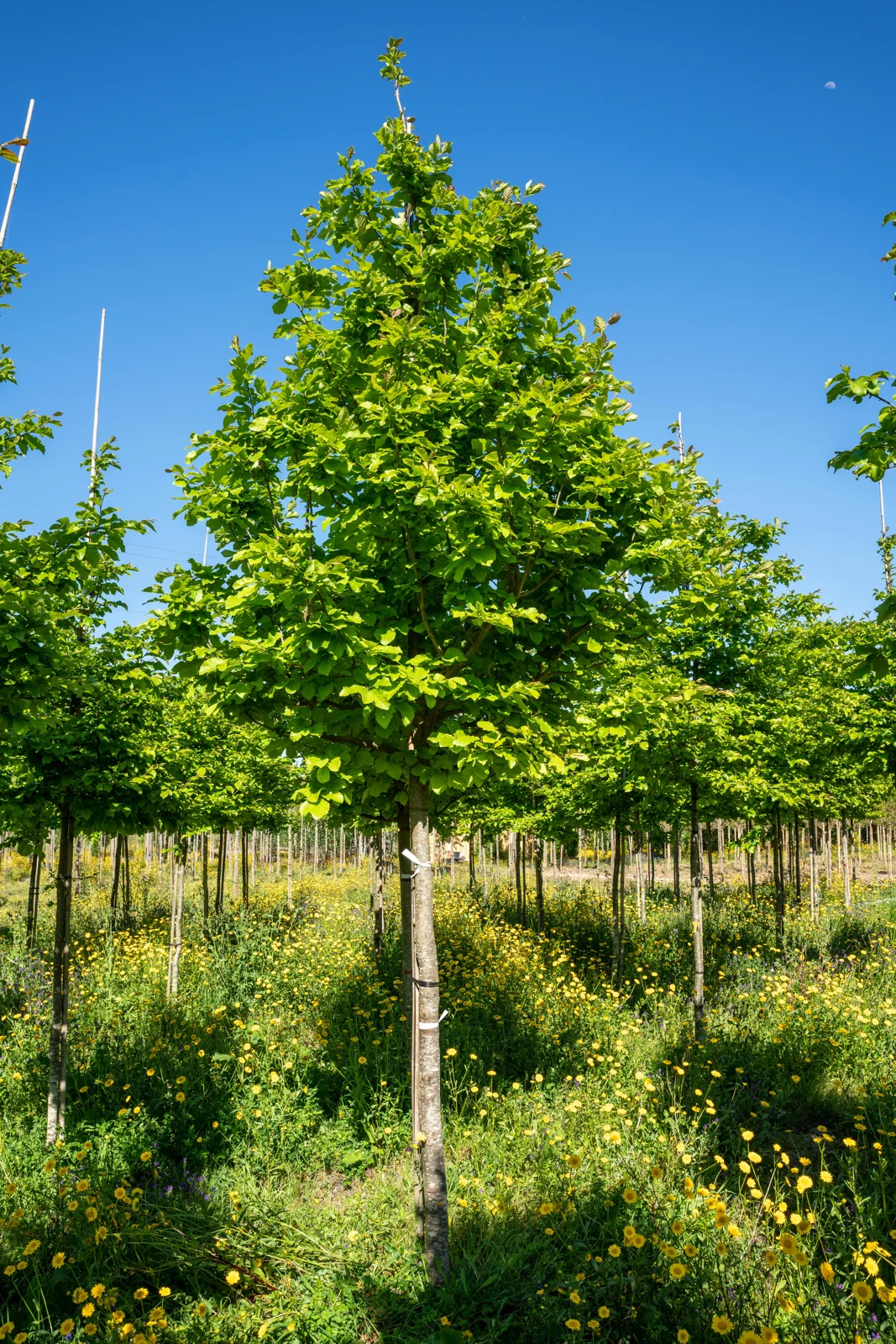
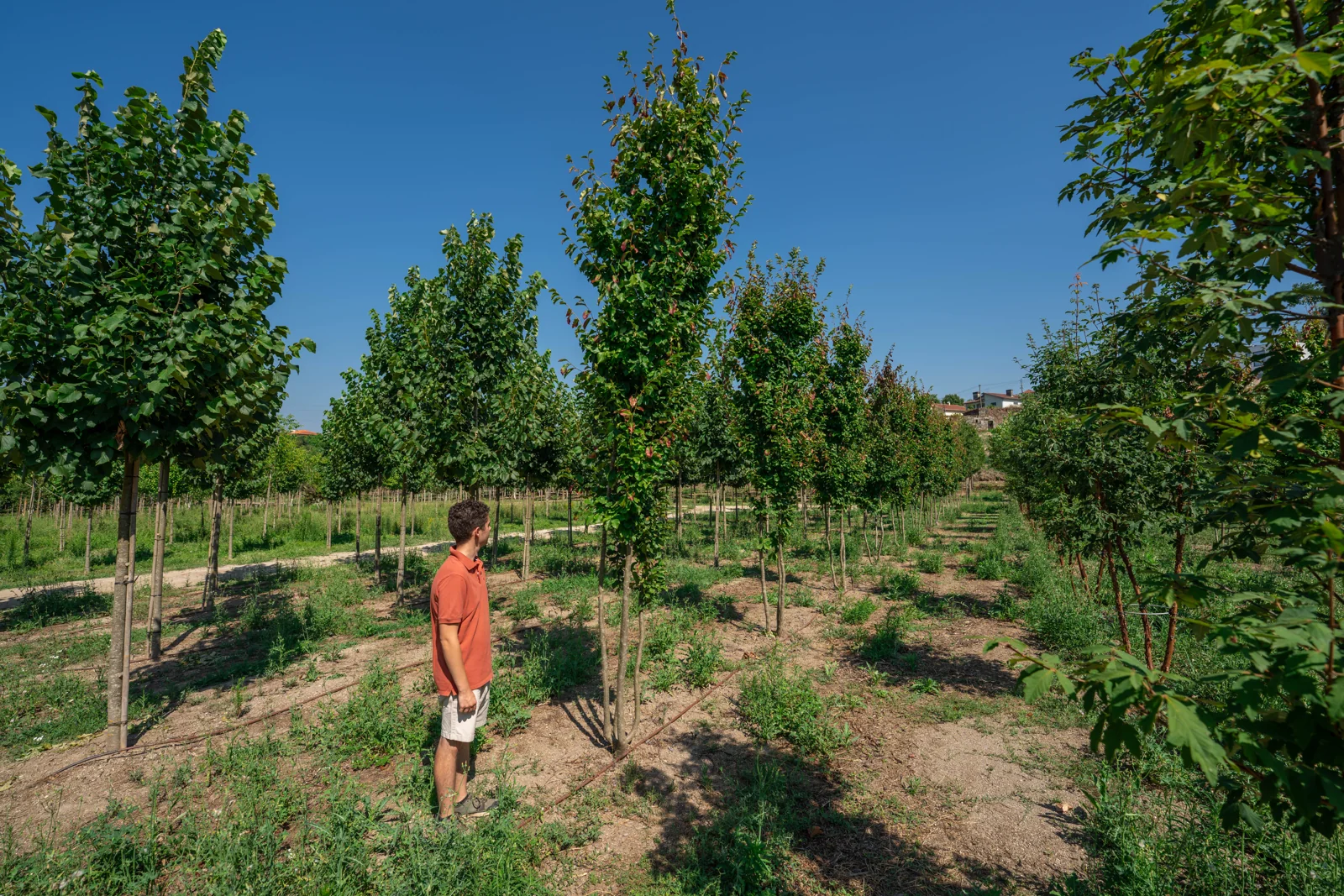
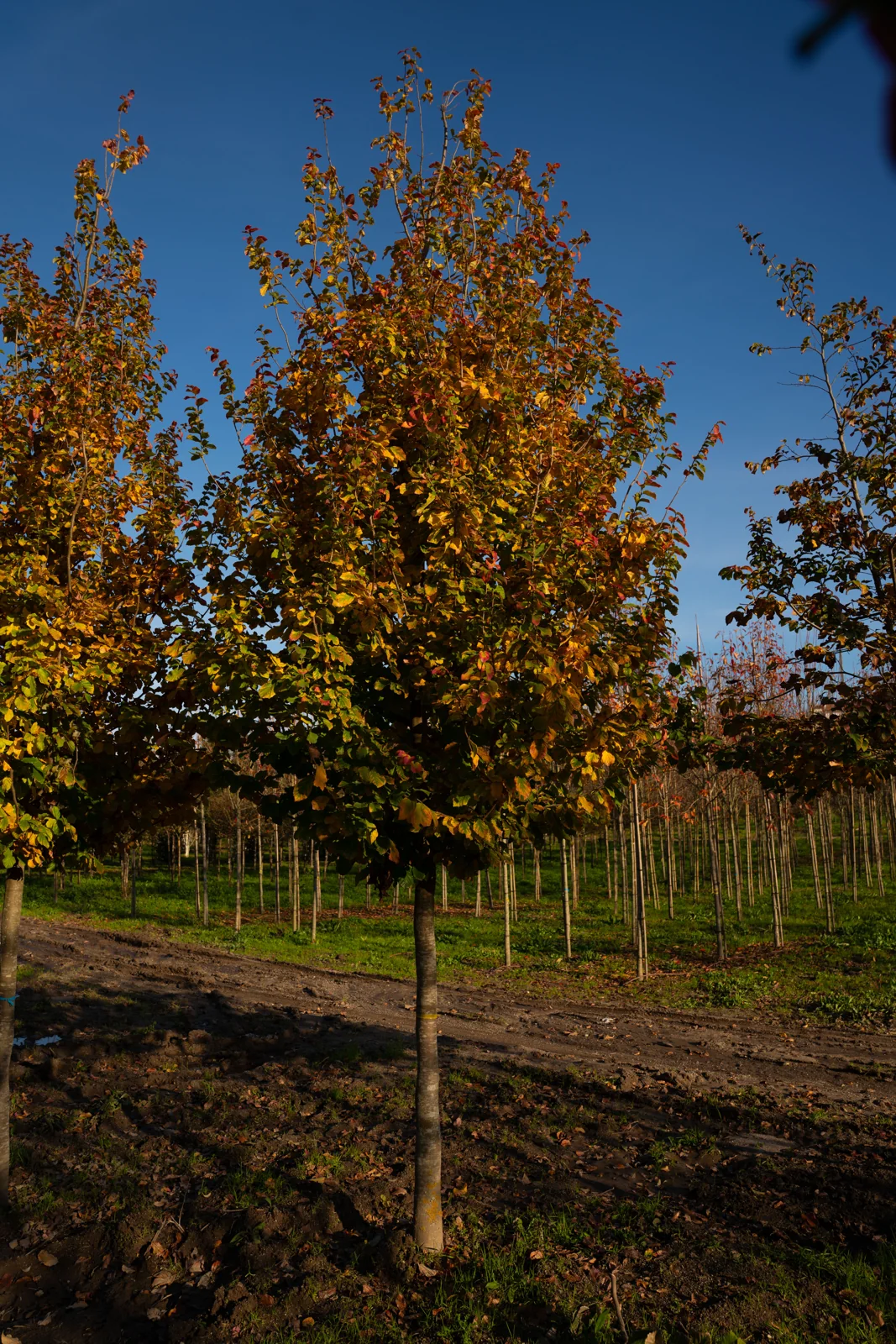
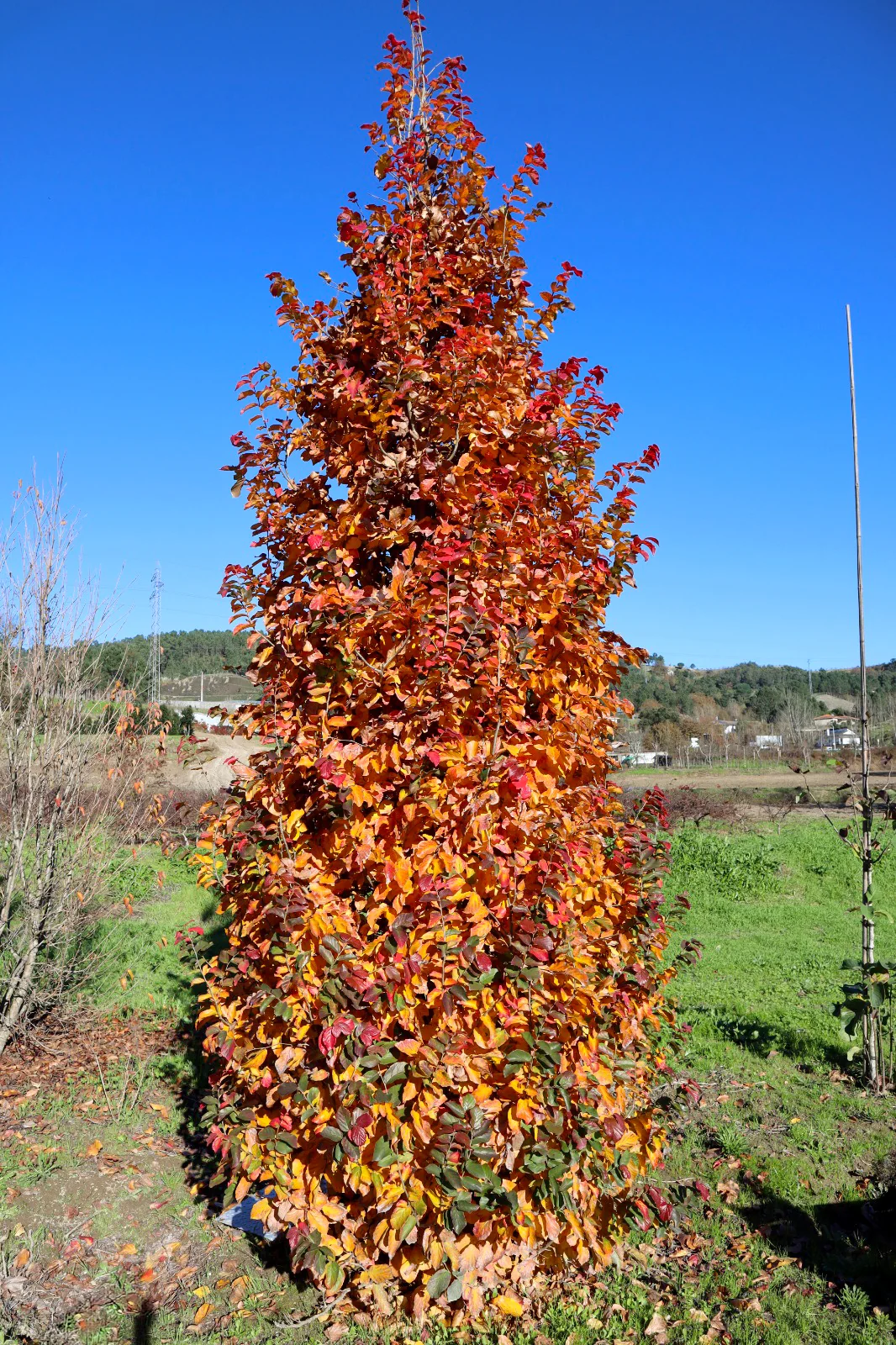
Columnar Persian ironwood with brilliant autumn colour
Persian Ironwood ‘Vanessa’ · Parrotia persica ‘Vanessa’
A narrow, upright selection of Persian ironwood, Parrotia persica ‘Vanessa’ is specified where the species’ multi-season ornamental value is wanted within a constrained crown envelope: street trees, urban pits, and confined courtyard schemes.
Key Facts
About this Cultivar
‘Vanessa’ is one of the narrowest selections of Parrotia persica in commercial cultivation, reaching roughly 8 to 10 metres in height and 3 to 5 metres in width at maturity. The crown is upright and columnar rather than the wide, spreading habit of the parent species, which makes the cultivar specifiable in street alignments and tree pits where the type…
Read more
Show less
‘Vanessa’ is one of the narrowest selections of Parrotia persica in commercial cultivation, reaching roughly 8 to 10 metres in height and 3 to 5 metres in width at maturity. The crown is upright and columnar rather than the wide, spreading habit of the parent species, which makes the cultivar specifiable in street alignments and tree pits where the type form would outgrow its allowance. Growth is slow to moderate, so calibre at delivery carries the scheme.
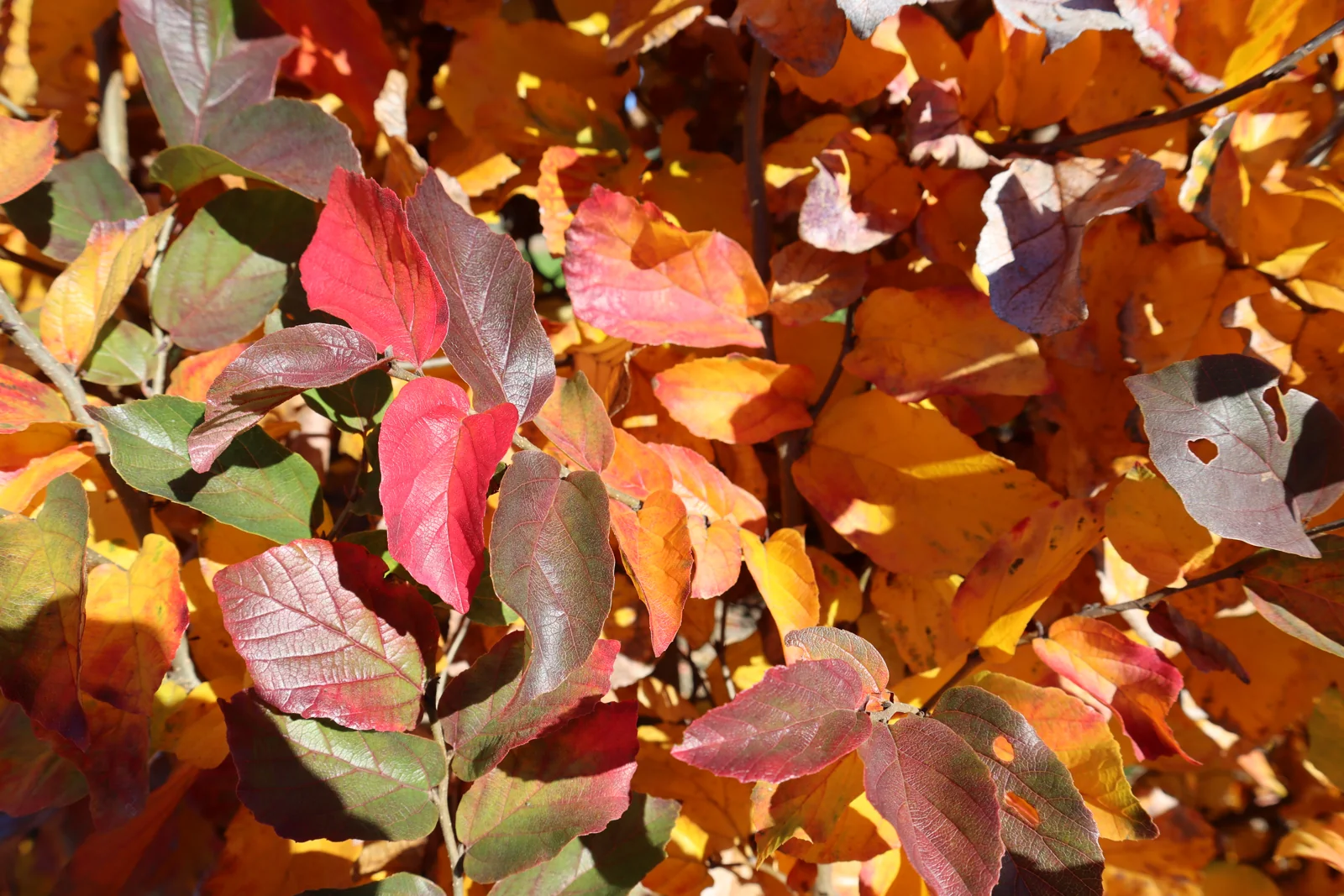
Ornamental load is carried across the year. Late-winter flowering, in January or February before the leaves break, produces small red apetalous flowers with a quiet but legible presence on bare wood. Summer foliage is glossy dark green; autumn colour on ‘Vanessa’ is a brilliant red, more saturated and more uniformly scarlet than the orange-yellow-purple gradient of the parent species. The exfoliating bark, mottled in patches of green, white, and tan, gives the trunk winter structure once leaves have fallen.
Climate fit is broad. The species is reliably winter-hardy across USDA zones 5 through 8 (winter minimum to about -29 °C), with reports of mature specimens enduring to USDA zone 4b in sheltered continental sites; summer maxima above 35 °C are tolerated provided root run is adequate. It performs through the Atlantic seaboard, the Po valley, the Pannonian basin, and inland to climates as continental as eastern Austria and southern Poland; reliable performance extends north to coastal southern Scandinavia and the Baltic coast. Acidic to neutral, free-draining soils suit it best, with reasonable tolerance of clay and sand; salt-laden coastal wind is the one common European exposure it does not handle.
In specification terms ‘Vanessa’ is a small-stature alternative to the broader columnar street trees in the European urban canon, with a longer ornamental season than Acer platanoides ‘Columnare’ and a smaller mature footprint than Tilia cordata in narrow pit dimensions. The Royal Horticultural Society’s Award of Garden Merit attaches to this cultivar, which is convenient shorthand in specification documents where a recognised quality marker is required.
Advice on this species
Want to know more about Parrotia persica 'Vanessa'?
Tell us about your project and we'll advise you on this species — where it thrives, which size makes sense, and what to expect once planted.
- Produção própria
- Exemplares adultos
- Resposta em 1–2 dias
Sem compromisso · orçamento personalizado