

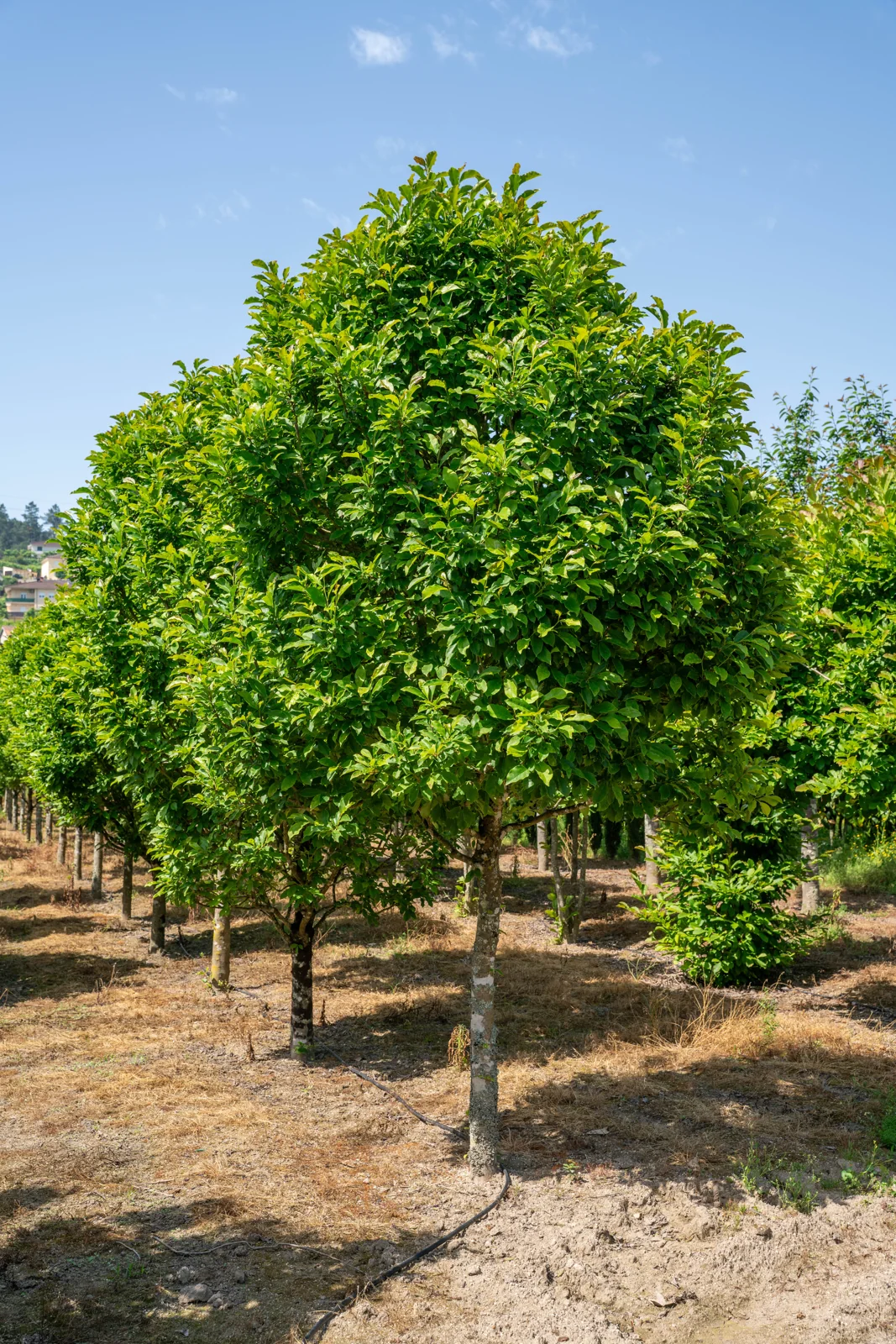
Late-flowering specimen shrub for sheltered urban sites
Susan Magnolia · Magnolia susan
A compact deciduous hybrid valued for its frost-avoiding bloom period and manageable scale. Reliably hardy across most of temperate Europe, it suits urban tree pits, courtyard schemes, and contained residential plantings where space is at a premium.
About this Species
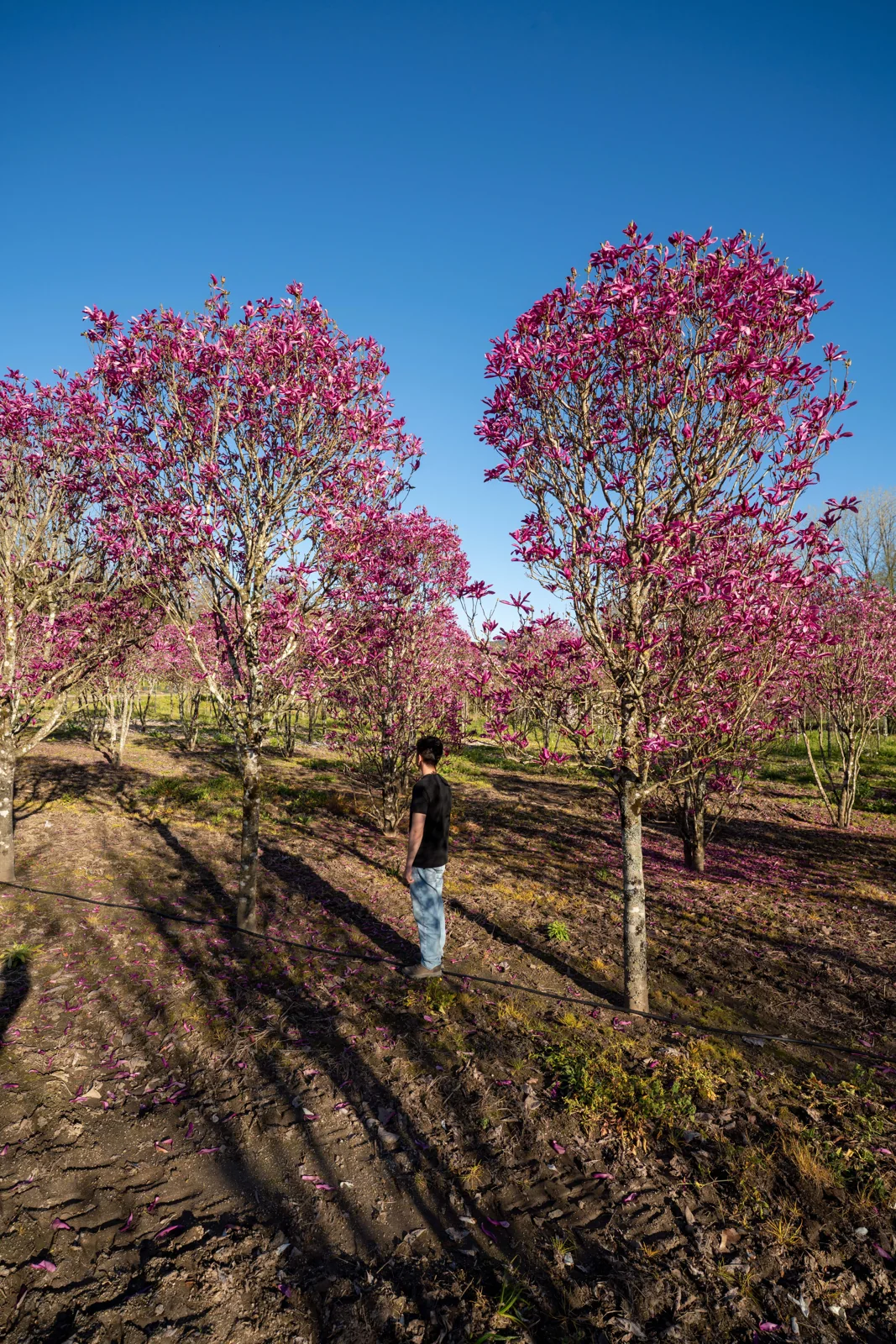
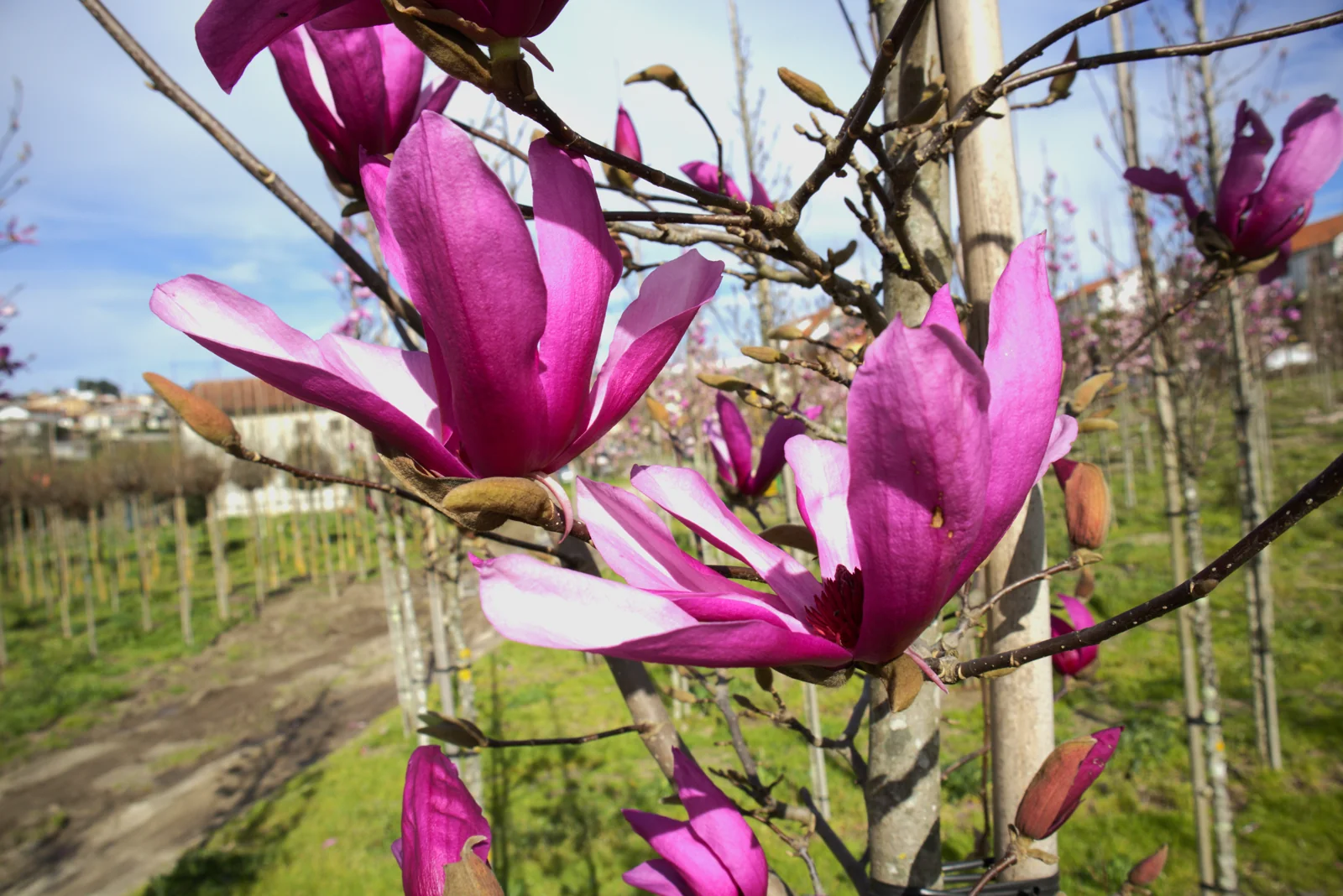
A hybrid of Magnolia liliiflora 'Nigra' and M. stellata 'Rosea', developed at the US National Arboretum in the 1950s as part of the Little Girl series. The breeding objective was a magnolia that flowers late enough to avoid spring frost damage, and 'Susan' delivers on that brief: bloom begins two to four weeks after M. stellata and M. x soulangeana,…
Read more
Show less
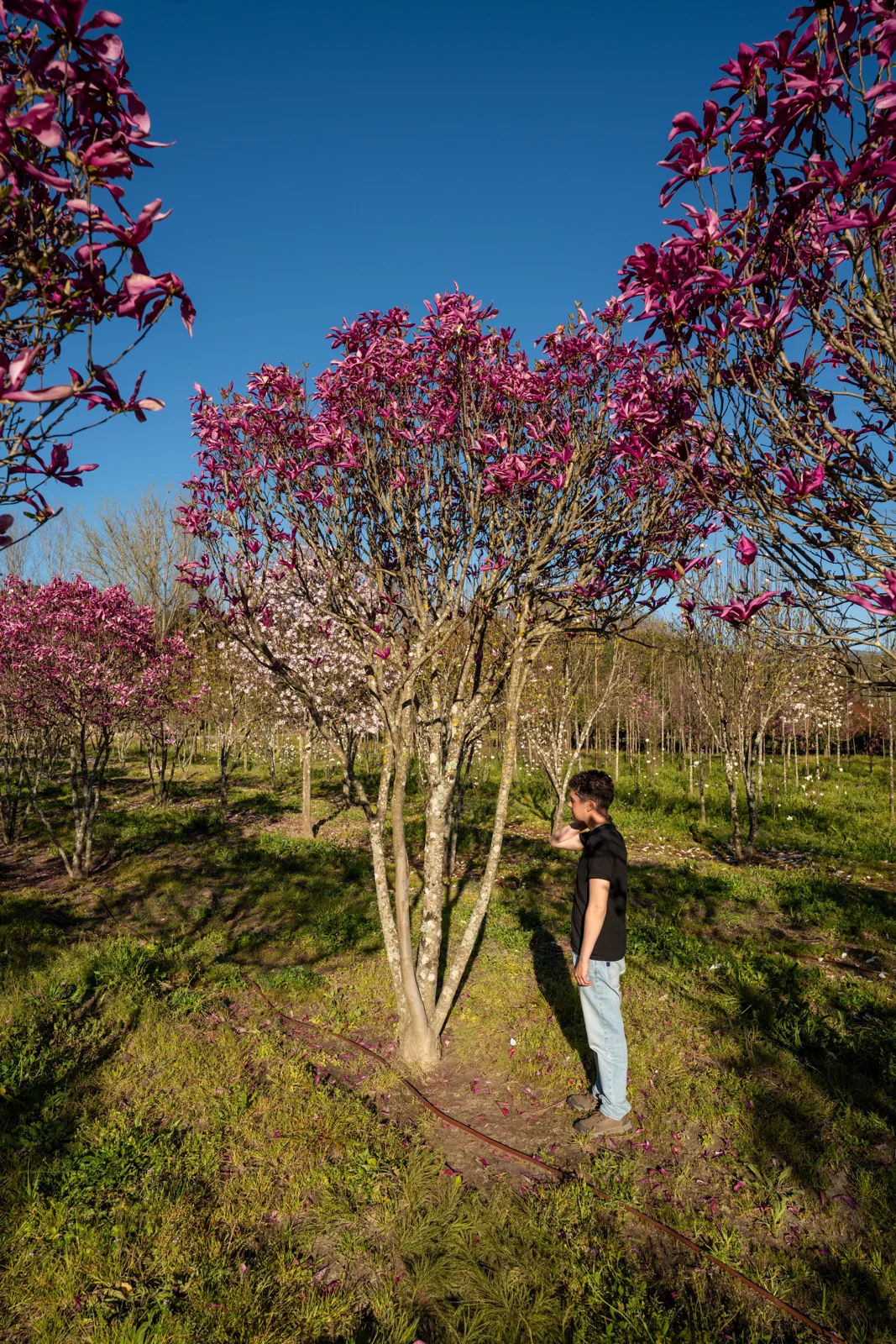
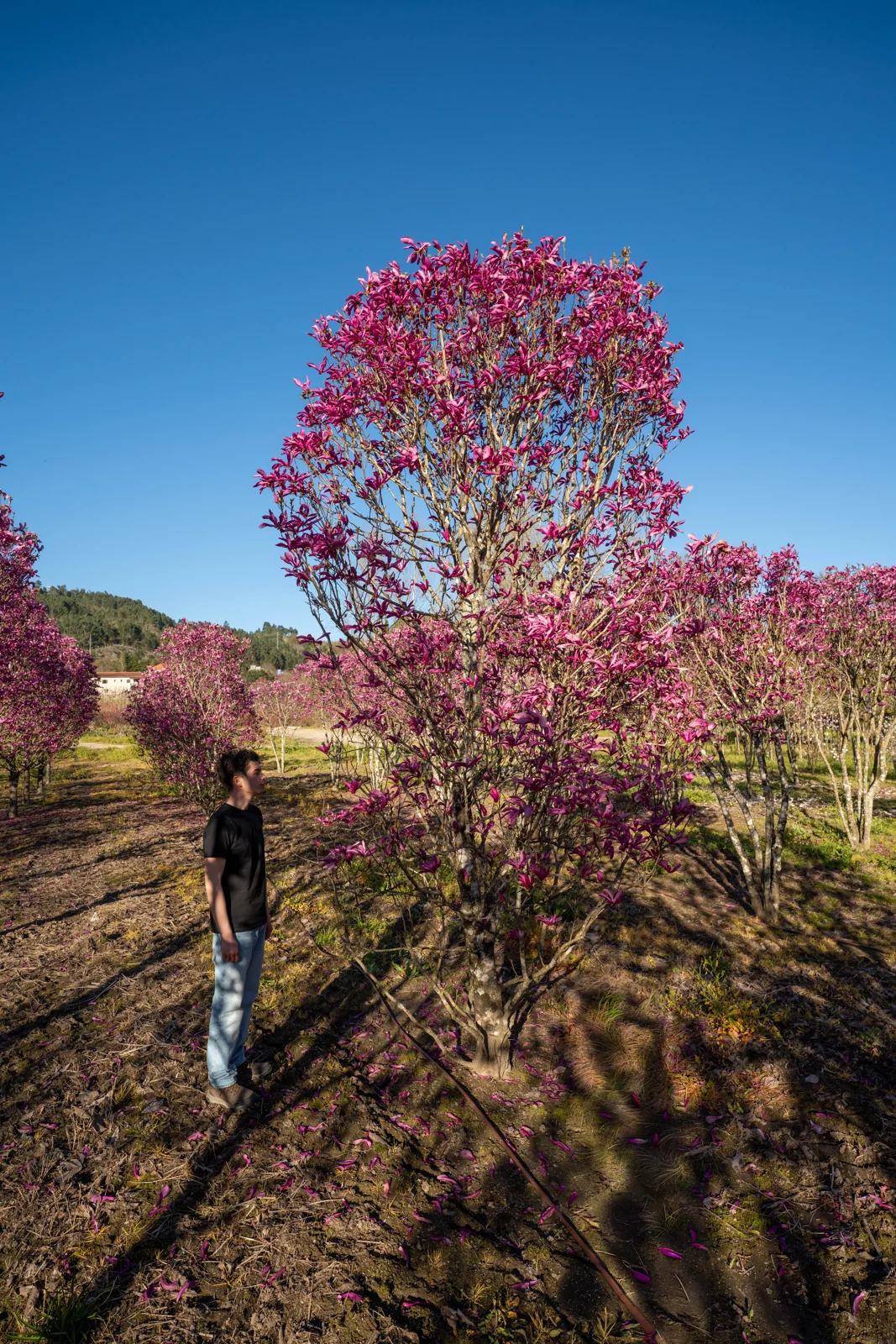
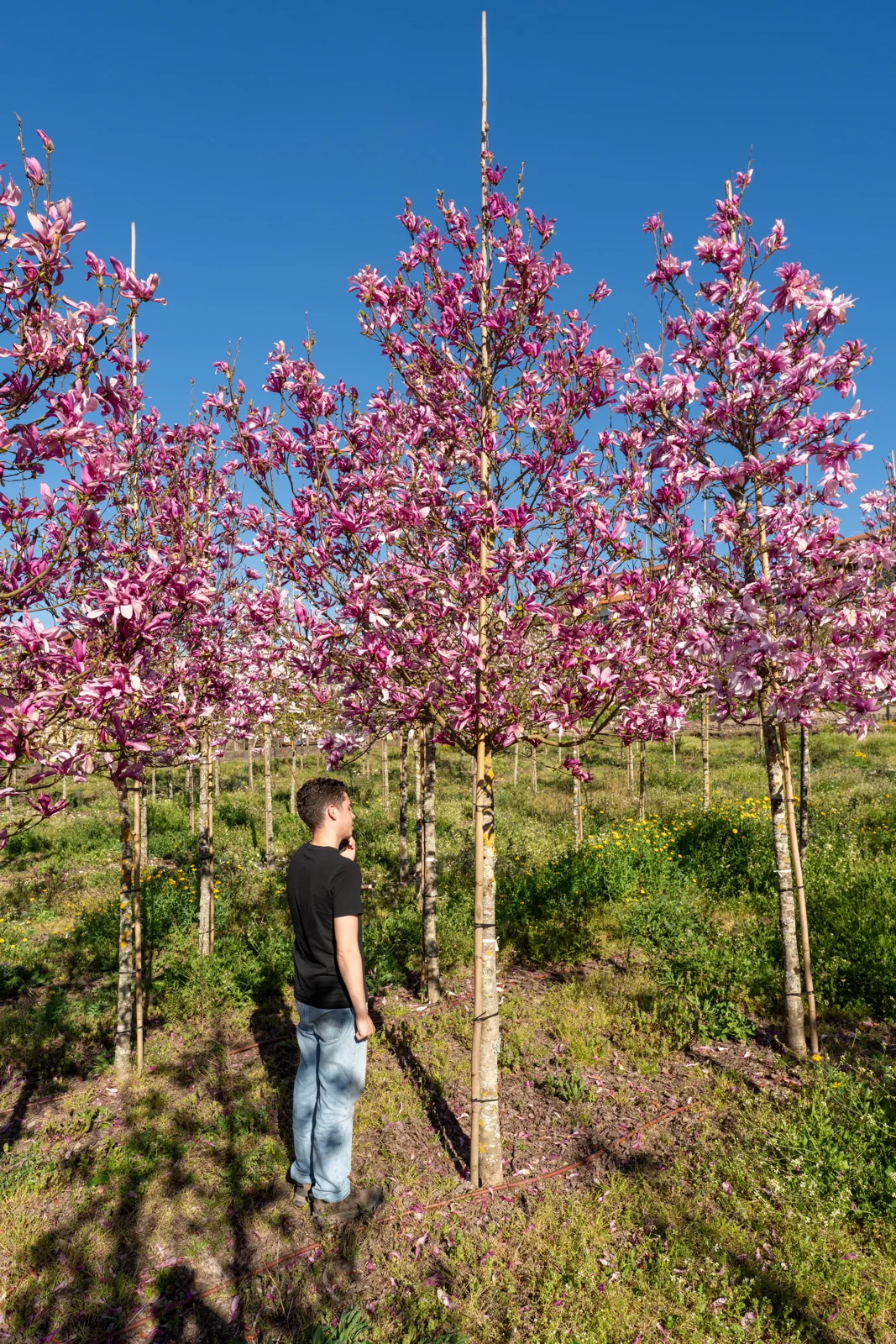
A hybrid of Magnolia liliiflora 'Nigra' and M. stellata 'Rosea', developed at the US National Arboretum in the 1950s as part of the Little Girl series. The breeding objective was a magnolia that flowers late enough to avoid spring frost damage, and 'Susan' delivers on that brief: bloom begins two to four weeks after M. stellata and M. x soulangeana, typically from mid-April into May depending on latitude. Goblet-shaped flowers carry six slightly twisted tepals, purple-red on the exterior and paler within, opening to approximately 12 cm across with a light citrus fragrance. Sporadic rebloom through summer is common on established plants.
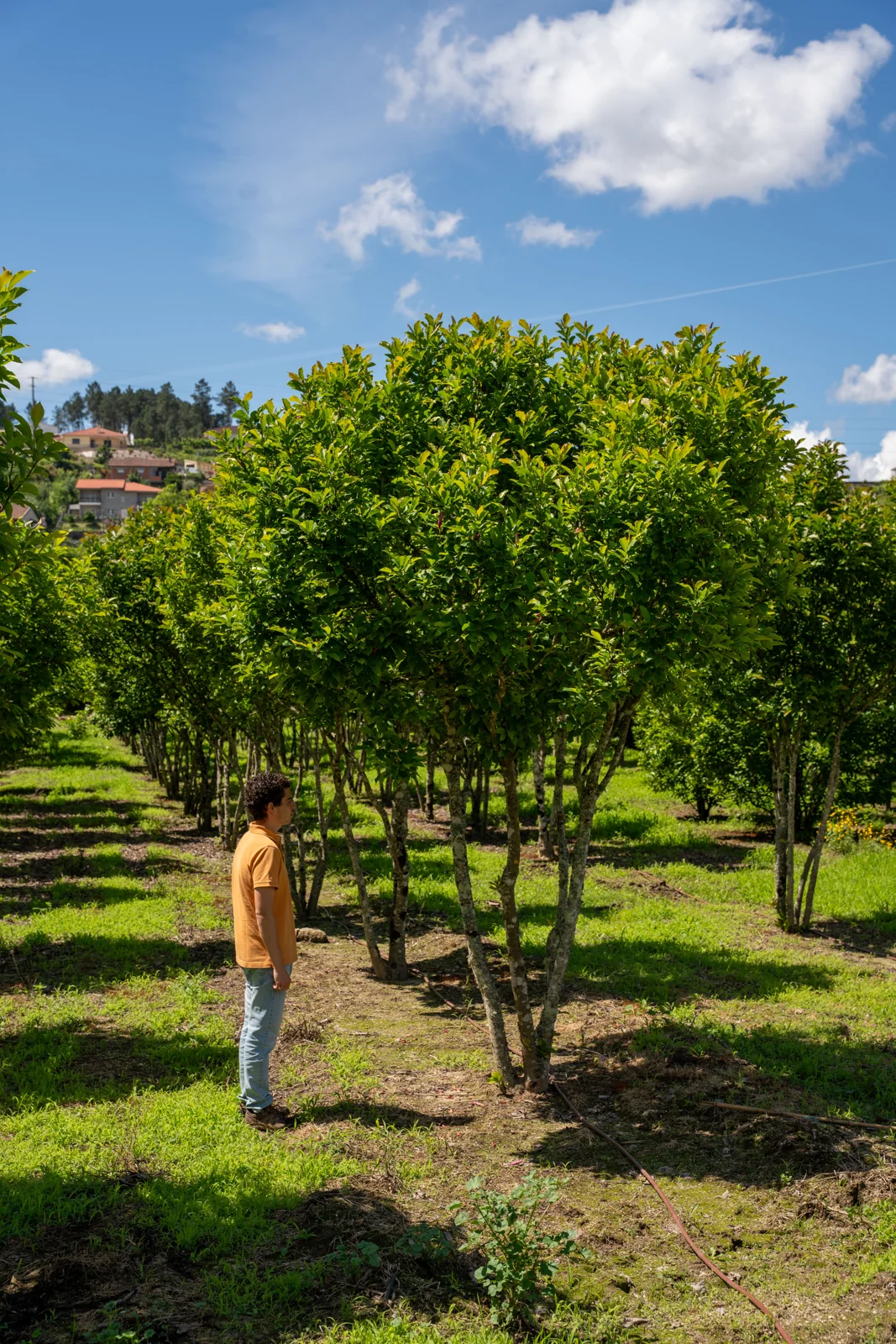
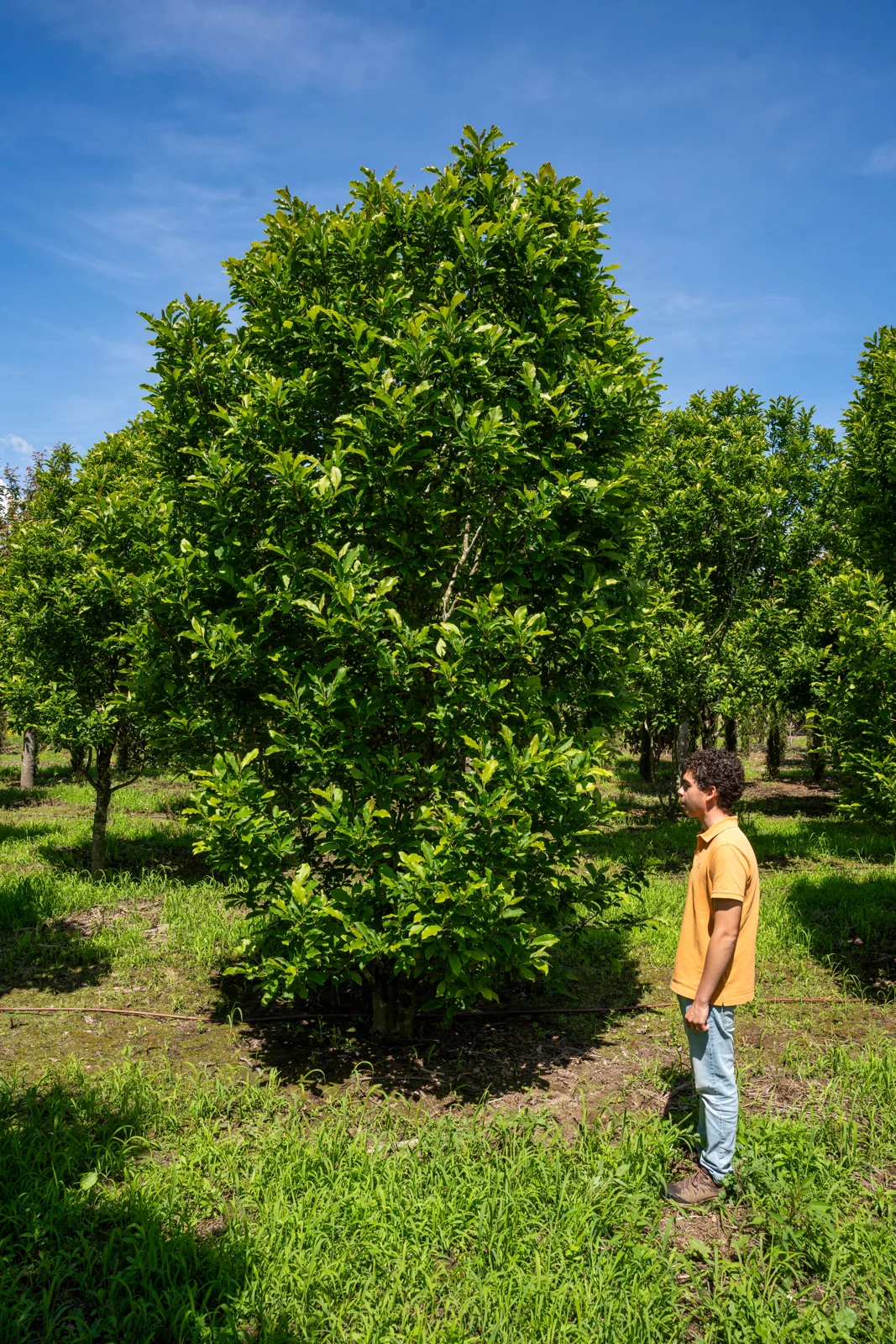
Mature dimensions are modest: 2.5 to 3.7 m in height with an equal spread, developing a rounded, multi-stemmed form. Growth rate is slow, rarely exceeding 30 cm per year even on favourable sites. The compact habit and contained root zone make it a practical specification for narrow planting beds, courtyards, and raised planters in urban contexts where vertical and lateral space is limited.
Winter hardiness is broad. Reliable performance extends to approximately minus 30 °C (USDA zone 4b), which places it comfortably within range across virtually all of temperate and northern Europe, including southern Scandinavia, the Baltic states, inland Poland, and continental Central Europe. The upper limit of comfortable performance sits around USDA zone 9a (minimum about minus 7 °C); in warmer zones, warm winter exposures should be avoided to prevent premature bud break. Heat tolerance is moderate rather than high: prolonged summer temperatures above 35 °C will stress the plant unless root-zone moisture is maintained.
Site requirements are straightforward but specific. Acidic to neutral, moist, well-drained soils of reasonable organic content suit it best; chalk and limestone soils induce chlorosis. Full sun to partial shade, with shelter from strong or drying winds. Avoid warm south-facing walls in mild-winter regions, as these promote early bud opening and subsequent frost damage to flowers. The fleshy root system is intolerant of disturbance after establishment, so positioning should be considered permanent. Against the more commonly specified M. x soulangeana, 'Susan' offers a more contained form, later and therefore more reliable flowering, and a lower maintenance profile with minimal pruning requirement beyond removal of dead wood.
Advice on this species
Want to know more about Magnolia susan?
Tell us about your project and we'll advise you on this species — where it thrives, which size makes sense, and what to expect once planted.
- Produção própria
- Exemplares adultos
- Resposta em 1–2 dias
Sem compromisso · orçamento personalizado