

Compact summer-flowering specimen for warm-temperate urban schemes
Crape Myrtle ‘Violacea’ · Lagerstroemia indica ‘Violacea’
A small, rounded multi-stem specimen carrying dense panicles of deep purple summer flower, suited to warm-temperate urban schemes from the Mediterranean basin to mild Atlantic and Pannonian sites within a defined hardiness envelope.
About this Cultivar
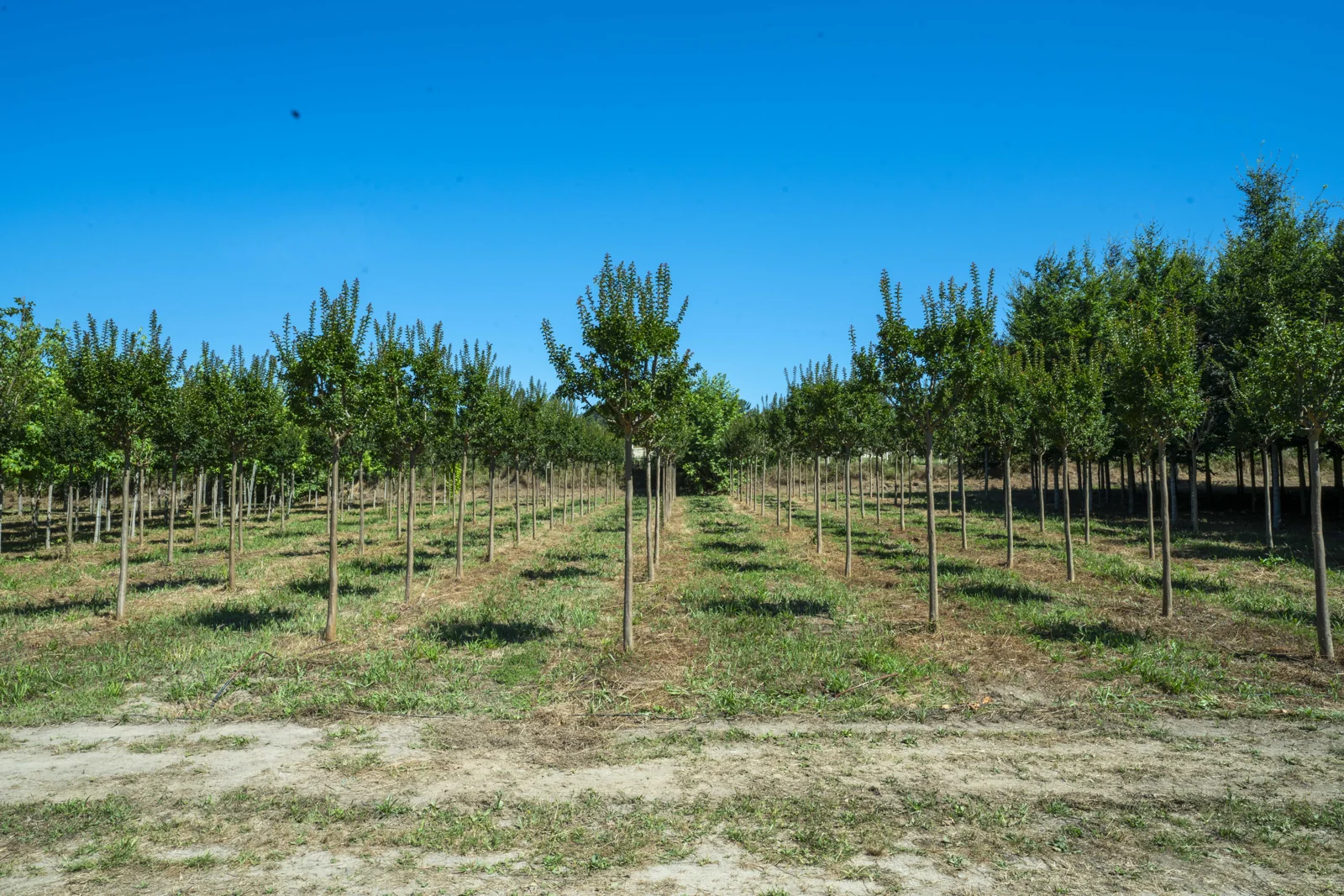
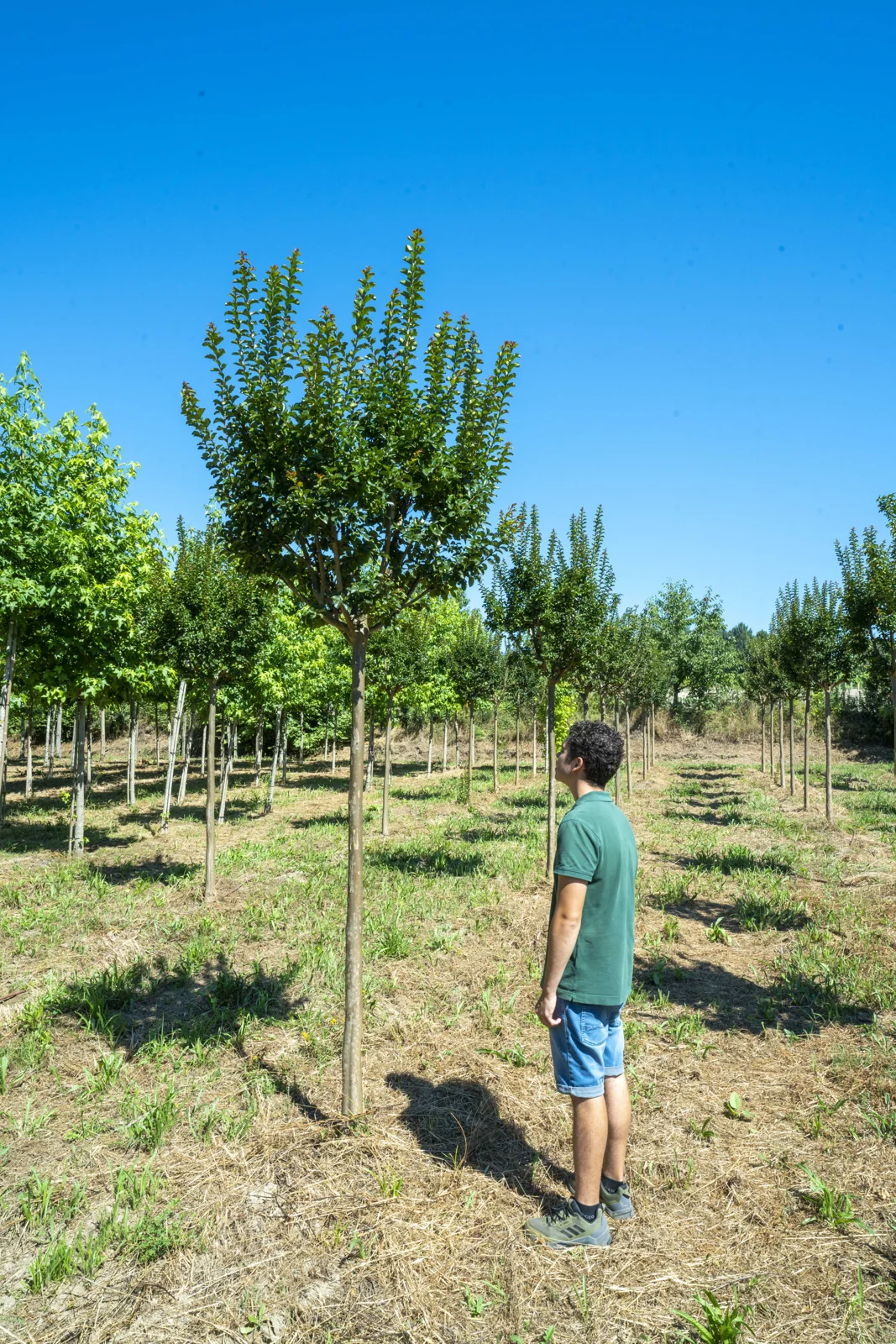
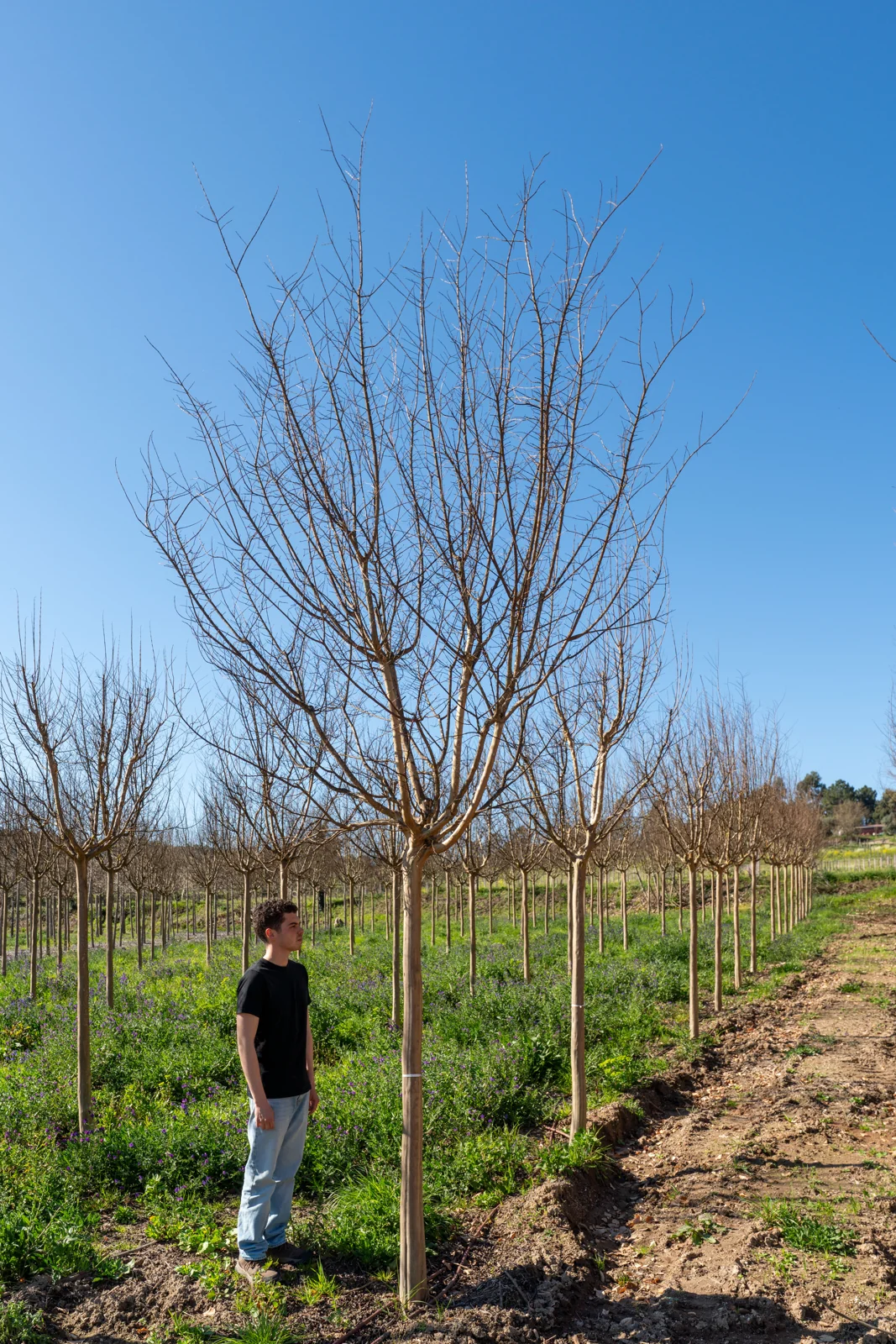
'Violacea' is a deciduous cultivar reaching four to six metres in height and three to five metres in spread, with a rounded, well-structured crown carried on multiple stems. Bark is smooth and exfoliates in plates to reveal lighter patches beneath, providing winter structure in deciduous schemes. From July to September the canopy carries abundant panicles…
Read more
Show less
'Violacea' is a deciduous cultivar reaching four to six metres in height and three to five metres in spread, with a rounded, well-structured crown carried on multiple stems. Bark is smooth and exfoliates in plates to reveal lighter patches beneath, providing winter structure in deciduous schemes. From July to September the canopy carries abundant panicles of deep violet to purple flower with the crepe-textured petals characteristic of the genus; foliage emerges glossy dark green and shifts through yellow, orange, and red in autumn, giving the cultivar a long ornamental season.
The specifiable climate envelope is warm-temperate. Reliable winter hardiness is to approximately minus 12 °C (USDA zone 8a to 8b); growth and flowering are dependable in zone 9 and warmer. Sustained minima below minus 15 °C cause top damage, and reliable flowering performance ends north and east of a line running from the Loire valley through the Po valley to coastal Croatia. Specifiers working in zone 7b sites, including parts of coastal Atlantic Europe, should treat the cultivar as marginal and select sheltered positions with good drainage. The cultivar is not recommended for continental Central or Northern Europe without significant winter protection.
Heat tolerance is high; the cultivar carries summer maxima above 35 °C without leaf scorch where root volume is adequate, which makes it suitable for urban heat-island sites and reflective hardscape. It accepts deep, fertile, well-drained soils ranging from acidic sandy substrates to clay, and tolerates short summer drought once established. Full sun is essential for vigorous flowering; partial shade compromises both flower density and autumn colour. Salt tolerance is low, so coastal positions require shelter from salt-laden wind.
Maintenance is light: occasional irrigation through extended drought, and a light winter or early-spring pruning to shape the crown and encourage flowering wood. It works as a stand-alone specimen, in small groups, in avenue alignments on narrow streets, and in large containers where root volume permits.
Advice on this species
Want to know more about Lagerstroemia indica 'Violacea'?
Tell us about your project and we'll advise you on this species — where it thrives, which size makes sense, and what to expect once planted.
- Produção própria
- Exemplares adultos
- Resposta em 1–2 dias
Sem compromisso · orçamento personalizado