


Summer-flowering specimen for warm-temperate and Mediterranean schemes
Crape Myrtle ‘Rosea Nova’ · Lagerstroemia indica ‘Rosea Nova’
A small deciduous tree for sunny urban and garden positions across warm-temperate Europe, valued for prolonged midsummer flowering, exfoliating bark, and autumn foliage colour where summer heat is sufficient to set bud reliably.
About this Cultivar
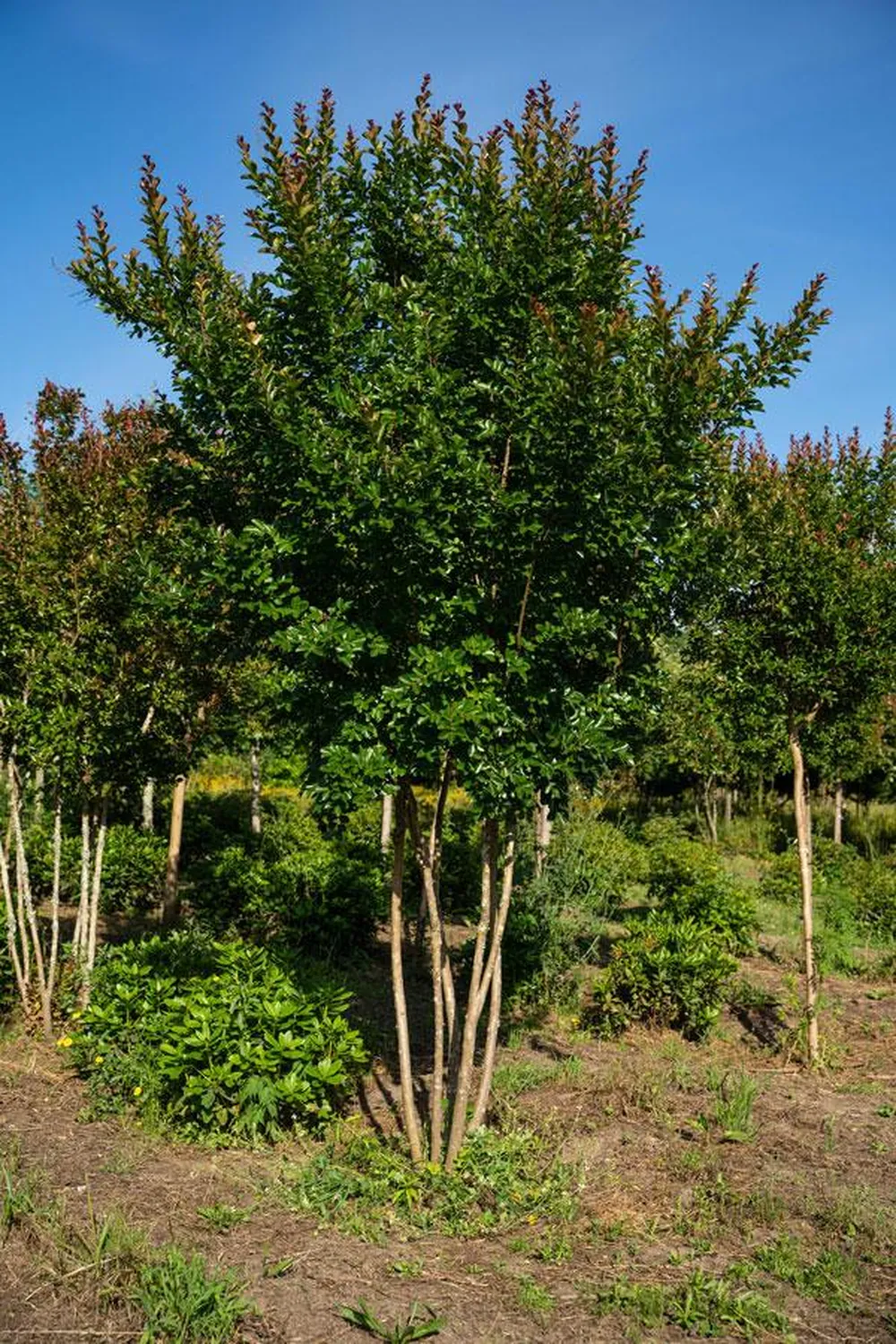
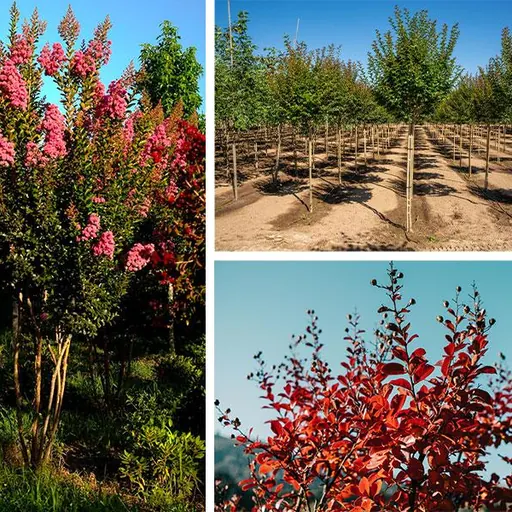
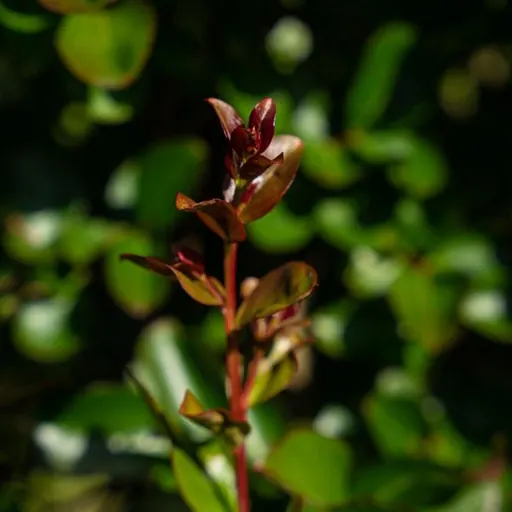
Lagerstroemia indica 'Rosea Nova' is a pink-flowered selection of the crape myrtle, reaching 4 to 6 m in height and 3 to 5 m in spread at maturity, with a rounded multi-stemmed crown. Foliage emerges glossy dark green and turns through yellow, orange, and red in autumn, and the smooth pale bark exfoliates in irregular plates, carrying winter structure once…
Read more
Show less
Lagerstroemia indica 'Rosea Nova' is a pink-flowered selection of the crape myrtle, reaching 4 to 6 m in height and 3 to 5 m in spread at maturity, with a rounded multi-stemmed crown. Foliage emerges glossy dark green and turns through yellow, orange, and red in autumn, and the smooth pale bark exfoliates in irregular plates, carrying winter structure once leaves drop. Dense terminal panicles of intense pink open from midsummer into early autumn on the current season's growth.
Climate envelope is the defining selection question. The species is reliably hardy to roughly minus 12 to minus 15 °C (USDA zone 7b to 8a), with damage to top growth observed in harder winters; the deeper limit of zone 7a is reached only with sheltered siting and assured drainage. Equally important is summer heat: flowering is dependent on consistent warmth above about 25 °C through July and August, so performance is dependable across the Mediterranean basin, the Iberian and Adriatic coasts, the Po valley, and inland Pannonian sites, marginal on the Atlantic seaboard north of Brittany and the southern Netherlands, and unreliable in cool-summer maritime climates including most of Ireland, Scotland, and Scandinavia regardless of nominal winter hardiness.
Site requirements are full sun and a fertile, deep, well-drained soil. The cultivar tolerates acidic, sandy, or clay substrates provided drainage is genuine, and accepts the heat-island conditions of paved urban settings; salt tolerance is low, which restricts use in exposed coastal alignments. Drought tolerance, sourced from the species, is high once the root system is established, though regular irrigation through the first summers and during flowering improves panicle density.
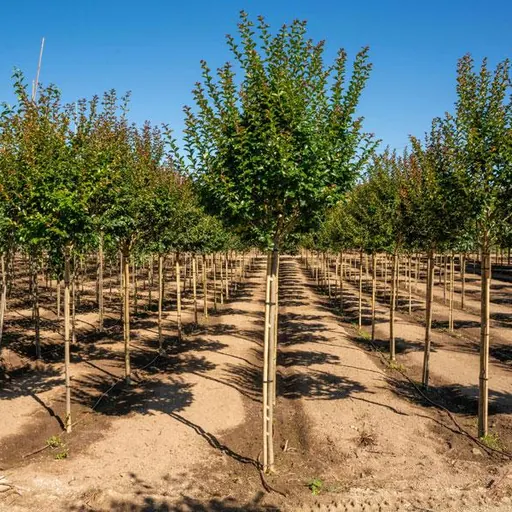
Disease and pest pressure is moderate. Powdery mildew is the principal concern in humid summers and is best managed through siting in open positions with free air movement; the species is otherwise broadly resilient and supports pollinators during a season when many woody plants have finished flowering. Form and scale make it suitable as a focal specimen, in informal groups, or in container schemes where the small mature footprint and three-season ornamental interest justify the position.
Advice on this species
Want to know more about Lagerstroemia indica 'Rosea Nova'?
Tell us about your project and we'll advise you on this species — where it thrives, which size makes sense, and what to expect once planted.
- Produção própria
- Exemplares adultos
- Resposta em 1–2 dias
Sem compromisso · orçamento personalizado