

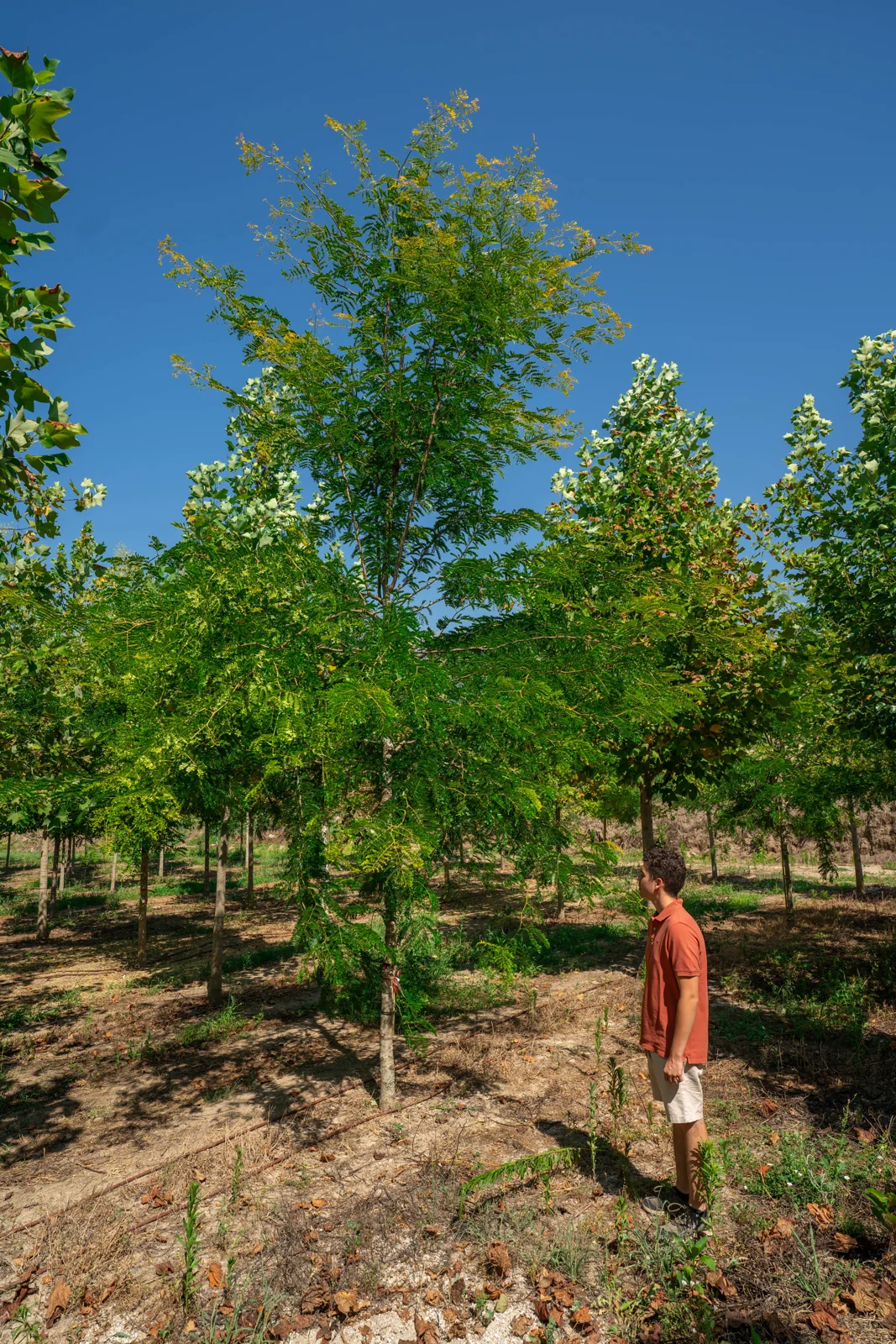
Golden-foliage urban tree, thornless and podless
Honey Locust ‘Sunburst’ · Gleditsia triacanthos ‘Sunburst’
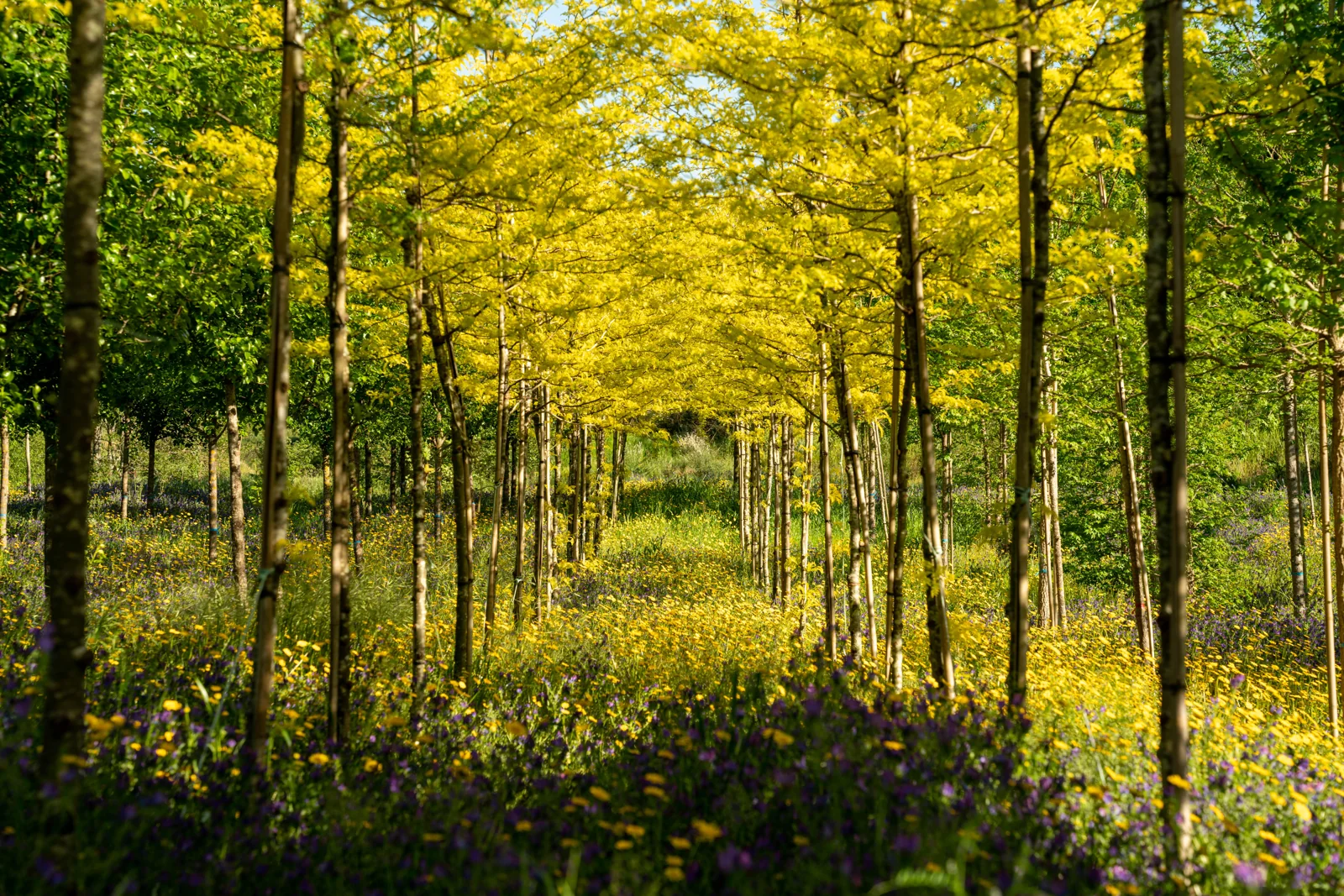
Bright golden spring growth, a light open crown, and the broad hardiness of the honey locust make this a defensible specification for street pits, car parks, and parkland across temperate Europe, from the Mediterranean coast to southern Scandinavia.
Key Facts
About this Cultivar
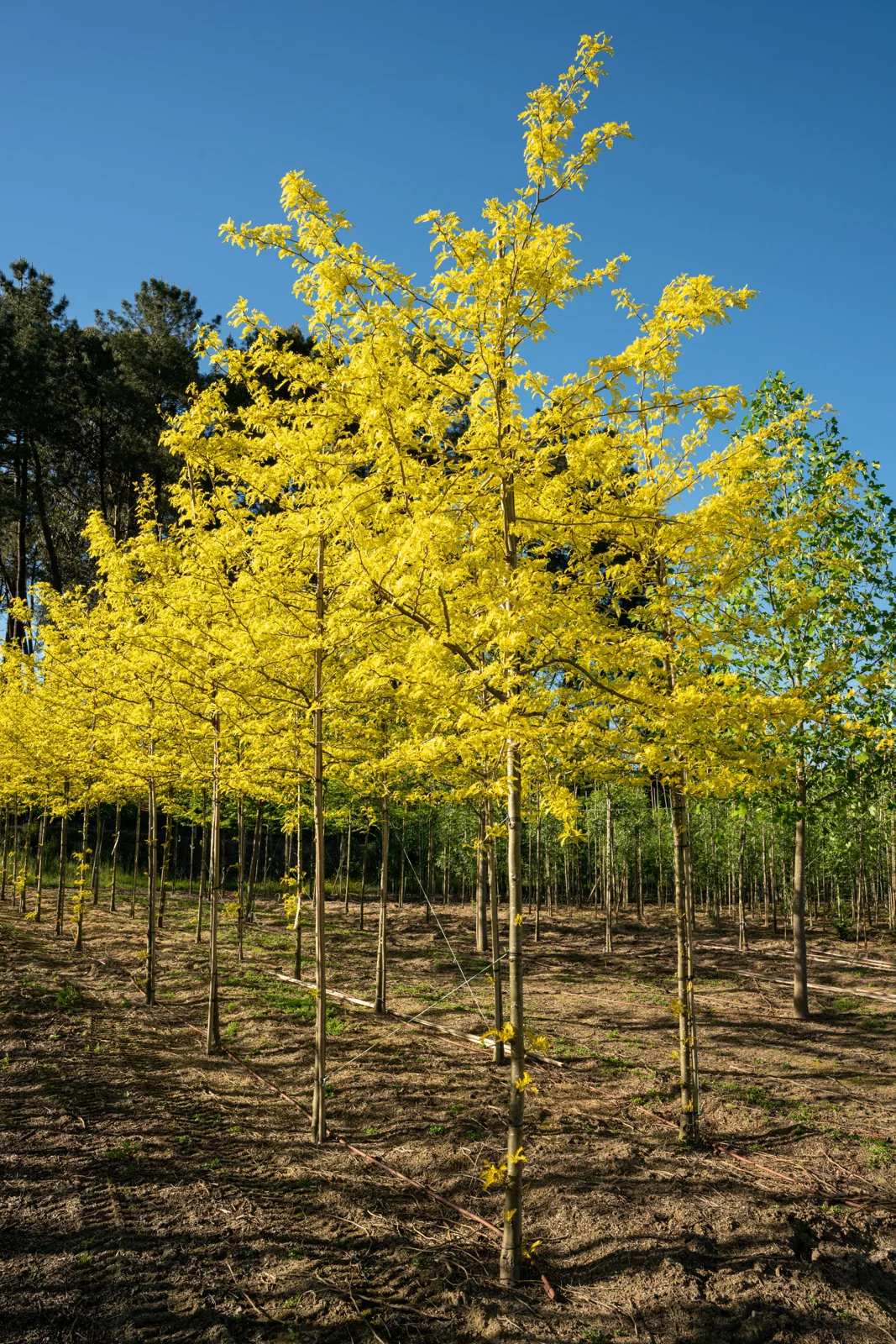
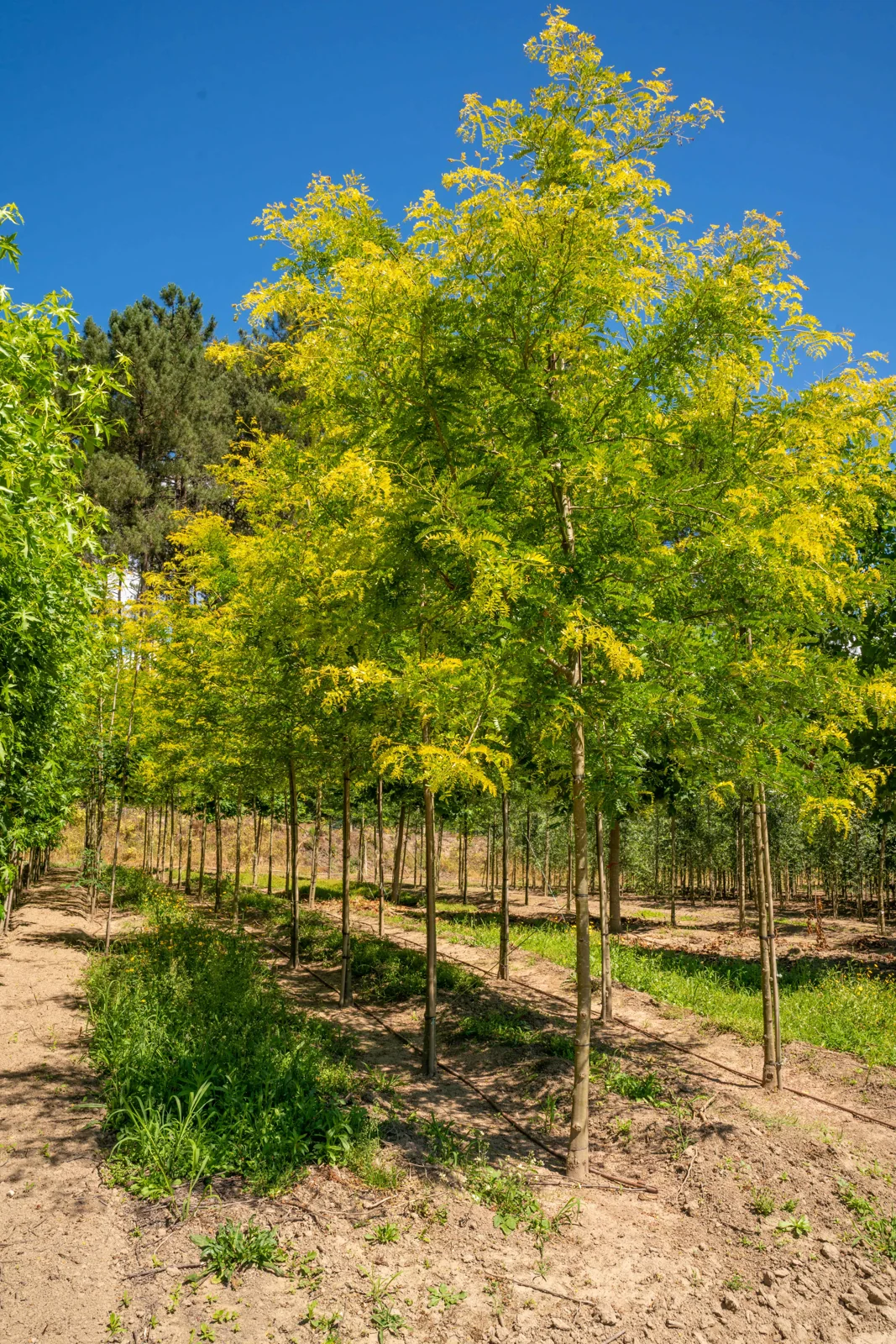
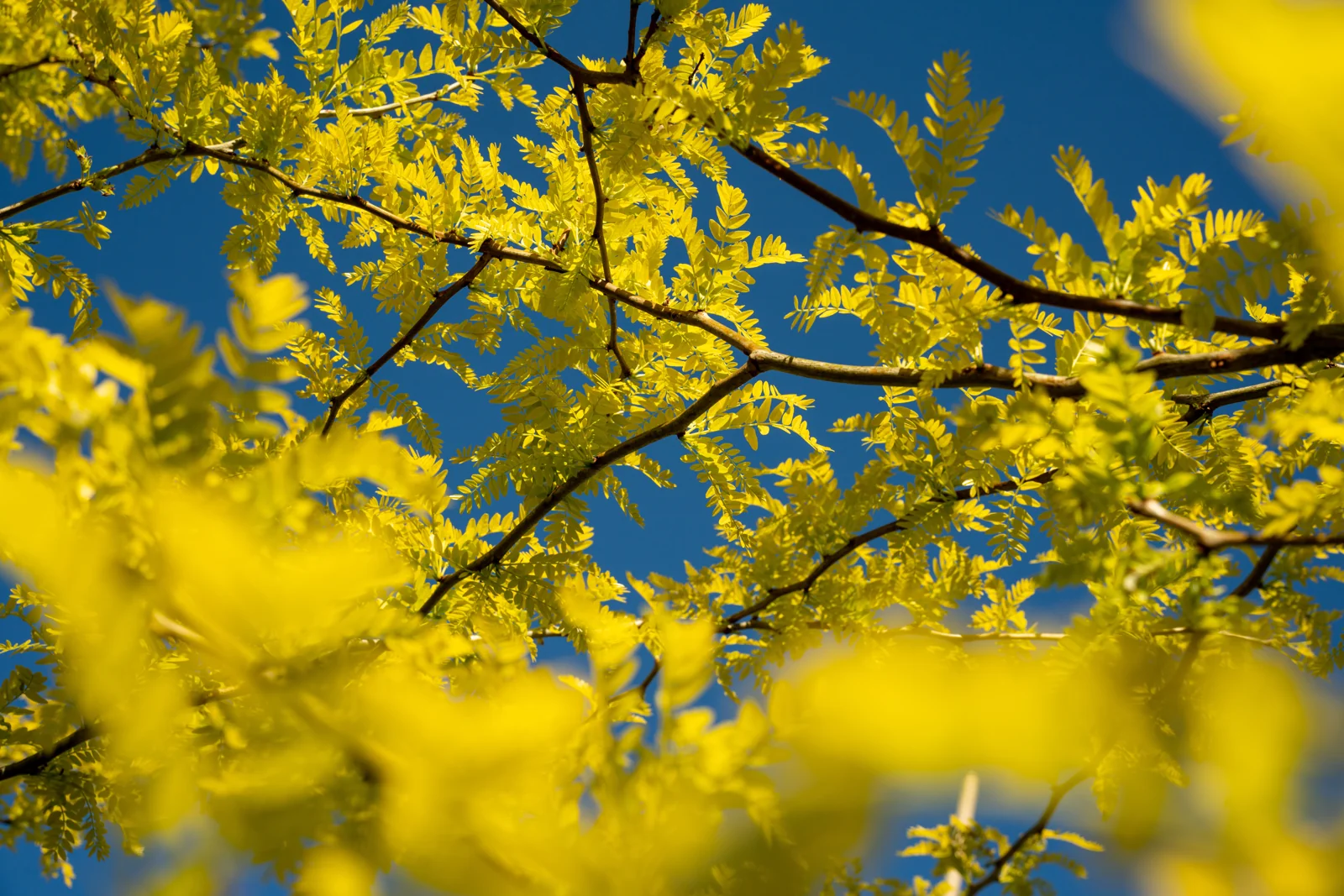
Gleditsia triacanthos 'Sunburst' is a selection of the honey locust grown for foliage colour: the finely divided, pinnate leaves emerge a clear golden-yellow in spring, settle to yellow-green through summer, and warm again in autumn. The crown is rounded and open, casting a light dappled shade that allows turf and underplanting to grow beneath it. At…
Read more
Show less
Gleditsia triacanthos 'Sunburst' is a selection of the honey locust grown for foliage colour: the finely divided, pinnate leaves emerge a clear golden-yellow in spring, settle to yellow-green through summer, and warm again in autumn. The crown is rounded and open, casting a light dappled shade that allows turf and underplanting to grow beneath it. At maturity it reaches roughly 10 to 15 metres tall and 8 to 10 metres across, smaller and more contained than the species, which suits it to confined urban settings. Like other selections from var. inermis, it is thornless and effectively podless, removing the litter and hazard that rule the wild species out of planted schemes.
The climate envelope is unusually wide, and this is the cultivar's principal selection argument for the European specifier. The species is hardy across USDA zones 3 to 9, which on the ground means it withstands the deep continental winters of Poland, the Pannonian basin, and the Baltic states as readily as it tolerates Mediterranean and Atlantic heat. Winter minima are not a practical constraint anywhere in the EU or EEA. At the warm end, it performs through prolonged summer maxima above 35 degrees C and through dry continental summers, its deep root system giving reliable drought tolerance once established.
Site tolerance matches the climatic range. It accepts acidic to alkaline soils and sandy to clay textures provided drainage is sound, withstands compaction, urban pollution, and reflected heat, and is salt-tolerant enough for coastal and de-iced roadside positions. Full sun is the one firm requirement: shade flattens the golden foliage to plain green and thins the crown, so site it in open, sunlit positions.
The foliage colour holds longest in good light and against darker backgrounds, where the open crown reads as a pool of light rather than a solid mass. Pest and disease pressure is low, and the absence of thorns and pods keeps long-term maintenance to a minimum, which is why it remains one of the more widely specified urban trees across the shared European canon.
Advice on this species
Want to know more about Gleditsia triacanthos 'Sunburst'?
Tell us about your project and we'll advise you on this species — where it thrives, which size makes sense, and what to expect once planted.
- Produção própria
- Exemplares adultos
- Resposta em 1–2 dias
Sem compromisso · orçamento personalizado