

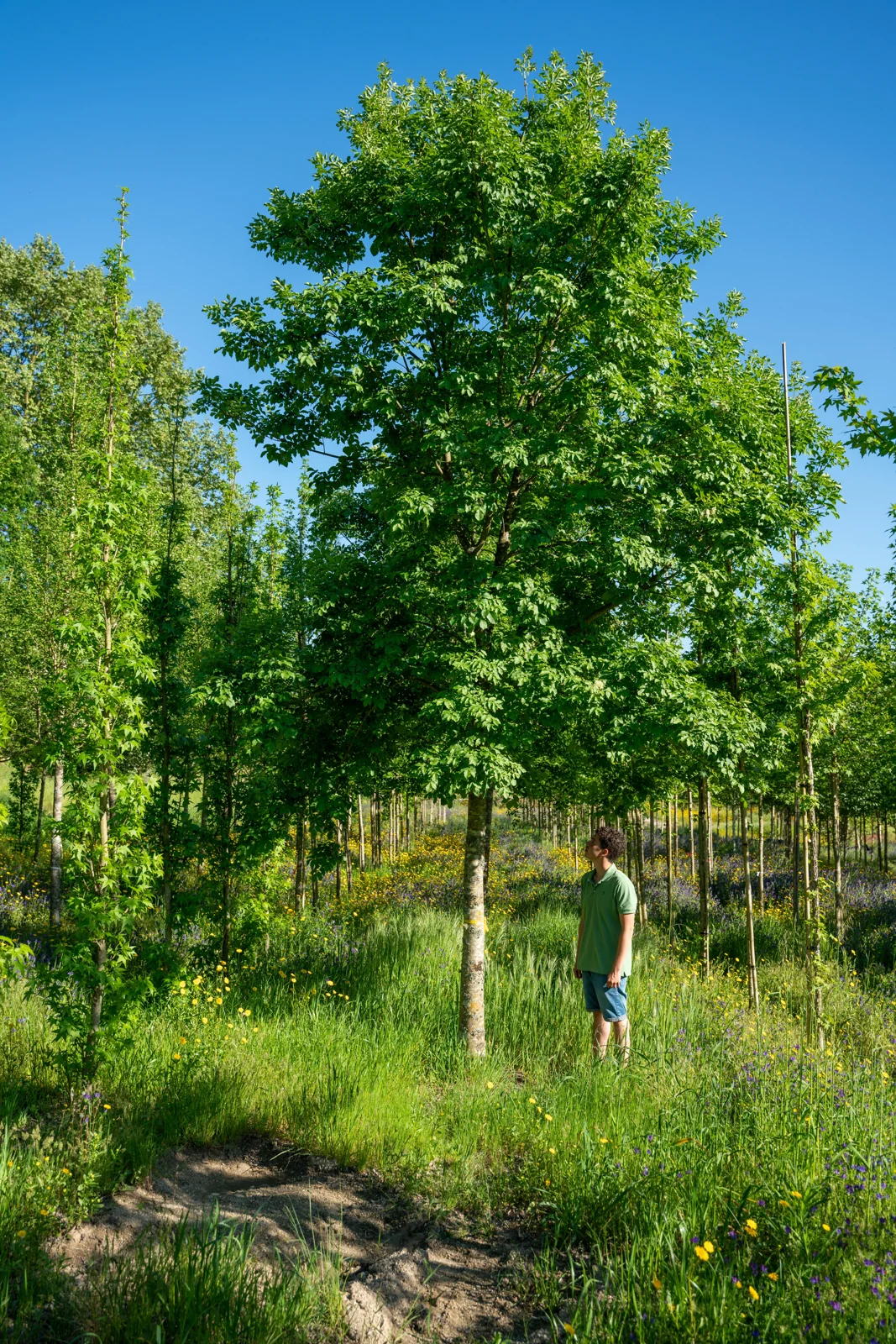
Mid-canopy flowering ash for warm-temperate streets and parks
Manna Ash · Fraxinus ornus
A medium-sized deciduous flowering ash suited to specimen, avenue, and parkland use across warm-temperate and Mediterranean Europe, with reliable performance into the colder reaches of central Europe.
About this Species
Native to southern Europe and Asia Minor, Fraxinus ornus reaches 15 to 25 metres at maturity with a trunk to one metre diameter and a rounded crown. The pinnate leaves carry five to nine leaflets and turn yellow to purplish in autumn. In late May and June, terminal panicles of creamy-white, faintly fragrant flowers open with the new leaves, a trait absent…
Read more
Show less
Native to southern Europe and Asia Minor, Fraxinus ornus reaches 15 to 25 metres at maturity with a trunk to one metre diameter and a rounded crown. The pinnate leaves carry five to nine leaflets and turn yellow to purplish in autumn. In late May and June, terminal panicles of creamy-white, faintly fragrant flowers open with the new leaves, a trait absent from most other Fraxinus in European cultivation.
Hardiness is broad. The species is reliable to about minus 23 °C, with documented performance to colder continental positions when sheltered. This places it comfortably across the Atlantic seaboard, the Po valley, the Pannonian basin, and the southern Baltic; in the Baltics, inland Scandinavia, and other very cold inland positions, plant with shelter and assured drainage. Northern range is effectively southern Scandinavia and the Scottish lowlands; eastern range is comfortable through Poland and Hungary into Romania.
Heat and drought tolerance are the defining cultivation traits. Established trees withstand prolonged summer maxima above 35 °C and rainfall regimes below 500 mm with summer drought, making the species relevant to the urban heat island question now reaching central Europe. Soils may be well-drained loams, chalky substrates, or shallow stony ground; the species is indifferent to lime. Salt tolerance is low, so coastal exposure with onshore wind is not a defensible specification.
Disease and pest resistance are notable in the genus. F. ornus is markedly less susceptible to Hymenoscyphus fraxineus (ash dieback) than F. excelsior, a relevant point as European specifiers seek replacements within the genus. Crown density is moderate, allowing dappled underplanting; the dark grey bark remains smooth into maturity and reads cleanly in winter.



Advice on this species
Want to know more about Fraxinus ornus?
Tell us about your project and we'll advise you on this species — where it thrives, which size makes sense, and what to expect once planted.
- Produção própria
- Exemplares adultos
- Resposta em 1–2 dias
Sem compromisso · orçamento personalizado