

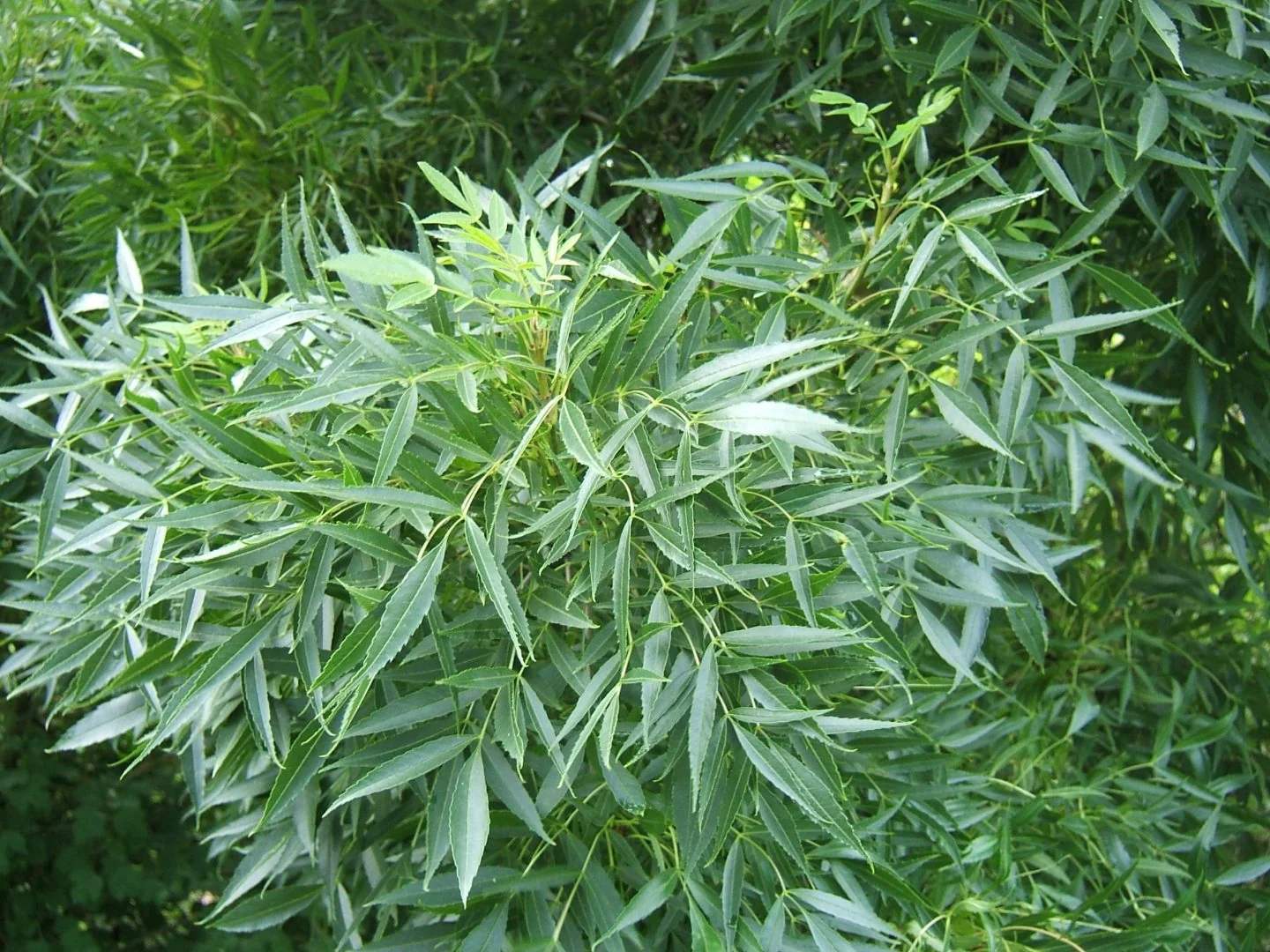
Drought-adapted deciduous canopy for warm-temperate alignments
Narrow-leaved Ash · Fraxinus angustifolia
A fast-growing deciduous canopy tree for warm-temperate and Mediterranean projects across Europe, reaching 15 to 25 m with a rounded, spreading crown suited to avenues, parks, and riparian schemes.
About this Species
The southern European narrow-leaved ash carries a lighter, more linear leaf than Fraxinus excelsior, producing the open dappled shade specifiers reach for when underplanting is part of the brief. Mature crowns settle into a rounded to broadly spreading habit at 15 to 25 m, with eventual spreads of 10 to 15 m, giving it the scale of a full canopy tree…
Read more
Show less
The southern European narrow-leaved ash carries a lighter, more linear leaf than Fraxinus excelsior, producing the open dappled shade specifiers reach for when underplanting is part of the brief. Mature crowns settle into a rounded to broadly spreading habit at 15 to 25 m, with eventual spreads of 10 to 15 m, giving it the scale of a full canopy tree without the heaviness of common ash. Growth is fast in the establishment phase, then moderating, which makes it useful where a project needs visible canopy within a decade.
Climate envelope is the species' working advantage. It is reliably winter-hardy to around minus 23 to minus 26 degrees C (USDA zone 5b at the cold end), and tolerates summer maxima well above 35 degrees C provided the root run has depth. Native distribution from southern Europe into North Africa means the species reads heat and seasonal drought as normal, not as stress. It performs throughout the Atlantic seaboard, the Mediterranean basin, the Pannonian basin and the Po valley, and remains defensible into continental zone 6 sites with reasonable shelter.
The limit to keep in mind is hydrology, not cold. Fraxinus angustifolia is at home in seasonally flooded riparian corridors and on heavy clay where common ash struggles, but rewards moisture access during the first three summers after planting. Once the pivoting root system is in, the tree carries dry summers on stored reserves and resumes growth with autumn rains.
Form and foliage carry the specification load: a domed crown, finely divided pinnate foliage that flushes early, and a reliable warm yellow autumn turn before leaf drop. Bark develops a quiet fissured texture useful for winter structure in deciduous schemes.
Within the European urban canon, position it alongside Quercus robur and Tilia cordata where drought adaptation matters, or as an open-crowned alternative to Platanus acerifolia on sites where canopy weight is undesirable.



Advice on this species
Want to know more about Fraxinus angustifolia?
Tell us about your project and we'll advise you on this species — where it thrives, which size makes sense, and what to expect once planted.
- Produção própria
- Exemplares adultos
- Resposta em 1–2 dias
Sem compromisso · orçamento personalizado