

Weeping specimen tree for cool-temperate parks and estate planting
European Beech ‘Pendula’ · Fagus sylvatica ‘Pendula’
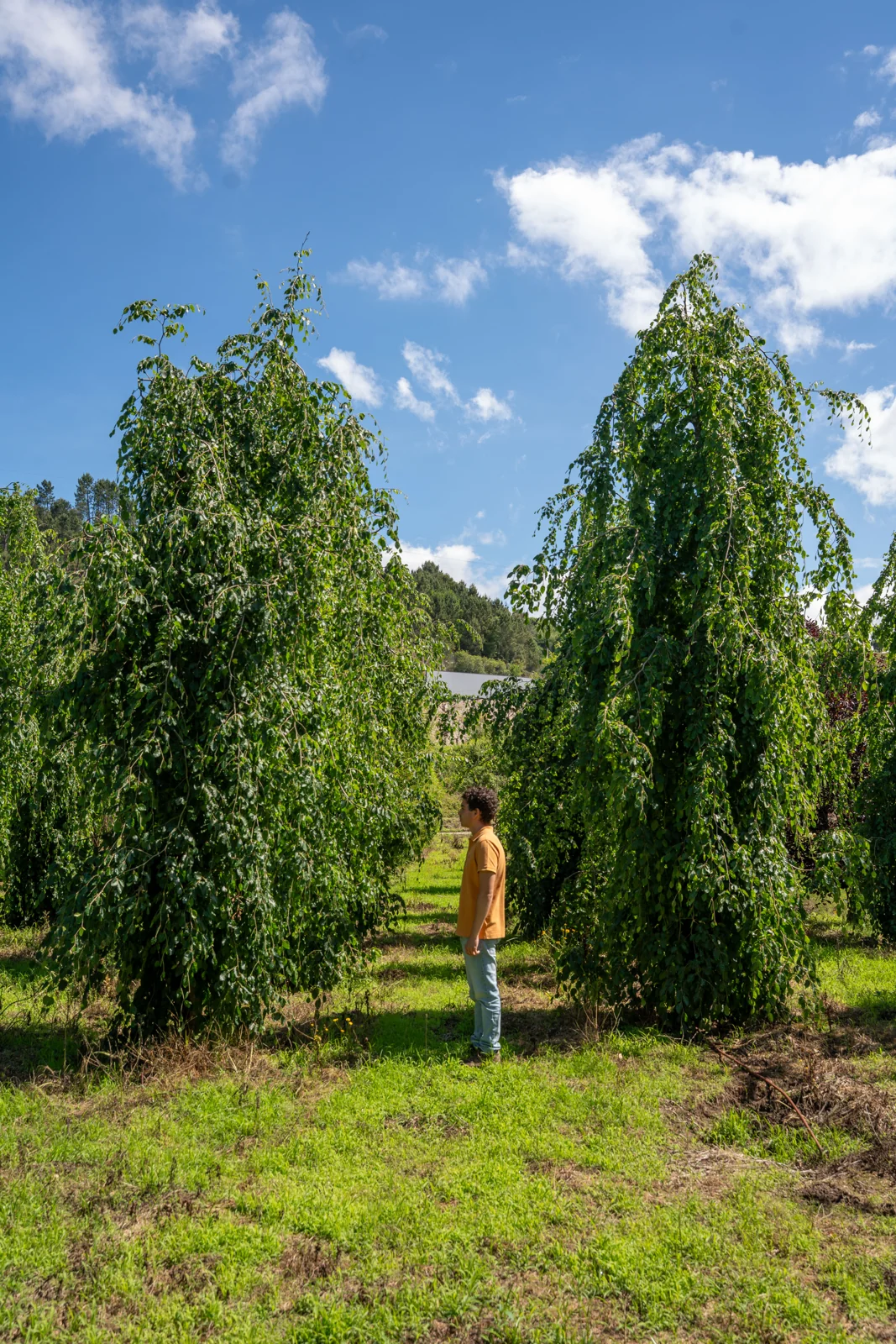
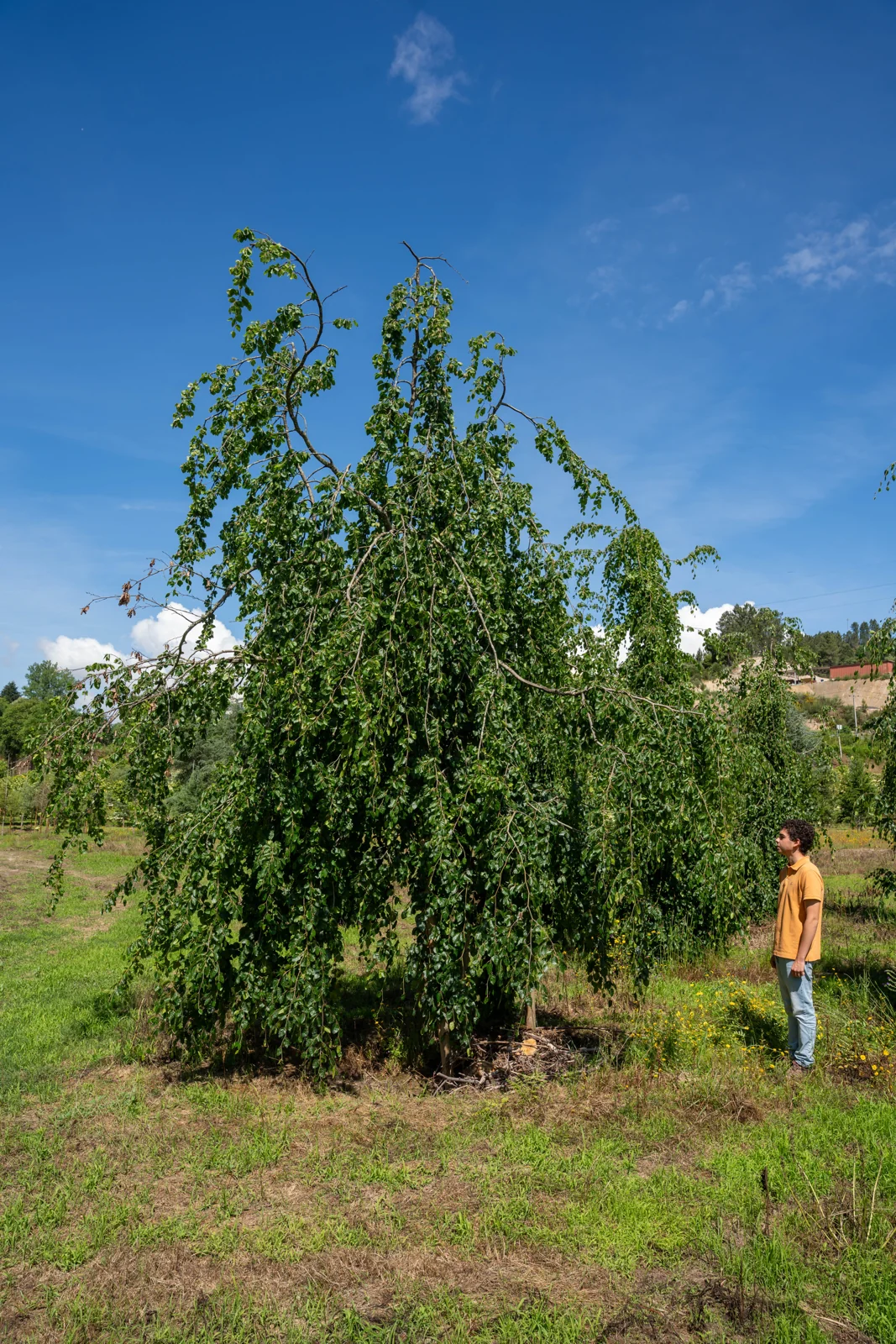
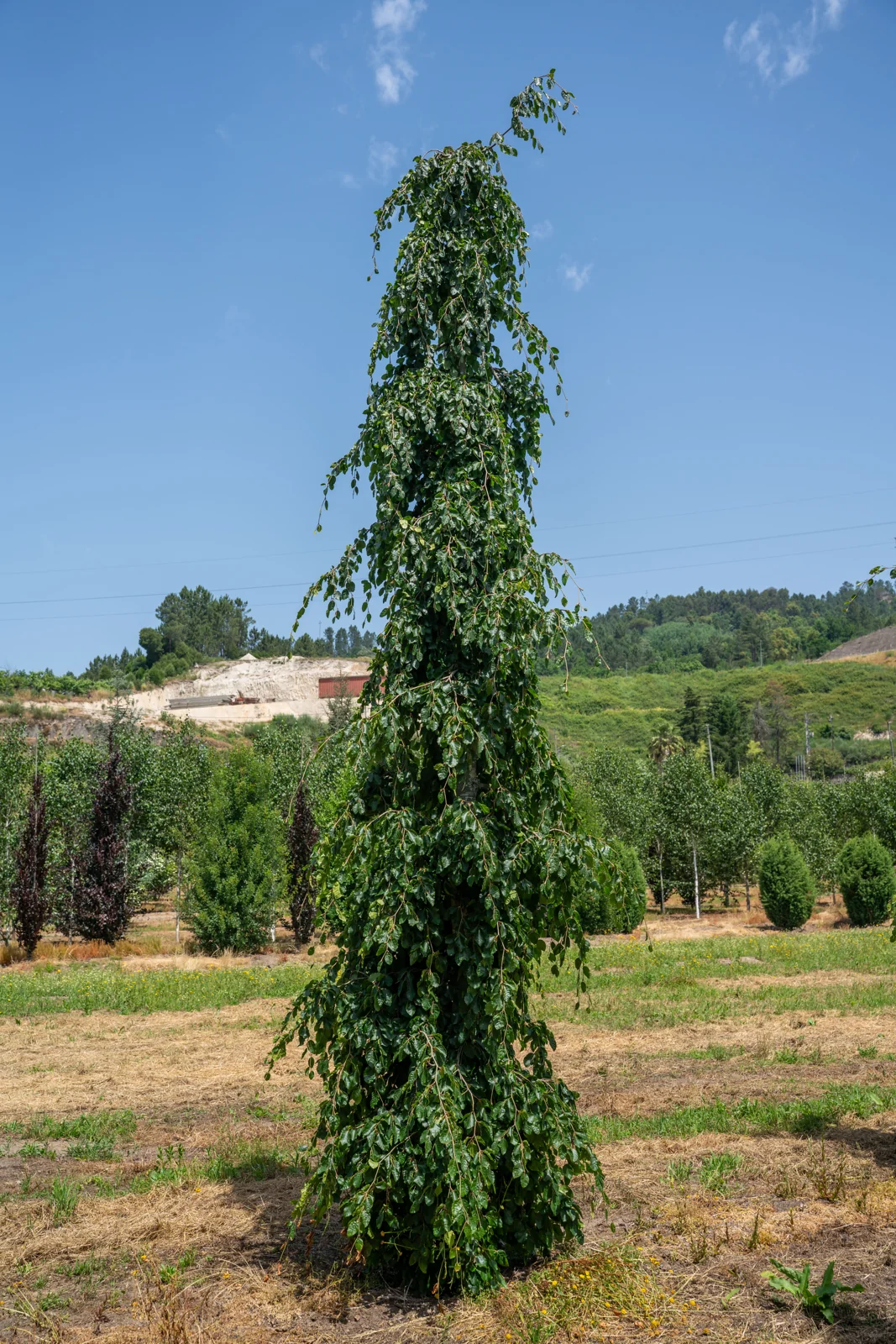
A pendulous cultivar of European beech selected for its sculptural form: arched, descending branches over a dense, broad crown. Reserved for solitary placement in cool-temperate climates with reliable summer moisture and deep, well-drained soils.
Key Facts
About this Cultivar
Mature trees reach roughly 15 to 20 metres in height with a crown spreading 15 to 25 metres, depending on early training and available room. The habit is unmistakable: long primary limbs arch outward and sweep downward, the leader often guided into a dominant axis so the canopy reads as a tiered, draping dome. Foliage is ovate, glossy dark green through…
Read more
Show less
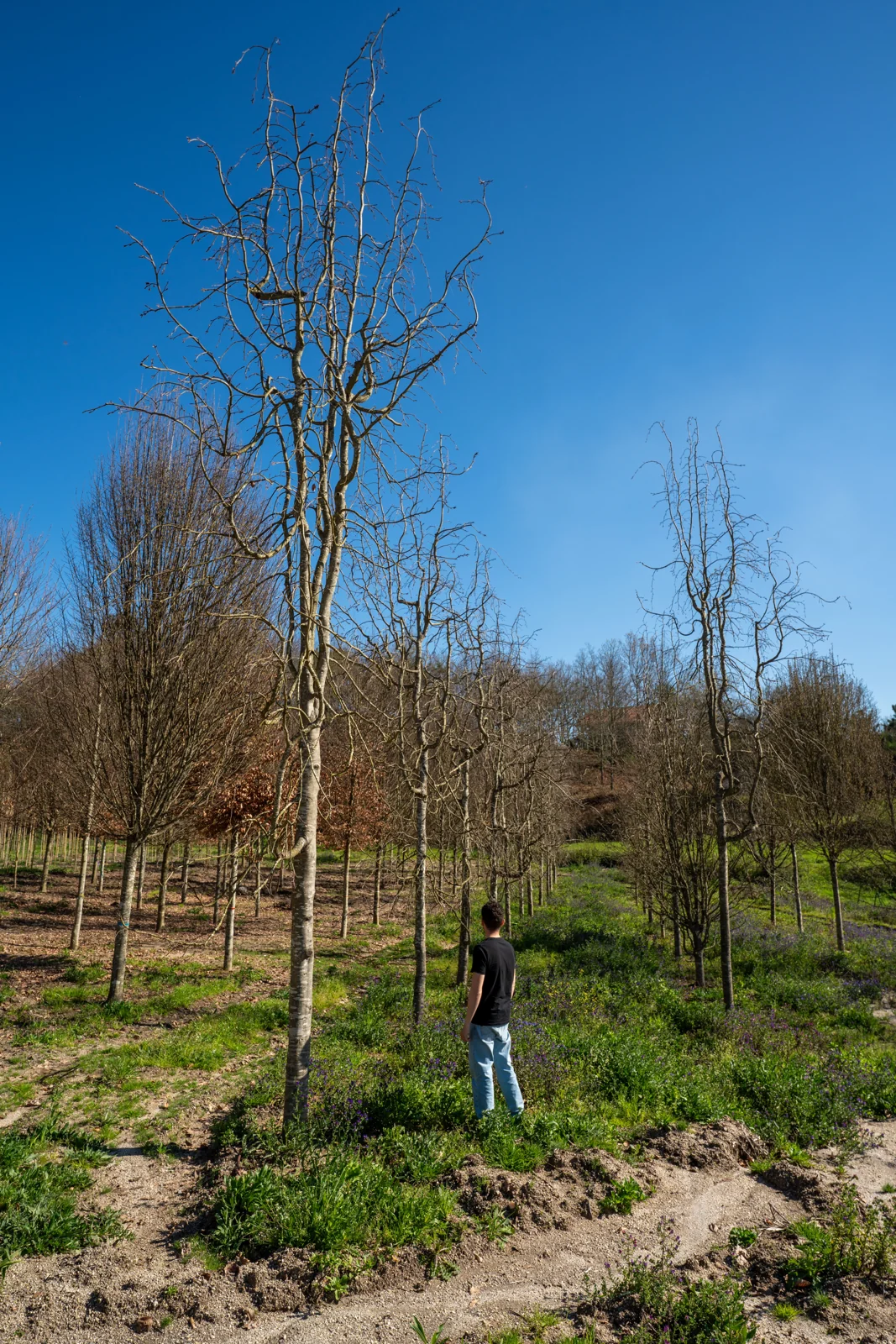
Mature trees reach roughly 15 to 20 metres in height with a crown spreading 15 to 25 metres, depending on early training and available room. The habit is unmistakable: long primary limbs arch outward and sweep downward, the leader often guided into a dominant axis so the canopy reads as a tiered, draping dome. Foliage is ovate, glossy dark green through summer, turning bronze and gold in autumn; bark remains smooth and pale grey, retaining the structural value of the parent species in winter silhouette.
Climate envelope follows Fagus sylvatica closely. The species is reliably winter-hardy across USDA zones 5 to 7 (absolute minima of roughly minus 23 °C to minus 15 °C), with structural hardiness extending into zone 4 in continental positions; the limiting factor in European cultivation is rarely cold but summer stress. Beech is drought-sensitive: prolonged summer heat above 35 °C combined with soil moisture deficit causes crown thinning and, in older specimens, sudden decline. The 1976 drought killed mature trees across southern England, and similar losses have been recorded in central Europe during recent extreme summers.
Reliable performance sits across cool-temperate central and western Europe, from the Atlantic seaboard through the Low Countries, the Po valley foothills, the Pannonian basin where annual rainfall is adequate, and into southern Scandinavia. The species reaches its eastern native limit near the Crimea and its northern limit in southern Sweden and south-east Norway, which broadly maps the practical specification envelope. Avoid exposed continental sites with hot, dry summers below 500 mm annual rainfall, shallow chalk over thin soil, and waterlogged ground.
The site requirement is specific: deep, fertile, well-drained loam, consistent summer soil moisture, and full sun to light shade. Allow a minimum 15-metre clear radius for mature crown development; underplanting is constrained by dense shade and surface rooting. As a solitary specimen in parkland, large private estates, arboreta, and the open lawns of public gardens, the form does load-bearing work that the type species cannot.
Advice on this species
Want to know more about Fagus sylvatica 'Pendula'?
Tell us about your project and we'll advise you on this species — where it thrives, which size makes sense, and what to expect once planted.
- Produção própria
- Exemplares adultos
- Resposta em 1–2 dias
Sem compromisso · orçamento personalizado