

Mediterranean small-stature flowering specimen, hardy to about minus 15 °C
Judas Tree · Cercis siliquastrum
A small-stature Mediterranean flowering tree for plazas, courtyards, and tight tree pits across the warm-temperate band of Europe, where its early spring blossom on bare wood and rounded multi-stem habit carry the design.
About this Species
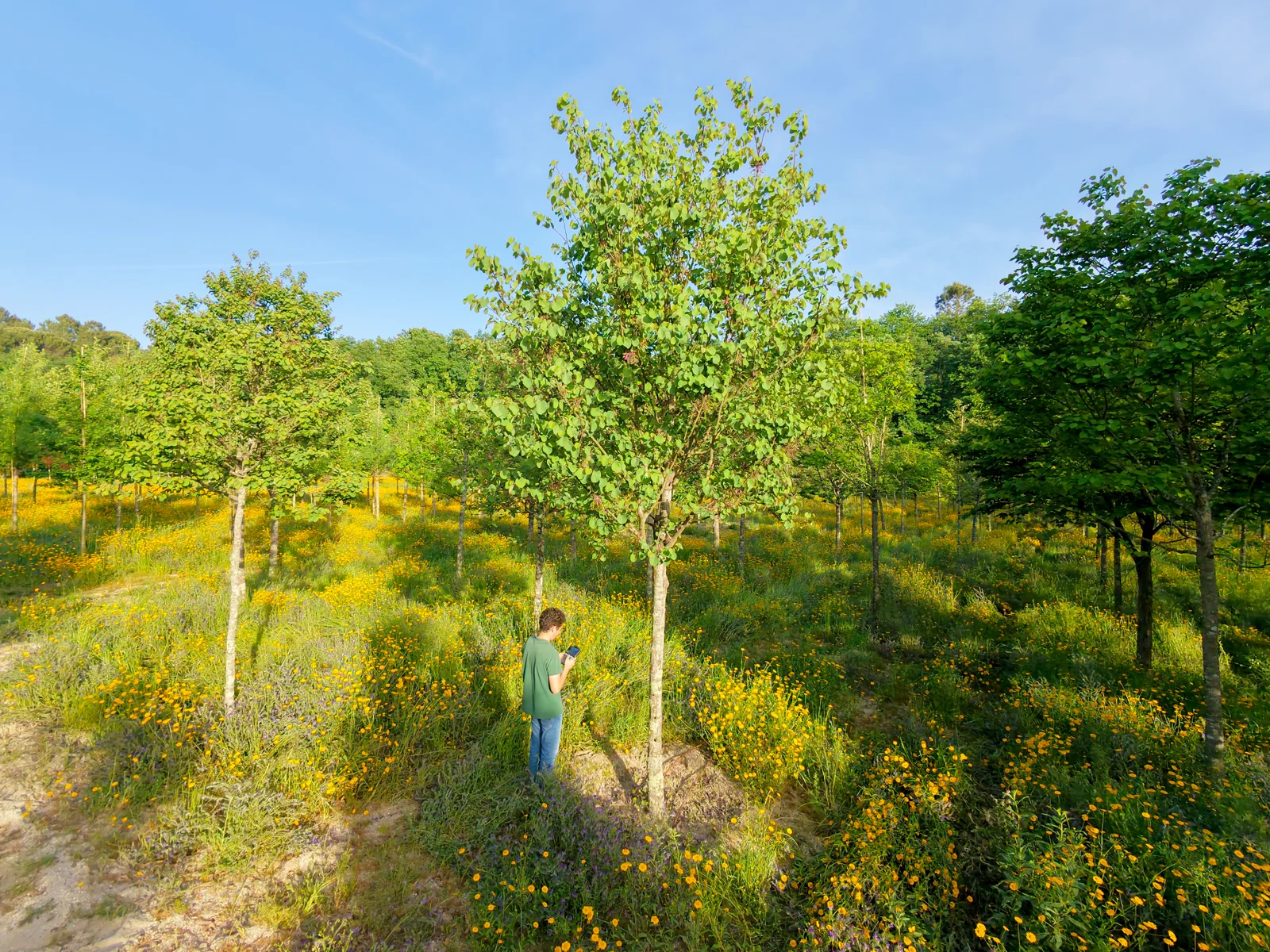
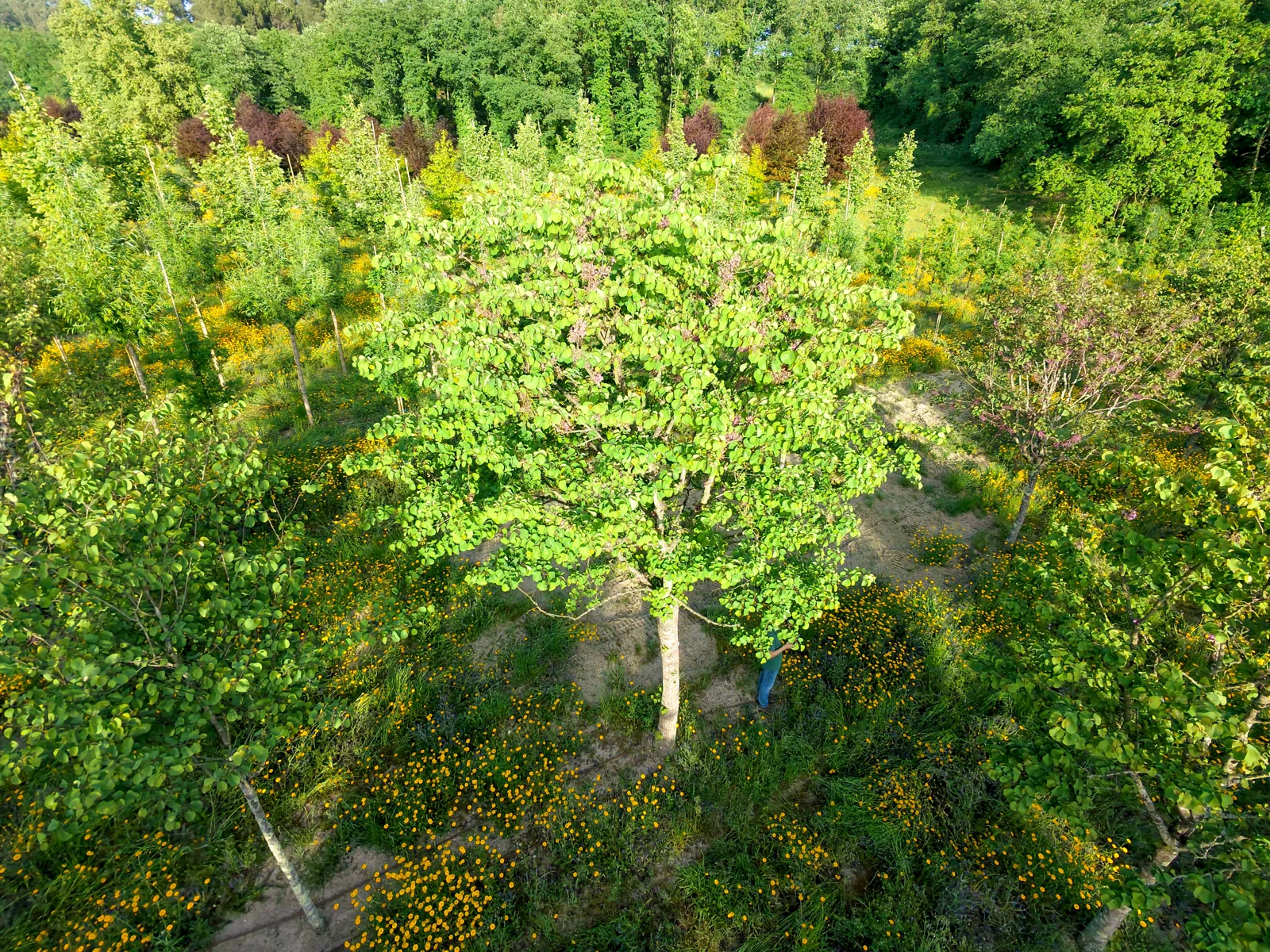
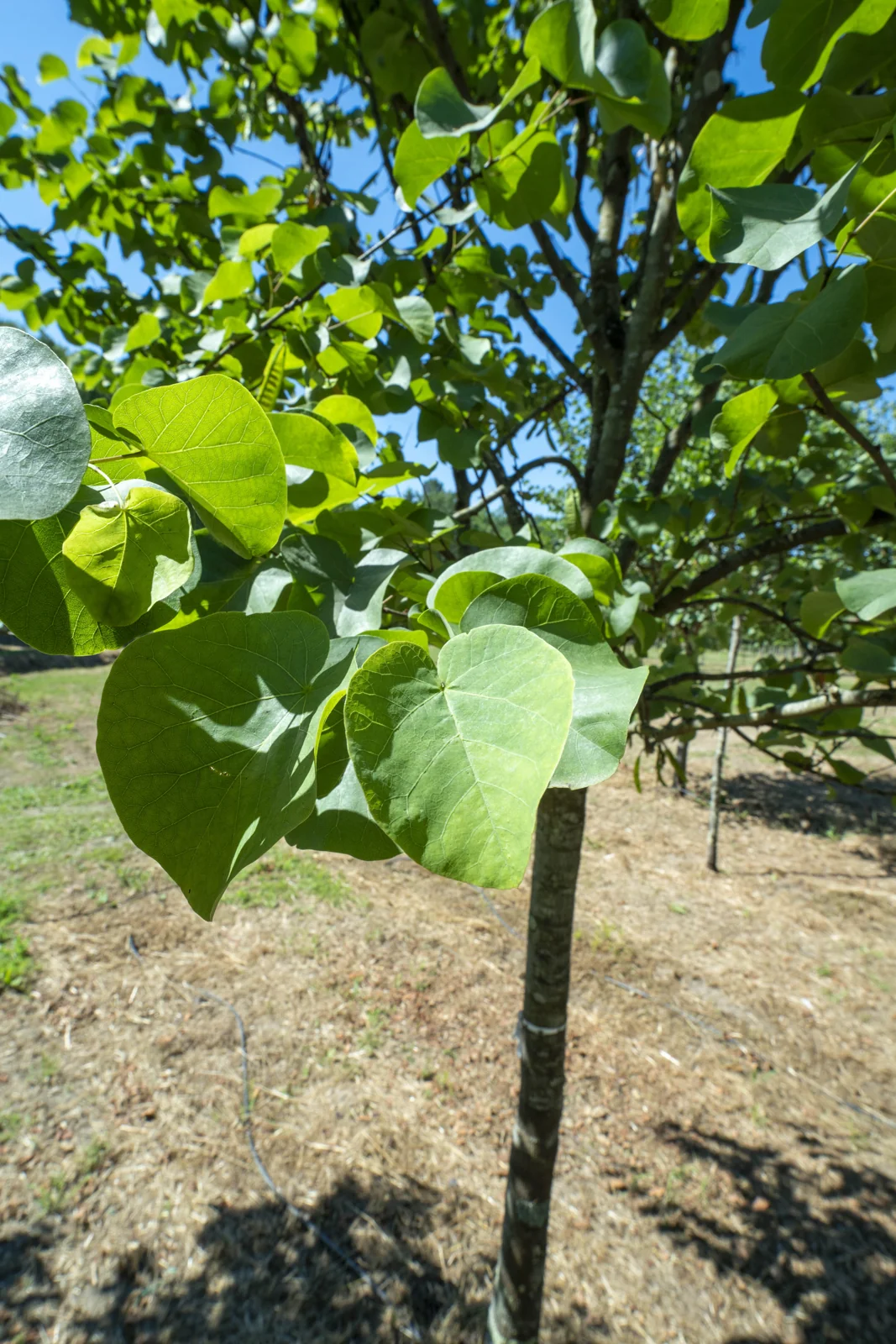
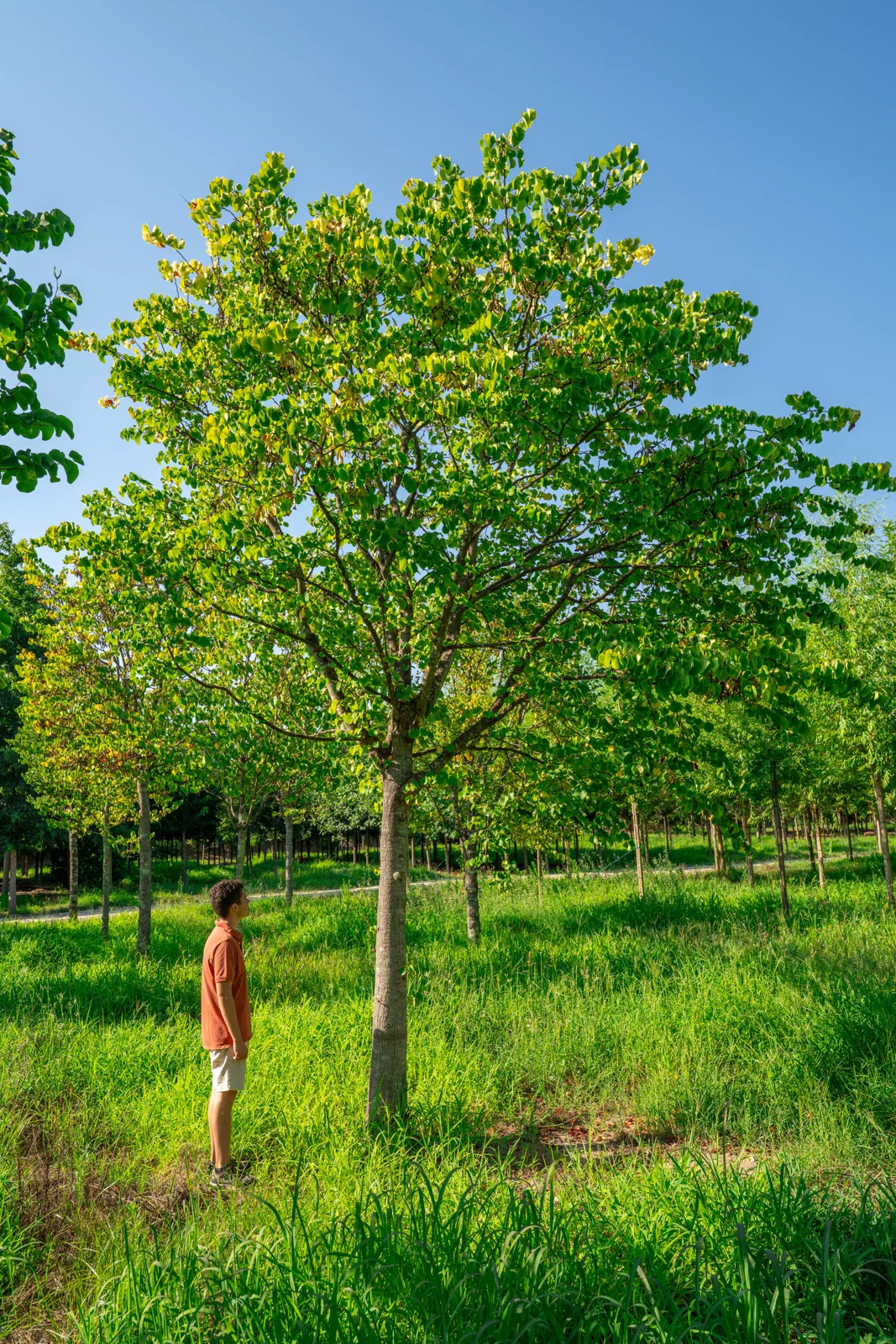
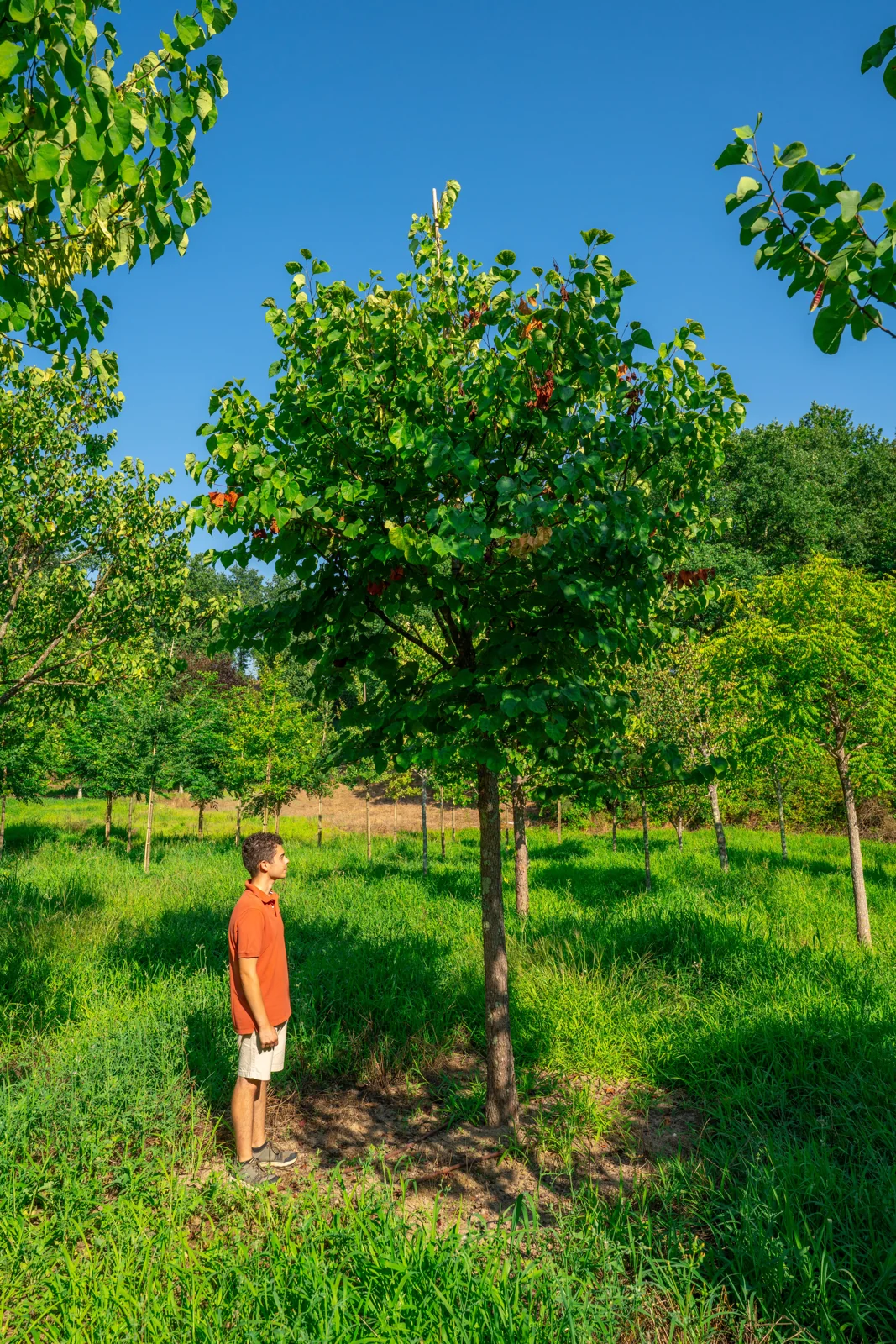
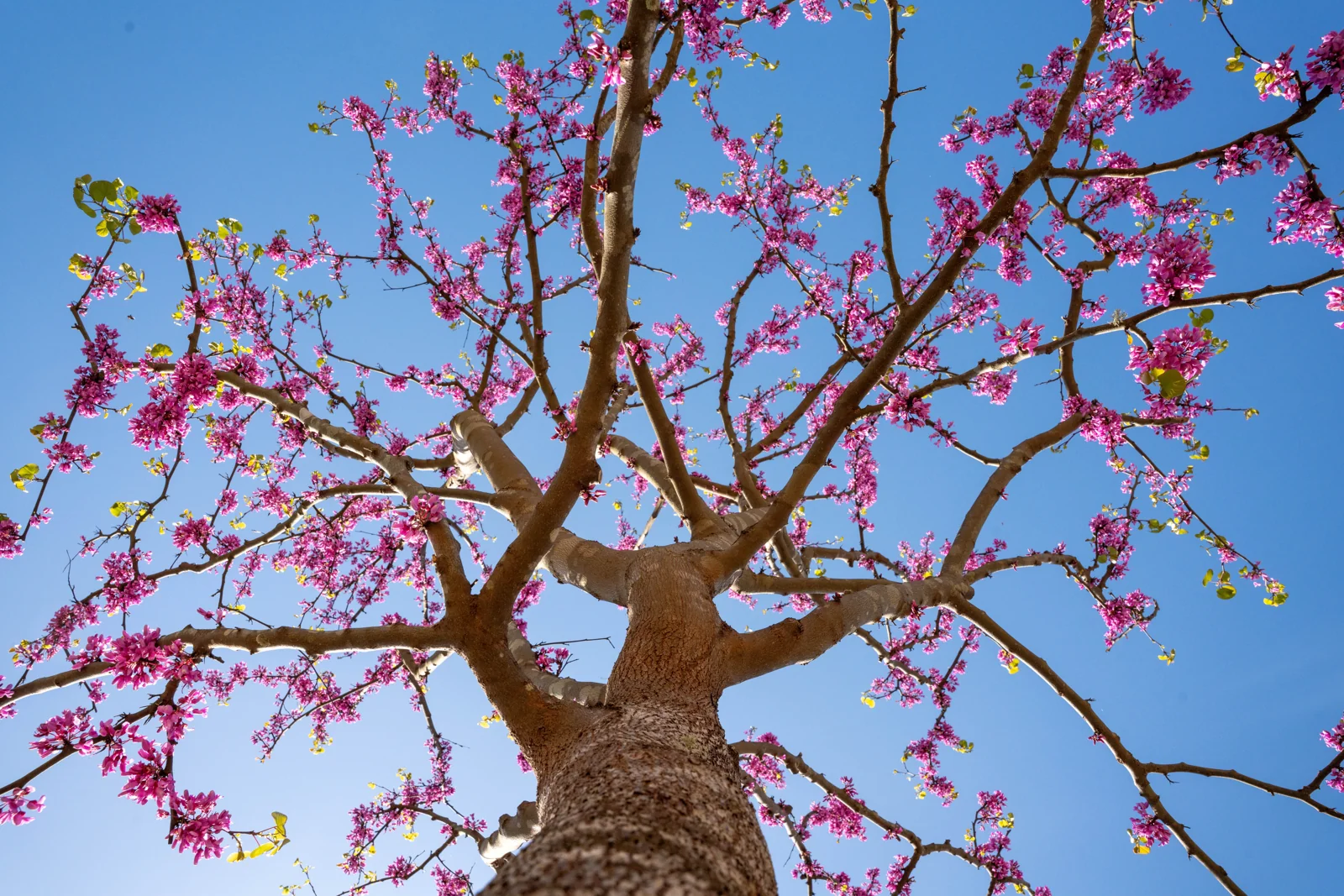
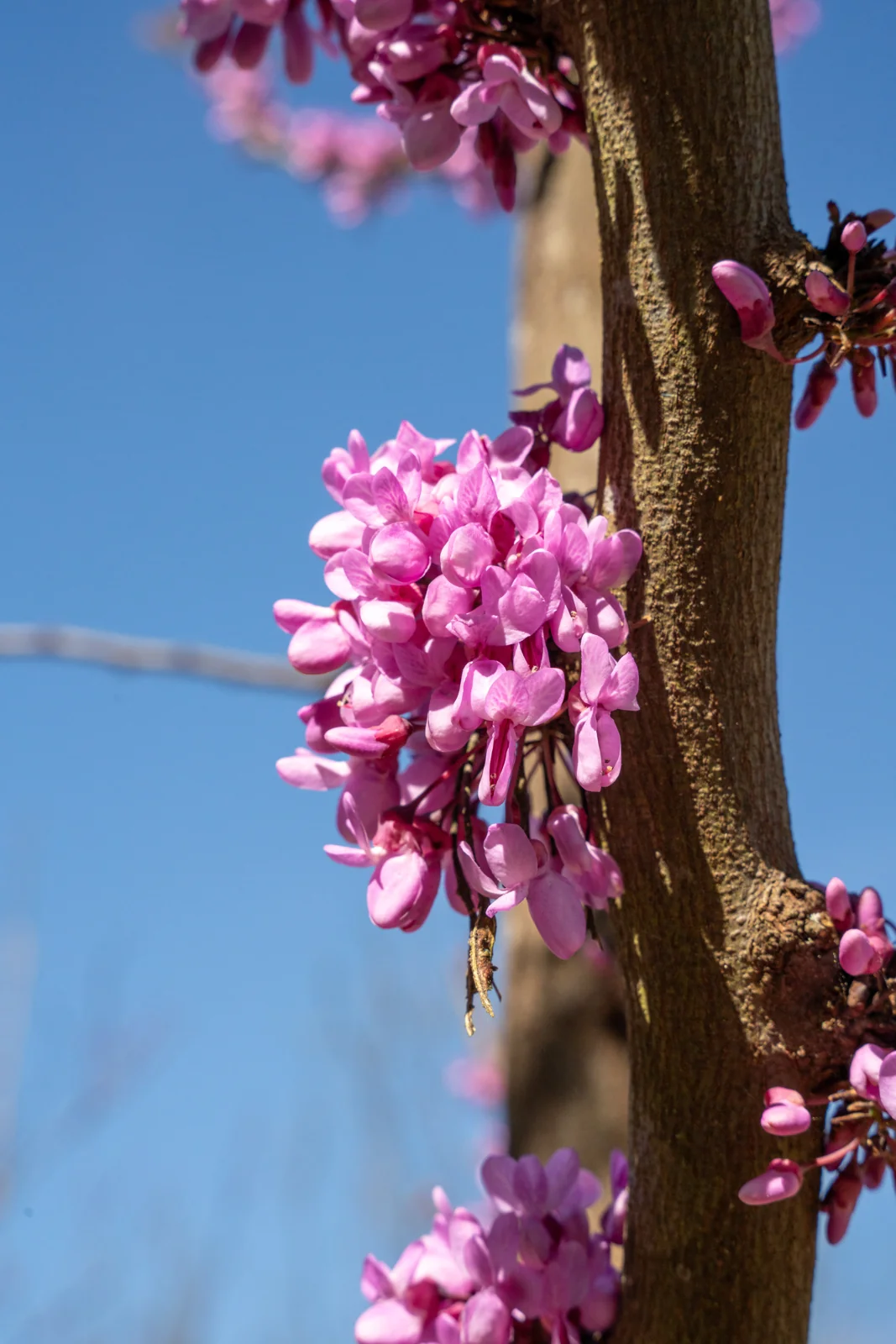
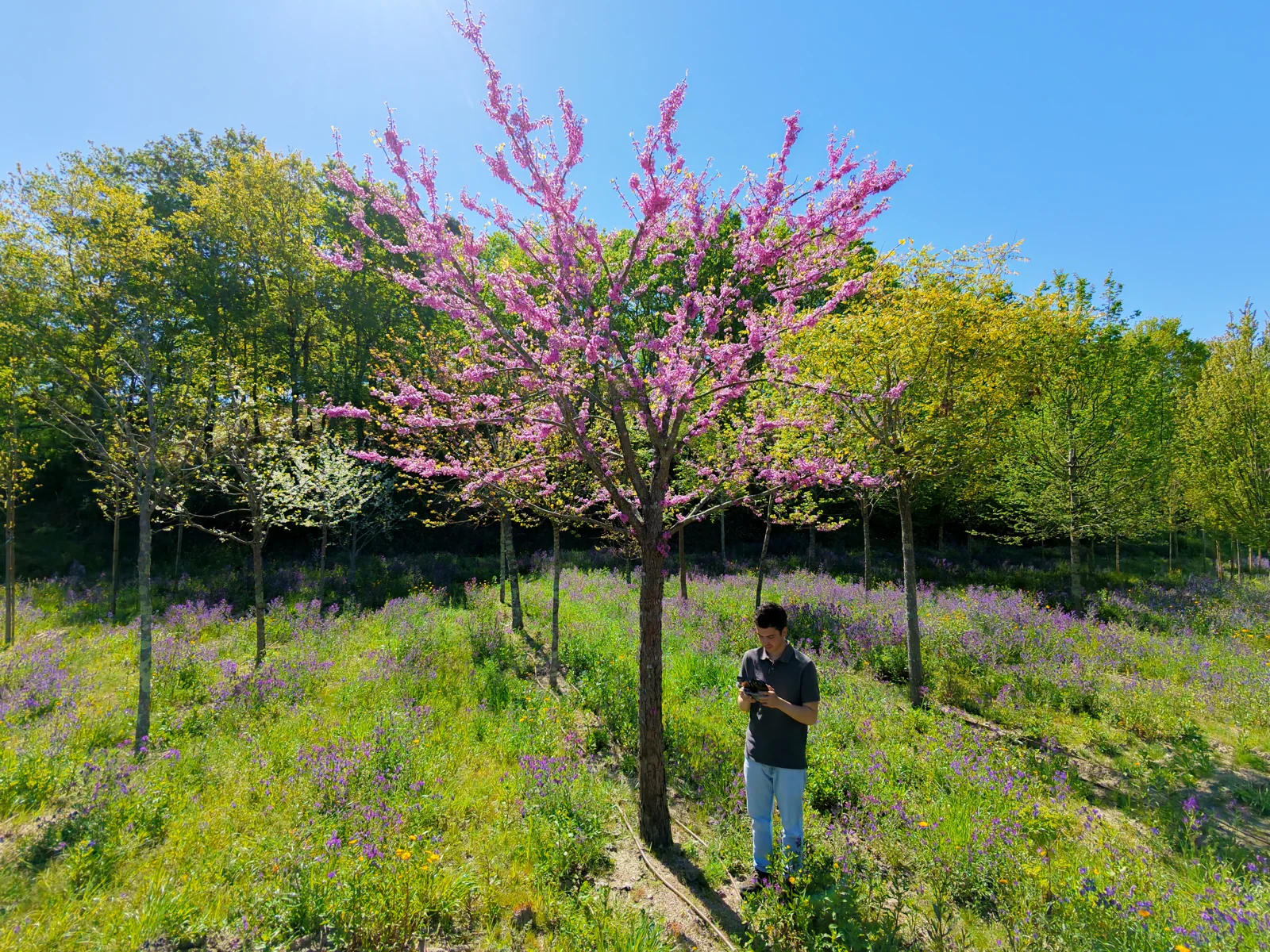
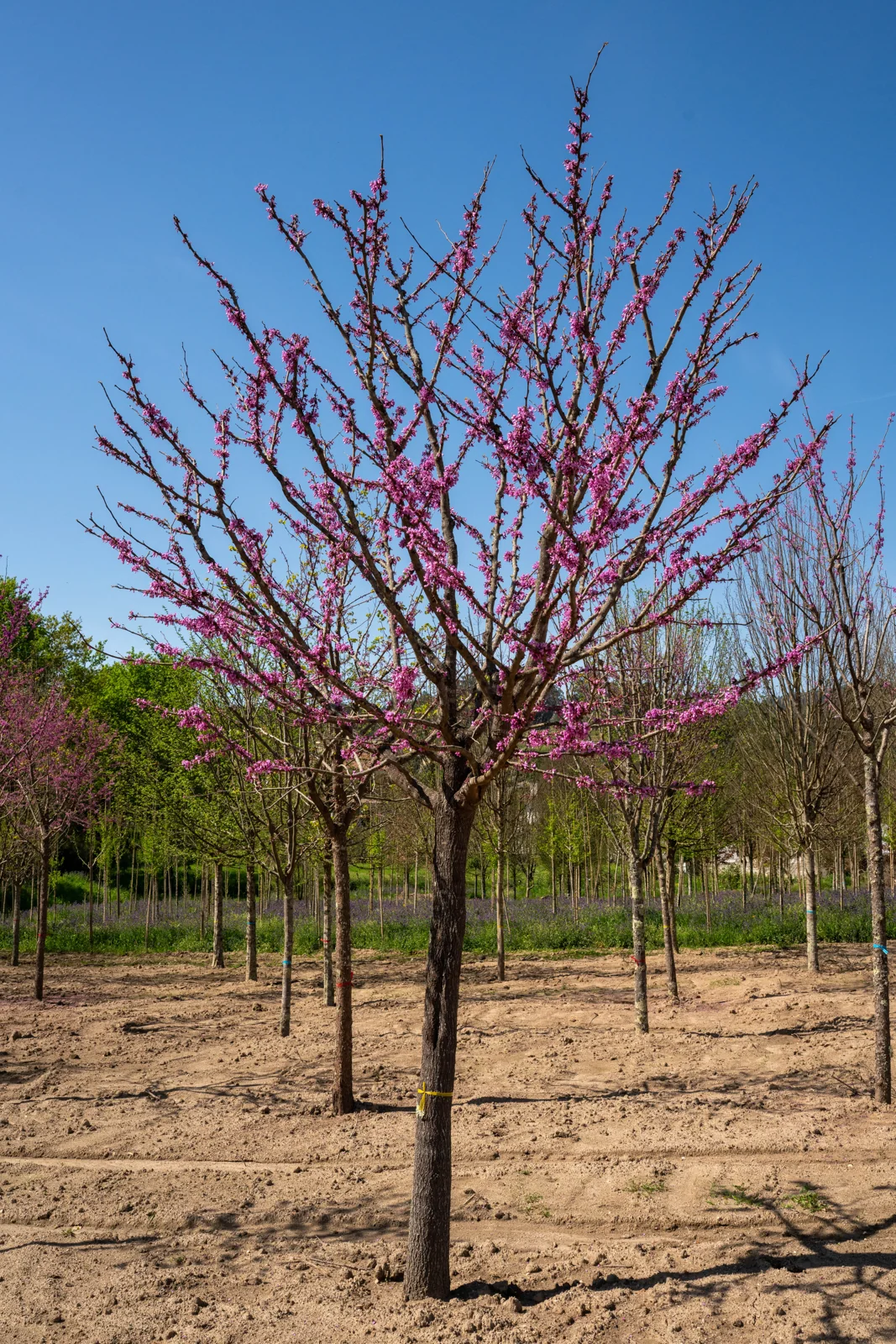
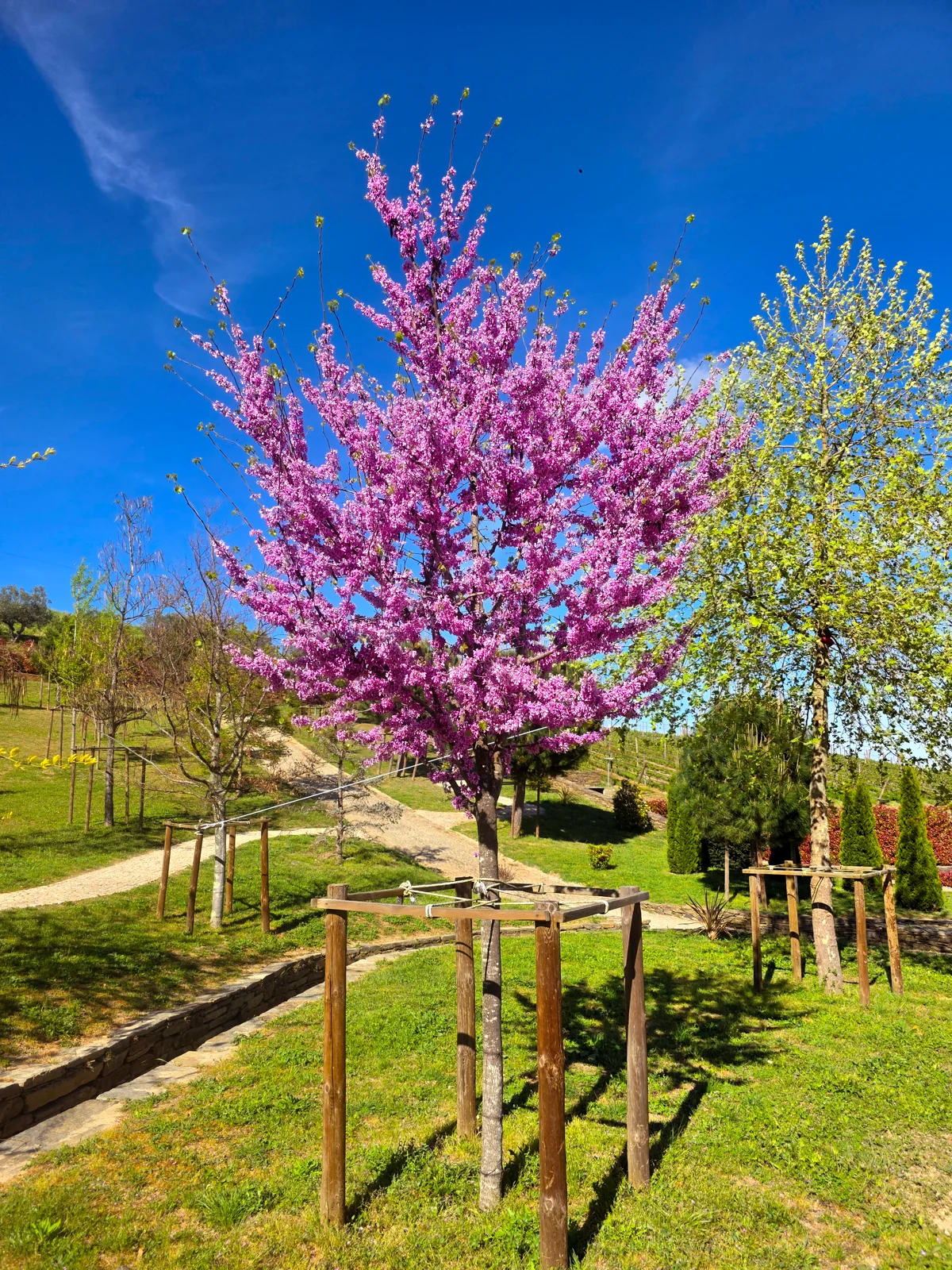
Cercis siliquastrum reaches roughly 8 to 12 m in height and equivalent spread, typically as a multi-stem with a rounded crown, occasionally trained to a single trunk. Pea-shaped rose-purple flowers cluster directly on year-old wood and the trunk itself in April and May, before the cordate leaves emerge bronze-red and mature to deep green. Flat purple seed…
Read more
Show less
Cercis siliquastrum reaches roughly 8 to 12 m in height and equivalent spread, typically as a multi-stem with a rounded crown, occasionally trained to a single trunk. Pea-shaped rose-purple flowers cluster directly on year-old wood and the trunk itself in April and May, before the cordate leaves emerge bronze-red and mature to deep green. Flat purple seed pods follow in late summer and persist into winter, holding structural interest after the bronze-yellow autumn colour drops.
Native to a band running from southern France and Italy through the Balkans into western Asia, the species is reliably hardy to about minus 15 °C (USDA zone 7b). Reliable specifying ground is zone 8 and warmer across the Mediterranean and Atlantic warm-temperate seaboard, from coastal Portugal and Spain through southern France to the Po valley, the Aegean and the Adriatic. In sheltered zone 7b sites along coastal Netherlands, southern England, Brittany, and the Pannonian basin it performs adequately; east of a line through Berlin or north of Edinburgh it is not a defensible specification without significant winter protection.
It tolerates prolonged summer maxima above 35 °C without canopy damage when root depth is established, and accepts annual rainfall down to around 500 mm with summer drought once mature. Drainage is the operative constraint: deep, well-drained loams, chalks, and stony soils suit it, while wet or compacted ground reliably triggers verticillium and canker. Full sun produces the densest flowering; partial shade is tolerated. Salt-laden coastal wind is poorly tolerated and continental drying winds at altitude shorten its life.
As a specimen, it occupies the small-stature flowering niche that Platanus, Tilia, Quercus robur, and Sophora japonica cannot fill; closer to the design role of an ornamental Prunus or Magnolia, but with a longer ornamental phase carried by bark, pods, and autumn colour, and with markedly better drought adaptation. The species resents disturbance to its raízes once established and is best installed young, then left in place. Maintenance is low: pruning is limited to clearing dead wood and shaping the multi-stem head in the first decade.



Advice on this species
Want to know more about Cercis siliquastrum?
Tell us about your project and we'll advise you on this species — where it thrives, which size makes sense, and what to expect once planted.
- Produção própria
- Exemplares adultos
- Resposta em 1–2 dias
Sem compromisso · orçamento personalizado