

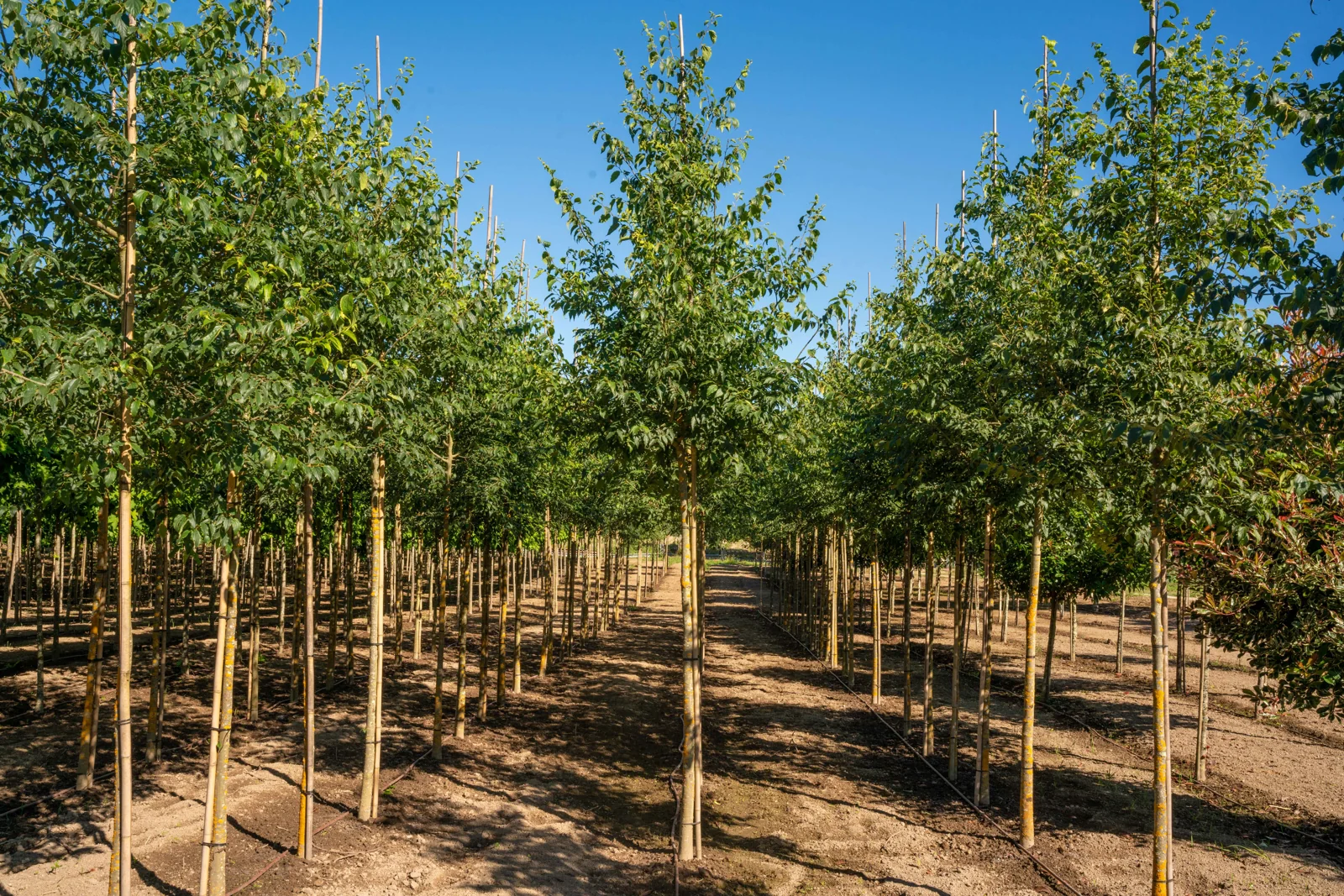
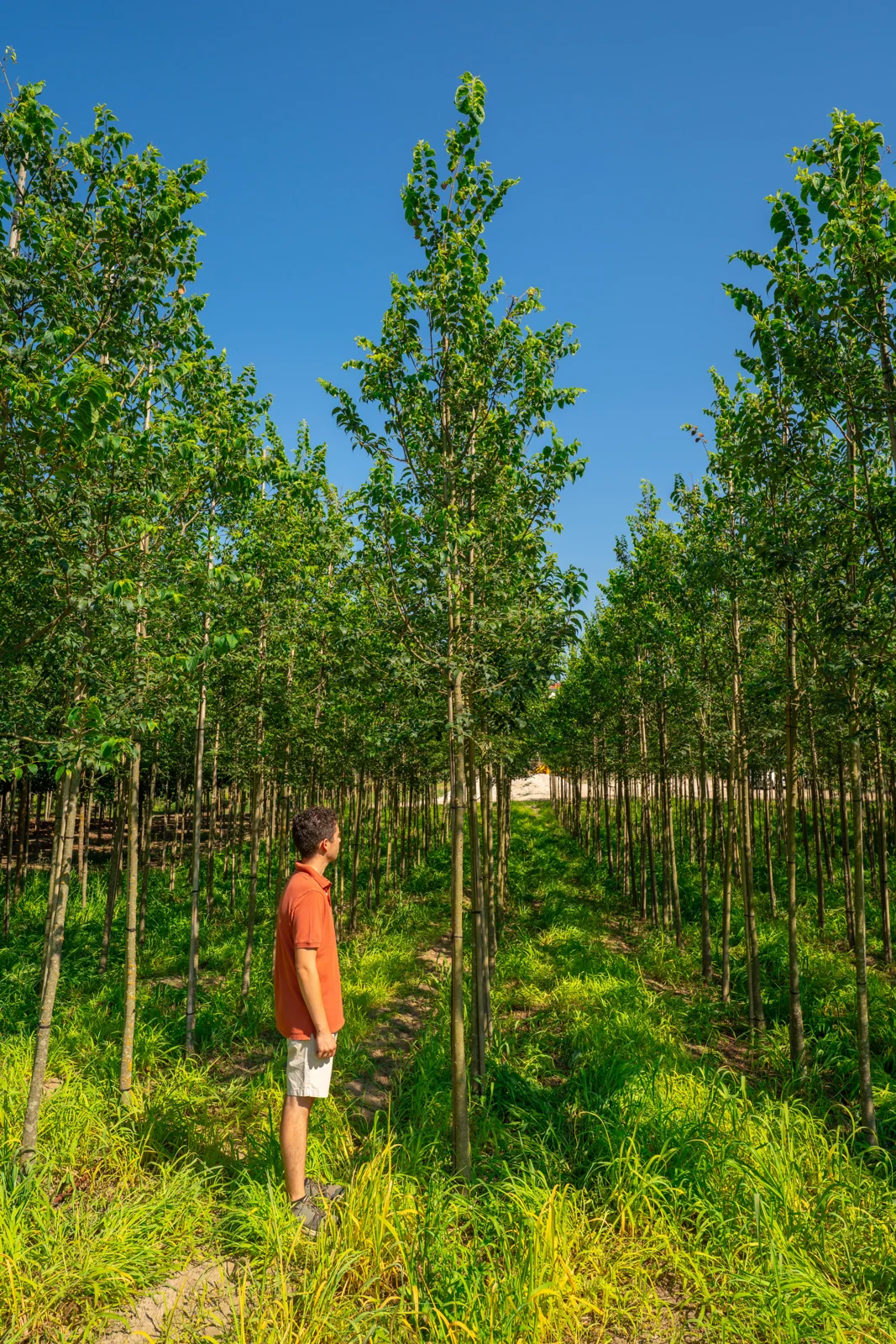
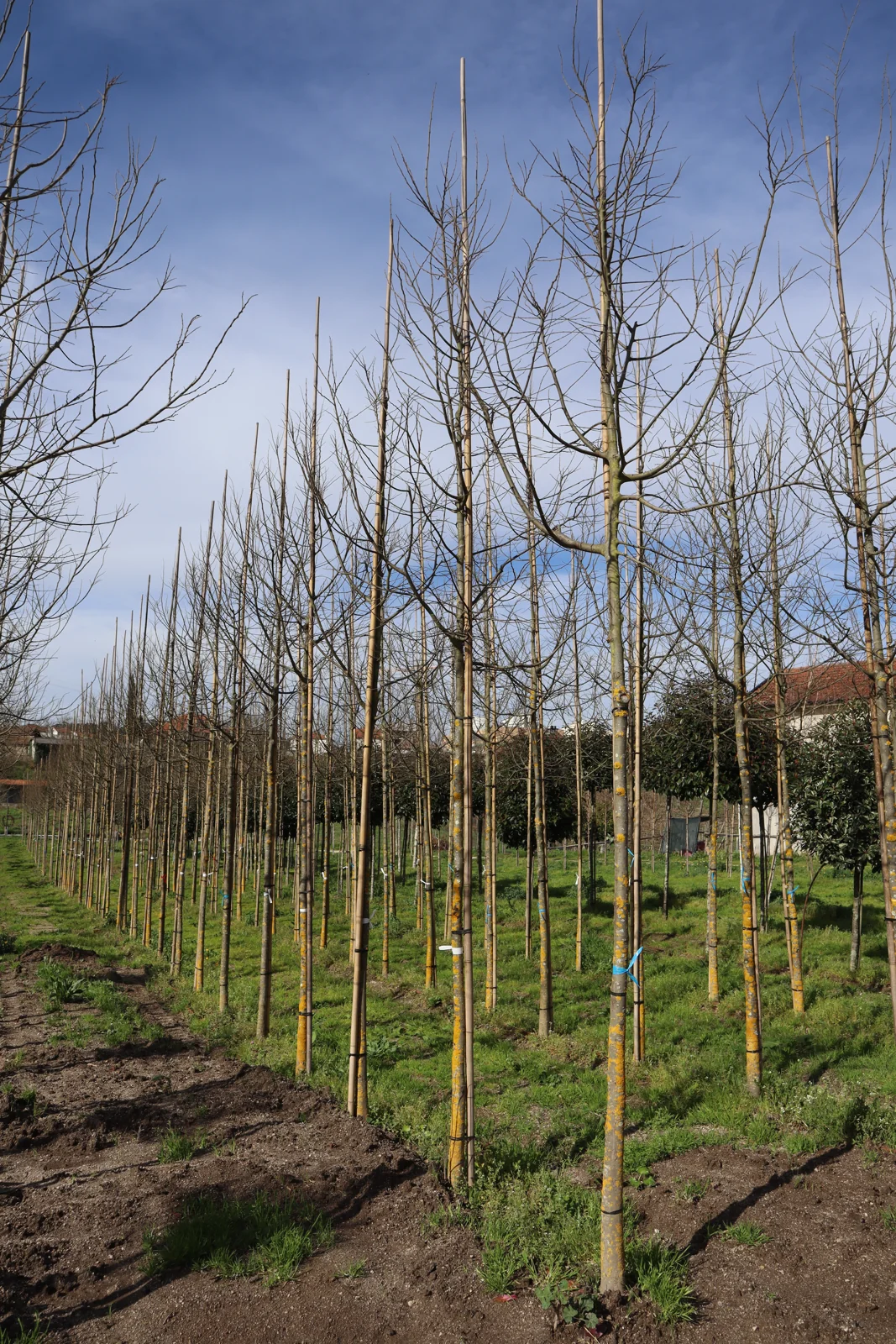
Drought-adapted Mediterranean shade tree for warm-temperate urban schemes
European Nettle Tree · Celtis australis
A deciduous Mediterranean broadleaf used in southern and warm-temperate European schemes as a durable shade and avenue tree, dependable through hot dry summers and tolerant of constrained urban rooting volumes.
About this Species
Native to the Mediterranean basin, North Africa, and Asia Minor, Celtis australis reaches 15 to 25 metres at maturity with a rounded, evenly spreading crown and smooth grey bark that retains a beech-like quality on mature trunks. The canopy is medium-dense, casting filtered rather than heavy shade, which keeps understorey planting feasible beneath avenue…
Read more
Show less
Native to the Mediterranean basin, North Africa, and Asia Minor, Celtis australis reaches 15 to 25 metres at maturity with a rounded, evenly spreading crown and smooth grey bark that retains a beech-like quality on mature trunks. The canopy is medium-dense, casting filtered rather than heavy shade, which keeps understorey planting feasible beneath avenue lines and within paved squares.
Its climate envelope is warm-temperate. Reliably winter-hardy to about minus 15 °C, with annual setback in unsheltered positions where winter minima run colder, a behaviour documented in cool maritime trials in southern England since the nineteenth century. Reliable performance therefore covers the Mediterranean basin, the Po valley, the Atlantic seaboard from northern Iberia to coastal Brittany, and the warmer pockets of the Pannonian basin. North of a line through the southern Netherlands and east of a line through Vienna it should be specified only on sheltered urban sites with assured drainage, and it is not a defensible specification for the Baltic, continental Poland, or Scandinavia outside microclimates.
Summer performance is the species' strength. Mature specimens tolerate sustained maxima above 35 °C, dry continental summers below 500 mm annual rainfall, and the radiated heat load of paved squares. Root architecture is deep and exploratory on well-drained loamy, sandy, or chalky substrates, which underpins its long-standing use as a small to medium street tree in Italian and Dalmatian urban contexts. Salt tolerance is moderate rather than high, sufficient for inland urban use but short of front-line coastal exposure.
Form and seasonal interest support specification in public realm. Foliage is matt mid-green through the season, turning a clean pale yellow before leaf drop in autumn, and the small dark drupes are taken readily by urban bird populations. The wood is notably tough and the species long-lived, with documented specimens exceeding four centuries in southern France; combined with proven tolerance of air pollution, this positions Celtis australis as a credible diversification option alongside the established European urban canon of Platanus x acerifolia, Tilia and Gleditsia triacanthos in climates where heat and drought are the binding constraints rather than winter minima.



Advice on this species
Want to know more about Celtis australis?
Tell us about your project and we'll advise you on this species — where it thrives, which size makes sense, and what to expect once planted.
- Produção própria
- Exemplares adultos
- Resposta em 1–2 dias
Sem compromisso · orçamento personalizado