

Cold-hardy true cedar for parkland specification
Cedar of Lebanon · Cedrus libani
The most cold-tolerant of the true cedars, reliably winter-hardy across much of temperate Europe and best specified where its eventual scale, slow build, and deep, free-draining soils can be accommodated.
About this Species
The species is reliably winter-hardy to approximately minus 23 °C (USDA zone 6a), with documented performance in sheltered zone 5b sites and a comfortable range extending through zones 7 and 8. It is the most cold-tolerant of the genus Cedrus, drawn from the mountains of Lebanon, Syria, and southern Turkey, where it grows at altitudes that produce hard…
Read more
Show less
The species is reliably winter-hardy to approximately minus 23 °C (USDA zone 6a), with documented performance in sheltered zone 5b sites and a comfortable range extending through zones 7 and 8. It is the most cold-tolerant of the genus Cedrus, drawn from the mountains of Lebanon, Syria, and southern Turkey, where it grows at altitudes that produce hard winters and dry, radiant summers. Summer maxima above 35 °C are tolerated without stress once the root system has reached depth, provided drainage is unimpeded.
Reliable performance extends across Atlantic and continental Europe from coastal Iberia through France, Benelux, southern England and Ireland, and into the warmer parts of Germany, Poland, and the Pannonian basin. Continental sites in zone 5 and colder, and exposed positions north of southern Scandinavia, are at the margin and require shelter from desiccating winter winds. Waterlogged or heavy, poorly drained ground is not workable at any latitude; the species declines quickly on saturated soils.
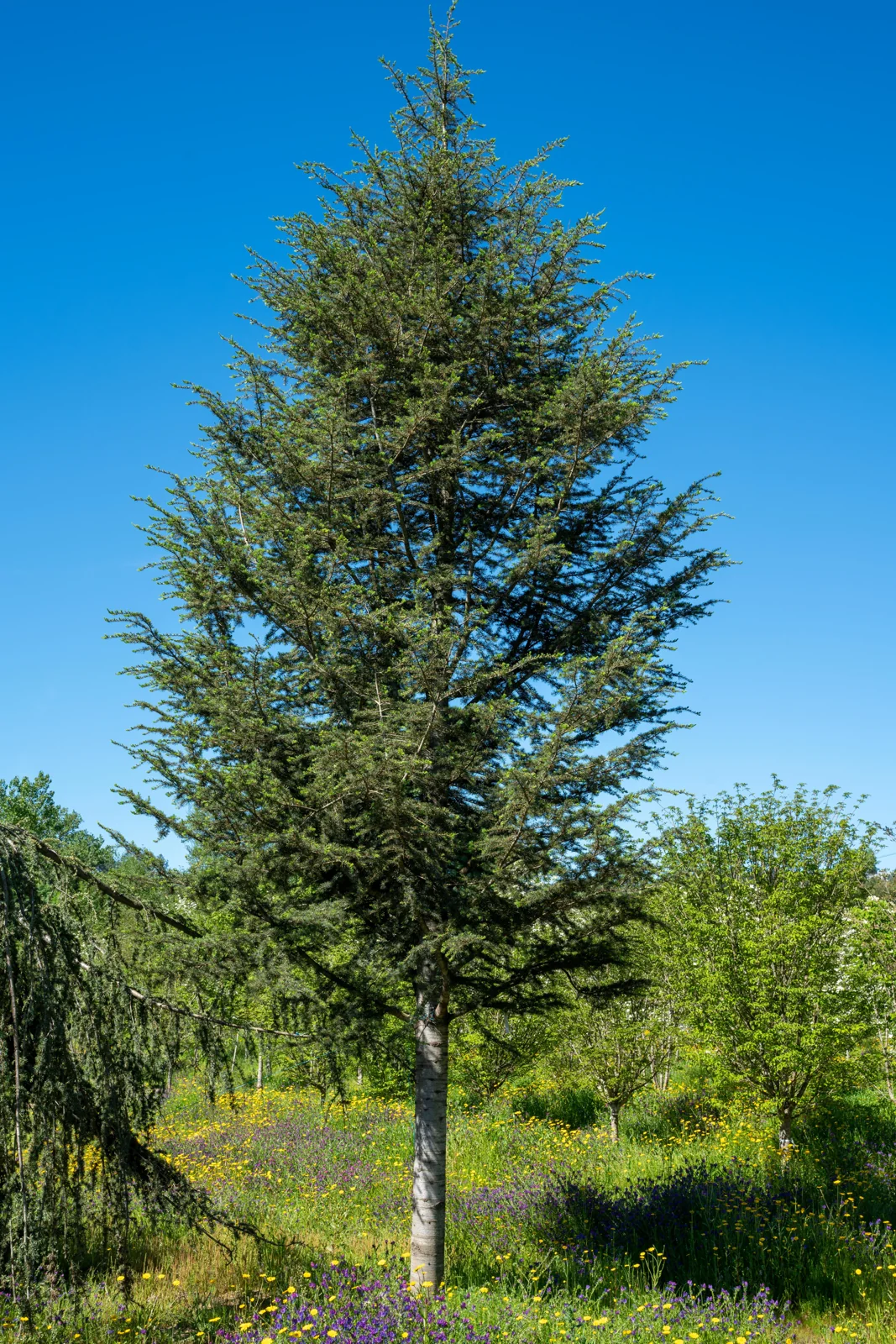
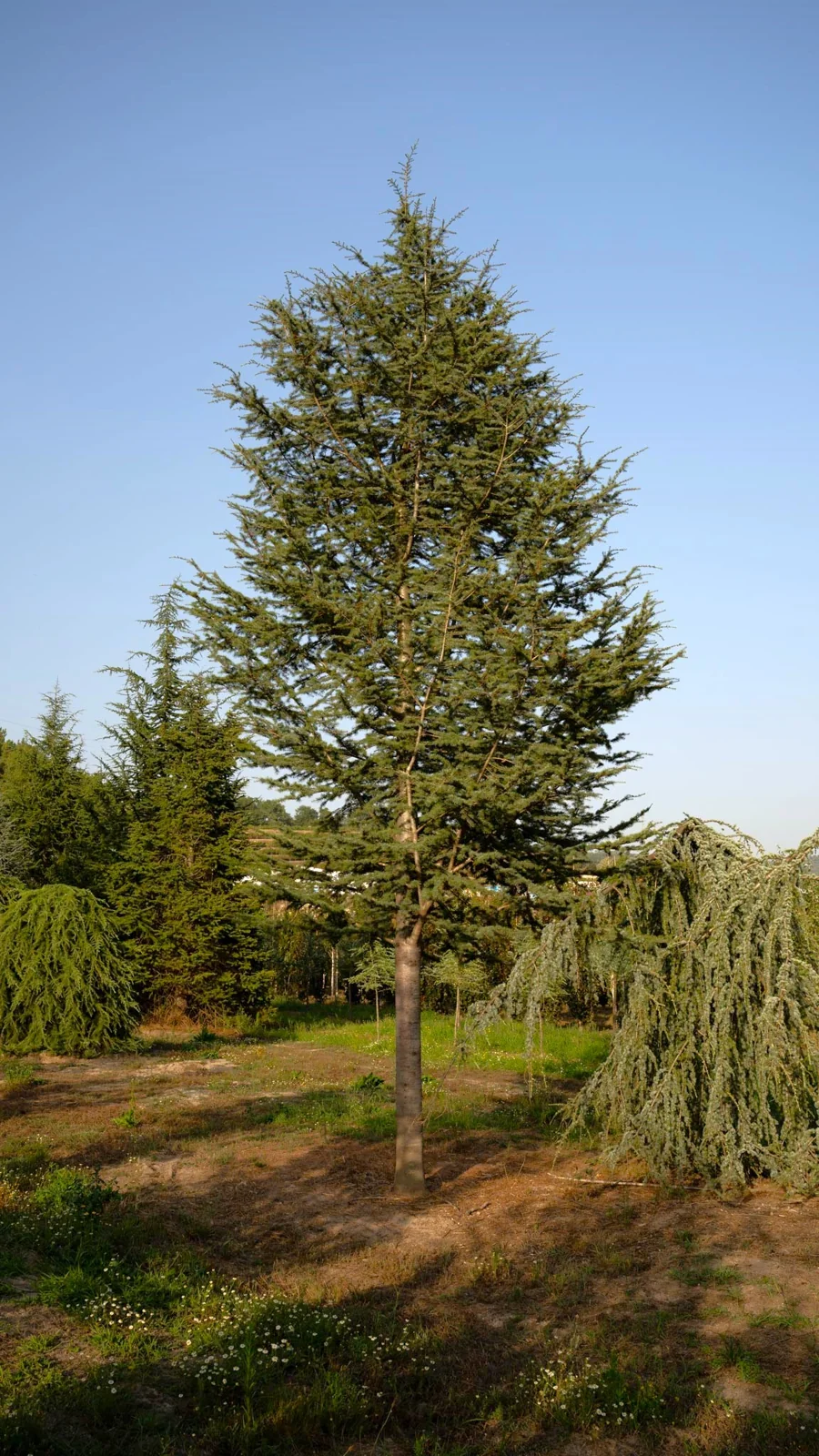
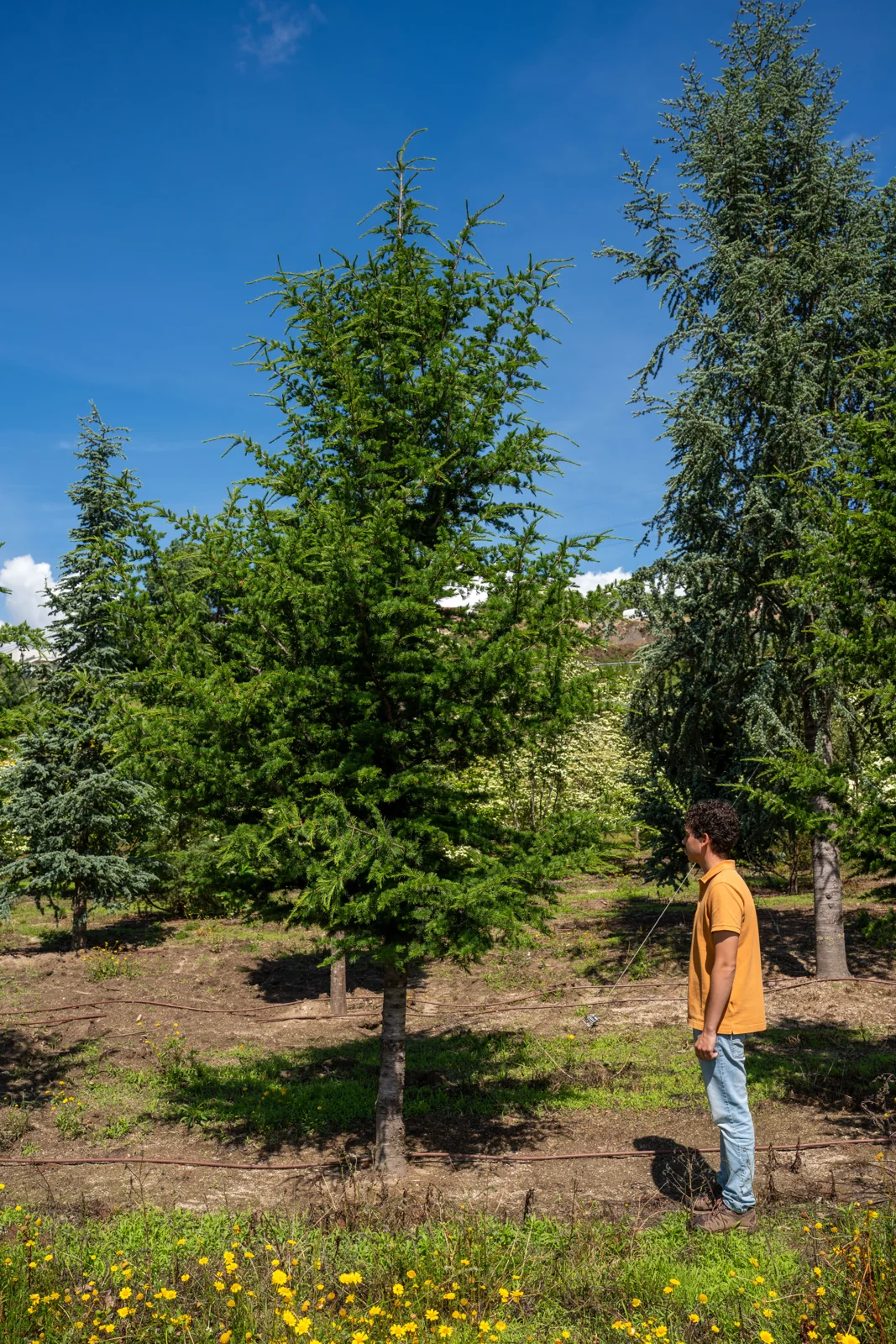
Habit is pyramidal and conical through the first decades, opening with age into the flat-topped, horizontally tiered silhouette that is the species' defining structural signature. Foliage is short, stiff, and dark green to glaucous, dense enough to read as a solid mass in winter when deciduous neighbours have dropped. Mature specimens reach 20 to 40 metres in height with a spread of 12 to 20 metres, although the slow growth rate means that early-stage scale, rather than ultimate dimensions, is what governs early specification.
Full sun is required; the species tolerates neither dense shade nor sustained air pollution, which limits its role in heavily trafficked urban tree pits but suits it to parkland, estate, civic, and resort landscapes where horizontal canopy development has room to resolve. Acid loams are preferred, although neutral and moderately alkaline soils are accepted where drainage is reliable. As a high-flammability conifer, siting should respect wildfire-prone interfaces in southern European projects.


Advice on this species
Want to know more about Cedrus libani?
Tell us about your project and we'll advise you on this species — where it thrives, which size makes sense, and what to expect once planted.
- Produção própria
- Exemplares adultos
- Resposta em 1–2 dias
Sem compromisso · orçamento personalizado