

Narrow-crowned hornbeam for tight urban alignments
European Hornbeam ‘Fastigiata’ · Carpinus betulus ‘Fastigiata’
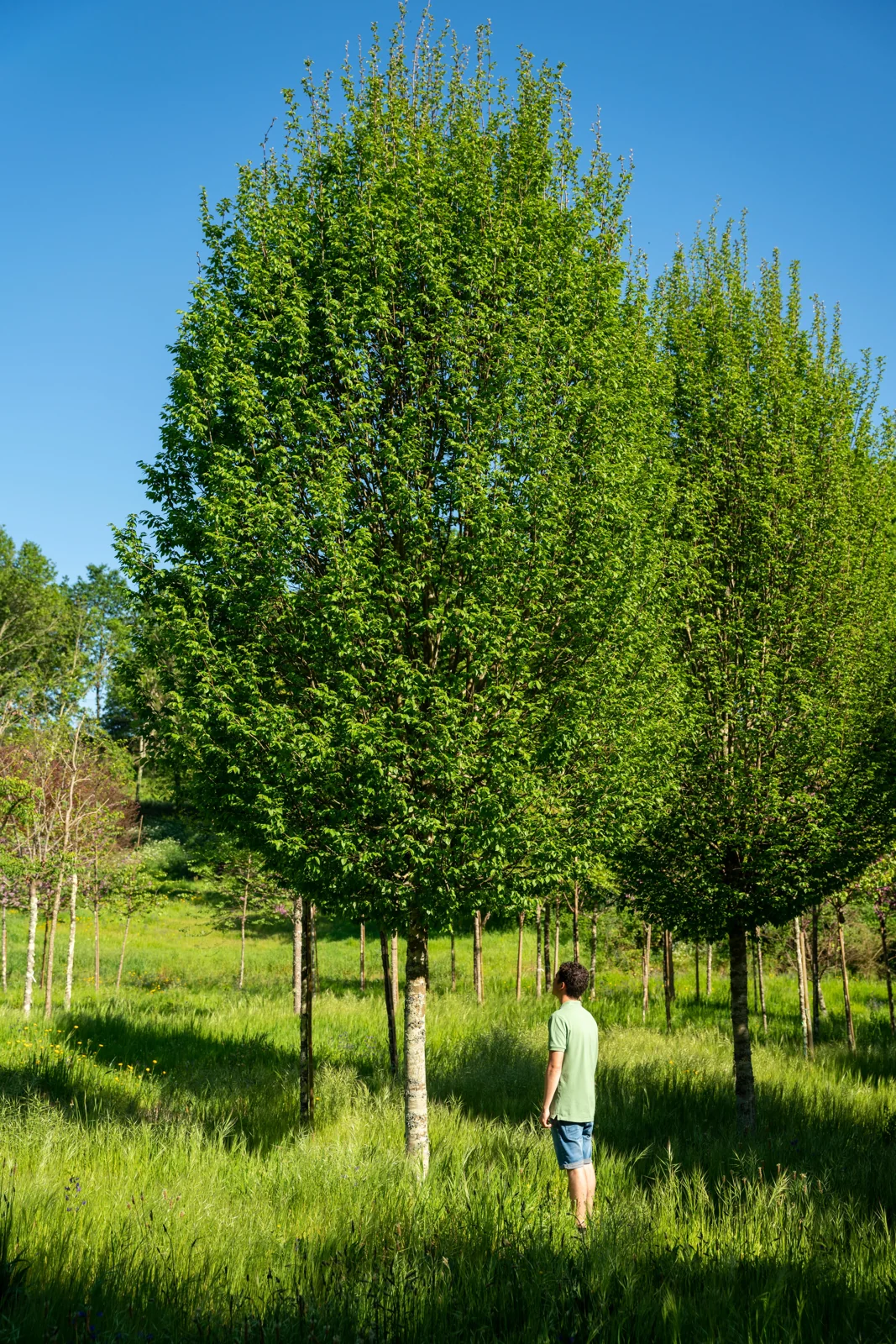
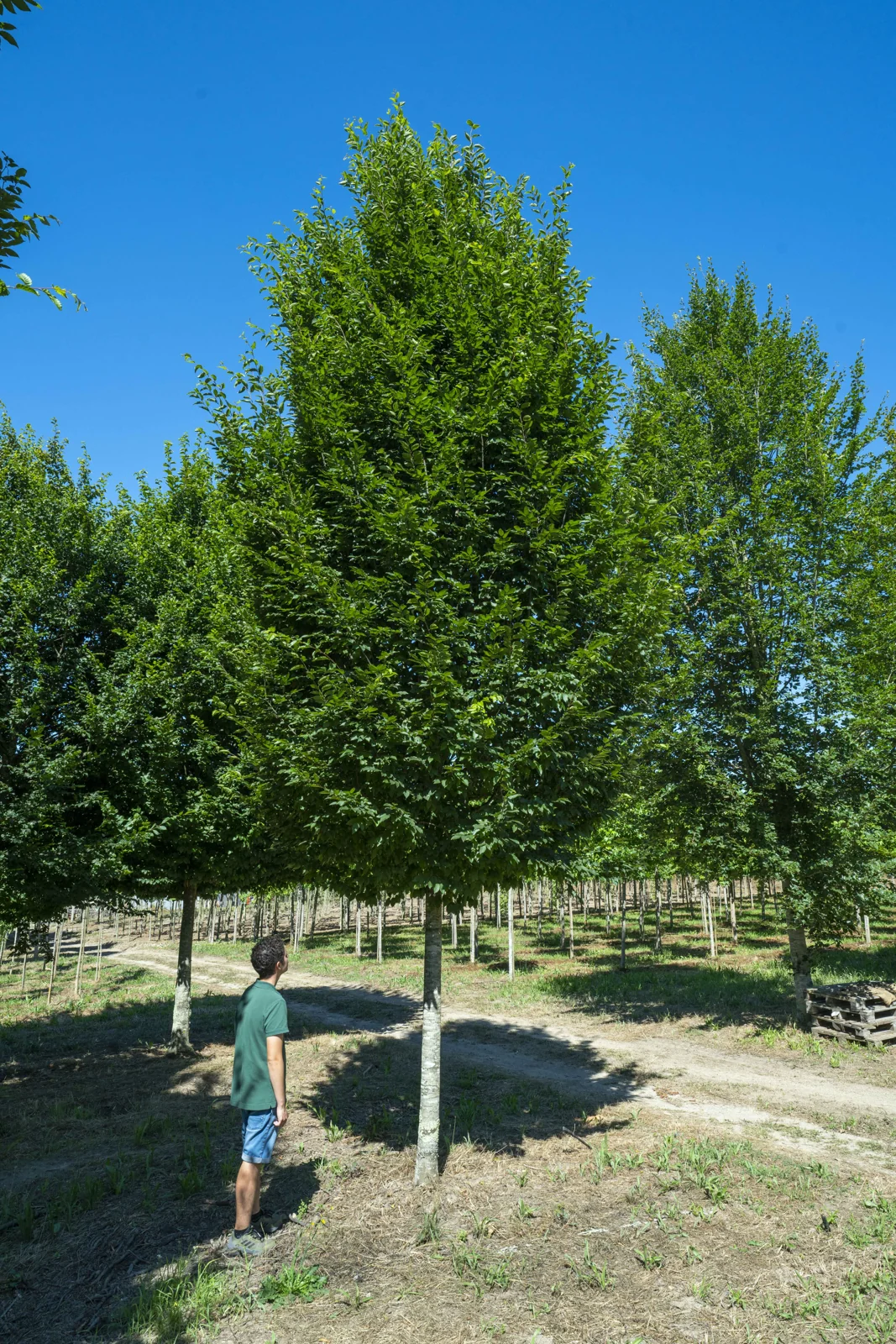
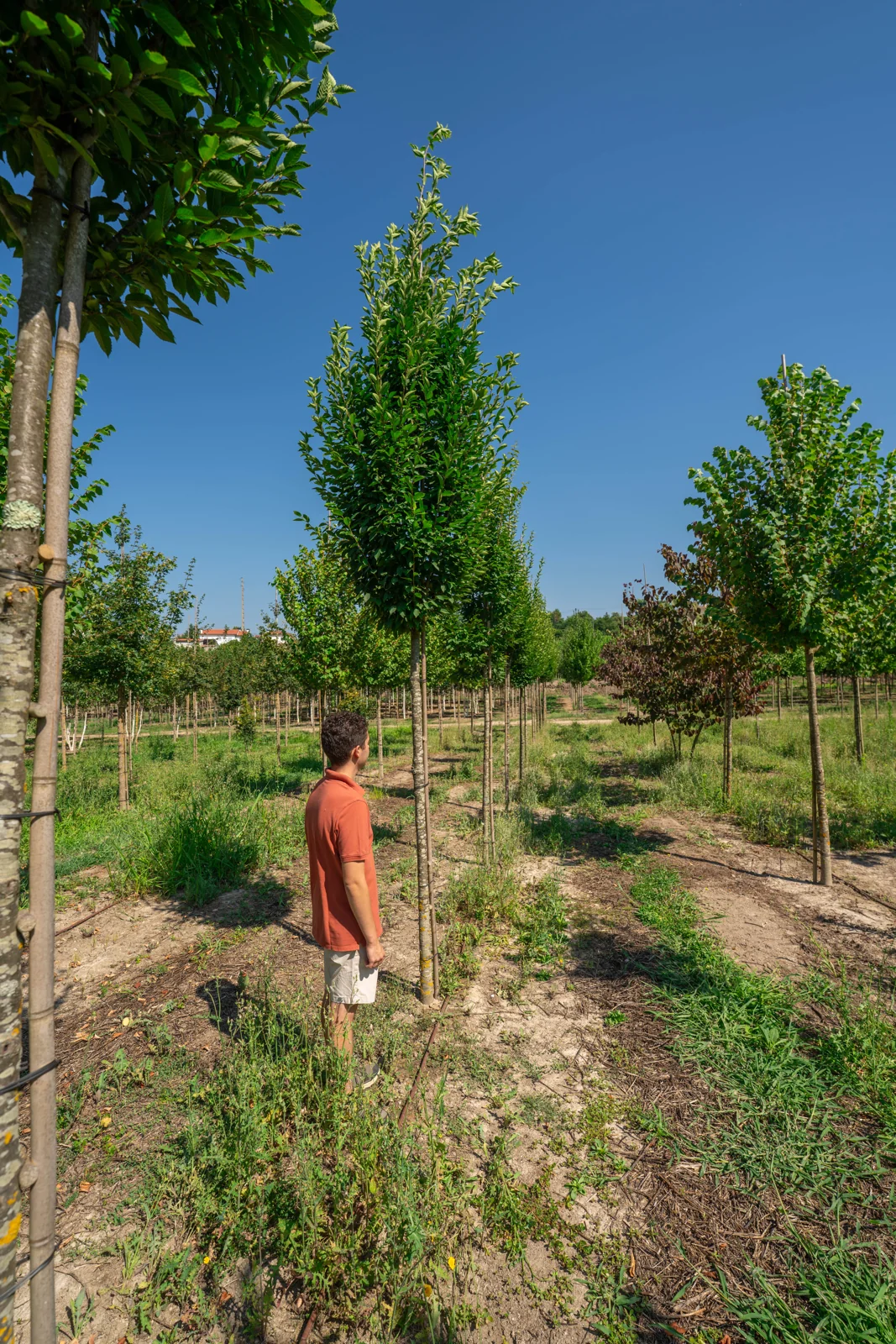
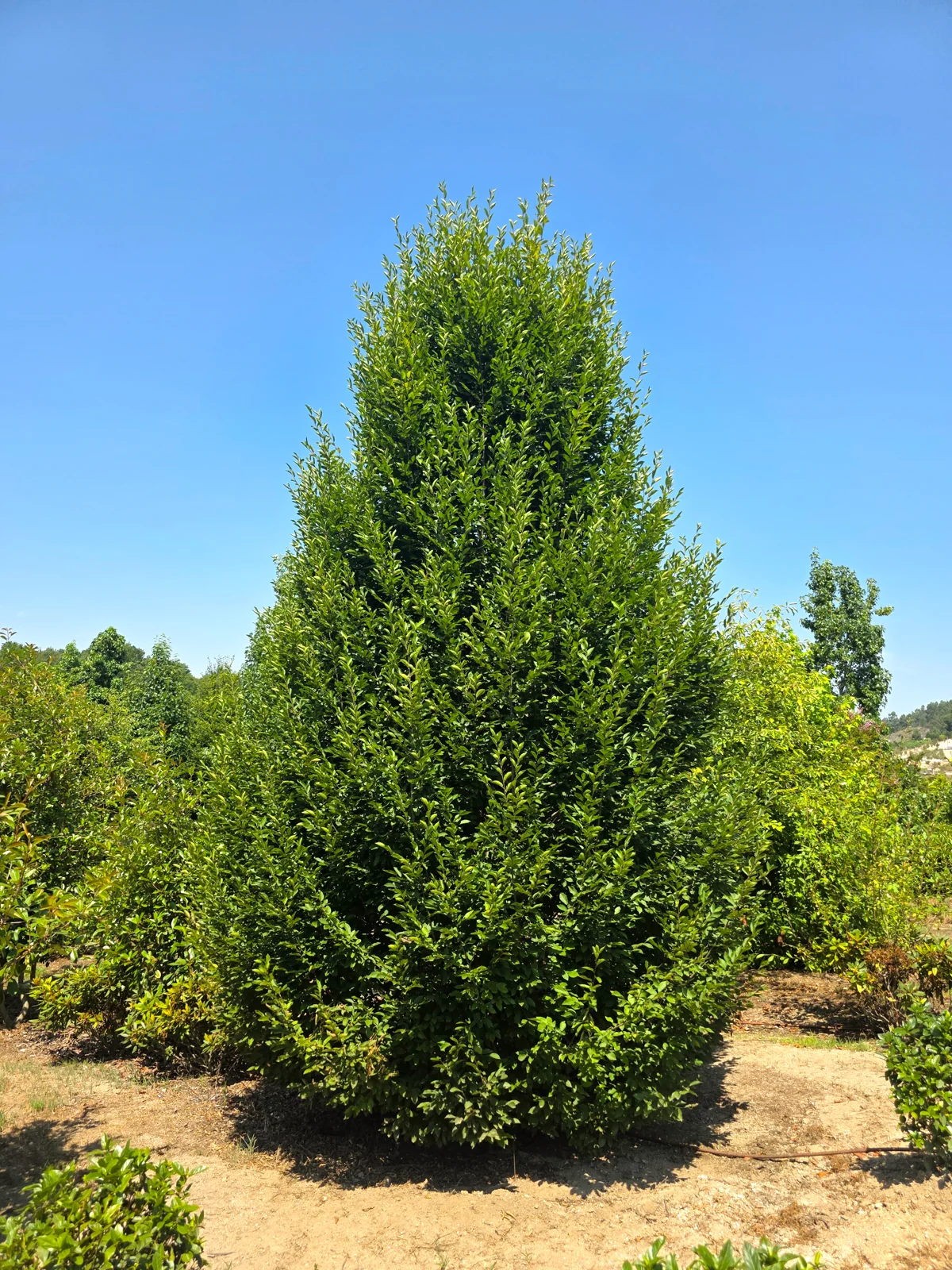
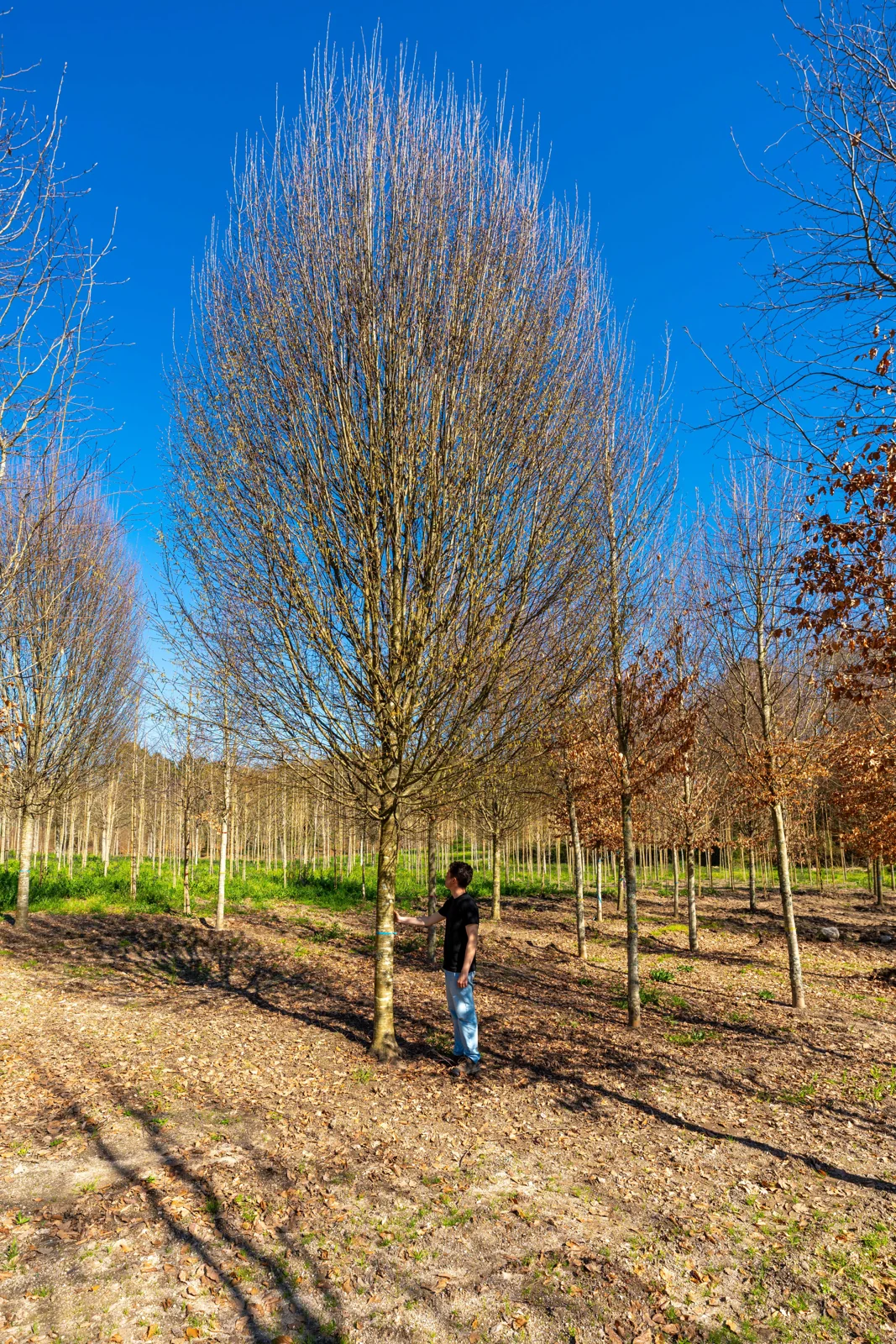
A columnar selection of the European hornbeam, used where the alignment role of Carpinus betulus is needed in restricted footprints. The cultivar holds a defined oval-pyramidal crown that reads cleanly across formal and urban schemes.
Key Facts
About this Cultivar
Carpinus betulus 'Fastigiata' carries the species' ornamental and structural attributes inside an upright habit that widens gradually with age, reaching roughly 10 to 15 metres in height and 4 to 6 metres in spread at maturity. Branching is erect and the crown stays dense and oval-pyramidal, which makes the cultivar legible as a repeating module in avenue…
Read more
Show less
Carpinus betulus 'Fastigiata' carries the species' ornamental and structural attributes inside an upright habit that widens gradually with age, reaching roughly 10 to 15 metres in height and 4 to 6 metres in spread at maturity. Branching is erect and the crown stays dense and oval-pyramidal, which makes the cultivar legible as a repeating module in avenue and tree-pit work where Tilia or Platanus would overgrow the available envelope.
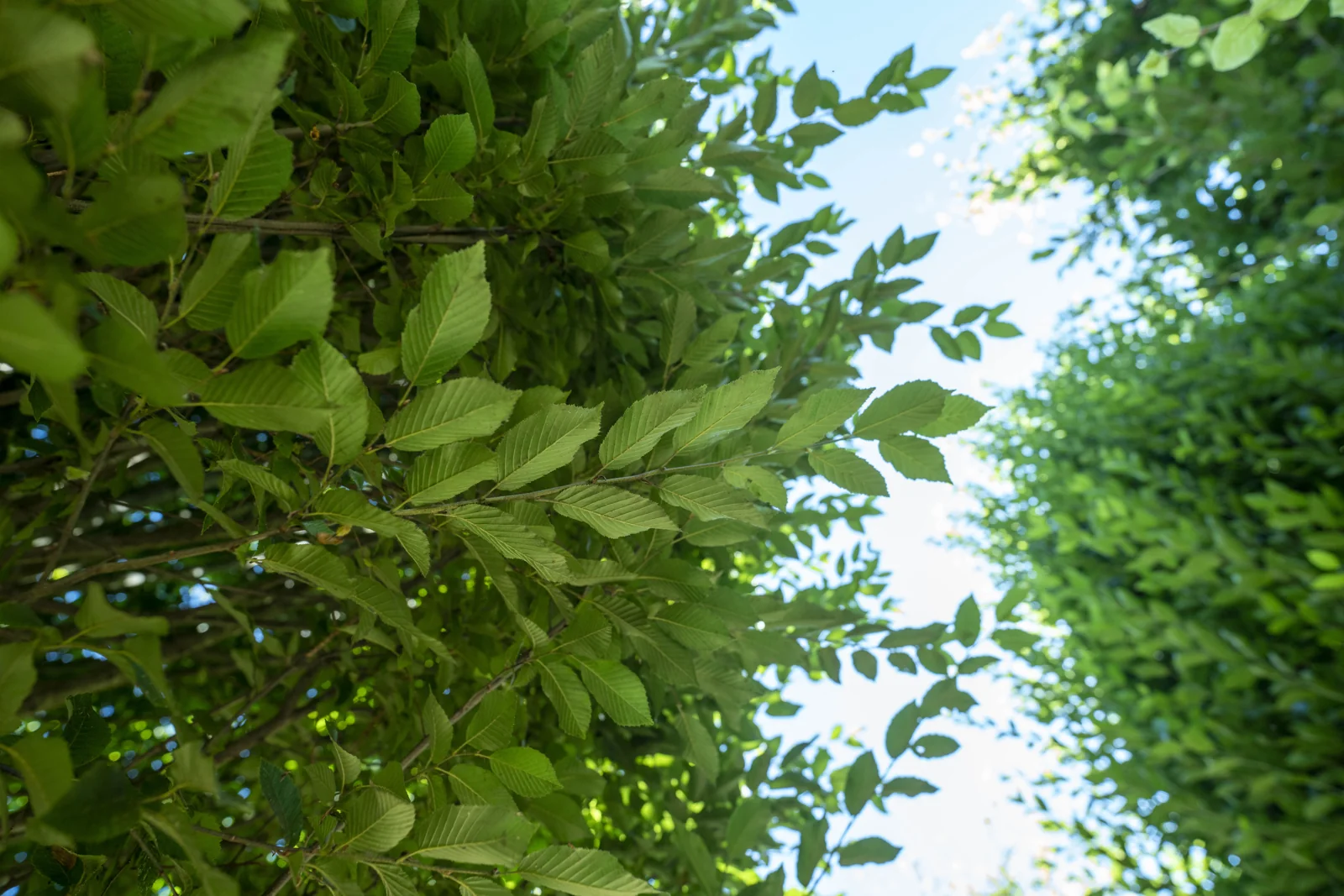
Foliage is the species type: ovate, sharply doubly-serrate, glossy mid to dark green through spring and summer, turning a clear yellow in autumn. Younger growth holds marcescent leaves through winter, adding tan texture to leafless schemes and reinforcing the cultivar's value where screening is required across all four seasons. Inconspicuous green catkins appear in April and May, followed by the species' small winged samaras taken by finches and other passerines.
The species tolerates a wide soil envelope including heavy clay and seasonally waterlogged ground, performs in full sun and part shade, and is essentially free of significant pests and diseases. Heat tolerance is moderate and the tree benefits from assured root-zone moisture under prolonged summer maxima above 35 °C. Reliably winter-hardy across USDA zones 5 to 7 and the warmer end of zone 4 (down to about minus 30 °C under continental conditions), which places the cultivar on safe ground from the Atlantic seaboard and Po valley through the Pannonian basin and southern Scandinavia.
Urban performance is well documented: tolerant of compacted substrates, atmospheric pollution and reflected heat in tree pits, and resilient under formative and reduction pruning, which the species accepts cleanly outside the spring sap-rise window. Wind resistance is good, supporting use in exposed alignments and as a tall screening element. Specify where the brief calls for the structural reliability of European hornbeam in a footprint too narrow for the type, in formal axes, courtyard alignments and infrastructure plantings across temperate and warm-temperate Europe.
Advice on this species
Want to know more about Carpinus betulus 'Fastigiata'?
Tell us about your project and we'll advise you on this species — where it thrives, which size makes sense, and what to expect once planted.
- Produção própria
- Exemplares adultos
- Resposta em 1–2 dias
Sem compromisso · orçamento personalizado