

Columnar silver birch for narrow alignments and constrained urban sites
Silver Birch ‘Fastigiata’ · Betula pendula ‘Fastigiata’
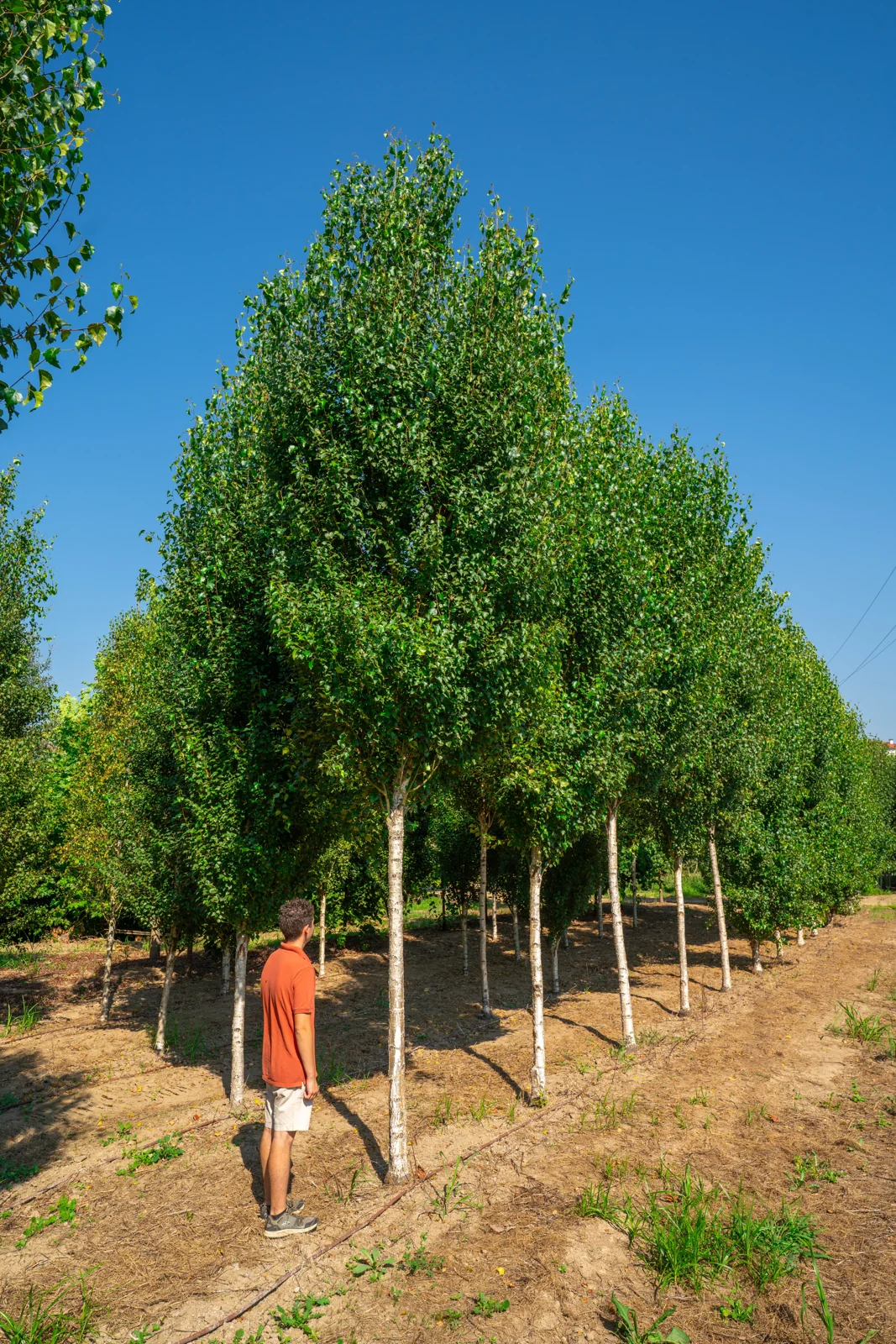
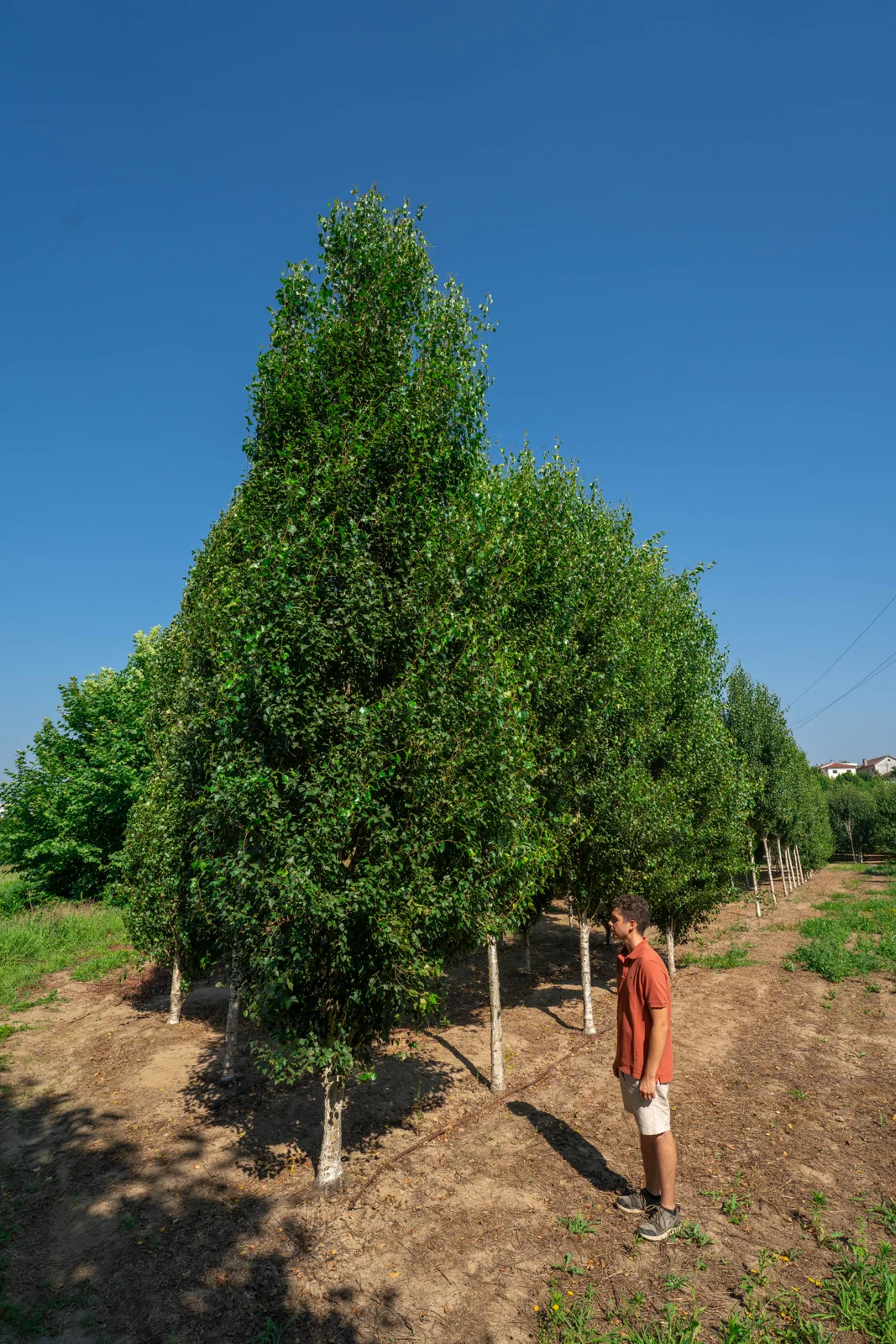
A columnar selection of Betula pendula, retained for its narrow vertical form and the species' familiar silver-white peeling bark. Specified across cool-temperate Europe for alignments, tight tree pits, and contemporary schemes where lateral space is constrained.
Key Facts
About this Cultivar
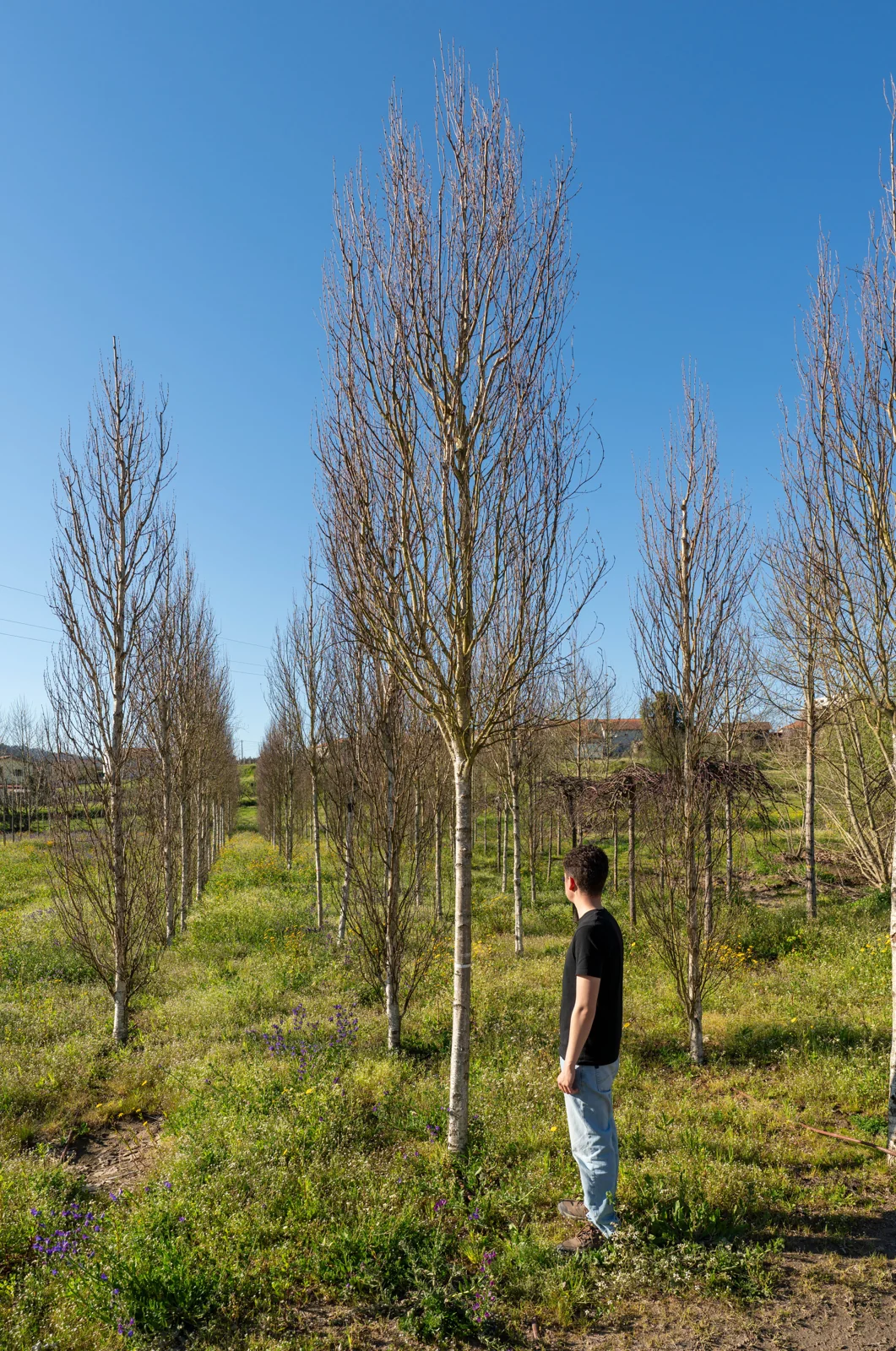
'Fastigiata' is a columnar selection of Betula pendula, typically reaching 10 to 15 m in height with a crown spread of only 2 to 4 m at maturity. The branches ascend rather than weeping, producing a dense vertical silhouette that holds its outline through winter. Bark develops the characteristic silver-white peel of the species from a young age, and the…
Read more
Show less
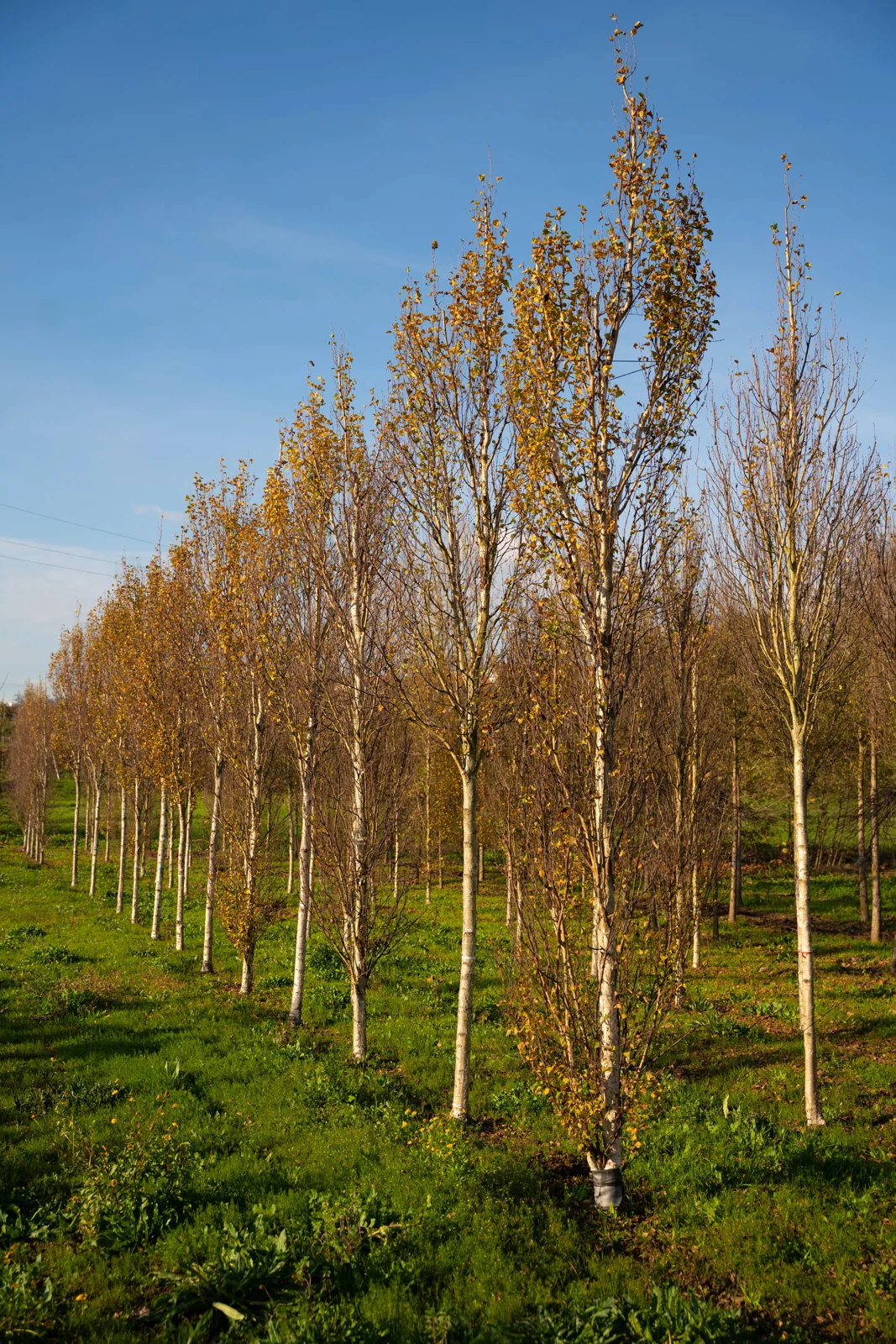
'Fastigiata' is a columnar selection of Betula pendula, typically reaching 10 to 15 m in height with a crown spread of only 2 to 4 m at maturity. The branches ascend rather than weeping, producing a dense vertical silhouette that holds its outline through winter. Bark develops the characteristic silver-white peel of the species from a young age, and the triangular leaves turn clear yellow before falling in autumn.
The species is fully hardy across continental, Atlantic, and boreal Europe, tolerating winter minima below minus 30 C (USDA zones 2 to 7). Spring flowering in March and April is monoecious and unobtrusive, ornamentally subordinate to the year-round bark interest. Growth is rapid in youth, slowing once the columnar crown is established, which makes the cultivar predictable to specify for fixed-width tree pits and avenue spacing.
Climatic limits are at the warm end of the envelope, not the cold. Betula pendula performs reliably where summer maxima stay below approximately 30 C and root zones remain cool and moist; sustained heat above 35 C combined with dry compacted soils weakens the tree and raises susceptibility to bronze birch borer (Agrilus anxius) and dieback. The cultivar is therefore a defensible specification across the Atlantic seaboard, the Benelux, the British Isles, the Nordics, the Baltics, the Pannonian basin, and Central European cities, but it is not recommended for the hot dry lowlands of the southern European summer belt without sheltered, irrigated siting.
Soil preference is for moist, well-drained, acidic to neutral loams; sandy and clay substrates are both tolerated where drainage is reliable. Salt tolerance is low, ruling out exposed coastal pits and heavily de-iced winter alignments. The narrow habit positions the cultivar in the European urban canon alongside fastigiate selections of Quercus robur, Carpinus betulus, and Acer platanoides, occupying a distinct visual register: lighter crown, brighter bark, and a clearer winter silhouette than the broadleaved alternatives.
Advice on this species
Want to know more about Betula pendula 'Fastigiata'?
Tell us about your project and we'll advise you on this species — where it thrives, which size makes sense, and what to expect once planted.
- Produção própria
- Exemplares adultos
- Resposta em 1–2 dias
Sem compromisso · orçamento personalizado