

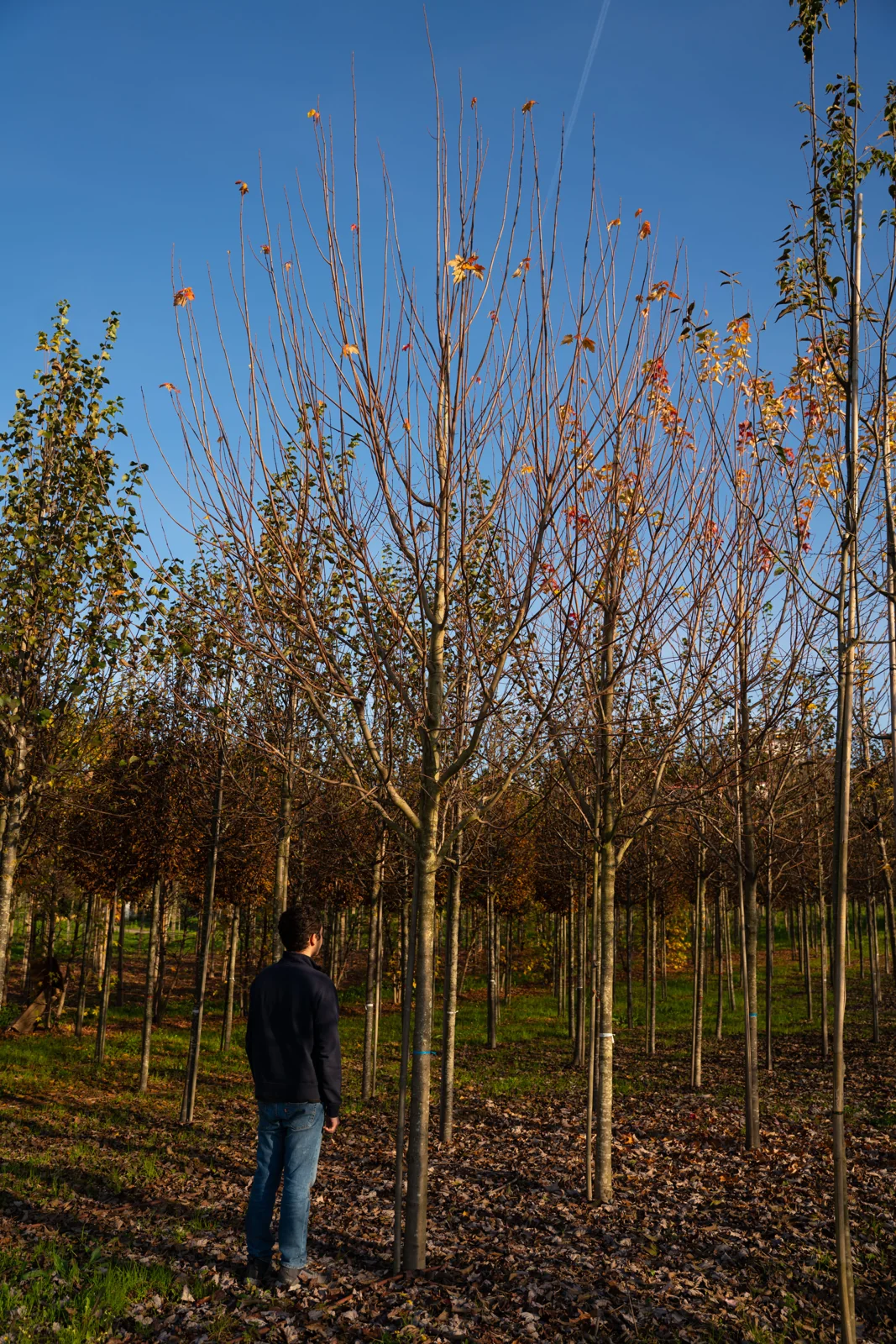
Scarlet autumn colour for acidic European soils
Red Maple · Acer rubrum
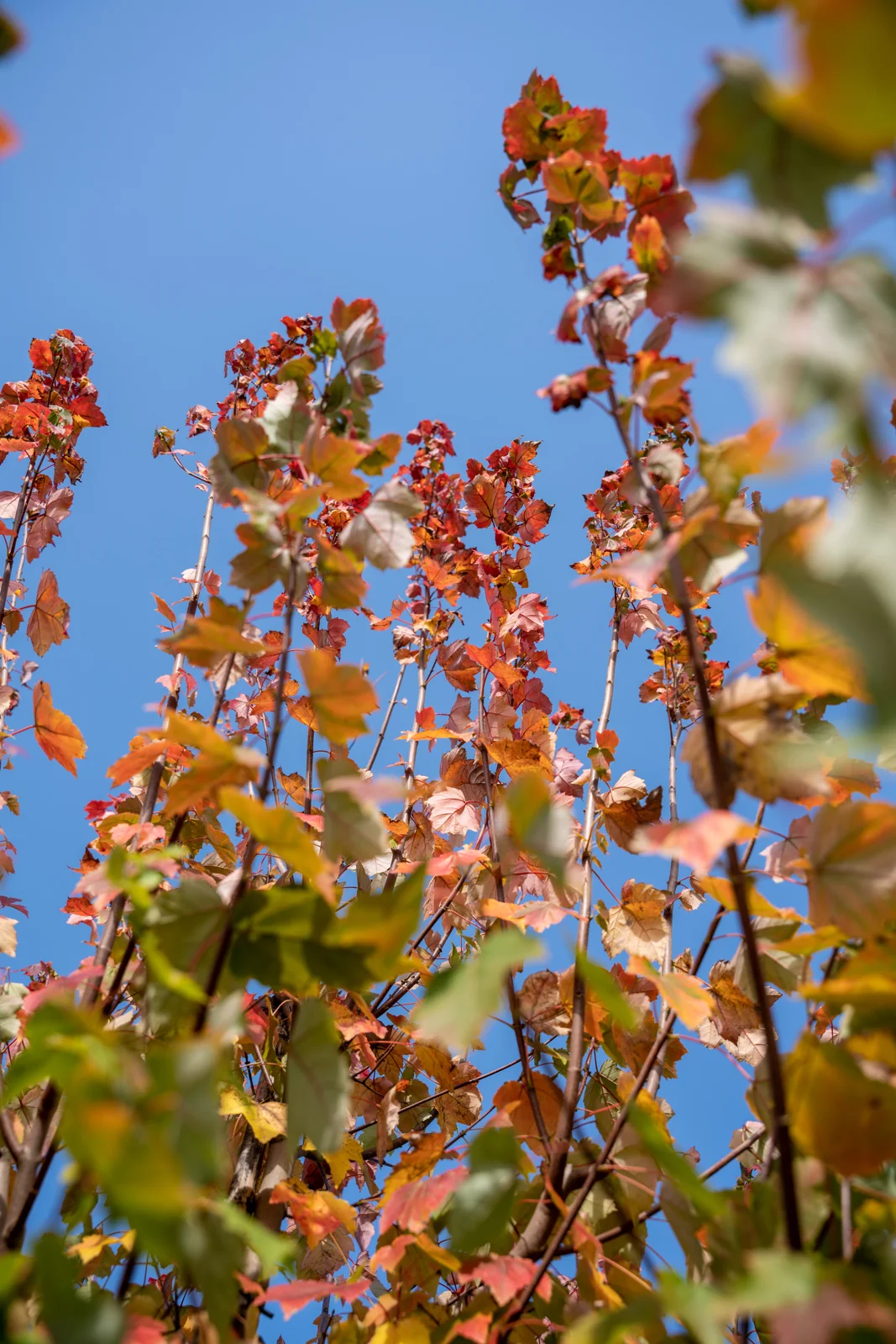
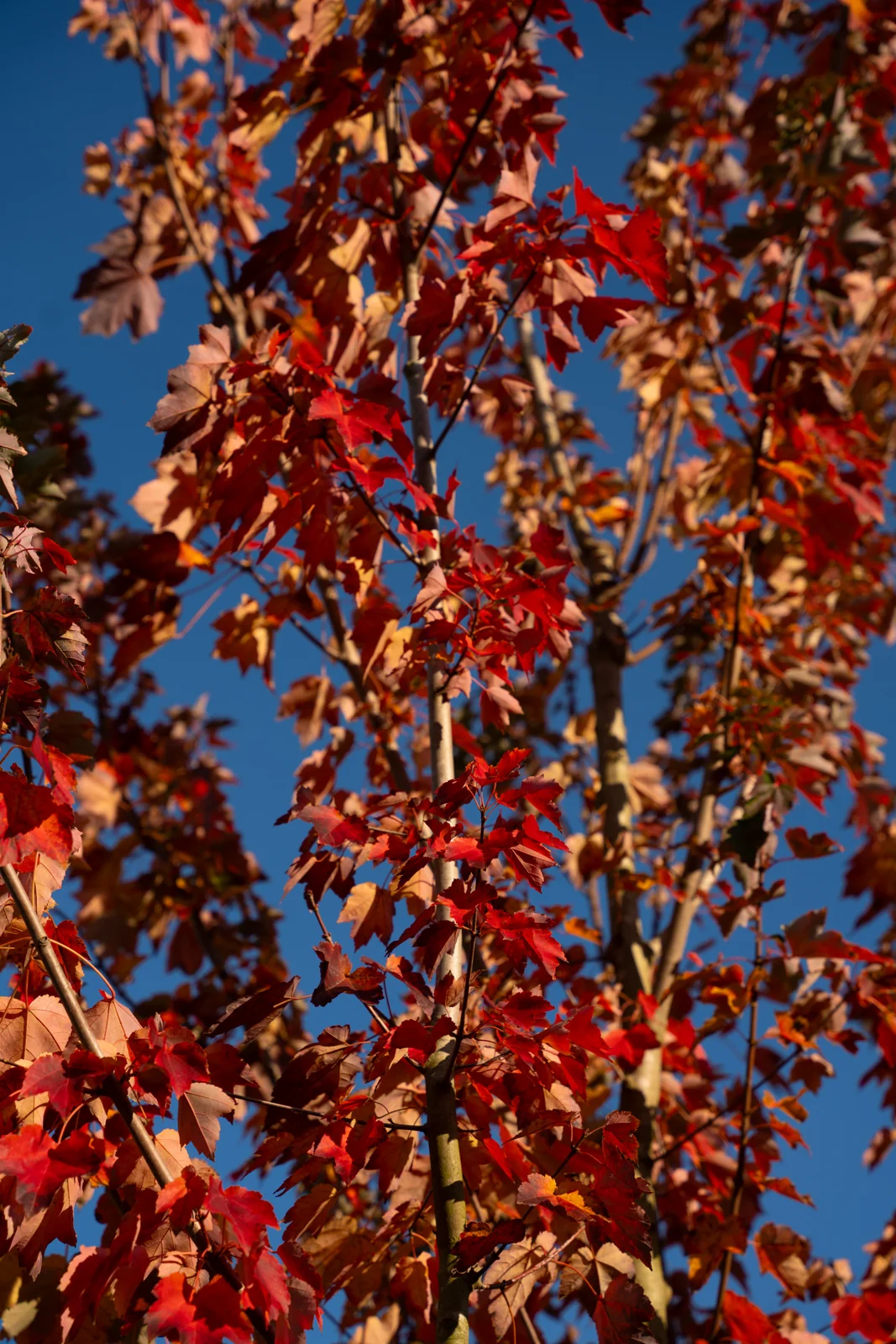
A widely established North American deciduous, specified across Europe for benchmark scarlet autumn colour and notable wet-soil tolerance, but strictly calcifuge: viable only where soil chemistry tests acidic to slightly acidic.
About this Species
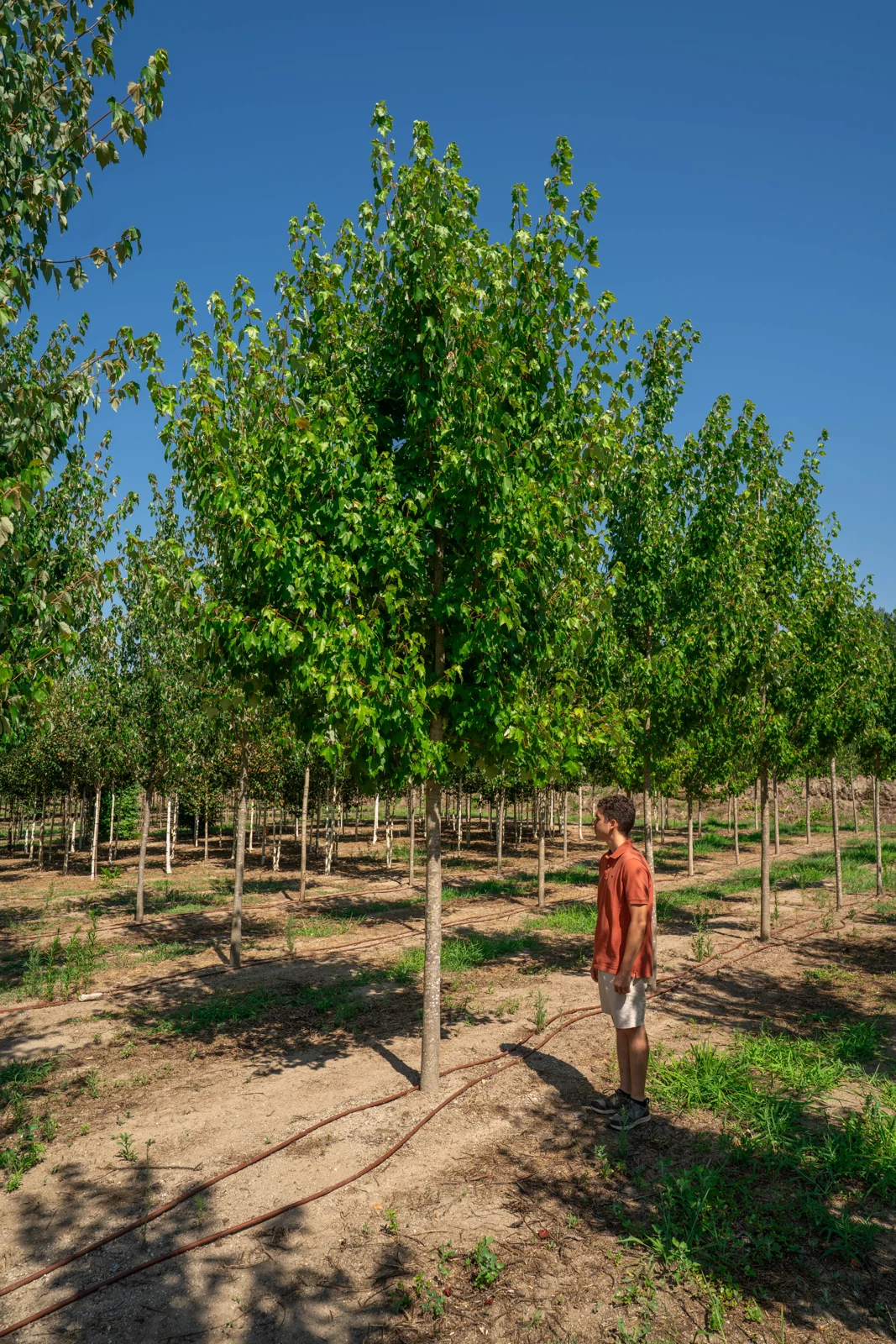
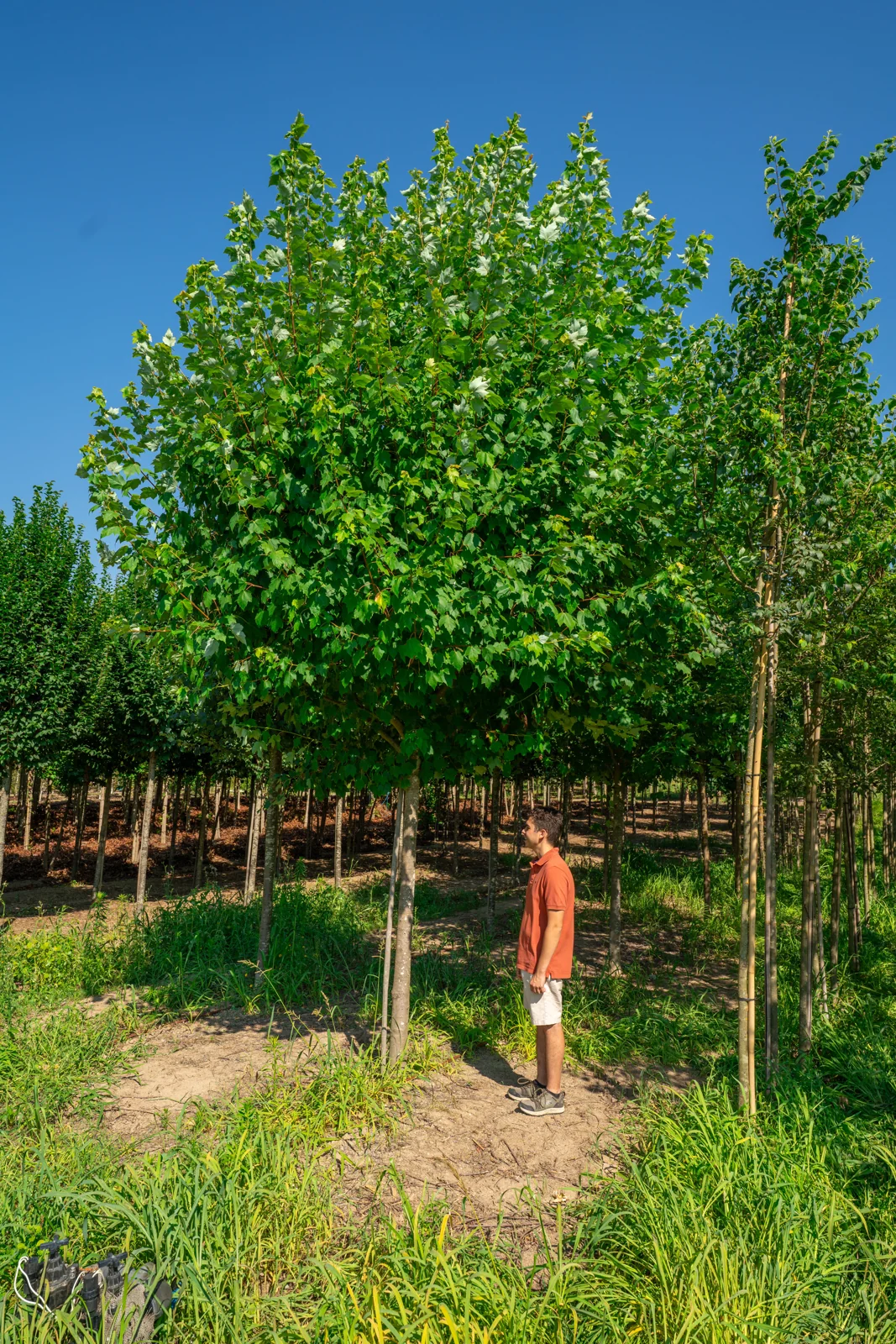
Acer rubrum is a North American native long established in European cultivation, valued primarily as the scarlet autumn-colour benchmark among medium-sized deciduous shade trees. Mature specimens typically reach 18 to 25 m in height with a rounded to broadly upright crown, growing at a medium rate. Small red flowers open on bare wood in March and April,…
Read more
Show less
Acer rubrum is a North American native long established in European cultivation, valued primarily as the scarlet autumn-colour benchmark among medium-sized deciduous shade trees. Mature specimens typically reach 18 to 25 m in height with a rounded to broadly upright crown, growing at a medium rate. Small red flowers open on bare wood in March and April, followed by red-tinted samaras: an early-spring ornamental phase that precedes the leaves.
Winter hardiness extends to roughly minus 35 °C (USDA zone 3), making the species reliable from the Atlantic seaboard through to the Baltic and well into boreal Scandinavia. Heat tolerance is moderate, with adequate performance above 30 °C provided root-zone moisture is maintained; salt tolerance is low and coastal exposure with onshore wind is not advised. Drought tolerance is moderate once established but the species does not specify into prolonged Mediterranean summer drought.
The decisive specification fact is soil chemistry. Acer rubrum is strictly calcifuge and develops severe iron and manganese chlorosis on alkaline or calcareous substrates, a profile common across much of southern, central, and eastern Europe. The species accepts only acidic to slightly acidic soils: the Atlantic seaboard from the British Isles through Brittany to Galicia and north-west Iberia, Scandinavian and Baltic forest soils, the silicate uplands of central Europe, and acidic pockets of the Pannonian basin and Pre-Alpine zone. Verify pH before specification.
Notable wet-soil tolerance, unusual within the genus, makes the species a defensible choice for SUDS basins, retention-pond margins, and riparian transition planting where the substrate tests acidic. Crown form and density support standard alignment, parkland, and civic specification; surface rooting is dense and should inform spacing from paving and underplanting strategy. Treat as a benchmark autumn-colour deciduous on suitable soils, and exclude where pH cannot be guaranteed.



Advice on this species
Want to know more about Acer rubrum?
Tell us about your project and we'll advise you on this species — where it thrives, which size makes sense, and what to expect once planted.
- Produção própria
- Exemplares adultos
- Resposta em 1–2 dias
Sem compromisso · orçamento personalizado