

Four-season Japanese maple, coral winter bark, USDA zone 6 to 9
Japanese Maple ‘Senkaki’ · Acer palmatum ‘Senkaki’
Selection of Acer palmatum with coral-red colouring on current-year shoots through winter. A sheltered specimen for residential and courtyard schemes in cool-temperate and warm-temperate maritime Europe, where winter cold sharpens the bark display but does not damage the young wood.
Key Facts
About this Cultivar
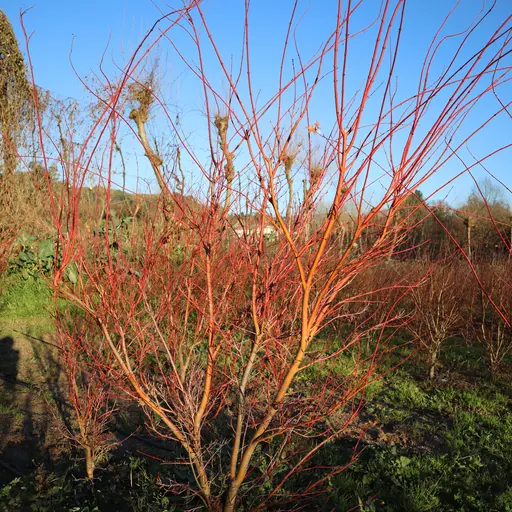
'Senkaki' (synonym 'Sango-kaku', the Japanese word for coral) is set apart from the species and from red-leaved palmatum selections by one feature: coral-red to coral-pink colouration on current-year shoots and young branchwork, which intensifies in cold weather and carries the visual interest of the cultivar from leaf-fall through to spring bud-break. The…
Read more
Show less
'Senkaki' (synonym 'Sango-kaku', the Japanese word for coral) is set apart from the species and from red-leaved palmatum selections by one feature: coral-red to coral-pink colouration on current-year shoots and young branchwork, which intensifies in cold weather and carries the visual interest of the cultivar from leaf-fall through to spring bud-break. The cultivar's specification case rests on this winter trait; specifying it without that argument is misuse.
Hardiness is the primary specification variable. Reliably winter-hardy to approximately -15 °C (USDA zone 6b) on free-draining substrate in sheltered positions; damage to one-year wood reported below -18 °C and under prolonged bare frost without snow cover. Reliable through coastal and lowland sites in Atlantic and warm-temperate Europe, including the Atlantic seaboard, the Po valley, the Hungarian and Romanian lowlands at moderate altitude, the milder pockets of southern Scandinavia, the Aegean coast and the British Isles. Marginal east of a line running through Berlin to Krakow without sheltered placement, and in continental sites above about 400 m. Reaches summer limits where afternoon temperatures exceed 35 °C with low atmospheric humidity, such as the inland Iberian meseta or the semi-arid Mediterranean basin, where foliage scorches and the cultivar requires deep shade and irrigation.
Site requirements are strict. Fresh, well-drained, slightly acid soil with organic matter, of the type that supports Camellia or Rhododendron; intolerant of heavy alkaline clay above pH 7.5 and of seasonal waterlogging. Drought tolerance is low and summer irrigation is required in every climate zone, including established stands, with mature water need rising as the summer maximum increases. Exposure light shade or filtered sun; reserve full sun for cool-summer maritime sites only.
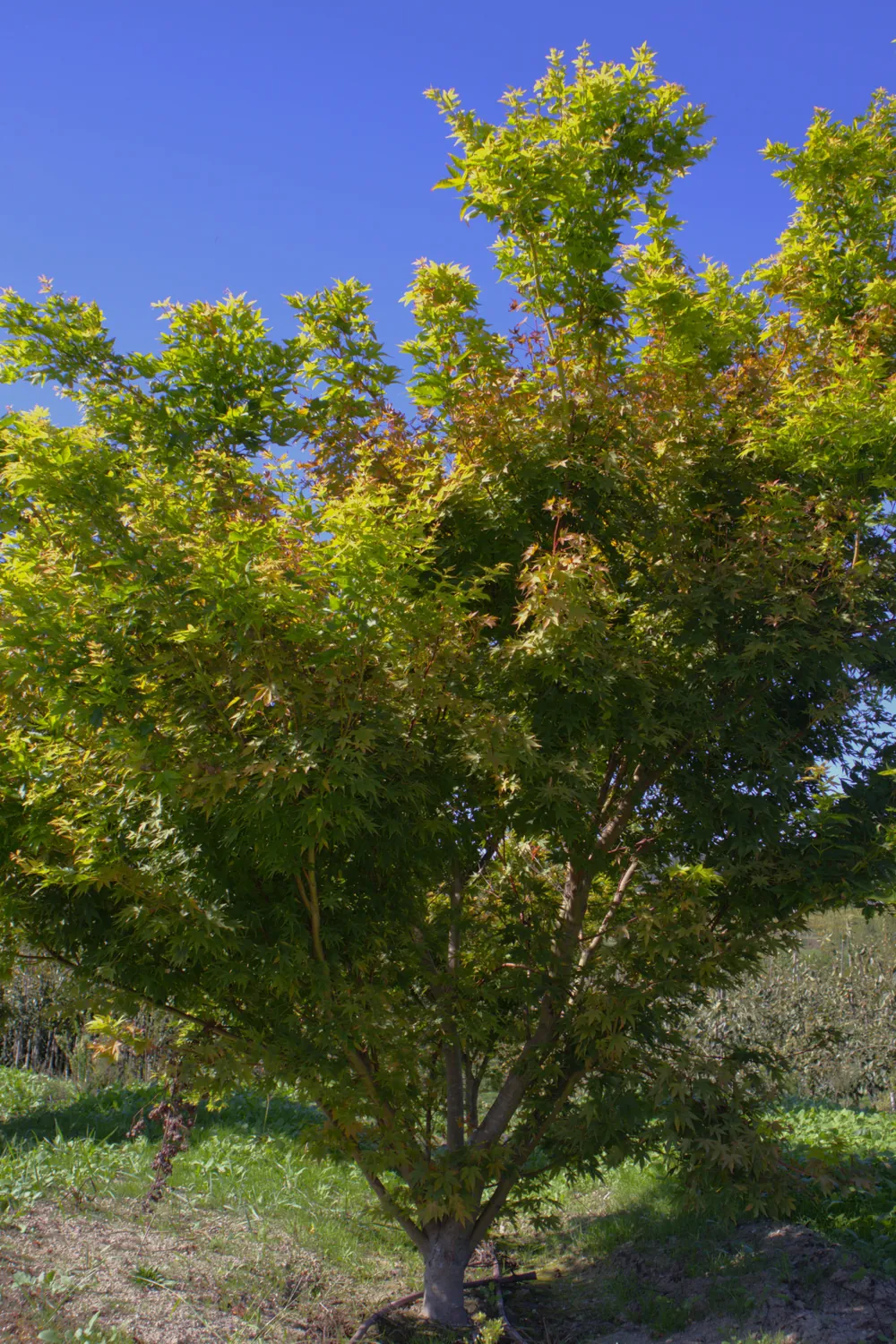
Habit a slow upright vase in youth, broadening with age to about 4 to 6 m in height and 4 to 5 m in crown spread at twenty years, with a fine and regular branching architecture. Growth slow, of the order of 20 to 30 cm per year in favourable conditions. Foliage palmate, five to seven lobes, not dissected, pale to yellow-green in summer, with autumn colour in butter yellow and apricot orange in October to early November. Disease pressure low; Verticillium wilt the principal risk on poorly drained substrates. Not a candidate for street planting under salt or heat-island stress.
Use as a sheltered specimen against a dark evergreen backdrop or pale wall that supports the bark reading through the leaf-off half-year. Pruning limited to sanitary cuts after the third year; tolerates hard late-winter pruning poorly.
Advice on this species
Want to know more about Acer palmatum 'Senkaki'?
Tell us about your project and we'll advise you on this species — where it thrives, which size makes sense, and what to expect once planted.
- Produção própria
- Exemplares adultos
- Resposta em 1–2 dias
Sem compromisso · orçamento personalizado