

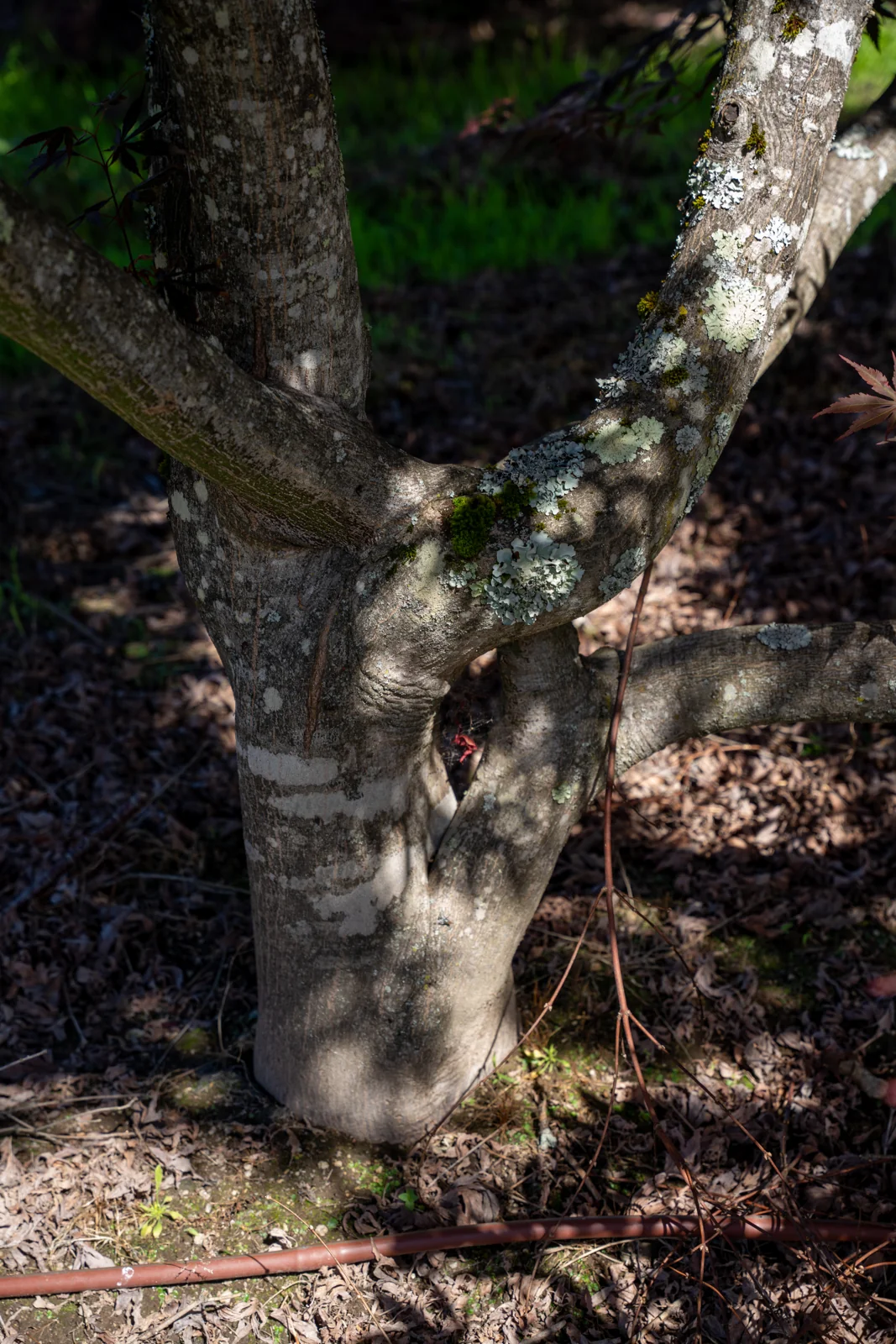
Purple-leaved Japanese maple for sheltered courtyards and parkland accent planting
Japanese Maple ‘Atropurpureum’ · Acer palmatum ‘Atropurpureum’
A purple-foliage selection of Acer palmatum forming a small, broadly rounded tree of 4 to 6 metres at maturity. Specified across temperate Europe as a structural accent where part shade and steady soil moisture can be assured.
Key Facts
About this Cultivar
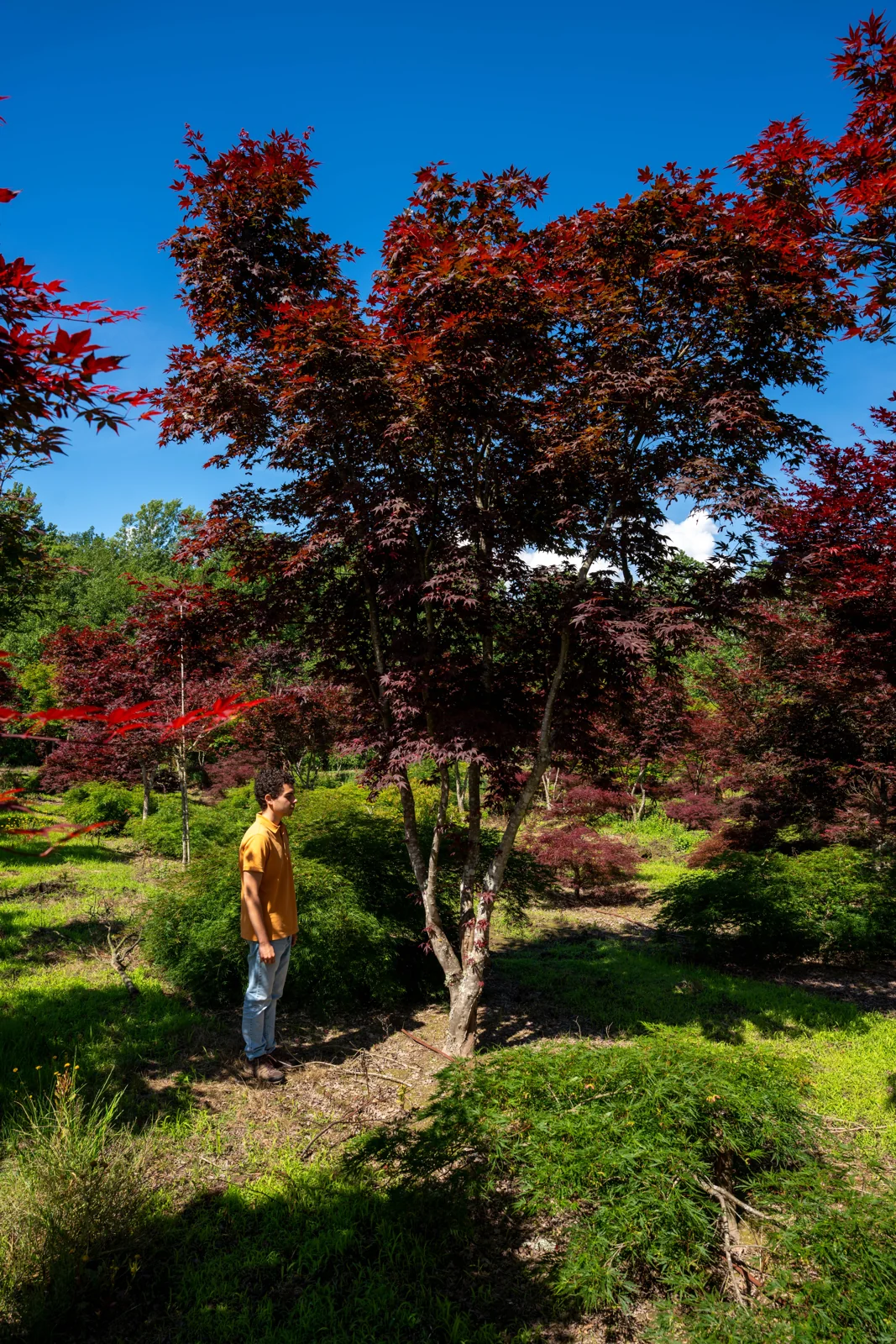
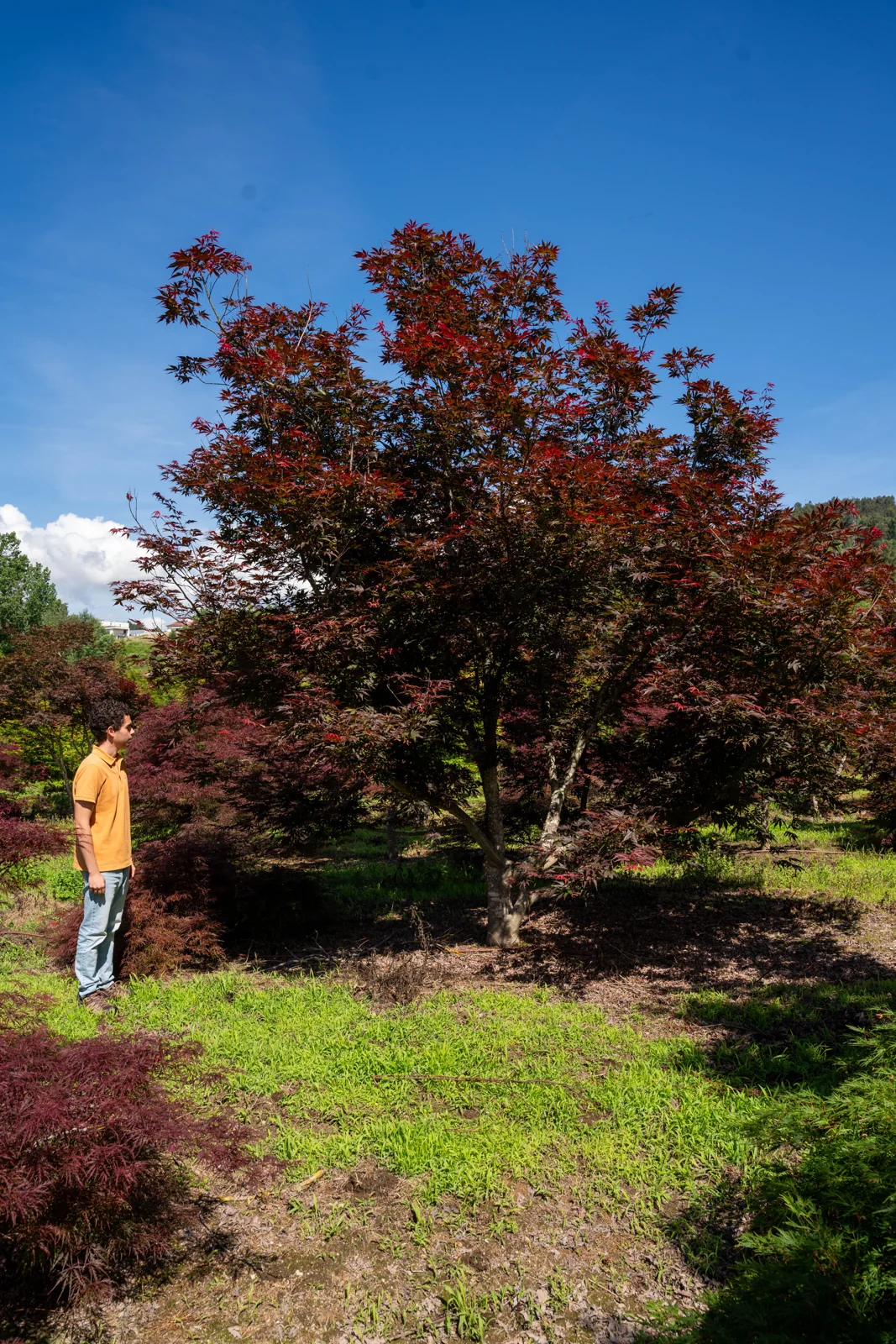
Acer palmatum 'Atropurpureum' is a long-established purple-leaved selection of the Japanese maple, reaching roughly 4 to 6 metres in height and 3 to 4 metres in spread over several decades. Habit is broadly obovoid, often wider than tall on older specimens, with multiple light stems and a fine-textured crown. Foliage emerges deep purple-red in spring, holds…
Read more
Show less
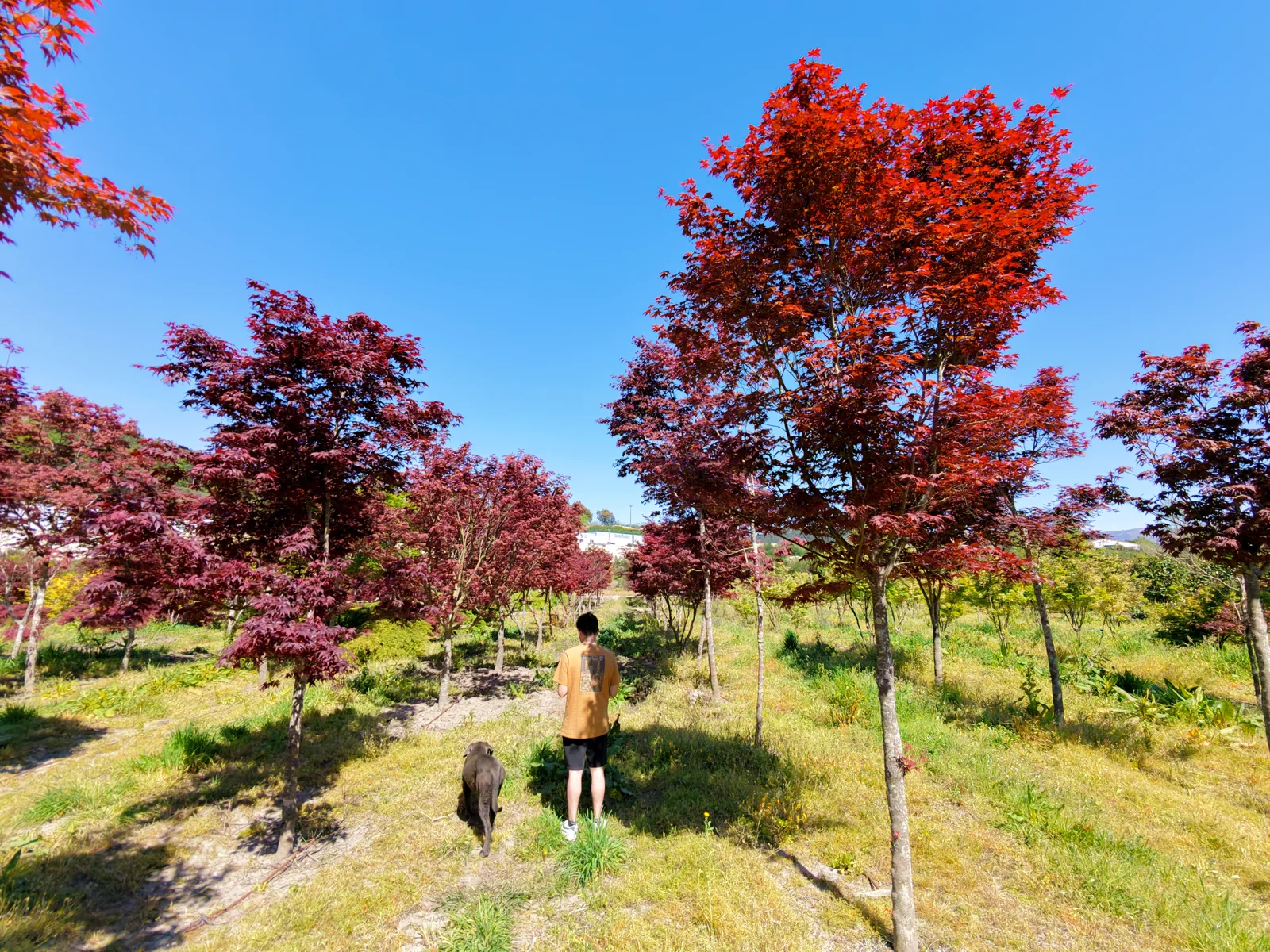
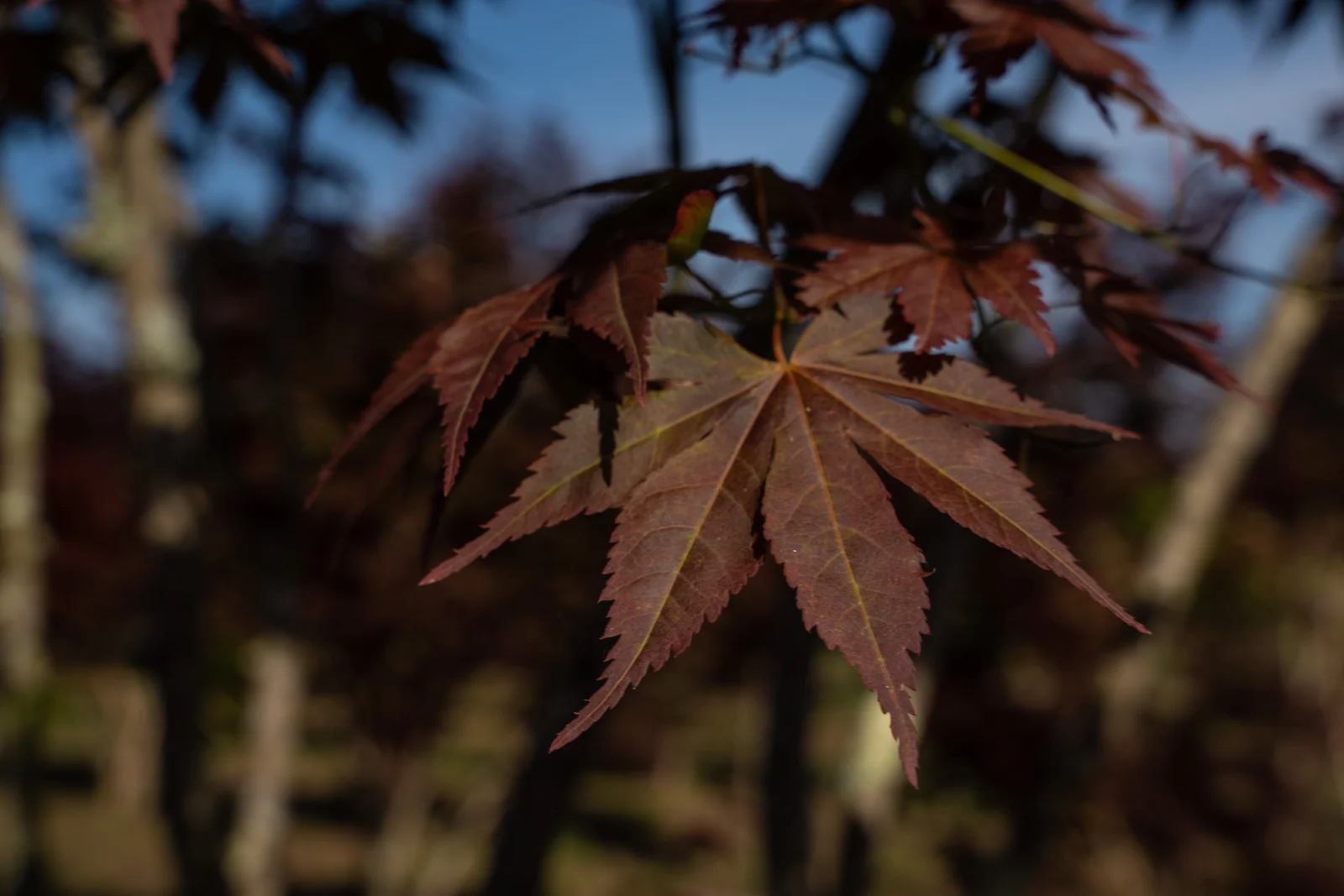
Acer palmatum 'Atropurpureum' is a long-established purple-leaved selection of the Japanese maple, reaching roughly 4 to 6 metres in height and 3 to 4 metres in spread over several decades. Habit is broadly obovoid, often wider than tall on older specimens, with multiple light stems and a fine-textured crown. Foliage emerges deep purple-red in spring, holds its colour through summer in adequate light, and turns a clear, luminous red in autumn before falling.
Winter hardiness is robust for the genus. The species is reliably winter-hardy to around minus 25 °C (USDA zone 5b), and purple-leaved selections in this group share that hardiness in practice. Reliable across the zone 6 belt of continental Europe and performing well along the Atlantic seaboard, in the Po valley, the Pannonian basin, southern Scandinavia, and the British Isles. In zone 5 sites of inland Central and Eastern Europe, plant in a sheltered position with assured drainage; late spring frosts scorch young foliage and should be planned around.
The more difficult specification limit is summer, not winter. Drought tolerance is low and heat tolerance only moderate. Under prolonged maxima above 35 °C with exposed afternoon sun, purple foliage bronzes and scorches; the cultivar holds its colour and condition best in dappled or filtered light, in soil kept evenly moist and rich in organic matter. Mildly acidic to neutral, free-draining substrates suit it; chalk and waterlogged ground do not. Coastal salt-laden wind and dry continental wind both desiccate the canopy and should be screened.
Within those limits the tree earns its place as a structural accent: a small-stature specimen for urban courtyards, sheltered tree pits with reliable irrigation, woodland-edge plantings, and the focal positions of formal residential and hospitality schemes. Growth is slow and the branching layered, giving a legible winter silhouette in schemes where year-round structural reading matters. Pest and disease profile is moderate; aphids, scale, and verticillium wilt are the principal watch points familiar from the species, and root rot follows in poorly drained ground.
Advice on this species
Want to know more about Acer palmatum 'Atropurpureum'?
Tell us about your project and we'll advise you on this species — where it thrives, which size makes sense, and what to expect once planted.
- Produção própria
- Exemplares adultos
- Resposta em 1–2 dias
Sem compromisso · orçamento personalizado