

A late-summer flowering shade tree for sunlit gardens
Japanese Pagoda Tree ‘Regent’ · Sophora japonica ‘Regent’
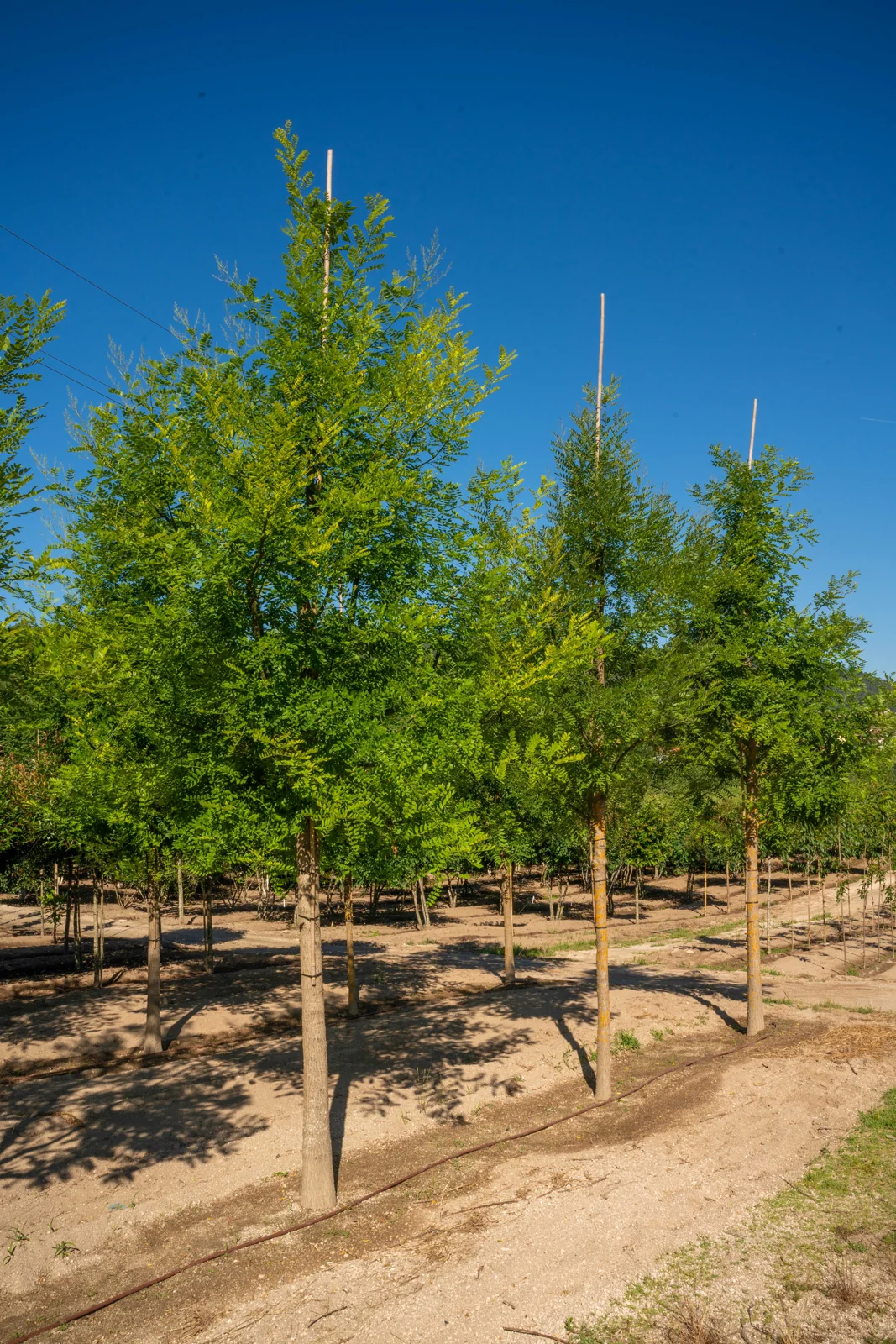
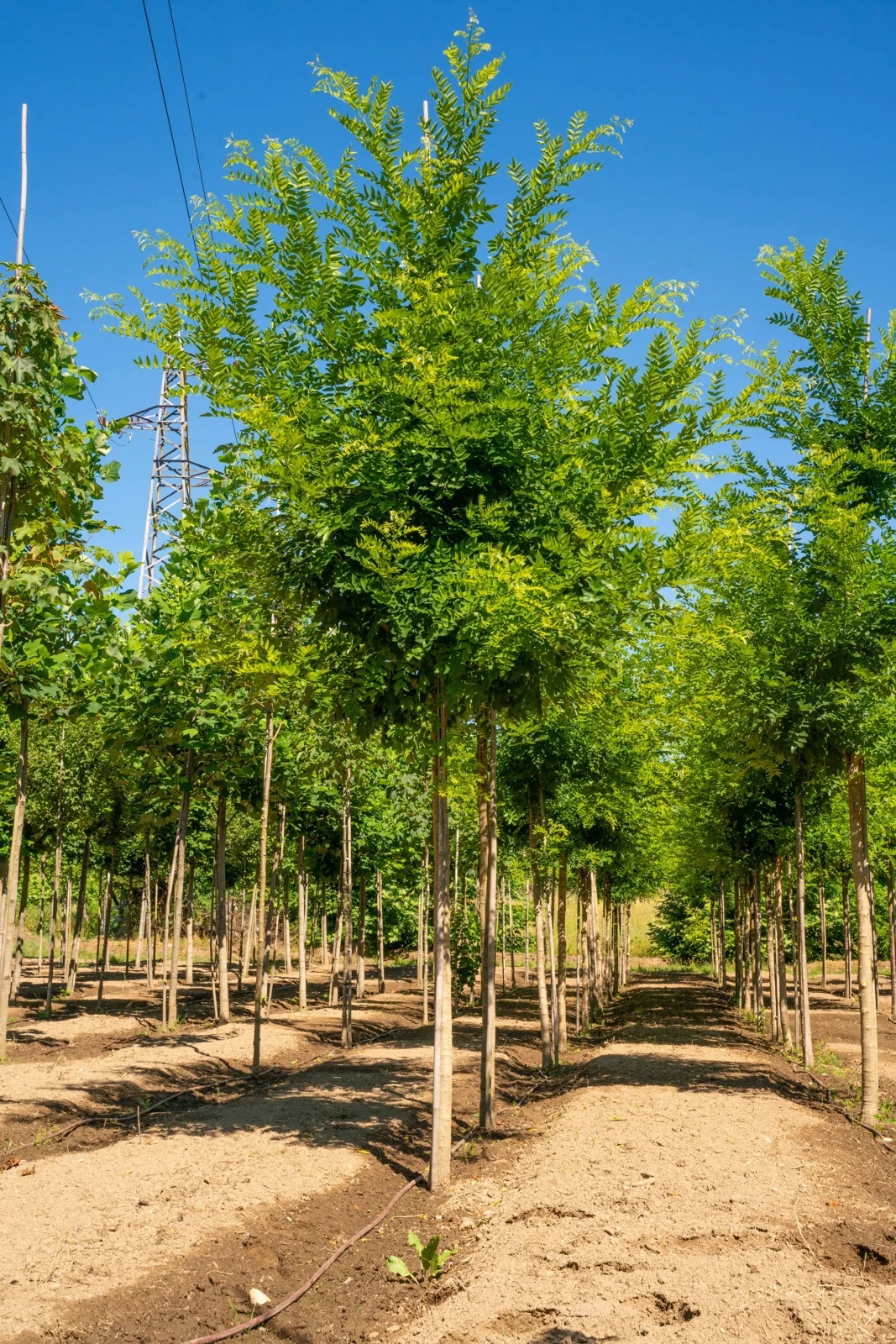
A selected street and avenue form with a vigorous, uniform upright-oval crown and glossy foliage, flowering in late summer when few large trees do. Specified where a Portuguese scheme needs reliable shade, pollution tolerance, and a clean structural line.
- Cream, lightly fragrant flowers through August and September
- Light, ferny canopy casting cool dappled shade over a terrace
- Deep-rooted and drought-tolerant once established after two or three summers
About this Cultivar
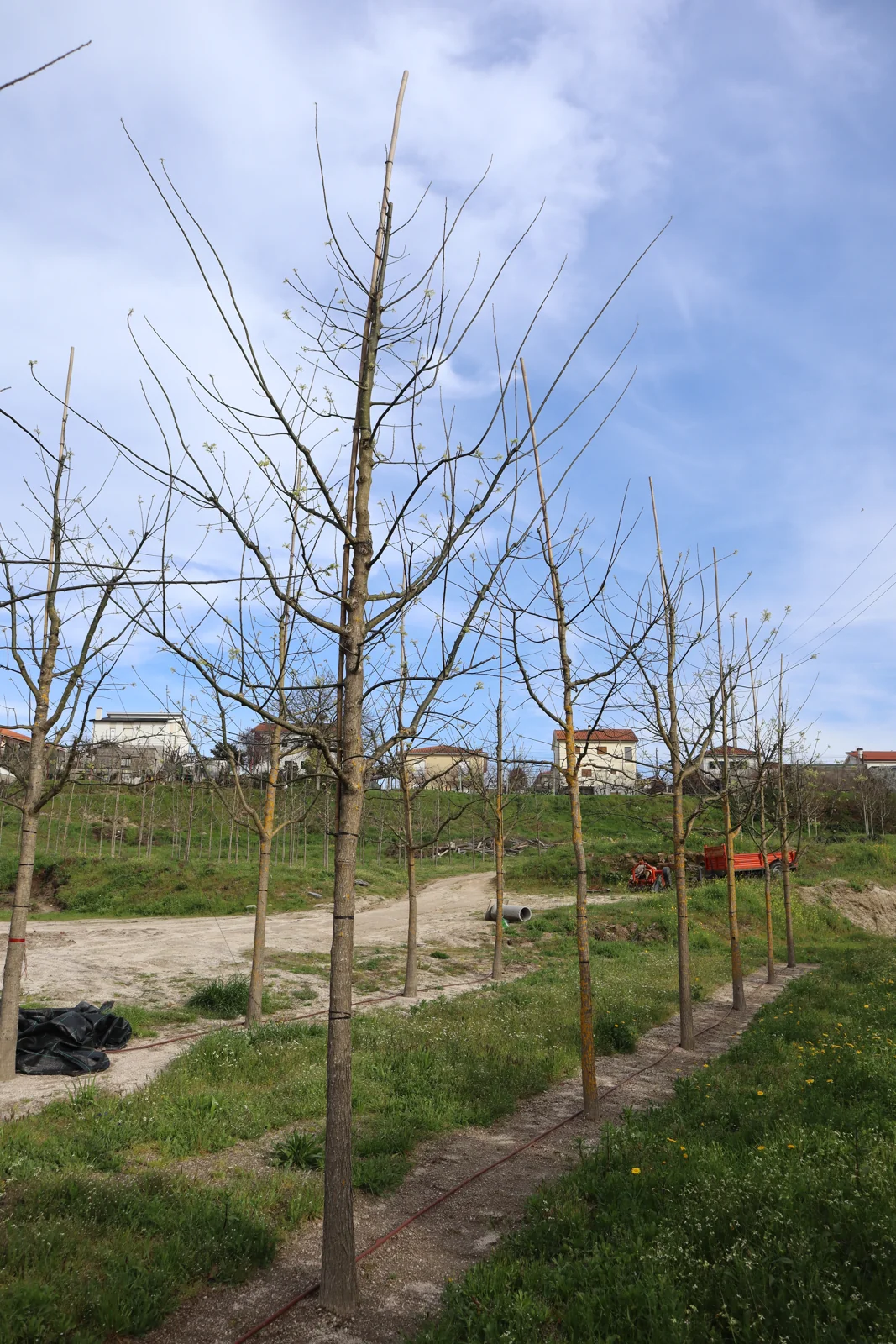
This selection of the Japanese pagoda tree (Sófora-do-japão) reaches 15 to 25 m tall and 12 to 18 m wide at maturity, carrying a rounded to upright-oval crown on a single clean stem. Unlike seedling-grown stock, which varies in habit, the cultivar holds a uniform feathered crown and establishes quickly, making it predictable for street alignments…
Read more
Show less
This selection of the Japanese pagoda tree (Sófora-do-japão) reaches 15 to 25 m tall and 12 to 18 m wide at maturity, carrying a rounded to upright-oval crown on a single clean stem. Unlike seedling-grown stock, which varies in habit, the cultivar holds a uniform feathered crown and establishes quickly, making it predictable for street alignments (arruamento), public squares (praça), and parking shade where a repeatable form matters across a planted run.
The defining feature is its flowering season: cream-white, pea-like flowers are carried in large terminal panicles from July into September, a period when almost no other large shade tree is in flower. Flowering is strongest after a hot summer, and the cultivar flowers earlier in life than seedling trees. Bees work the panicles heavily. As blooms drop they leave a pale carpet beneath the crown, which is worth noting where the tree overhangs paving or seating.
Performance suits the warmer, drier Portuguese contexts well. The species withstands heat, prolonged summer drought once established, and air pollution, and grows in full sun on well-drained loamy or sandy soils. It is a strong choice for the limestone soils and reflected pavement heat of urban Lisbon and for the calcareous, low-rainfall conditions of the coastal Algarve. In the hotter interior Alentejo it benefits from a single establishment irrigation cycle and deep planting through its first summers; in the humid Minho and Douro it accepts the higher rainfall provided drainage is good.
Maintenance is low once established, though the wood is brittle, so formative pruning to establish a sound branch structure is advisable in early years to reduce limb breakage in wind. The pods and seeds are toxic if eaten, relevant where the tree sits near play areas.
Advice on this species
Want to know more about Sophora japonica 'Regent'?
Tell us about your project and we'll advise you on this species — where it thrives, which size makes sense, and what to expect once planted.
- Produção própria
- Exemplares adultos
- Resposta em 1–2 dias
Sem compromisso · orçamento personalizado