

Silver-backed foliage for water’s edge and damp ground
White Willow · Salix alba
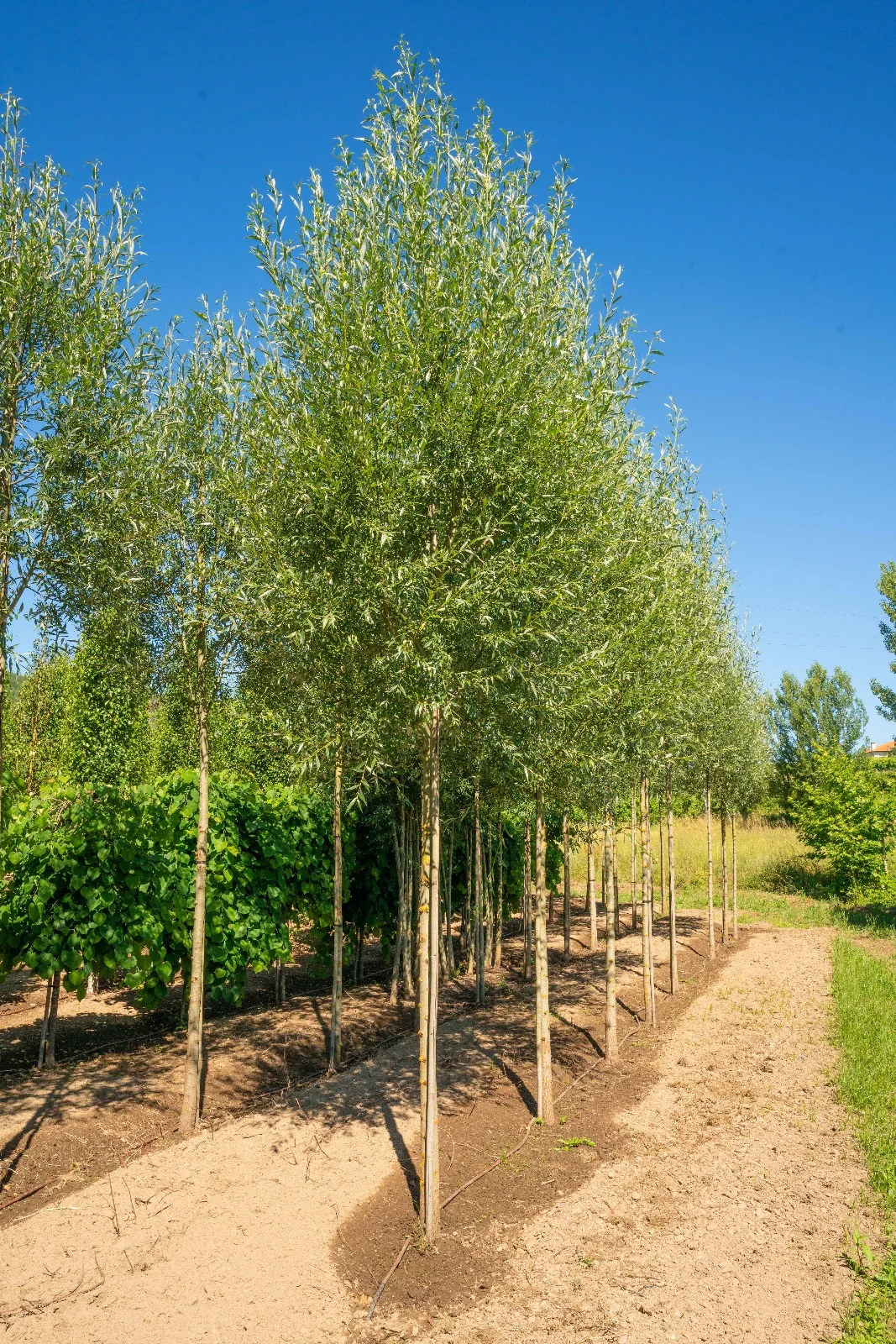
Where a scheme carries water, this fast-growing deciduous tree earns its place along stream banks, pond margins, and damp ground. Specifiers reach for it to anchor riparian edges and read its silver, silky leaf undersides across a planting.
- Silvered foliage that shimmers in the slightest breeze
- Soft yellow catkins in early spring before the leaves
- Fast-growing, giving height and presence within a few seasons
About this Species
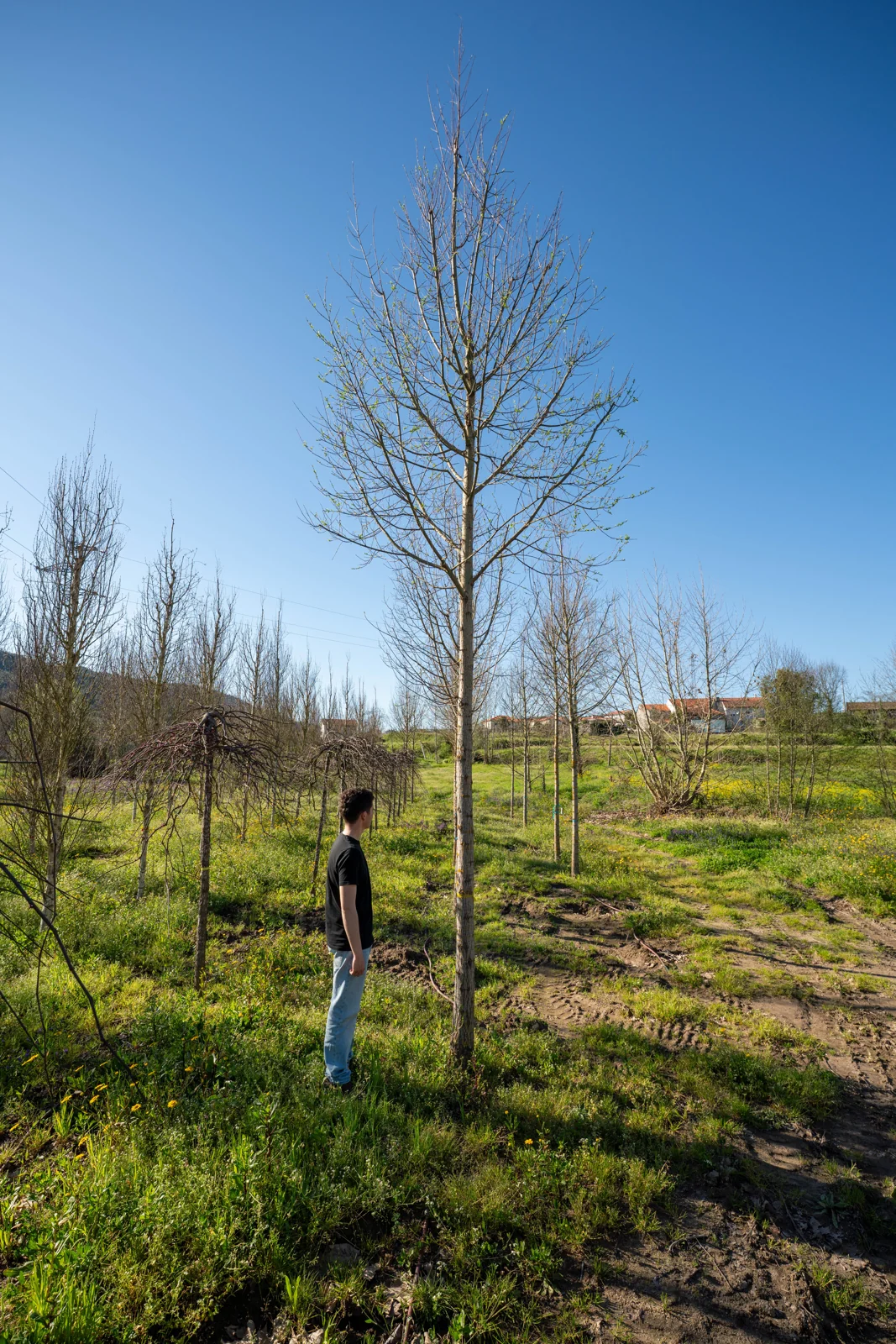
A fast-growing deciduous tree, it reaches 15 to 25 m in height with a spread of 10 to 15 m, carrying a rounded to spreading crown on branches that ascend steeply and turn pendulous at the tips. The lanceolate leaves are dark green above and silky white beneath, so the crown shifts to silver in moving air, and they pass to pale yellow before leaf fall.…
Read more
Show less
A fast-growing deciduous tree, it reaches 15 to 25 m in height with a spread of 10 to 15 m, carrying a rounded to spreading crown on branches that ascend steeply and turn pendulous at the tips. The lanceolate leaves are dark green above and silky white beneath, so the crown shifts to silver in moving air, and they pass to pale yellow before leaf fall. Yellow male catkins open with the new leaves in March and April. Used as a riparian species (vegetação ribeirinha) or a single feature specimen, it sits in the same wet-ground role as the native choupo (Populus) and freixo (Fraxinus angustifolia).
The defining requirement is moisture at the root. This species thrives where ground water sits near the surface: stream banks, pond and lake margins, floodplains, and seasonally wet low ground. In the humid Minho and Douro, with 1200 to 1800 mm of annual rainfall, it establishes readily on granite and schist soils. Field-grown in Amarante under roughly 950 mm of rainfall, mild winters, and dry summers, it carries direct domestic-supply experience of Portuguese conditions. In urban Lisbon, the coastal Algarve, and the interior Alentejo, plant it beside open water or on irrigated ground, and give it supplementary irrigation through its first summers, since prolonged summer drought is its real limit.
The wood is light and the branches are brittle, so site it clear of parking and frequent footfall, where shed twigs and leaf litter present no problem. Its shallow, water-seeking raízes recommend distance from drains, paving, and underground services. Formative pruning in late winter builds a sound framework, and the tree responds well to hard pruning and pollarding for managed forms. It suits larger landscapes, water features, and slope stabilisation on damp ground rather than confined street pits.



Advice on this species
Want to know more about Salix alba?
Tell us about your project and we'll advise you on this species — where it thrives, which size makes sense, and what to expect once planted.
- Produção própria
- Exemplares adultos
- Resposta em 1–2 dias
Sem compromisso · orçamento personalizado