

The broad-crowned heritage oak for cooler, well-watered gardens
English Oak · Quercus robur
Broad-crowned and deep-rooted, this is a framework tree for the long term: a native Portuguese oak that anchors parks, estate avenues, and large gardens where a single specimen must hold the structure of a scheme for generations.
- Broad, rounded crown casting generous shade at maturity
- Deep anchoring roots give steadiness on exposed, open ground
- Tolerates heavy clay as well as deep, fertile loam
About this Species
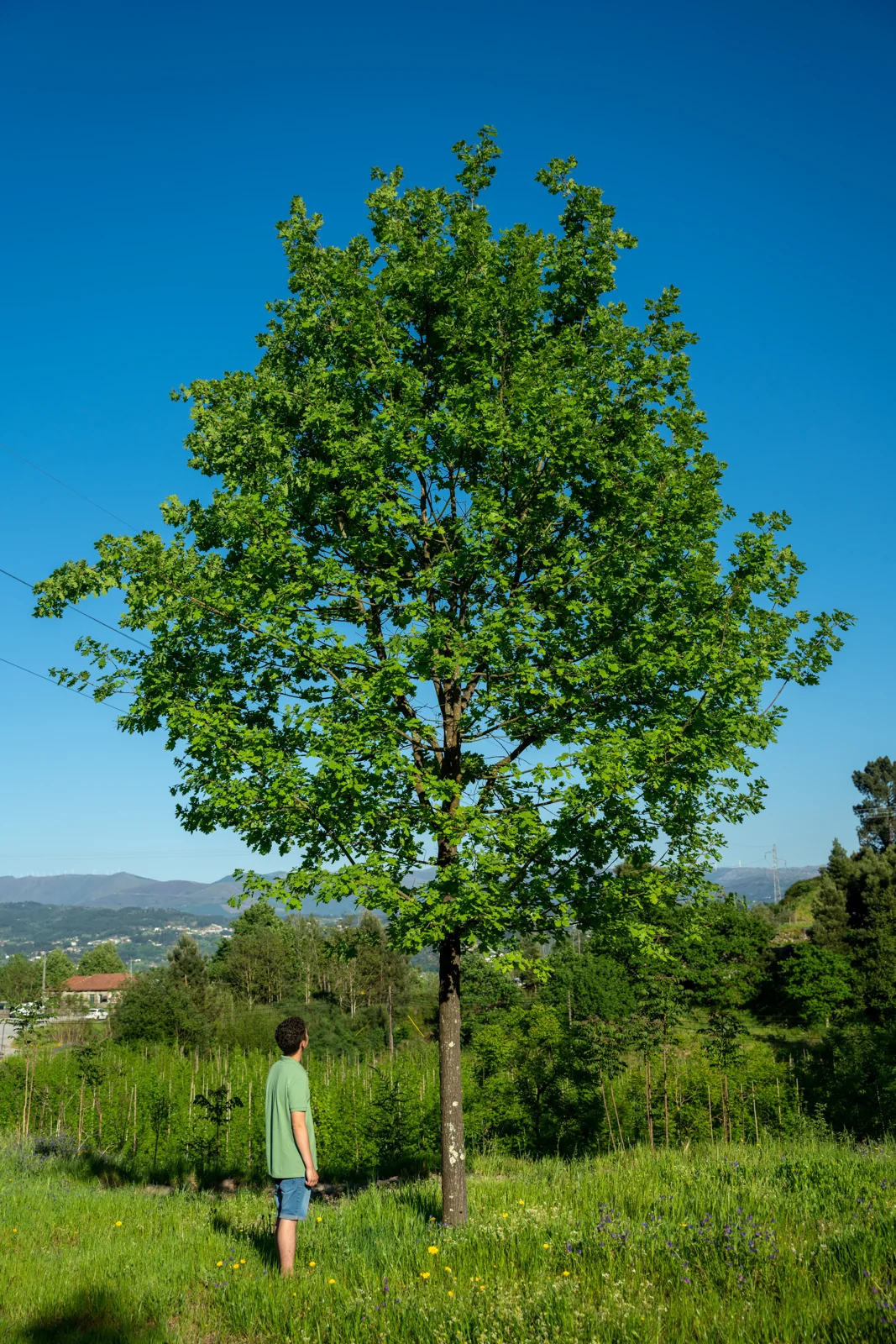
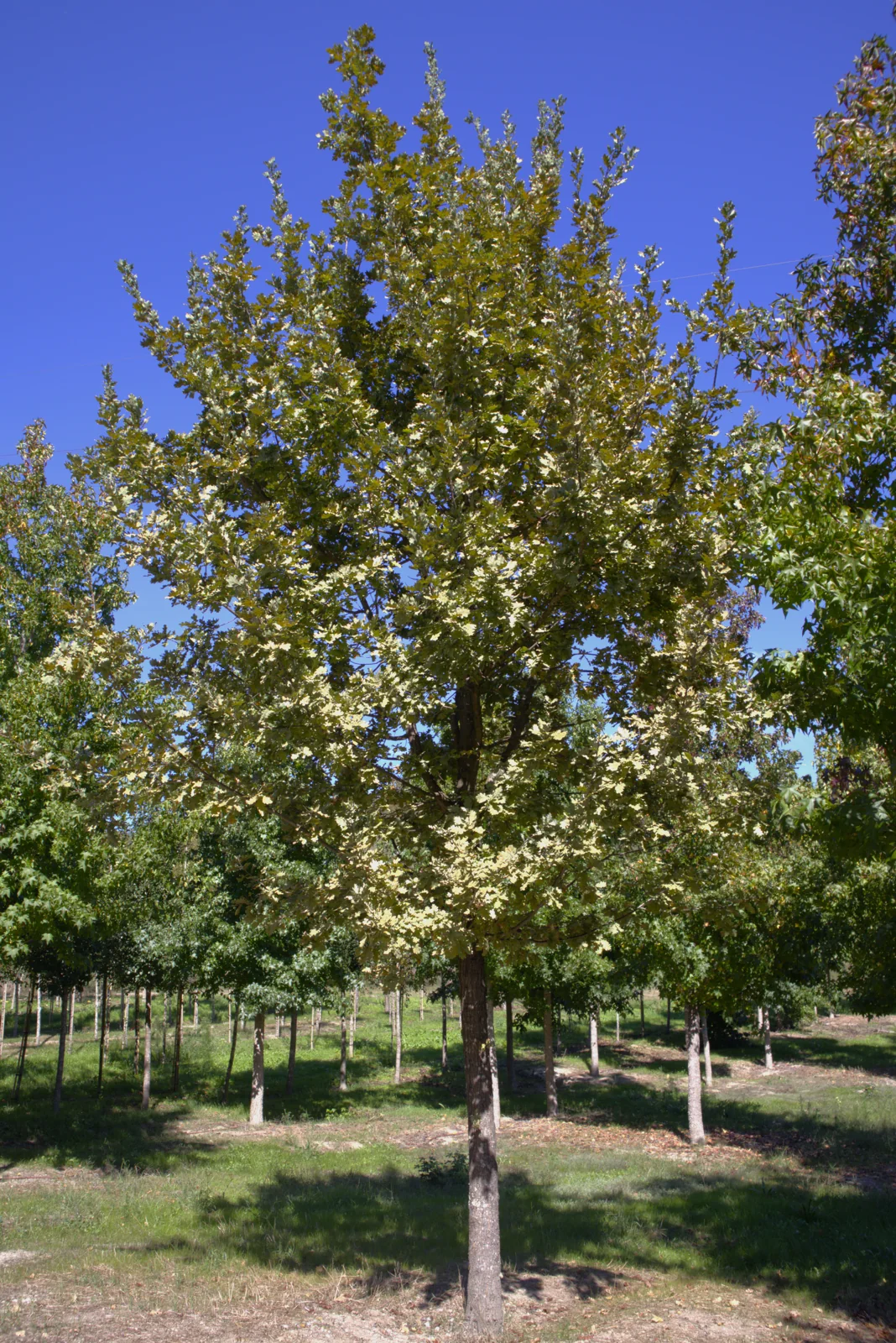
A large deciduous tree, the pedunculate oak (carvalho-roble) reaches 20 to 35 metres in height with a spread of 15 to 25 metres at maturity, carried on a single stout trunk and a broad, rounded, spreading crown. Growth is medium, so it reads as a slow-building structural investment rather than a quick screen. It suits the roles a Portuguese project asks of…
Read more
Show less
A large deciduous tree, the pedunculate oak (carvalho-roble) reaches 20 to 35 metres in height with a spread of 15 to 25 metres at maturity, carried on a single stout trunk and a broad, rounded, spreading crown. Growth is medium, so it reads as a slow-building structural investment rather than a quick screen. It suits the roles a Portuguese project asks of a major canopy tree: solitary feature specimen, shade tree for a park or public square (praca), and the framework planting of an estate avenue or alameda.
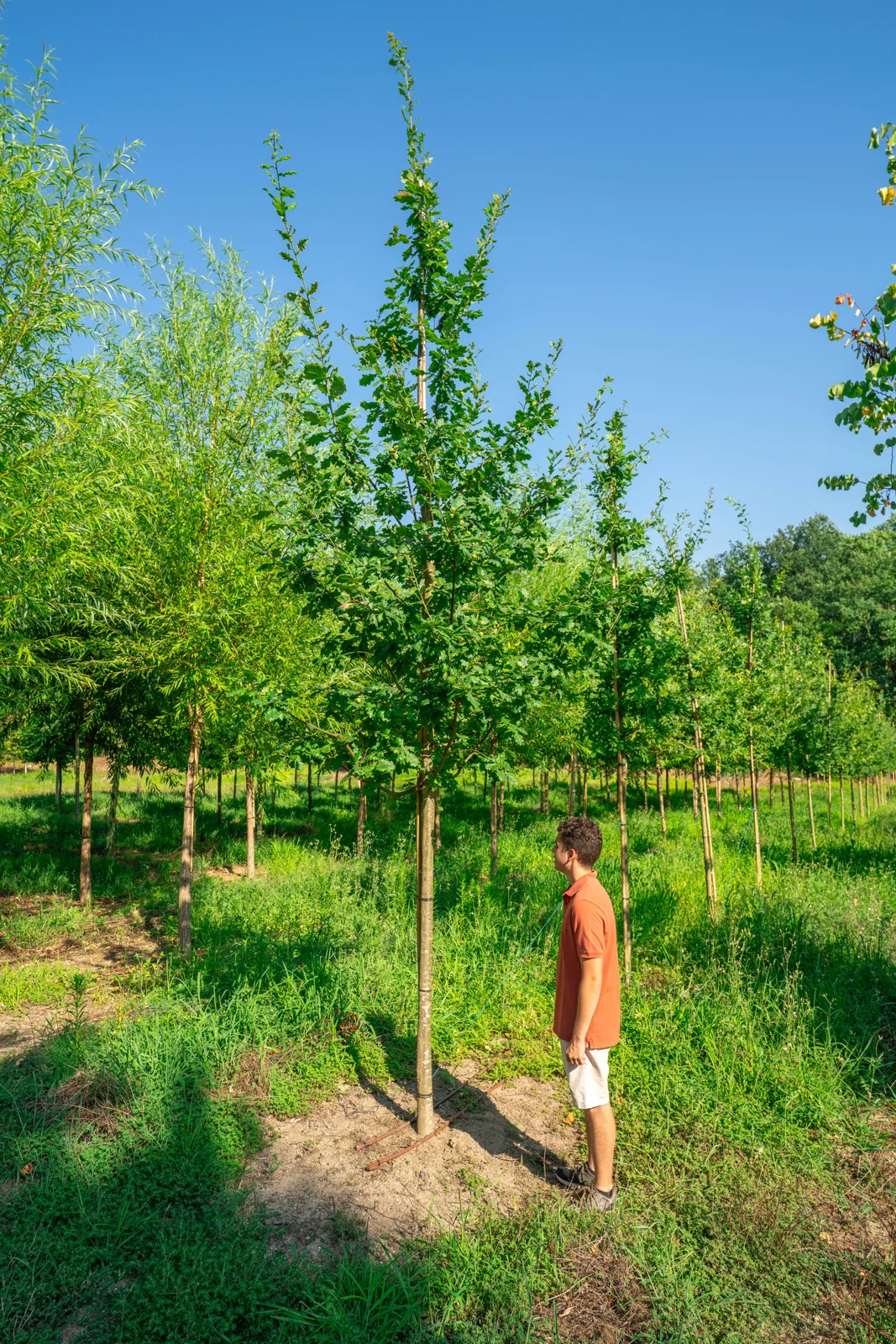
This is a species native to Portugal, so its performance is anchored in local conditions rather than inferred from abroad. It is well suited to the humid Atlantic north, where the granite and schist soils and 1200 to 1800 mm of annual rainfall in the Minho and Douro match its preference for moist, well-drained ground, and it tolerates heavy clay that defeats many specimen trees. Diaplant grows it field-grown (cultivado em pleno solo) in Amarante, where roughly 950 mm of rainfall, mild winters, and dry summers reproduce the conditions of much of the northern half of the country.
Drought tolerance is moderate and develops with the deep root system, which makes the tree dependable once established but reliant on water while young. In the hot interior Alentejo and the dry coastal Algarve, specify a deep planting position and a single establishment irrigation cycle through the first summers; on the limestone-derived soils of urban Lisbon it performs where the soil holds moisture. Frost hardiness is high, so cooler interior winters present no constraint.
Maintenance is low for a tree of this scale. Formative pruning sets the framework, after which the crown needs little intervention, and the species recovers well from pruning. Powdery mildew (Erysiphe alphitoides) can mark foliage in humid summers without lasting harm. Leaf and acorn litter and the deep roots make it a tree for open ground, parks, and large gardens rather than narrow paved alignments.



Advice on this species
Want to know more about Quercus robur?
Tell us about your project and we'll advise you on this species — where it thrives, which size makes sense, and what to expect once planted.
- Produção própria
- Exemplares adultos
- Resposta em 1–2 dias
Sem compromisso · orçamento personalizado