

Slender upright oak for the narrow drive
English Oak ‘Fastigiata Koster’ · Quercus robur ‘Fastigiata Koster’
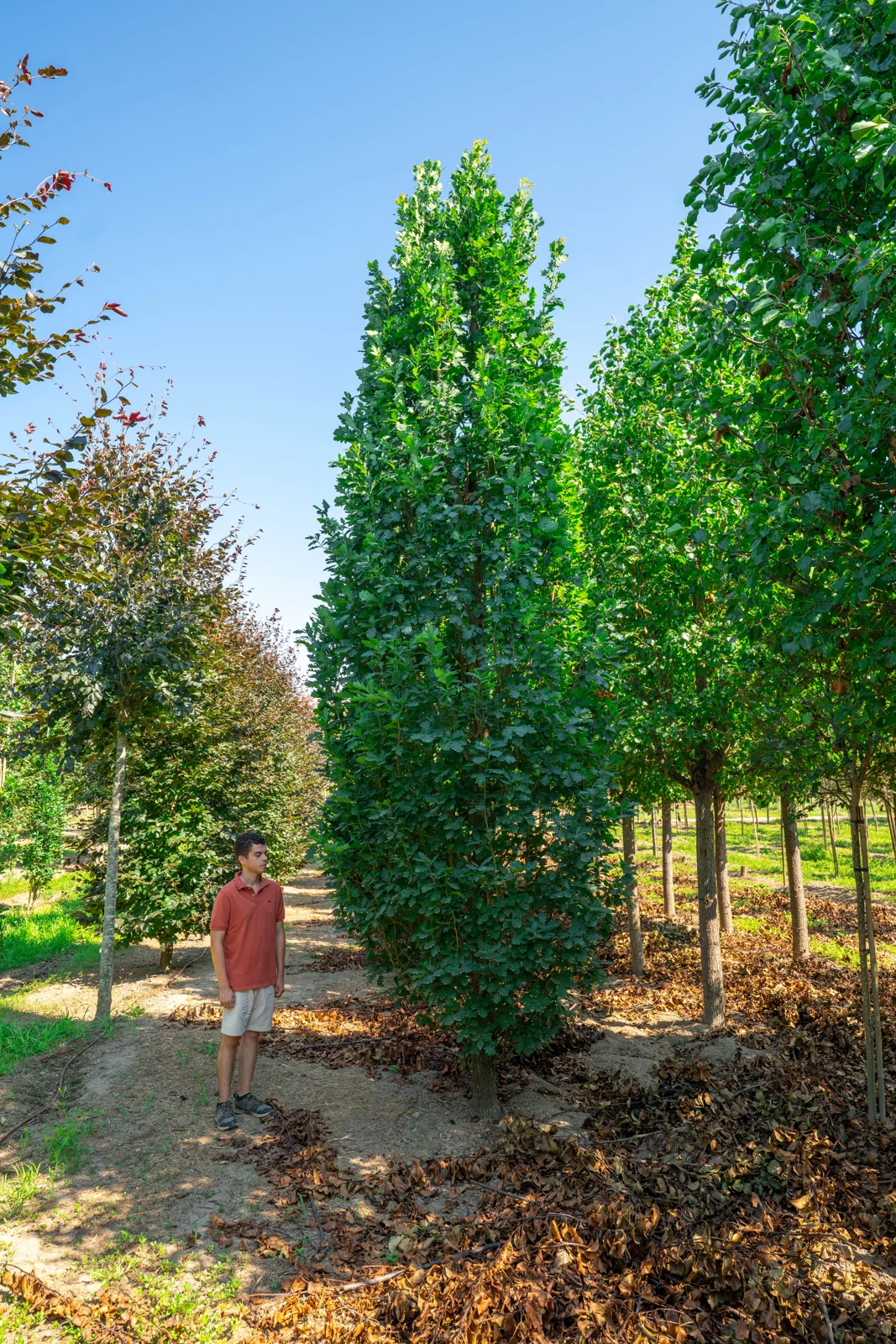
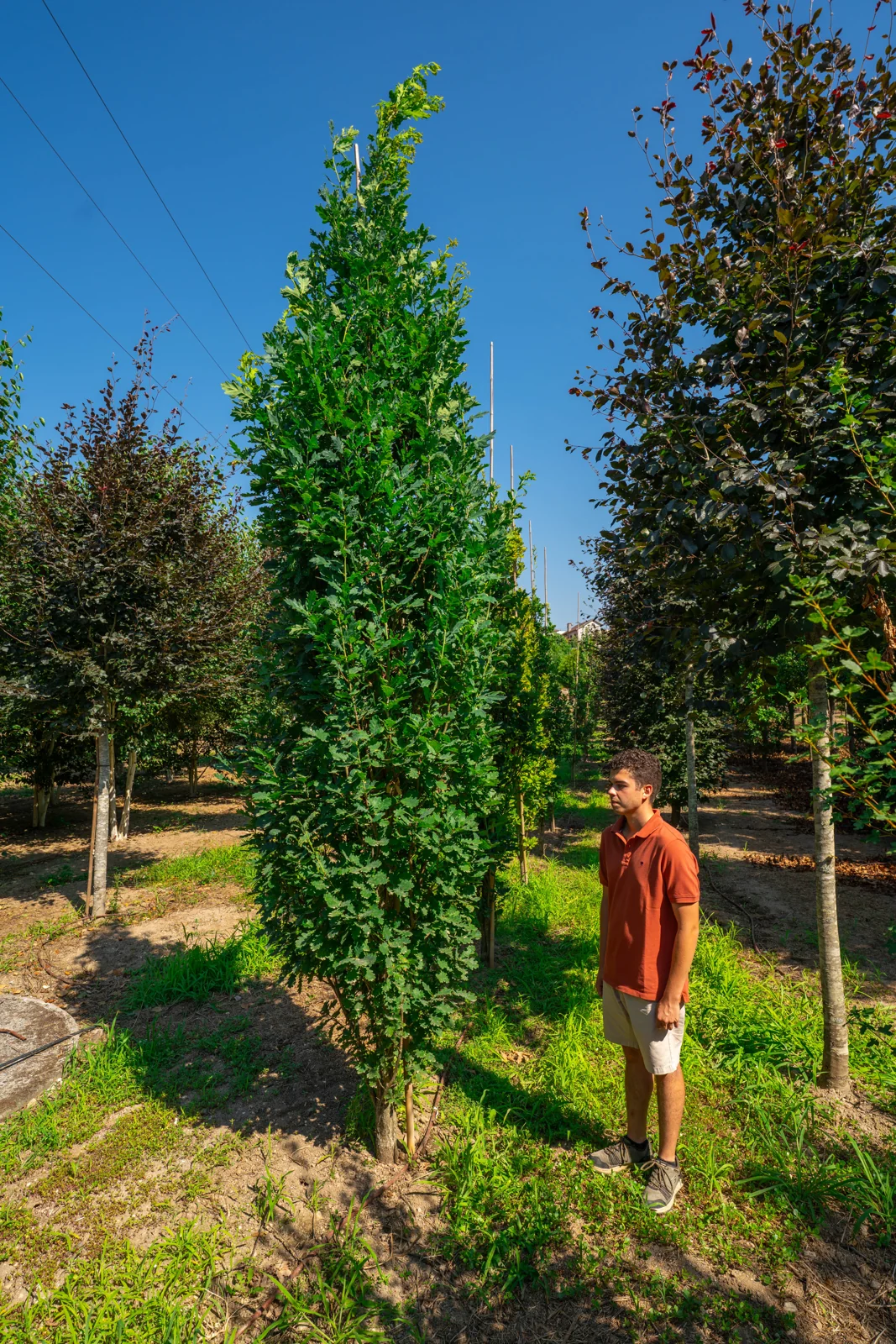
Narrow and strongly upright, this form of the English oak holds a tight columnar crown on dense branching, giving a landscape architect oak permanence where width is constrained and a vertical accent is wanted on a Portuguese scheme.
- Narrow, upright crown to around 4 metres wide
- Reaches roughly 20 metres in height at maturity
- The stature of an oak for a confined space
Key Facts
About this Cultivar
The columnar habit (porte colunar) is the defining trait: dense branching wraps close to a single stem, producing a tight vertical silhouette rather than the broad, rounded crown of the species. Mature dimensions in cultivation reach roughly 20 m in height against a spread of only 3 to 4 m, which suits narrow alignments (arruamentos), avenues with limited…
Read more
Show less
The columnar habit (porte colunar) is the defining trait: dense branching wraps close to a single stem, producing a tight vertical silhouette rather than the broad, rounded crown of the species. Mature dimensions in cultivation reach roughly 20 m in height against a spread of only 3 to 4 m, which suits narrow alignments (arruamentos), avenues with limited lateral clearance, and squares (pracas) where a tall structural accent is needed but canopy spread must stay controlled.
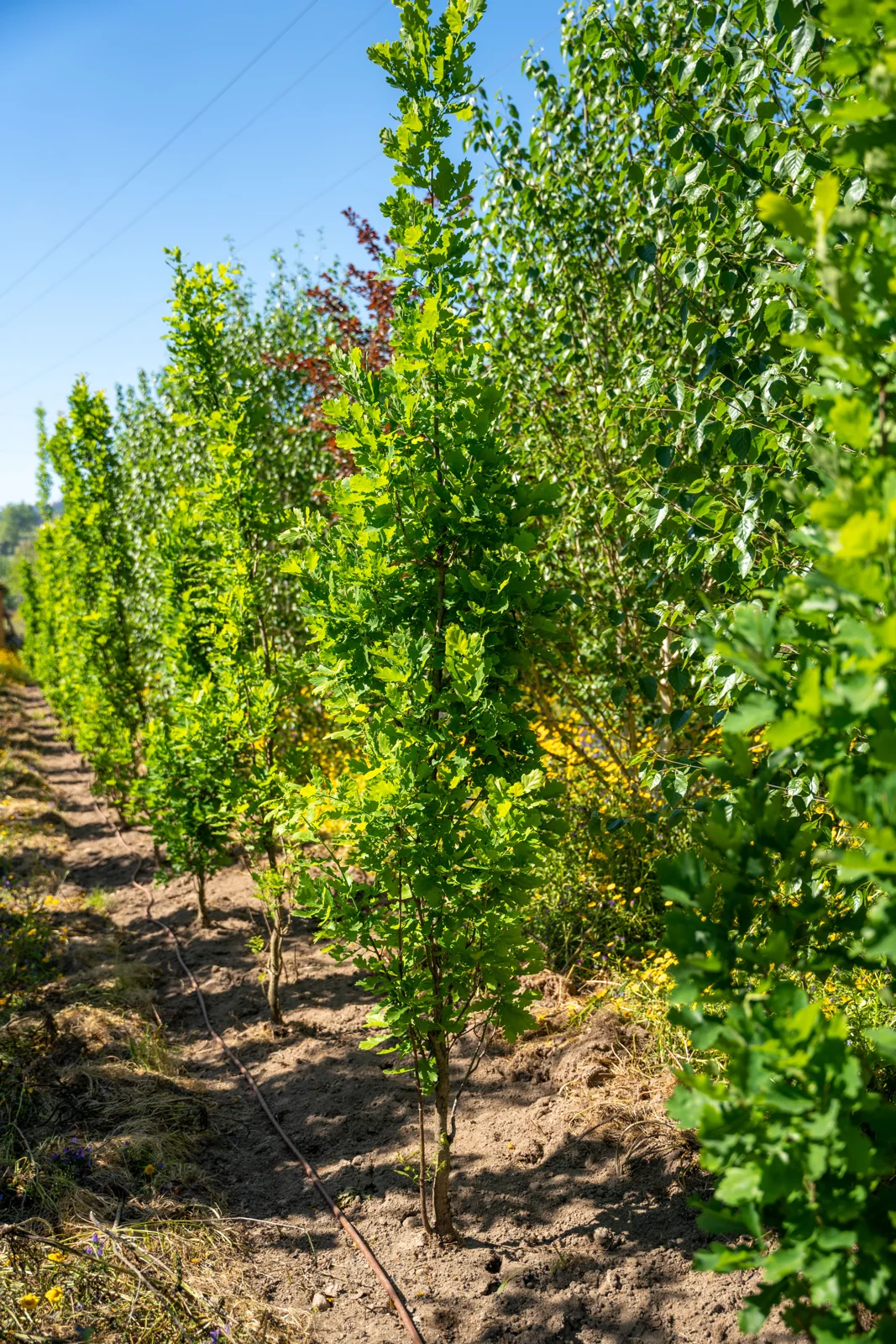
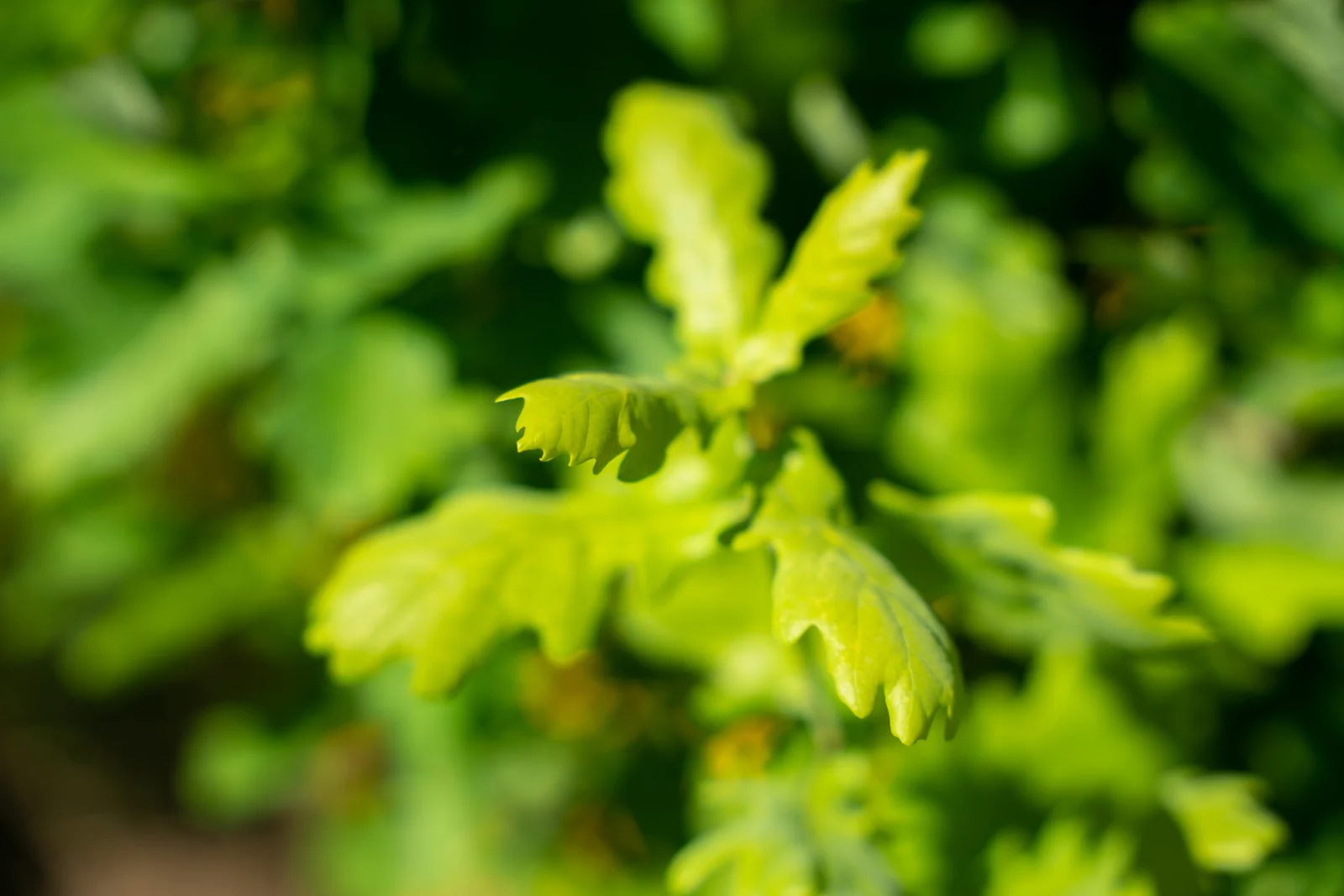
Growth is moderate, and the form reads as a clear vertical from a young calibre, so the design intent is legible long before maturity. The foliage is deciduous, dark green through the season and turning yellow-brown in autumn. Spring catkins and the acorns carried in autumn give the tree wildlife value, drawing birds, and the litter is modest relative to broad-crowned oaks because the crown footprint is small.
Performance across Portuguese conditions is broad. The species tolerates most soil types, including the heavy clays common inland, and withstands urban air pollution and reflected heat from paving, which supports use in hard-landscaped settings such as Greater Lisbon streets and pracas. Drought tolerance is moderate and develops with a deep root system once established: in the coastal Algarve and interior Alentejo, where summers are long and dry, a single establishment irrigation cycle through the first summers is advisable, after which the tree carries the dry season with little support.
In the humid Minho and Douro the tree establishes readily on granite and schist soils, though high summer humidity can bring powdery mildew on the foliage in still positions, a cosmetic pressure managed by open siting in full sun. Field-grown in Amarante (cultivado em pleno solo, approximately 950 mm annual rainfall, mild winters, dry summers), the stock is conditioned to the Atlantic-influenced north and transplants with a stabilised root ball (torrao). The narrow form and frost hardiness make it a dependable framework tree where the species oak would outgrow its space.
Advice on this species
Want to know more about Quercus robur 'Fastigiata Koster'?
Tell us about your project and we'll advise you on this species — where it thrives, which size makes sense, and what to expect once planted.
- Produção própria
- Exemplares adultos
- Resposta em 1–2 dias
Sem compromisso · orçamento personalizado