

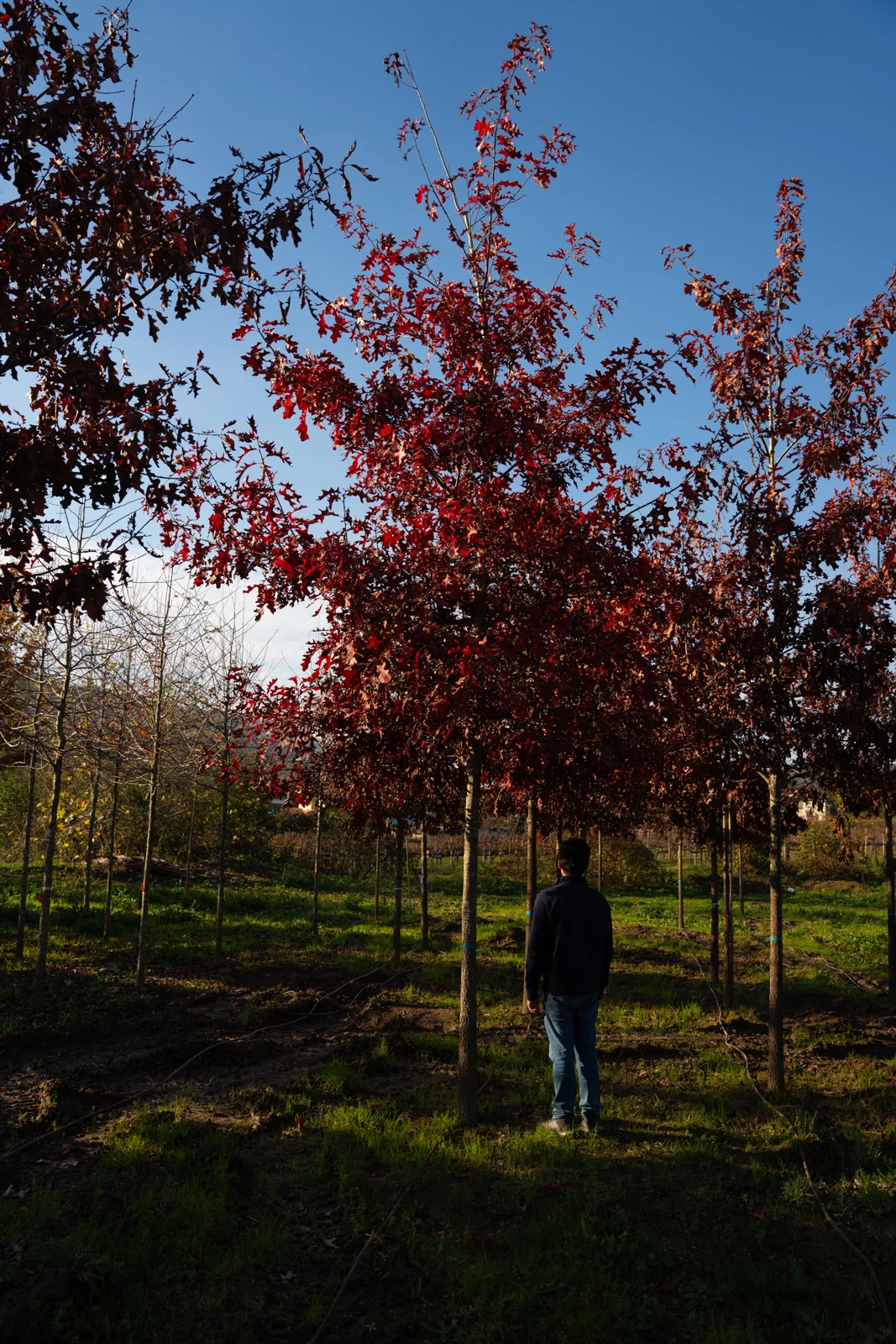
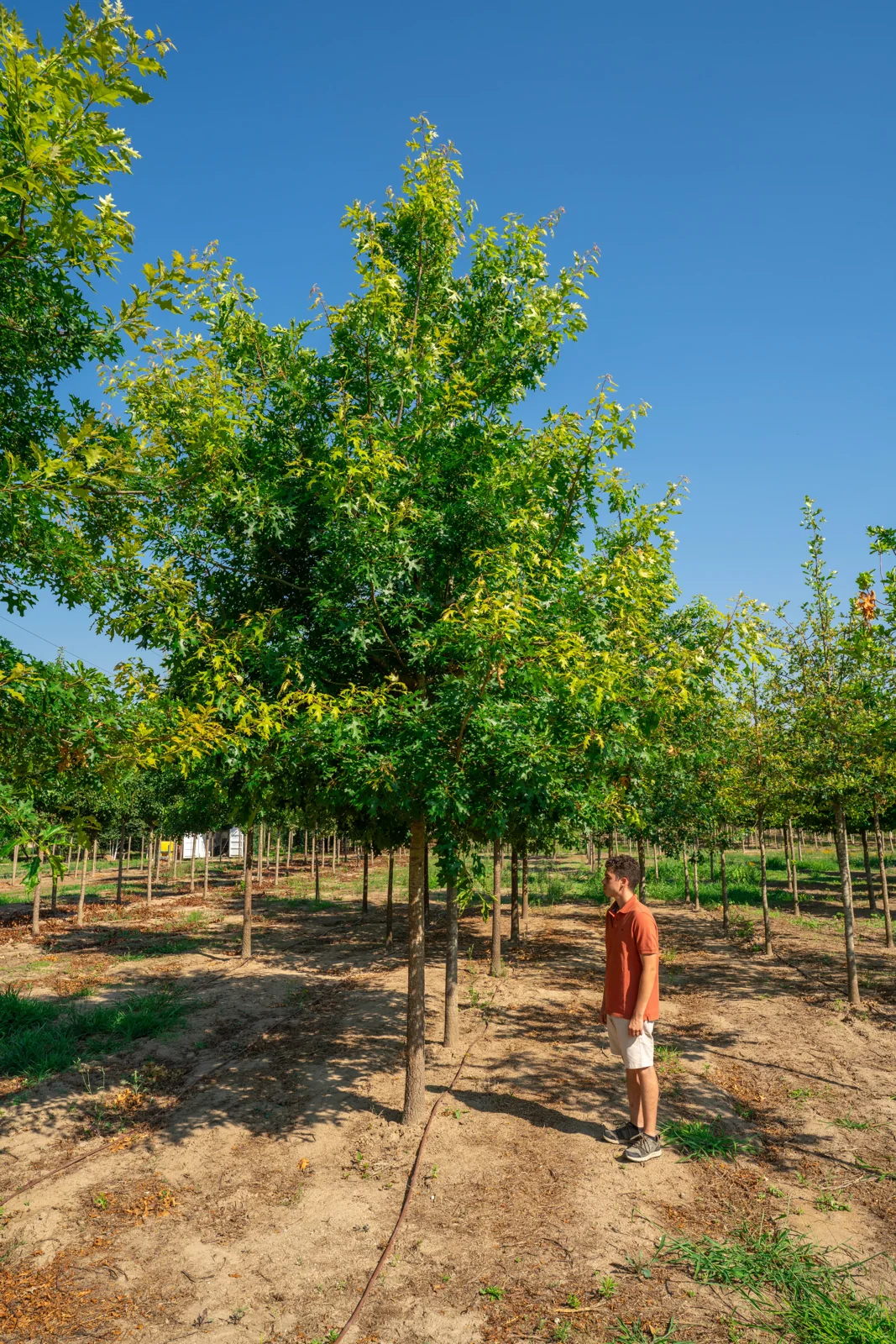
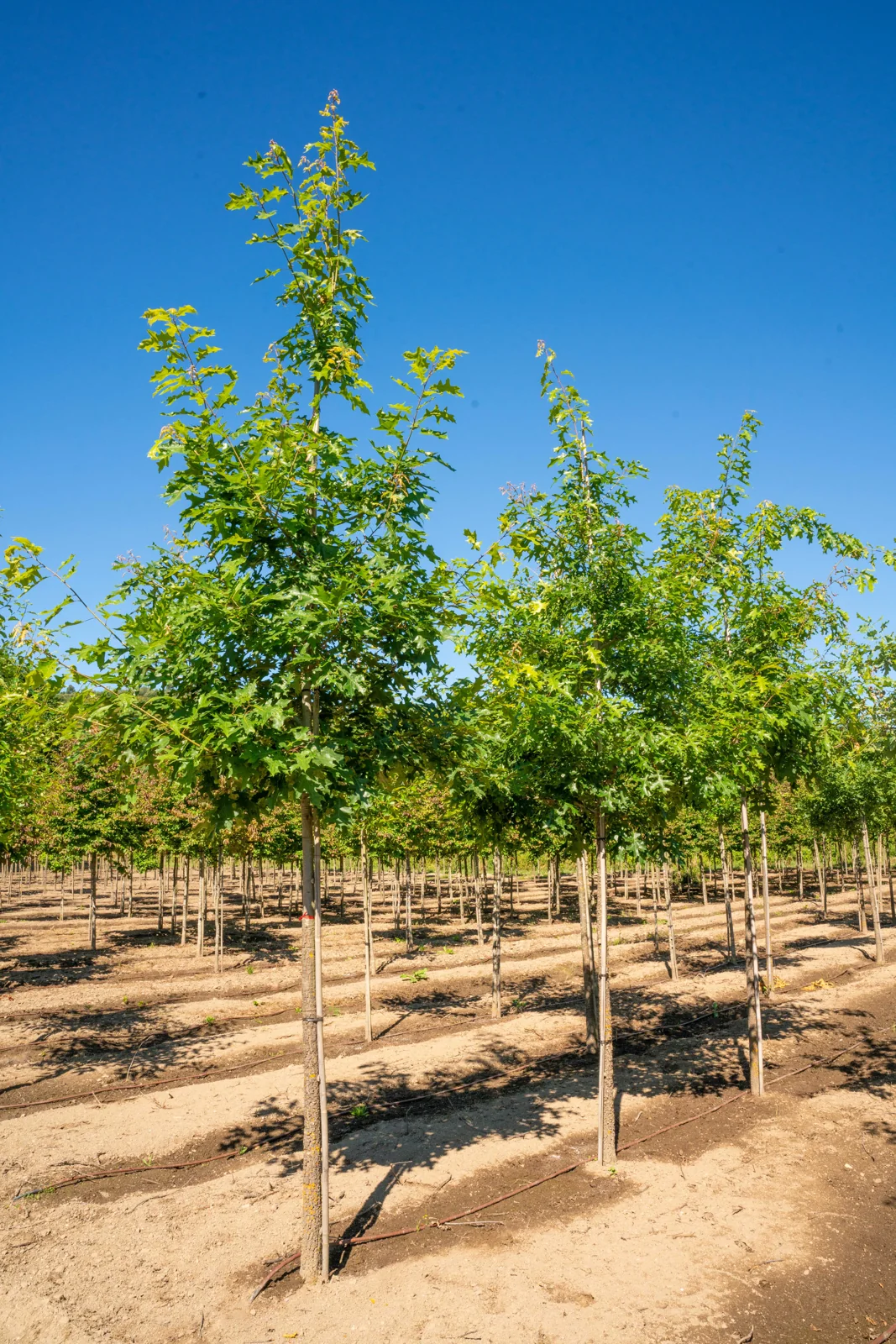
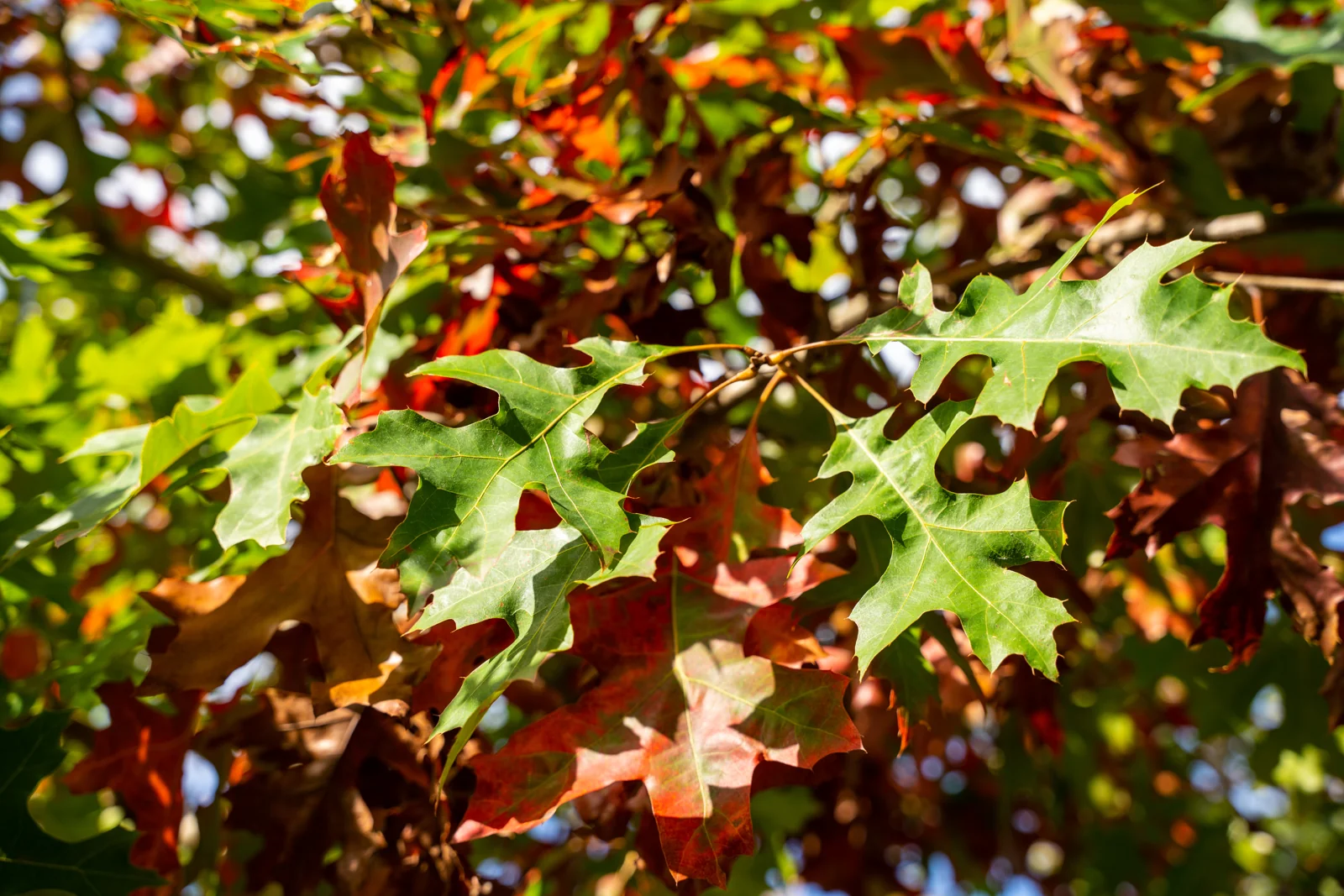
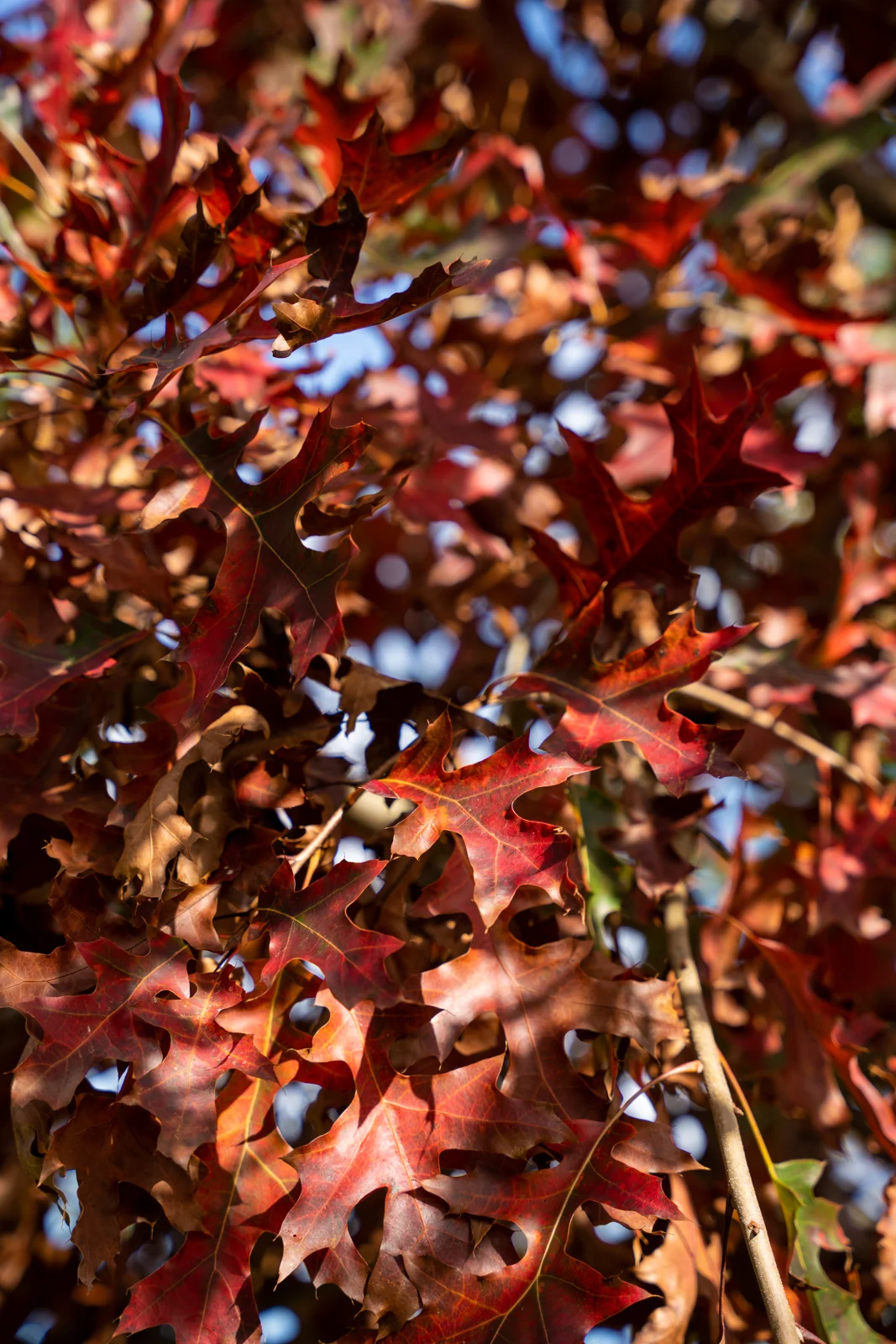

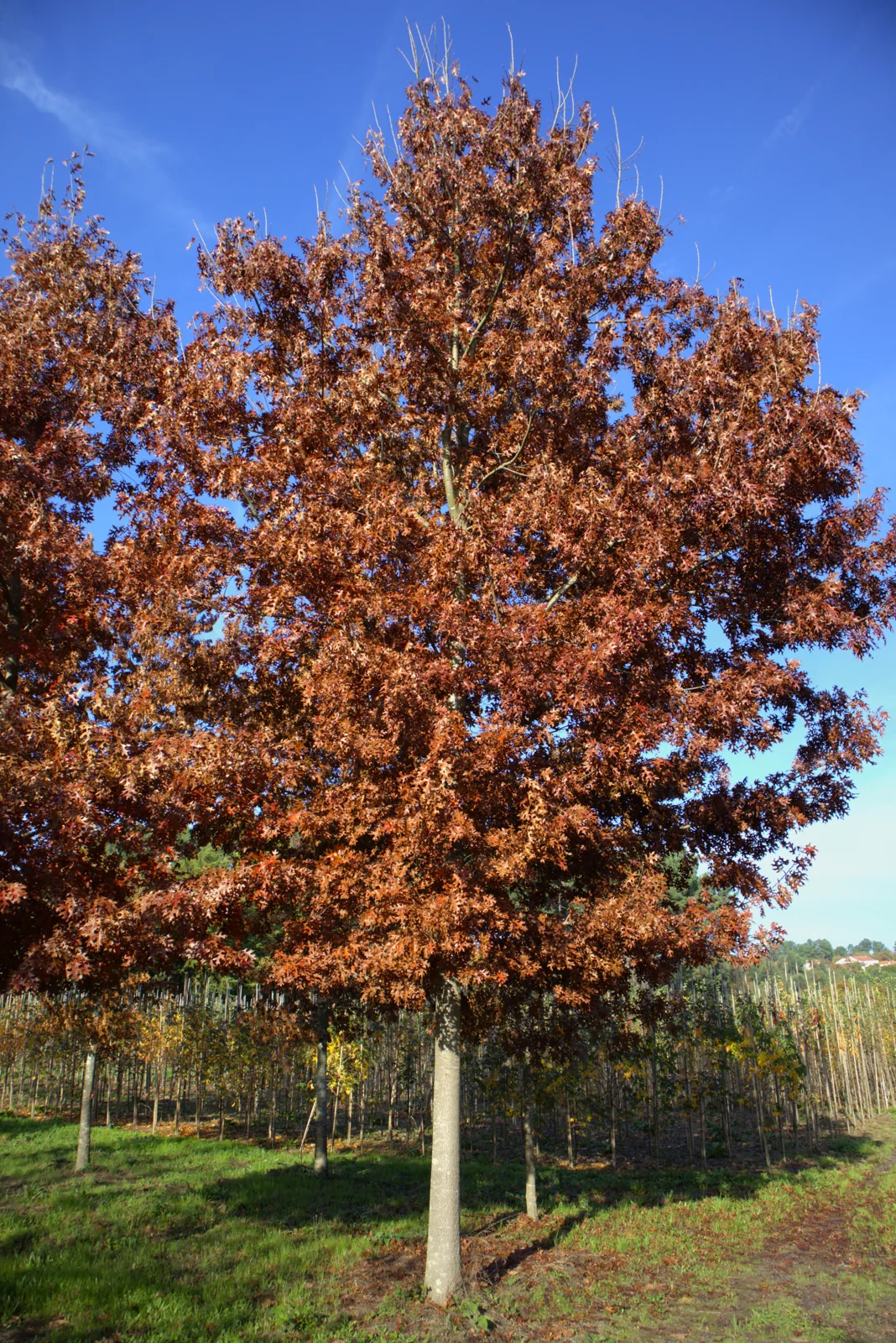
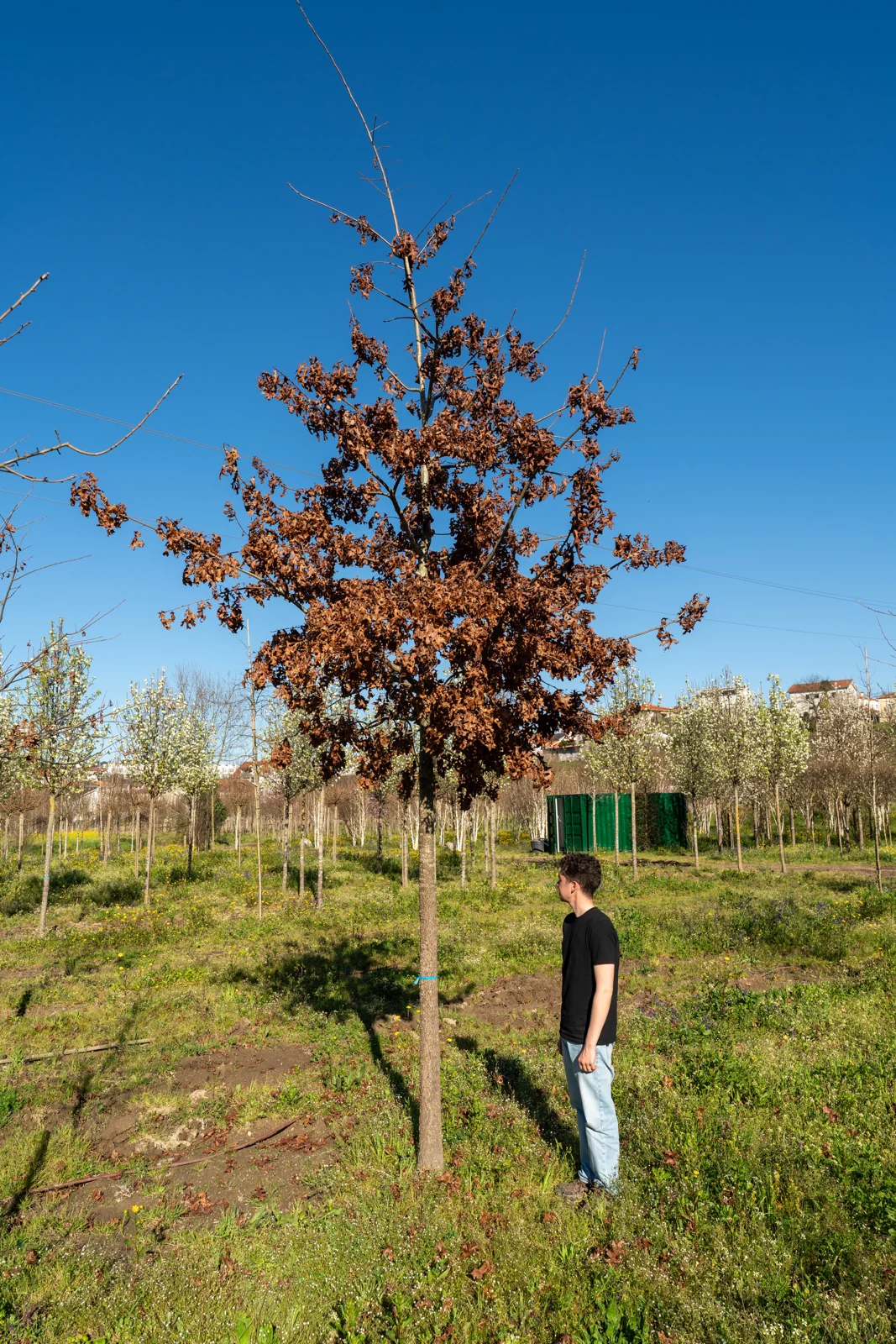
A deciduous oak for the long, scarlet autumn
Scarlet Oak · Quercus coccinea
Deeply lobed and open-crowned, this red oak earns its place where a project needs a fast-establishing framework tree that turns a late, sustained scarlet. A strong candidate for parks, large gardens, and spacious alignments on acidic ground.
- Clear scarlet autumn colour arriving late and holding six to eight weeks
- Open, dappled crown lets shrubs and underplanting grow beneath it
- Quick to establish for an oak, with glossy, finely lobed summer foliage
About this Species
Reaching 15 to 25 metres in height with a spread of 12 to 18 metres, the scarlet oak (carvalho-escarlate) carries a rounded, open crown on a single stem, well above average pace for an oak. It matures relatively early and casts dappled rather than dense shade, so underplanting with shade-tolerant shrubs remains workable. For a landscape architect, this is a…
Read more
Show less
Reaching 15 to 25 metres in height with a spread of 12 to 18 metres, the scarlet oak (carvalho-escarlate) carries a rounded, open crown on a single stem, well above average pace for an oak. It matures relatively early and casts dappled rather than dense shade, so underplanting with shade-tolerant shrubs remains workable. For a landscape architect, this is a framework tree and shade specimen for parks, public lawns, and large gardens, suited to street alignments (arruamento) only where the planting space accommodates the wide crown.
Its defining asset is autumn colour: the glossy summer foliage turns a deep scarlet that arrives later than other oaks and persists for six to eight weeks, giving a long season of interest. Colour intensity varies with provenance, so specifying field-grown stock of known origin is the reliable route to the display the species is named for.
The species asks for full sun and free-draining ground, and it performs best on acidic soils. This makes it a natural fit for the granitic and schist soils of the humid Minho and Douro, where Atlantic rainfall and milder summers suit it well. Unlike the related pin oak (Quercus palustris), it resists chlorosis on more alkaline, limestone-derived soils, widening its use into Greater Lisbon and coastal schemes where drainage is sound.
Drought tolerance is moderate once the deep taproot is established; on the drier interior Alentejo and on the calcareous Algarve coast, deep planting and a supporting irrigation cycle through the first summers are advisable. Salt tolerance is low, so estuarine and exposed coastal positions want shelter.
Maintenance is undemanding: formative pruning when young to establish a clear stem, then little intervention. Field-grown in Amarante (roughly 950 mm annual rainfall, mild winters, dry summers), Diaplant's specimens are raised under Portuguese conditions, giving the specifier a domestically grown tree with a proven establishment record.



Advice on this species
Want to know more about Quercus coccinea?
Tell us about your project and we'll advise you on this species — where it thrives, which size makes sense, and what to expect once planted.
- Produção própria
- Exemplares adultos
- Resposta em 1–2 dias
Sem compromisso · orçamento personalizado