

A wide, level-crowned flowering cherry for the spring garden
Japanese Cherry ‘Shirotae’ · Prunus serrulata ‘Shirotae’
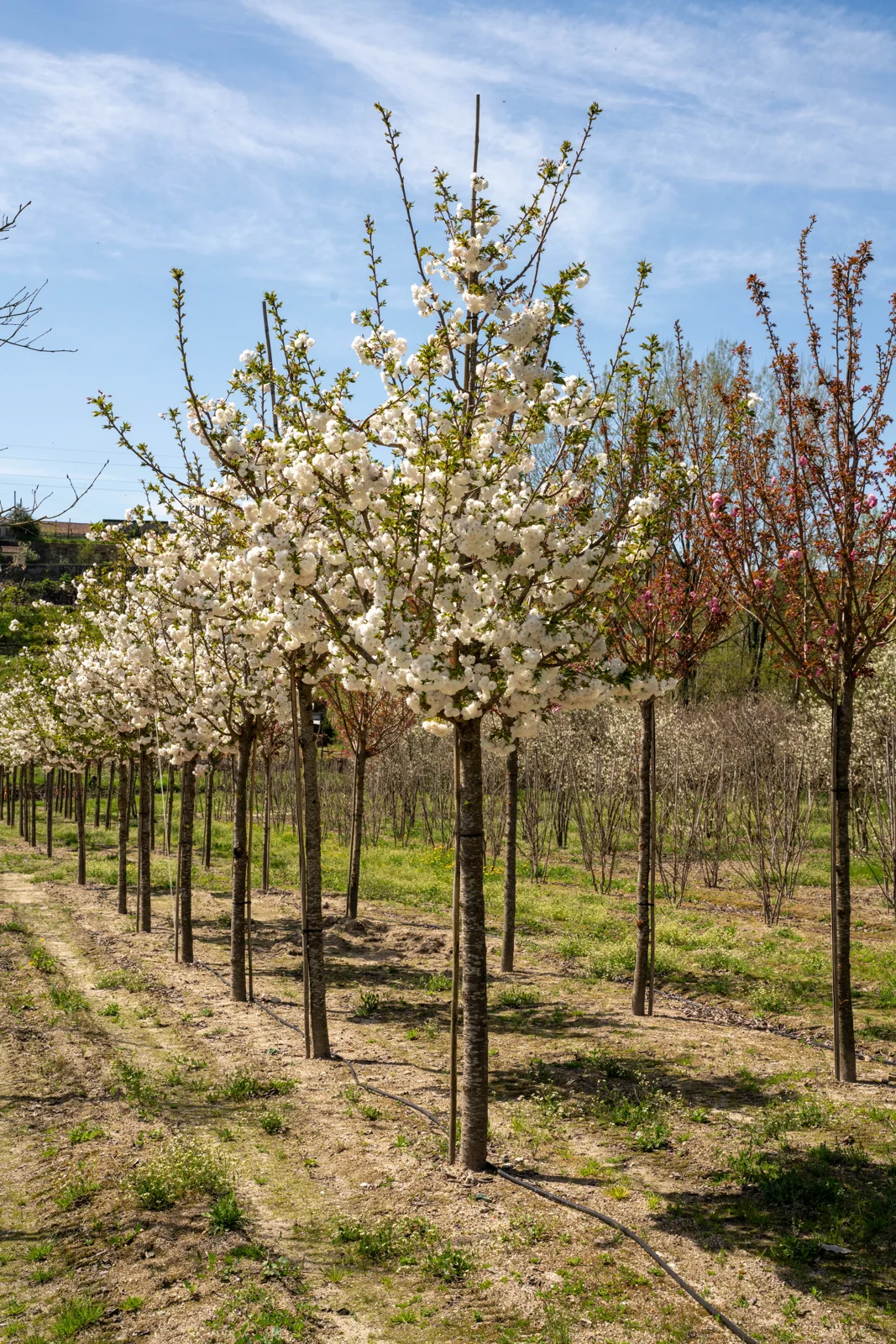
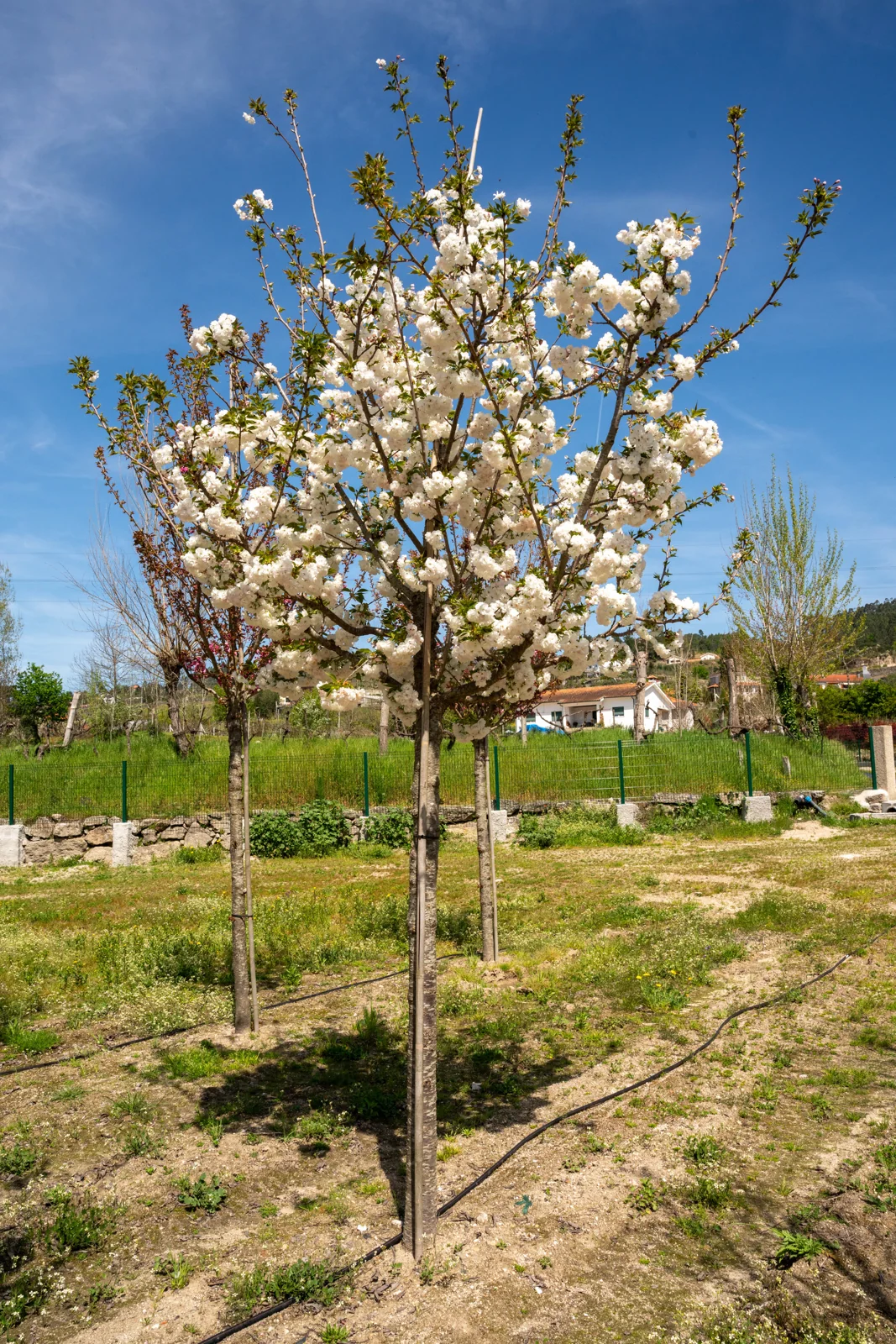
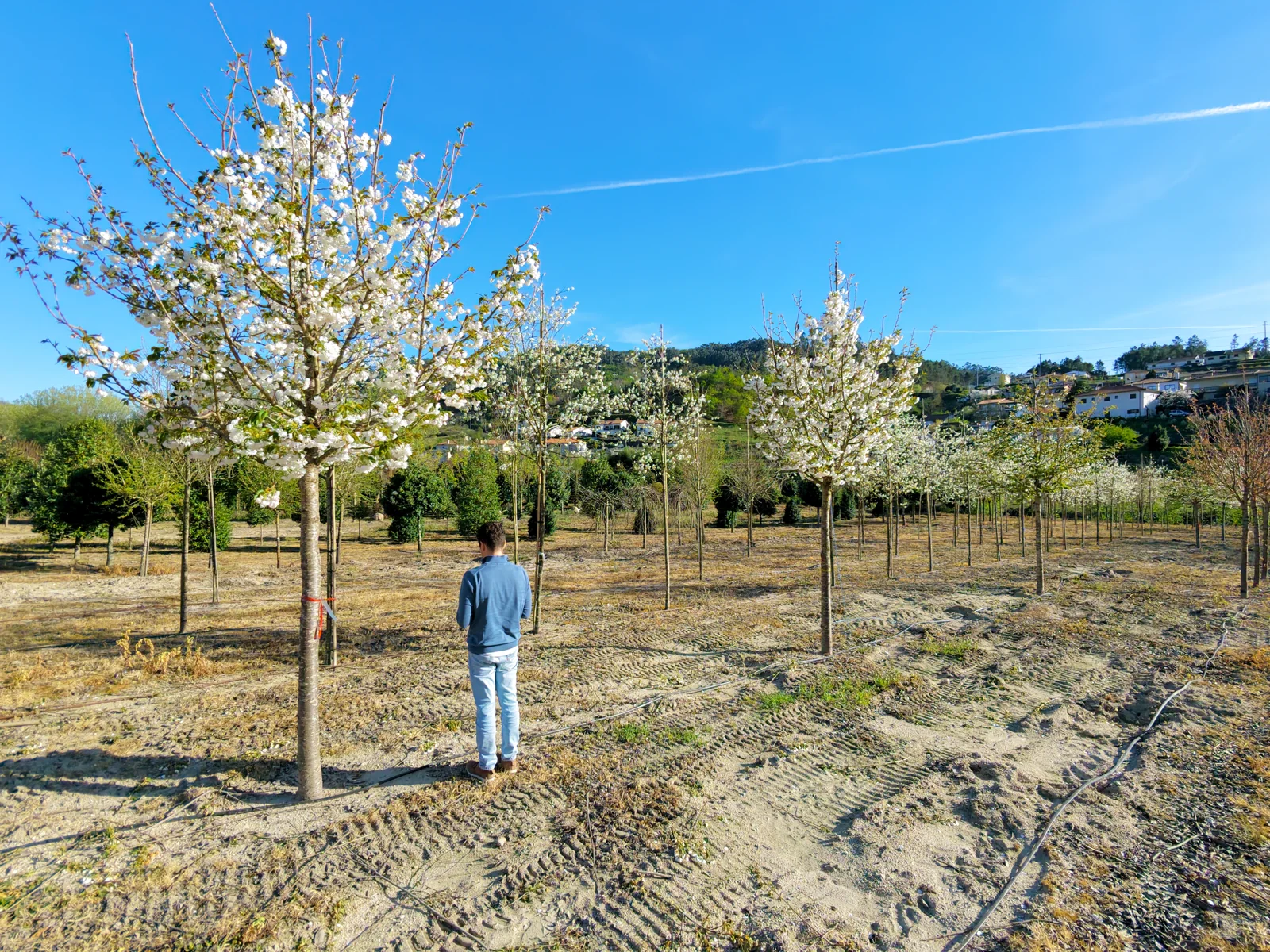
Where a scheme needs a single spring event and horizontal structure the rest of the year, this Japanese cherry (cerejeira-do-japao) delivers a low, wide-spreading crown and a dense flush of pure white bloom to build a focal point around.
- Wide, near-horizontal crown reaching four to six metres across
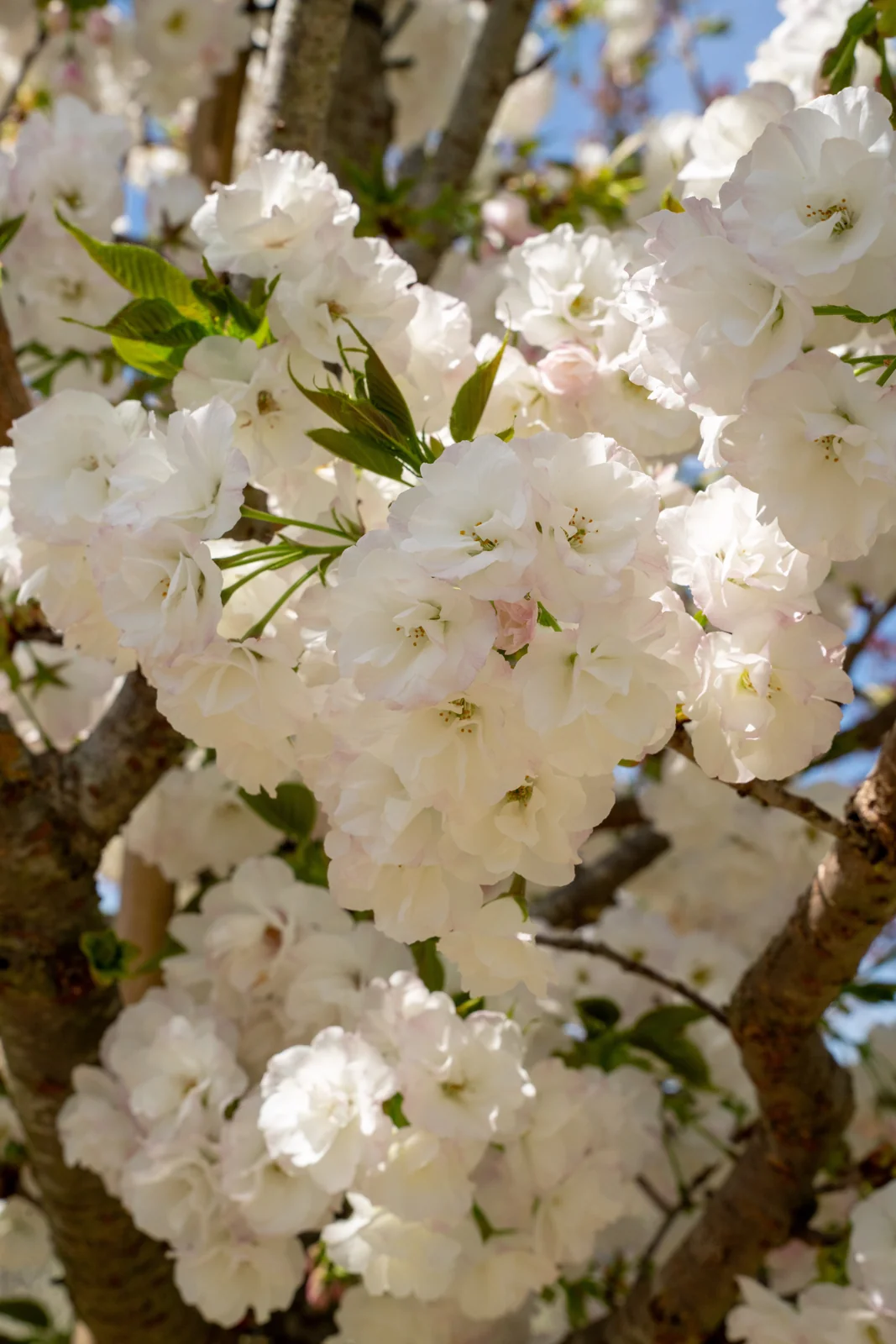
- Dense clusters of pure white, lightly scented April blossom
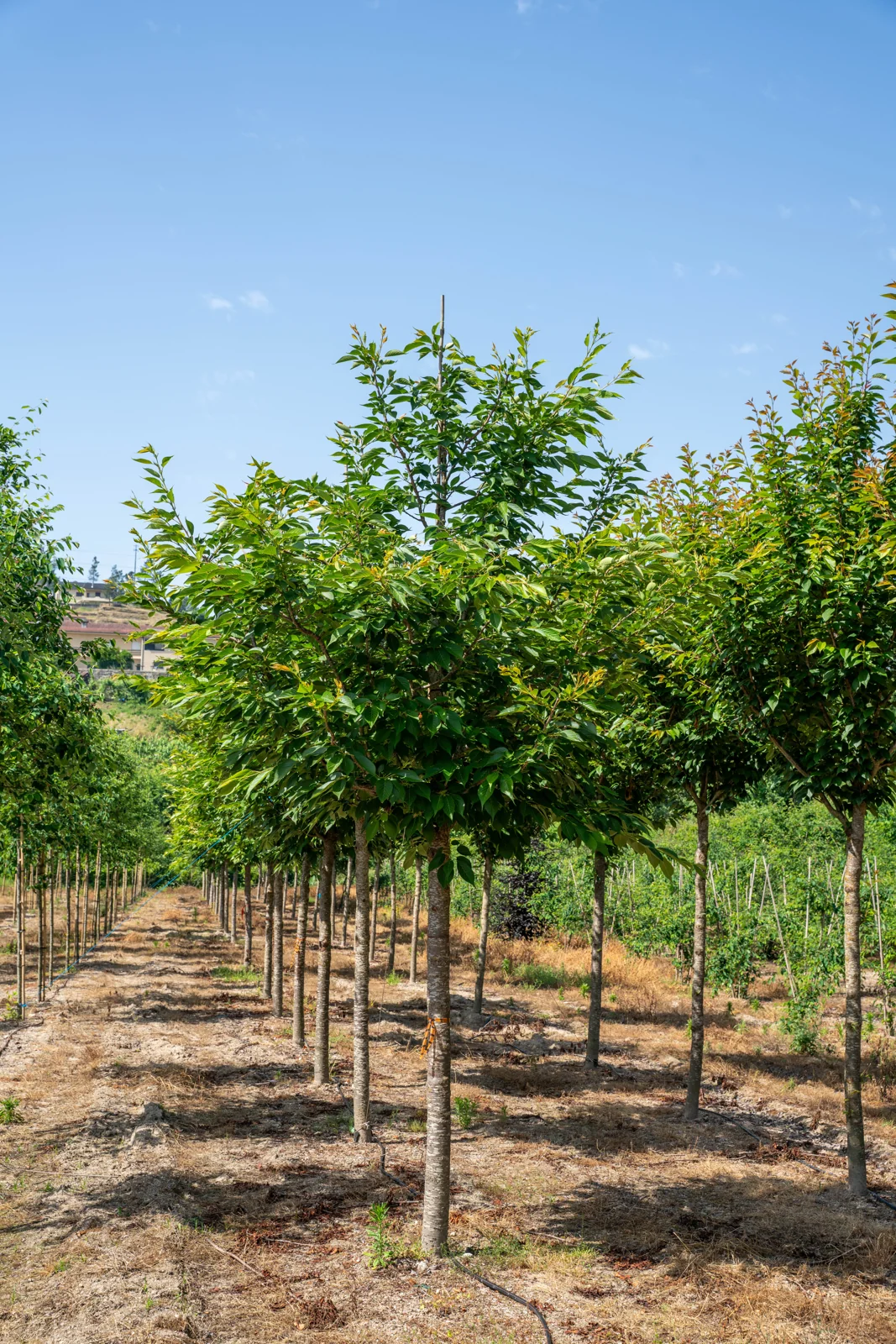
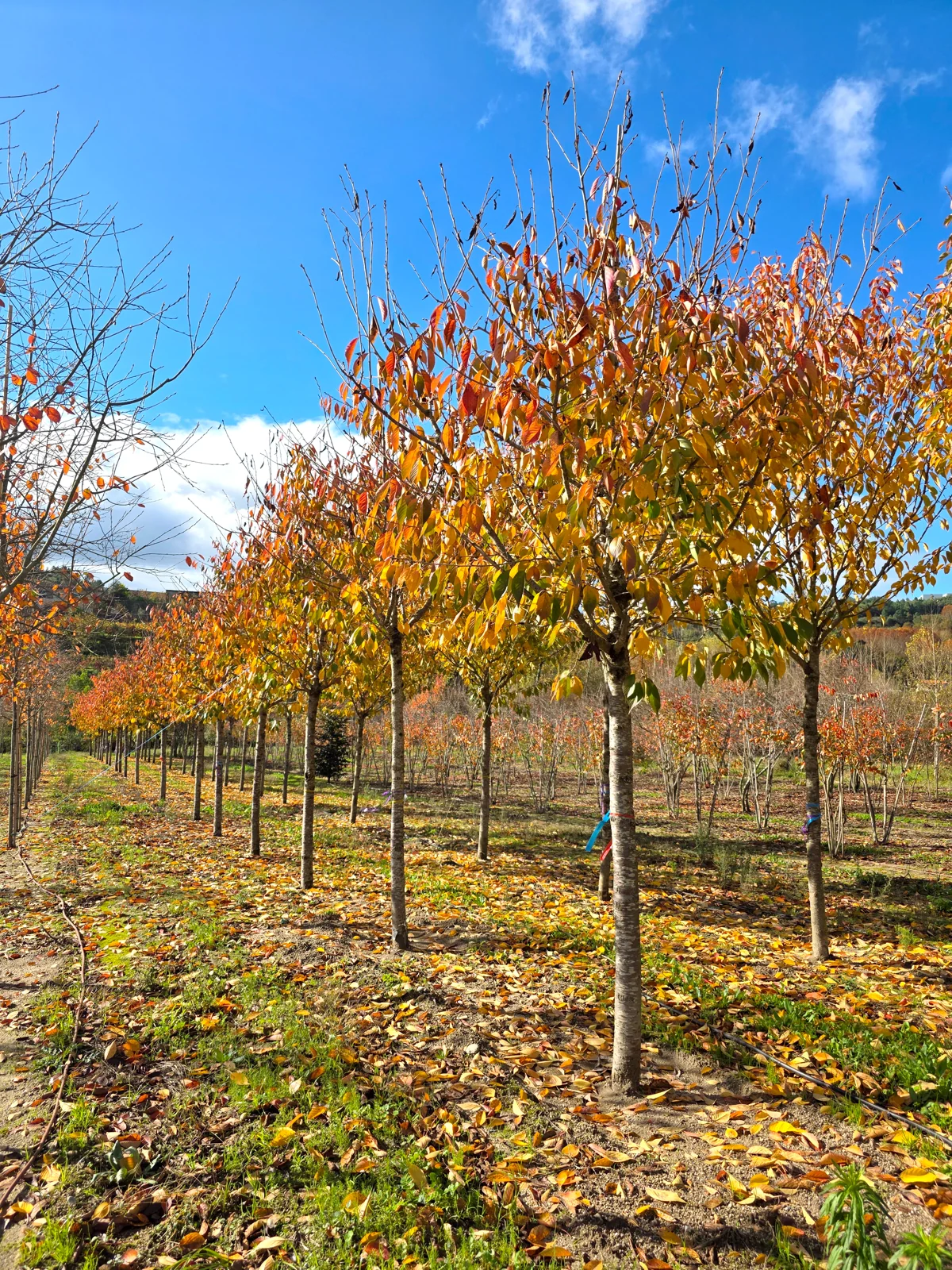
- Bronze new growth in spring, orange and brown foliage in autumn
Key Facts
About this Cultivar
Reaching 4 to 6 metres in height with a spread to match, this cultivar holds a broad, open, distinctly horizontal crown that reads as architecture once the flower has passed. The frame is low-branched and tiered, which makes it a feature specimen for a residential garden, a public square (praca), or a short decorative alignment where a tall canopy is not…
Read more
Show less
Reaching 4 to 6 metres in height with a spread to match, this cultivar holds a broad, open, distinctly horizontal crown that reads as architecture once the flower has passed. The frame is low-branched and tiered, which makes it a feature specimen for a residential garden, a public square (praca), or a short decorative alignment where a tall canopy is not wanted. Growth is slow to moderate, so the form a specifier draws is close to the form delivered, and a field-grown specimen carries useful structure at planting.
The ornamental case rests on a brief, concentrated April flowering: large semi-double flowers of pure white, gathered in dense pendent clusters that cover the crown and carry a light fragrance. Bronze-toned young growth extends the spring interest, and the deciduous foliage turns orange and brown tones in autumn before fall. Pollinators work the bloom, and the cultivar sets no appreciable fruit, so there is no drupe litter on paving below.
Diaplant grows the tree field-grown in Amarante (around 950 mm annual rainfall, mild winters, dry summers), which suits its preference for fertile, well-drained, slightly acidic soils in full sun. Drought tolerance is low: in the interior Alentejo and across the drier Algarve, specify a sheltered position and supplementary irrigation through the establishment summers. In urban Lisbon it tolerates the setting where root-run and irrigation are provided, and the humid Minho and Douro suit it well, given good air circulation to manage fungal pressure.
For the maintenance brief, the species runs to a moderate useful life and thin bark that is easily damaged, so protect the trunk and avoid hard pruning. Give the crown room to spread laterally rather than constrain it, and shelter young trees from strong wind while they establish.
Advice on this species
Want to know more about Prunus serrulata 'Shirotae'?
Tell us about your project and we'll advise you on this species — where it thrives, which size makes sense, and what to expect once planted.
- Produção própria
- Exemplares adultos
- Resposta em 1–2 dias
Sem compromisso · orçamento personalizado