

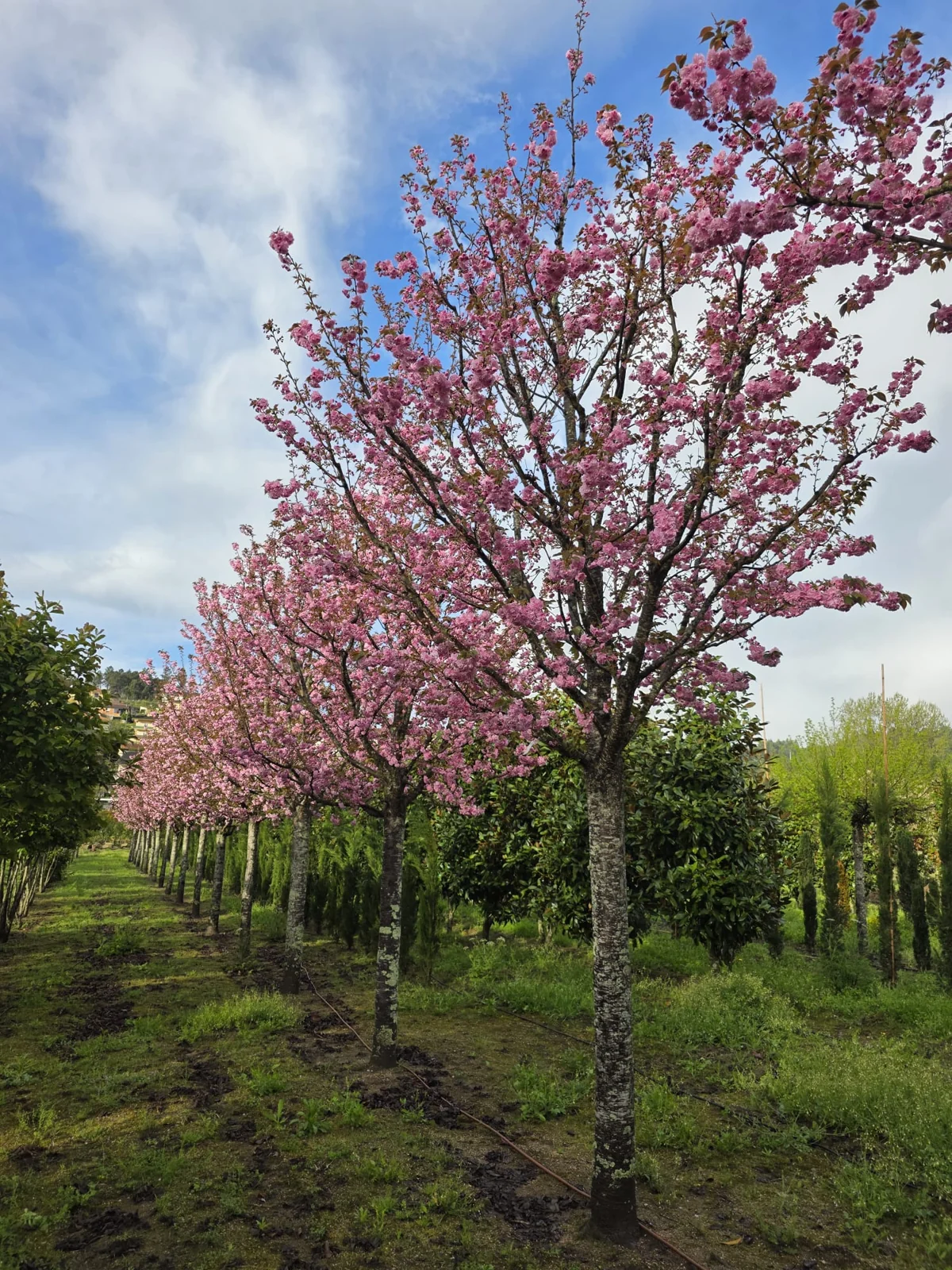
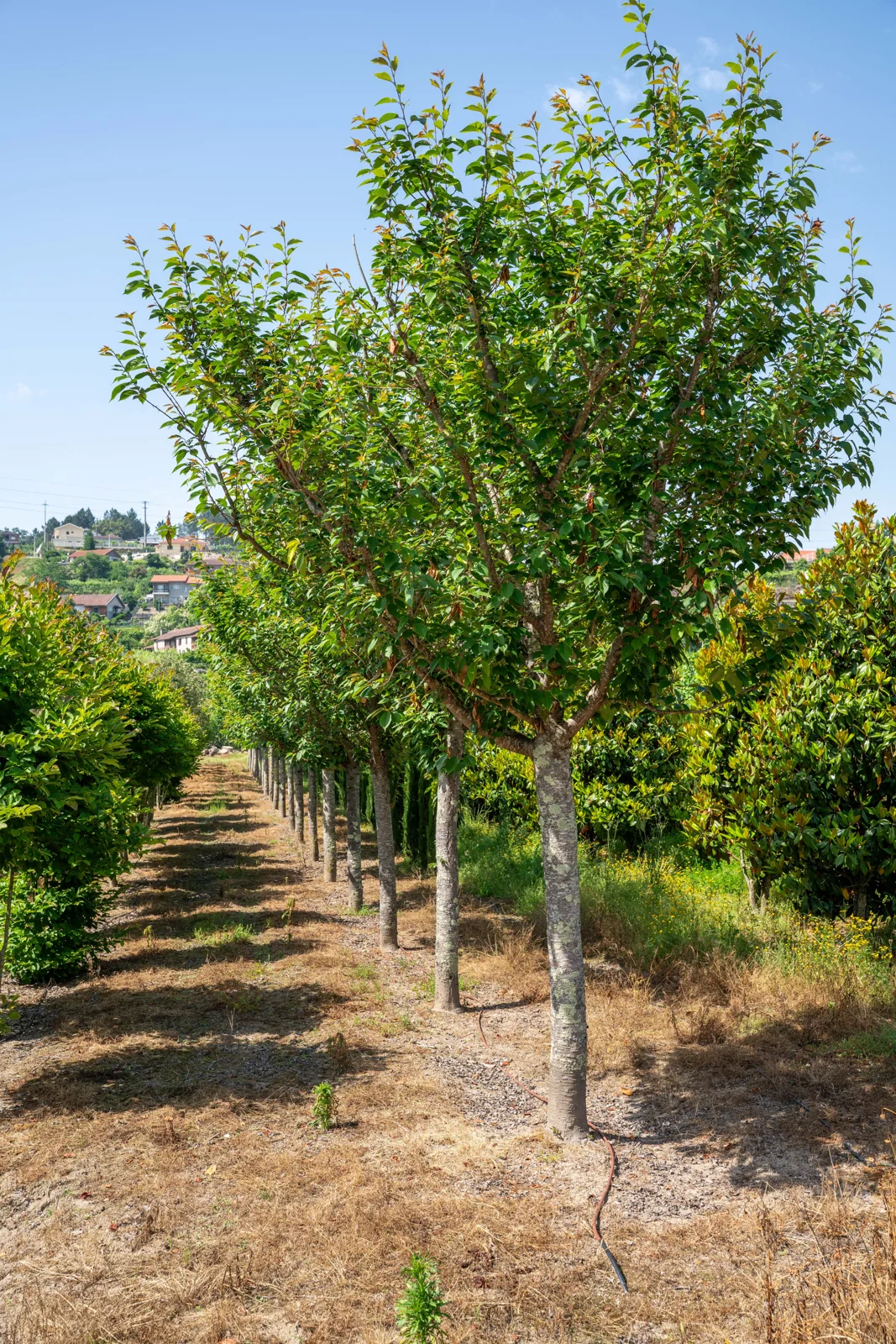
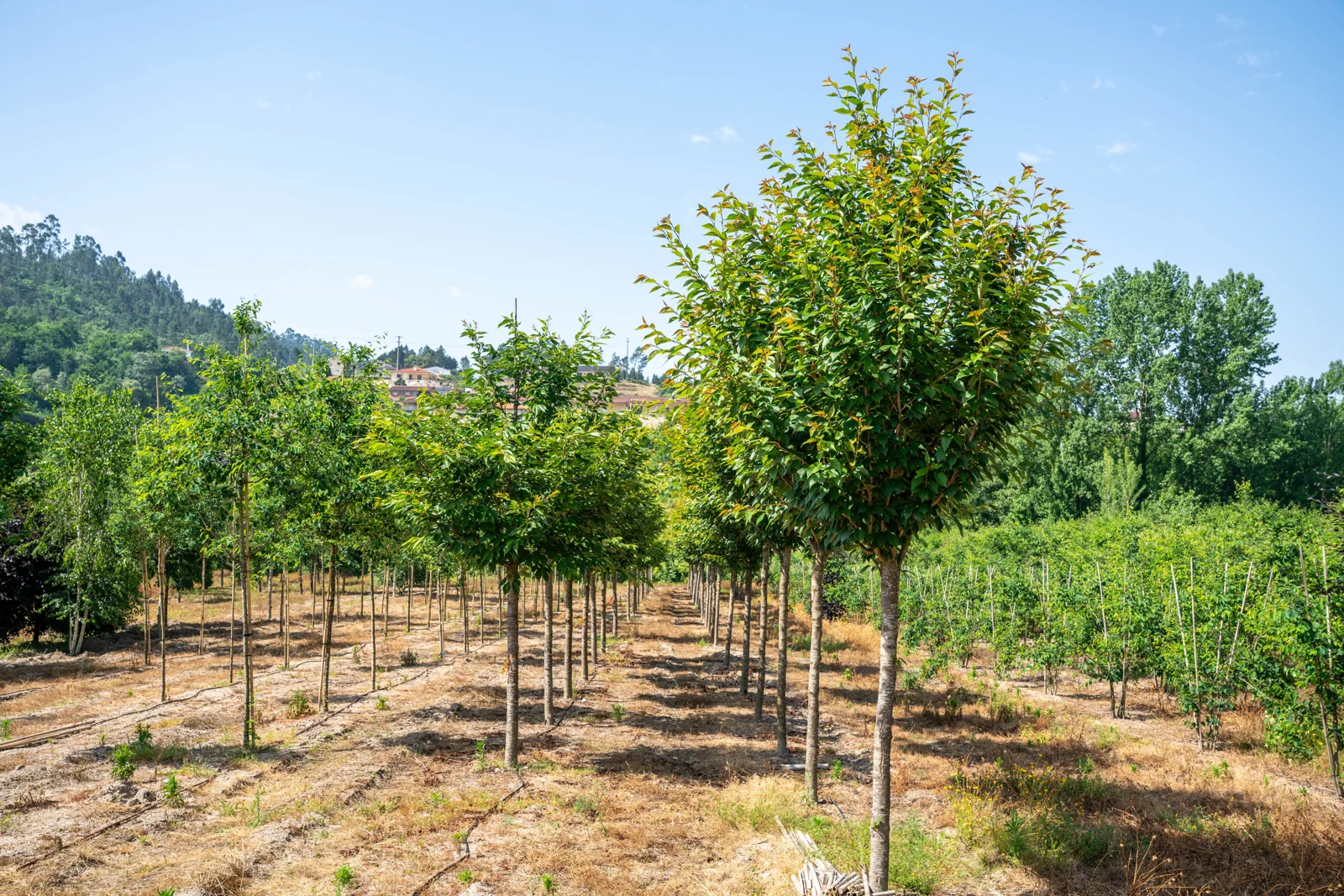
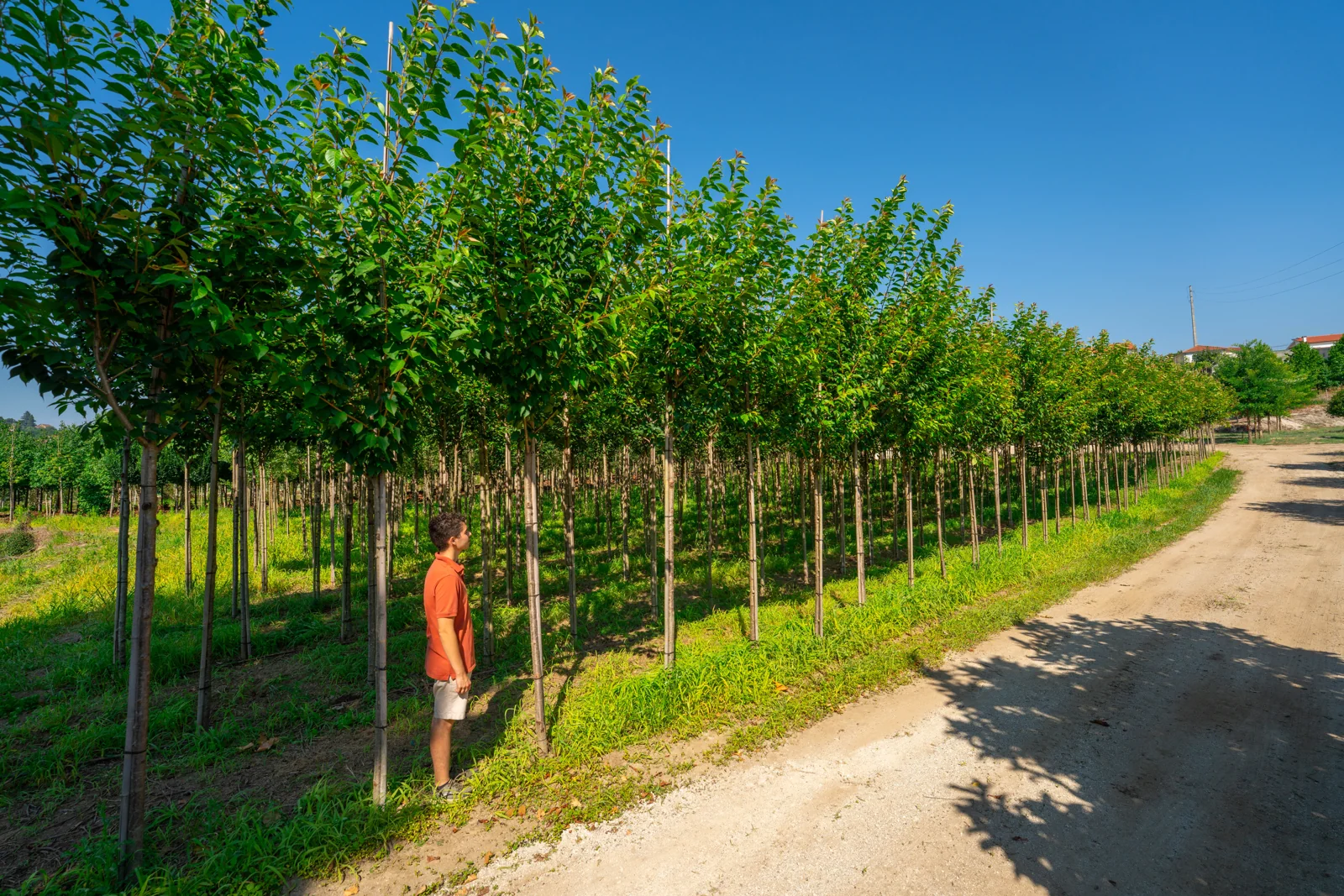
Double pink blossom for a spring garden
Japanese Cherry ‘Kanzan’ · Prunus serrulata ‘Kanzan’
Specifiers reaching for a deciduous feature tree with a defined ornamental peak will find dense double pink blossom in spring, a broad rounded crown, and copper autumn colour, on a moderate-growing frame that settles into garden and avenue planting.
- Dense double rose-pink blossom through April and into May
- Each flower packed with twenty to thirty petals
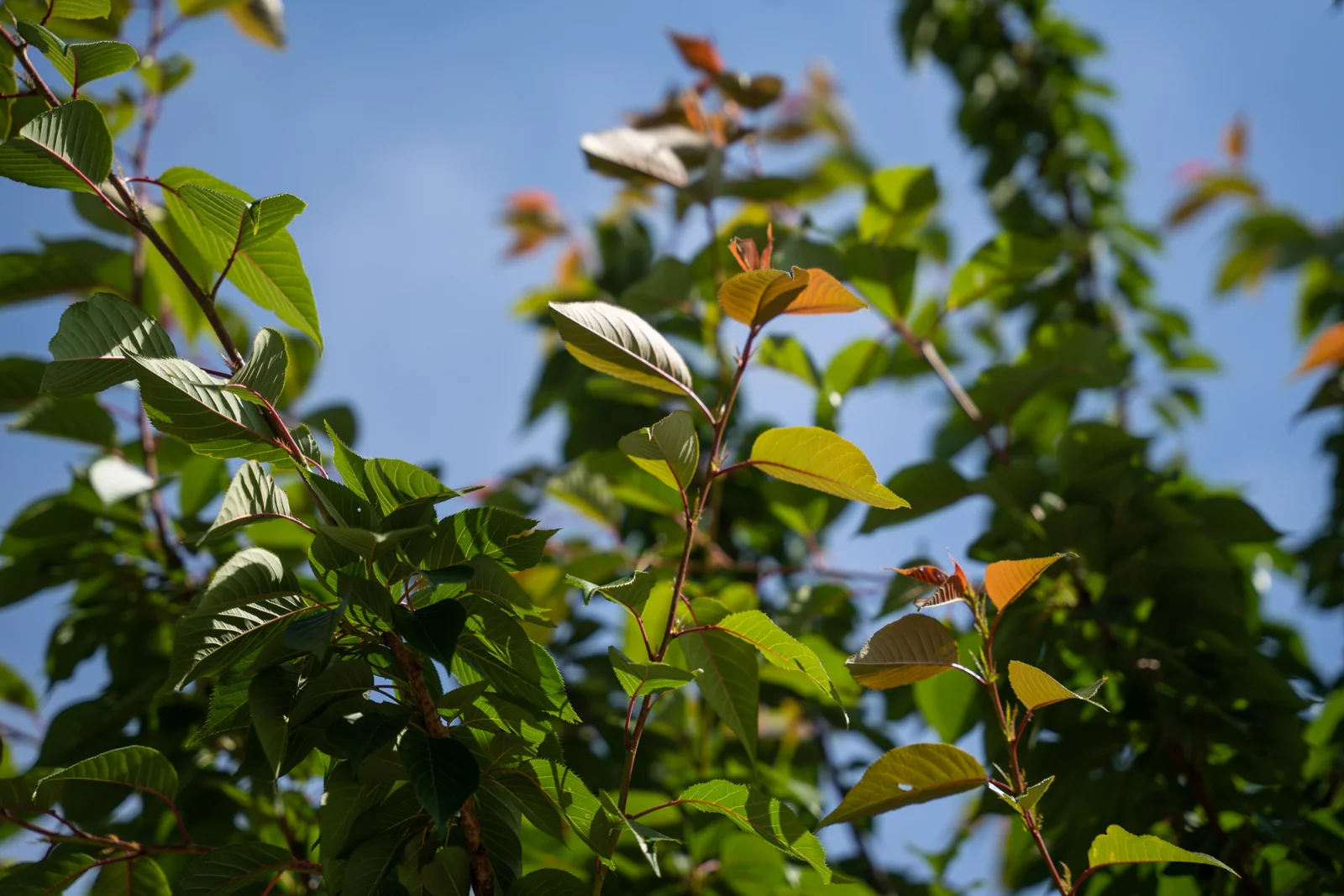
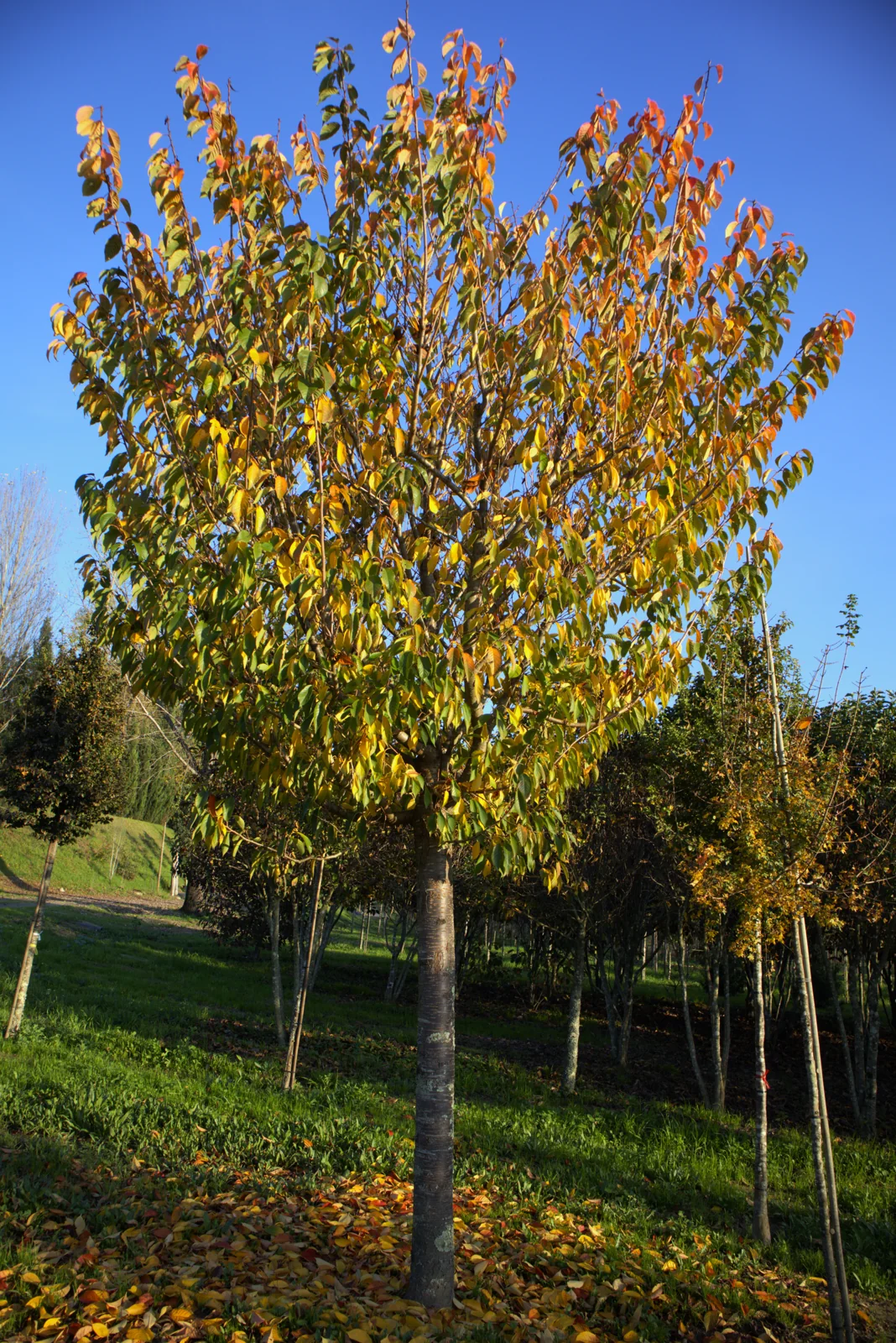
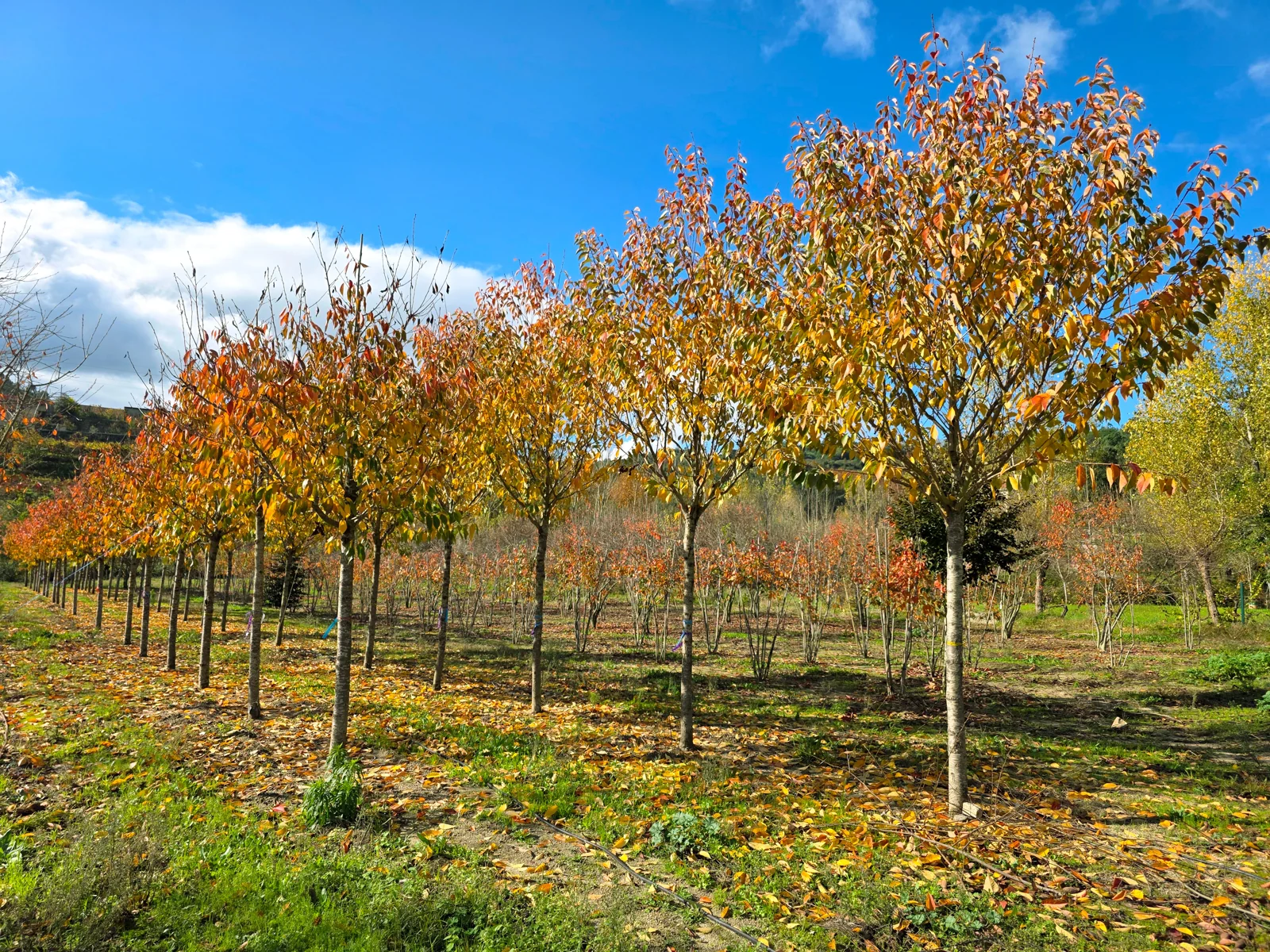
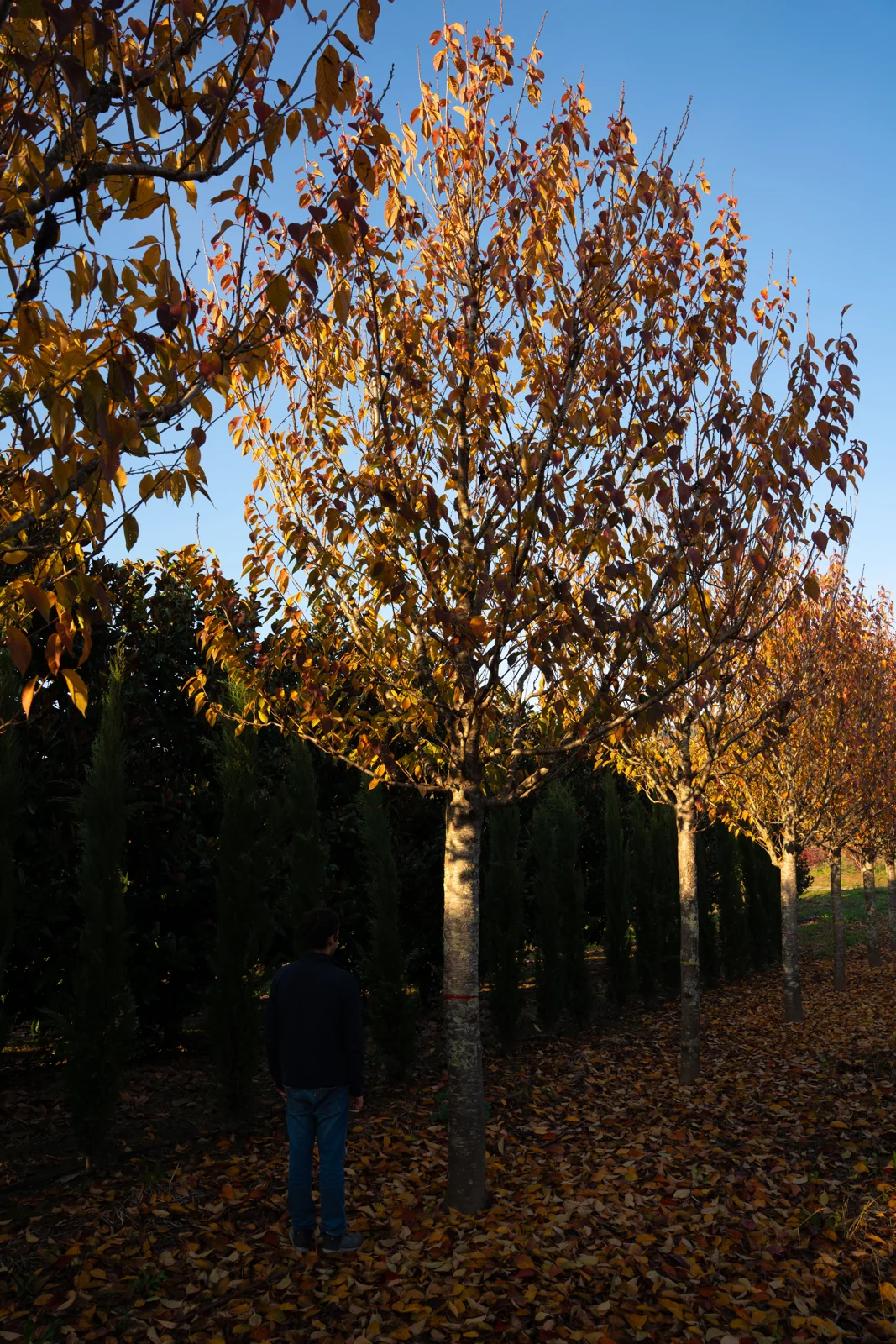
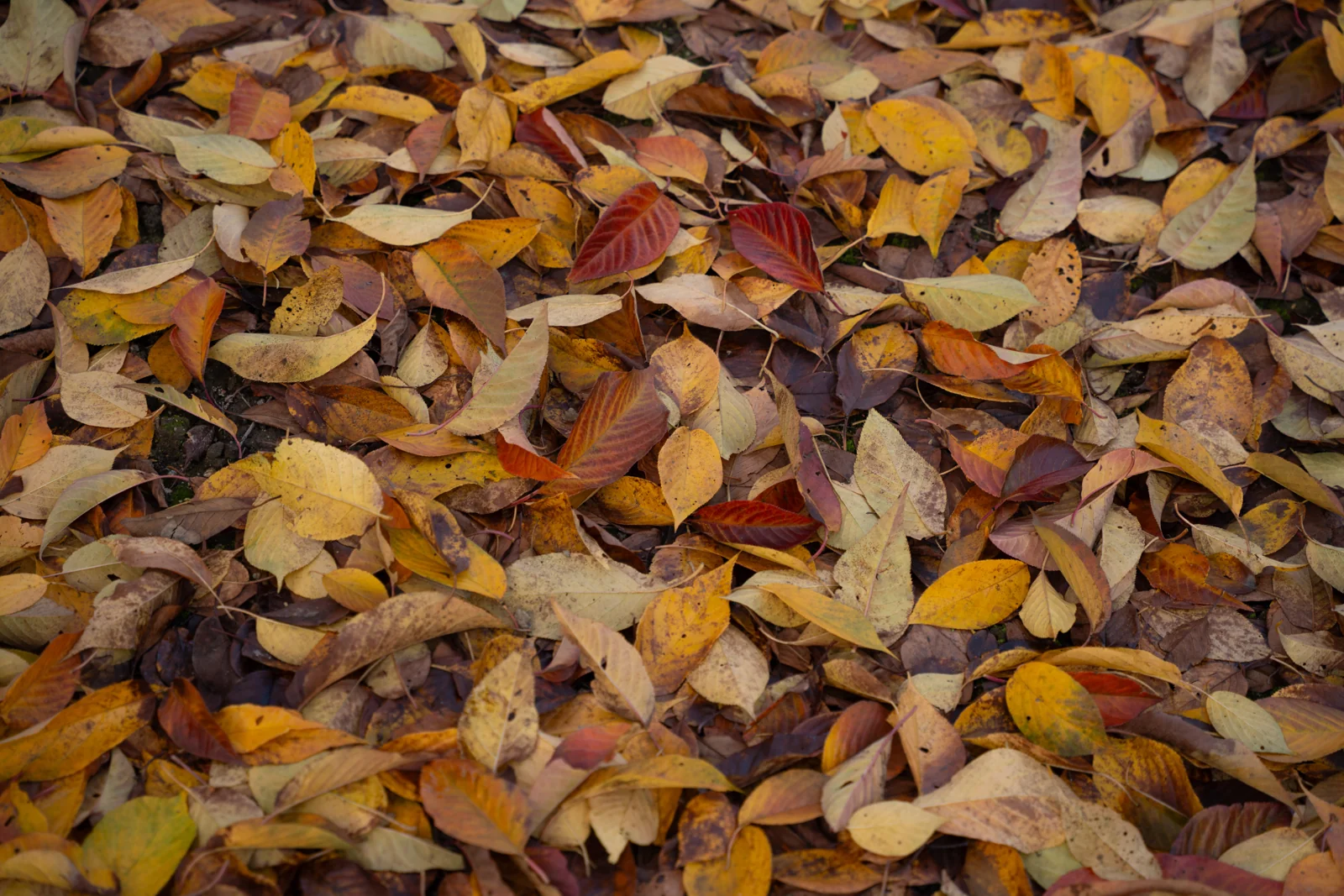
- Coppery young foliage turning warm orange in autumn
Key Facts
About this Cultivar
This cultivar carries dense clusters of double, deep-pink flowers, two to five per group, across the whole crown in spring, the most distinctive of its ornamental phases. In Portuguese conditions, with mild winters and dry summers, it flowers reliably between April and May. Young foliage opens bronze, matures dark green through summer, and turns orange and…
Read more
Show less
This cultivar carries dense clusters of double, deep-pink flowers, two to five per group, across the whole crown in spring, the most distinctive of its ornamental phases. In Portuguese conditions, with mild winters and dry summers, it flowers reliably between April and May. Young foliage opens bronze, matures dark green through summer, and turns orange and copper tones in autumn, giving the tree a second seasonal interest.
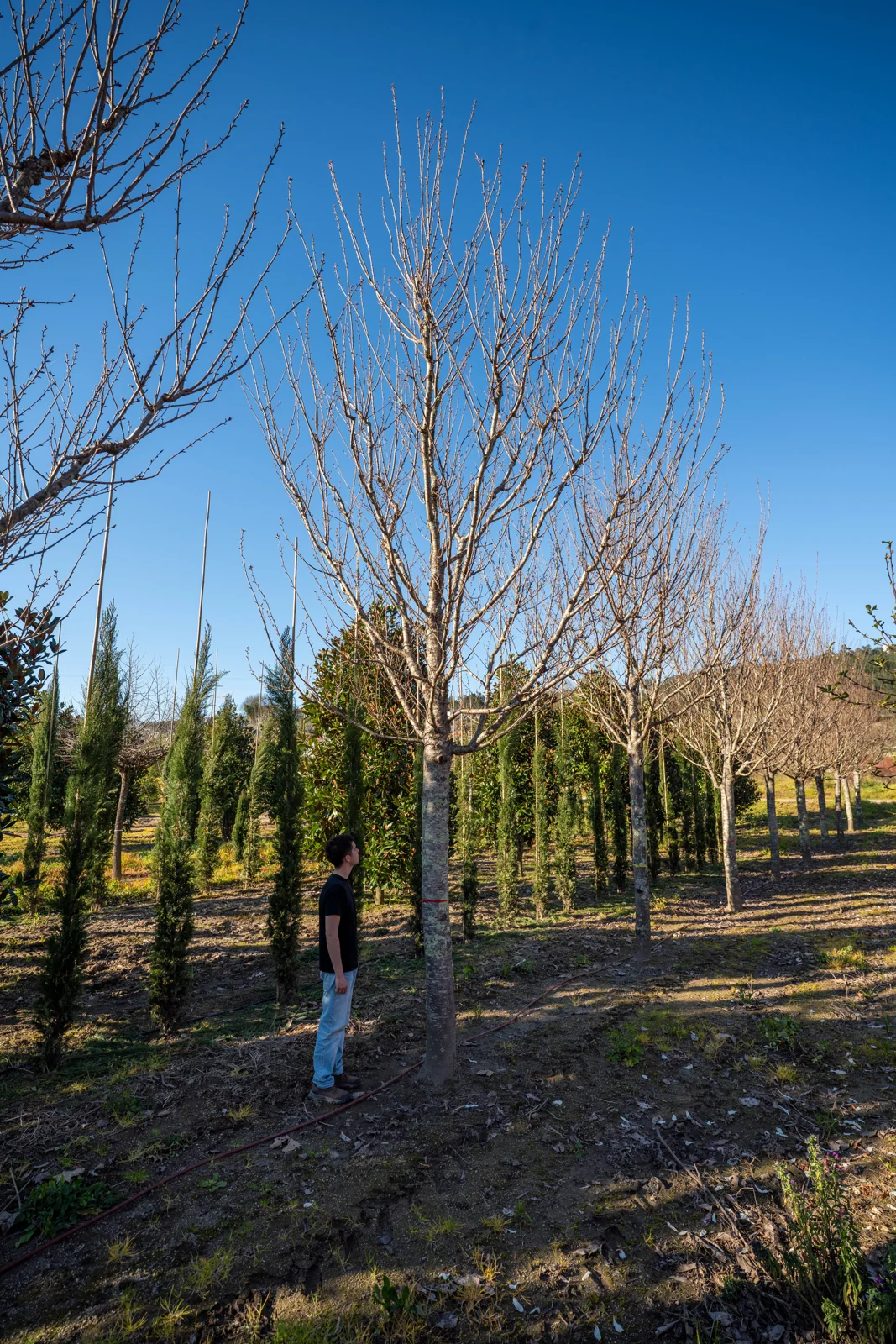
Mature dimensions in Portuguese cultivation reach 6 to 10 m in height and 5 to 8 m in spread, forming a broad, rounded, evenly balanced crown on a single stem. Growth is moderate, which suits it to a feature specimen, a small group, or a spring avenue (arruamento) where a contained framework tree is wanted rather than a large-canopy shade tree. The crown form makes it readable as structural planting in a praca or a private garden.
The species prefers fertile, well-drained, slightly acidic soils and an open, sunlit position. Drought tolerance is limited: in the interior Alentejo and across the Algarve summer, supplementary irrigation through the first establishment years and into mature dry spells supports flowering and crown density. In the humid Minho and Douro, free-draining ground matters more than added water, since the cultivar dislikes waterlogging. Salt tolerance is low, so coastal estuarine sites near Lisbon ask for shelter from salt-laden air.
Maintenance is modest. The tree carries no significant fruit, so paved areas stay clear of fallen litter, and formative pruning is best kept light, since this cultivar responds poorly to hard cuts on larger wounds. It adapts well to urban planting and reads as a proven ornamental in Portuguese public and private gardens, where it has long served as a spring-flowering specimen.
Advice on this species
Want to know more about Prunus serrulata 'Kanzan'?
Tell us about your project and we'll advise you on this species — where it thrives, which size makes sense, and what to expect once planted.
- Produção própria
- Exemplares adultos
- Resposta em 1–2 dias
Sem compromisso · orçamento personalizado