

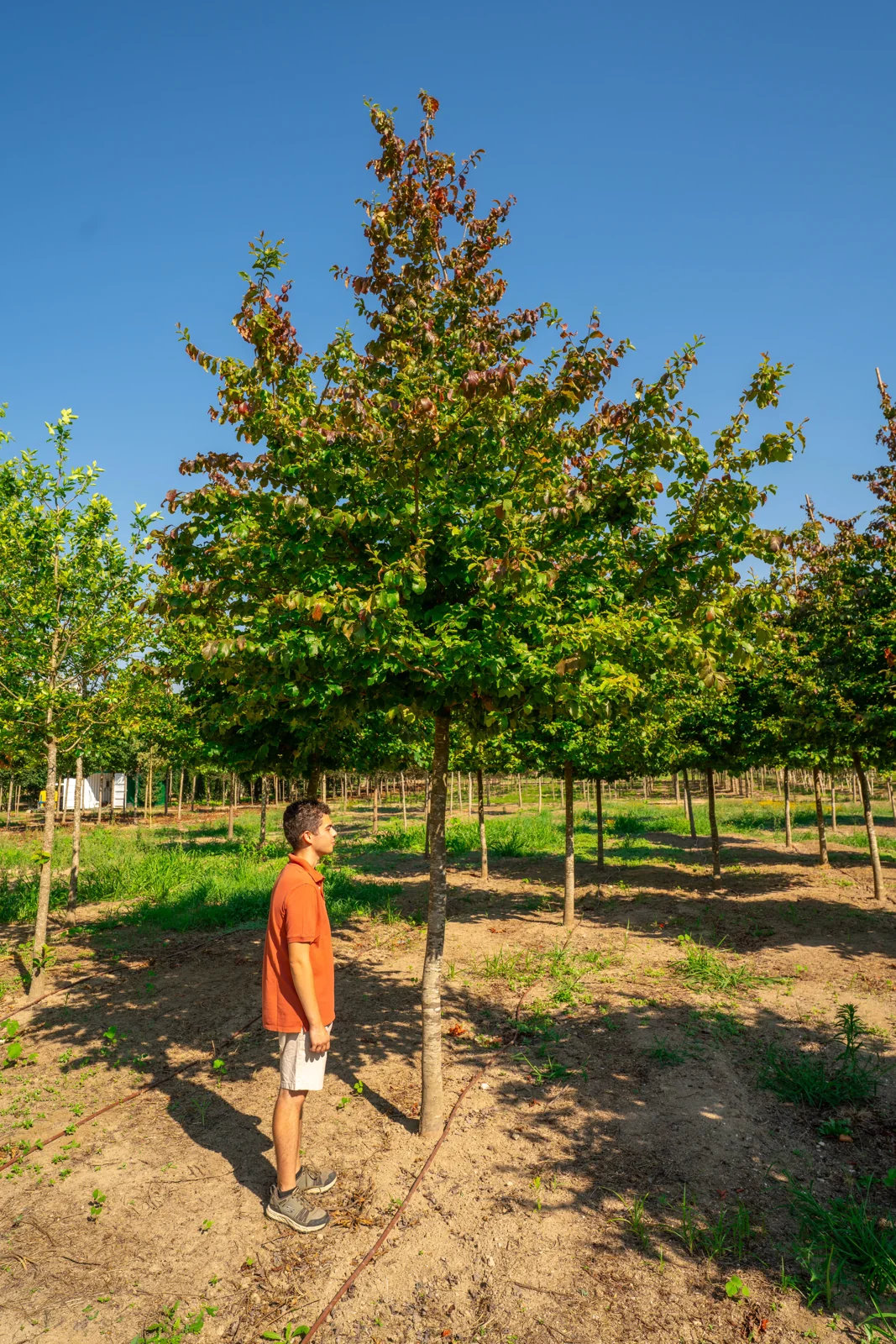
Exfoliating bark and slow authority in a spreading crown
Persian Ironwood · Parrotia persica
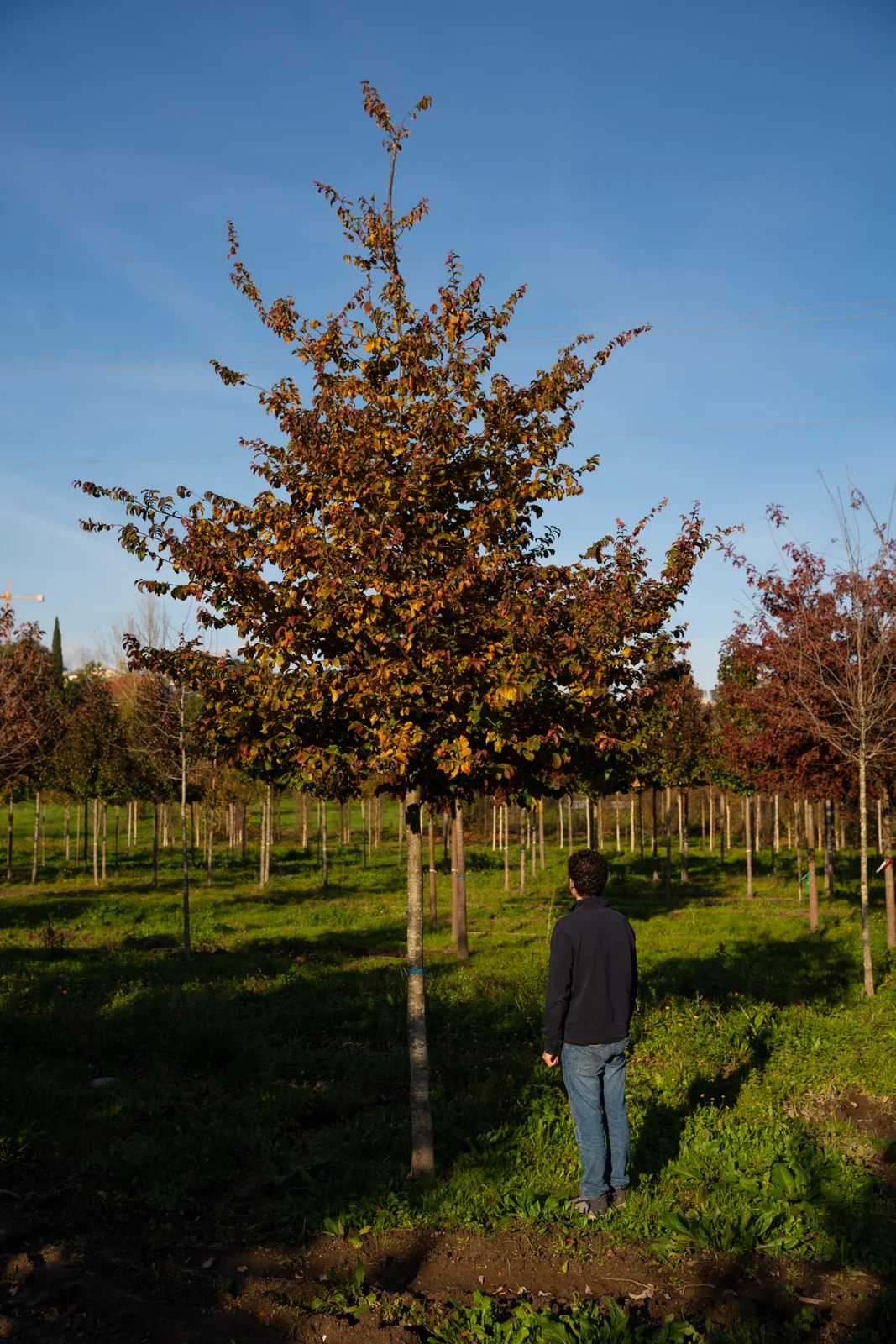
A slow-growing deciduous tree prized for three-season ornamental interest: exfoliating bark in winter, red staminal flowers in late winter, and broad autumn range from yellow through orange to burgundy. Its compact stature and disease resistance suit confined urban planting.
- Exfoliating bark reveals green, cream, and tan mosaic on mature specimens
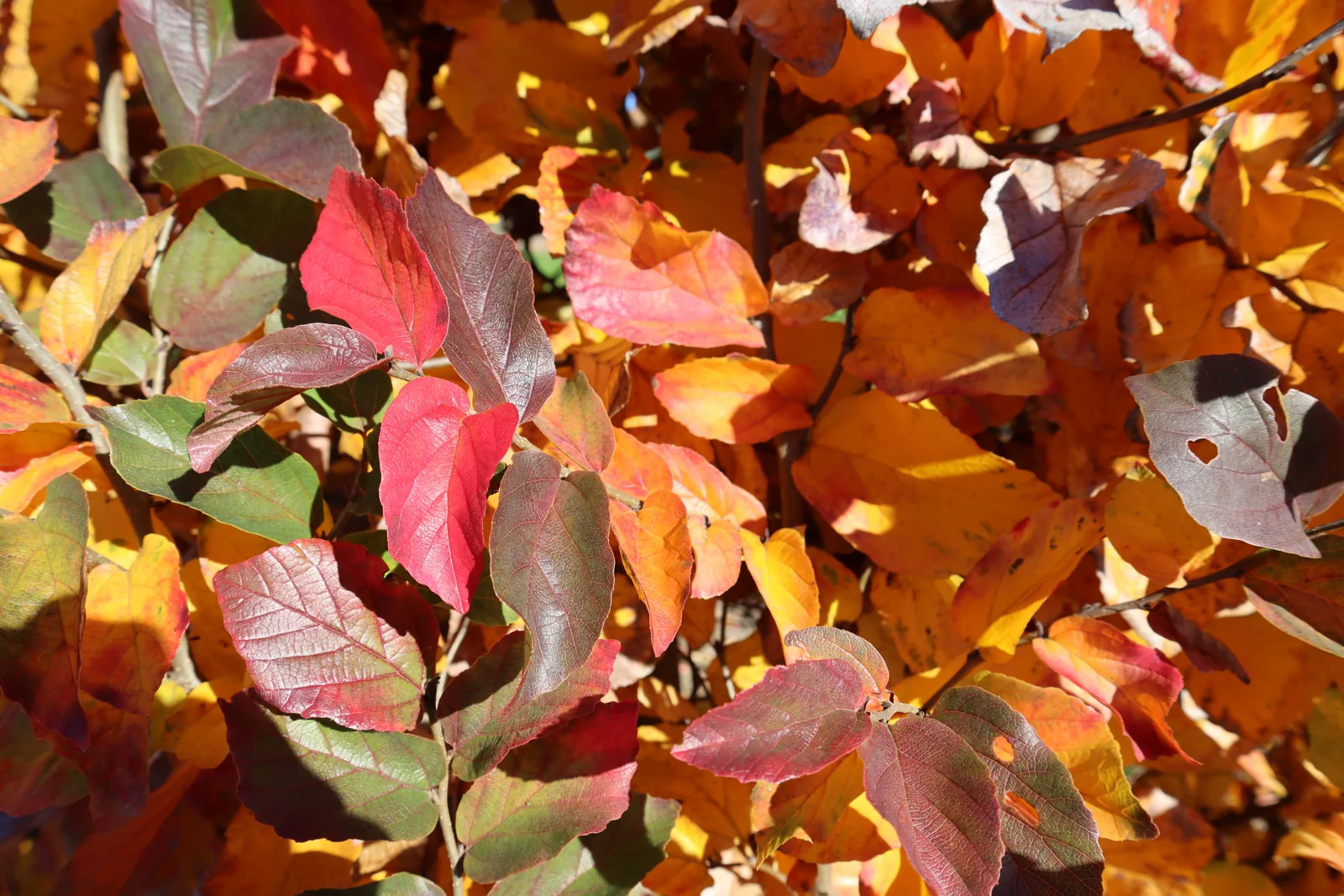
- Extended autumn colour from yellow through crimson to plum purple, mid-October into November
- Drought tolerant once established; self-sufficient on rainfall after three to four summers
About this Species
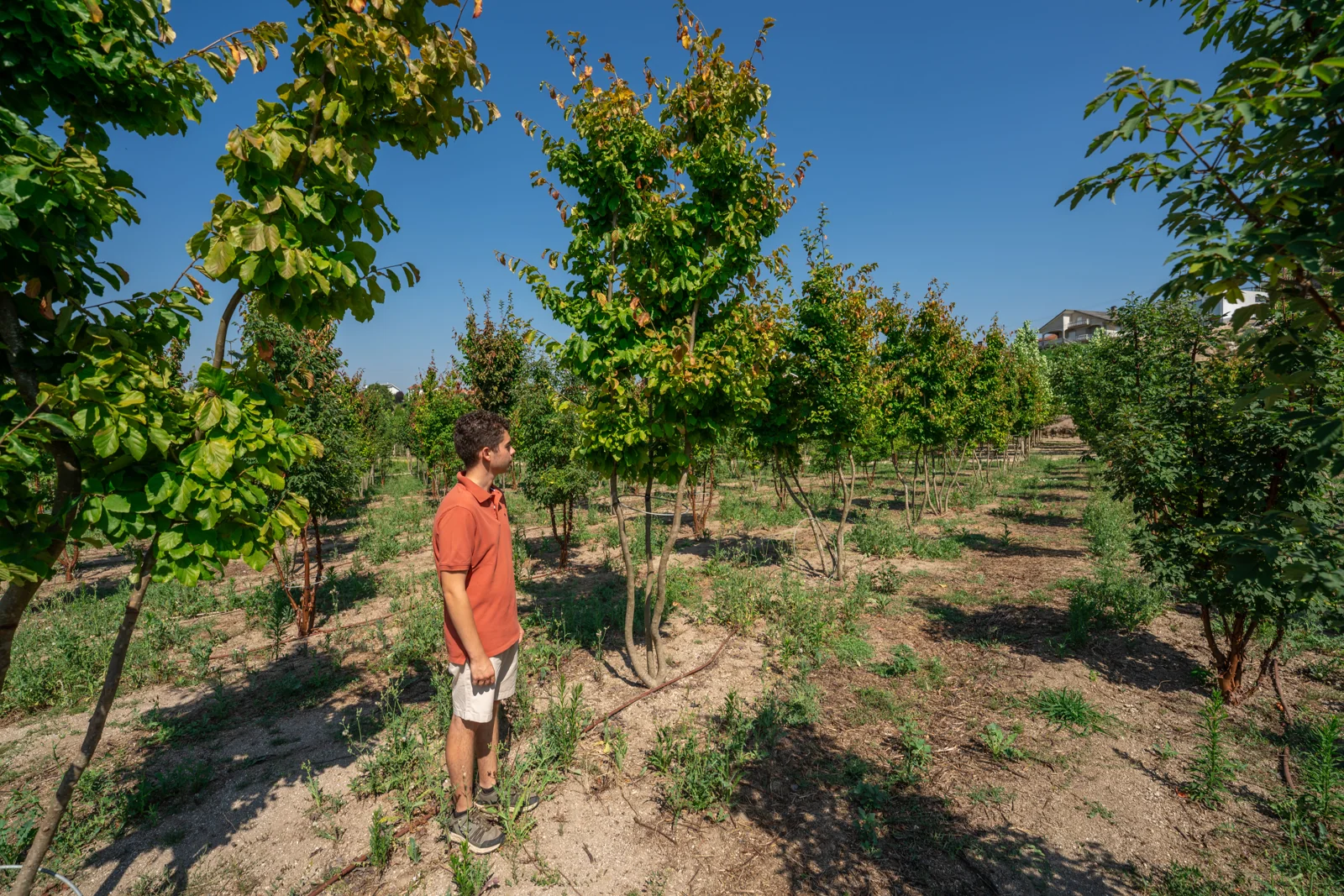
Parrotia persica matures at 6 to 12 m in height with a spreading crown of 6 to 10 m. The habit is naturally multi-stemmed with low, arching branches, though formative pruning produces a clean single trunk that better displays the bark. Growth is slow; expect 15 to 20 years to reach a functional canopy of 6 m spread, which makes it a long-term framework tree…
Read more
Show less
Parrotia persica matures at 6 to 12 m in height with a spreading crown of 6 to 10 m. The habit is naturally multi-stemmed with low, arching branches, though formative pruning produces a clean single trunk that better displays the bark. Growth is slow; expect 15 to 20 years to reach a functional canopy of 6 m spread, which makes it a long-term framework tree rather than a fast screen.
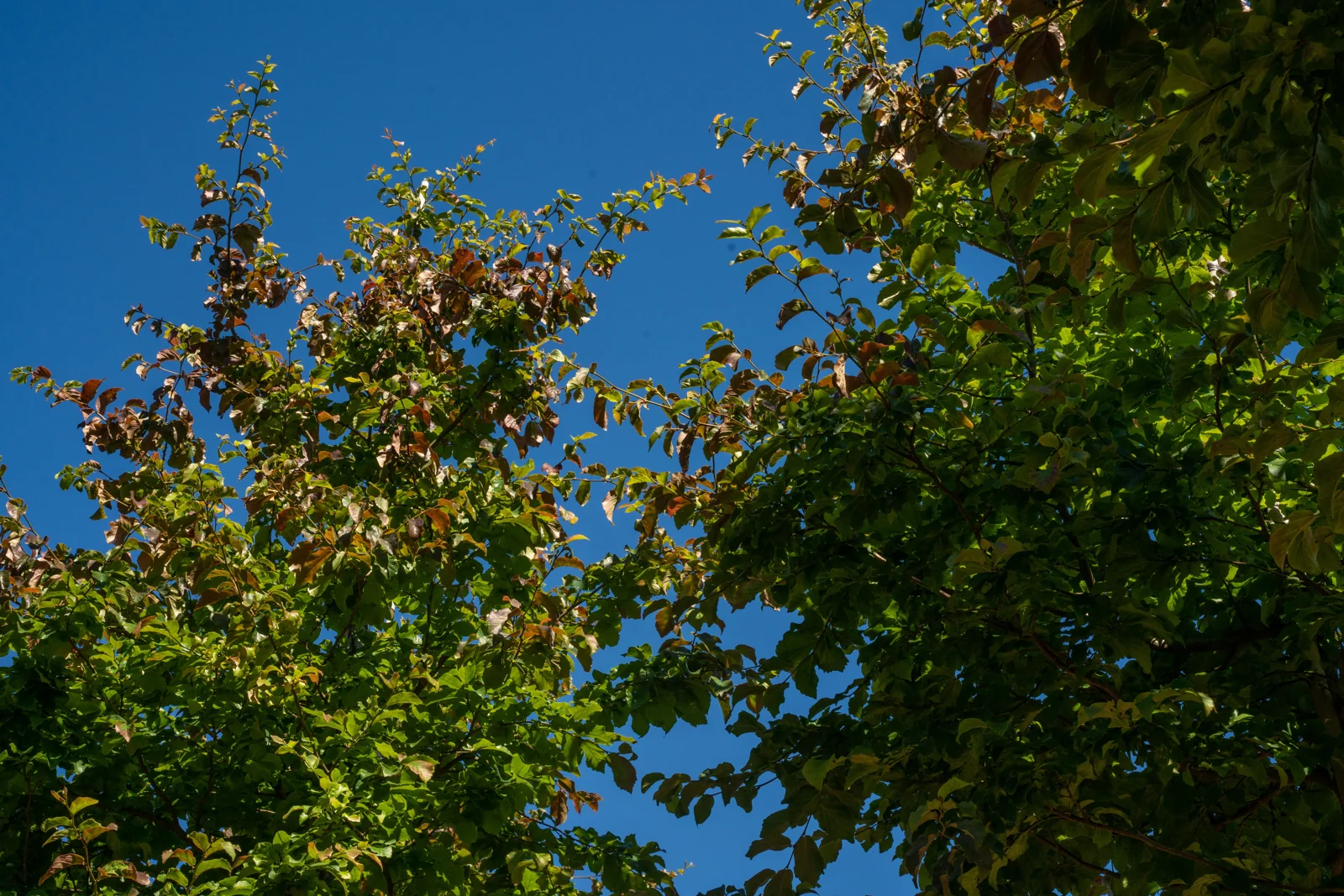
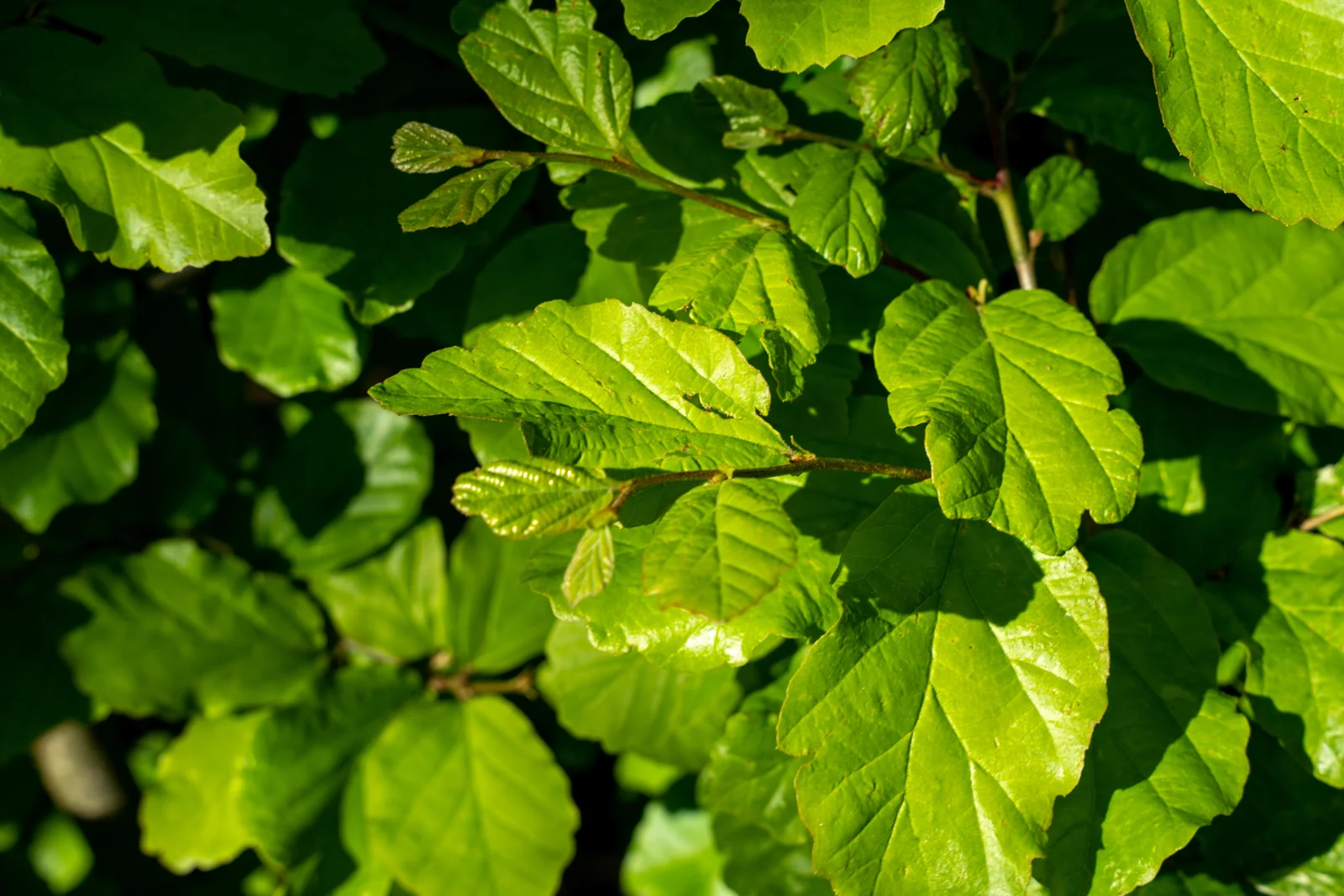
The ornamental calendar begins in February with clusters of apetalous flowers whose dense red stamens are visible on bare wood. Foliage emerges reddish-purple, darkens to glossy green through summer, then turns through yellow, orange, and burgundy in autumn. On mature specimens the bark exfoliates to reveal a mosaic of green, cream, and cinnamon patches comparable to the flaking bark of platano (Platanus x acerifolia). This bark display improves with age and is the tree's strongest winter asset.
The species originates in the montane forests of the Alborz range in northern Iran and the Caucasus, where summer drought alternates with cool, wet winters. This origin predicts reliable performance in the humid Minho and Douro valleys, where Atlantic rainfall (1200 to 1800 mm), mild winters, and acidic granite soils closely match the native habitat. In Greater Lisbon and urban Porto, the tree tolerates reflected heat and compacted ground; its deep root system provides moderate drought tolerance once established, though supplementary irrigation during the first three summers is advisable in sites without consistent soil moisture. In the interior Alentejo, where summer temperatures regularly exceed 40 degrees C, Parrotia persica requires a sheltered position with afternoon shade and reliable establishment irrigation. Coastal Algarve presents a harder limit: low salt tolerance and prolonged summer drought without irrigation make it a poor specification for exposed coastal schemes, though it can succeed in irrigated courtyard settings on well-drained soil.
Maintenance requirements are low. The species has no serious pest or disease problems recorded in European cultivation, which distinguishes it from alternatives such as freixo (Fraxinus), now compromised by Hymenoscyphus fraxineus across Atlantic Europe. Formative pruning in the first five years controls the suckering tendency and shapes the crown for pavement clearance or visibility lines. Leaf litter is moderate and decomposes quickly; fruit capsules are small and do not create a maintenance burden on hard surfaces. Root behaviour is non-aggressive, posing low risk to pavements and underground services. In an urban setting, an expected useful life of 80 to 100 years is realistic, based on documented specimens in northern European collections exceeding 120 years.



Advice on this species
Want to know more about Parrotia persica?
Tell us about your project and we'll advise you on this species — where it thrives, which size makes sense, and what to expect once planted.
- Produção própria
- Exemplares adultos
- Resposta em 1–2 dias
Sem compromisso · orçamento personalizado