

A columnar Persian Ironwood for narrow gardens and avenues
Persian Ironwood ‘Vanessa’ · Parrotia persica ‘Vanessa’
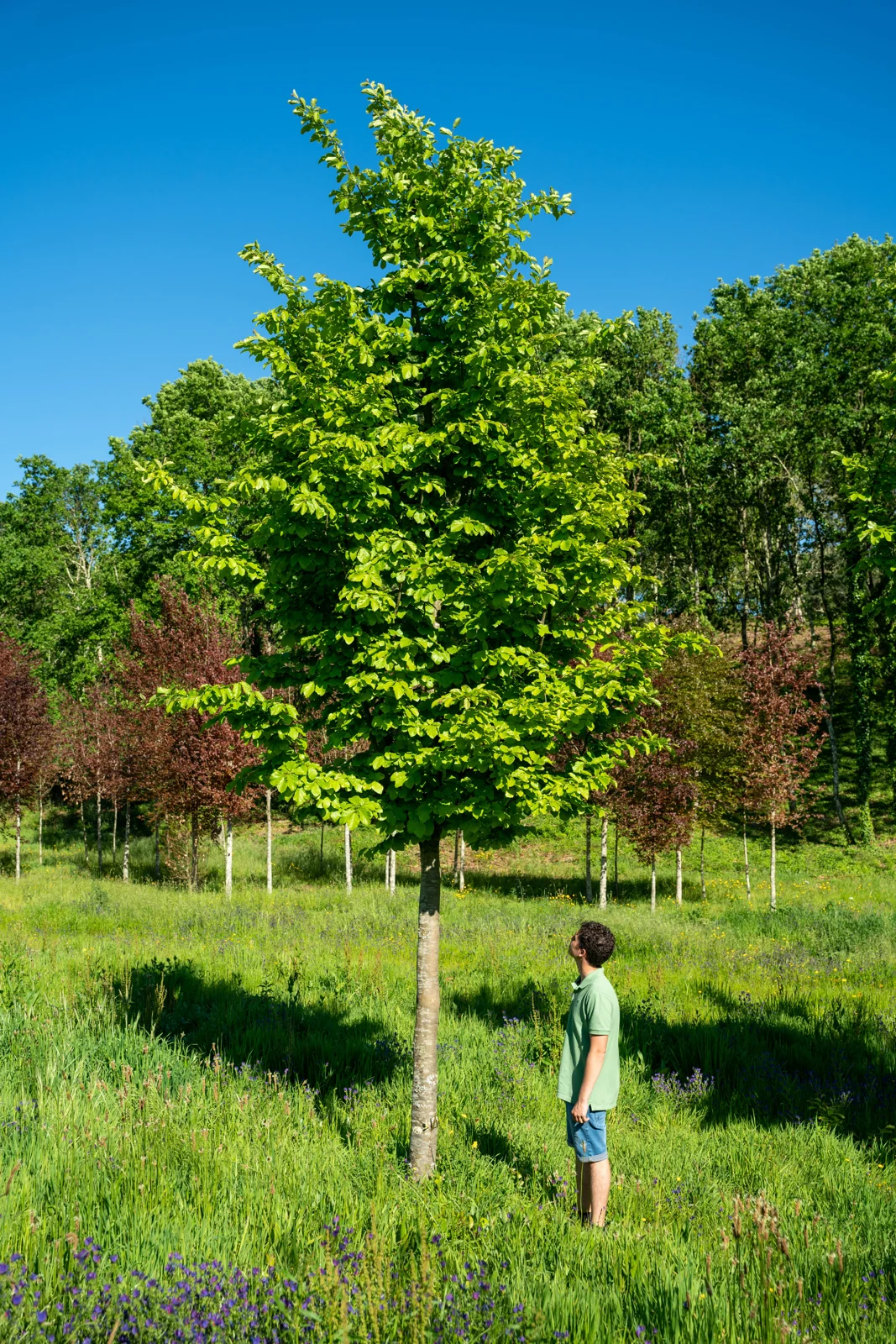
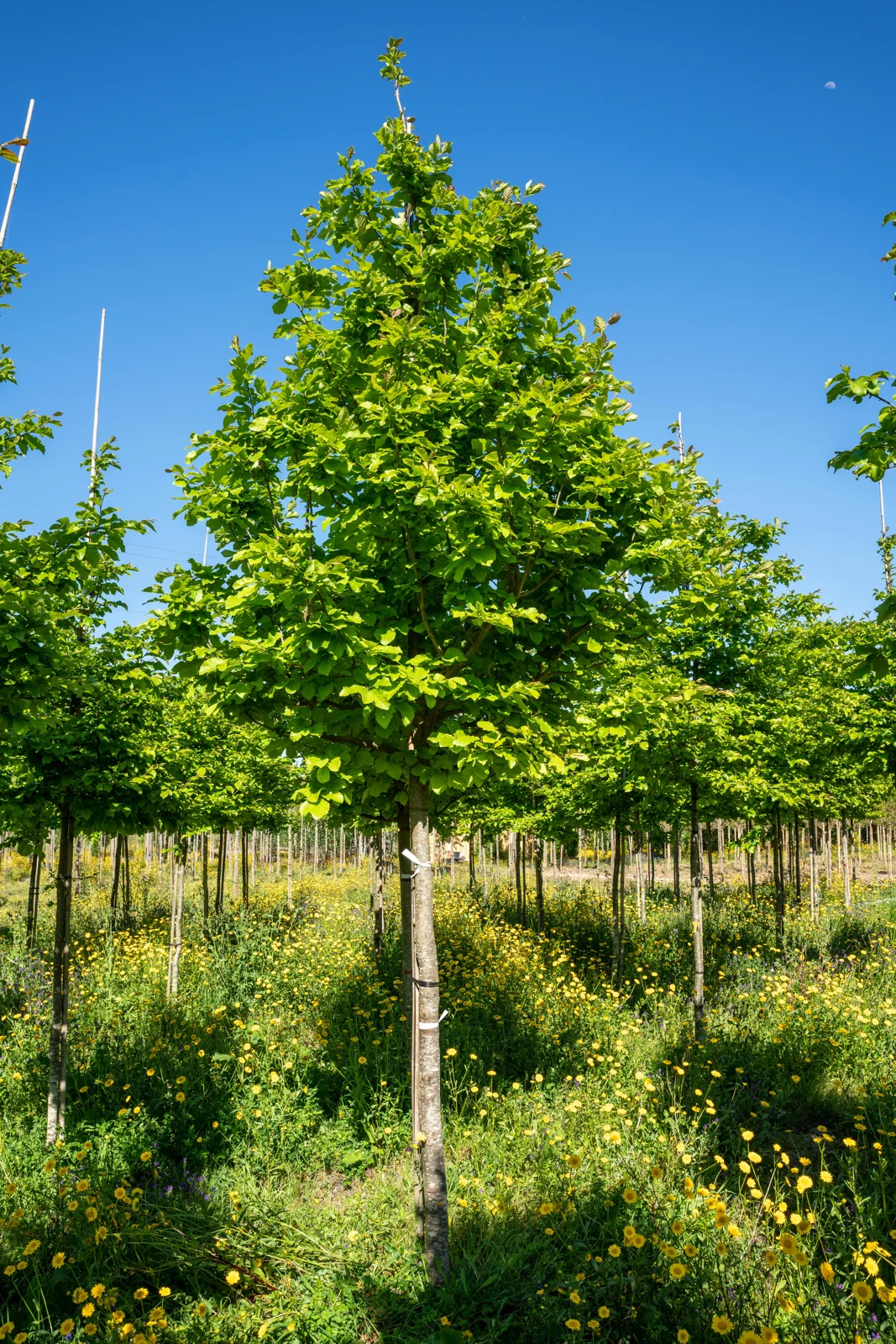
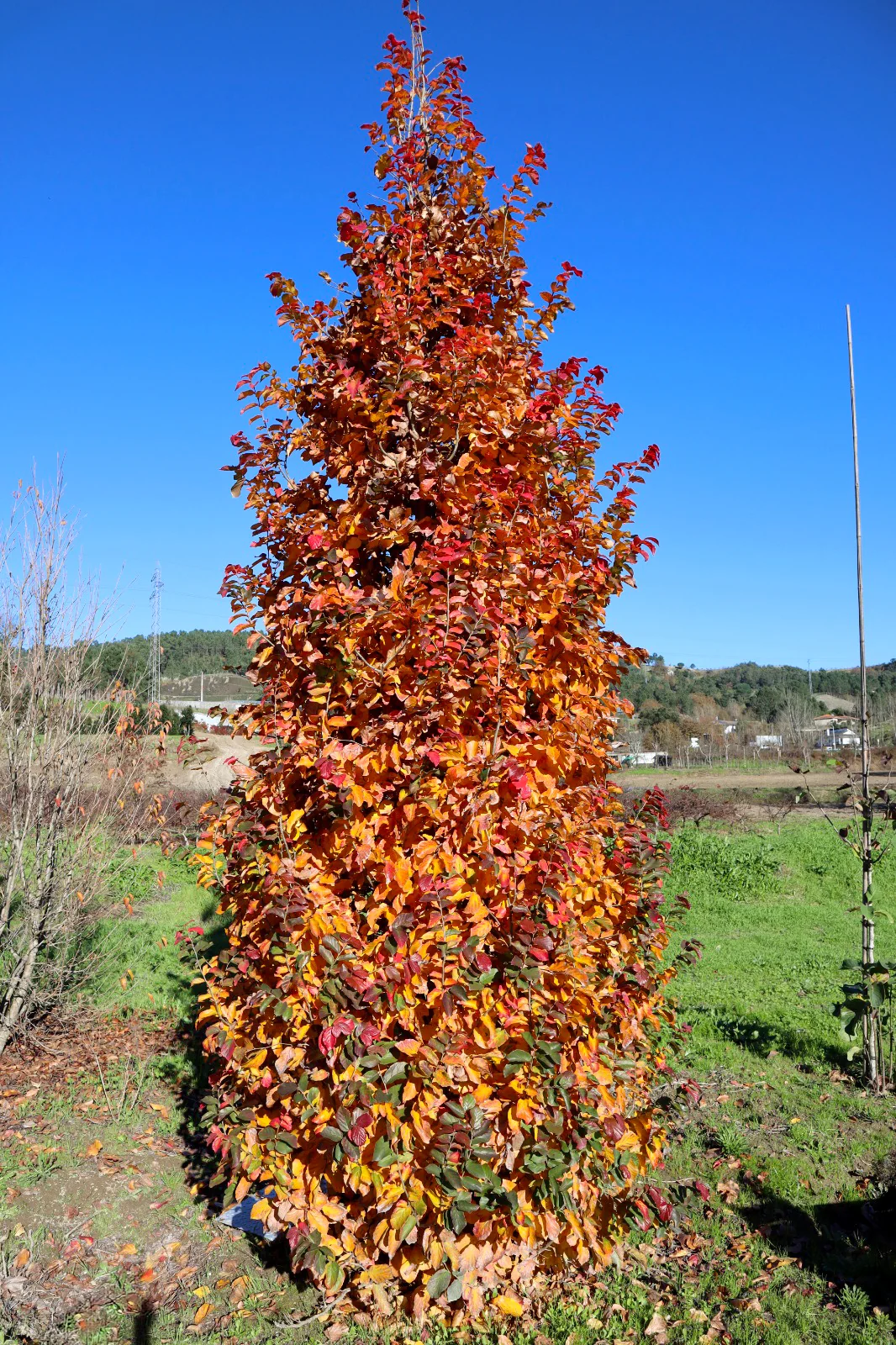
Answering the specification for a four-season deciduous tree in confined urban positions on Portuguese projects, Parrotia persica ‘Vanessa’ carries autumn colour, exfoliating bark, and winter flowering on a columnar frame of moderate ultimate stature.
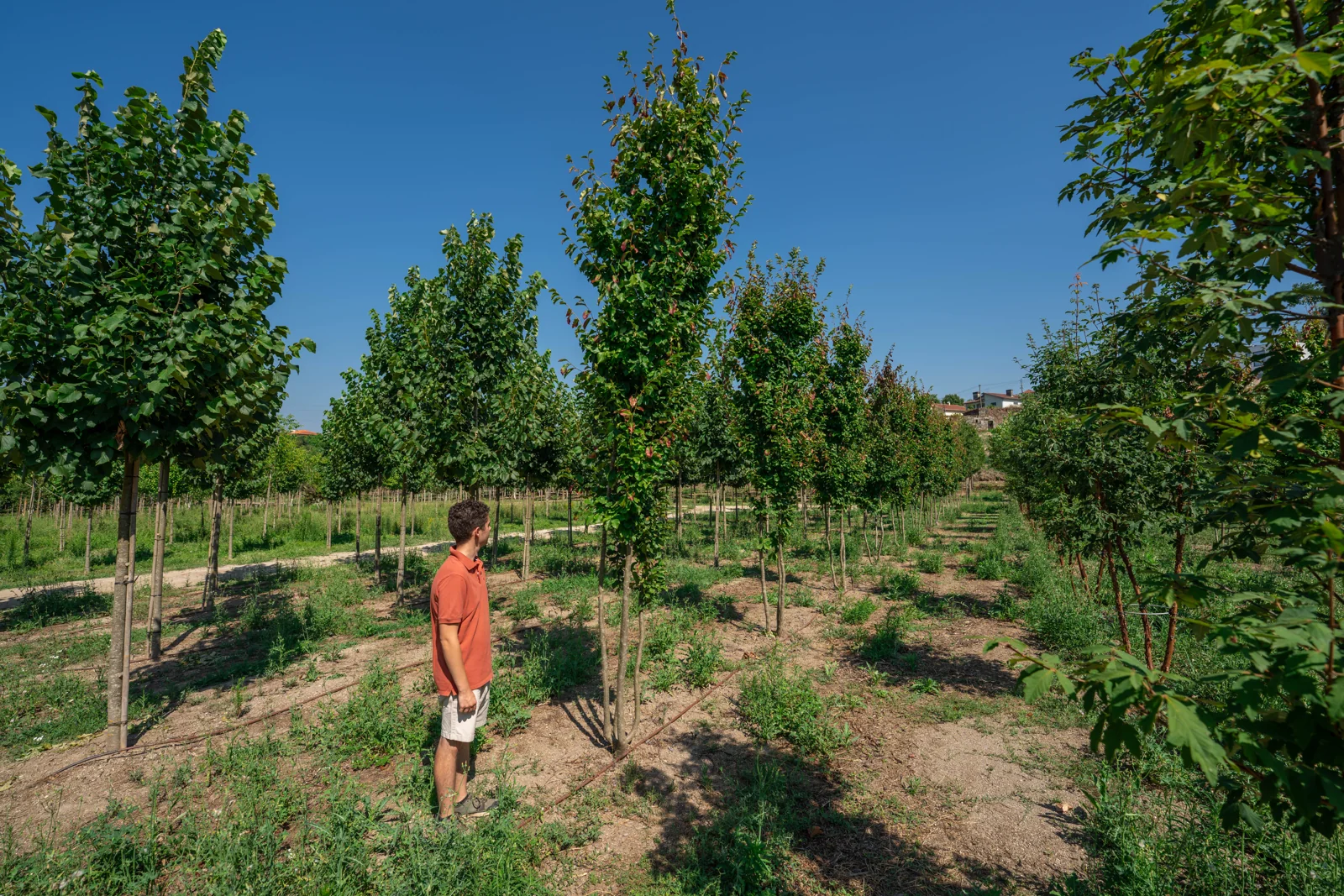
- Narrow, columnar habit suiting town gardens, driveways, and avenue planting
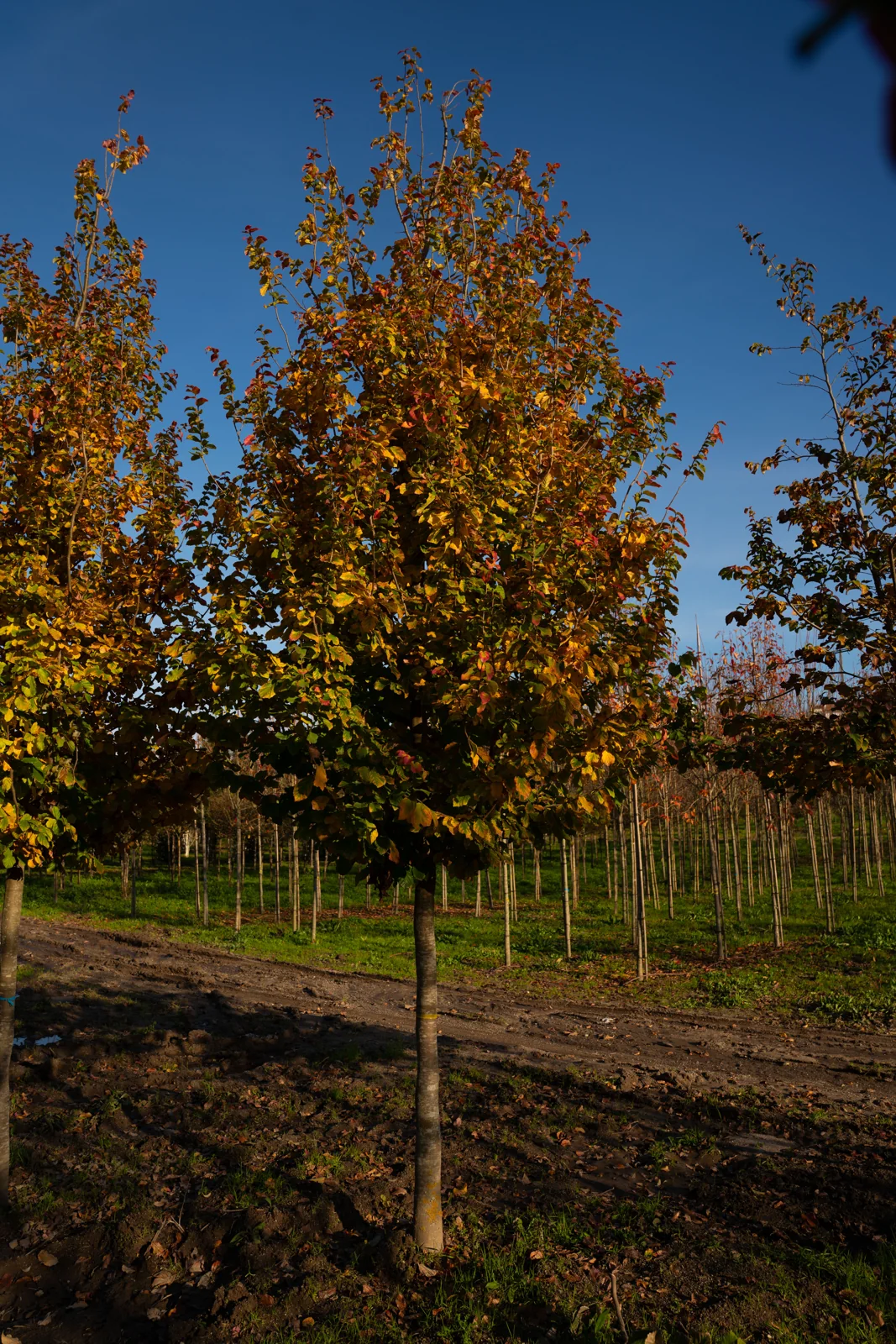
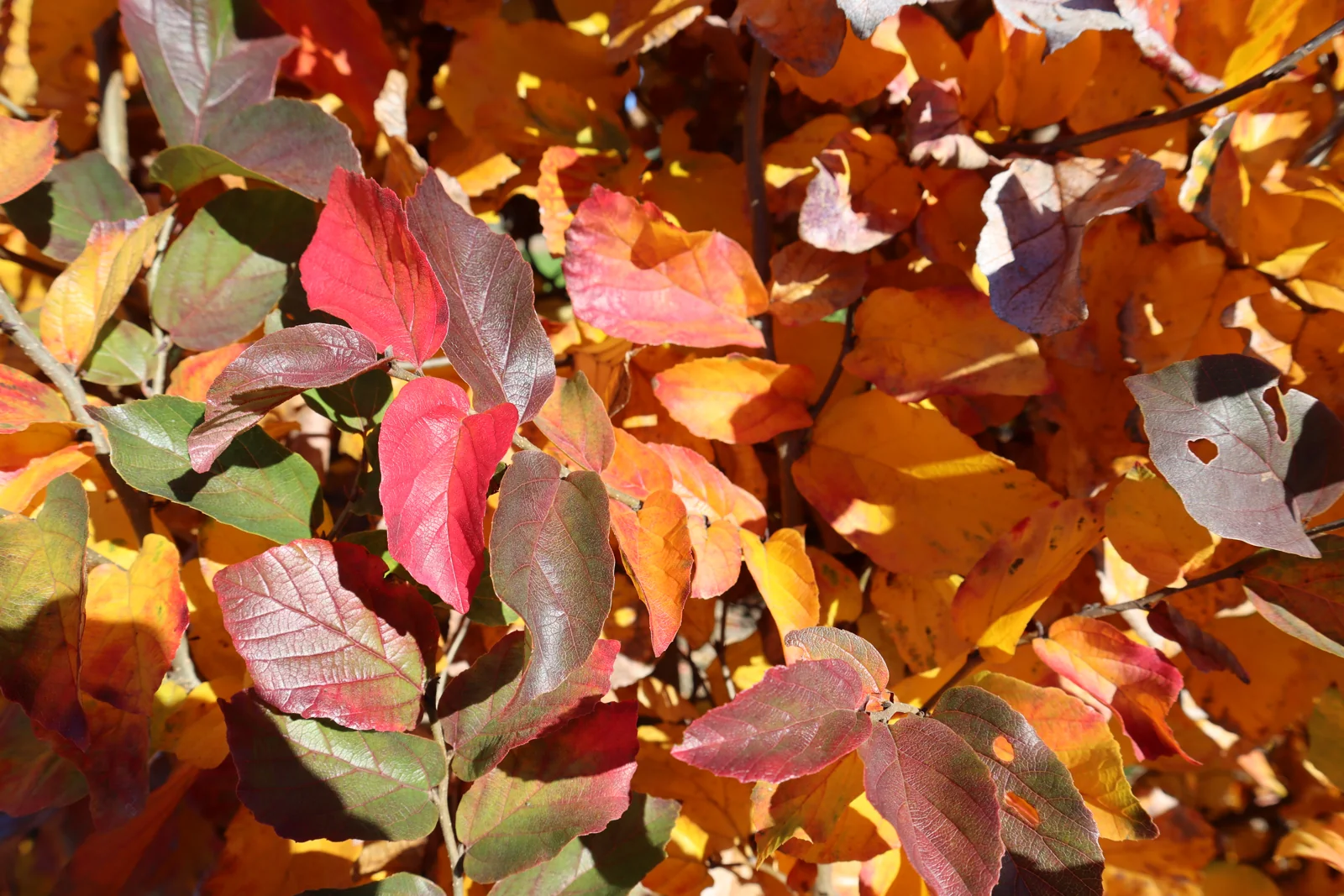
- Autumn foliage moves from yellow through scarlet to deep purple
- Exfoliating bark in grey, green, and tan patches through winter
Key Facts
About this Cultivar
The cultivar carries a narrower, more upright crown than the type species, forming a columnar to oval framework of 8 to 10 metres in height by 3 to 5 metres in spread at maturity. Growth is slow to moderate, which suits a long-term framework tree but argues for larger calibres where early presence on a praça or arruamento is part of the brief. Formative…
Read more
Show less
The cultivar carries a narrower, more upright crown than the type species, forming a columnar to oval framework of 8 to 10 metres in height by 3 to 5 metres in spread at maturity. Growth is slow to moderate, which suits a long-term framework tree but argues for larger calibres where early presence on a praça or arruamento is part of the brief. Formative pruning in the first three to five seasons resolves the multi-stemmed habit and lifts the crown for pedestrian clearance.
Performance in Portuguese conditions reflects the species’ Hyrcanian-forest origins. Recorded survival across European cultivation spans winters near minus 19 degrees C and summers around 41 degrees C, which covers every Portuguese climate zone from coastal Algarve to interior Alentejo. Field-grown at Diaplant in Amarante (approximately 950 mm annual rainfall, mild winters, dry summers), specimens develop root systems suited to humid Minho and Douro schemes as well as irrigated Algarve resort programmes. Salt tolerance is low, so direct estuarine or oceanfront exposure marks the species’ limit.
Maintenance load is light once the tree establishes. A single establishment irrigation cycle and a deep planting position serve interior Alentejo specifications on schist-derived soils with minimal summer rainfall; on calcareous to sandy substrates in the Algarve the cultivar tolerates the soil provided drainage is sound, though acidic to neutral conditions give the strongest autumn colour. Pest and disease pressure relevant to Portuguese phytosanitary surveillance is minimal: the species is not affected by Phytophthora cinnamomi (the seca dos montados pathogen of Quercus suber and Q. rotundifolia) or Bursaphelenchus xylophilus.
Three ornamental phases drive the specification. Autumn foliage passes from yellow and orange through scarlet to deep purple; the exfoliating bark, in patches of grey, green and brown, carries the tree through winter; small red apetalous flowers open on bare wood from December to February. The narrow habit positions ‘Vanessa’ as a feature specimen on residential schemes, a secondary canopy under taller framework such as Platanus or Quercus, and a deciduous alignment where the type species would compromise carriageway clearance.
Advice on this species
Want to know more about Parrotia persica 'Vanessa'?
Tell us about your project and we'll advise you on this species — where it thrives, which size makes sense, and what to expect once planted.
- Produção própria
- Exemplares adultos
- Resposta em 1–2 dias
Sem compromisso · orçamento personalizado