

Fragrant evergreen structure for year-round garden presence
Holly Olive · Osmanthus heterophyllus
A dense, slow-growing evergreen well suited to screens, formal hedges, and barrier plantings on Portuguese projects, valued for its low ongoing maintenance and its strong structural presence throughout the year.
- Intensely fragrant white flowers through September to November
- Dense evergreen crown to around 3 to 5 metres at maturity
- Tolerates alkaline clay and partial shade without difficulty
About this Species
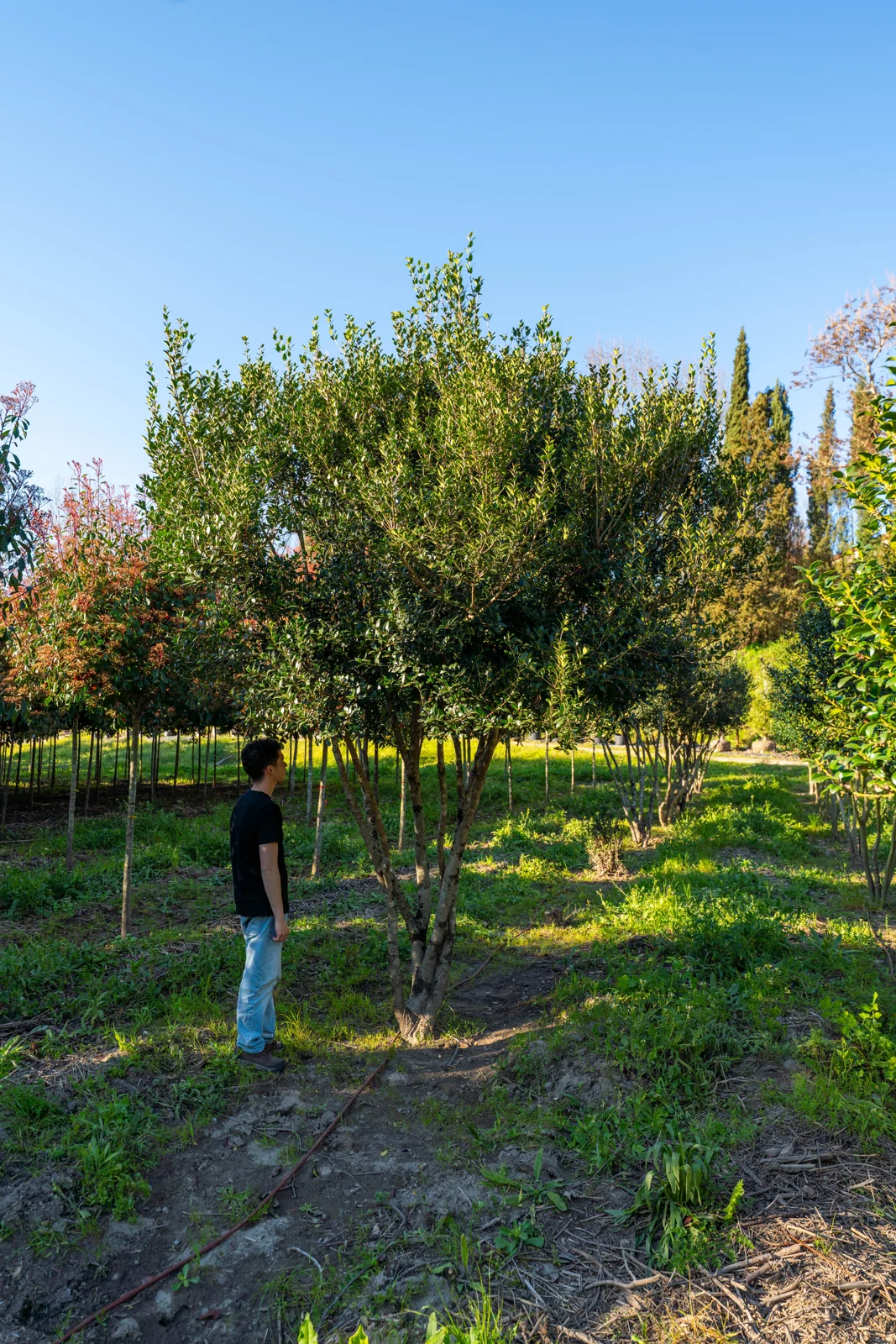
Reaching 3 to 6 metres in height with a spread of 3 to 5 metres, Osmanthus heterophyllus develops a naturally compact, rounded crown that requires minimal formative pruning to maintain a clean profile. The coriaceous, dark green leaves are dimorphic: juvenile growth carries prominently spined margins reminiscent of Ilex, while mature foliage becomes…
Read more
Show less
Reaching 3 to 6 metres in height with a spread of 3 to 5 metres, Osmanthus heterophyllus develops a naturally compact, rounded crown that requires minimal formative pruning to maintain a clean profile. The coriaceous, dark green leaves are dimorphic: juvenile growth carries prominently spined margins reminiscent of Ilex, while mature foliage becomes progressively entire. This combination of foliage types within a single plant gives the mature specimen a layered, textured surface that reads well in both formal clipping and natural form.
In Lisbon alignments and urban courtyard schemes, the species tolerates reflected heat from paved surfaces, compacted soils with clay fractions, and pollution loads typical of dense urban environments. Its root system does not pose the infrastructure risk associated with more vigorous species, making it a reliable choice for narrow planting strips and walled terraces where services are present. On the Algarve coast and throughout the Atlantic seaboard, established plants tolerate moderate summer drought and resist salt-laden air; supplementary irrigation during the first two to three post-planting summers is advisable in sandy or calcareous soils to support root establishment.
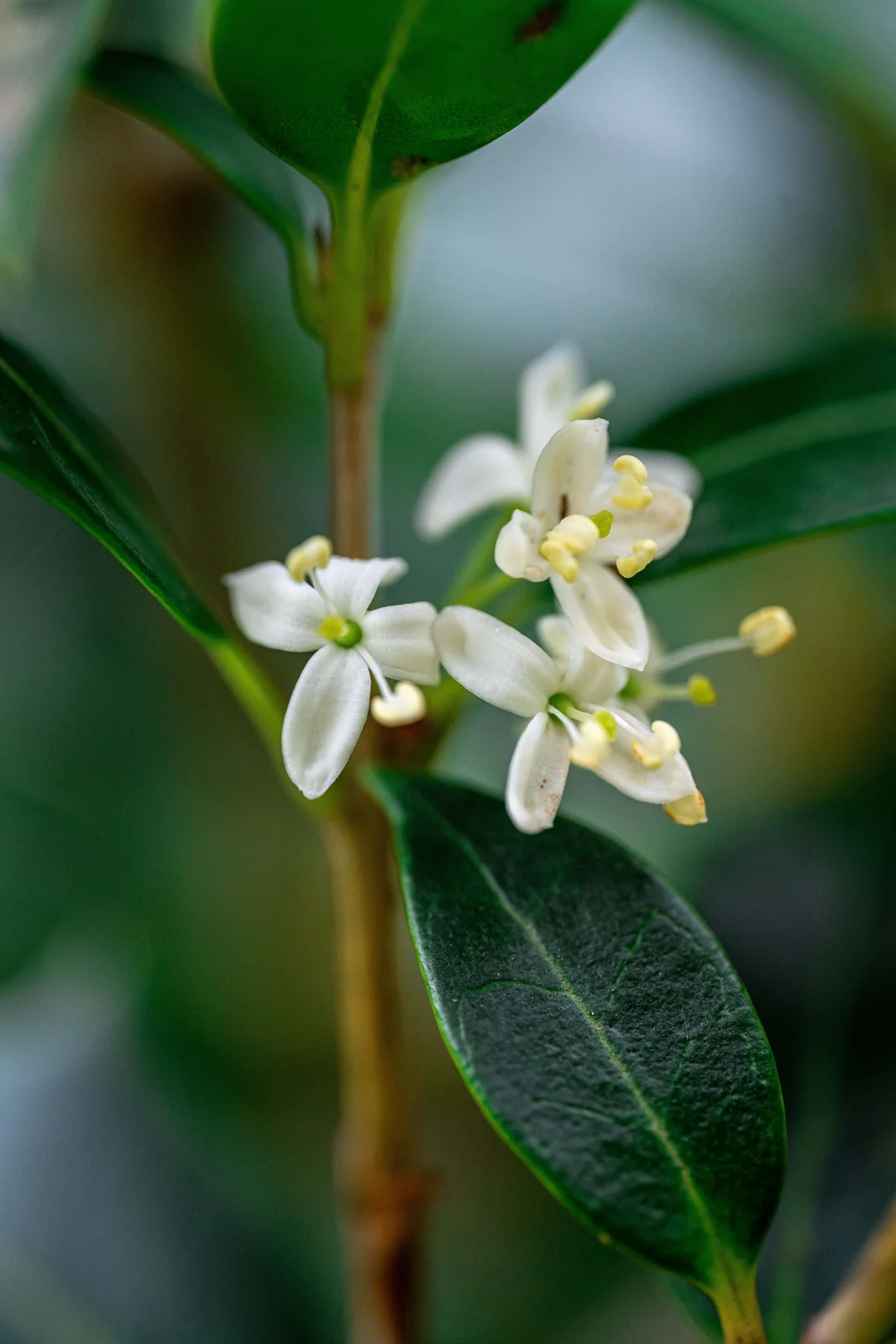
The fragrant white flowers appear from September to November, largely concealed within the foliage but capable of scenting a significant area. This late-season ornamental phase adds value in project specifications where the plant is otherwise selected purely on structural grounds, allowing it to serve both as a hard-working screen and as a seasonal feature without competing with the planting palette.
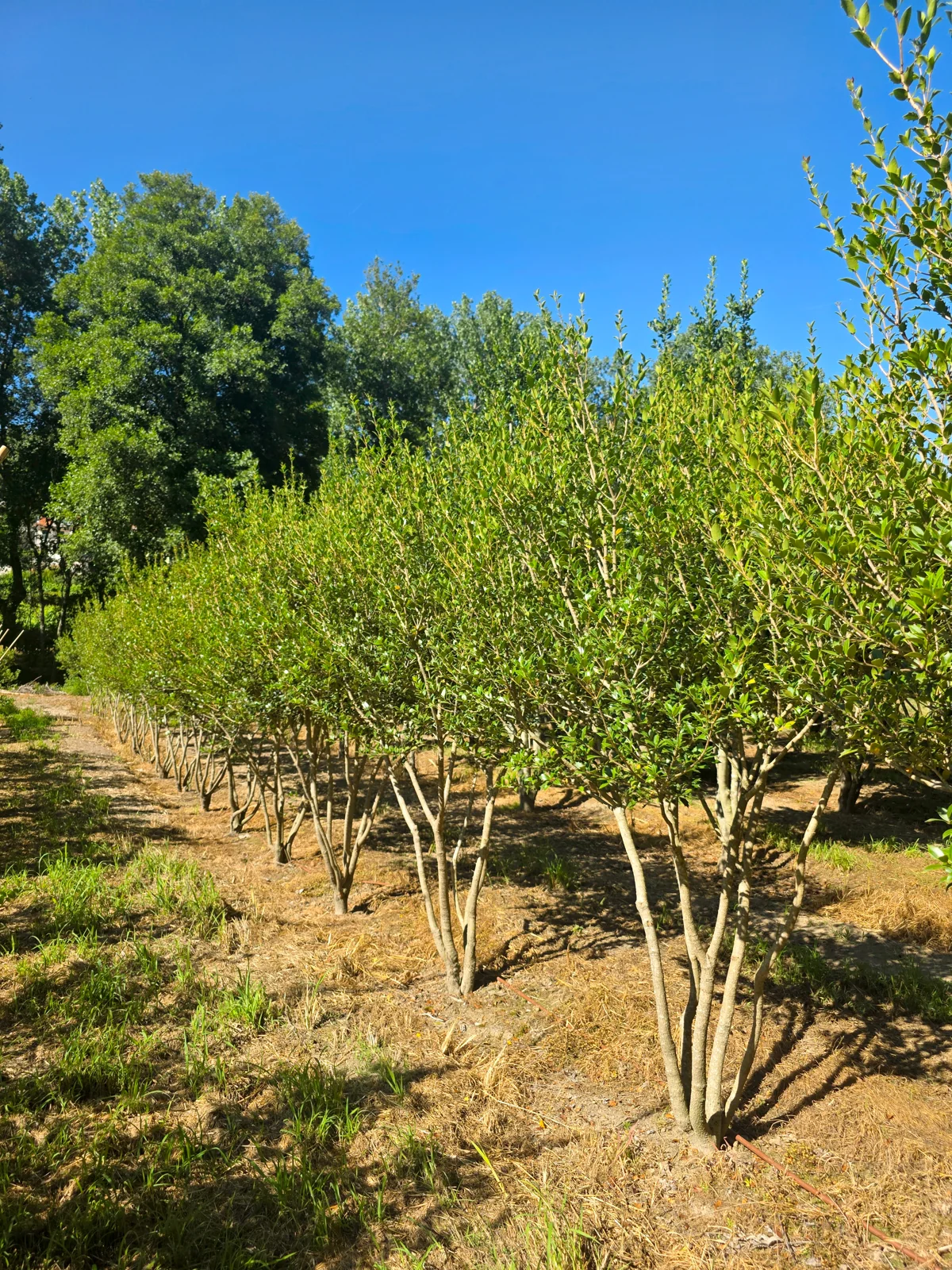
Osmanthus heterophyllus accepts heavy pruning without structural damage, which allows it to be maintained as a formal hedge, clipped into a geometric volume, or left to develop its natural rounded form according to the brief. Scale insects and aphids are the principal pest concerns, but no serious disease problems are recorded. Grown in continental Europe since 1856, it has a track record in Portuguese cultivation that supports confident specification without the establishment uncertainty associated with less trialled species.



Advice on this species
Want to know more about Osmanthus heterophyllus?
Tell us about your project and we'll advise you on this species — where it thrives, which size makes sense, and what to expect once planted.
- Produção própria
- Exemplares adultos
- Resposta em 1–2 dias
Sem compromisso · orçamento personalizado