

A spring-flowering small tree for the sheltered garden
Saucer Magnolia · Magnolia x soulangeana
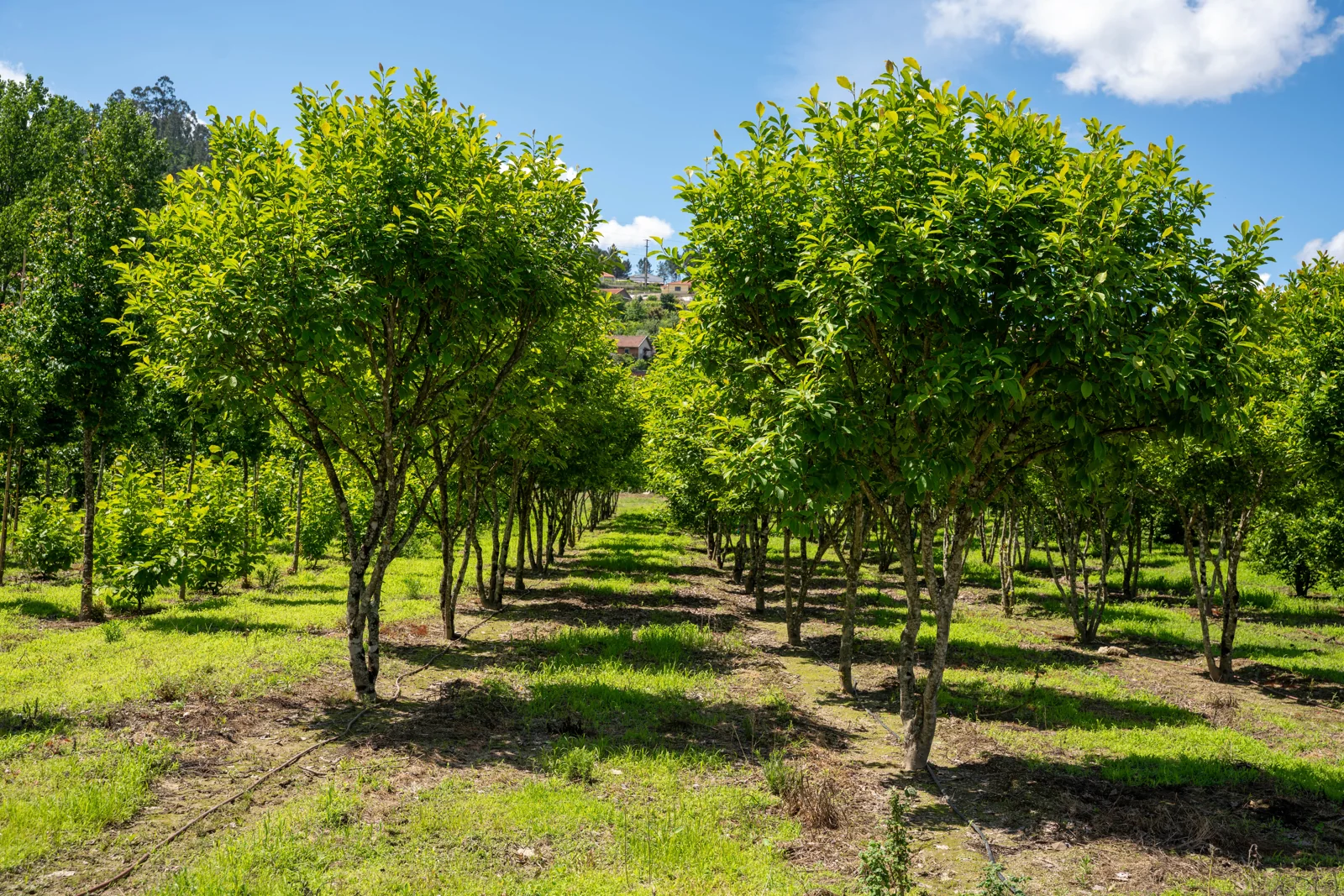
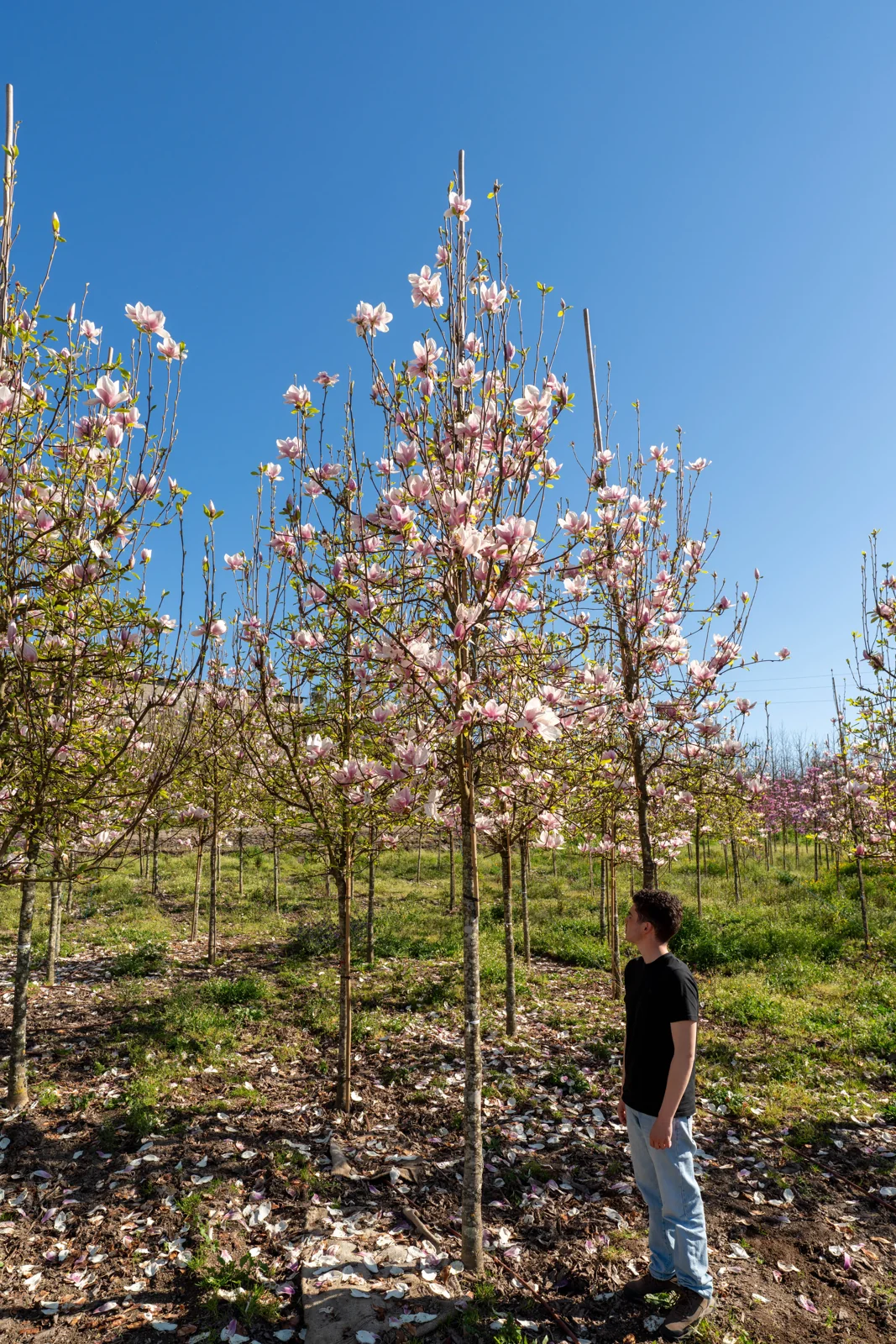
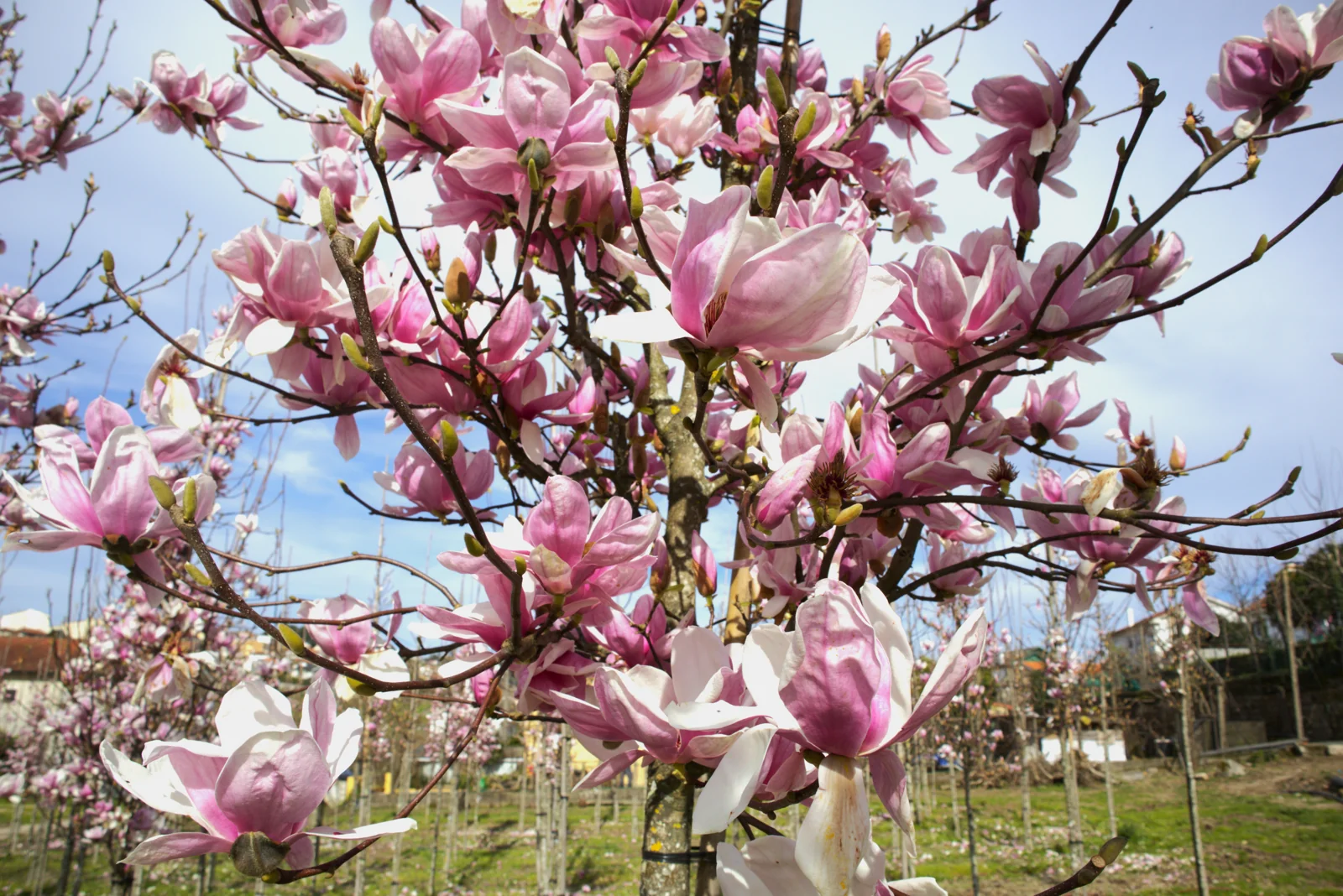
Where a project needs a deciduous focal specimen that opens its display before the leaves, this rounded, often multi-stemmed magnolia carries upright goblet-shaped flowers in early spring on a frame that stays in human scale.
- Large white, pink and purple cups open before the leaves
- Lightly fragrant flowers carry a garden through early spring
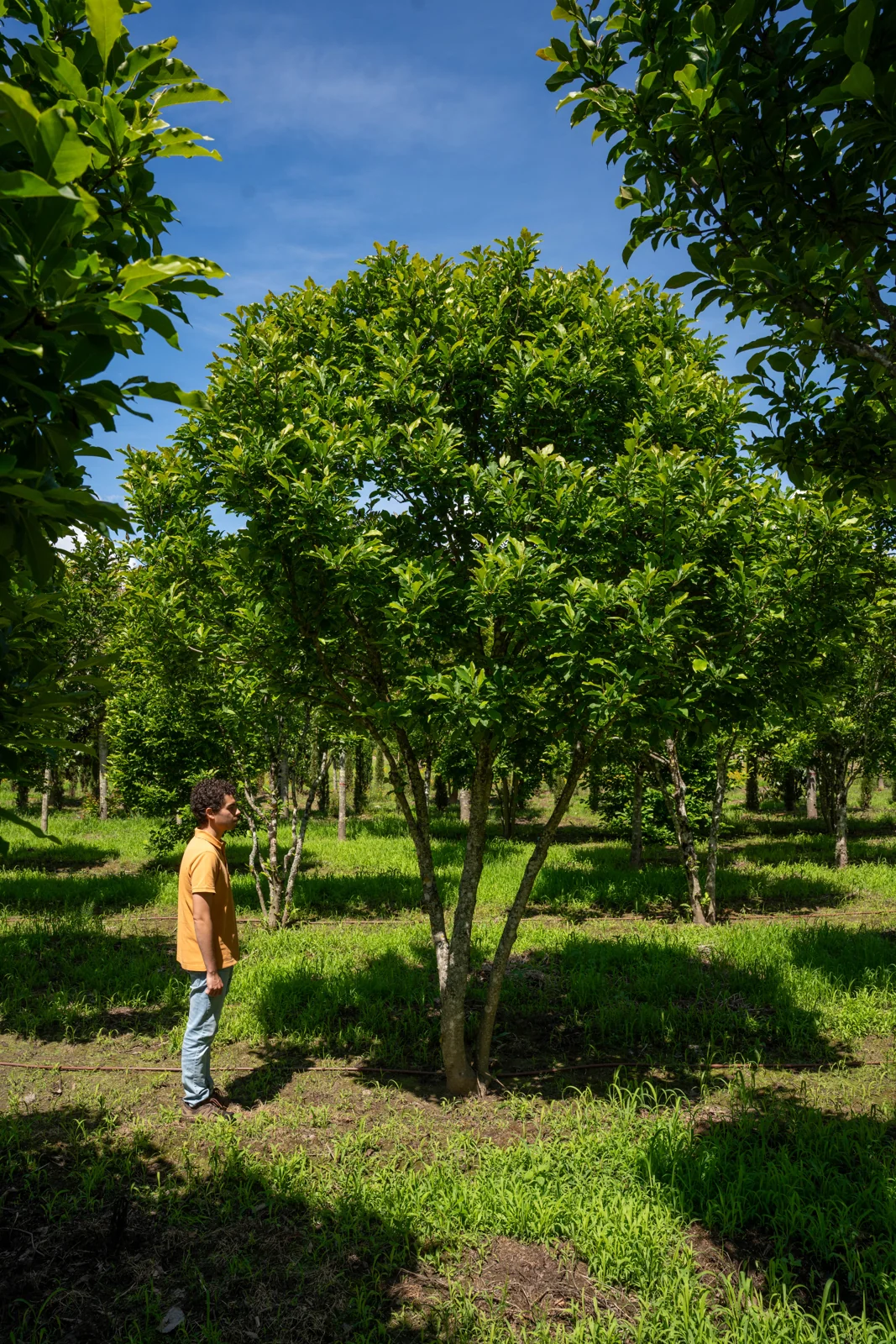
- Broad rounded crown of about 5 to 8 metres at maturity
About this Species
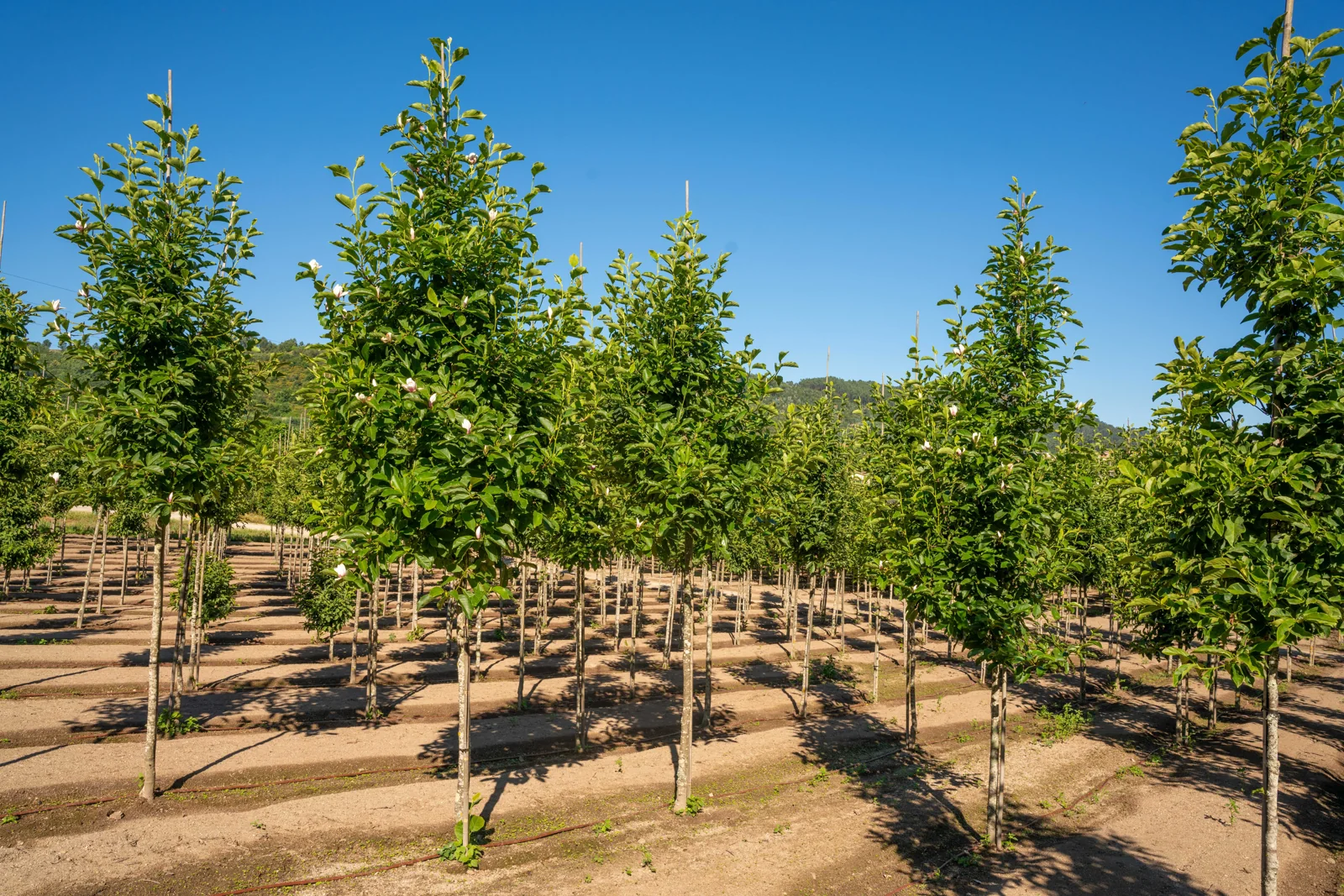
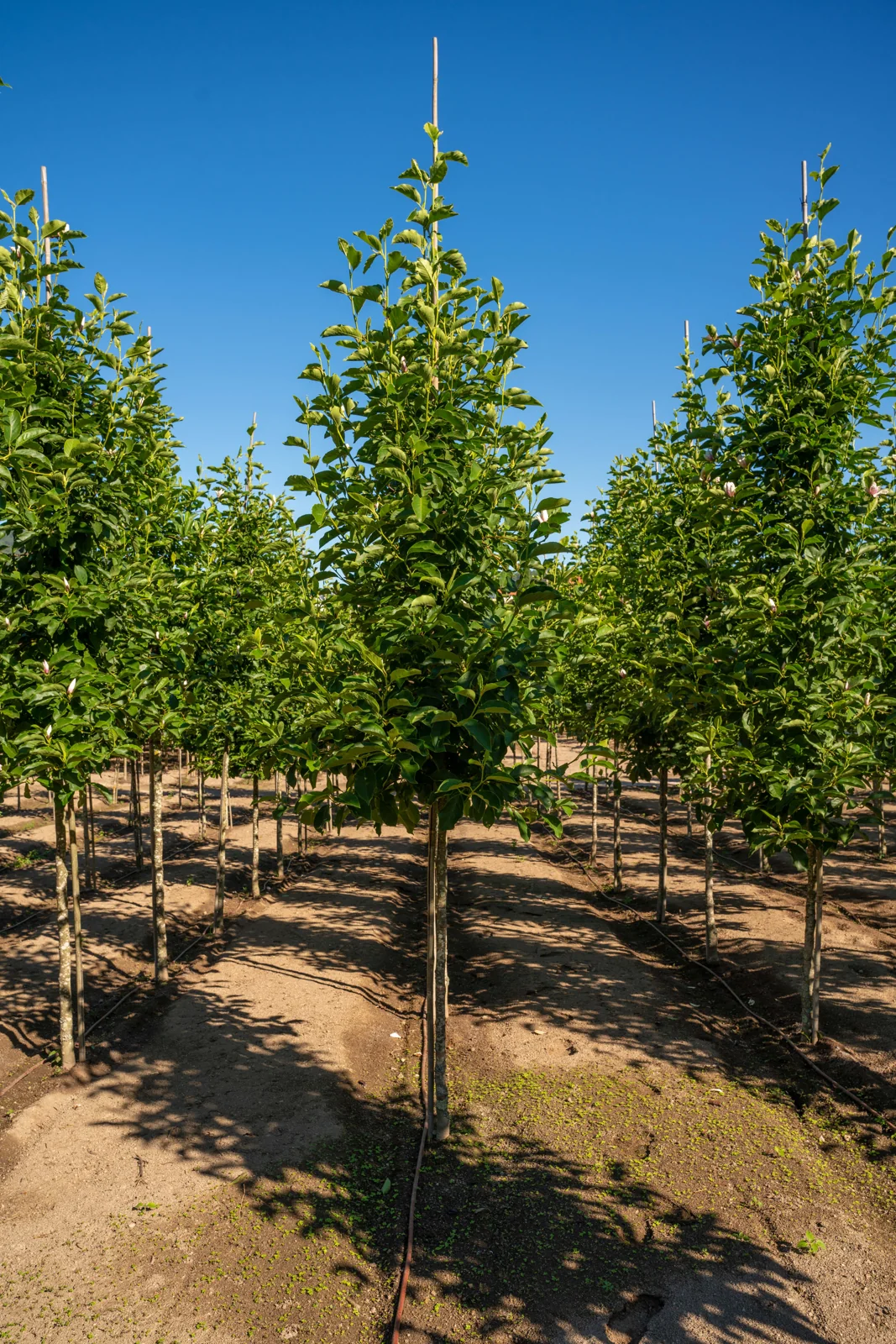
Magnolia x soulangeana is a small deciduous tree or large multi-stemmed shrub, reaching roughly 5 to 8 m in both height and spread at maturity, with a broad, rounded crown that widens with age as the major branches sag outwards under their own weight. Growth is medium-paced, and the smooth grey bark and low, spreading frame make it a feature specimen for a…
Read more
Show less
Magnolia x soulangeana is a small deciduous tree or large multi-stemmed shrub, reaching roughly 5 to 8 m in both height and spread at maturity, with a broad, rounded crown that widens with age as the major branches sag outwards under their own weight. Growth is medium-paced, and the smooth grey bark and low, spreading frame make it a feature specimen for a garden, a courtyard, or a square (praca) rather than a street alignment, where the eventual crown width and fleshy surface roots leave little room beside paving.
The defining event is the early spring flowering, in March and April before the foliage appears: upright, goblet-shaped flowers of nine tepals, white inside and flushed pink to purple outside, set across the bare branches. Because the open flowers are disfigured by even light frost, the species earns its place in mild, sheltered positions; later-flowering cultivars reduce the risk where spring weather stalls and restarts. A warm urban pocket or a wall-sheltered garden holds the display more reliably than an exposed inland site.
For a Portuguese plant schedule, the controlling factor is water and soil. Drought tolerance is low, and the species performs best on moist, well-drained, acidic to neutral loams. It suits the humid Atlantic conditions of the Minho and Douro and irrigated Greater Lisbon schemes; in the hot interior Alentejo and on the calcareous, drought-prone soils of the coastal Algarve, it requires free-draining ground, a settled irrigation cycle, and afternoon shelter from reflected heat to establish and hold form.
Maintenance is modest once the tree is settled. It is wind-tolerant for a magnolia and regenerates strongly after pruning, which is best carried out straight after flowering. Pest and disease pressure is low, with only occasional soft scale or leaf spot, and the spent tepals and autumn leaves drop as light, manageable litter.



Advice on this species
Want to know more about Magnolia x soulangeana?
Tell us about your project and we'll advise you on this species — where it thrives, which size makes sense, and what to expect once planted.
- Produção própria
- Exemplares adultos
- Resposta em 1–2 dias
Sem compromisso · orçamento personalizado