

A tall flowering shade tree for deep, moist ground
Tulip Tree · Liriodendron tulipifera
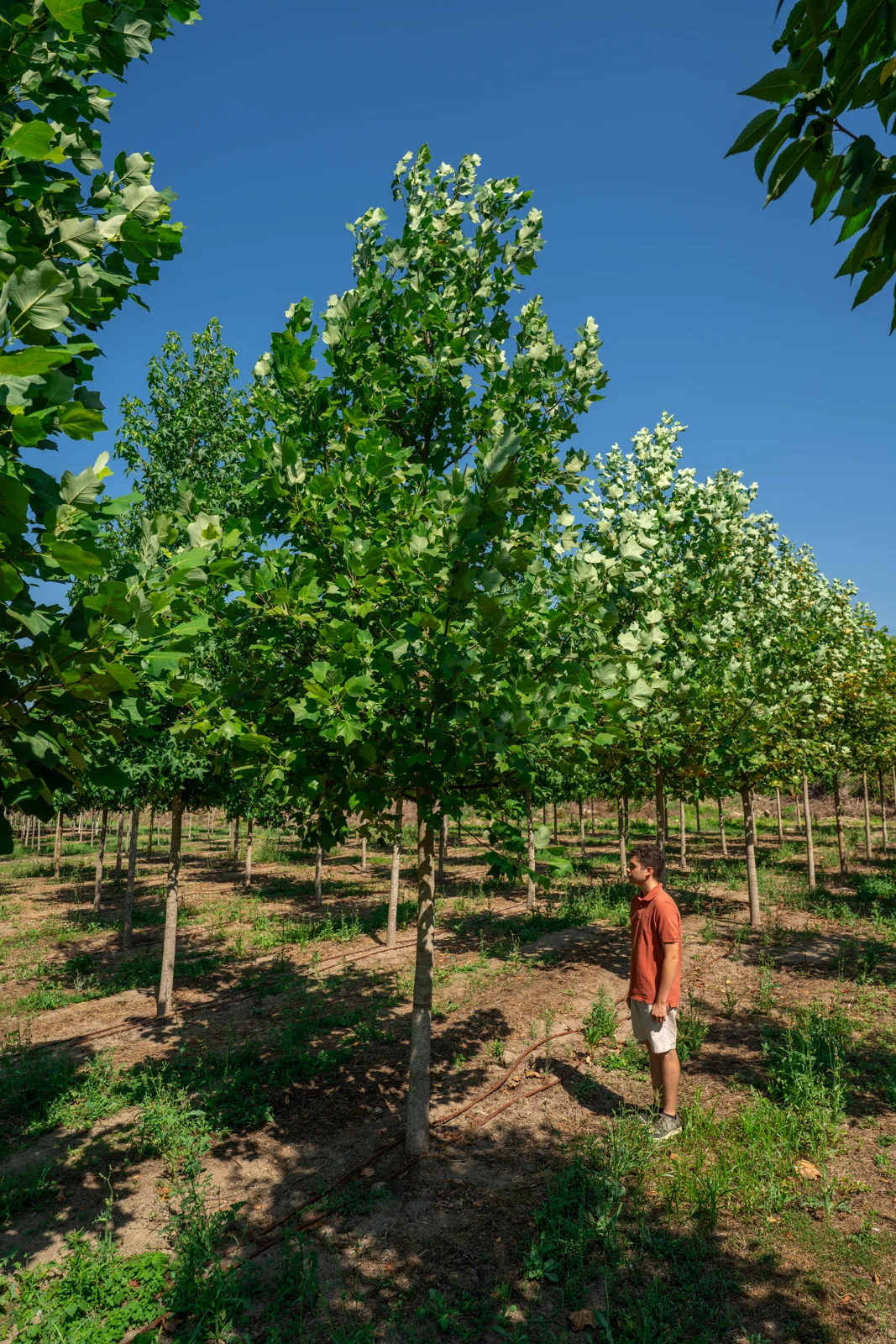
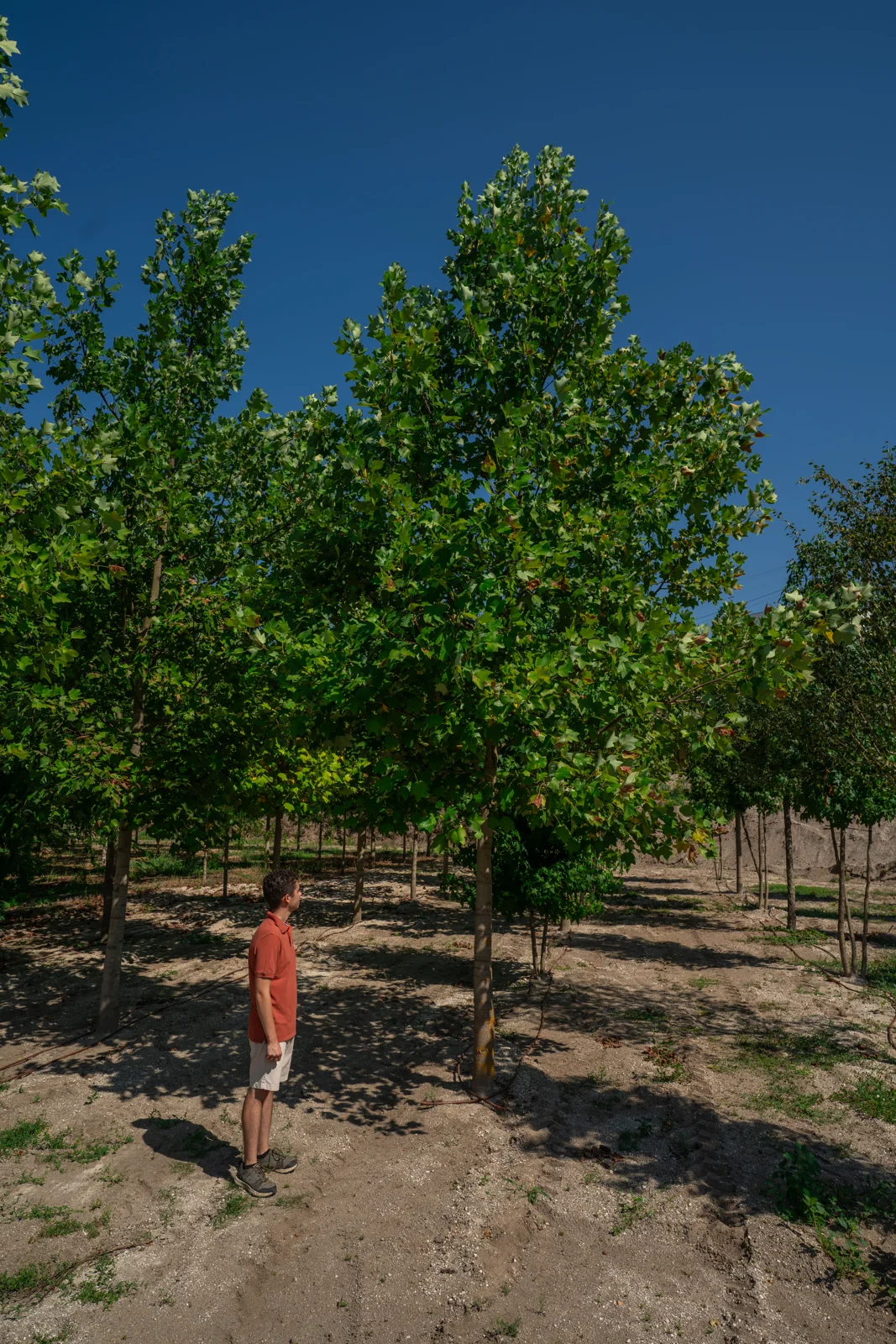
A large-scale deciduous shade tree with a strong central leader, rapid vertical growth, and clean pyramidal crown, specified as a framework tree for parks, institutional grounds, and wide alamedas where deep soil and reliable moisture build its structural character.
- Fast-growing with a clean, conical crown reaching 20 to 35 metres
- Cup-shaped flowers in May and June with orange-banded petals
- Distinctive four-lobed foliage turning warm gold in autumn
About this Species
Liriodendron tulipifera reaches 20 to 35 m in height with a spread of 10 to 15 m. The crown is conical in youth, broadening to a rounded-oval form at maturity. A single straight trunk rises through the centre, often clear of branches for several metres, producing the columnar silhouette that gives the species its value as an alignment or avenue tree. Growth…
Read more
Show less
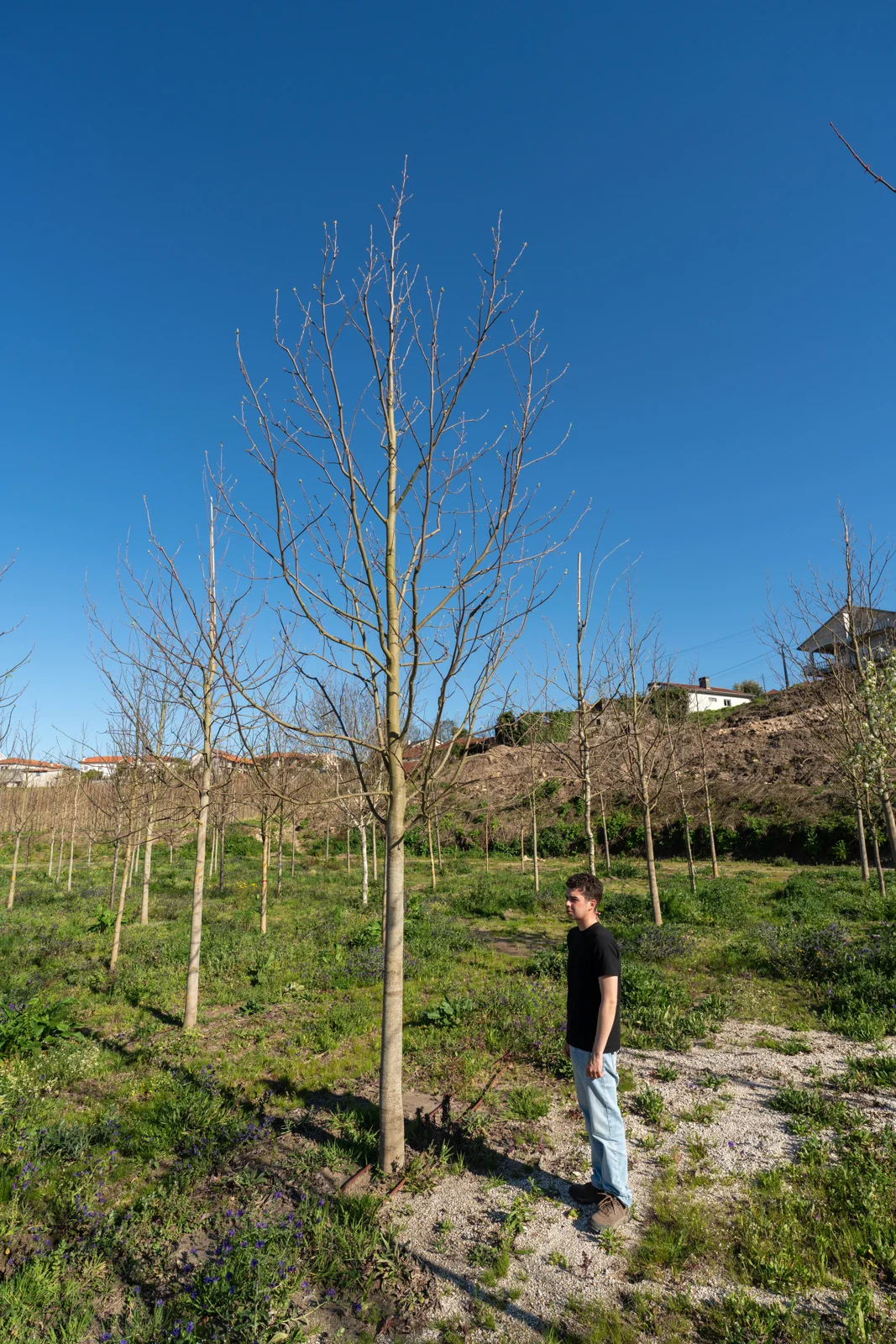
Liriodendron tulipifera reaches 20 to 35 m in height with a spread of 10 to 15 m. The crown is conical in youth, broadening to a rounded-oval form at maturity. A single straight trunk rises through the centre, often clear of branches for several metres, producing the columnar silhouette that gives the species its value as an alignment or avenue tree. Growth is fast: a well-sited tree can add 1 m or more per year in its first two decades, reaching usable canopy shade sooner than most comparable framework species. The four-lobed leaves, 12 to 20 cm across, are distinctively truncated at the apex and turn clear gold in autumn.
In Portugal, this species performs best in the humid northwest, from the Minho valley through the Douro and into the Beira Litoral, where annual rainfall exceeds 900 mm and summers remain moderate. In the greater Porto area and along the northern coast, established trees tolerate summer dry spells if planted in deep loam with adequate organic matter. Field-grown in Amarante, in the heart of this climatic zone, the species develops dense root systems in the region's granite-derived soils. In urban Lisbon, supplementary irrigation through July and August is necessary; without it, leaves yellow and drop prematurely during drought stress. The species is not suited to the interior Alentejo, where prolonged summer heat above 40 degrees C and low rainfall create conditions beyond its tolerance. Coastal Algarve plantings face similar limitations unless sited in irrigated grounds with deep, acid to neutral soil. Hardy to approximately minus 34 degrees C, winter cold is never the limiting factor in any Portuguese project zone.
Soil requirements are specific: deep, moist, well-drained, and preferably acidic. Compacted or waterlogged clay soils cause root decline. The fleshy root system is sensitive to damage during handling, making careful transplanting of large-calibre specimens essential. Formative pruning to maintain a single leader is advisable in the first years after planting. Aphid infestations can produce honeydew and sooty mould on leaf surfaces, a consideration for paved areas beneath the crown. Samara litter disperses through autumn and winter. Shallow lateral roots may conflict with pavements and underground services in confined planting pits. In the humid Minho and Douro, fungal pressure from verticillium wilt and powdery mildew warrants monitoring, though general disease resistance is good.
The species is native to eastern North America, where it is the tallest broadleaf of the temperate deciduous forest. In southern Europe it has a long horticultural record, with specimens exceeding 49 m in northern Italy and southwest France. This origin in deep, moist valleys predicts its Portuguese behaviour: it thrives where water is available and declines where it is not. Specification is appropriate for parks, large-scale institutional landscapes, and wide arruamentos in the north of Portugal, where an alternative to platano (Platanus x acerifolia) is sought that delivers comparable scale with a cleaner autumn leaf drop and no anthracnose risk.



Advice on this species
Want to know more about Liriodendron tulipifera?
Tell us about your project and we'll advise you on this species — where it thrives, which size makes sense, and what to expect once planted.
- Produção própria
- Exemplares adultos
- Resposta em 1–2 dias
Sem compromisso · orçamento personalizado