

Reliable autumn colour for a Portuguese garden
Sweet Gum · Liquidambar styraciflua
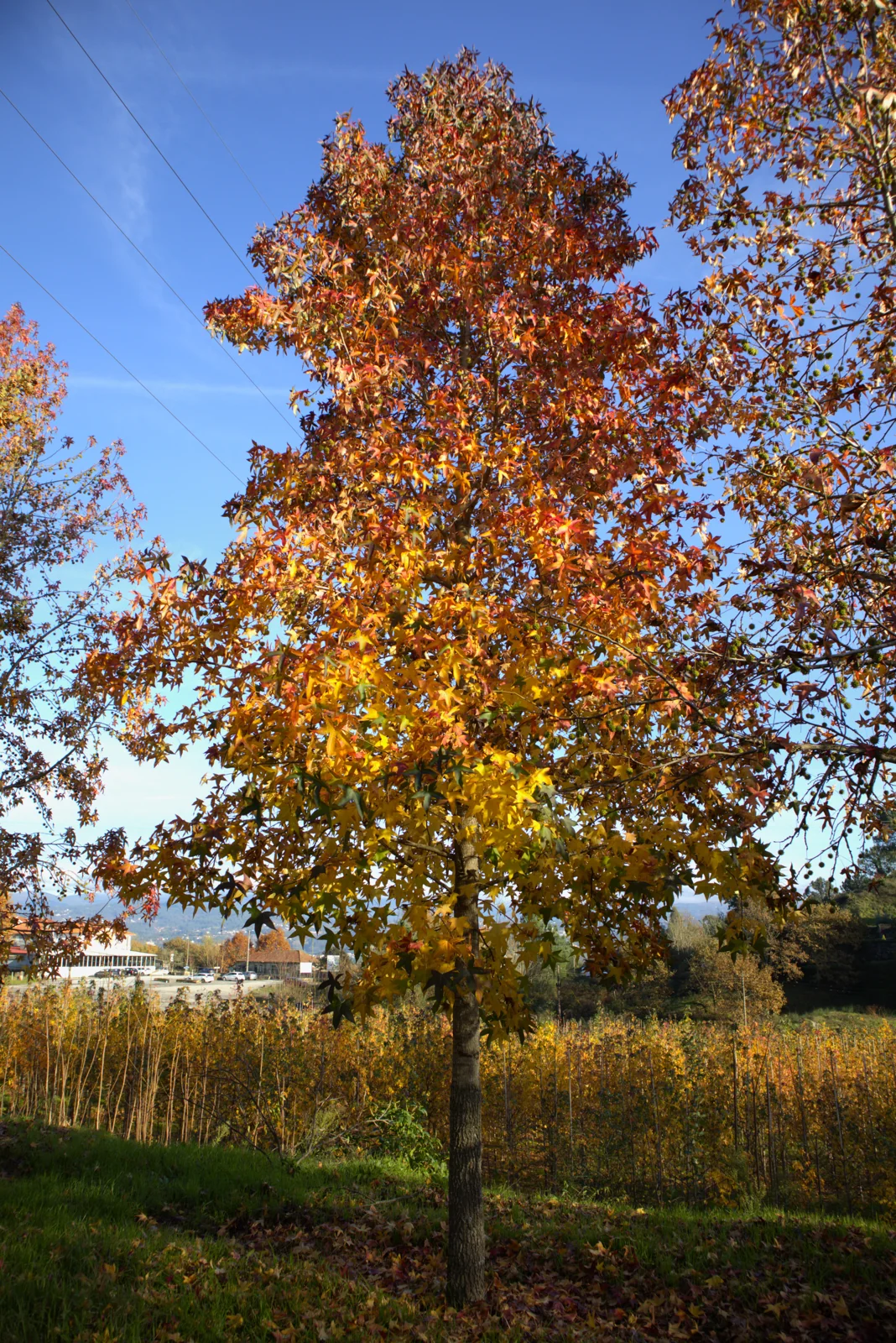
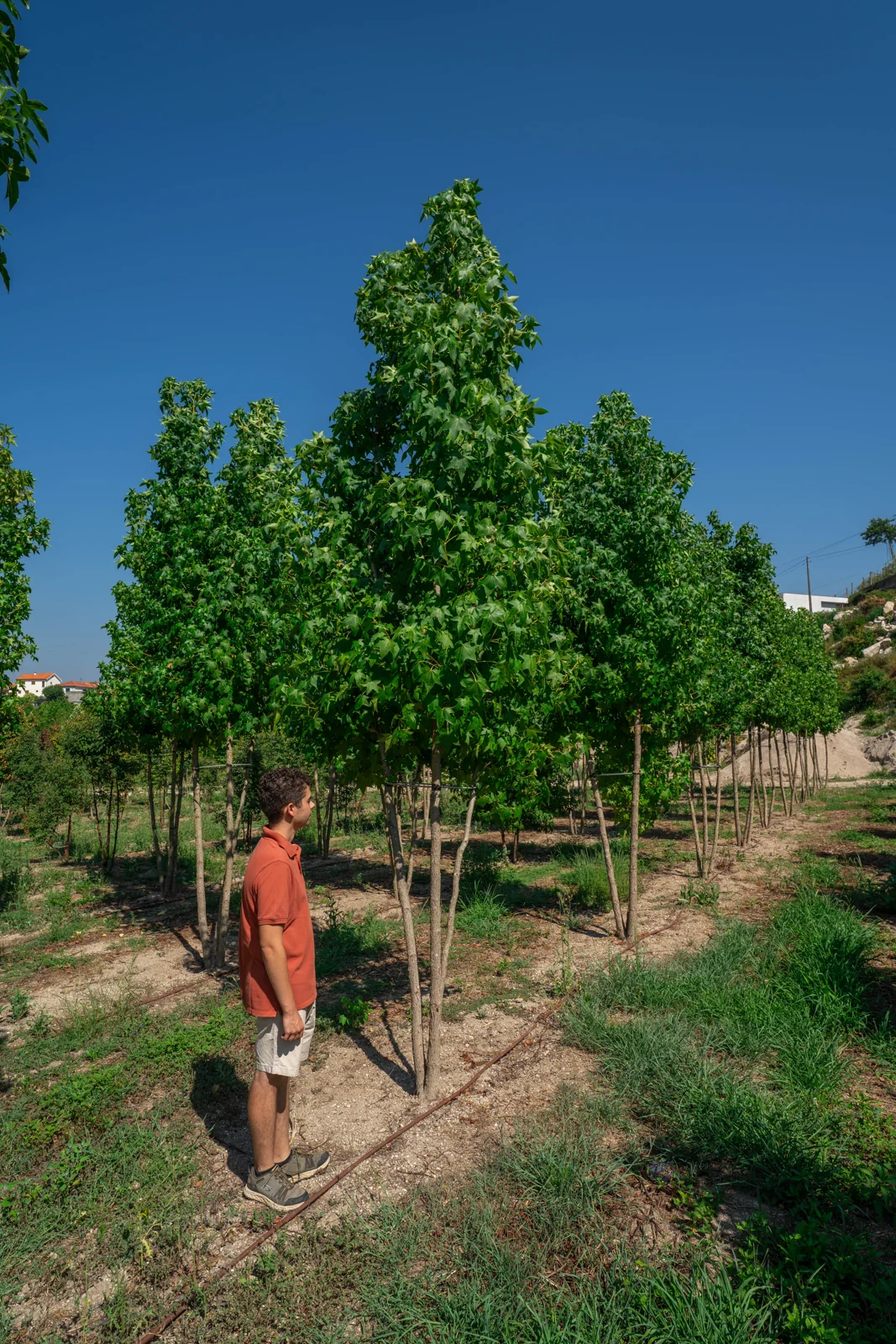
Specified on Portuguese projects as a feature specimen primarily for autumn colour, this deciduous tree is planted on acidic to neutral soils where supplementary irrigation is available through the summer.
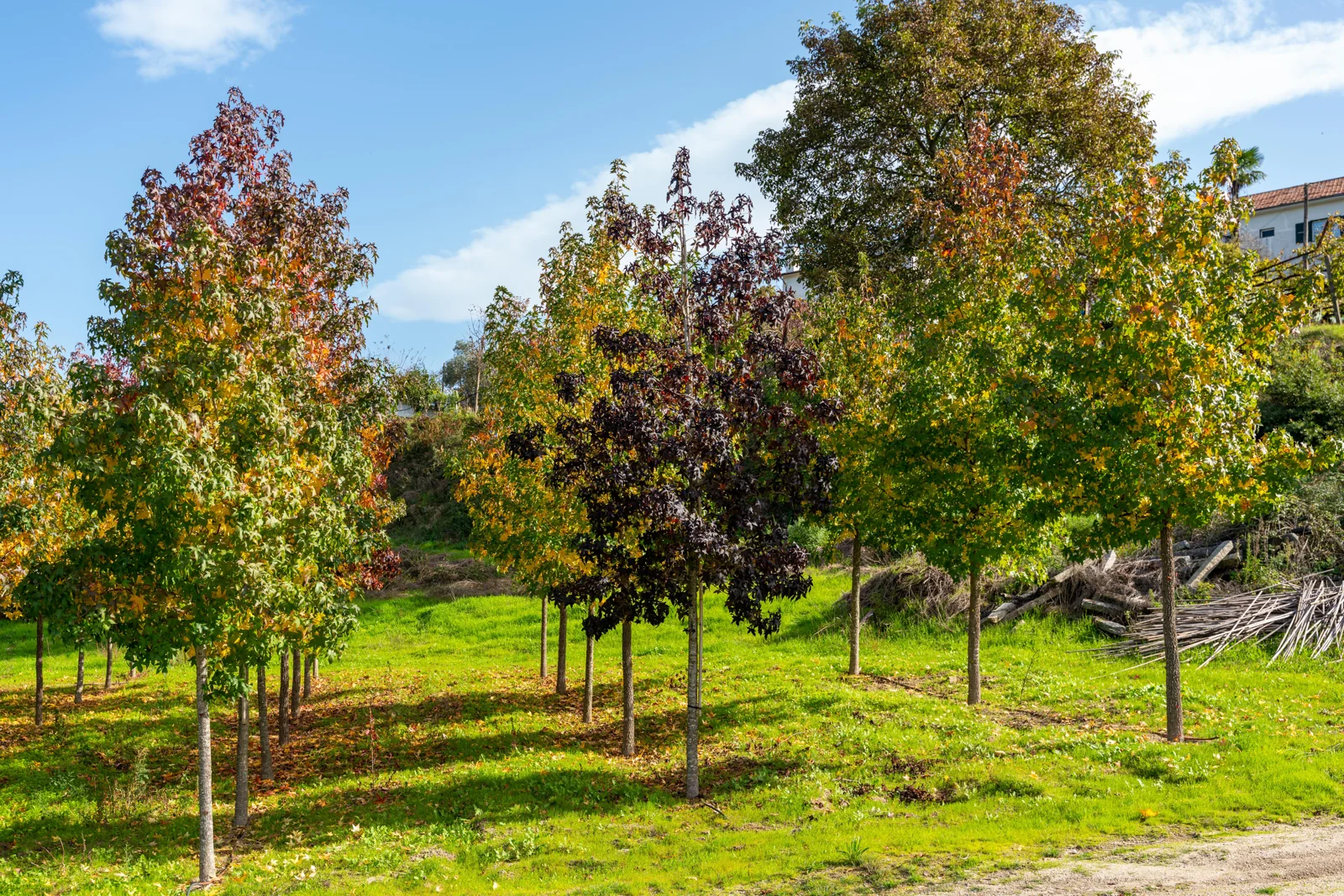
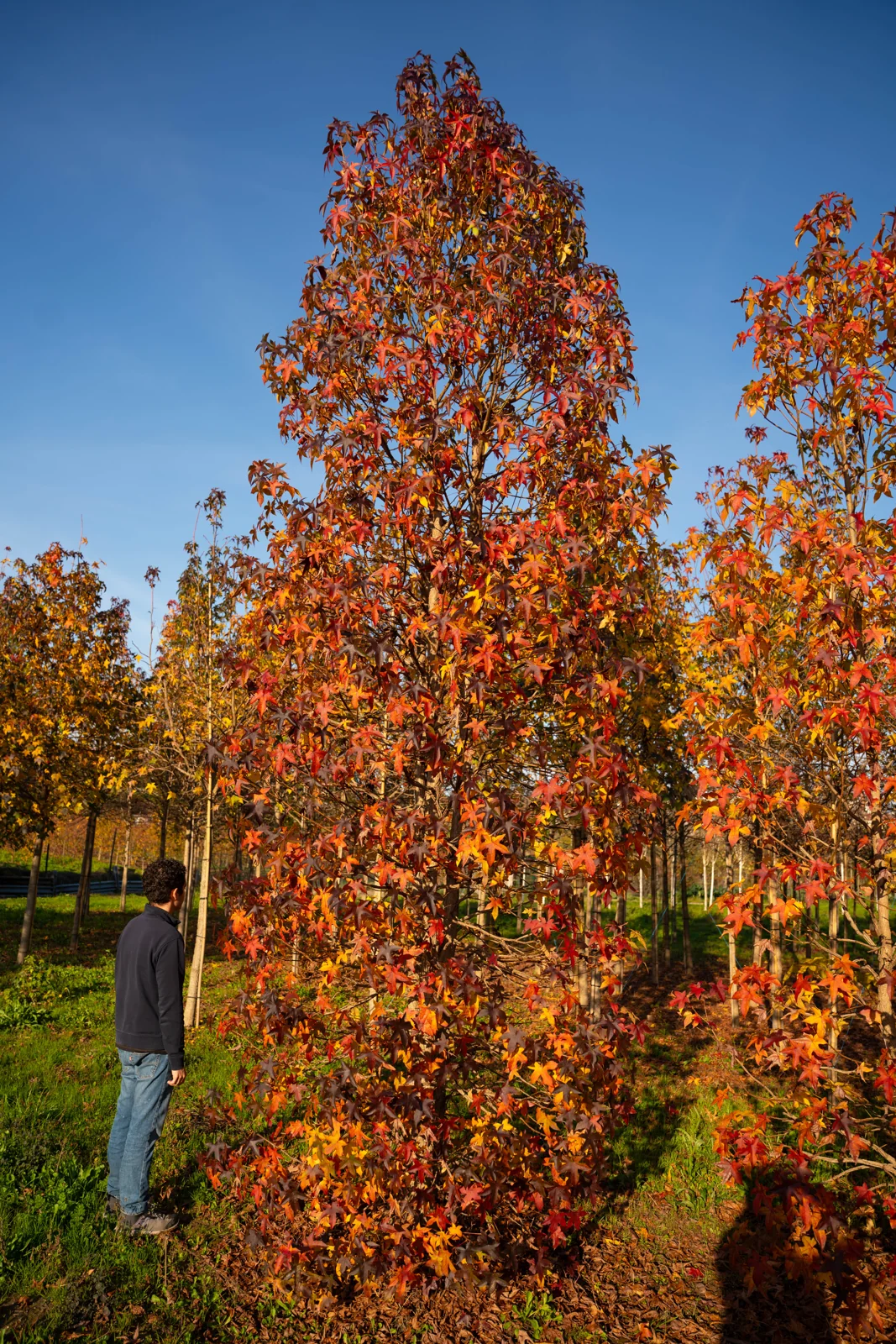
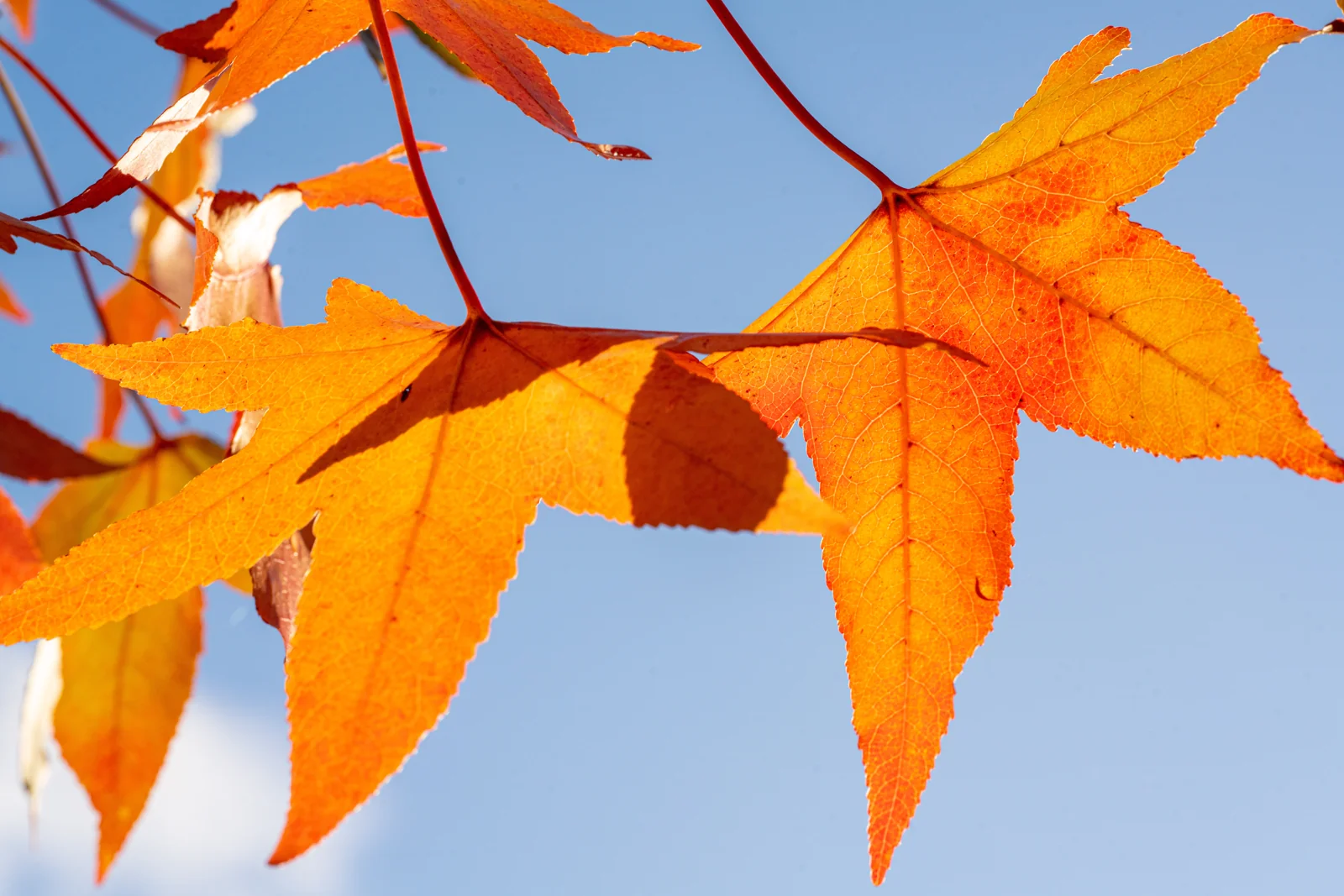
- Glossy palmate leaves turn amber, scarlet and purple from late October
- Reliable on acidic schist and granite soils of Greater Porto
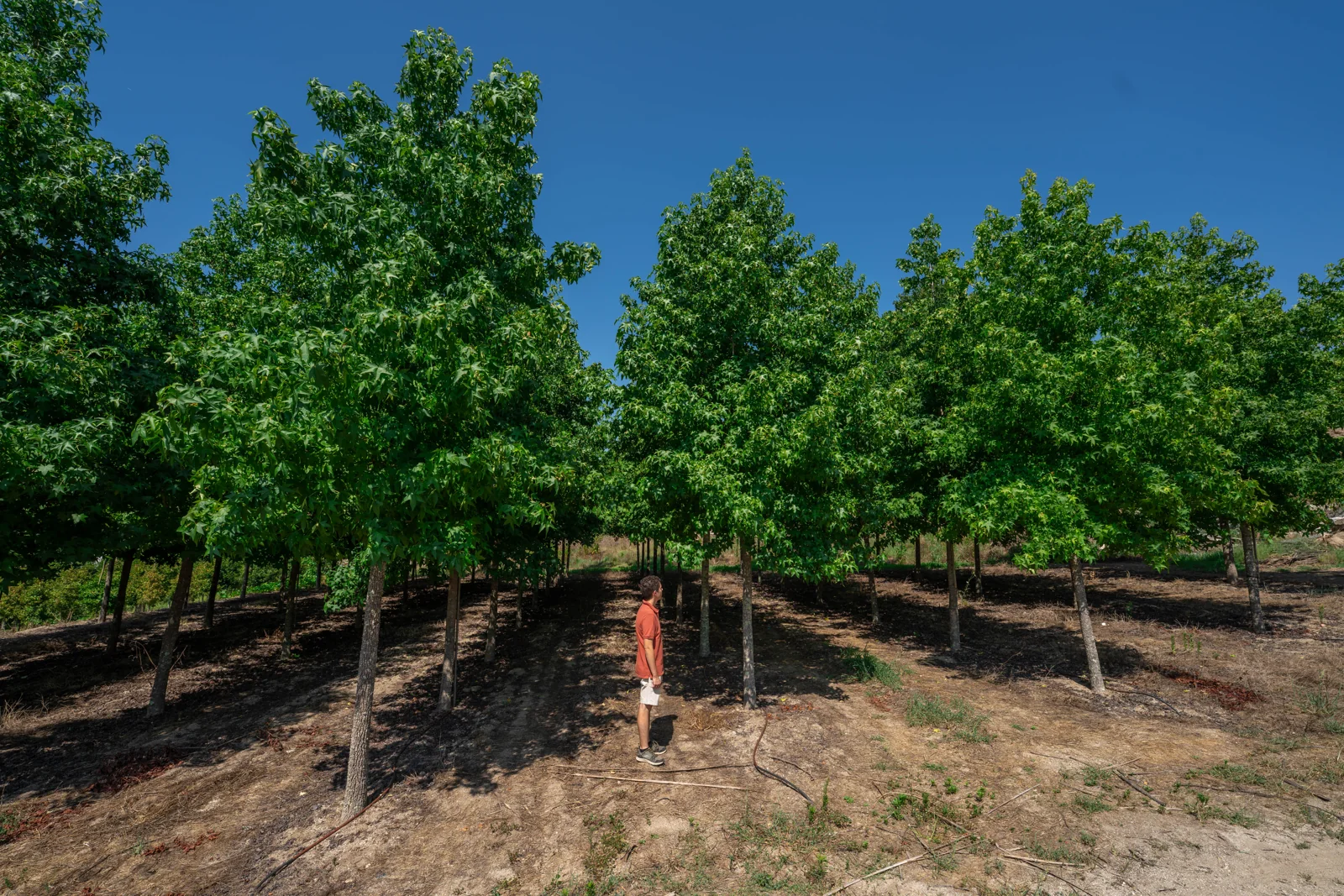
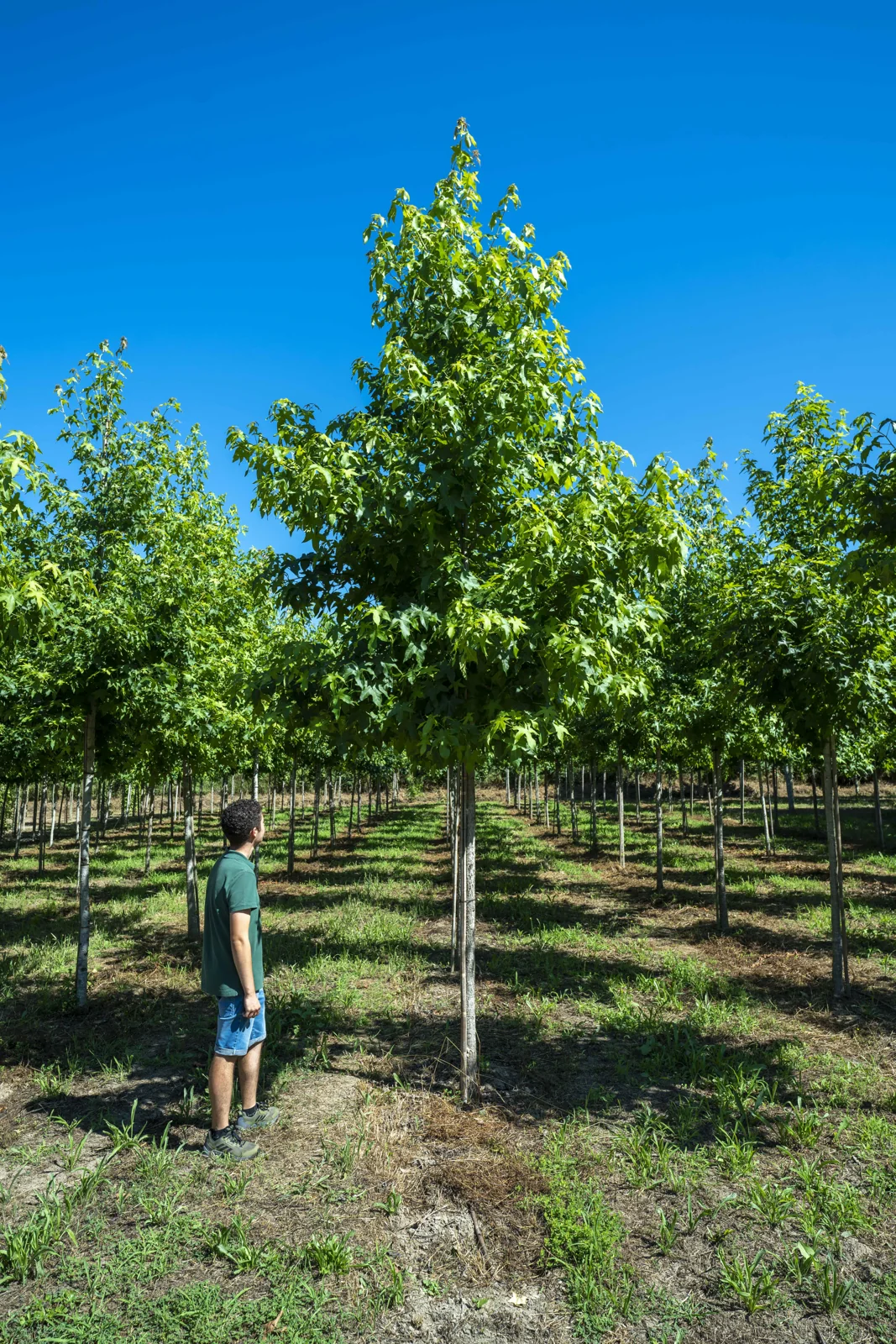
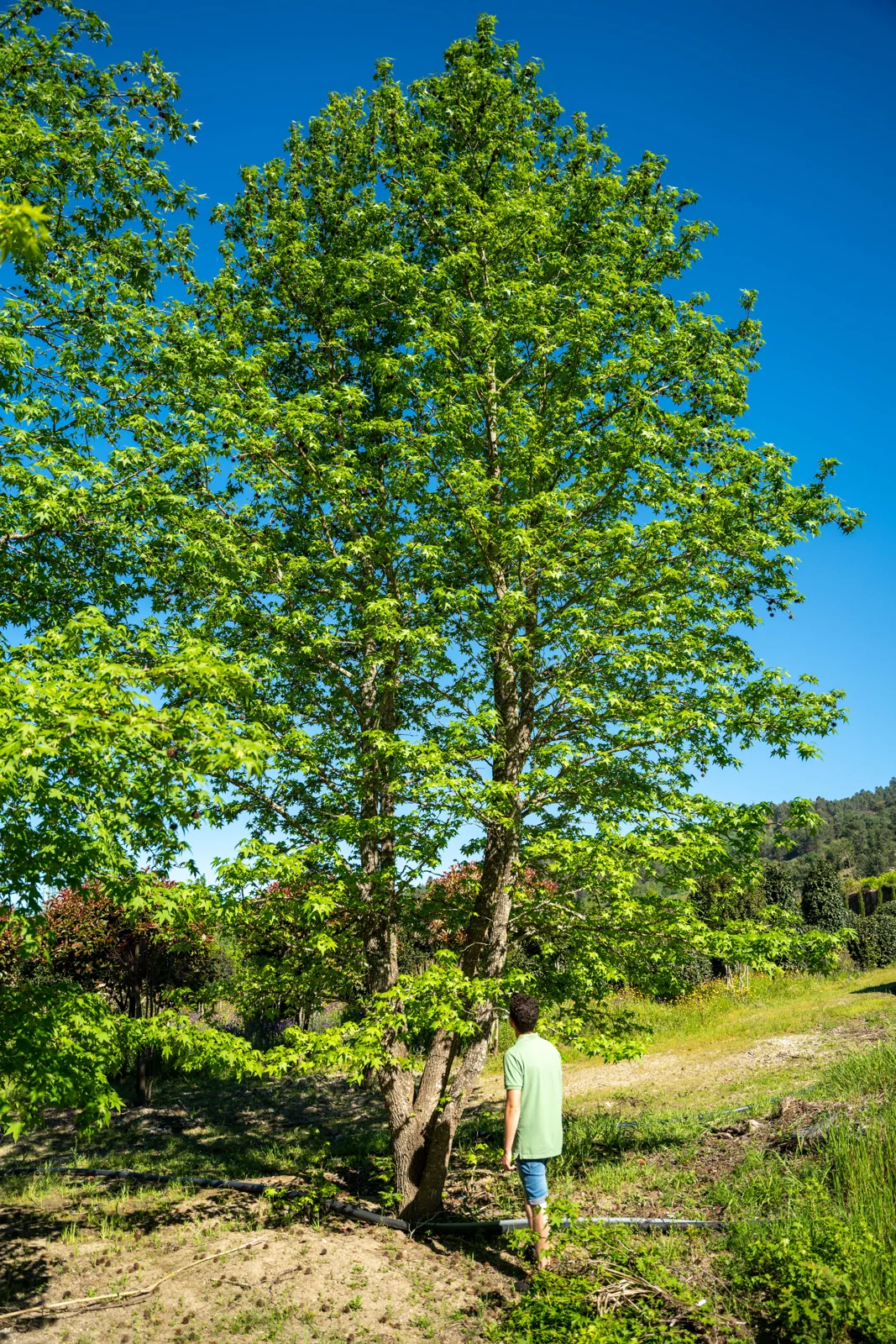
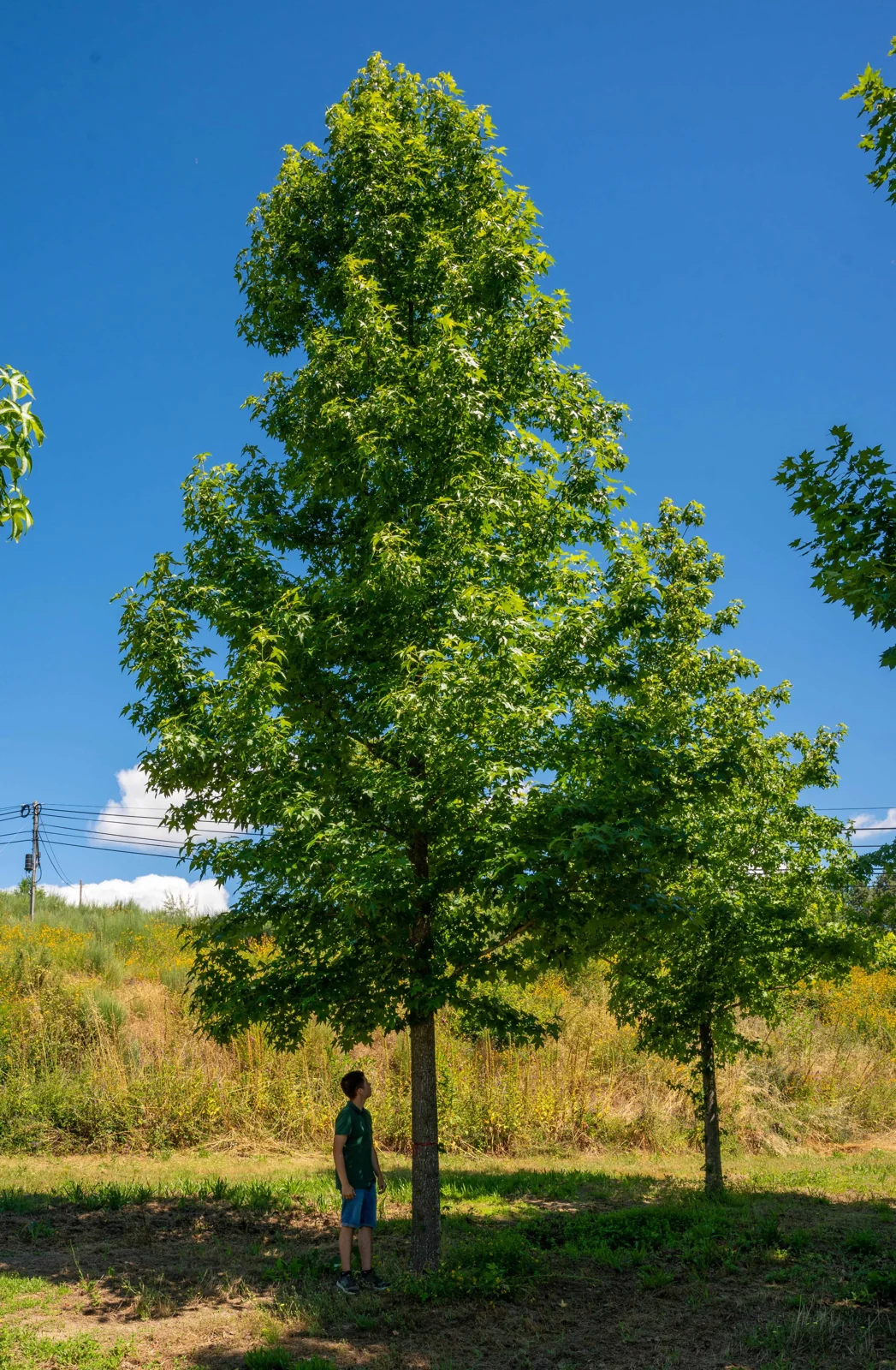
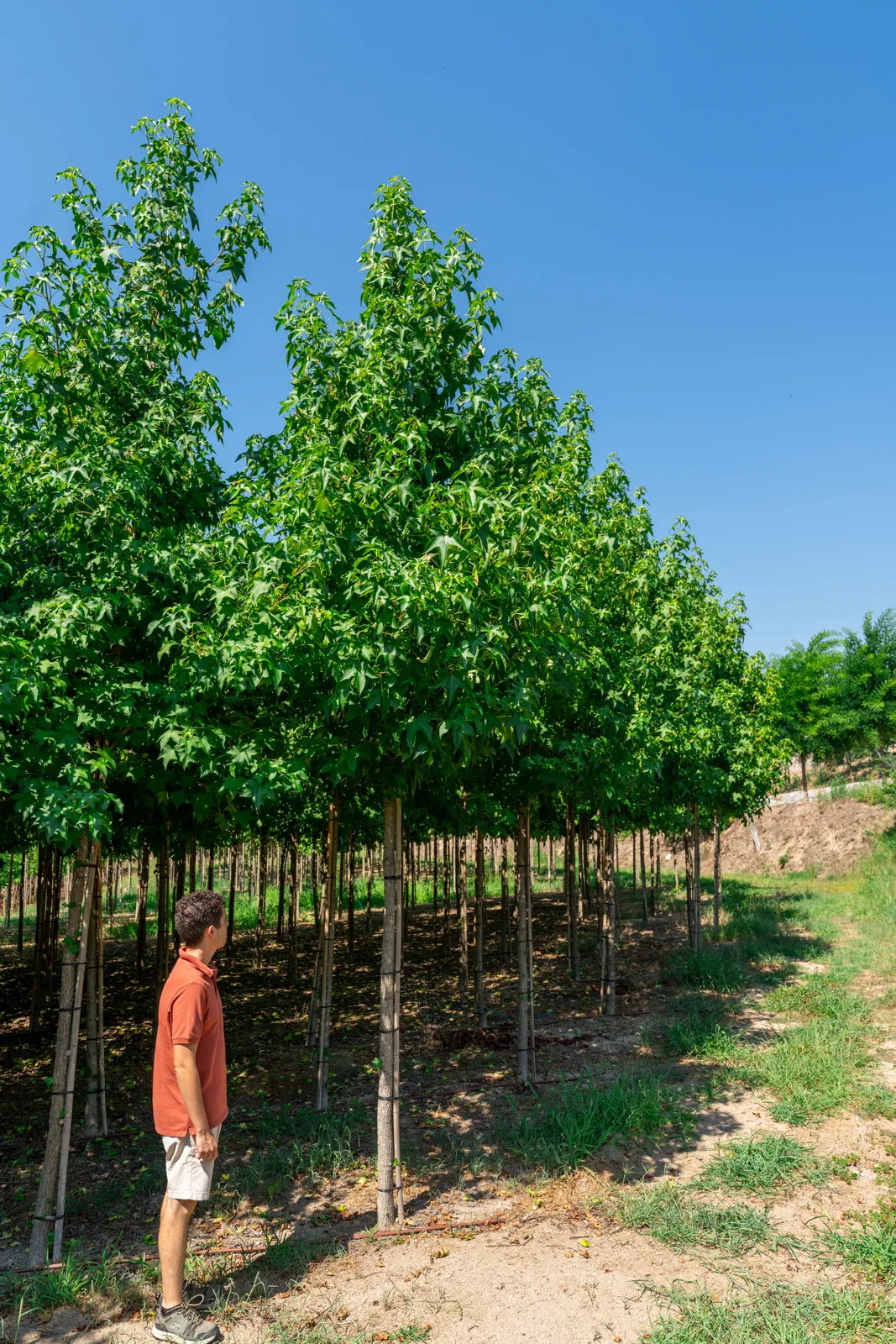
- Tall pyramidal habit broadening into a domed crown at maturity
About this Species
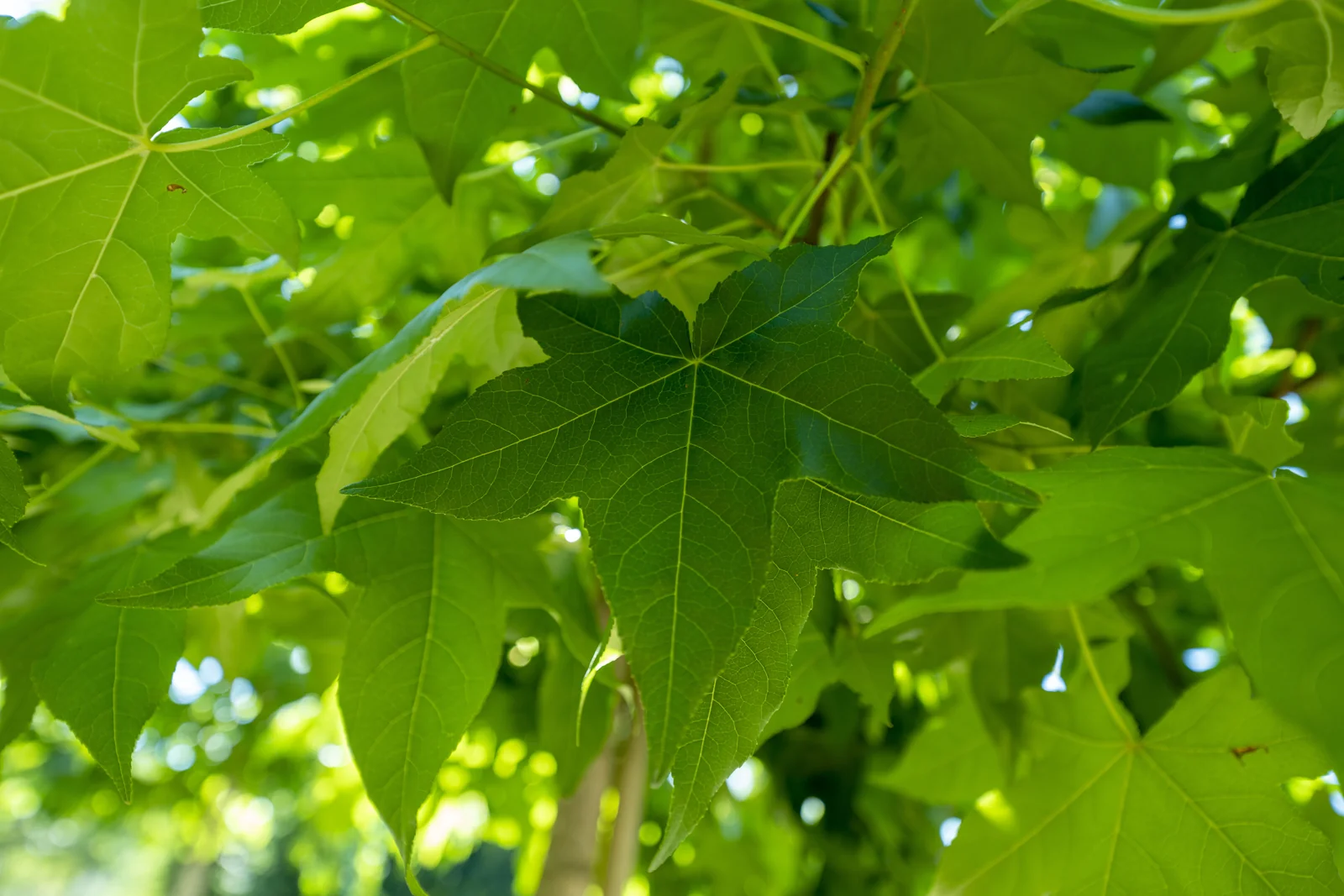
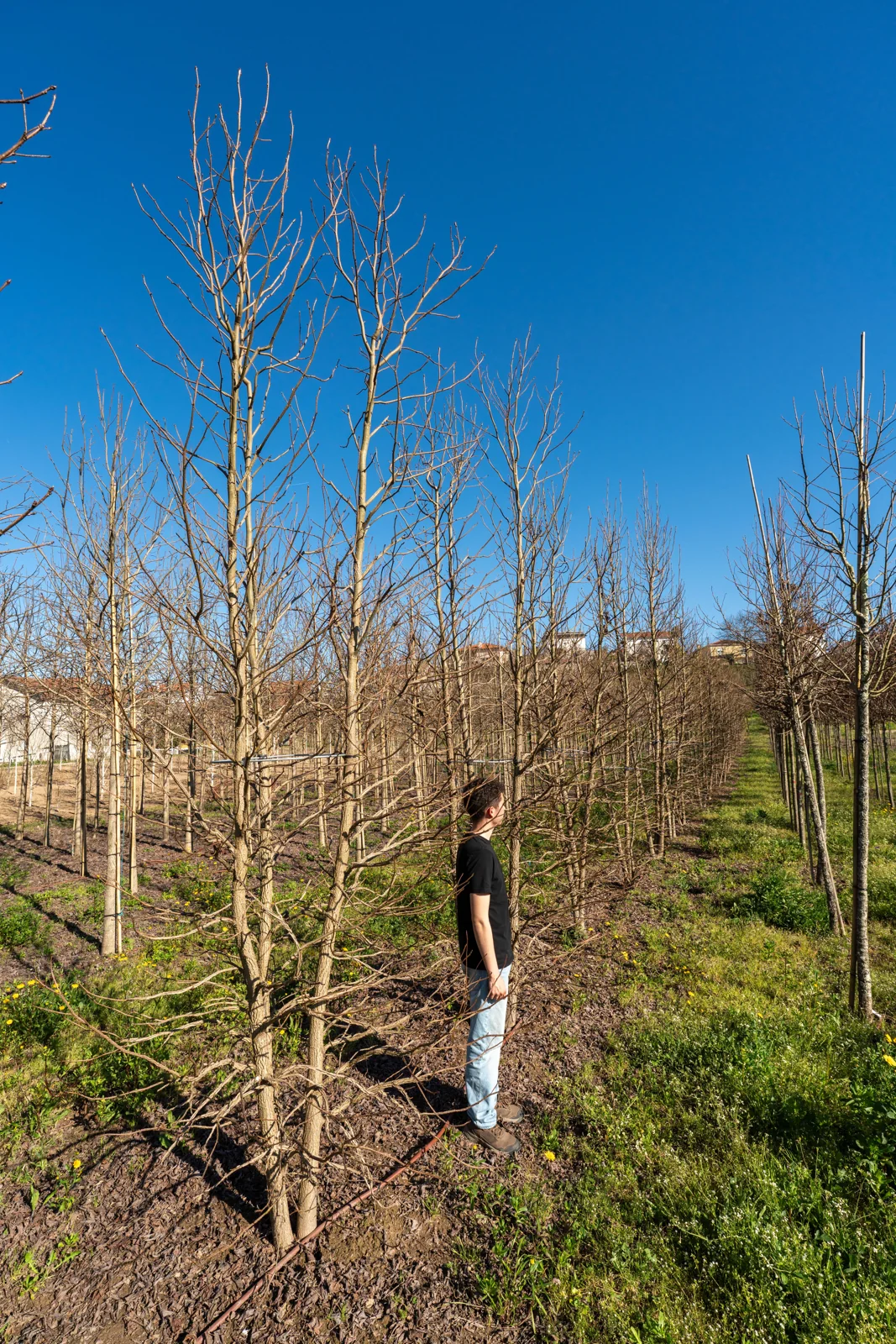
In Portuguese cultivation Liquidambar styraciflua reaches a mature height of 15 to 20 metres with a spread of 8 to 12 metres, holding a pyramidal habit through youth and broadening to a domed crown with age. The glossy, palmate, star-shaped leaves resemble those of a maple but are alternate on the shoot. Autumn brings a sustained mixture of yellow, orange,…
Read more
Show less
In Portuguese cultivation Liquidambar styraciflua reaches a mature height of 15 to 20 metres with a spread of 8 to 12 metres, holding a pyramidal habit through youth and broadening to a domed crown with age. The glossy, palmate, star-shaped leaves resemble those of a maple but are alternate on the shoot. Autumn brings a sustained mixture of yellow, orange, red and purple, often persisting for several weeks because the species responds to gradual cooling rather than abrupt frost.
The species suits acidic to neutral soils such as the granite and schist substrates of the Minho and Douro, where Atlantic rainfall of 1200 to 1800 mm supports the tree without summer water stress. On the limestone-derived soils of Greater Lisbon and the calcareous Algarve, iron chlorosis is the principal risk; specification on alkaline ground requires soil analysis and a planned irrigation regime. Frost hardiness to about minus 28 degrees C exceeds any Portuguese winter, but the tree requires reliable summer moisture and will scorch in interior Alentejo without supplementary irrigation during the first three to five summers.
Specified as a feature specimen or as a framework tree in groves of three to five, it functions in Portuguese projects where alternatives such as plátano (Platanus × acerifolia) carry anthracnose pressure. It also serves as a secondary canopy in irrigated public squares (pracas) and in the deeper planting pits of residential street alignments (arruamentos), though it should not be planted within five metres of paved surfaces.
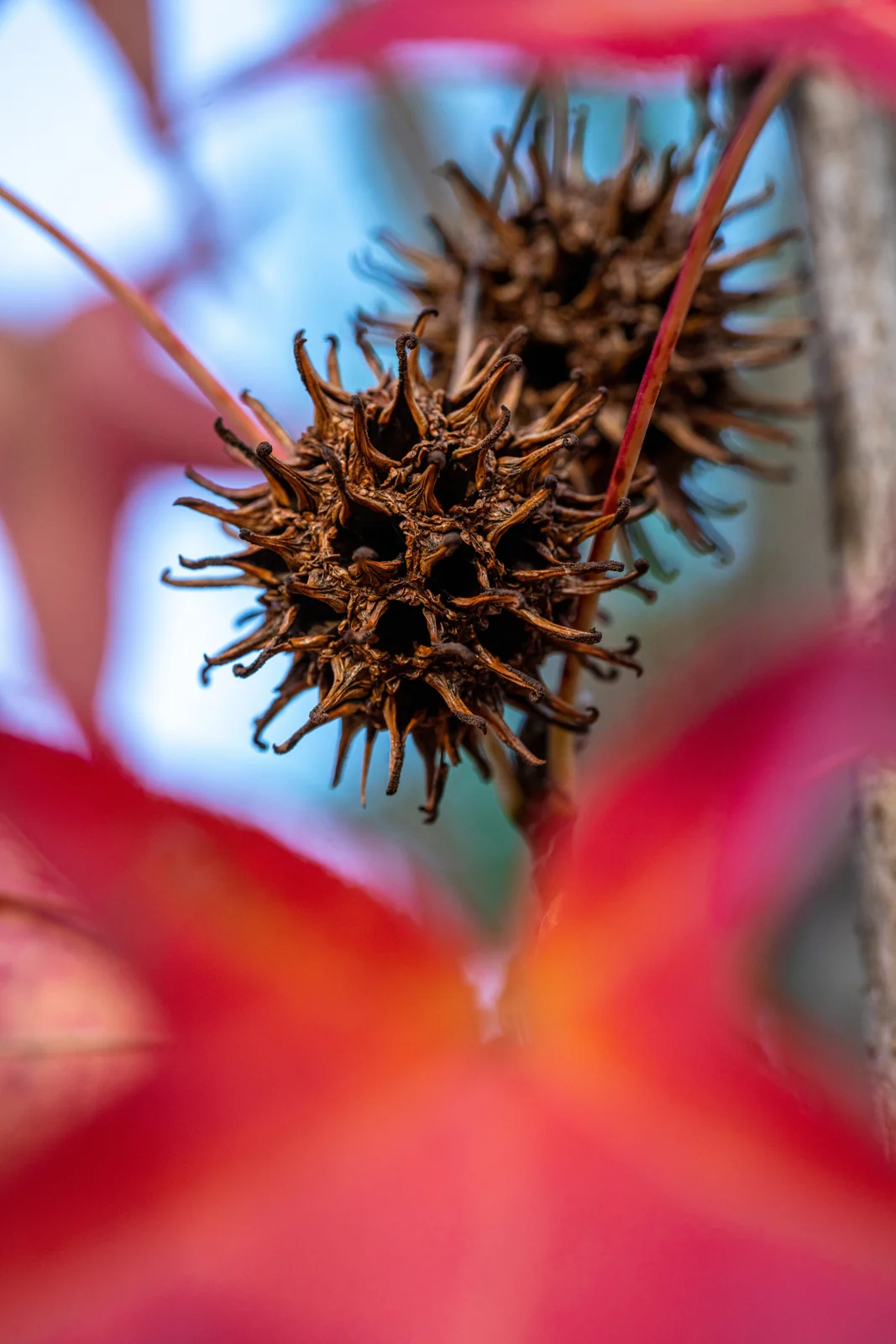
The shallow root system tolerates compacted urban soils less well than alfarrobeira (Ceratonia siliqua) or sobreiro (Quercus suber), and surface roots can lift adjacent pavement on shallow profiles. The spiny capsular fruit drops between December and April and is a litter consideration for paved courtyards and lawns; sterile cultivars such as 'Rotundiloba' eliminate the problem where it matters. Pest and disease pressure in Portuguese conditions is low. Pruning should be confined to formative shaping in early years.



Advice on this species
Want to know more about Liquidambar styraciflua?
Tell us about your project and we'll advise you on this species — where it thrives, which size makes sense, and what to expect once planted.
- Produção própria
- Exemplares adultos
- Resposta em 1–2 dias
Sem compromisso · orçamento personalizado