


A summer-flowering tree for the walled Portuguese garden
Crape Myrtle ‘Rosea Nova’ · Lagerstroemia indica ‘Rosea Nova’
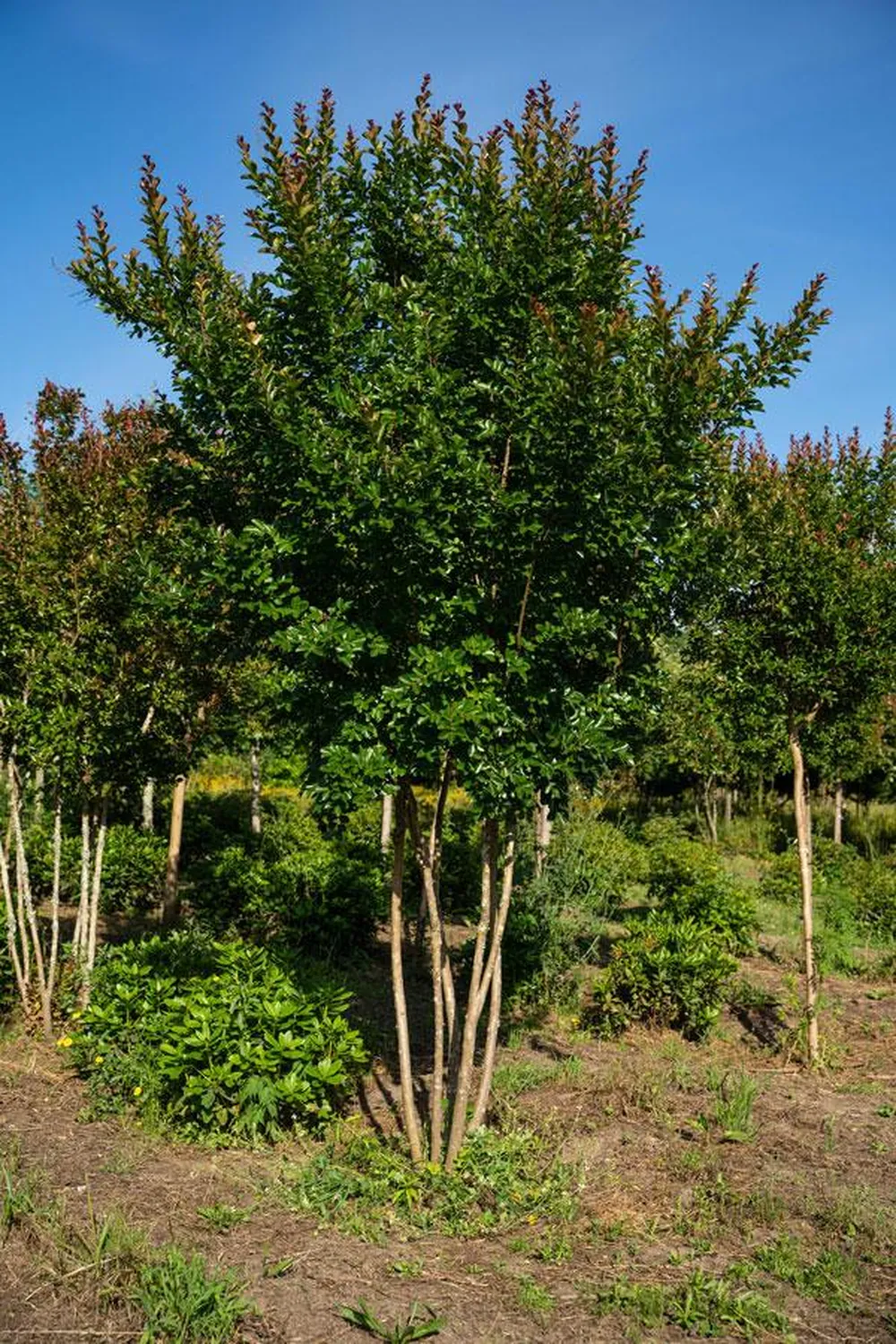
A deciduous small tree for Portuguese projects that need a long summer flowering phase in scale with paved courtyards, narrow alignments (arruamentos), and contained garden settings. Reaches 4 to 6 metres at maturity with a rounded crown.
- Deep rose-pink flower sprays from late June through August
- Mature canopy of four to six metres within a generation
- Reliable across Lisbon, the Algarve, and the Silver Coast
About this Cultivar
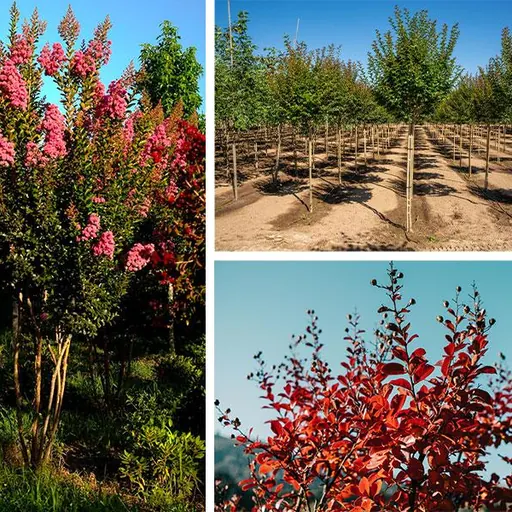
Lagerstroemia indica 'Rosea Nova' is a deciduous multi-stemmed small tree of moderate growth, settling at 4 to 6 metres in height and 3 to 5 metres in spread, with a rounded, well-balanced crown. Dense panicles of crinkled rose-pink flowers open through July and August and continue into early autumn, the longest reliable flowering window of any tree at this…
Read more
Show less
Lagerstroemia indica 'Rosea Nova' is a deciduous multi-stemmed small tree of moderate growth, settling at 4 to 6 metres in height and 3 to 5 metres in spread, with a rounded, well-balanced crown. Dense panicles of crinkled rose-pink flowers open through July and August and continue into early autumn, the longest reliable flowering window of any tree at this stature in Portuguese cultivation. The smooth bark exfoliates in irregular plates and remains a visible feature once the leaves fall, and the dark glossy foliage turns yellow, orange, and red before drop.
The species is heat-tolerant and adapted to full sun, which is a precondition for vigorous flowering; in shade the panicles thin and the canopy grows lax. It accepts a range of soils, including acidic, sandy, and clay substrates, provided drainage is good and the planting position is deep and fertile. Drought tolerance is moderate once established: the tree withstands the short dry periods typical of Greater Lisbon and Greater Porto, but flowering intensity in interior Alentejo or coastal Algarve schemes is improved by a maintained drip irrigation cycle through the flowering window.
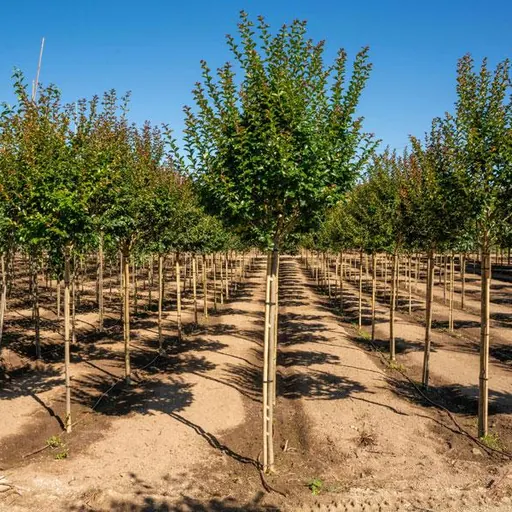
The useful field is the Portuguese coastal and inland zones excluding the immediate salt-spray strip, where salt tolerance is low. The taxon performs in Greater Lisbon limestone soils, on schist in the Douro hinterland, and on the loamy substrates of the central Alentejo. Diaplant grows the cultivar in Amarante (approximately 950 mm annual rainfall, mild winters, dry summers), a representative reference climate for most Portuguese specification contexts.
Maintenance is light. Formative pruning in late winter shapes the multi-stem habit and concentrates the flowering wood, and the species accepts hard renewal cuts without loss of vigour. Powdery mildew is the principal disease pressure, more visible in humid coastal positions than in the interior; siting in open air movement and full sun reduces incidence. Used as a feature specimen, in groups, or in low alignments along a praça or quinta entrance, it carries a defined ornamental role through the longest months of the Portuguese visitor calendar.
Advice on this species
Want to know more about Lagerstroemia indica 'Rosea Nova'?
Tell us about your project and we'll advise you on this species — where it thrives, which size makes sense, and what to expect once planted.
- Produção própria
- Exemplares adultos
- Resposta em 1–2 dias
Sem compromisso · orçamento personalizado