

An evergreen holly with winter berries for a Portuguese garden
Mutchagara Holly ‘Nellie R. Stevens’ · Ilex mutchagara ‘Nellie R. Stevens’
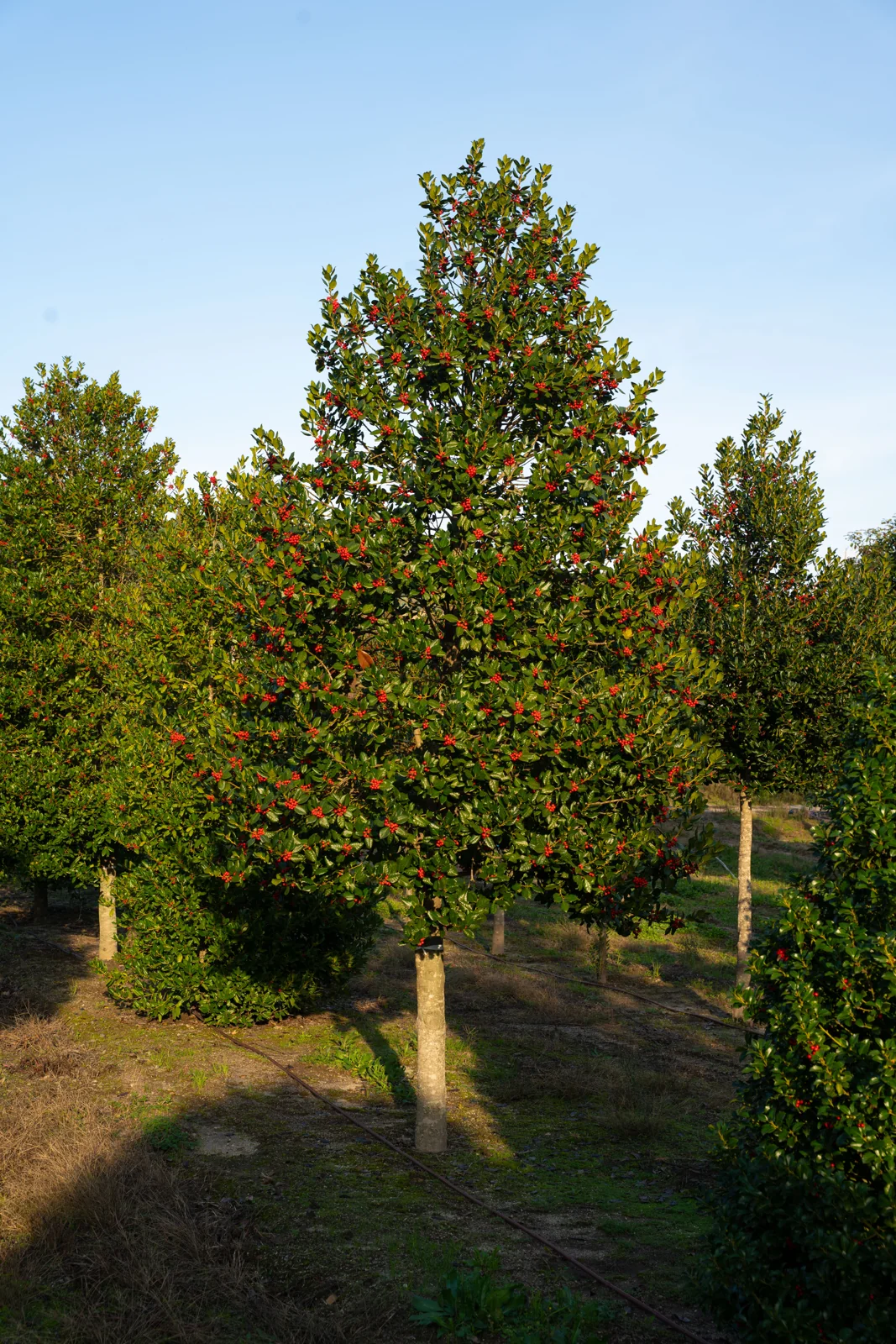
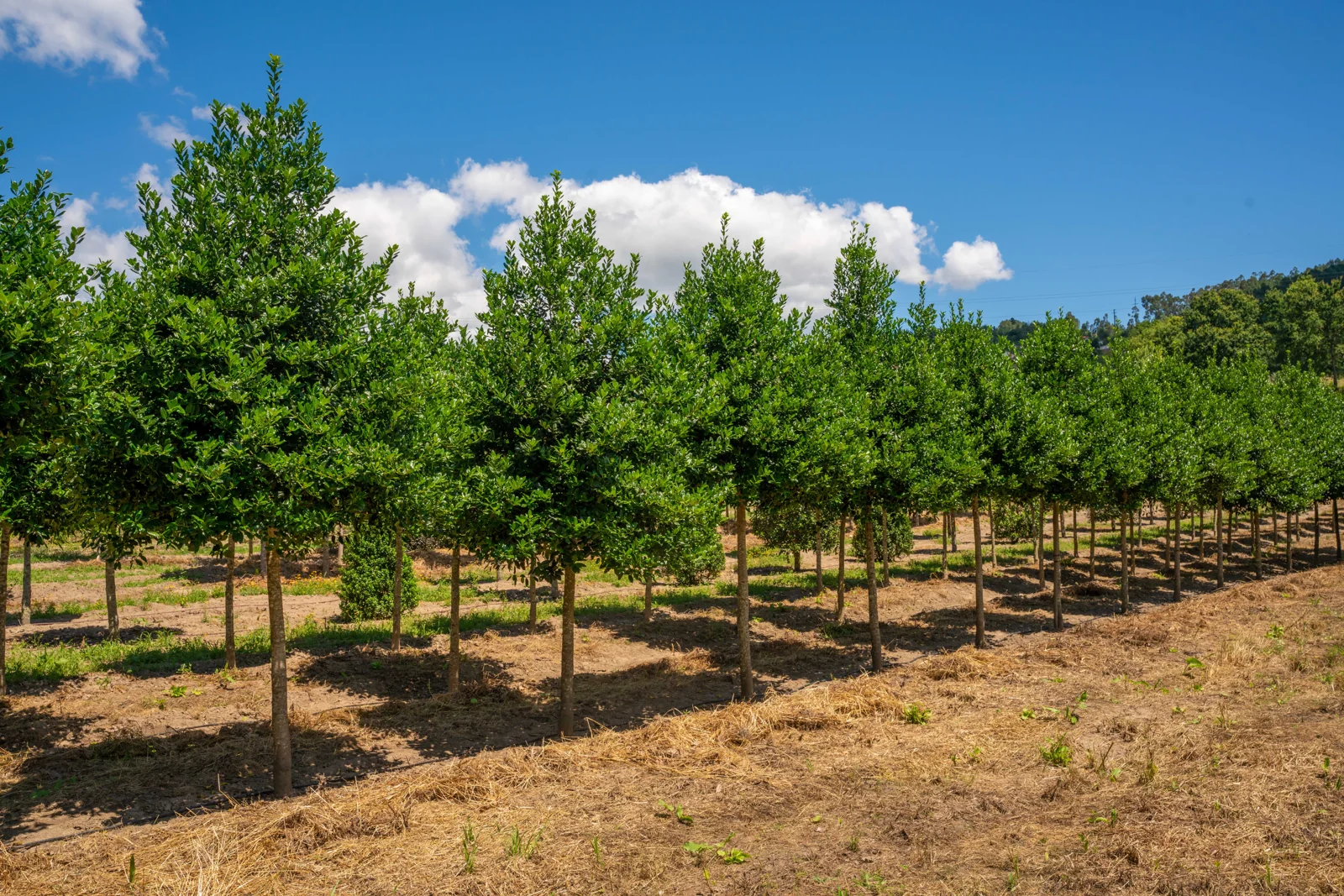
A dense pyramidal evergreen holly specified across Portugal for tall screens, framework planting, and standalone specimens where year-round mass and heavy red winter fruiting carry the scheme.
- Dense pyramidal evergreen reaching four to six metres at maturity
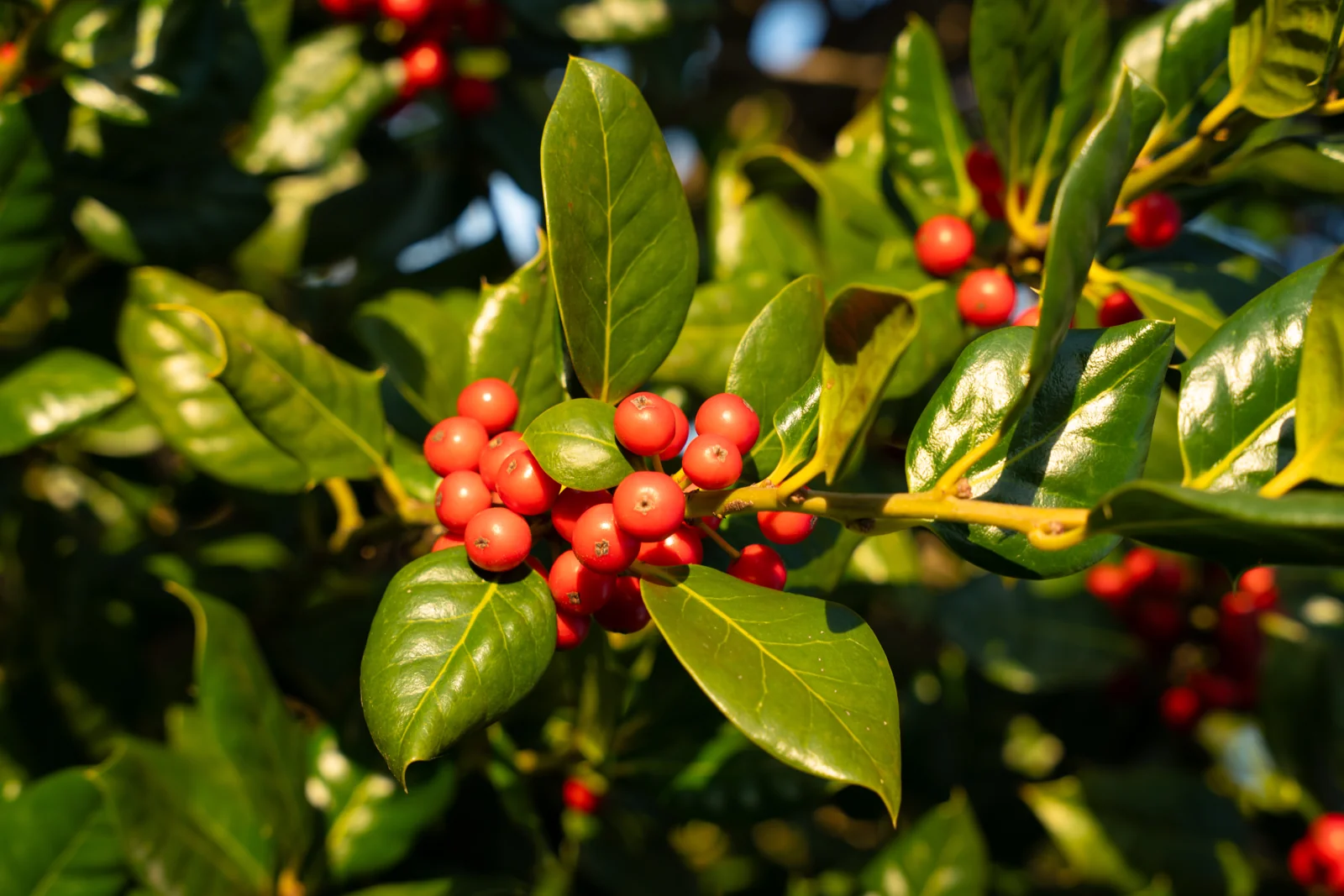
- Heavy crop of red berries from December through February
- Adaptable to sandy coastal soils and heavier Lisbon clays alike
Key Facts
About this Cultivar
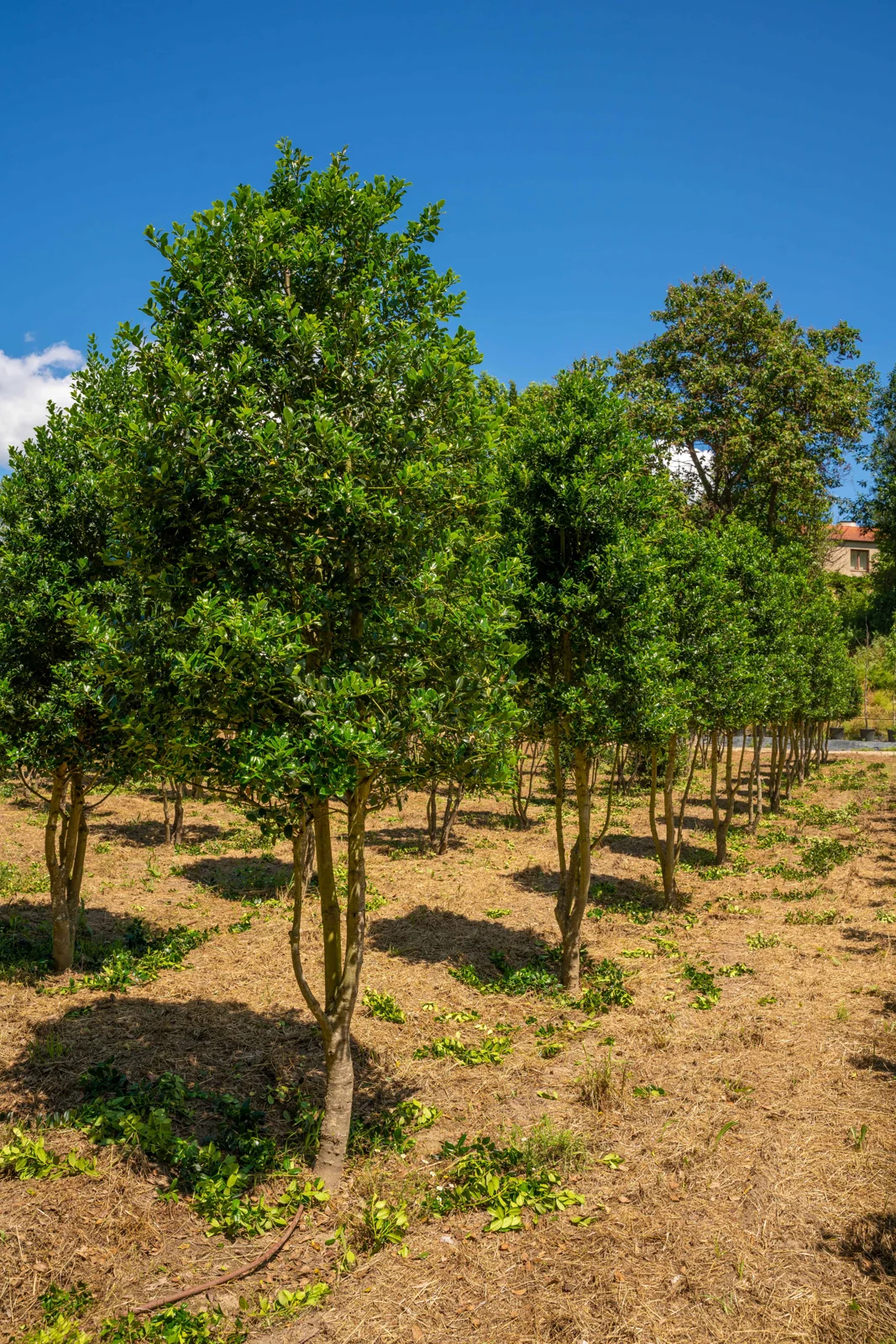
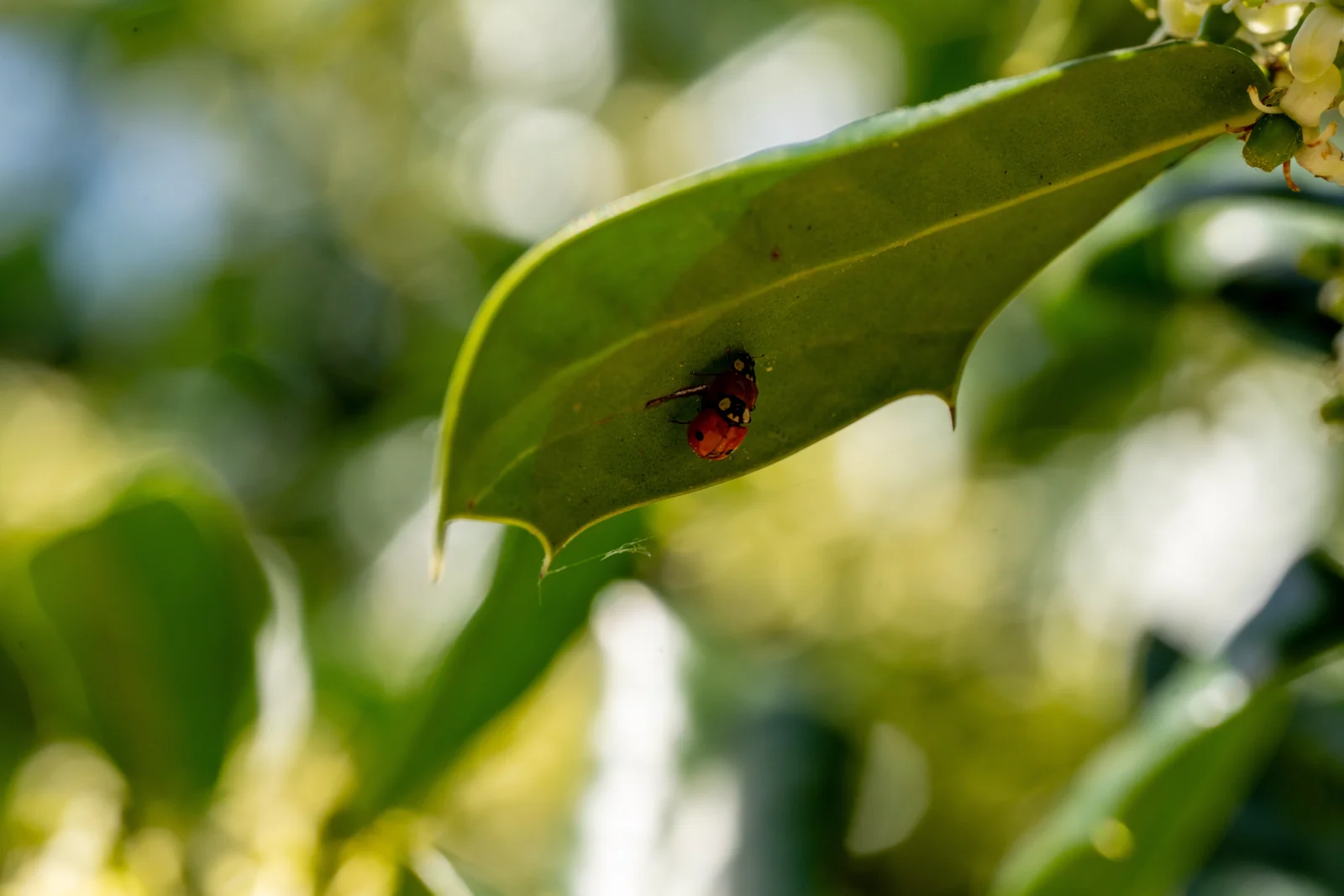
Mature dimensions settle at 4 to 6 m in height and 2 to 4 m in spread, on a pyramidal, densely branched frame that holds its outline without formative correction. Foliage is large, ovate, glossy dark green with lightly spined margins, denser in habit than Ilex aquifolium (the European holly familiar across the Atlantic facade) and broader-leaved than the…
Read more
Show less
Mature dimensions settle at 4 to 6 m in height and 2 to 4 m in spread, on a pyramidal, densely branched frame that holds its outline without formative correction. Foliage is large, ovate, glossy dark green with lightly spined margins, denser in habit than Ilex aquifolium (the European holly familiar across the Atlantic facade) and broader-leaved than the typical garrigue evergreens. Growth is moderate, which makes the cultivar a controllable structural element rather than a fast-filling screen.
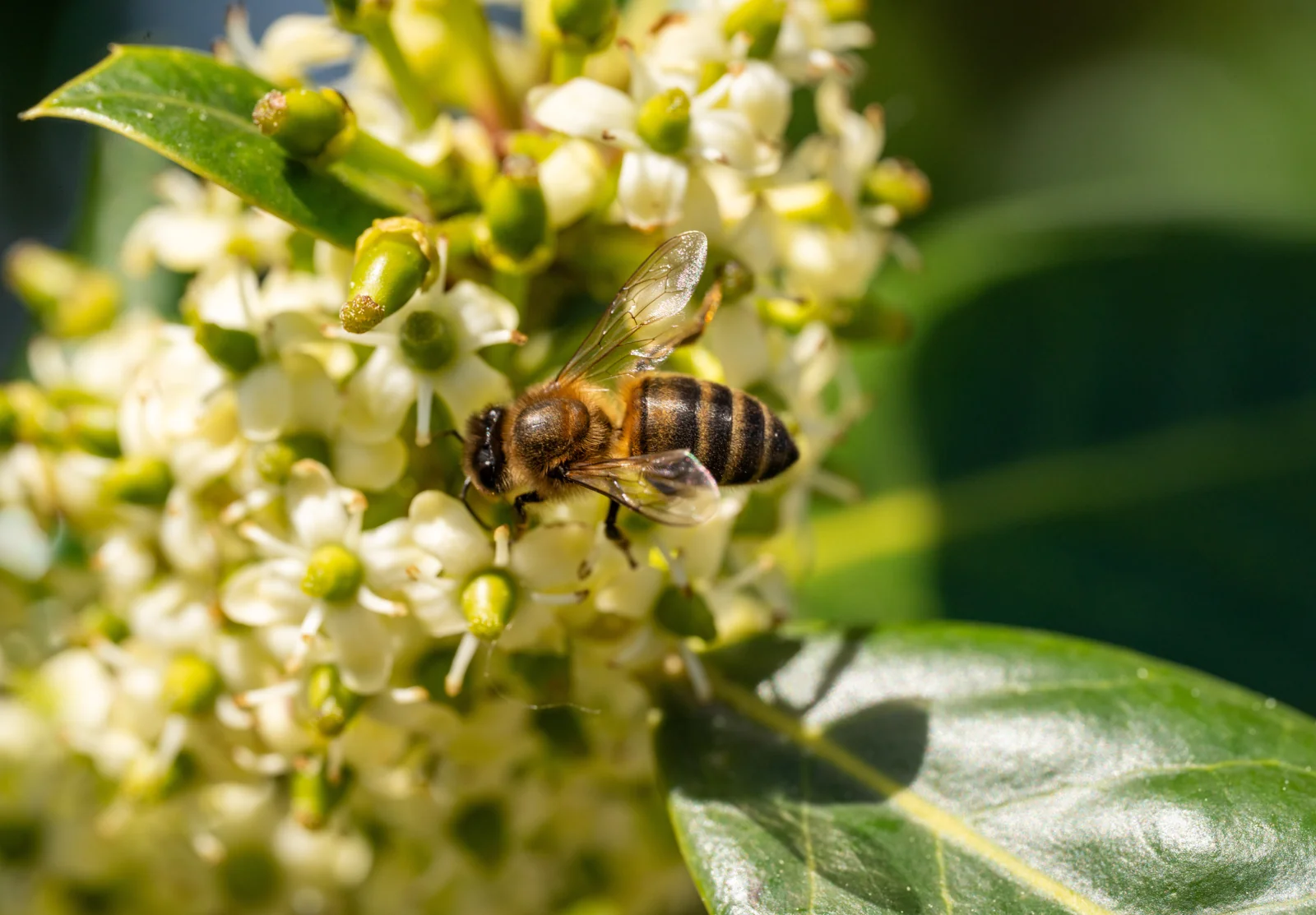
The ornamental signature is fruiting. Discreet white flowers in late spring give way to abundant bright red berries that persist through autumn and Iberian winter, holding chromatic contrast from December into February when most evergreen masses read as a single dark plane. Birds take the fruit progressively, which extends the wildlife value into spring without stripping the display early.
Performance across Portuguese conditions is broad provided drainage is reliable. The cultivar tolerates acidic, alkaline, sandy, and clay soils, accepts full sun to partial shade in Iberian light, and withstands urban pollution, which suits it to Greater Lisbon and Greater Porto street and praca contexts. Atlantic-coast mildness in the Minho and along the Silver Coast presents no constraint; on Algarve and Alentejo schemes, well-drained planting and an establishment irrigation cycle through the first two summers are advisable, after which water demand is moderate rather than absolute.
Maintenance load in service is low. Disease and pest pressure are minimal in Portuguese cultivation, the species responds well to formative pruning and to hard renovation when a hedge or screen needs to be brought back to line, and root behaviour is compatible with paved alignments (arruamentos) and adjacent praca surfaces. Berries and leaves drop close to the canopy and are not a litter issue on circulation paving.
In the international project frame, 'Nellie R. Stevens' reads as the reliable dense-evergreen specimen where Quercus ilex (azinheira) would be too massive and Magnolia grandiflora too demanding of soil depth and irrigation. It carries hedge, framework, and specimen roles within a single specification.
Advice on this species
Want to know more about Ilex mutchagara 'Nellie R. Stevens'?
Tell us about your project and we'll advise you on this species — where it thrives, which size makes sense, and what to expect once planted.
- Produção própria
- Exemplares adultos
- Resposta em 1–2 dias
Sem compromisso · orçamento personalizado