

A fast evergreen screen for privacy and shelter
Leyland Cypress · ×Cupressocyparis leylandii
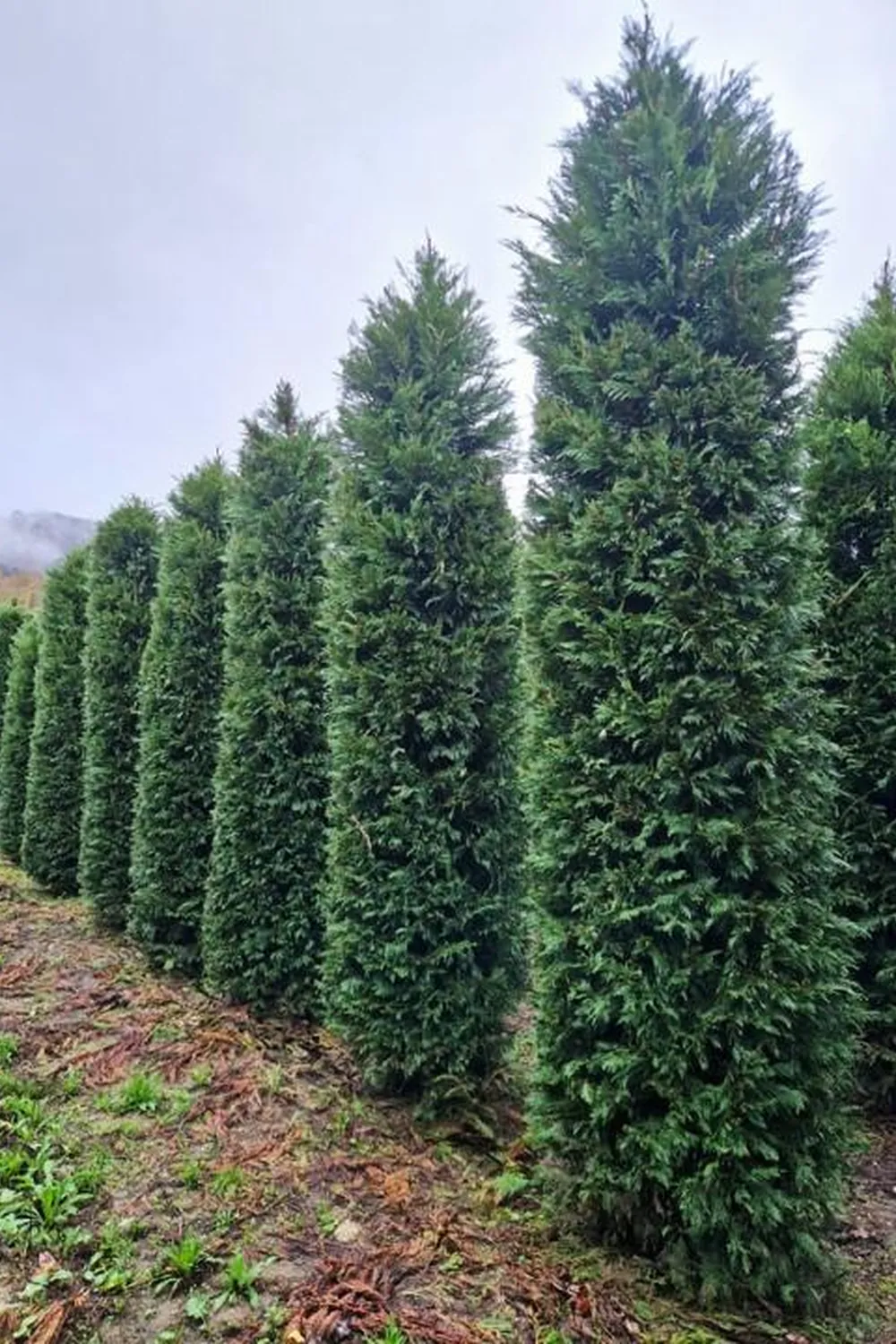
Where a project needs dense, immediate vertical structure, this fast-growing evergreen conifer delivers a tall green wall within a few seasons, well suited to formal hedging, privacy screening, and shelter planting (cortina corta-vento) across much of Portugal.
- Dense evergreen screen and windbreak that reads as mature within a few seasons
- Fast growth of over a metre a year in a warm, well-drained position
- Soft blue-green foliage in flat sprays over scaly reddish-brown bark
About this Species
This fast-growing evergreen conifer forms a dense, narrow crown that is pyramidal when young and broadly columnar with age, carrying persistent dark green, slightly fragrant foliage to the ground. In Portuguese cultivation it reaches roughly 15 to 25 metres in height and 4 to 6 metres in spread, with growth that can exceed one metre per year on a favourable…
Read more
Show less
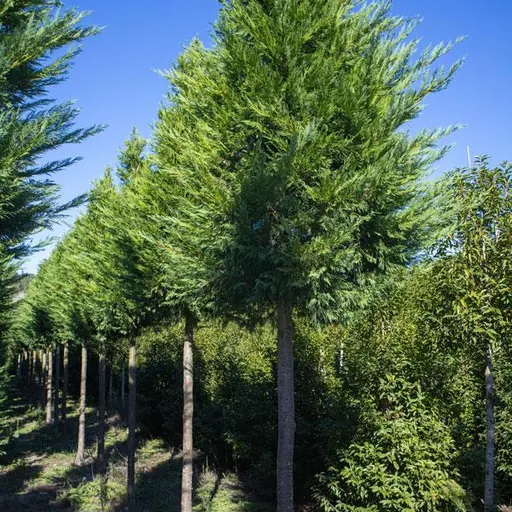
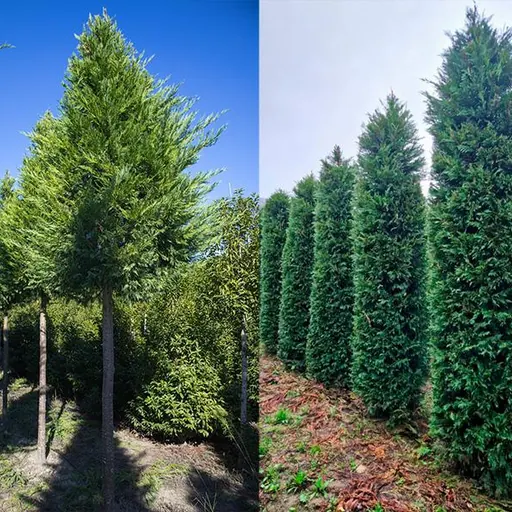
This fast-growing evergreen conifer forms a dense, narrow crown that is pyramidal when young and broadly columnar with age, carrying persistent dark green, slightly fragrant foliage to the ground. In Portuguese cultivation it reaches roughly 15 to 25 metres in height and 4 to 6 metres in spread, with growth that can exceed one metre per year on a favourable site. Diaplant produces it as a shrub for hedging, as a trained espaldar for narrow boundaries, and as a clear-stemmed standard (pé-alto), giving the specifier a single species for several screening roles.
Its principal value is speed and density. A row planted as a formal hedge or shelter belt (cortina corta-vento) closes into a continuous green wall within a few seasons, far faster than sobreiro (Quercus suber), azinheira (Quercus rotundifolia), or pinheiro-manso (Pinus pinea) could provide, making it the practical choice where a scheme needs immediate privacy, wind shelter, or visual screening of services and car parking.
The species adapts to most well-drained soils, acid or alkaline, including clay, and tolerates poor ground, urban pollution, wind, and moderate coastal salinity. It performs across the milder Atlantic conditions of the Minho and Douro and the warm summers of Greater Lisbon, and on drier sites it benefits from establishment irrigation through the first summers. Free draining soil is the central condition: the relatively shallow root system is intolerant of waterlogging, which predisposes the tree to Phytophthora and Armillaria root rot.
Maintenance is straightforward but regular. The hedge requires at least one formative cut each year to hold its line and density, and it recovers well from hard pruning. Prolonged drought stress can invite Seiridium and Botryosphaeria canker, and bagworm is the pest to monitor; sustained irrigation in dry spells and prompt removal of affected growth keep both in check. On a suitable, sheltered site the planting gives reliable structure for several decades.
Advice on this species
Want to know more about ×Cupressocyparis leylandii?
Tell us about your project and we'll advise you on this species — where it thrives, which size makes sense, and what to expect once planted.
- Produção própria
- Exemplares adultos
- Resposta em 1–2 dias
Sem compromisso · orçamento personalizado