

A living sculpture for the patient garden
Maidenhair Tree · Ginkgo biloba
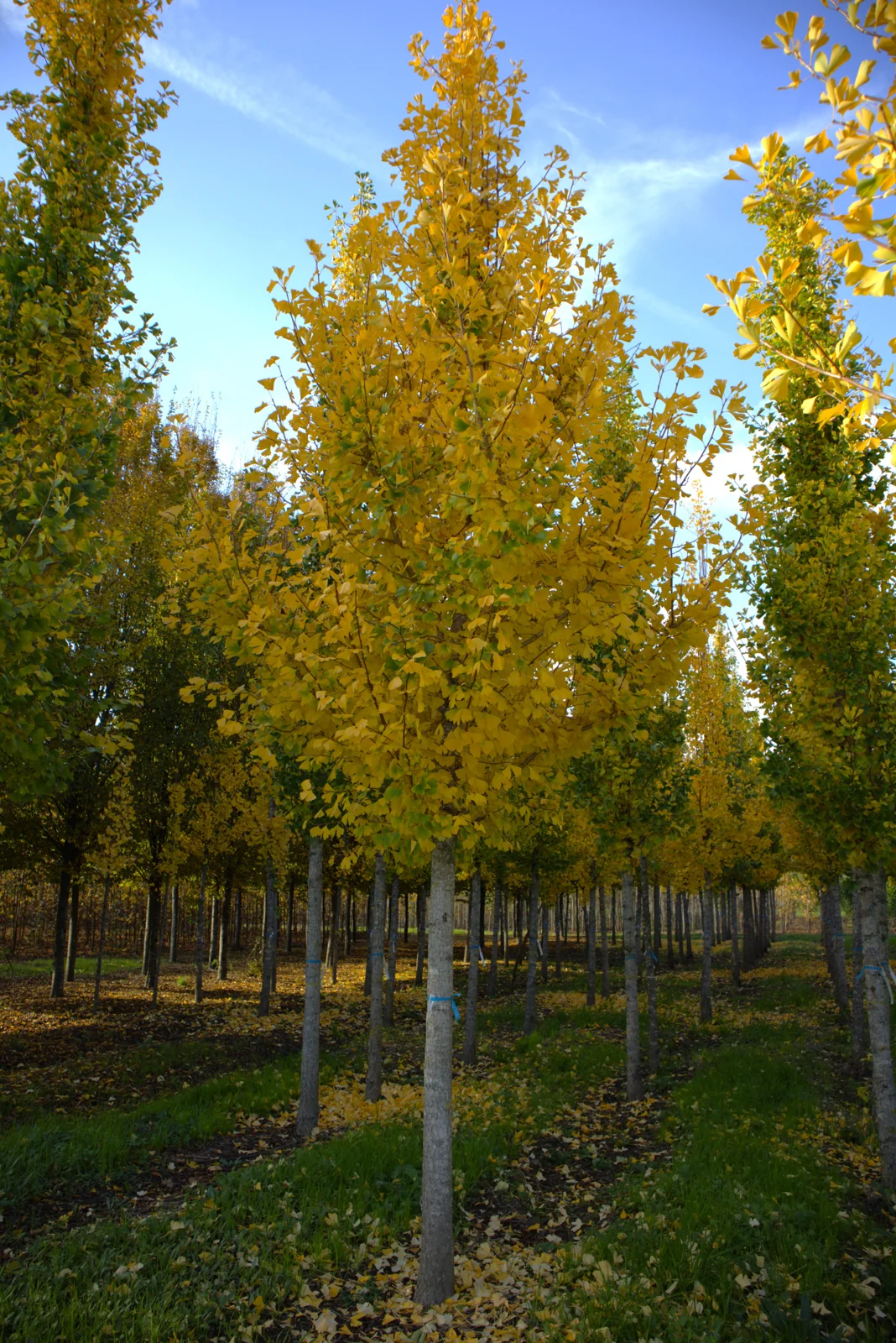
Ginkgo biloba is a deciduous framework tree for alignments, public squares (praças) and parking shade, specified where a hard urban site demands proven heat and pollution tolerance combined with a clean, well-defined crown form.
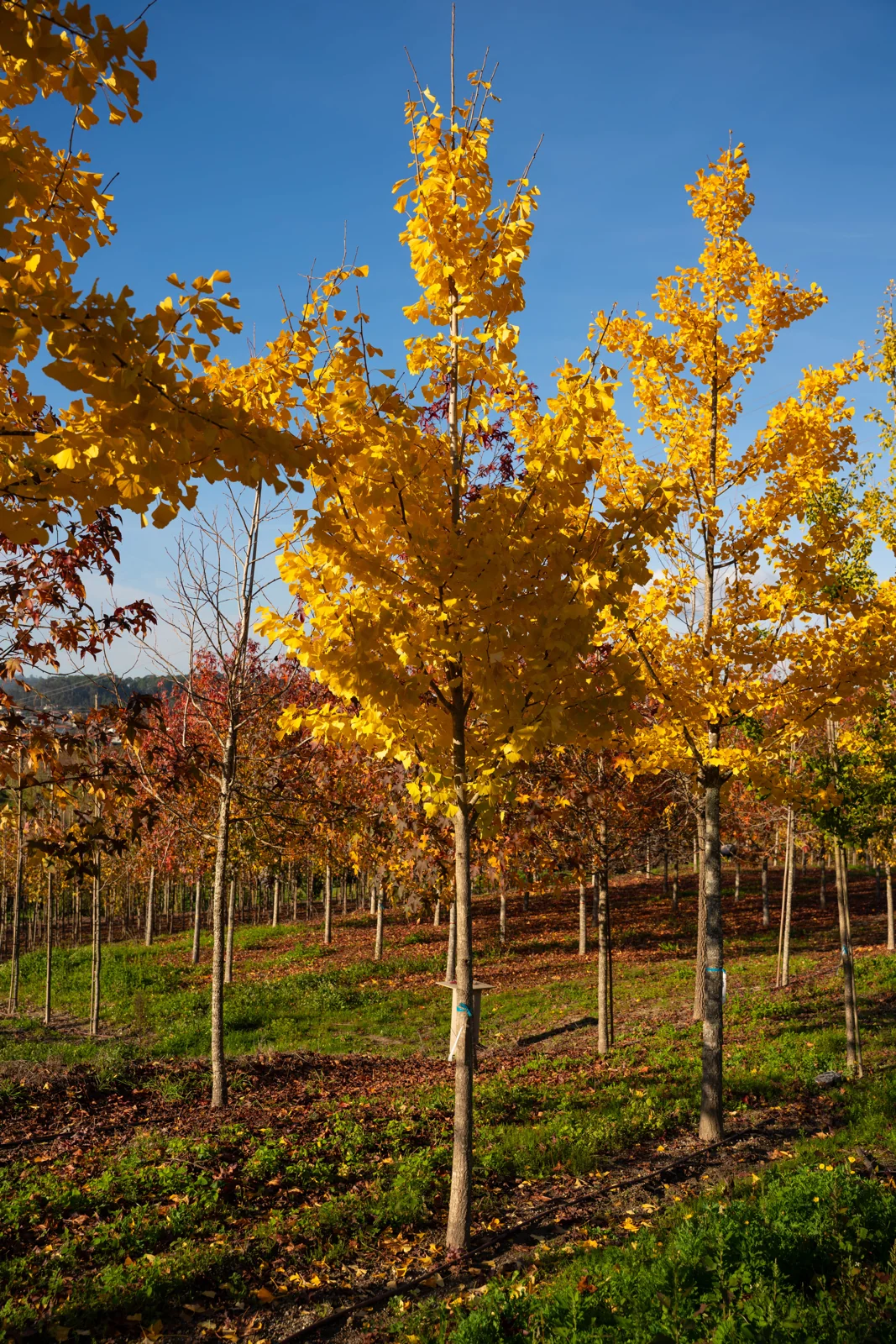
- Clear saffron autumn colour, usually falling within a week or two
- Becomes self-sufficient for water after about three summers
- Resistant to wind, snow, pollution, pests, and disease
About this Species
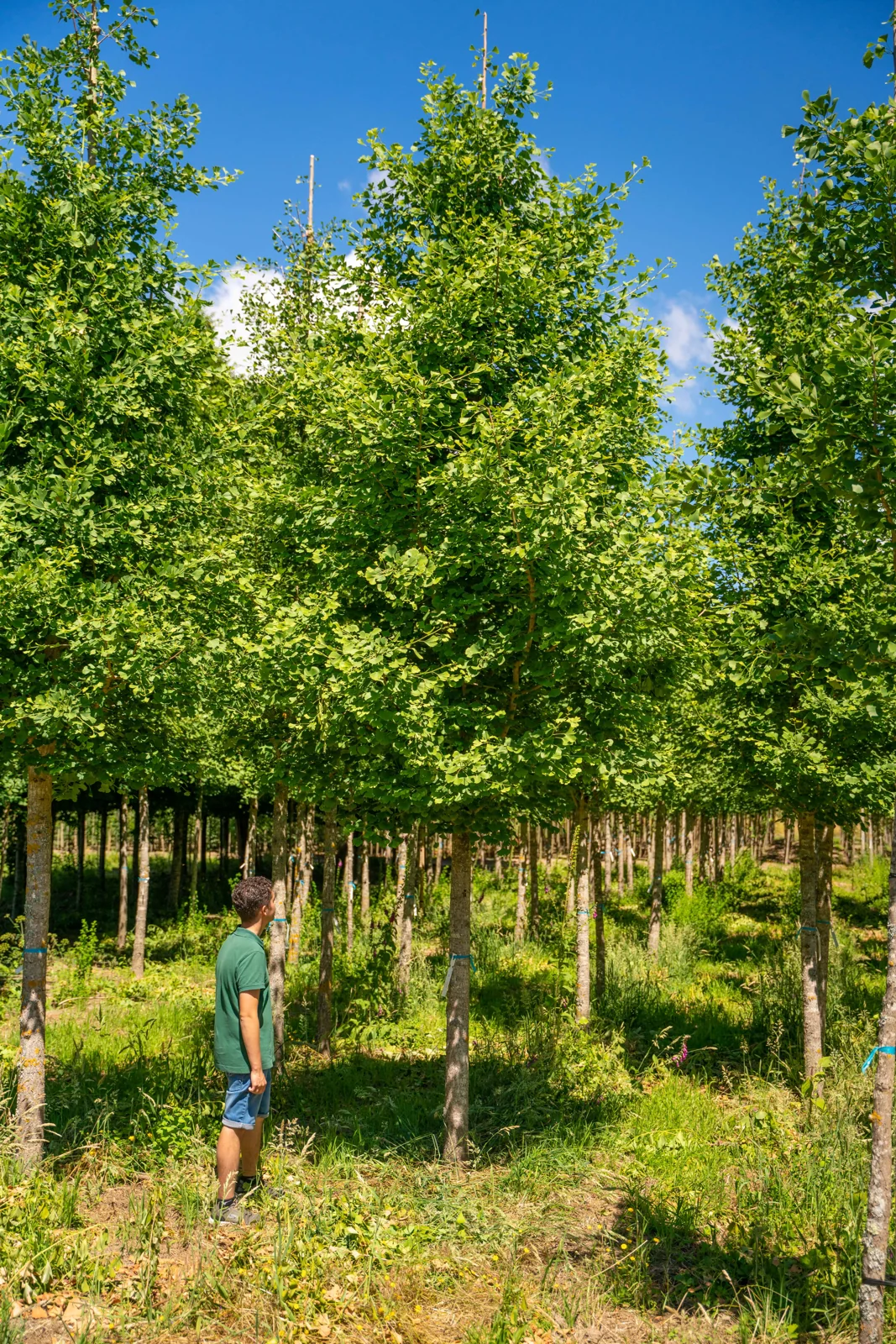
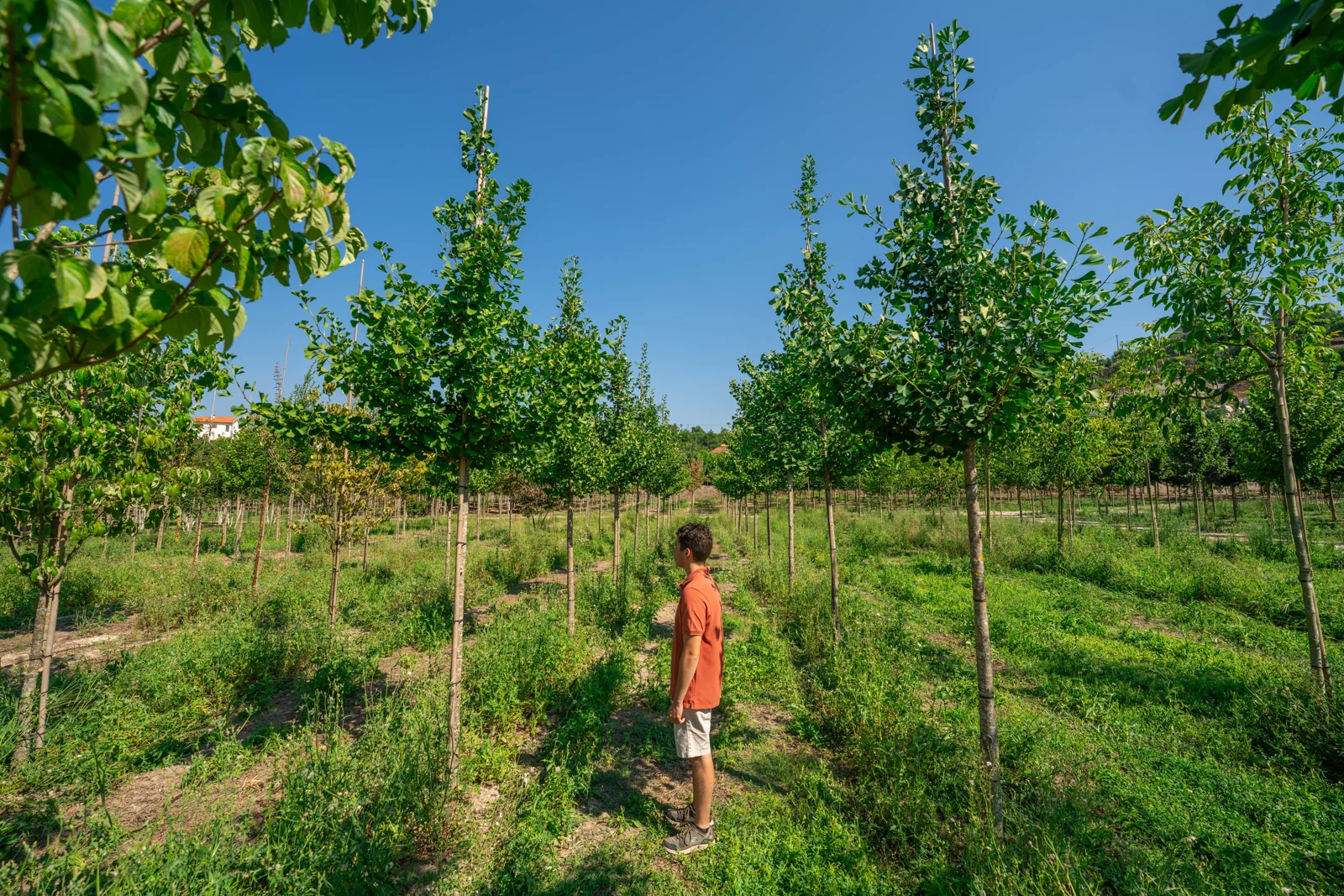
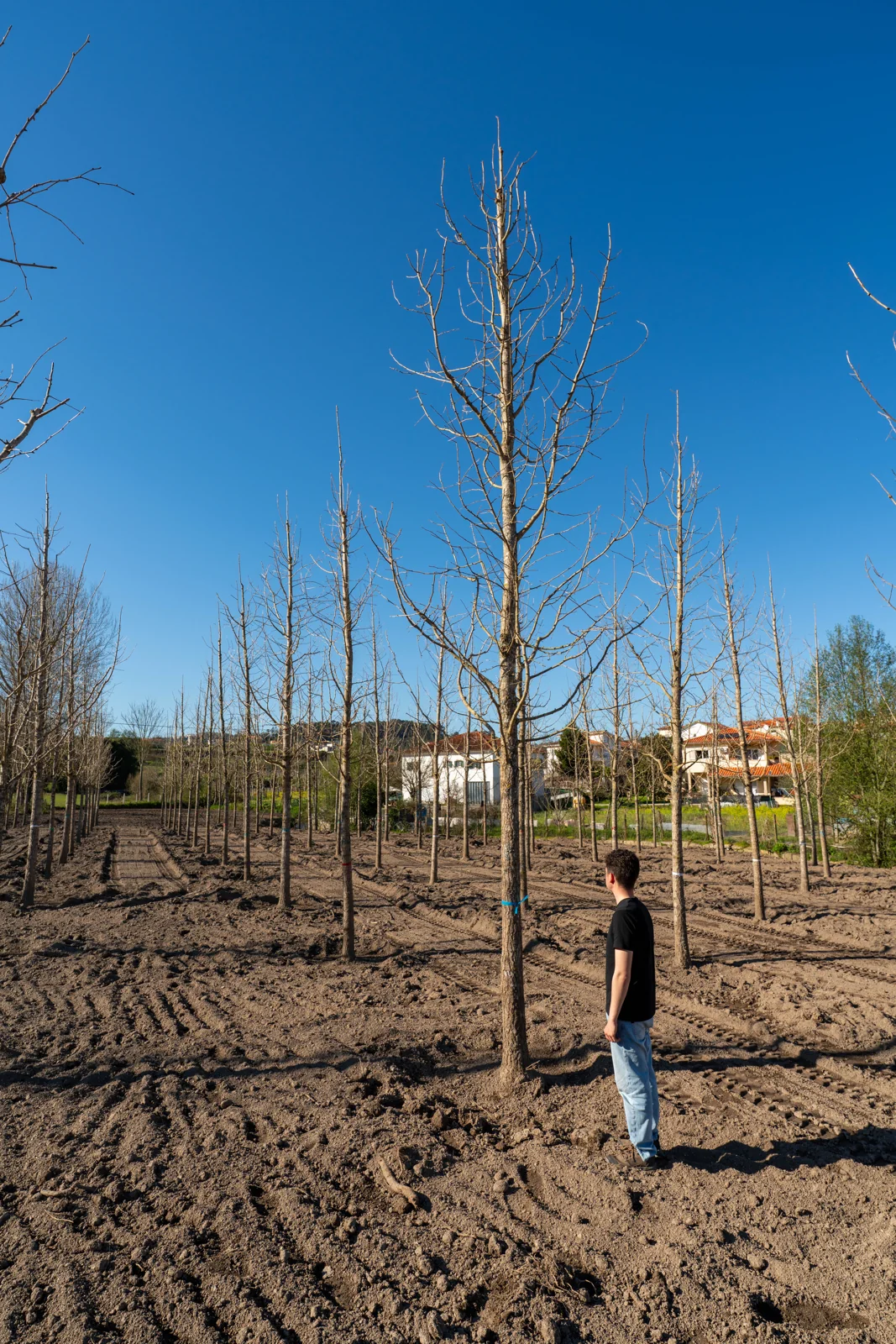
Ginkgo biloba carries a narrow, conical crown when young, broadening to a more open and rounded structure as the tree matures, on a single low-branched stem that lifts readily for clearance over pavements and carriageways. Mature specimens reach 15 to 25 metres in height and 8 to 12 metres in spread, which places it as a large framework tree for street…
Read more
Show less
Ginkgo biloba carries a narrow, conical crown when young, broadening to a more open and rounded structure as the tree matures, on a single low-branched stem that lifts readily for clearance over pavements and carriageways. Mature specimens reach 15 to 25 metres in height and 8 to 12 metres in spread, which places it as a large framework tree for street alignments (arruamentos) and public squares (praças) rather than a small-garden subject. Growth is slow, so canopy closure along an alignment is measured in decades, but the trade is a long useful life and a predictable, self-structuring form that requires little corrective pruning.
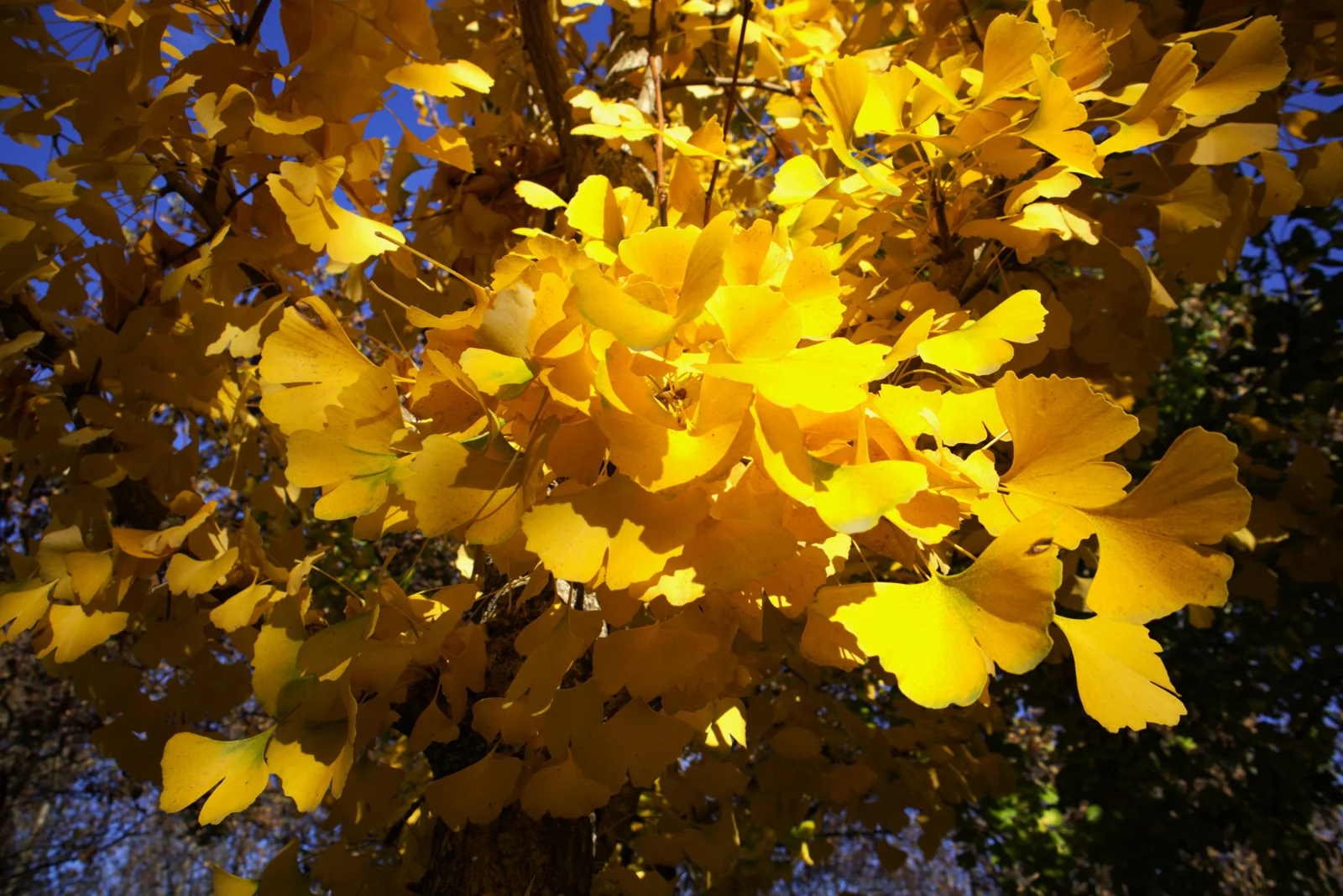
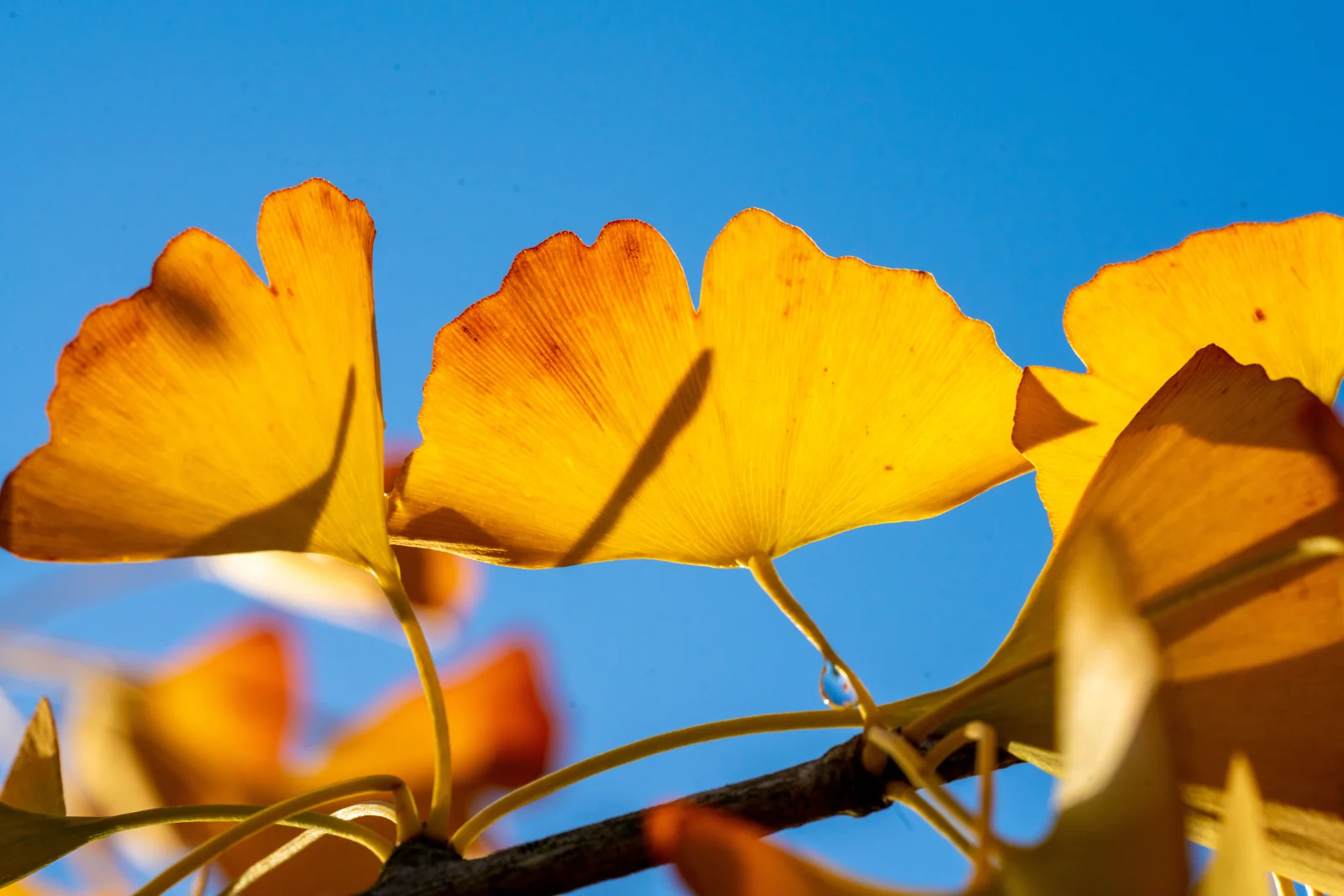
The defining ornamental feature is the fan-shaped foliage, mid-green through summer and turning a uniform saffron yellow in autumn before falling over a short period. Specifiers should request grafted male clones such as 'Autumn Gold' or 'Princeton Sentry', because female trees produce a plum-like seed whose fleshy coat smells strongly when it falls and stains paving, which is unacceptable on a public surface.
Ginkgo tolerates heat, reflected pavement glare and air pollution well, which suits the warm summers and hard surfaces of urban Lisbon and Porto. It requires full sun and free-draining soil, and will not tolerate waterlogged ground, so it performs best on the lighter calcareous and sandy soils of the coastal strip. Drought tolerance is moderate rather than absolute: in the hot, dry interior Alentejo, an establishment irrigation cycle through the first summers is advisable, while salt tolerance is moderate enough for planting set back from the immediate coastal front.
Maintenance demands are low. The deep, well-anchored root system resists wind and is unlikely to lift adjacent paving, and the species is notably free of the serious pest and disease pressures affecting many street taxa in Portugal. This combination supports a long working life in demanding municipal and resort planting.



Advice on this species
Want to know more about Ginkgo biloba?
Tell us about your project and we'll advise you on this species — where it thrives, which size makes sense, and what to expect once planted.
- Produção própria
- Exemplares adultos
- Resposta em 1–2 dias
Sem compromisso · orçamento personalizado