

Cool-climate structure for the moister Portuguese garden
European Beech · Fagus sylvatica
The framework shade tree of cooler, humid Atlantic Portugal, Fagus sylvatica performs across the Minho, Douro, and the western littoral above Porto, where deep moist soils and mild summers sustain it as a parkland specimen or alameda subject.
- Thrives in cool, moist sites such as Sintra, the Douro, north of Porto
- Mature crown of 20 to 35 metres with patience and the right site
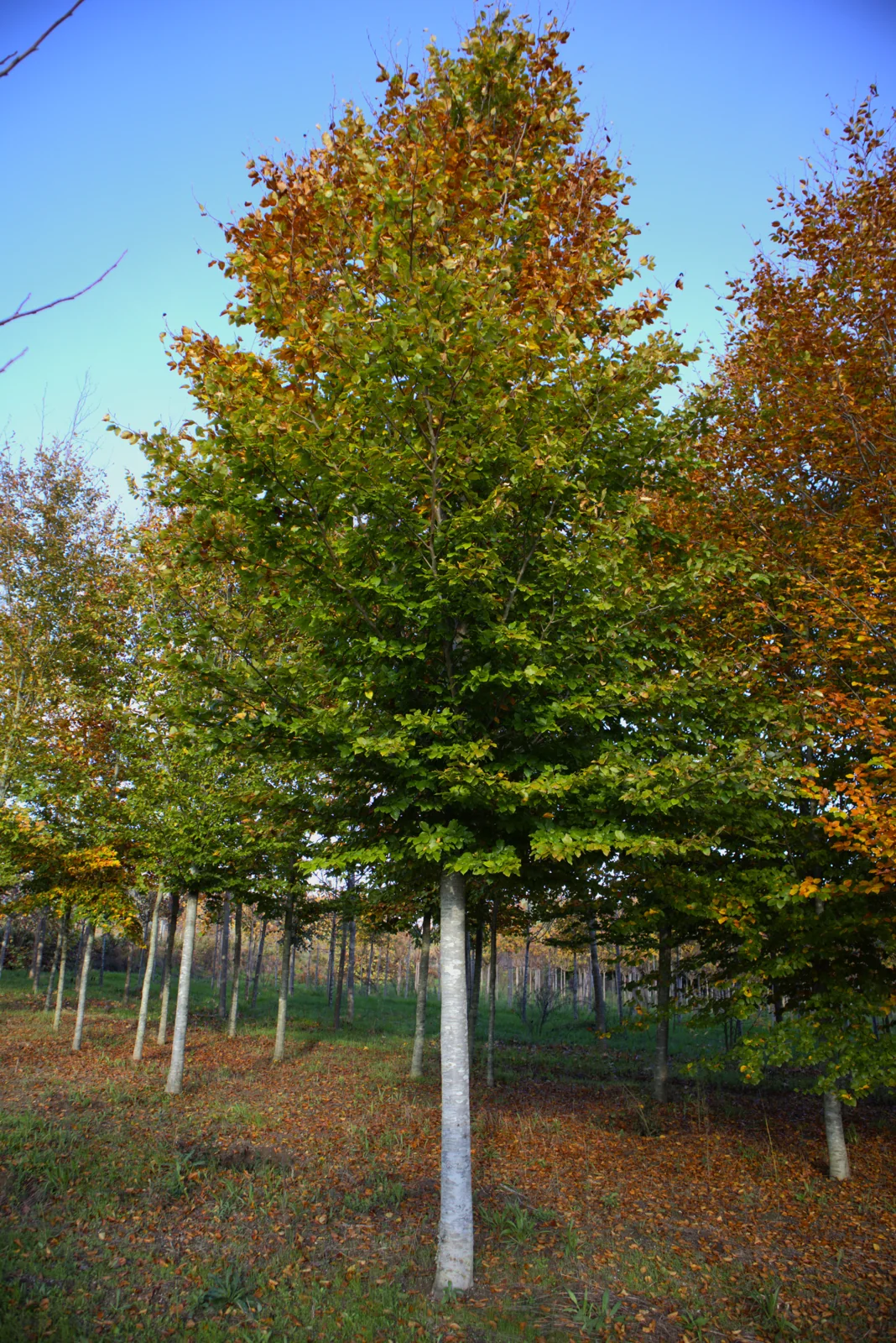
- Clear amber autumn colour holding well into October
About this Species
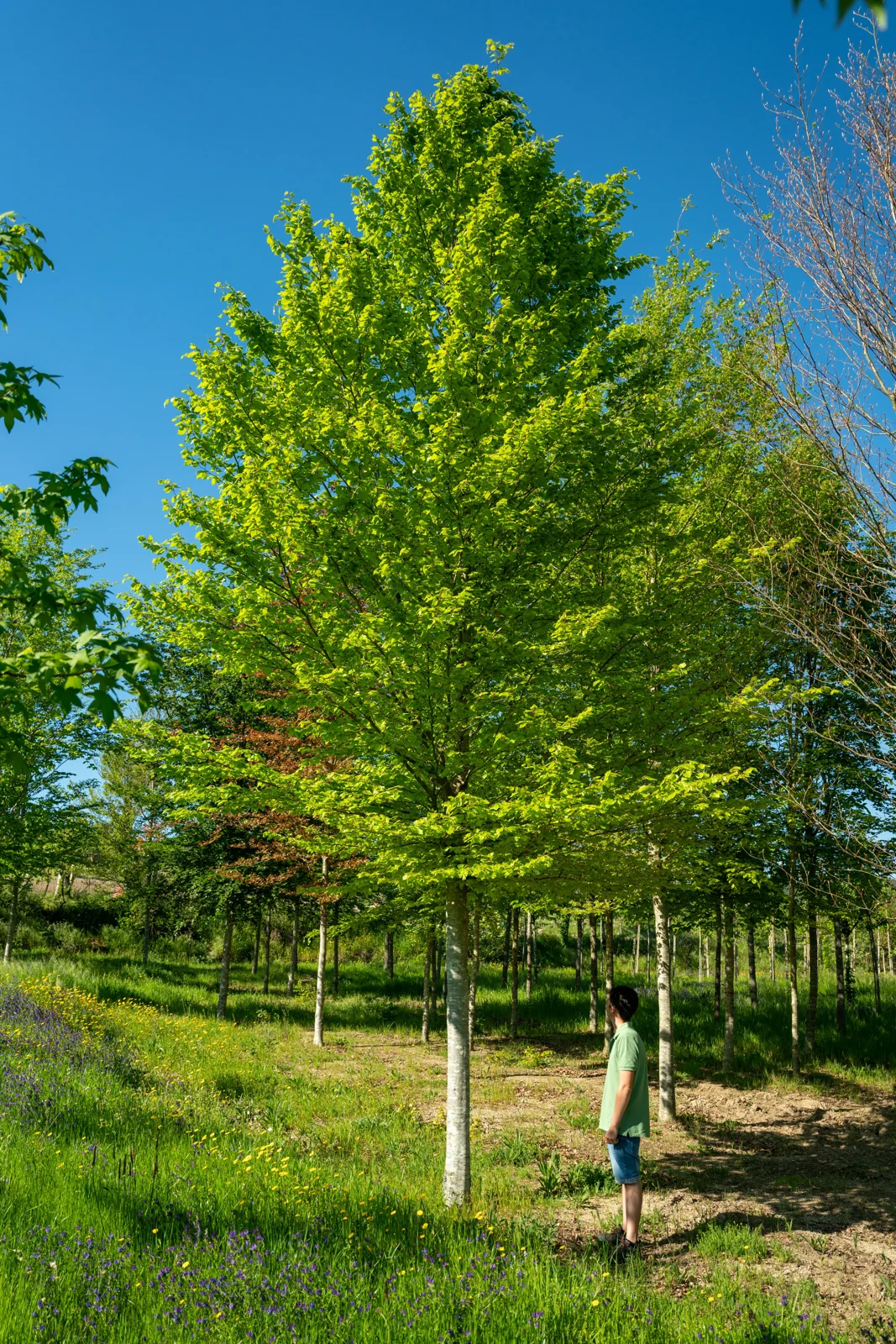
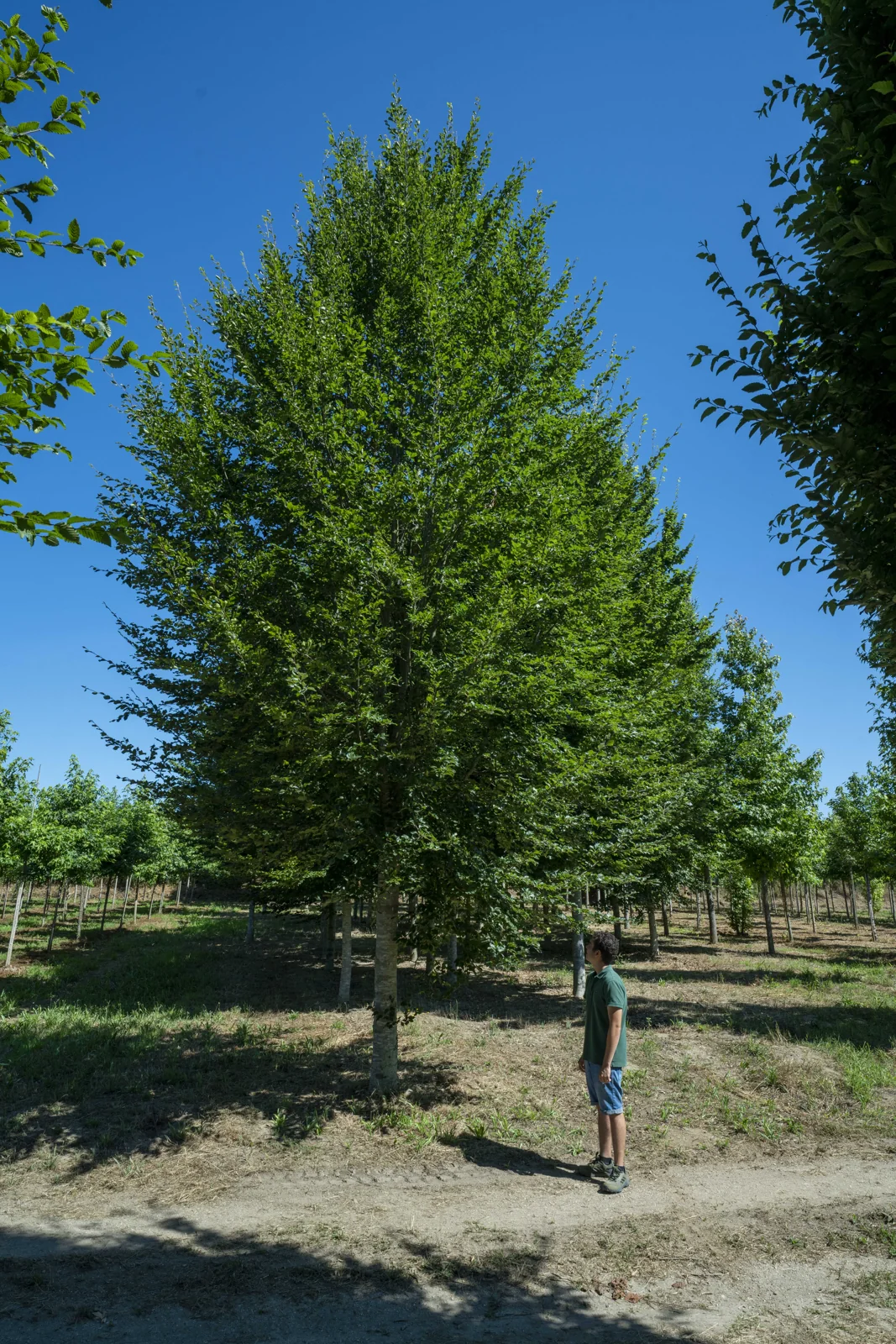
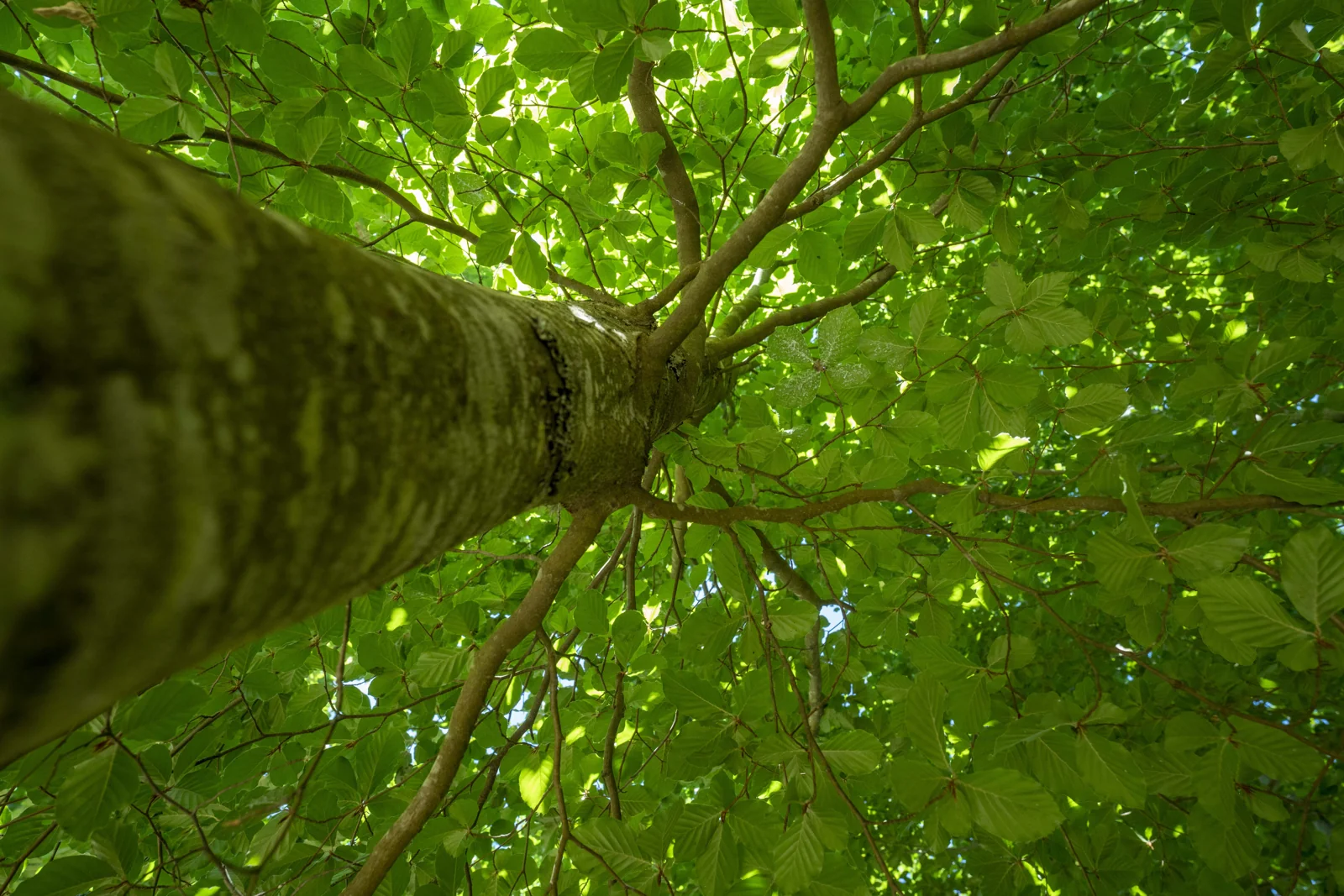
The European beech (faia) develops a dense, oval to rounded crown on a short, low-branching trunk, reaching 20 to 35 m in height with a spread of 12 to 20 m over a long, slow lifespan. Bark is thin, smooth, and dark gray, with the elephant-hide texture characteristic of older trunks. Glossy elliptical leaves emerge a pale silken green in April, deepen…
Read more
Show less
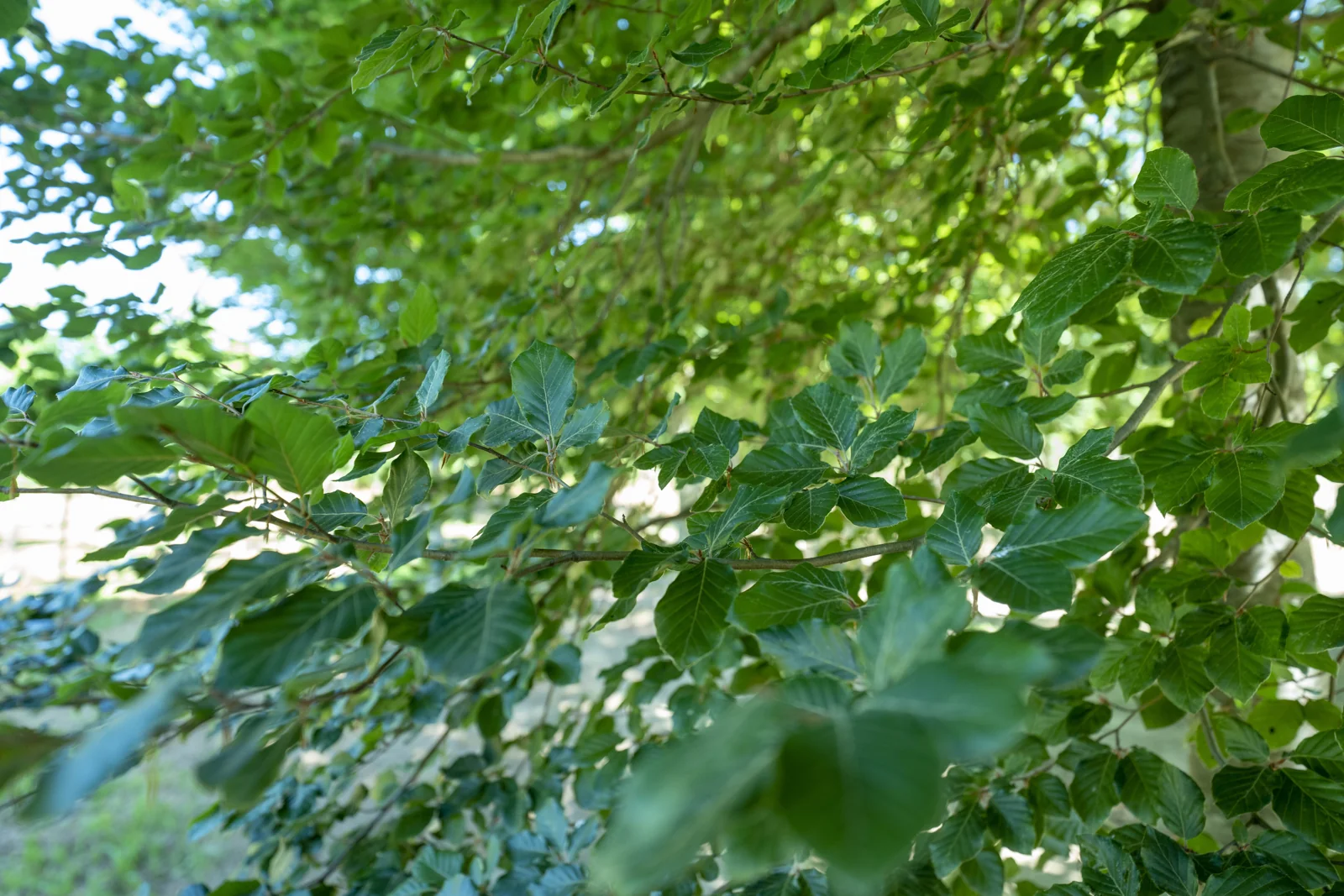
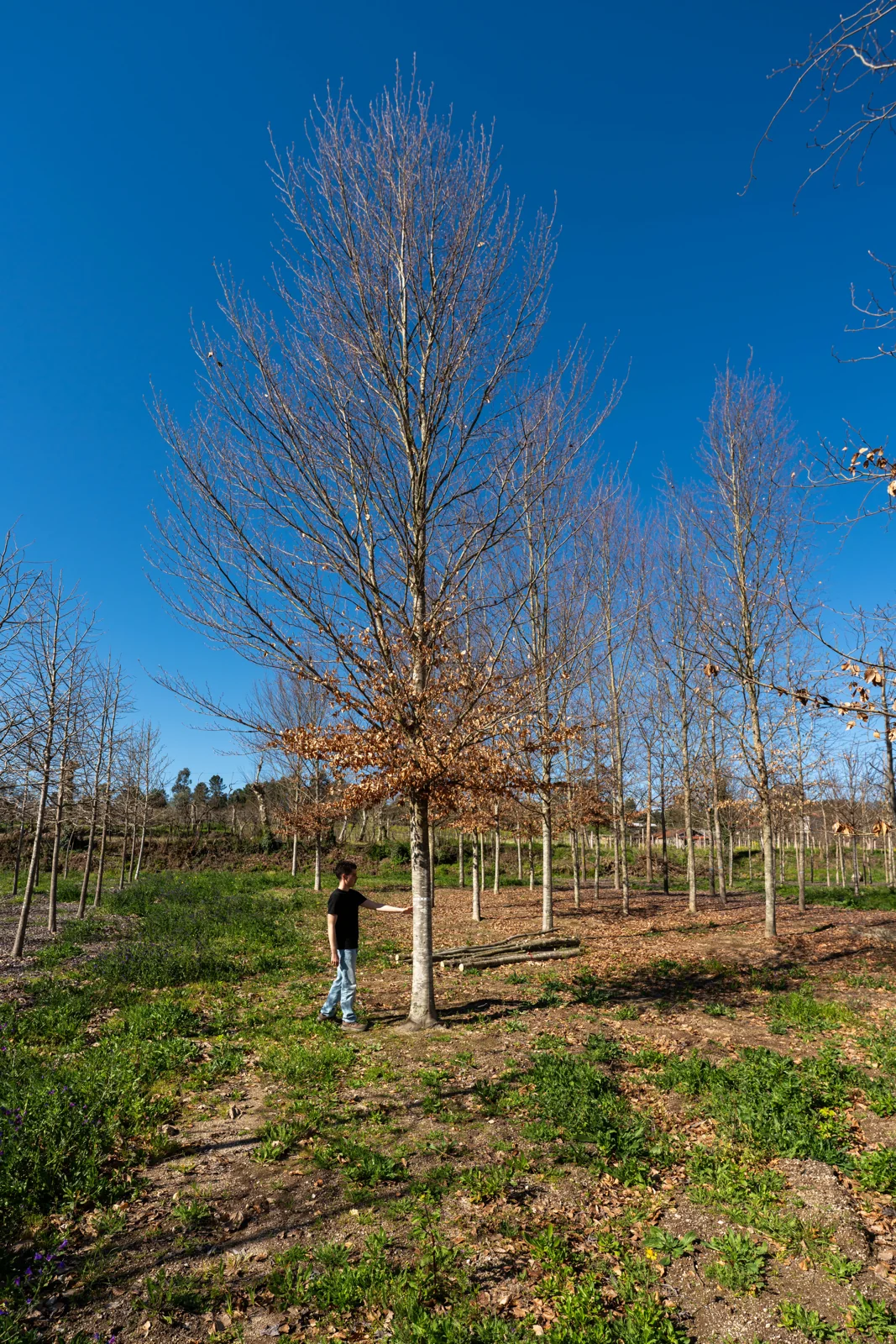
The European beech (faia) develops a dense, oval to rounded crown on a short, low-branching trunk, reaching 20 to 35 m in height with a spread of 12 to 20 m over a long, slow lifespan. Bark is thin, smooth, and dark gray, with the elephant-hide texture characteristic of older trunks. Glossy elliptical leaves emerge a pale silken green in April, deepen through summer, and turn to coppery bronze that often persists into winter on hedged or juvenile growth.
Site selection in Portugal is decisive. The species performs reliably in the humid Minho and Douro corridor, including the Amarante area where Diaplant grows it on roughly 950 mm of annual rainfall with mild winters and dry but cool summers, and it suits Sintra microclimates and the wooded estates above Porto. Heat and drought define its limits: it does not tolerate the prolonged summer drought of urban Lisbon or coastal Algarve, and the continental Alentejo (40 degrees C summers, 400 to 600 mm rainfall) is outside its envelope. Plan for moist, well-drained, loamy or chalky soils with organic matter; standing wet and compacted urban ground are both refused.
For specifiers familiar with sobreiro (Quercus suber) and azinheira (Quercus rotundifolia) as default Portuguese framework trees, faia occupies a different niche: the Atlantic-forest counterpart to the Mediterranean evergreens, structurally similar in crown weight to a mature tília or freixo but with finer foliage. In avenue or alameda work, expect 30 to 40 years to closed crown cover on properly spaced single-stem specimens. The species accepts hard pruning and remains the reference hedging tree of cool Atlantic Europe, holding russet leaf through winter at hedging height, well suited to formal estate enclosure where humid summers permit.
Establishment irrigation is essential through the first three summers; older specimens dislike soil disturbance over the root plate and respond poorly to changes in water table. Litter is minimal: triangular beechnuts in autumn and clean leaf-fall, no samaras. Pest and disease pressure in Portuguese conditions is low, with aphids and occasional powdery mildew on stressed trees the main concerns. Useful life on a well-chosen site exceeds 150 years.



Advice on this species
Want to know more about Fagus sylvatica?
Tell us about your project and we'll advise you on this species — where it thrives, which size makes sense, and what to expect once planted.
- Produção própria
- Exemplares adultos
- Resposta em 1–2 dias
Sem compromisso · orçamento personalizado