

A weeping specimen for the cooler quintas of Portugal
European Beech ‘Pendula’ · Fagus sylvatica ‘Pendula’
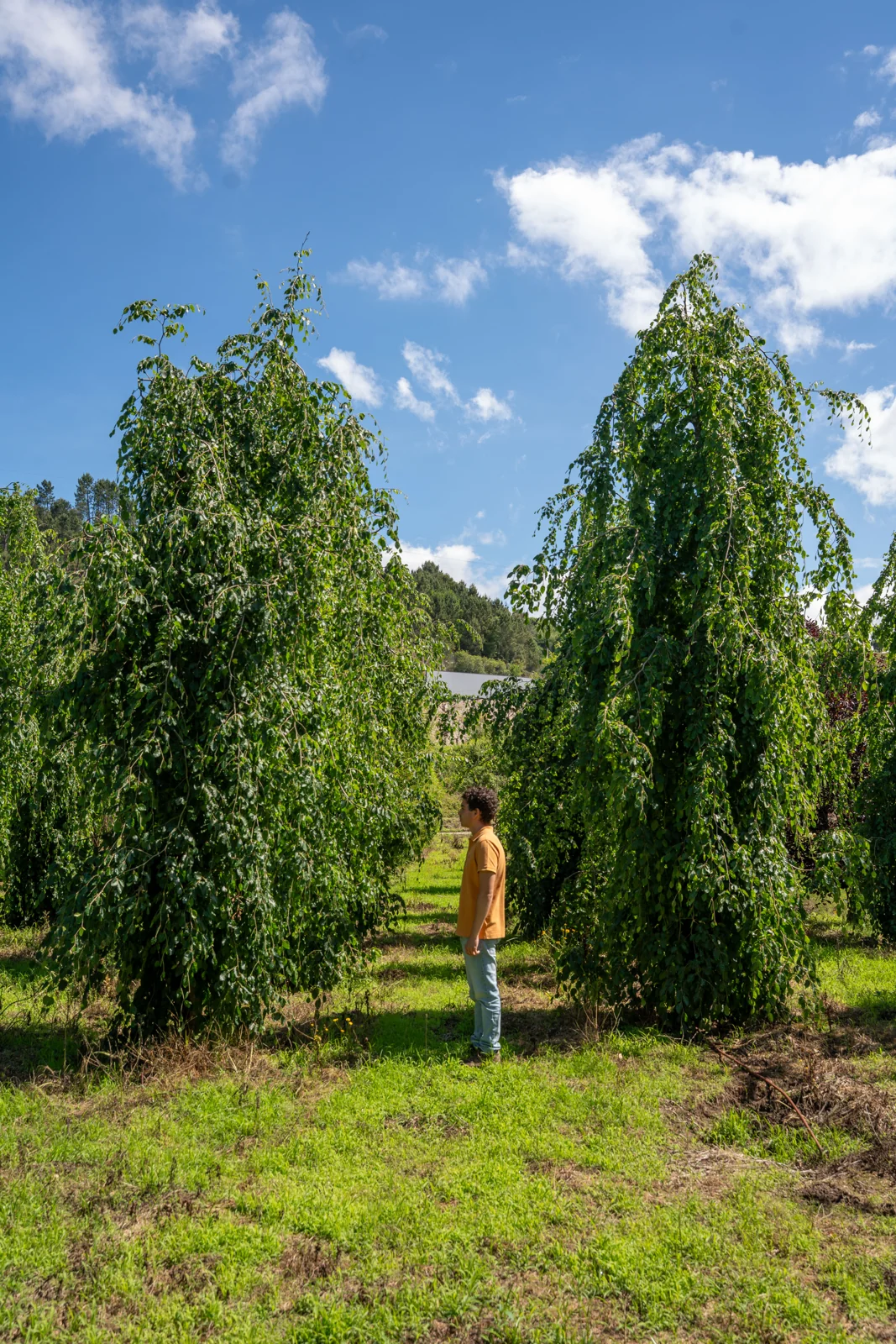
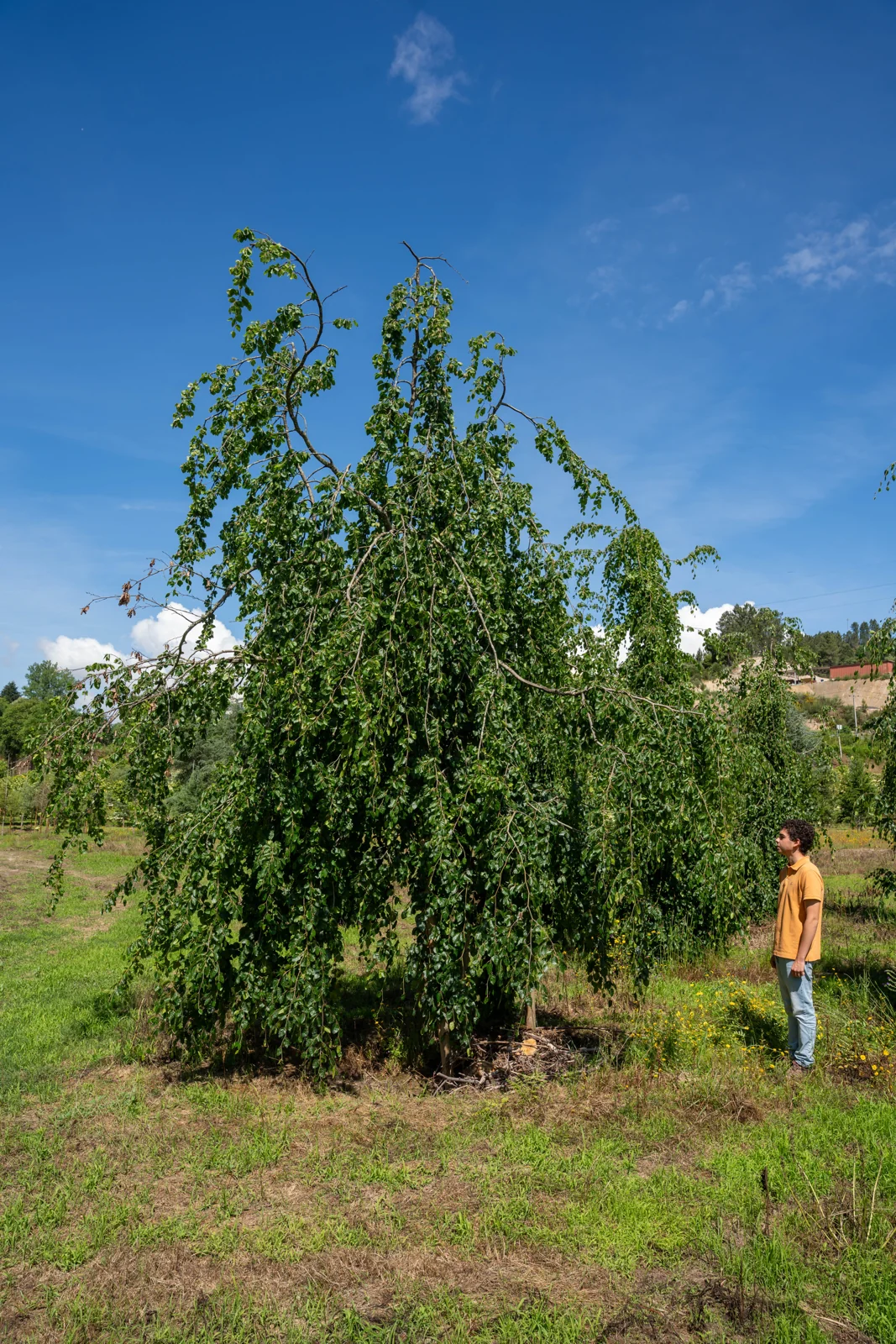
A weeping cultivar of European beech specified as a feature specimen in humid northern Portuguese schemes. Diaplant proposes Fagus sylvatica 'Pendula' for parks, historic gardens, and large estate landscapes where its sculptural form anchors a long sightline.
- Mature height of 15 to 20 m with a 15 to 25 m spread
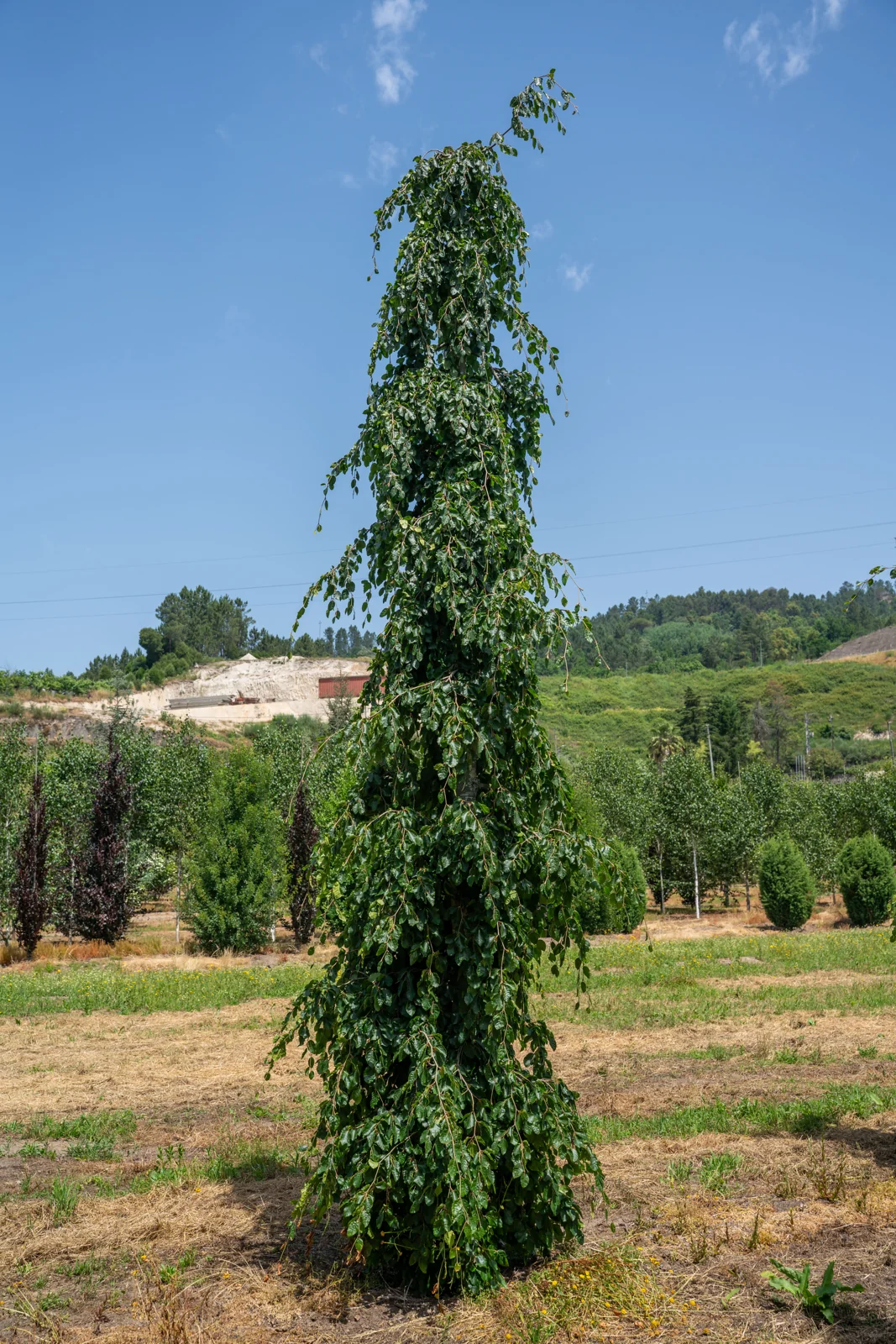
- Long, arching branches give each specimen a singular silhouette
- Gold and copper autumn colour holding into late October
Key Facts
About this Cultivar
Fagus sylvatica 'Pendula' (faia-chorona) reaches 15 to 20 metres in height and 15 to 25 metres in spread at maturity, forming a broad, sculptural crown with long, arching branches that descend to the ground. Each specimen develops a distinct silhouette according to early training, which positions the cultivar as a feature specimen rather than a unit of…
Read more
Show less
Fagus sylvatica 'Pendula' (faia-chorona) reaches 15 to 20 metres in height and 15 to 25 metres in spread at maturity, forming a broad, sculptural crown with long, arching branches that descend to the ground. Each specimen develops a distinct silhouette according to early training, which positions the cultivar as a feature specimen rather than a unit of repeatable structural planting. Growth is slow to moderate, so the tree is specified where its architectural value is the project intention from the outset.
Performance in Portugal is constrained by the species' Atlantic-montane origin. The cultivar suits humid Minho and Douro sites with 1200 to 1800 millimetres of annual rainfall and deep, fertile, well-drained soils on the acid to neutral range; it is field-grown by Diaplant in Amarante under approximately 950 millimetres of rainfall, which represents a workable southern limit with reliable irrigation. The cultivar is not recommended for coastal Algarve schemes, interior Alentejo projects, or urban Lisbon avenues, where summer heat, prolonged drought, calcareous soils, and reflected pavement heat exceed its tolerances.
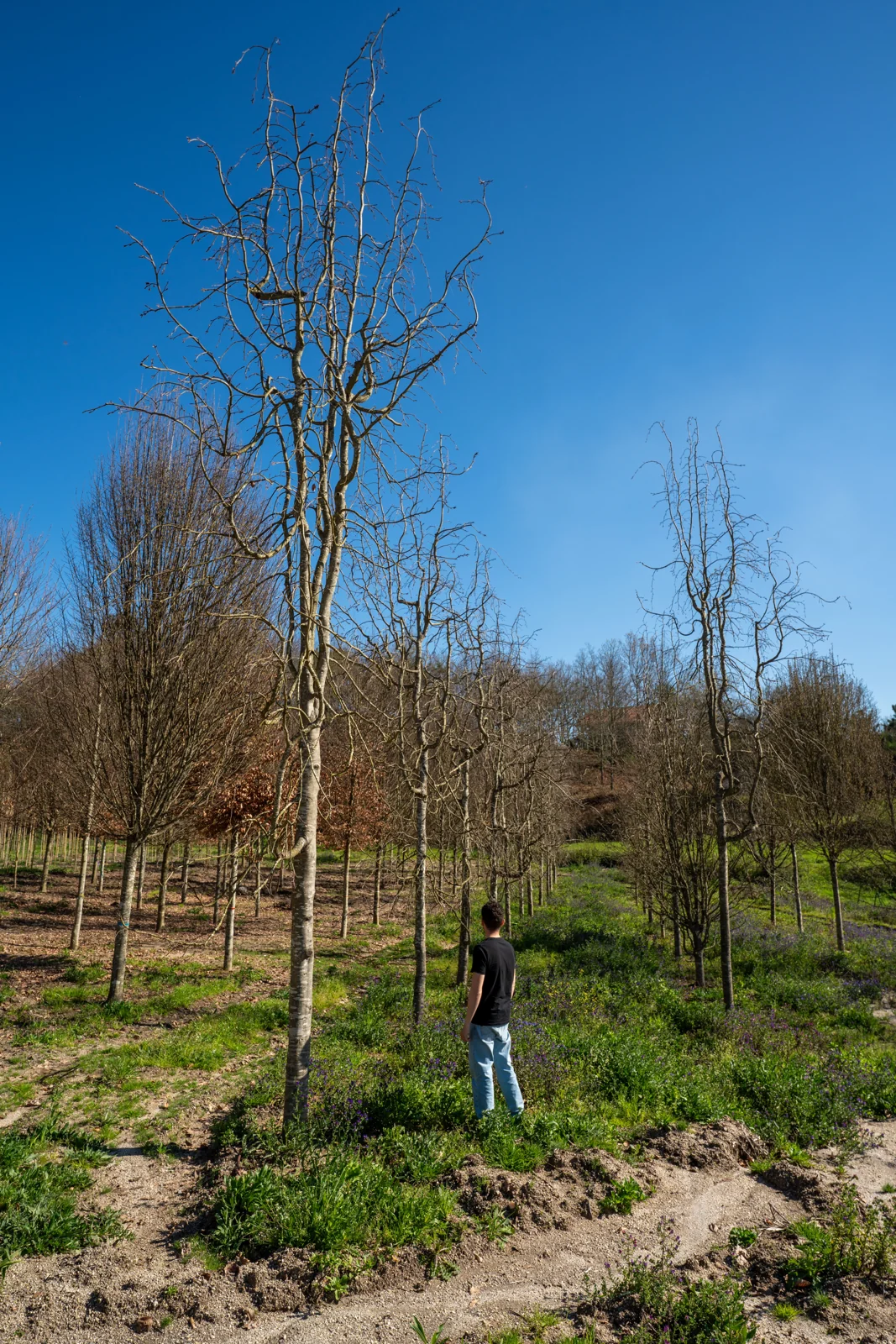
The ovate, dark green leaves are glossy through summer and turn golden bronze in autumn, holding colour for several weeks before falling. The combination of pendulous branch architecture with this seasonal transition gives two distinct ornamental phases: a dense green dome from May to September and a translucent bronze structure in October and November. Smooth grey bark on the mature trunk adds winter interest once the leaves have dropped.
Maintenance demands are low once the tree is established. Formative pruning during the first decade sets the line at which the lowest branches will sweep the ground; mature crowns require only deadwood removal. Irrigation is necessary through establishment and through dry summers thereafter, particularly south of the Douro. The root system is shallow and wide, so the cultivar is unsuitable near pavements or underground services, and is best placed in a generous lawn, a clearing, or the open ground of a jardim histórico.
Advice on this species
Want to know more about Fagus sylvatica 'Pendula'?
Tell us about your project and we'll advise you on this species — where it thrives, which size makes sense, and what to expect once planted.
- Produção própria
- Exemplares adultos
- Resposta em 1–2 dias
Sem compromisso · orçamento personalizado