

A small flowering tree for cooler Portuguese gardens
Japanese Dogwood ‘Chinensis’ · Cornus kousa ‘Chinensis’
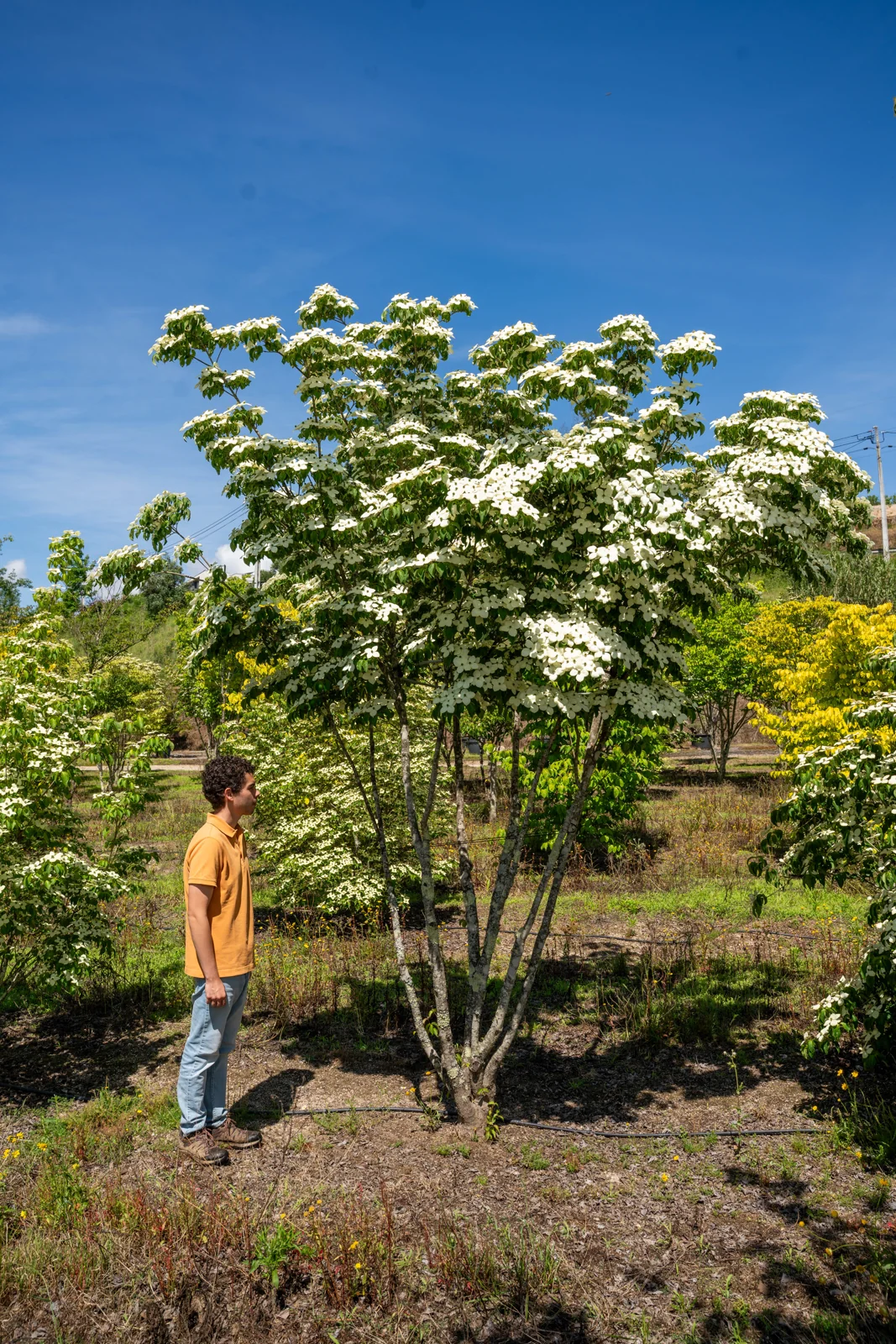
A medium-sized deciduous specimen with horizontal branching, white spring bracts and red autumn foliage. Specified for private gardens (jardins) and shaded municipal squares (pracas) in the Minho, Douro and Greater Lisbon, where moisture and acidic substrates are reliable.
- Mature canopy of six to nine metres within twenty years
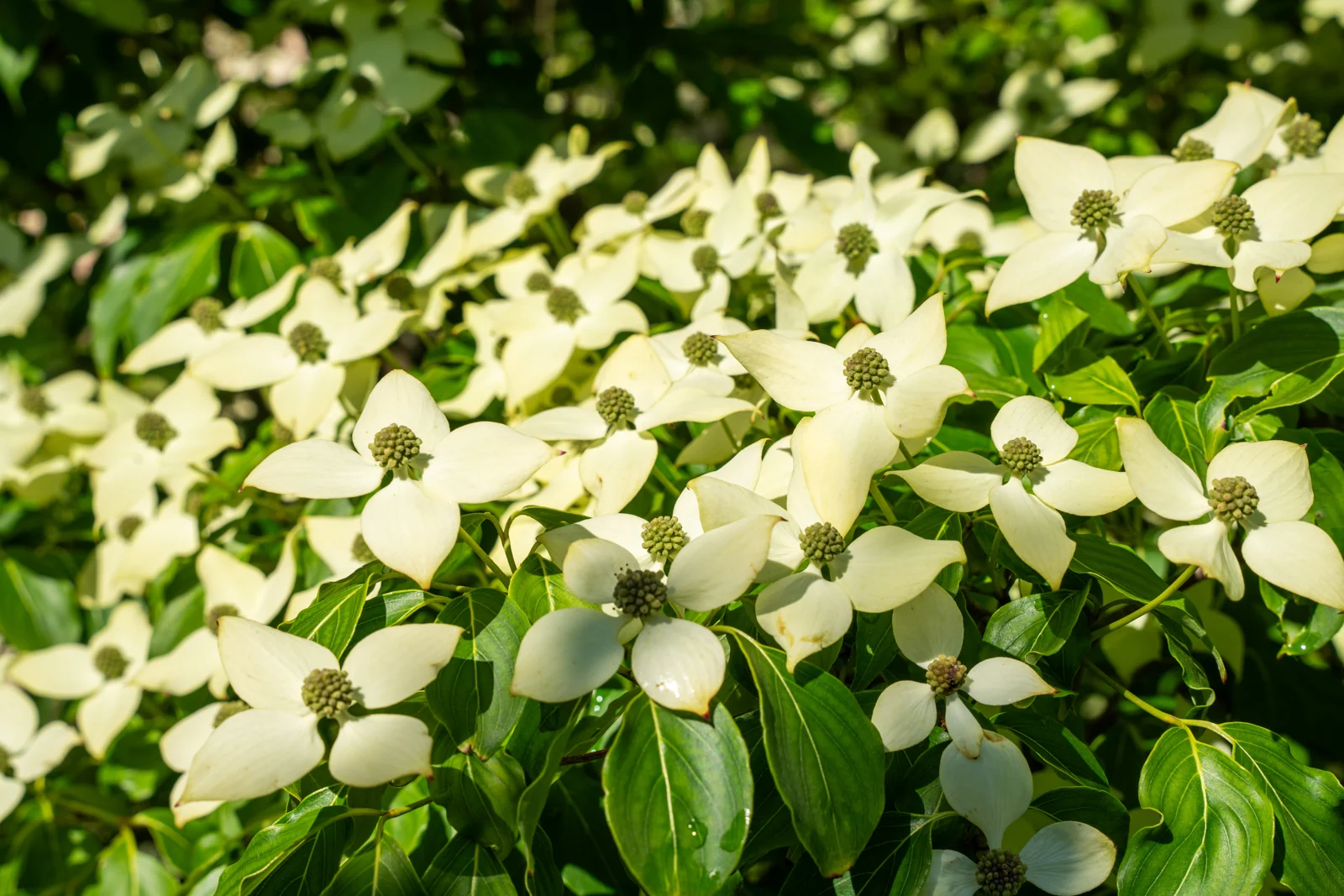
- Large white bracts in late spring, broader than the species type
- Reliable on the Silver Coast, Sintra and the Greater Porto belt
About this Cultivar
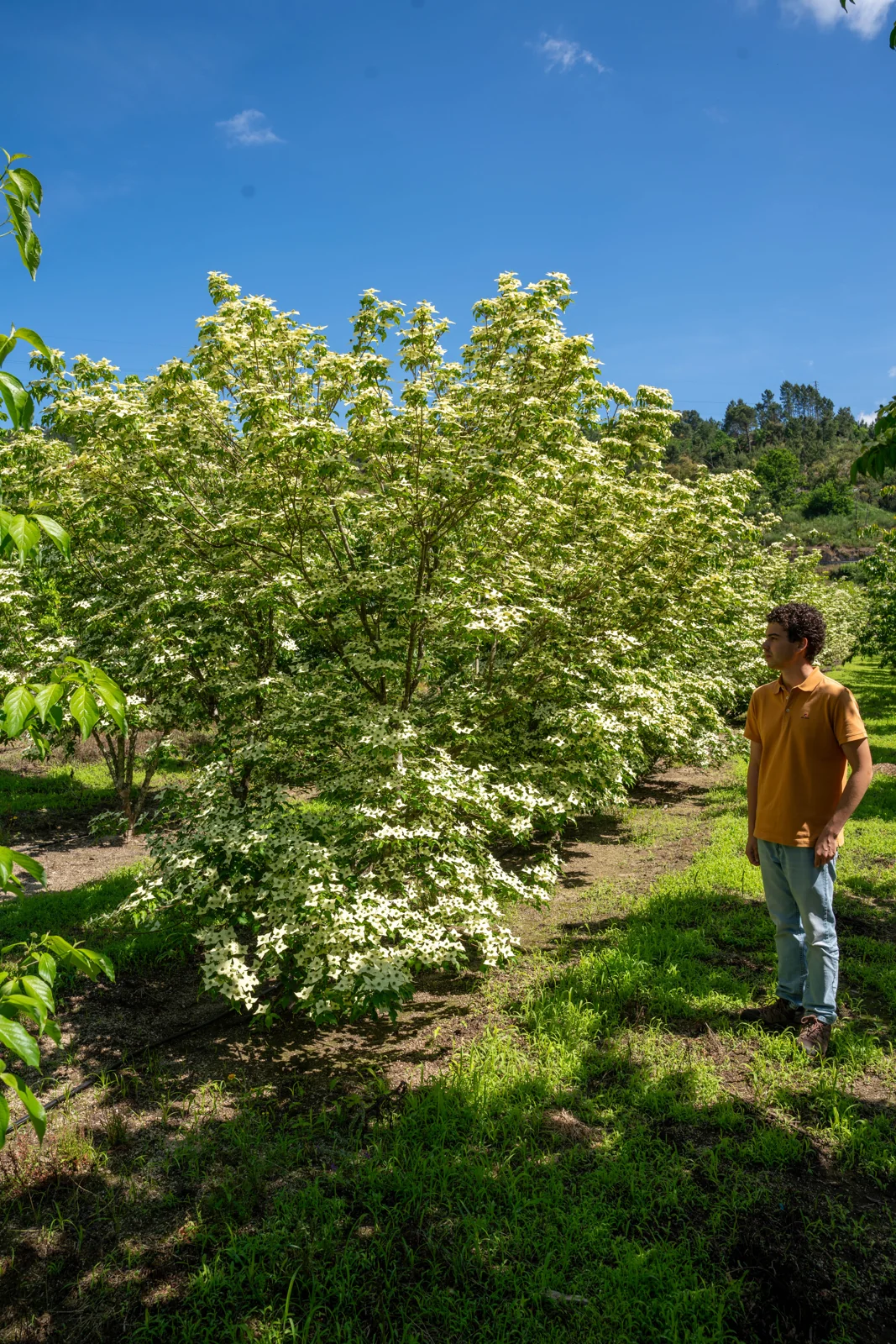
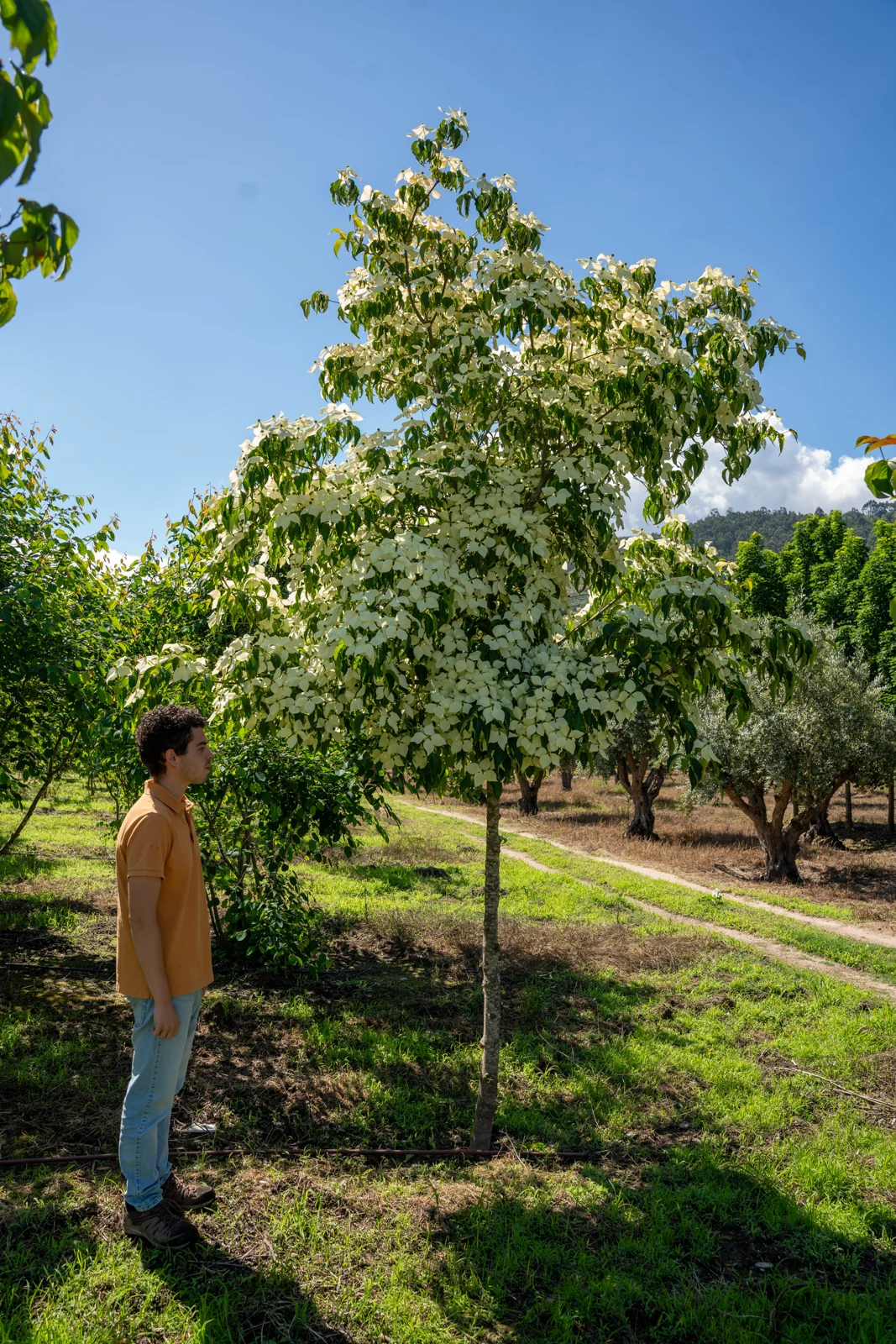
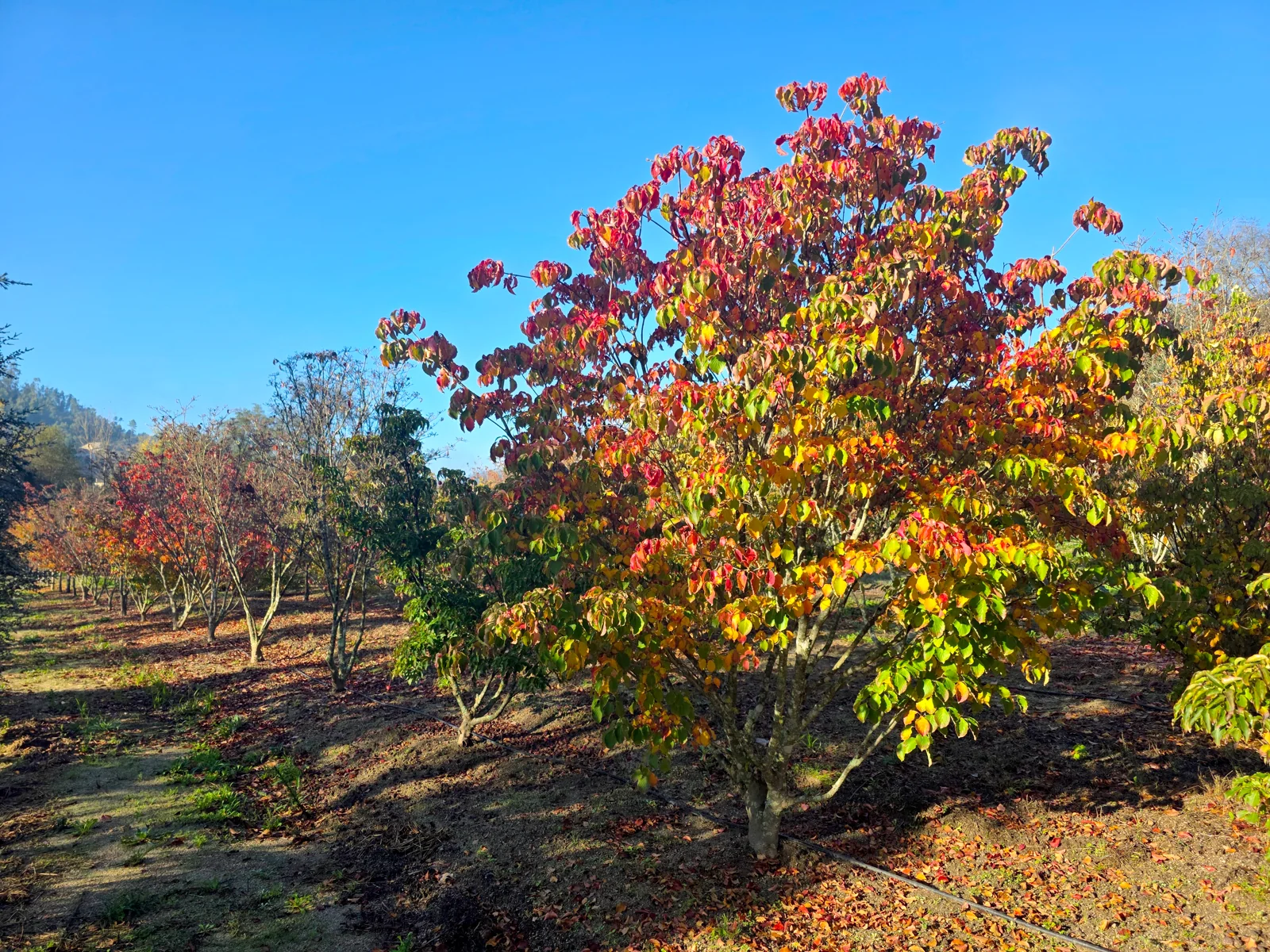
Cornus kousa 'Chinensis' reaches 6 to 9 m in height and 5 to 7 m in spread under Portuguese cultivation, forming a rounded crown with markedly horizontal branching. The Chinese variety carries larger bracts and a heavier flowering display than the typical form, and matures more slowly than a platano or a tilia. As a specifier, treat it as a feature specimen…
Read more
Show less
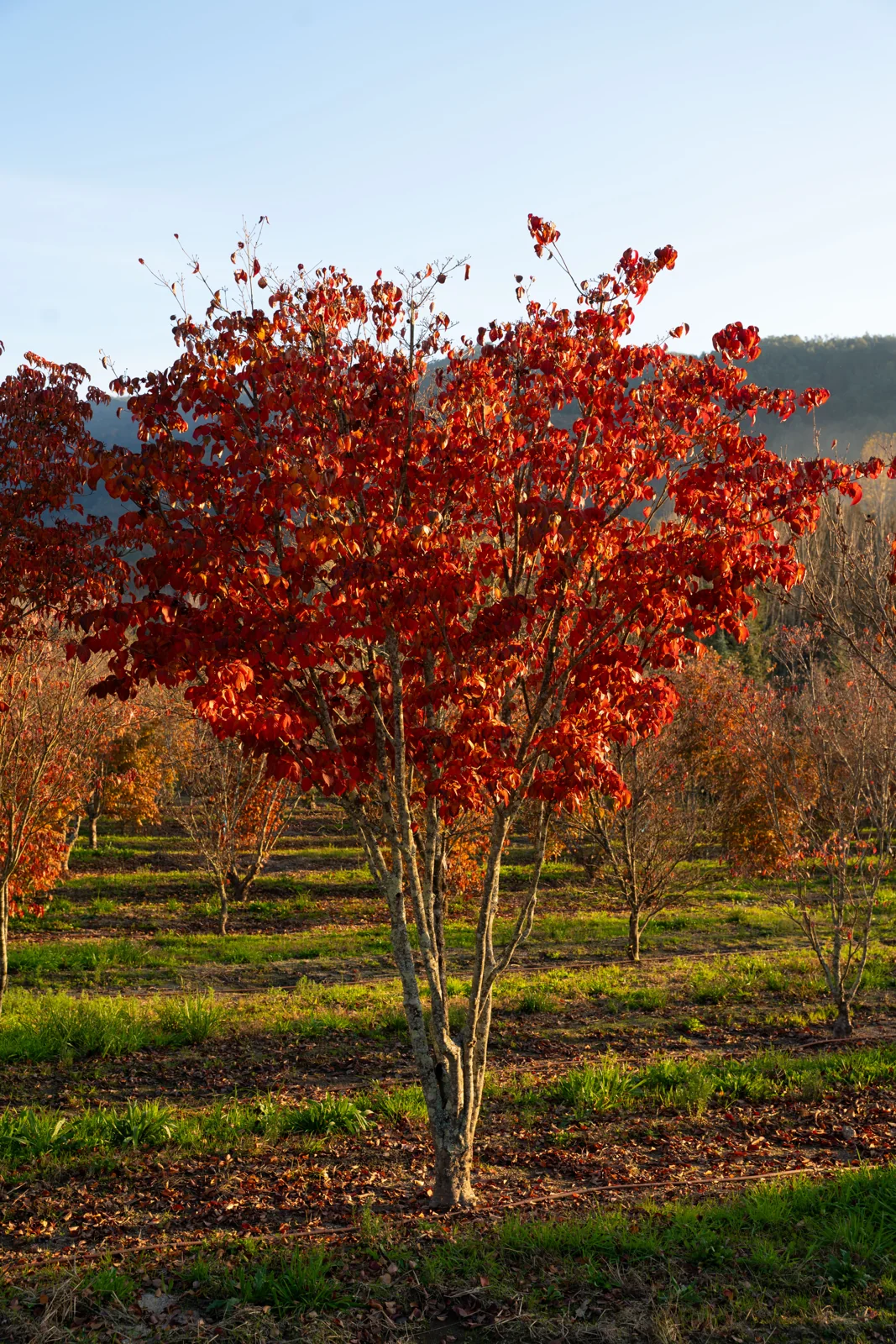
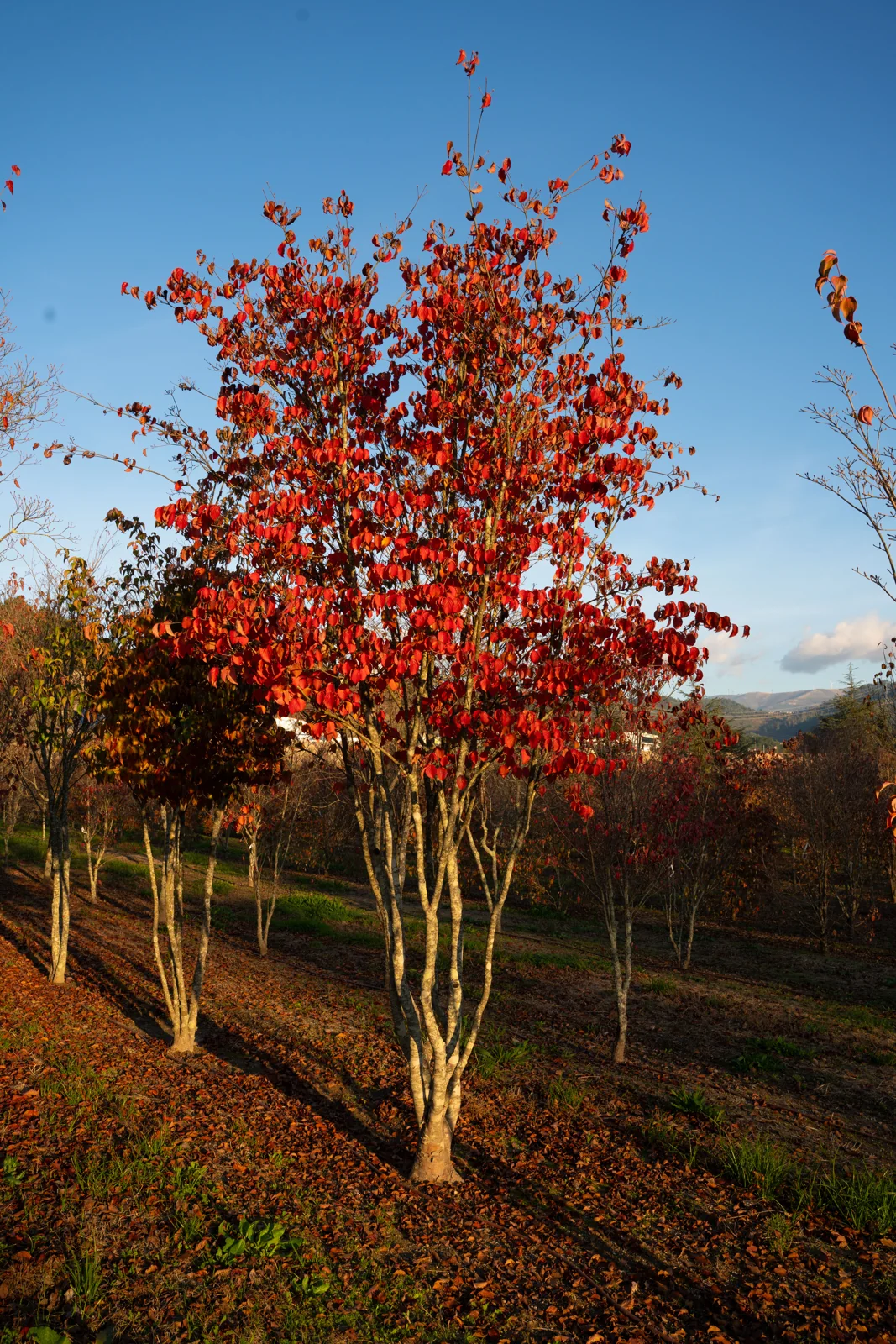
Cornus kousa 'Chinensis' reaches 6 to 9 m in height and 5 to 7 m in spread under Portuguese cultivation, forming a rounded crown with markedly horizontal branching. The Chinese variety carries larger bracts and a heavier flowering display than the typical form, and matures more slowly than a platano or a tilia. As a specifier, treat it as a feature specimen or a secondary canopy tree, not as a framework tree for street alignment (arruamento).
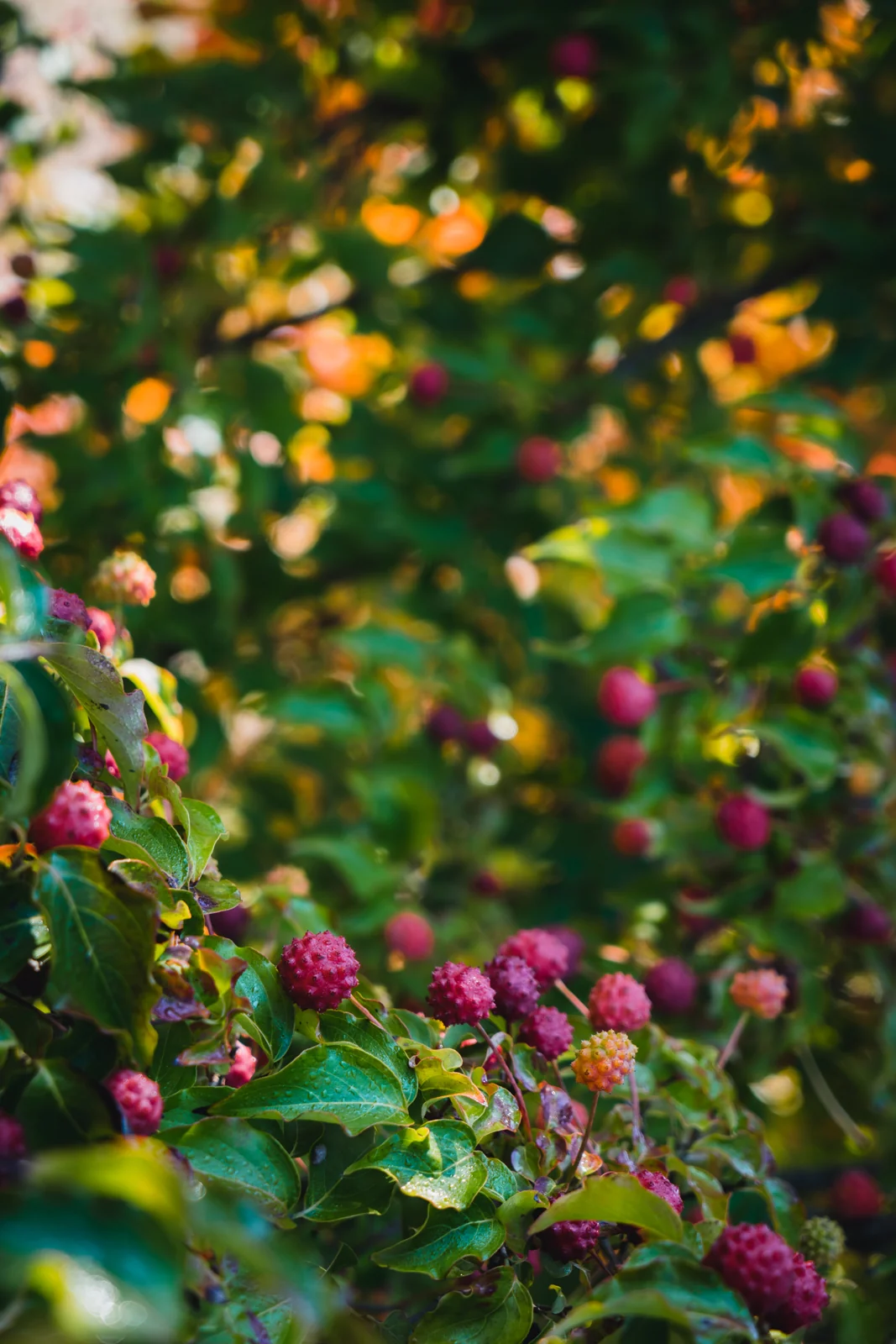
Flowering occurs in late spring and early summer, with broad white bracts arranged in flat clusters across the horizontal branch structure. Autumn brings reddish-purple to scarlet foliage that persists for three to five weeks, followed by globose scarlet drupes attractive to songbirds. Mature trunks develop exfoliating bark in tan and brown patches, which adds winter interest in a position where the trunk is visible from a path or seating area.
Performance in Portugal is governed by soil moisture and atmospheric humidity. The species thrives in the humid Minho and Douro, where Atlantic rainfall of 1200 to 1800 mm and granite or schist soils provide the cool, slightly acidic, fresh root environment it requires. In Greater Lisbon, it performs in private gardens and shaded courtyards where reliable summer irrigation is provided and the substrate is not chalky. The interior Alentejo, with hot dry summers above 40 degrees and limited rainfall, exceeds its drought tolerance and is not recommended. Salt sensitivity also rules out the exposed coastal strip of the Algarve.
Diaplant produces this cultivar in Amarante (approximately 950 mm annual rainfall, mild winters, dry summers), conditions that align closely with its preferred range and that allow the field-grown (cultivado em pleno solo) material to establish predictably once transplanted into comparable northern sites. Maintenance is low: formative pruning during the first three years to set the horizontal architecture, then only sanitary cuts. The species is resistant to dogwood anthracnose and shows no significant pest pressure under Portuguese conditions, which simplifies the maintenance brief passed to the municipal parks department (espacos verdes municipais) or to a private client.
Advice on this species
Want to know more about Cornus kousa 'Chinensis'?
Tell us about your project and we'll advise you on this species — where it thrives, which size makes sense, and what to expect once planted.
- Produção própria
- Exemplares adultos
- Resposta em 1–2 dias
Sem compromisso · orçamento personalizado