

A small flowering tree for the cooler, moister Portuguese garden
Flowering Dogwood · Cornus florida
A small deciduous understory tree for sheltered, acid-soil schemes in humid northern Portugal. Specified where a low-branched feature specimen is required beneath a higher canopy, with spring bract display and red autumn colour.
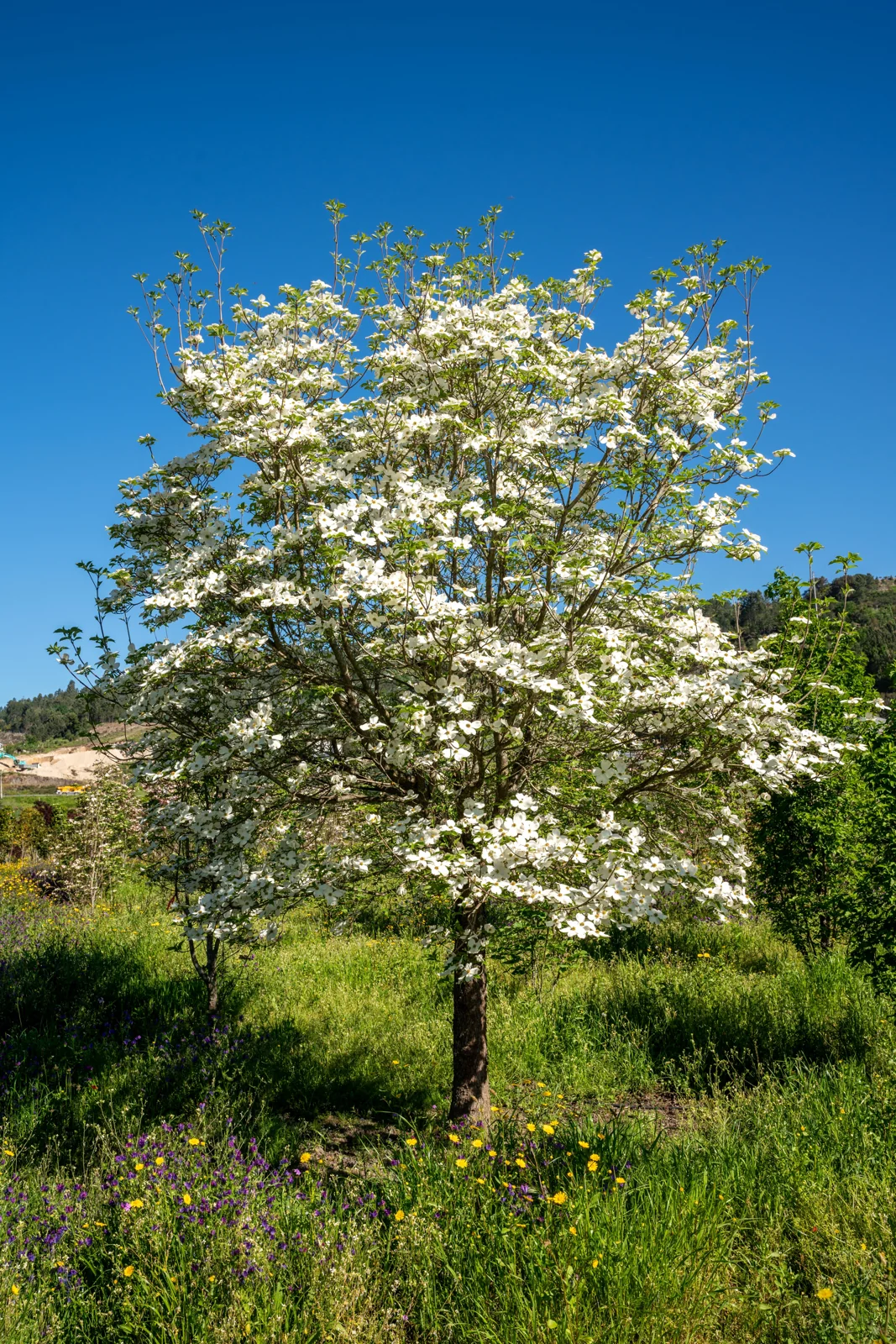
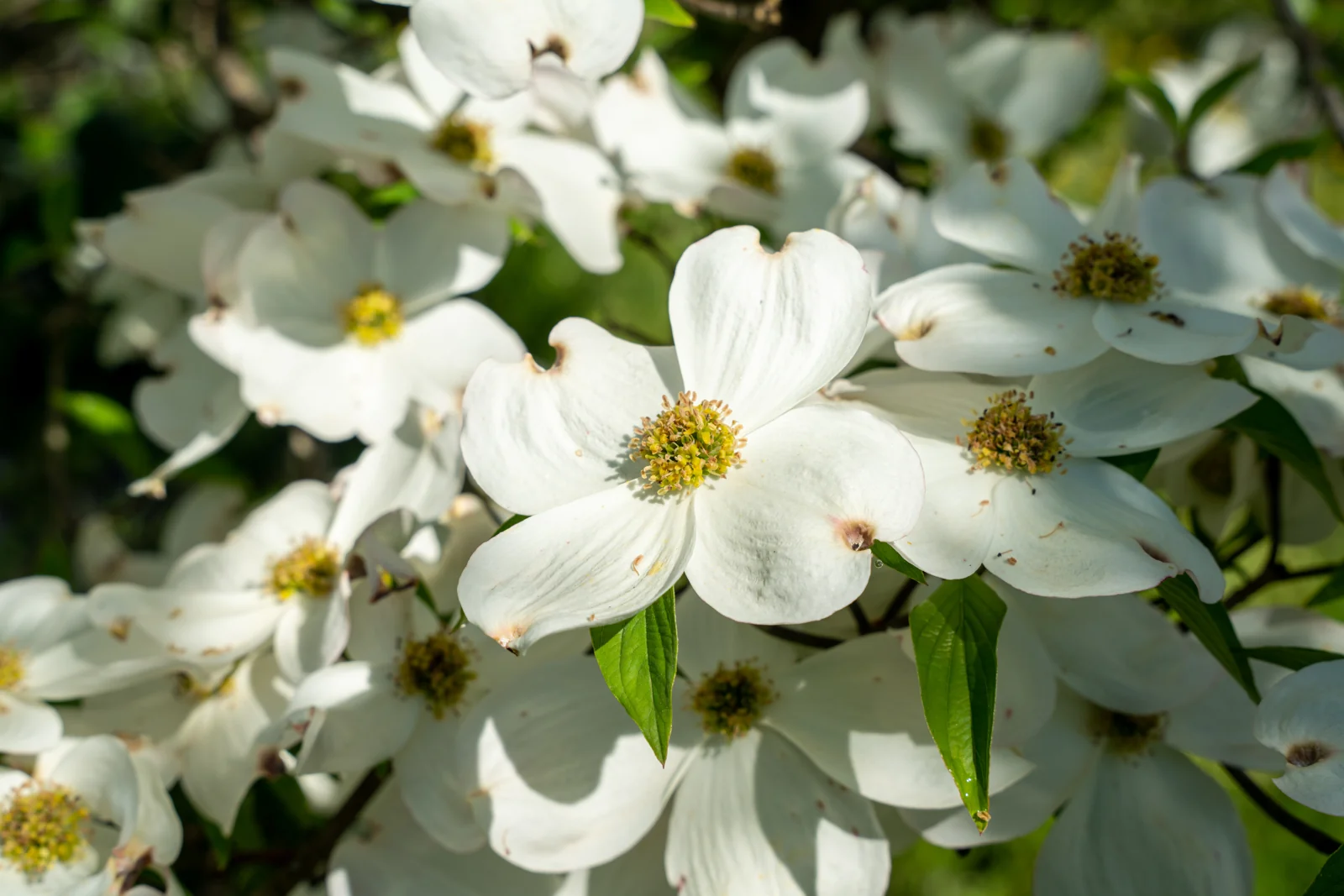
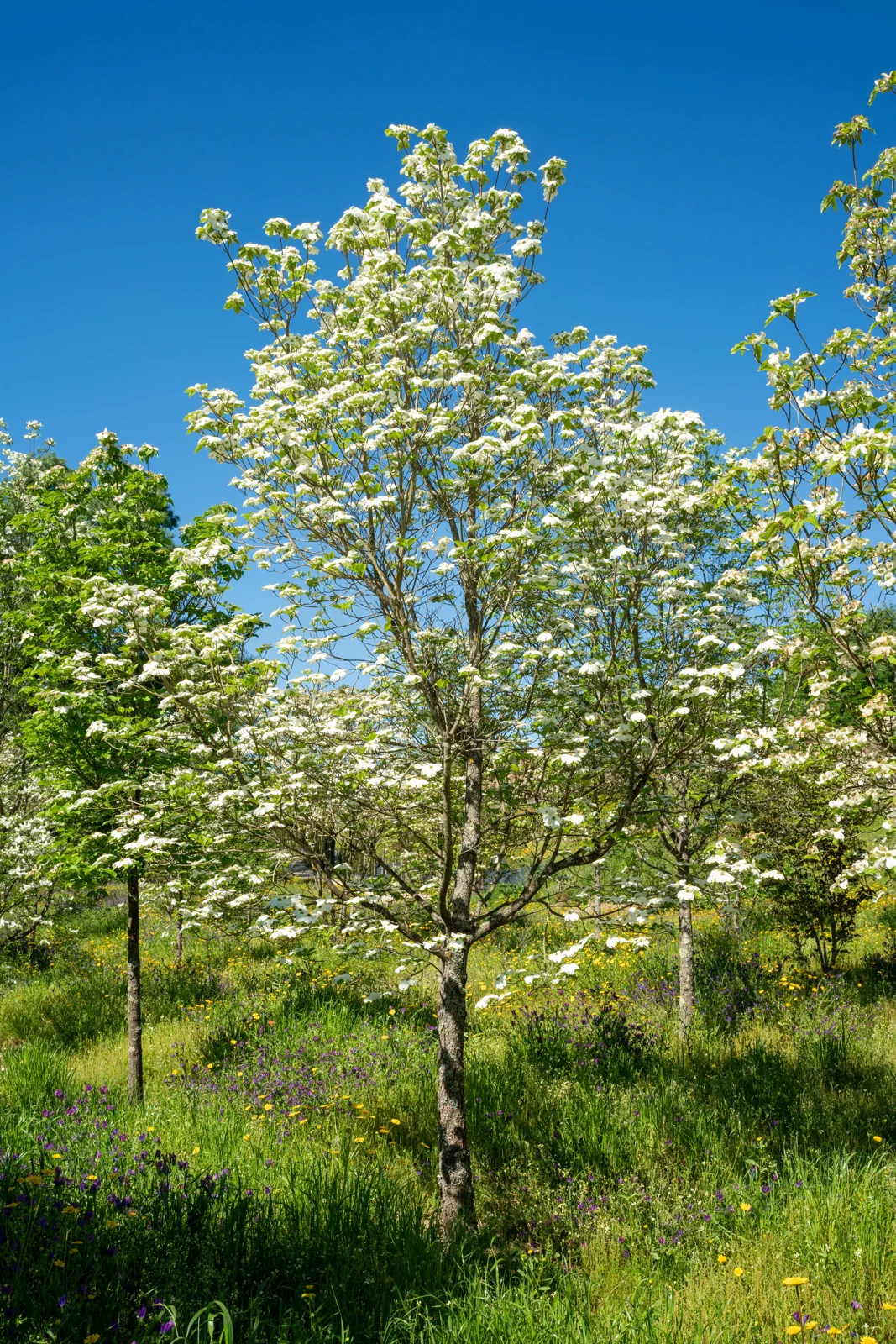
- Broad white or pink bracts open in mid-April before the leaves
- Best in the Sintra hills, greater Porto, and the cooler Silver Coast
- Needs acidic soil, afternoon shade, and reliable summer irrigation
About this Species
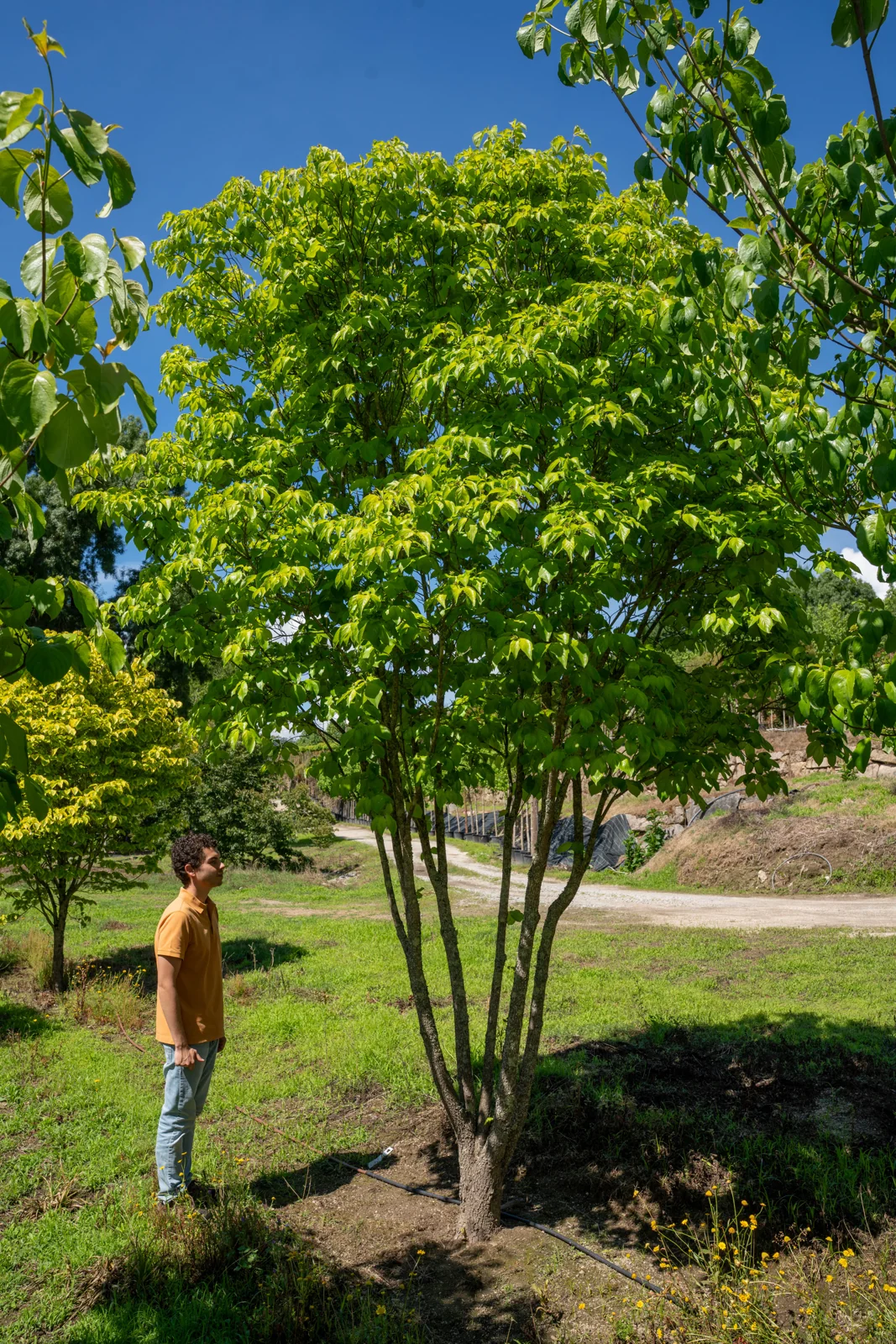
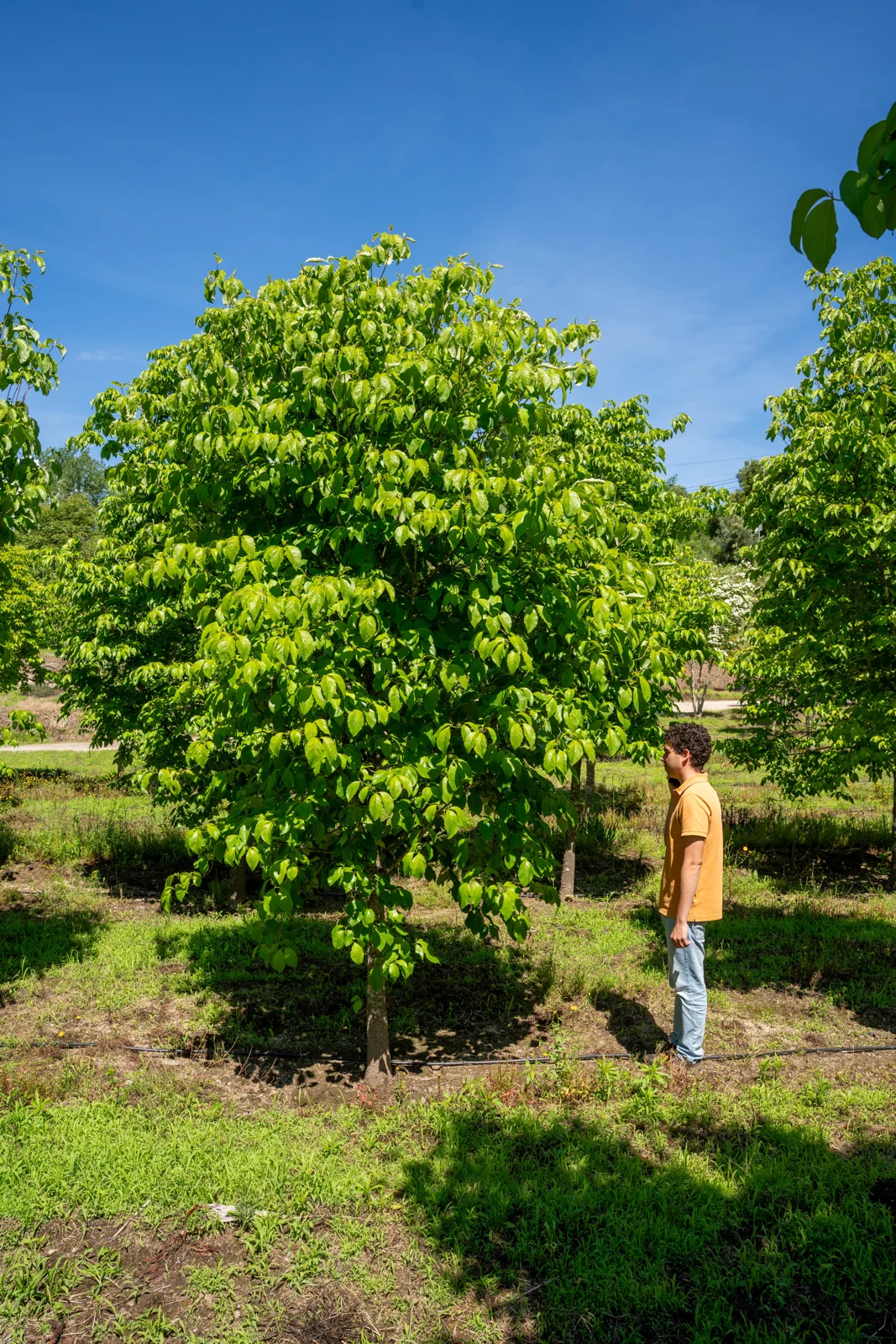
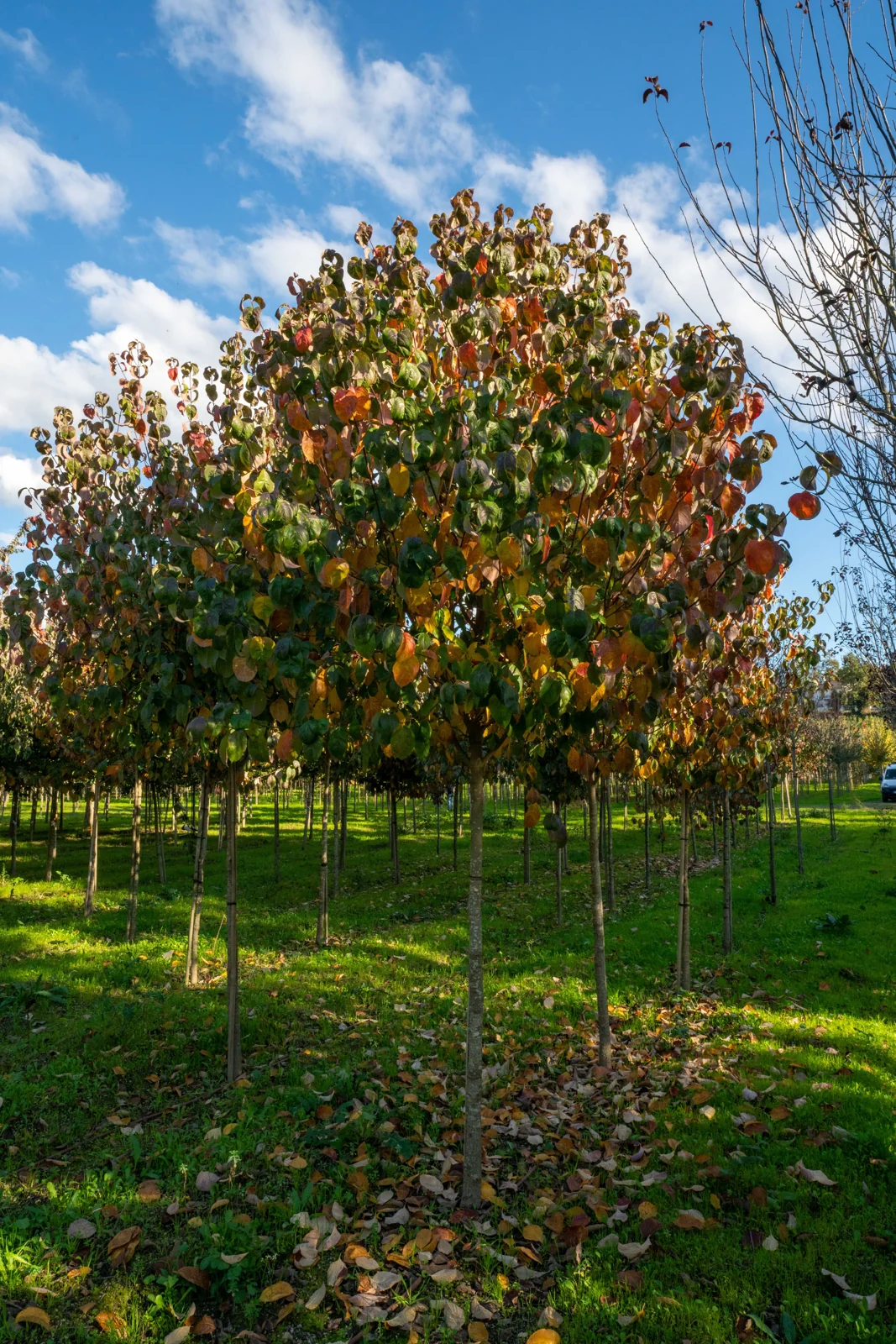
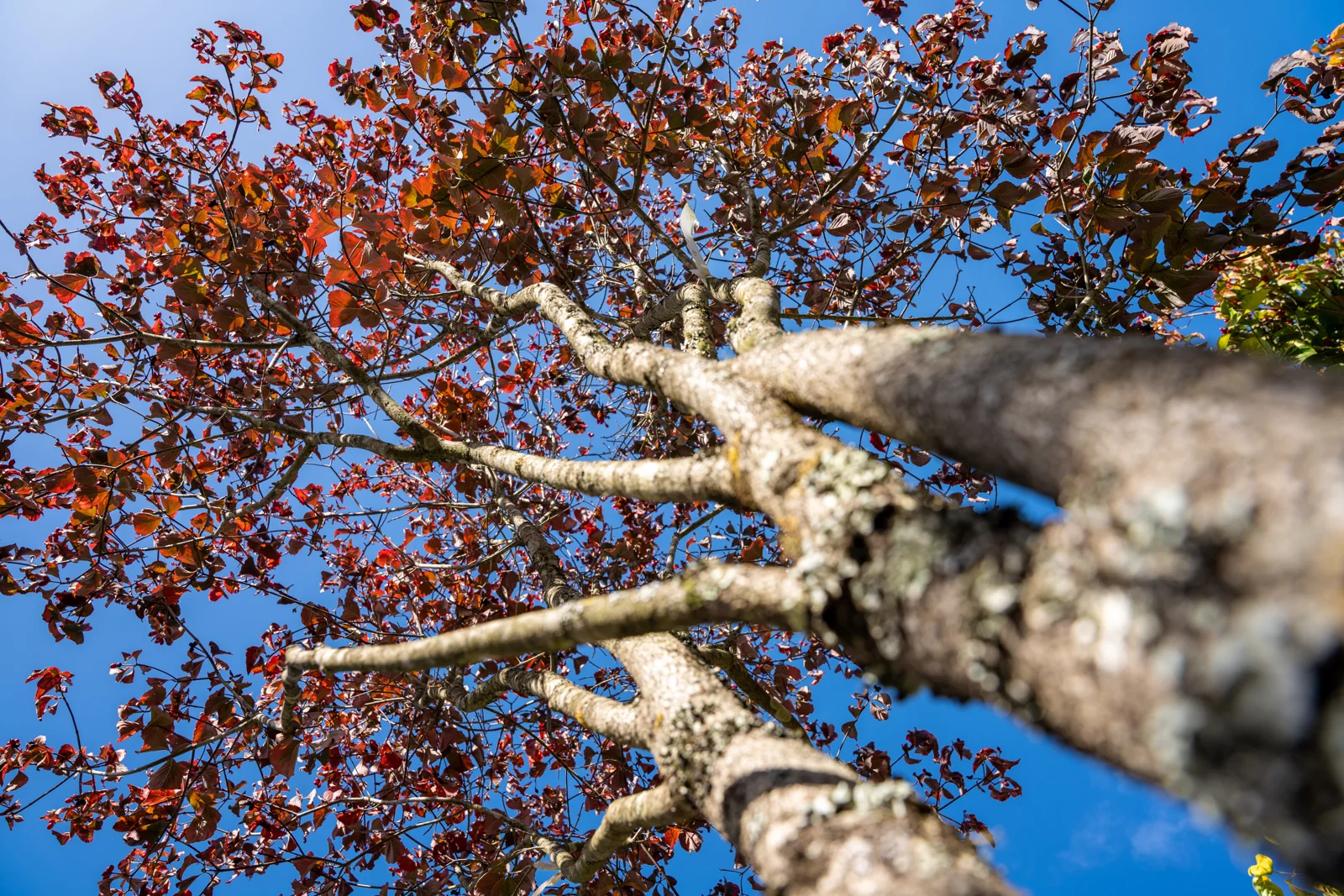
Cornus florida reaches 5 to 10 metres in height and spread at maturity, with a broadly rounded, flat-topped crown and horizontal branching from a low single stem. Growth is slow, and useful caliper accumulates over several seasons rather than in a single establishment cycle. The species reads as a secondary canopy or feature specimen, not as a framework or…
Read more
Show less
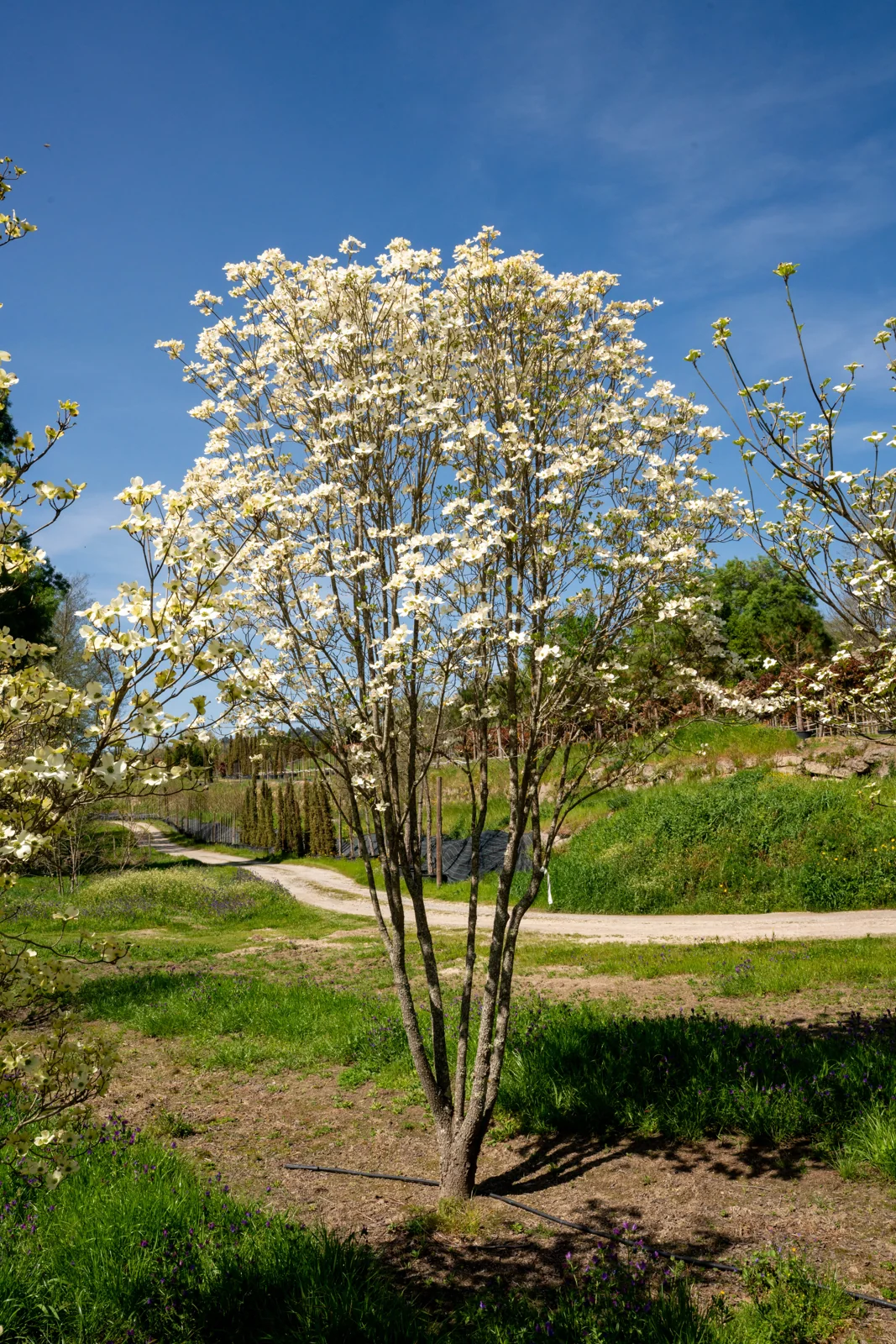
Cornus florida reaches 5 to 10 metres in height and spread at maturity, with a broadly rounded, flat-topped crown and horizontal branching from a low single stem. Growth is slow, and useful caliper accumulates over several seasons rather than in a single establishment cycle. The species reads as a secondary canopy or feature specimen, not as a framework or street tree, and its habit suits sheltered courtyards, woodland margins, and the underplanting of taller deciduous structure.
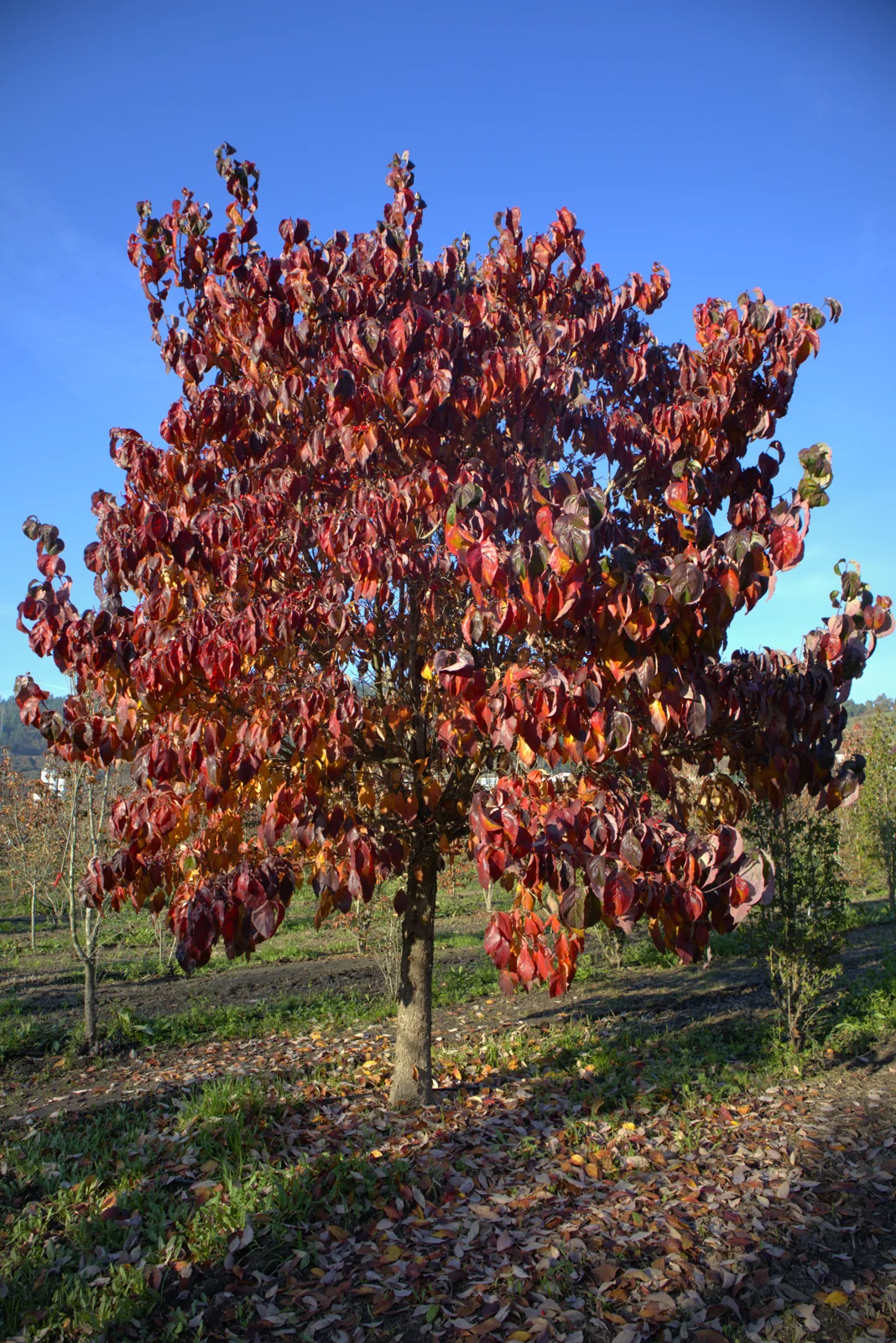
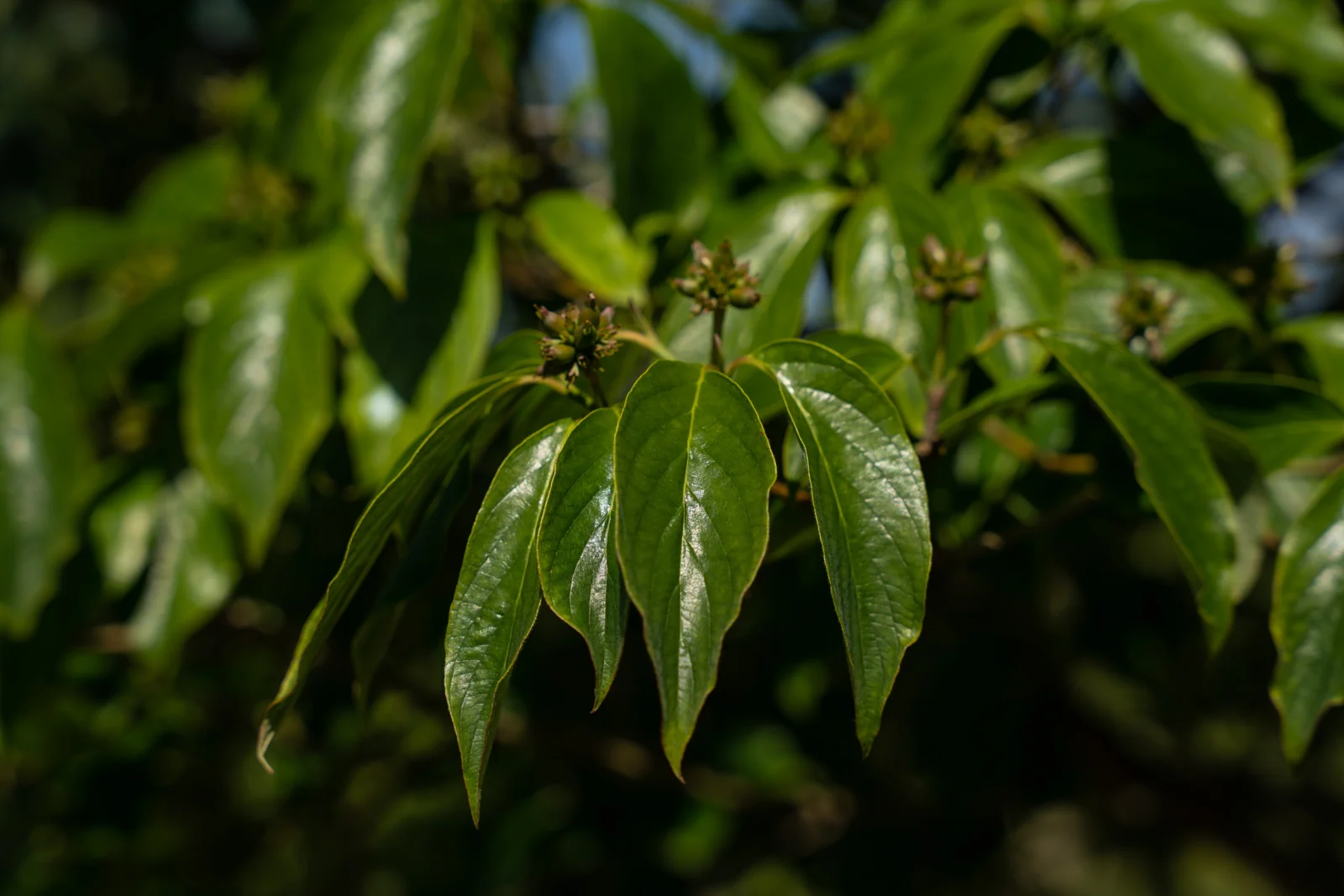
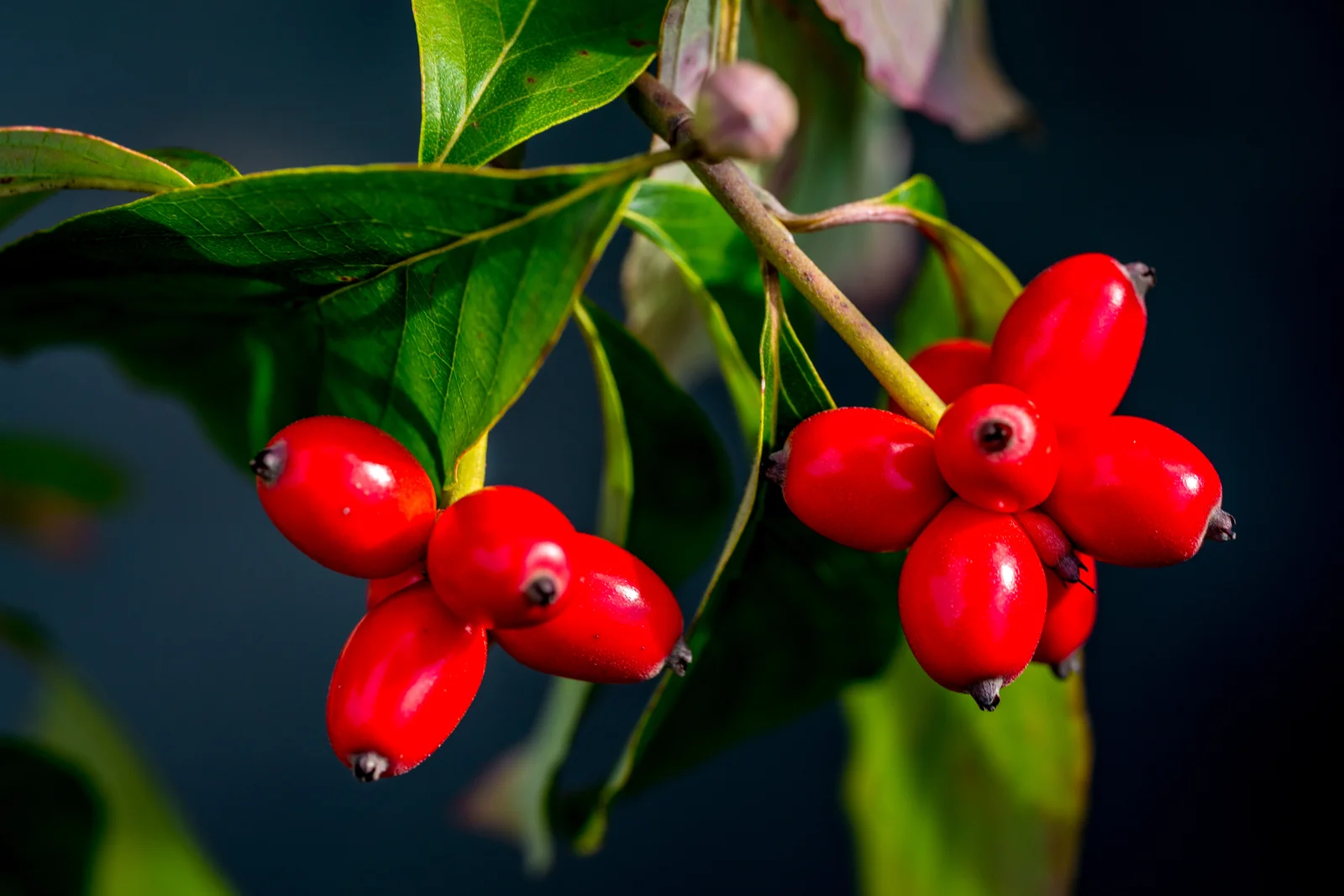
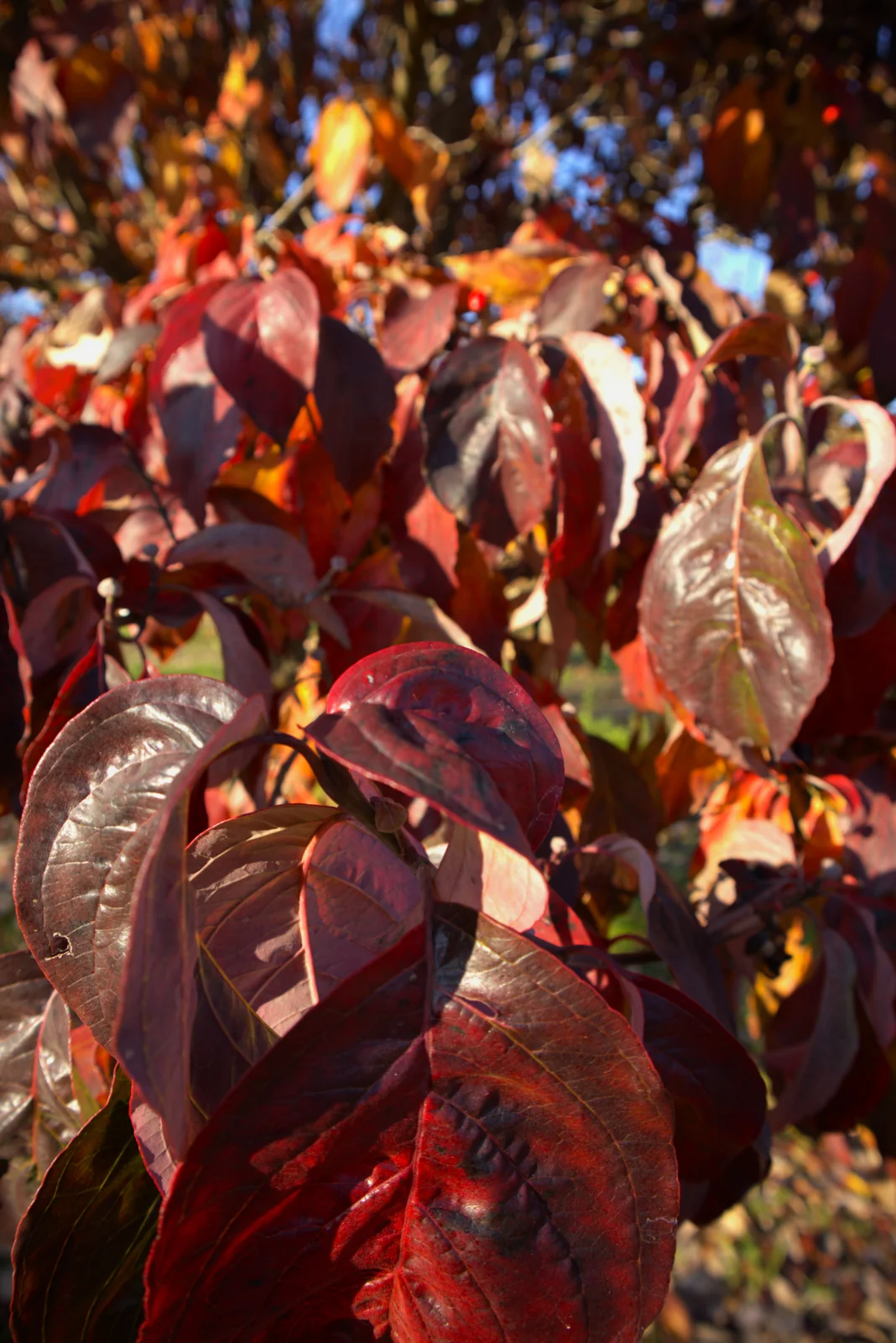
Ornamental performance rests on four white or pink petal-like bracts that open in April and May before leaf-out, forming a corolla-like involucre 8 to 10 centimetres across around the small true flowers. Oval dark green leaves turn red to reddish-purple in autumn, and glossy red drupes follow in late summer, valuable to birds and inedible to humans. The bark matures into small scaly plates with age.
Portuguese performance is constrained by the species' requirement for acidic, organically rich, moist but well-drained soils and protection from prolonged summer drought. The humid Minho and Douro (1200 to 1800 mm annual rainfall, granite and schist soils, mild summers near the coast) and the historic acid-soil estates of Sintra and Buçaco offer the appropriate frame. Performance is poor on the limestone-derived soils of Greater Lisbon, on the calcareous and sandy substrates of the Algarve, and under the continental summer heat of interior Alentejo, where it should not be specified.
Maintenance implications are non-trivial for a Portuguese project. Supplementary irrigation through the dry summer is required even after establishment in all but the wettest northern microclimates. The species is vulnerable to spot anthracnose, powdery mildew, and crown canker under fungal pressure, and it does not tolerate compacted urban soils, reflected pavement heat, or atmospheric pollution. Specifiers should treat it as a garden or estate subject, not a street alignment (arruamento) or urban praca candidate.
For sheltered acid-soil schemes in the north, often paired with native Atlantic understory species, Cornus florida delivers a defined spring and autumn event over a long useful life. The trade-off is site discipline: the species rewards correct placement and fails when specified outside its envelope.



Advice on this species
Want to know more about Cornus florida?
Tell us about your project and we'll advise you on this species — where it thrives, which size makes sense, and what to expect once planted.
- Produção própria
- Exemplares adultos
- Resposta em 1–2 dias
Sem compromisso · orçamento personalizado