

A spring-flowering small tree for cooler, moister Portuguese gardens
Flowering Dogwood ‘Rubra’ · Cornus florida ‘Rubra’
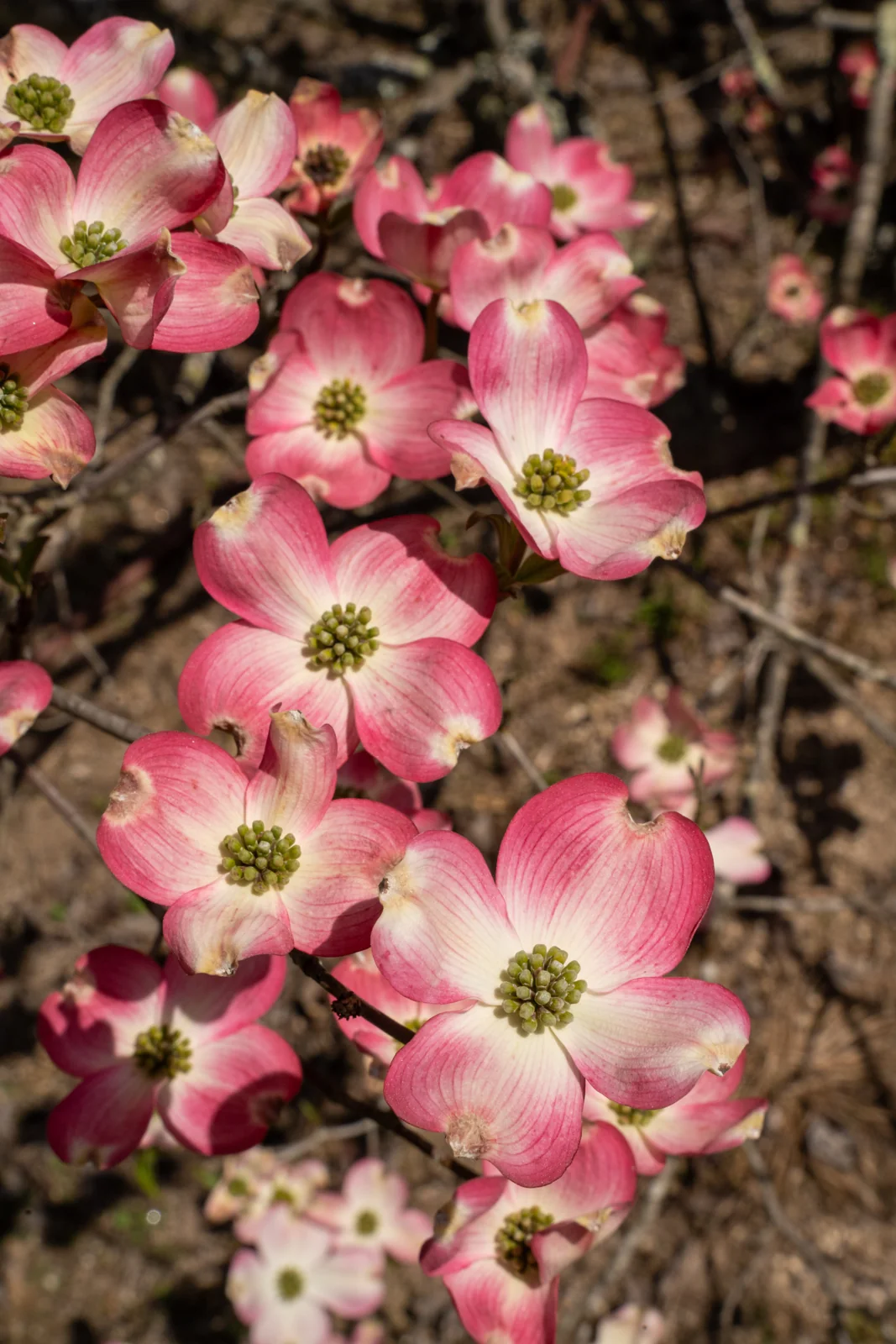
A small, slow deciduous tree specified for its rose-pink spring bract display and red autumn foliage. Suited to fertile, slightly acidic soils in humid northern Portugal, where its modest drought tolerance is best matched.
- Rose to scarlet-pink bracts before leaf-out, holding two to three weeks
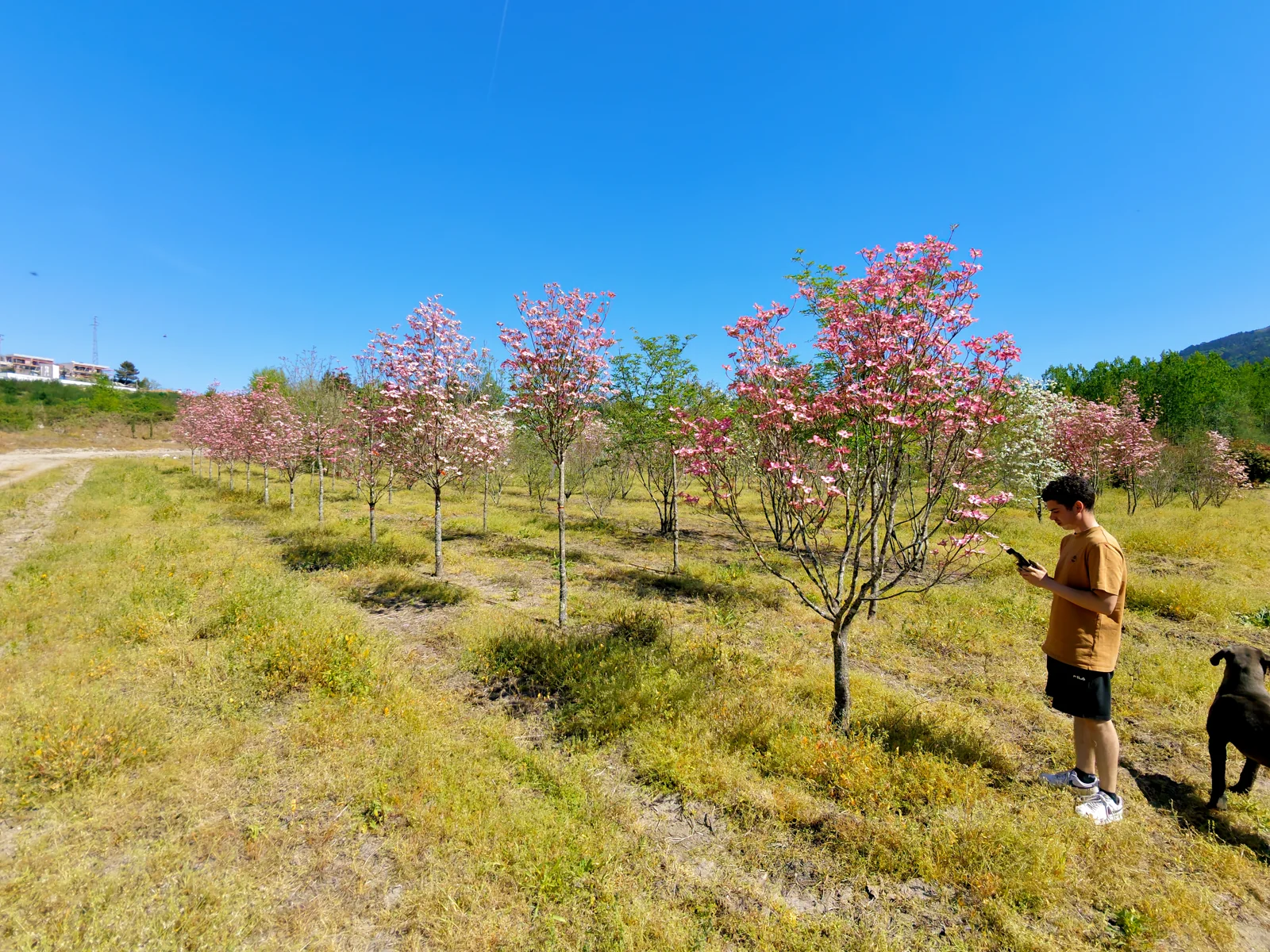
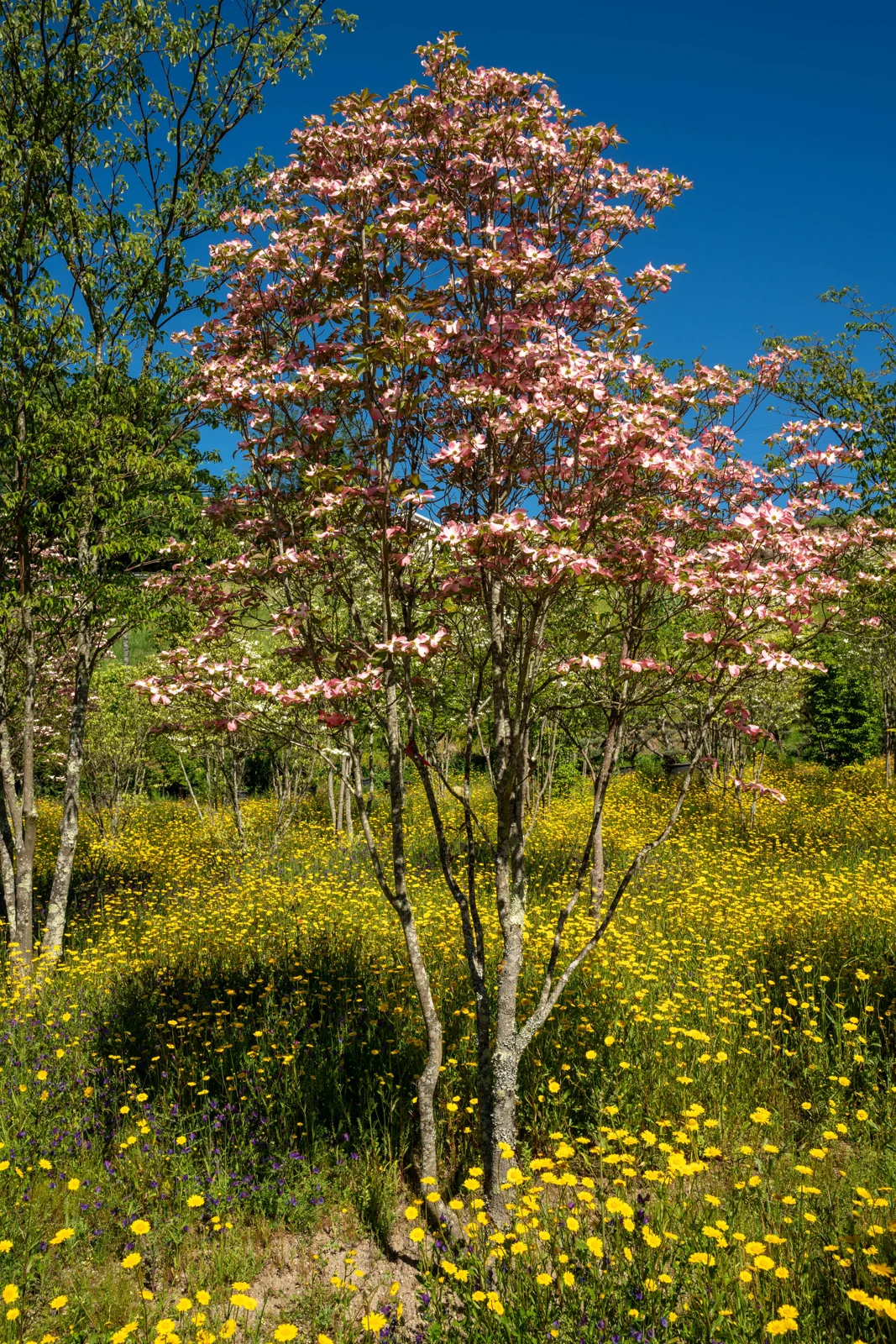
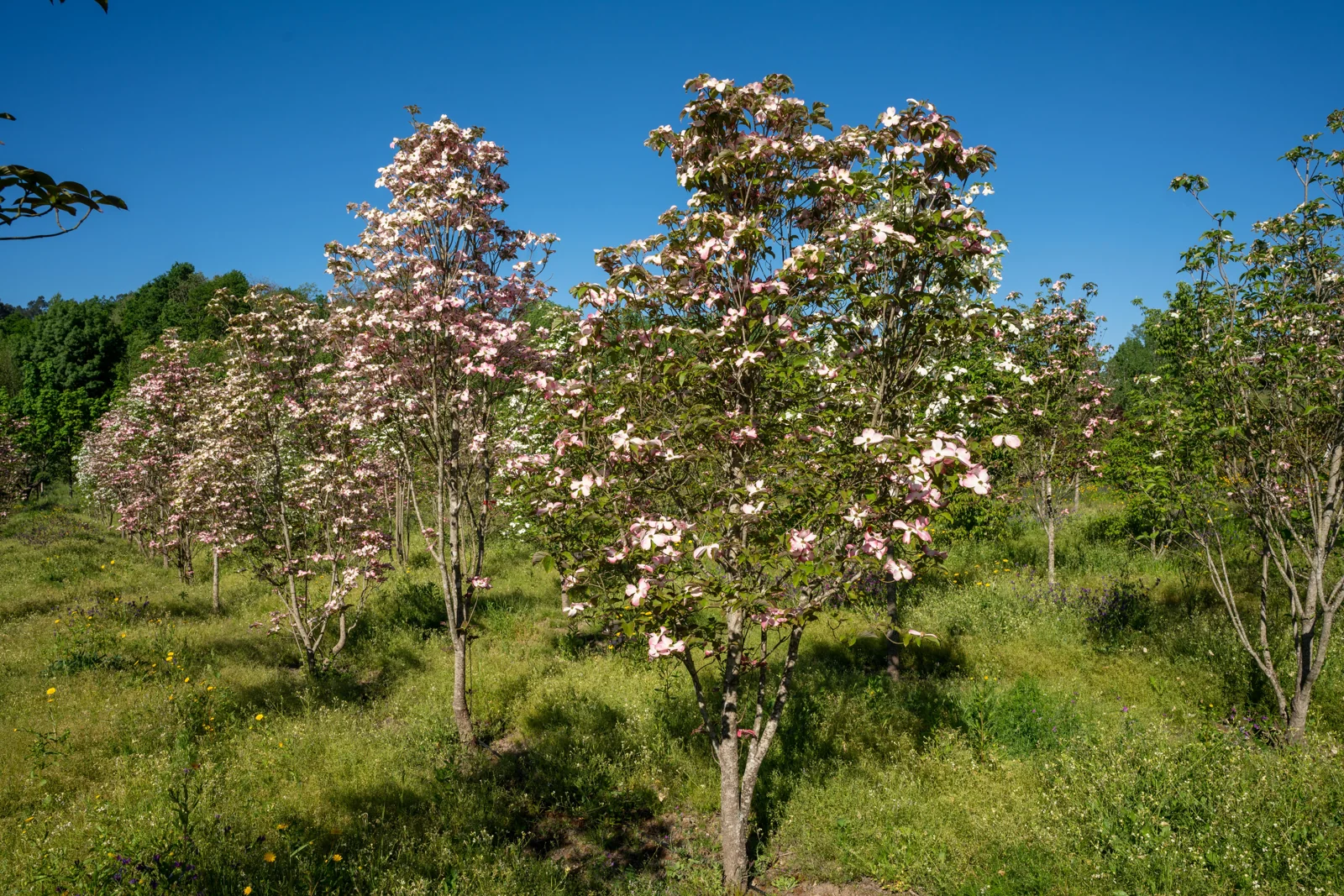
- Mature canopy of around six to eight metres within twenty years
- Red and purple autumn foliage holding well into October
Key Facts
About this Cultivar
Cornus florida 'Rubra' (corniso-florido) is a small, slow-growing deciduous tree reaching 6 to 8 metres tall and 4 to 6 metres wide in Portuguese cultivation, with a rounded, horizontally-branched crown that finishes lower than the canopy oaks of the montado. The cultivar is distinguished by four large rose-pink to rose-scarlet bracts enclosing the…
Read more
Show less
Cornus florida 'Rubra' (corniso-florido) is a small, slow-growing deciduous tree reaching 6 to 8 metres tall and 4 to 6 metres wide in Portuguese cultivation, with a rounded, horizontally-branched crown that finishes lower than the canopy oaks of the montado. The cultivar is distinguished by four large rose-pink to rose-scarlet bracts enclosing the inconspicuous true flowers, opening before leaf-out in early spring and persisting for several weeks. Oval green leaves turn red to purple in autumn, and the small red drupes that follow are taken by birds through winter.
The species occupies a feature-specimen role rather than a structural one. It functions as a focal tree in residential gardens, parque or quinta entrances, and small public spaces, and reads well in mixed woodland-edge planting alongside medronheiro (Arbutus unedo) or as an understorey element below taller framework trees. It will not perform as a street alignment specimen and is not a substitute for plátano or tília in that role.
Performance is calibrated to the Atlantic northwest. Field observation in Amarante (approximately 950 mm annual rainfall, mild winters, dry summers) confirms reliable behaviour on fertile, fresh, well-drained, slightly acidic soils in full sun or light shade. The cultivar tolerates urban air pollution well and withstands the winter minima of northern Portugal without difficulty.
Drought tolerance is low. The species is not recommended for unirrigated Algarve or interior Alentejo schemes, where prolonged summer heat and dry calcareous soils exceed its limits. On Lisbon and Greater Porto projects with reliable irrigation and a partially shaded aspect, performance is acceptable.
Maintenance is light: summer irrigation during establishment and in extended dry periods, formative pruning only, and routine monitoring for the powdery mildew and leaf-spot pressure that affects the species under humid conditions. Litter is minimal and the root system poses no concern near paving.
Advice on this species
Want to know more about Cornus florida 'Rubra'?
Tell us about your project and we'll advise you on this species — where it thrives, which size makes sense, and what to expect once planted.
- Produção própria
- Exemplares adultos
- Resposta em 1–2 dias
Sem compromisso · orçamento personalizado