

A variegated flowering dogwood for sheltered Portuguese gardens
Flowering Dogwood ‘Rainbow’ · Cornus florida ‘Rainbow’
A small deciduous feature specimen with year-round foliage interest, 'Rainbow' is specified for sheltered residential schemes and courtyard gardens in the humid Minho, Douro, and Greater Porto belts where atlantic rainfall supports the species.
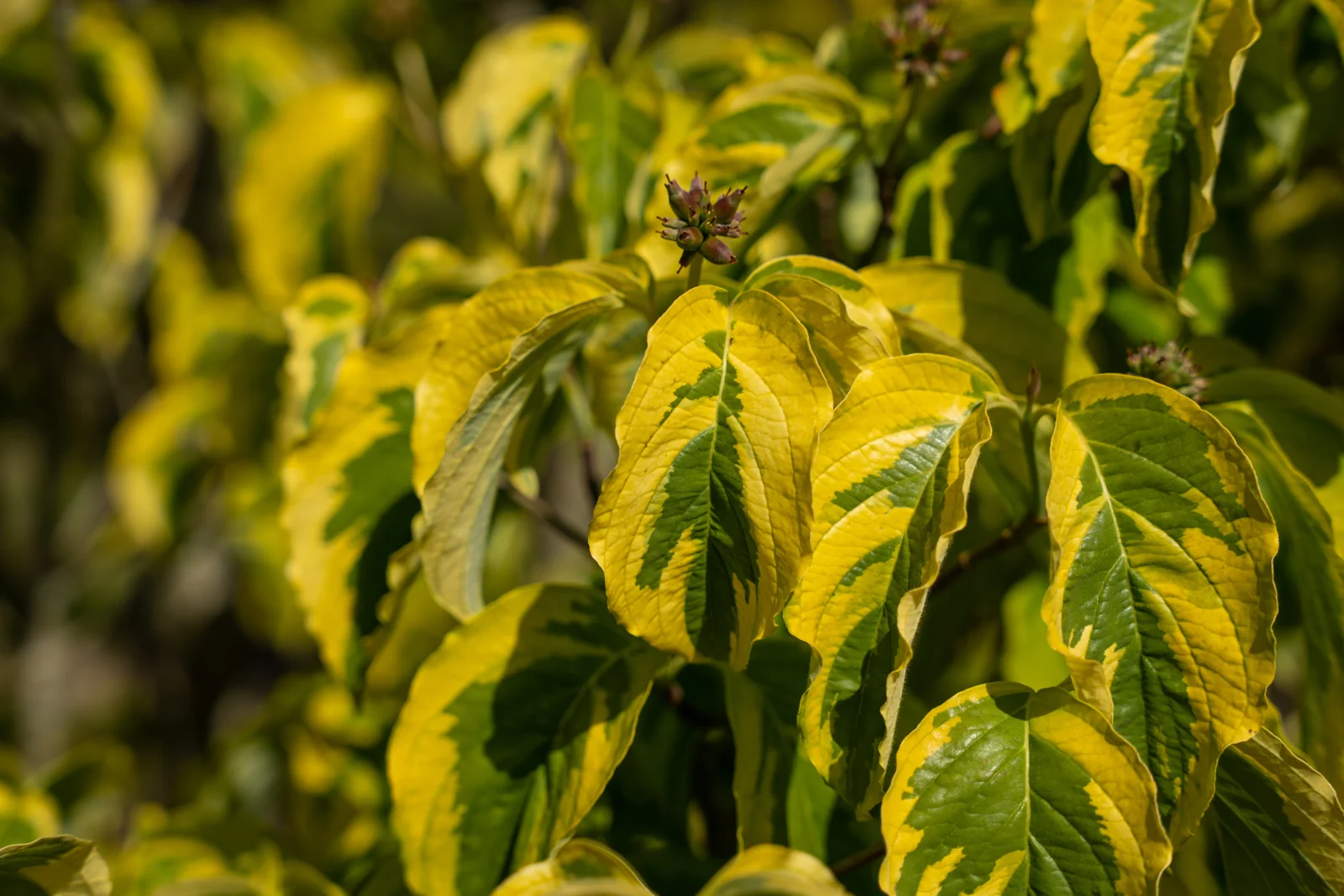
- Cream-edged variegated foliage lights the canopy through the growing season
- Star-shaped white spring bracts open before the leaves emerge
- Deep red and purple autumn colour extends the ornamental year
Key Facts
About this Cultivar
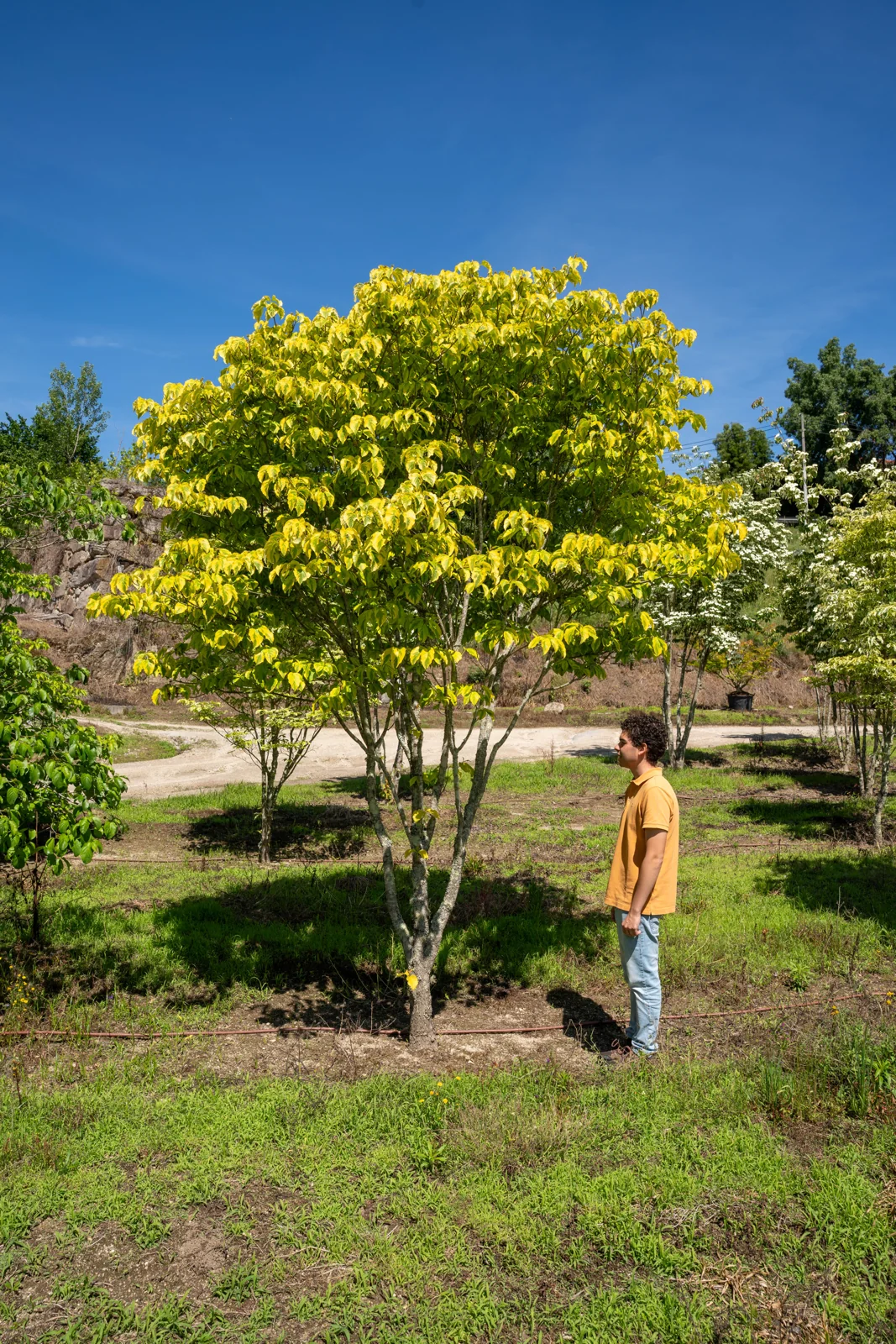
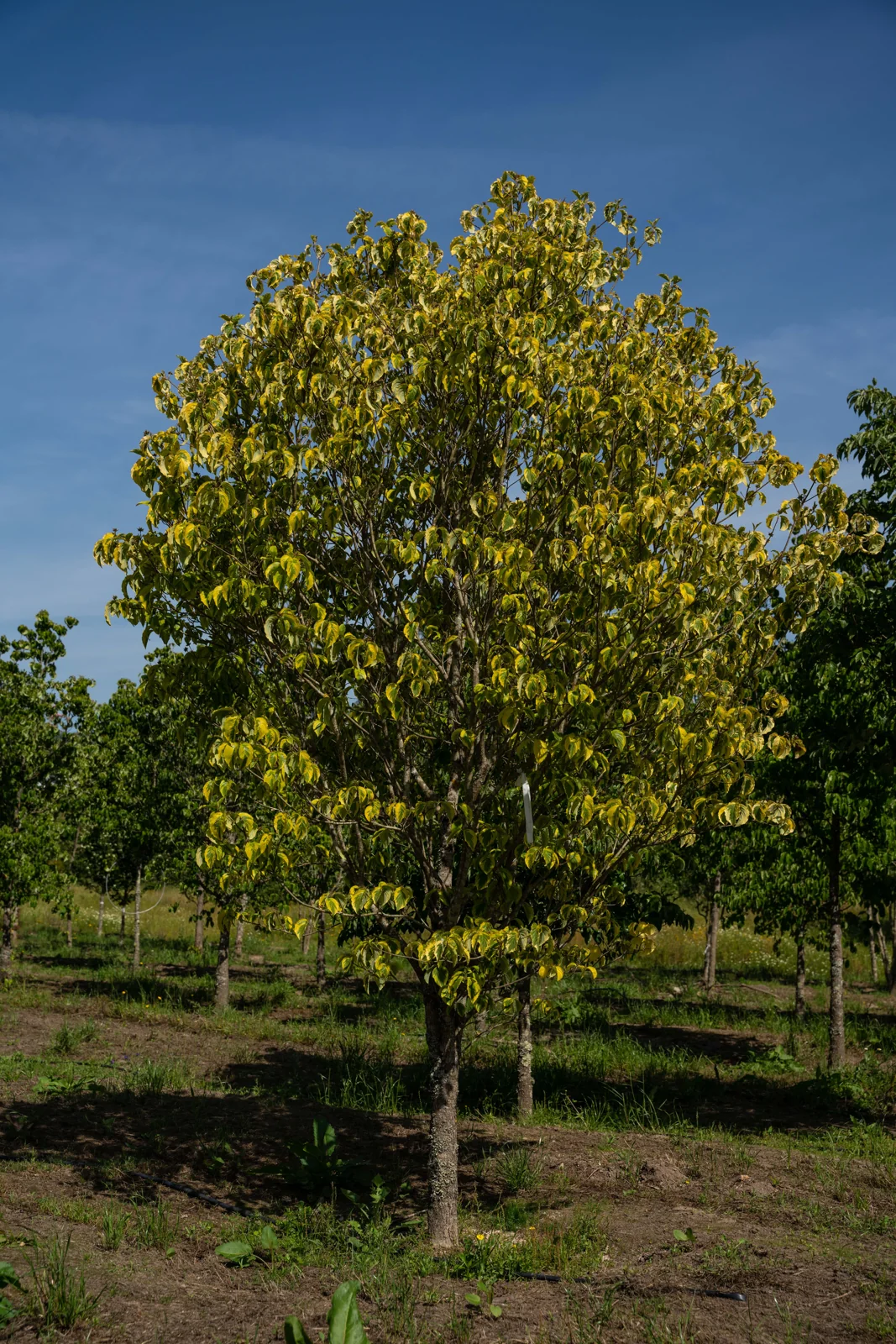
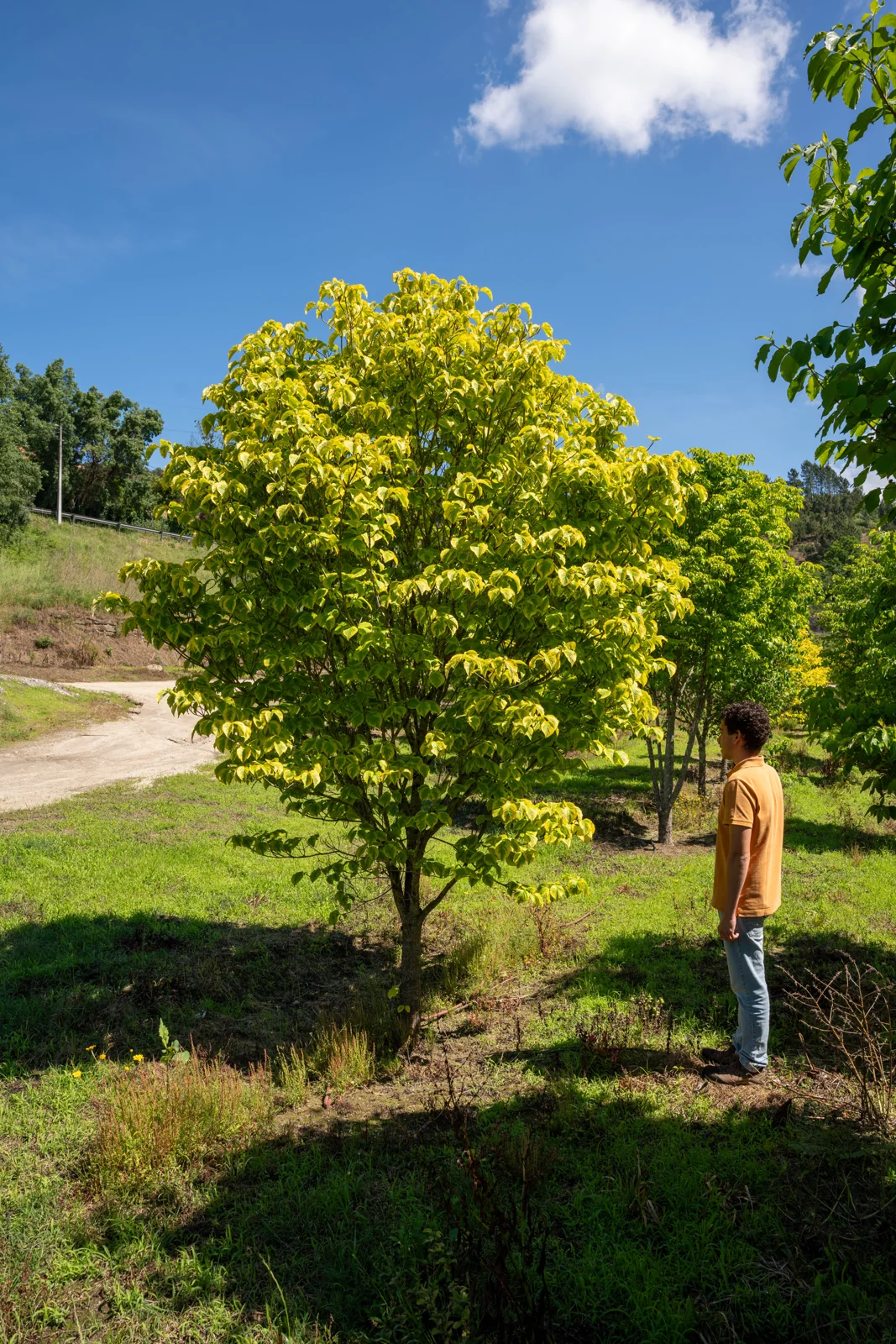
The cultivar reaches 4 to 6 m in height and 3 to 5 m in spread in Portuguese cultivation, forming a rounded, well-structured crown on a low-branched single or multi-stem framework. Growth is slow to moderate, which places it as a feature specimen or secondary canopy element rather than a framework tree, and which makes the field-grown specimen the practical…
Read more
Show less
The cultivar reaches 4 to 6 m in height and 3 to 5 m in spread in Portuguese cultivation, forming a rounded, well-structured crown on a low-branched single or multi-stem framework. Growth is slow to moderate, which places it as a feature specimen or secondary canopy element rather than a framework tree, and which makes the field-grown specimen the practical route to immediate landscape effect. In a project schedule (caderno de encargos) it reads as a small ornamental tree for focal positions near terraces, courtyards, and entrance sequences.
Foliage is the cultivar's defining trait. Leaves carry cream to yellow margins against a green centre through the growing season, holding visual interest from leaf-out to autumn, when the same foliage turns deep red to purple. Spring brings the species' four white petal-like bracts opening flat around the small true flowers, before the canopy closes for summer.
Performance in Portugal is climate-dependent and the specifier should treat it as a tree for the humid north. The species has low drought tolerance and low salt tolerance, with a root system that asks for fresh, slightly acidic, well-drained soil rich in organic matter. It suits the Minho, the Douro Litoral, and sheltered Greater Porto gardens; in Greater Lisbon it requires irrigation and afternoon shade, and it is not advisable for the coastal Algarve or the interior Alentejo where summer heat and prolonged drought exceed its tolerance.
Maintenance is low once established. Formative pruning is light, and supplementary irrigation through the first two to three summers is the principal establishment requirement. The species can be susceptible to anthracnose, powdery mildew, and leaf spot under stress, so site selection (partial shade, free-draining soil, no compaction) is the primary fitossanitário control. The tree does not tolerate paved-area compaction or atmospheric pollution and should not be specified as a street tree.
Advice on this species
Want to know more about Cornus florida 'Rainbow'?
Tell us about your project and we'll advise you on this species — where it thrives, which size makes sense, and what to expect once planted.
- Produção própria
- Exemplares adultos
- Resposta em 1–2 dias
Sem compromisso · orçamento personalizado