

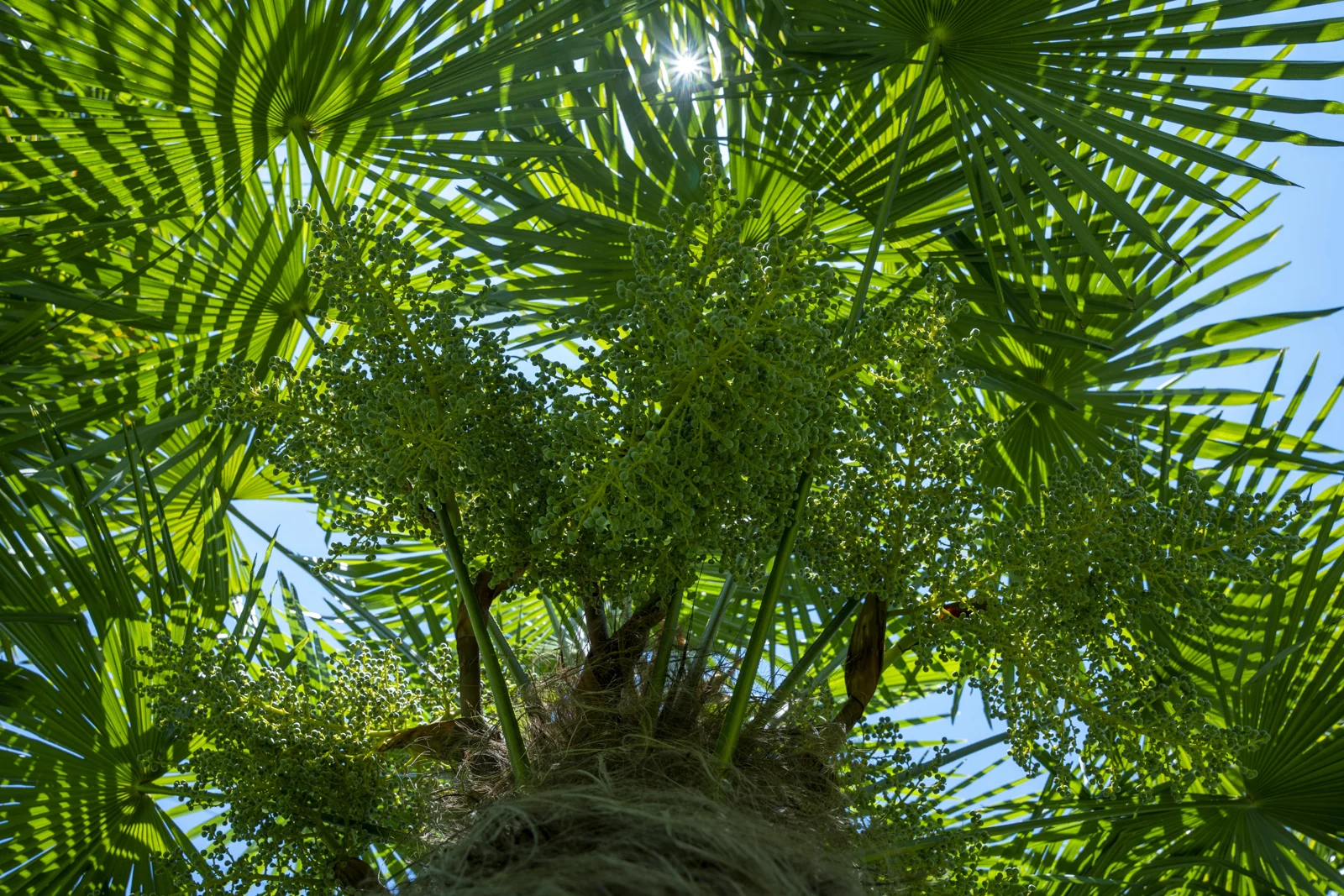
An evergreen palm for sheltered Portuguese gardens
Chusan Palm · Chamaerops excelsa
A structural evergreen for coastal and urban schemes that need a vertical specimen with low litter, the Chusan palm is still listed in Portuguese trade as Chamaerops excelsa or Palmeira excelsa.
- Evergreen fan-leaved crown carried above a fibrous, sculptural trunk
- Mature height of six to twelve metres, slow and steady
- Hardy well below freezing once roots are established
About this Species
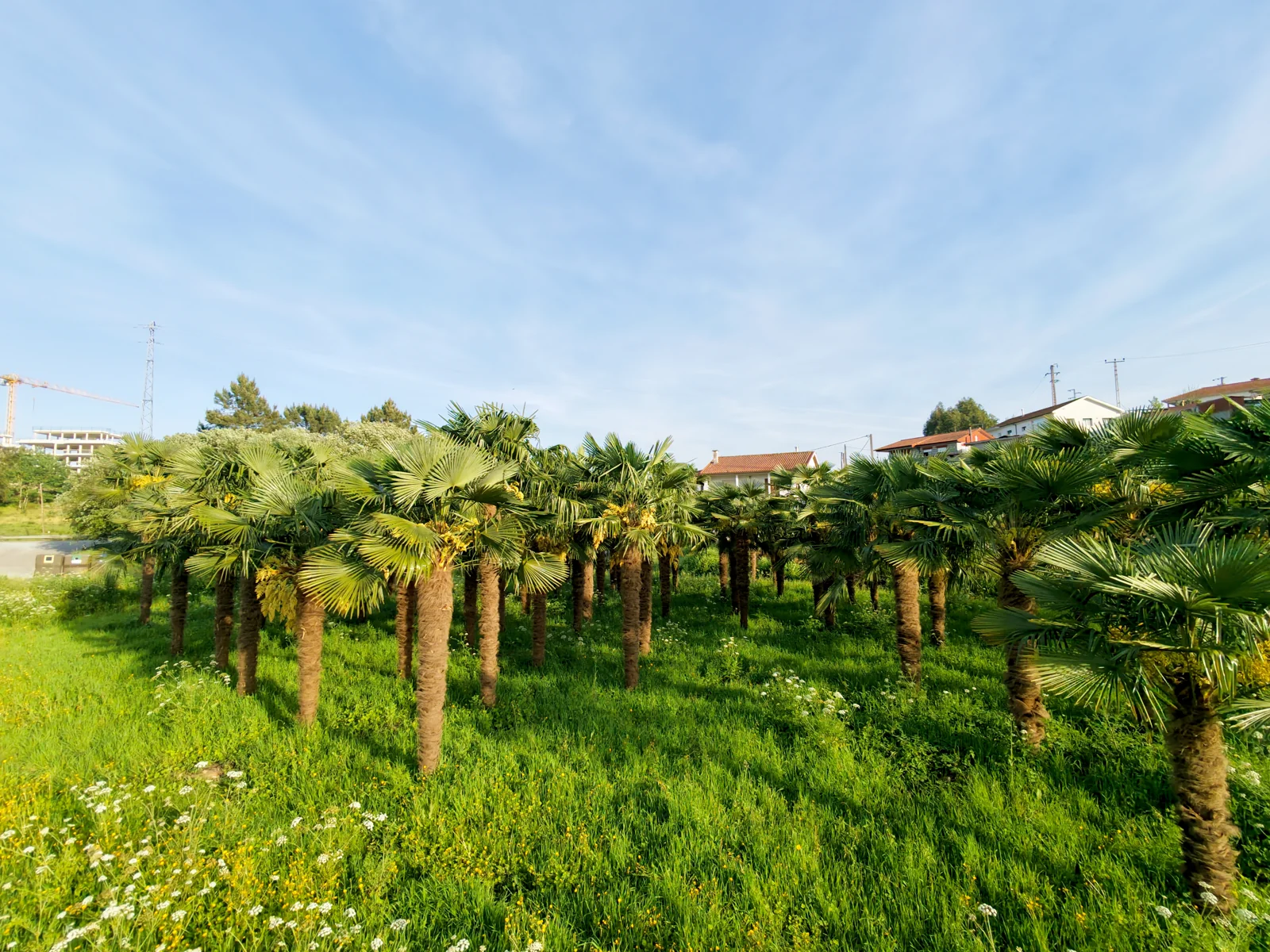
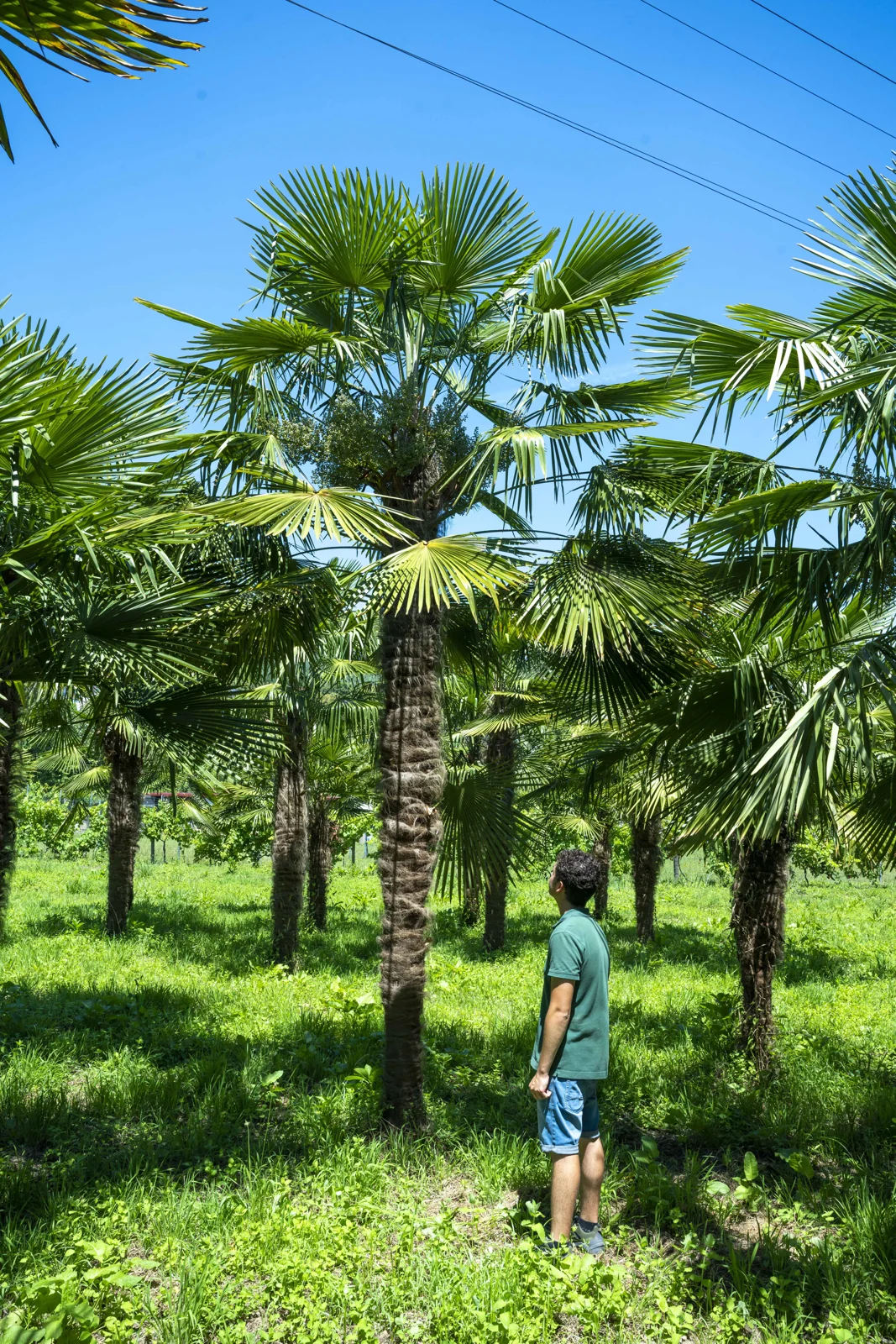
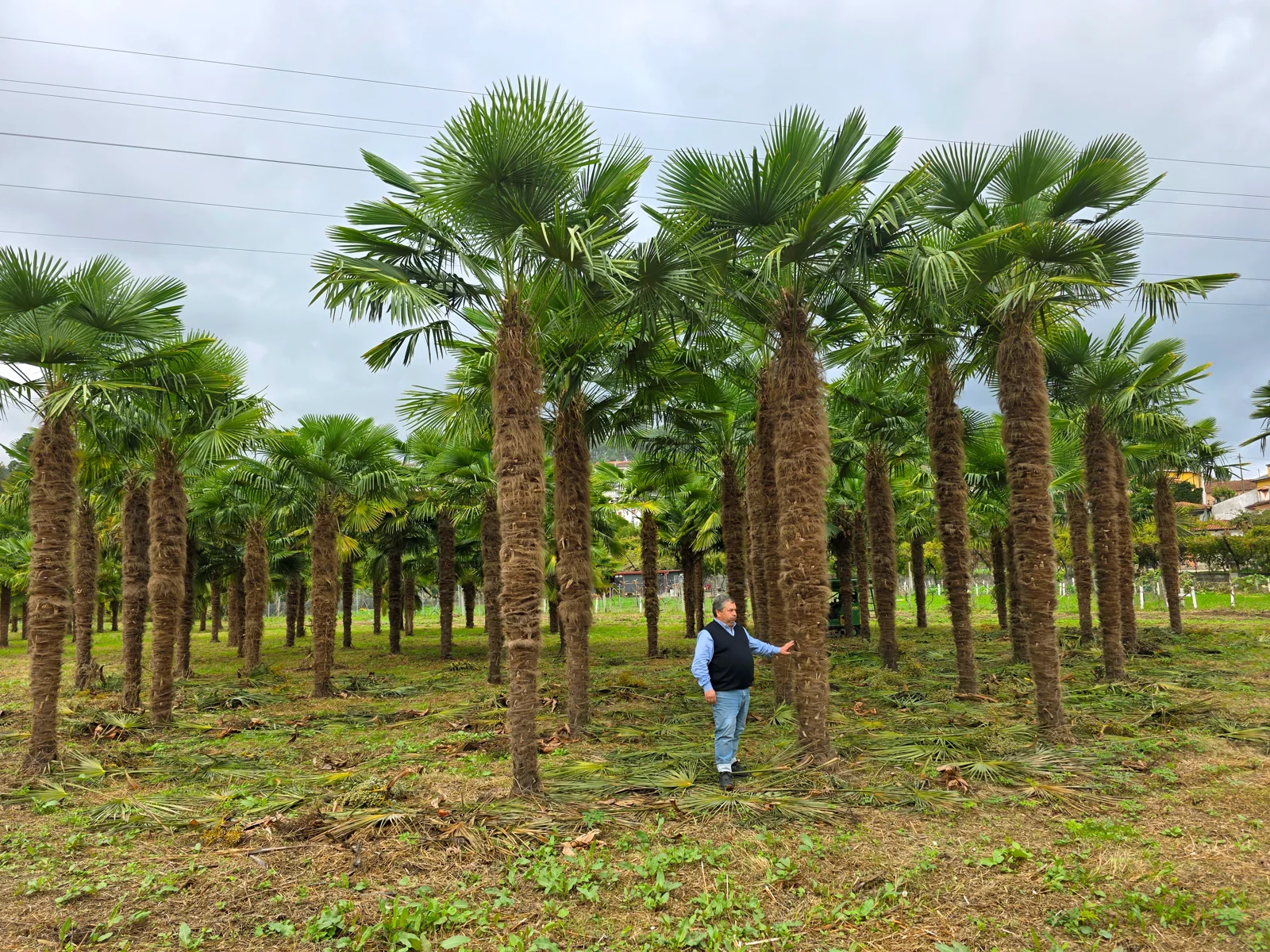
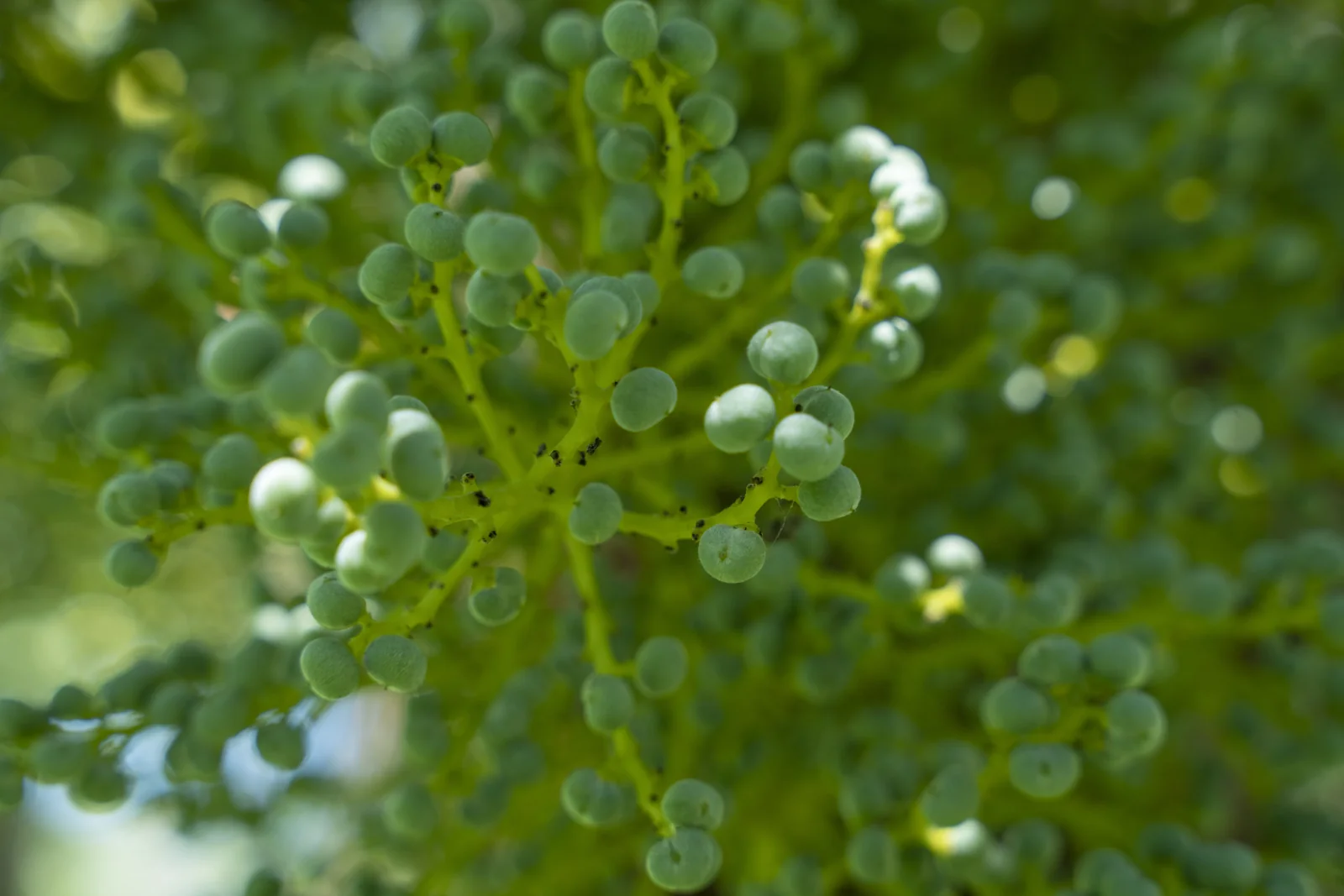
The species carries a single upright stem of 6 to 12 m in mature cultivation, sheathed in persistent brown fibre, and a crown of stiff fan-shaped leaves 60 to 90 cm across. Growth is slow, which keeps proportions stable for years once the specimen is set. Yellow inflorescences appear in May and June; the species is dioecious, so fruit set requires a male…
Read more
Show less
The species carries a single upright stem of 6 to 12 m in mature cultivation, sheathed in persistent brown fibre, and a crown of stiff fan-shaped leaves 60 to 90 cm across. Growth is slow, which keeps proportions stable for years once the specimen is set. Yellow inflorescences appear in May and June; the species is dioecious, so fruit set requires a male and a female plant in proximity.
Hardiness extends to a low temperature limit near minus 15 degrees C on well-drained ground, which places the species across the full Portuguese range from coastal Algarve to the cooler Minho. Heat tolerance is high and salt tolerance is moderate, so the palm retains form on the Atlantic coastal strip and on calcareous sandy soils. Drought tolerance is moderate, not absolute: once established, the plant accepts the prolonged dry summer characteristic of Iberian conditions, with an establishment irrigation cycle advisable in the driest interior sites.
In a Portuguese specification the palm occupies a role that neither sobreiro (Quercus suber) nor pinheiro-manso (Pinus pinea) can fill: a strict vertical, evergreen throughout the year, narrow in plan, suited to repeat planting along an arruamento, to a praca composition, or to container use on terraces and roof gardens where weight and root volume are constrained. Specifiers also use it as a feature specimen in the Algarve quinta and the historic gardens around Sintra, where palm character is part of the established design vocabulary.
Maintenance is undemanding. The fibrous trunk requires no pruning; senescent leaves either persist as a skirt or are removed annually for a cleaner profile, with minimal litter implication on paved areas. Root behaviour is restrained and pavement-friendly, and the species shows good resistance to the common pest and disease pressures recorded in Portuguese palm cultivation. Field-grown in Amarante (approximately 950 mm annual rainfall, mild winters, dry summers) provides a useful reference point for performance across most Portuguese sites.



Advice on this species
Want to know more about Chamaerops excelsa?
Tell us about your project and we'll advise you on this species — where it thrives, which size makes sense, and what to expect once planted.
- Produção própria
- Exemplares adultos
- Resposta em 1–2 dias
Sem compromisso · orçamento personalizado