

A small flowering tree for the Portuguese spring garden
Judas Tree · Cercis siliquastrum
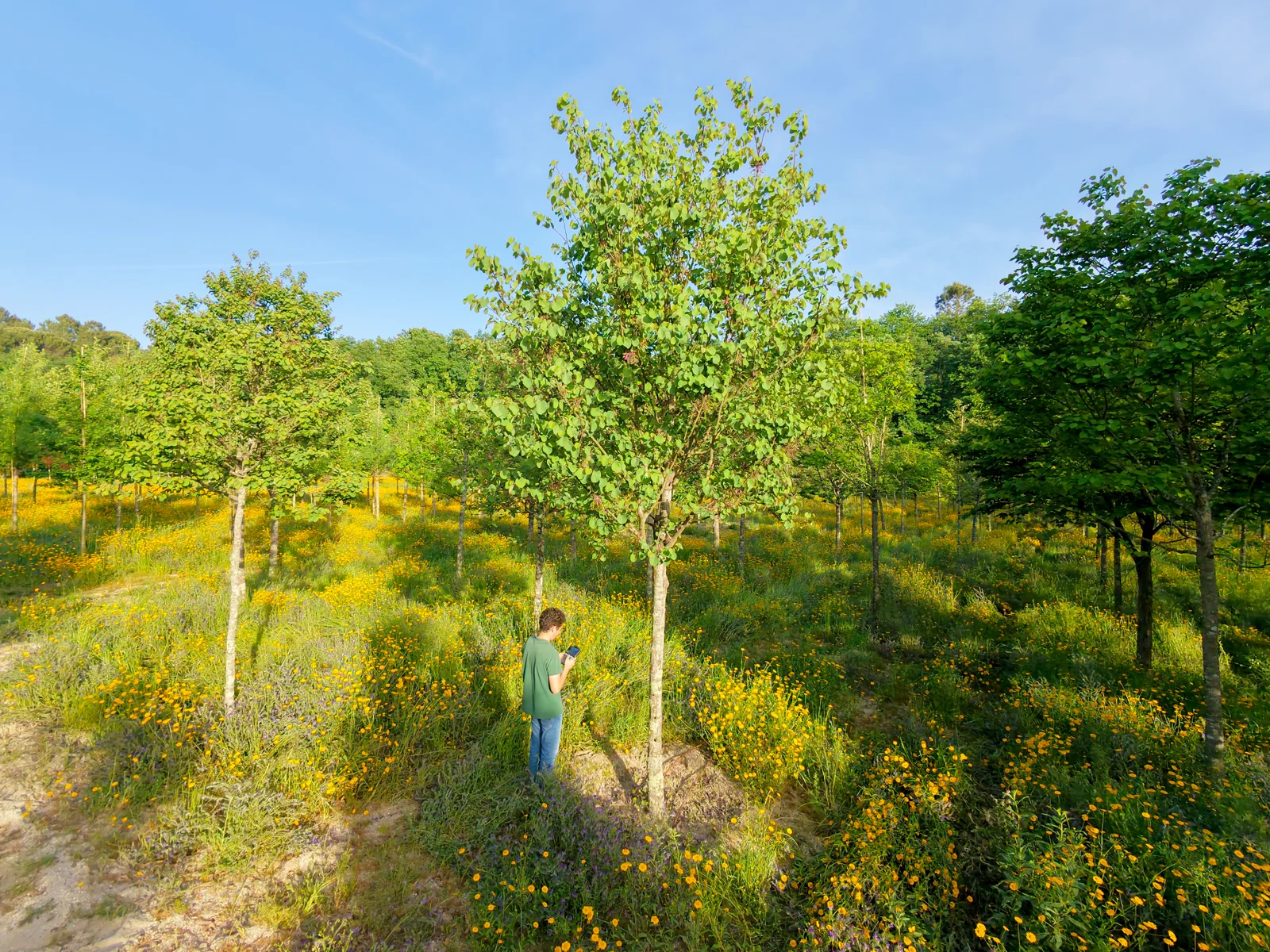
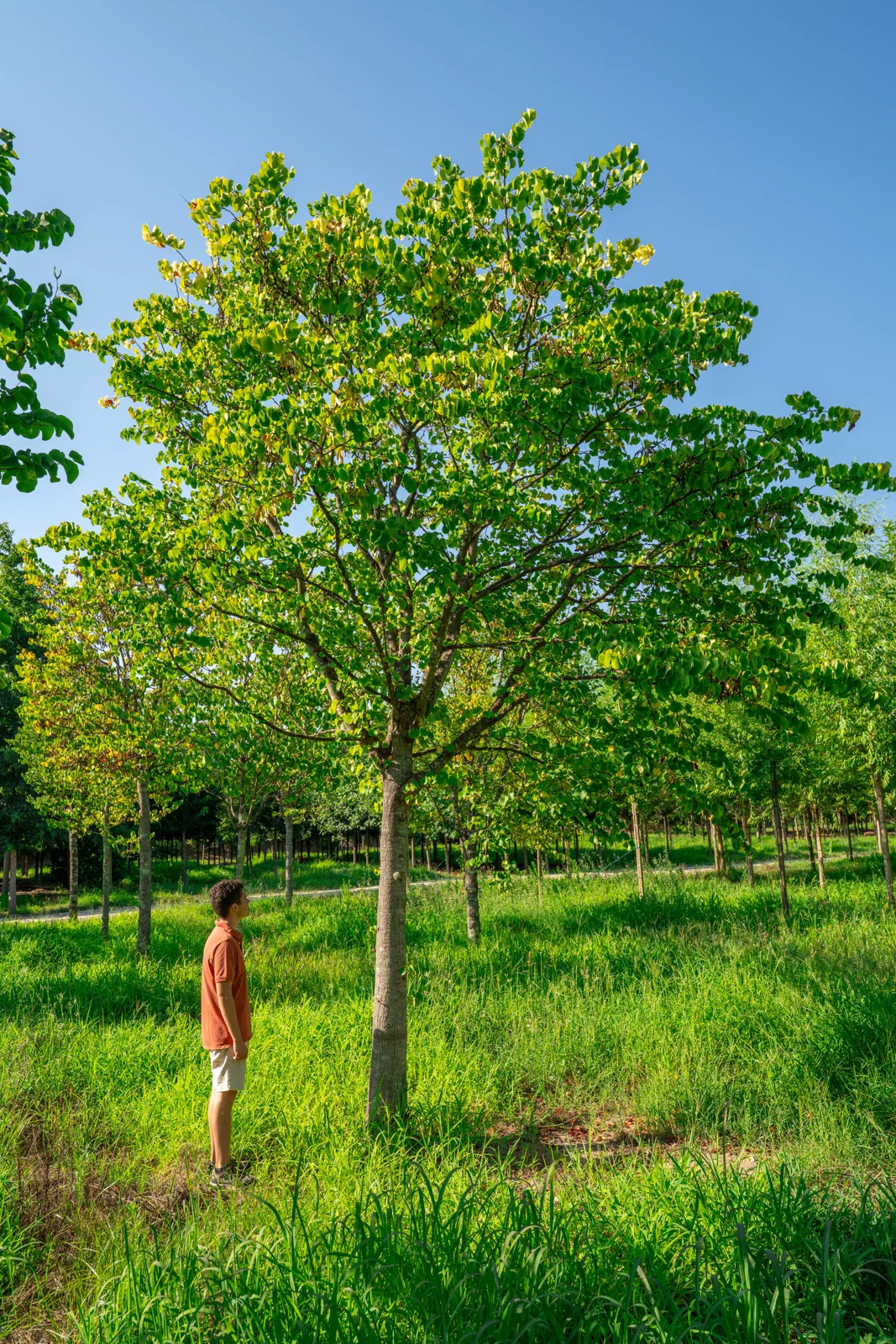
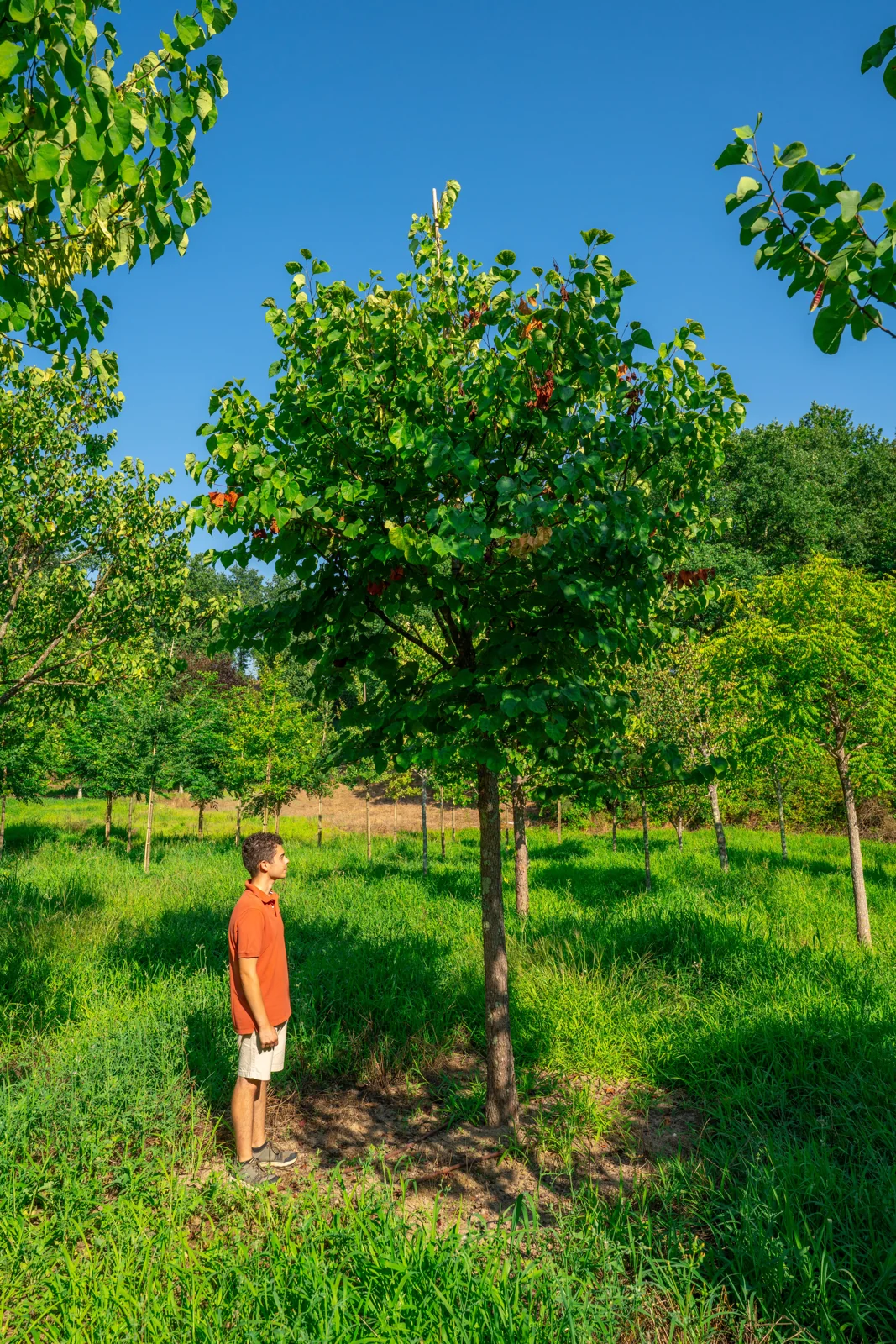
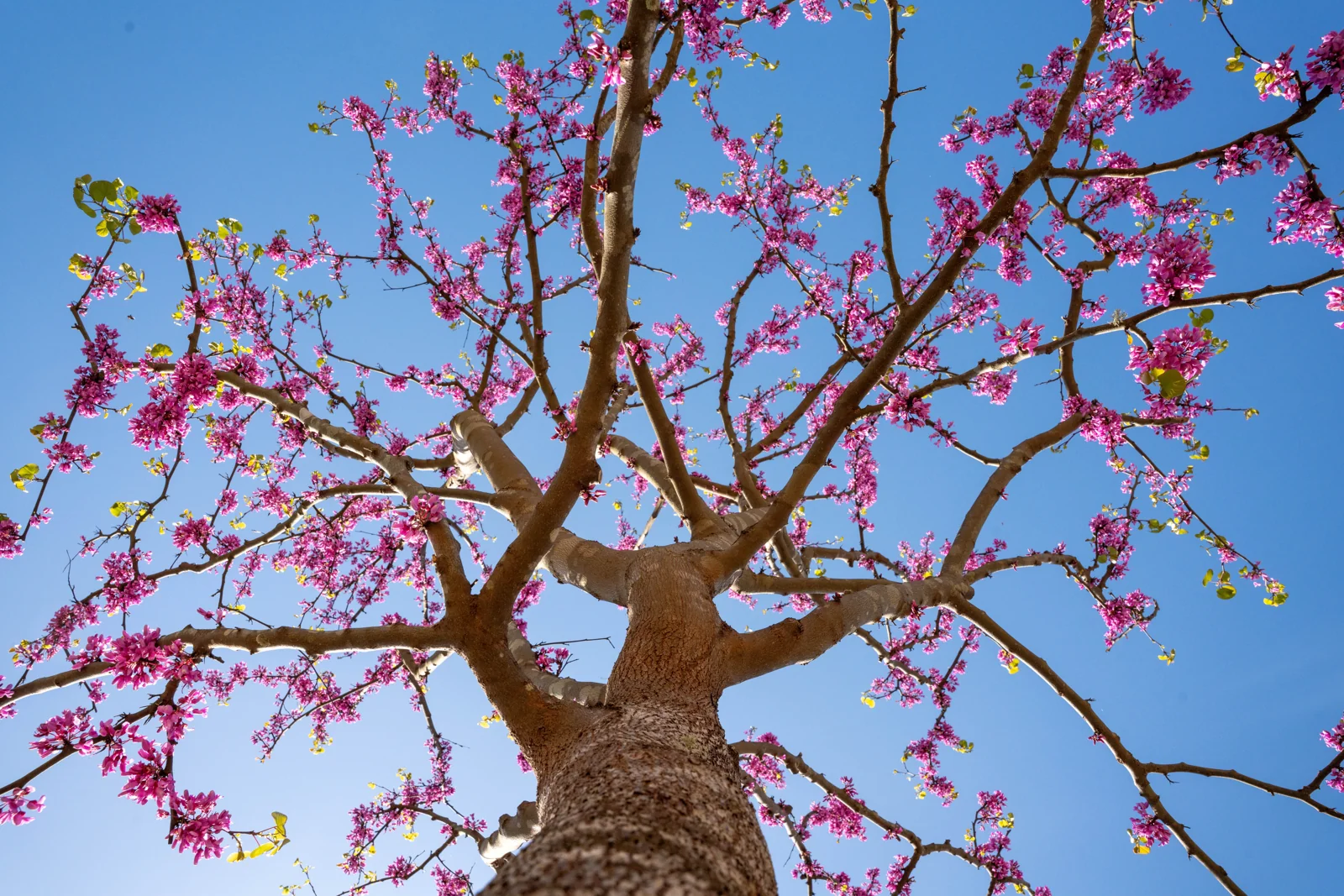
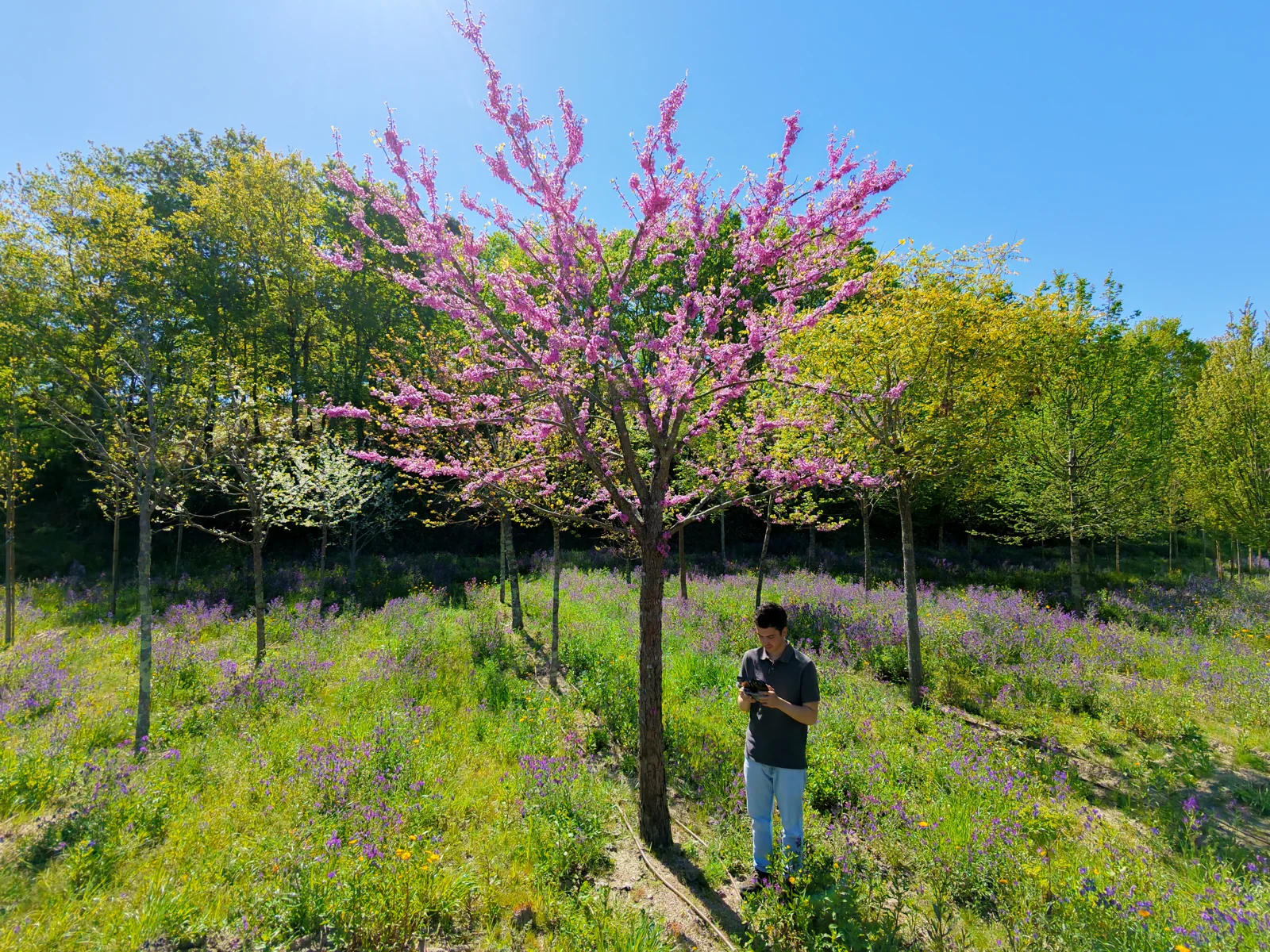
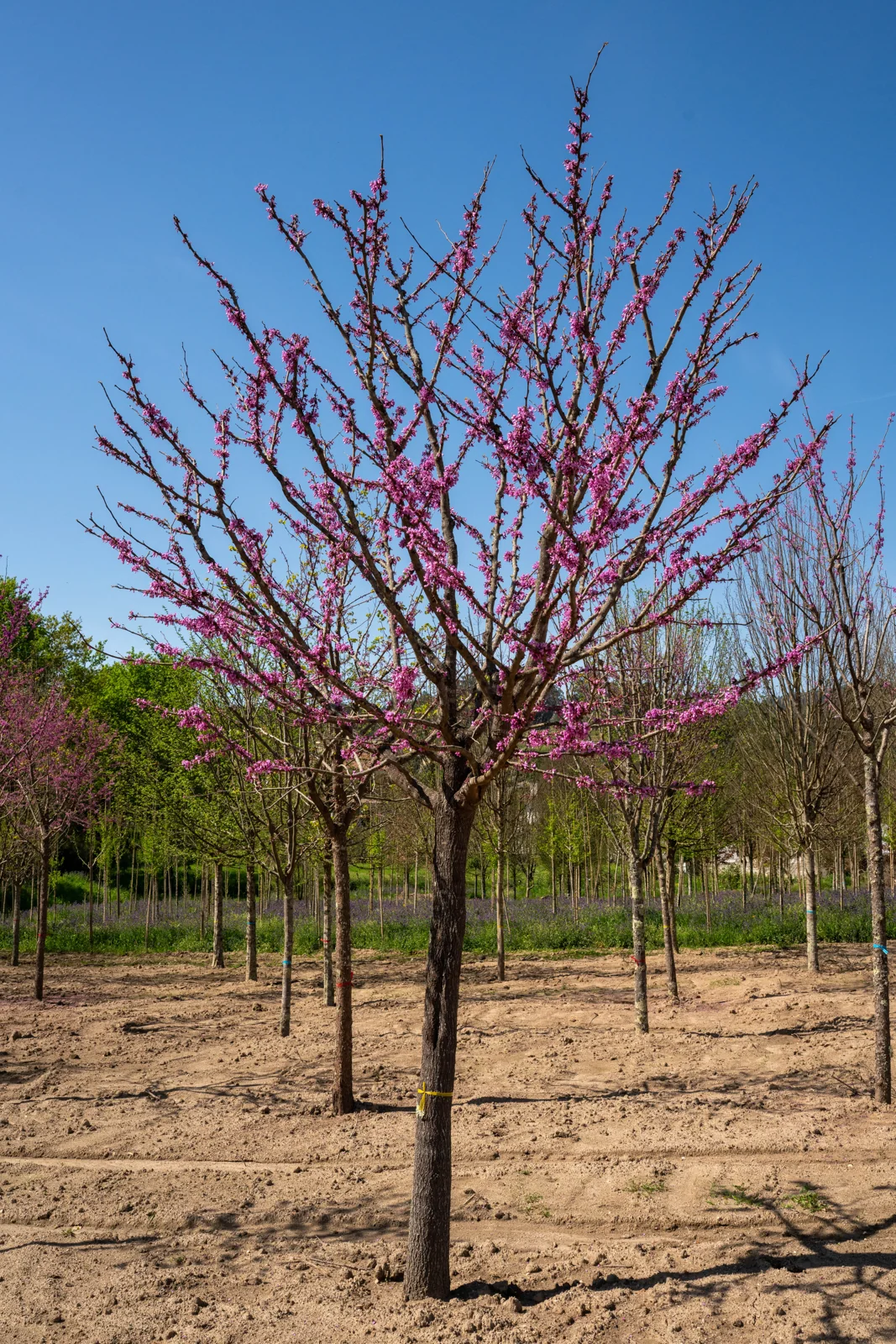
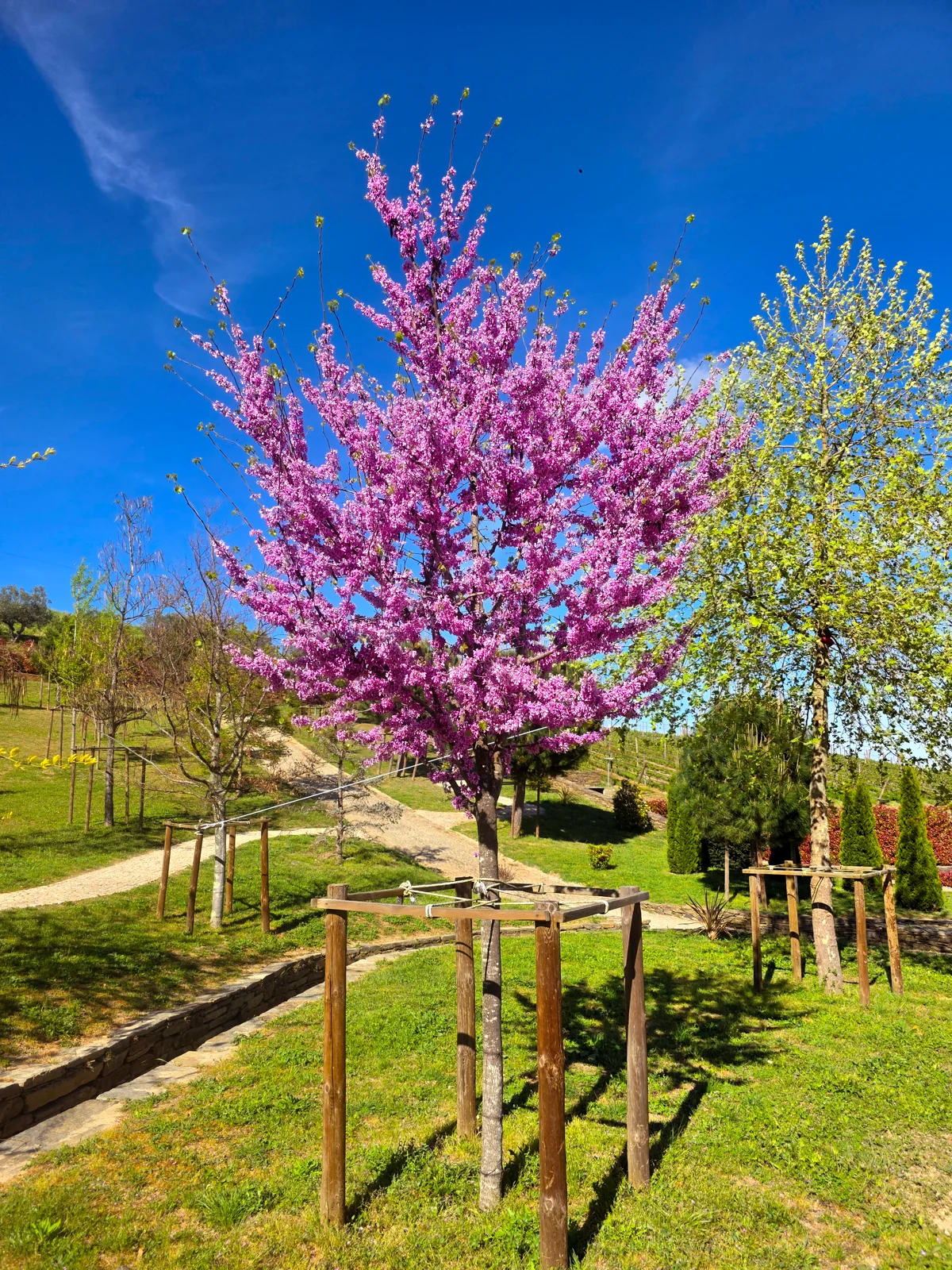
A small deciduous tree, five to ten metres at maturity, the olaia is specified in Portuguese schemes as a feature specimen for its rose-purple flowering on bare wood in April, before the cordate foliage emerges.
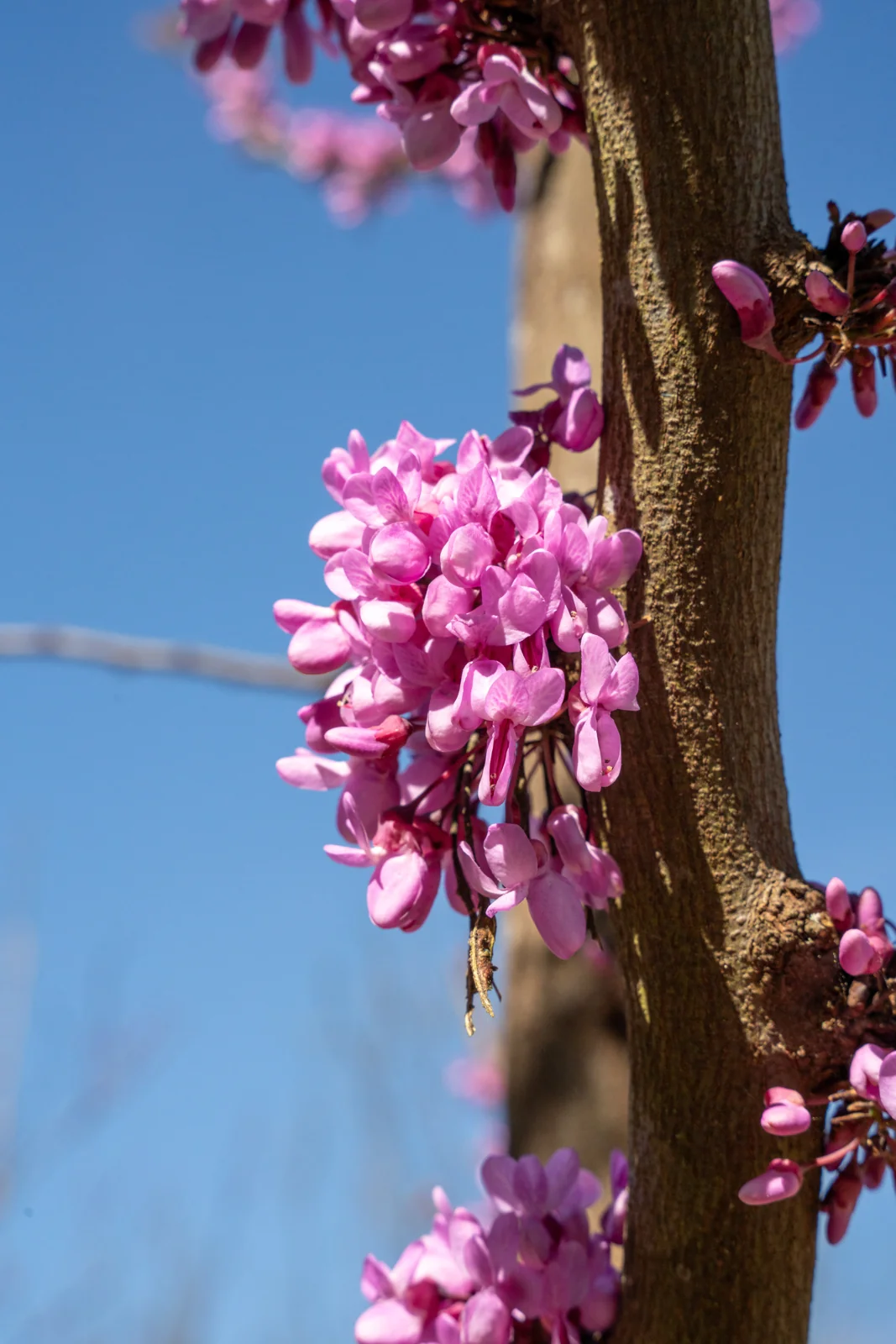
- Profuse rose-purple bloom on bare wood in April
- Reliable across the central Algarve, Lisbon coast and Alentejo interior
- Self-sufficient on irrigation once established through three summers
About this Species
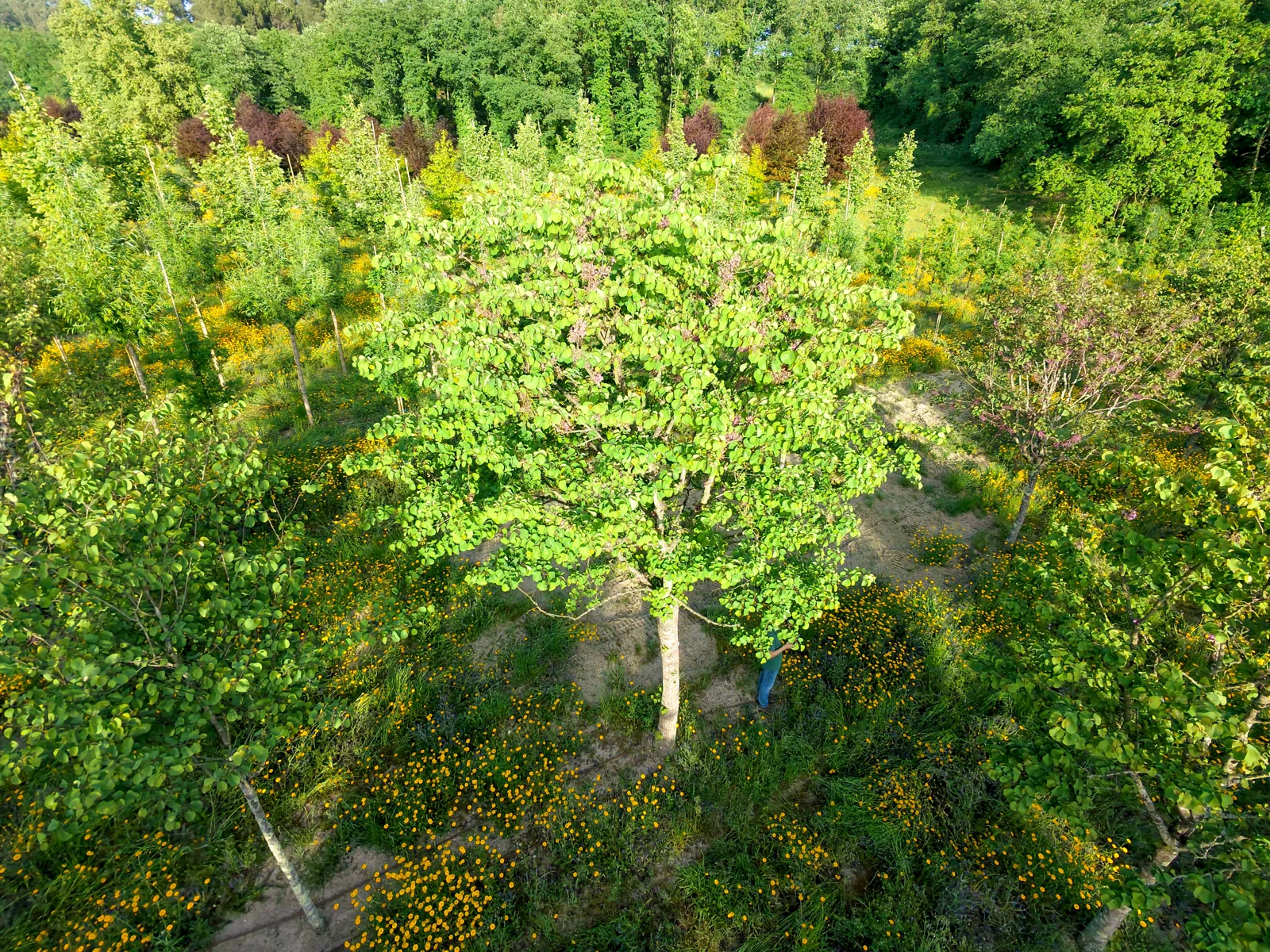
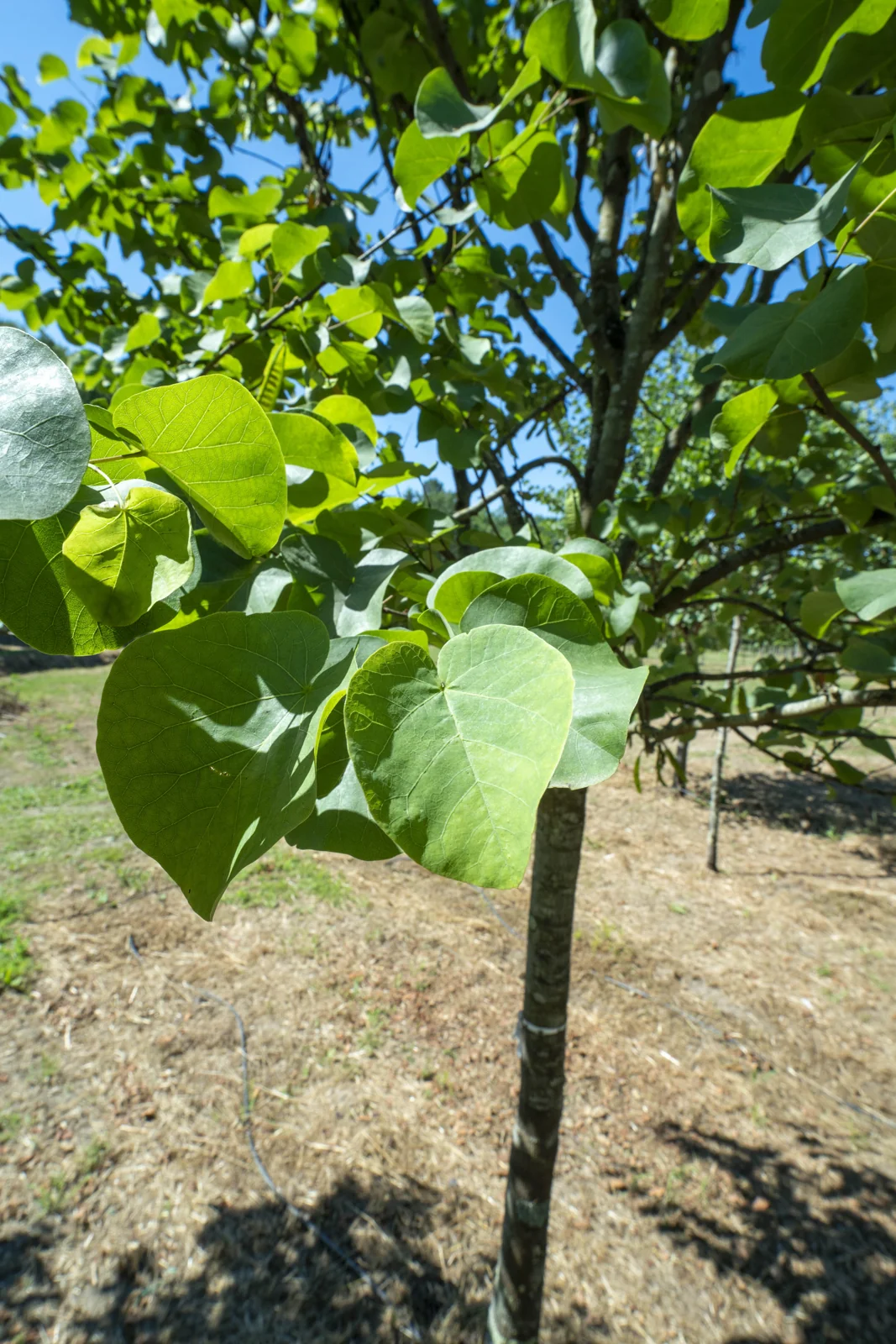
The olaia reaches five to ten metres in height and spread, with a rounded crown that is frequently multi-stemmed. Flowering occurs in April on year-old wood, with pea-shaped rose-purple to pink blooms appearing directly on the branches and trunk before the cordate, bronze-red foliage emerges. Summer foliage matures to deep green and turns yellow in autumn;…
Read more
Show less
The olaia reaches five to ten metres in height and spread, with a rounded crown that is frequently multi-stemmed. Flowering occurs in April on year-old wood, with pea-shaped rose-purple to pink blooms appearing directly on the branches and trunk before the cordate, bronze-red foliage emerges. Summer foliage matures to deep green and turns yellow in autumn; flattened purple pods follow and persist into winter. Growth is medium and the tree functions as a feature specimen or in small groups along a praça or alameda, rather than as a structural framework tree.
The species is native to the eastern Mediterranean and is long established in Portuguese horticulture, present in nineteenth-century estate plantings around Lisbon and Sintra. It performs across the warm, summer-dry zones of the country: urban Lisbon on limestone-derived soils, the calcareous Algarve, and the deep schist and alluvial soils of the interior Alentejo, where summers above forty degrees Celsius are tolerated once the tree is established. Drought tolerance is high in these conditions, supported by a deep root system, though a single establishment irrigation cycle is advisable in the first two summers on dry interior sites.
Drainage governs site selection more than rainfall. The species requires free-draining soils and will not tolerate waterlogging or heavy clay that retains winter moisture, which limits its use on poorly drained sites in the humid Minho and Douro. Salt tolerance is low, so coastal exposures with regular spray are unsuitable; sheltered Algarve quintas inland of the immediate shoreline are not affected. The tree prefers full sun and accepts partial shade as an understory specimen in woodland margins.
Cercis siliquastrum resents root disturbance and is best planted young and undisturbed, which makes torrão integrity at planting the operational variable for establishment. Maintenance after establishment is low: formative pruning to set the multi-stem or single-stem form, removal of dead wood, and observation for canker and verticillium wilt, both of which respond to vigour and clean pruning practice. Leaf litter is light and the persistent pods do not affect paved surfaces.



Advice on this species
Want to know more about Cercis siliquastrum?
Tell us about your project and we'll advise you on this species — where it thrives, which size makes sense, and what to expect once planted.
- Produção própria
- Exemplares adultos
- Resposta em 1–2 dias
Sem compromisso · orçamento personalizado