

A long-lived shade tree for hot Portuguese gardens
European Nettle Tree · Celtis australis
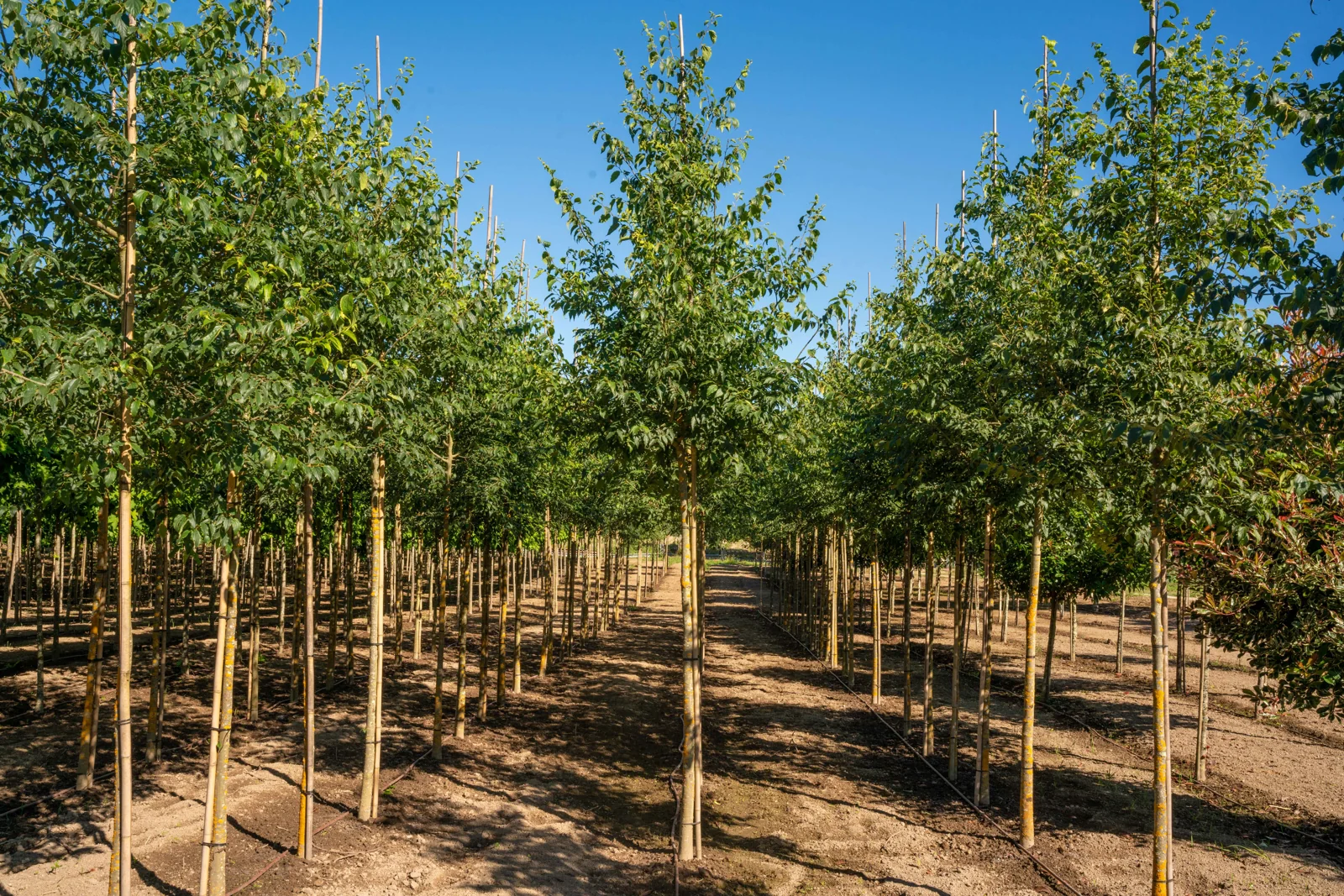
A long-lived deciduous framework tree for Portuguese street alignments (arruamentos), public squares (praças) and parking shade, valued for its smooth grey trunk, rounded crown, and pollution tolerance in hot Mediterranean conditions.
- Reliable across Greater Lisbon, the Algarve, the Silver Coast, and the Alentejo
- Forms a high, rounded crown of around 10 m at maturity
- Self-sufficient on natural rainfall once established in most regions
About this Species
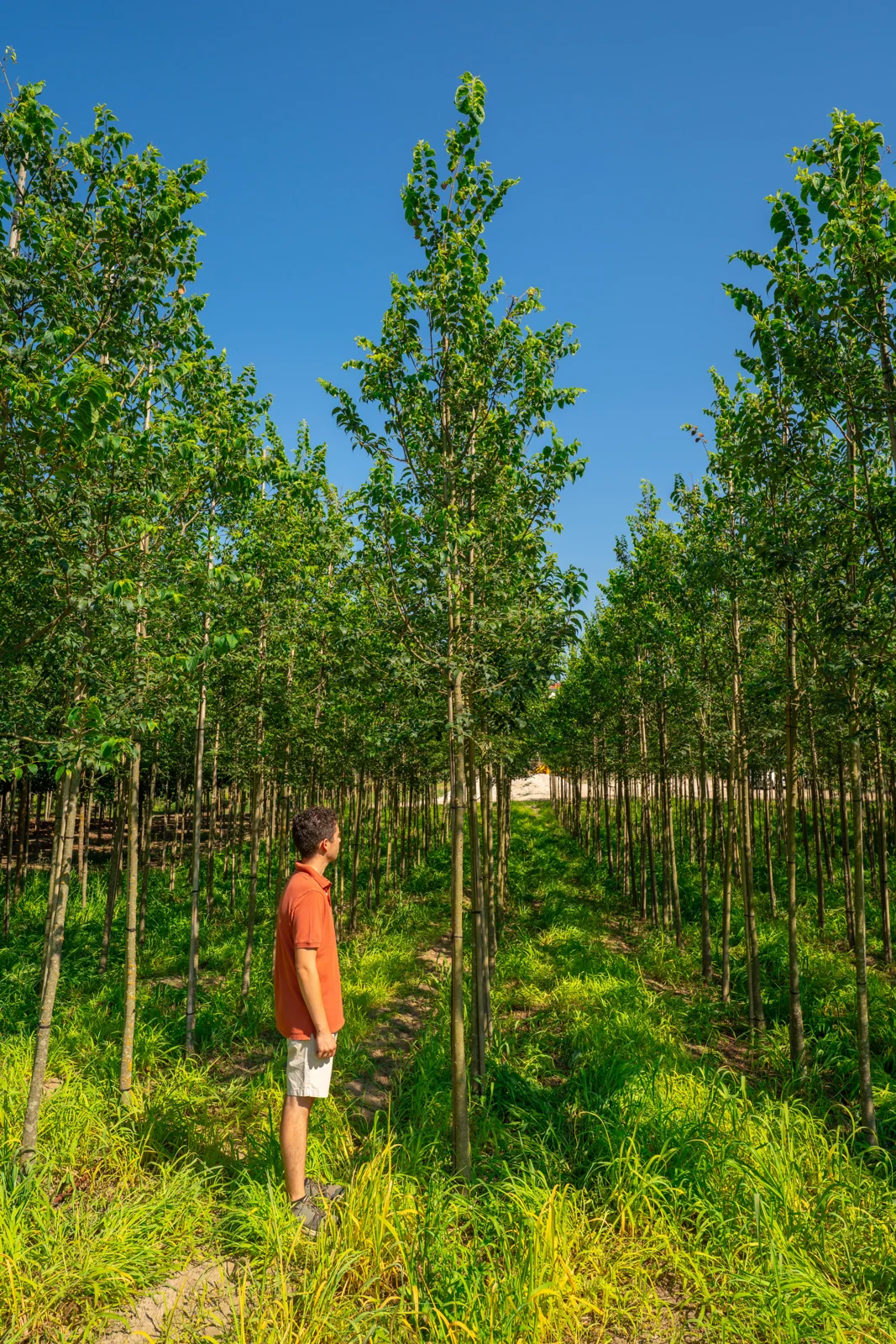
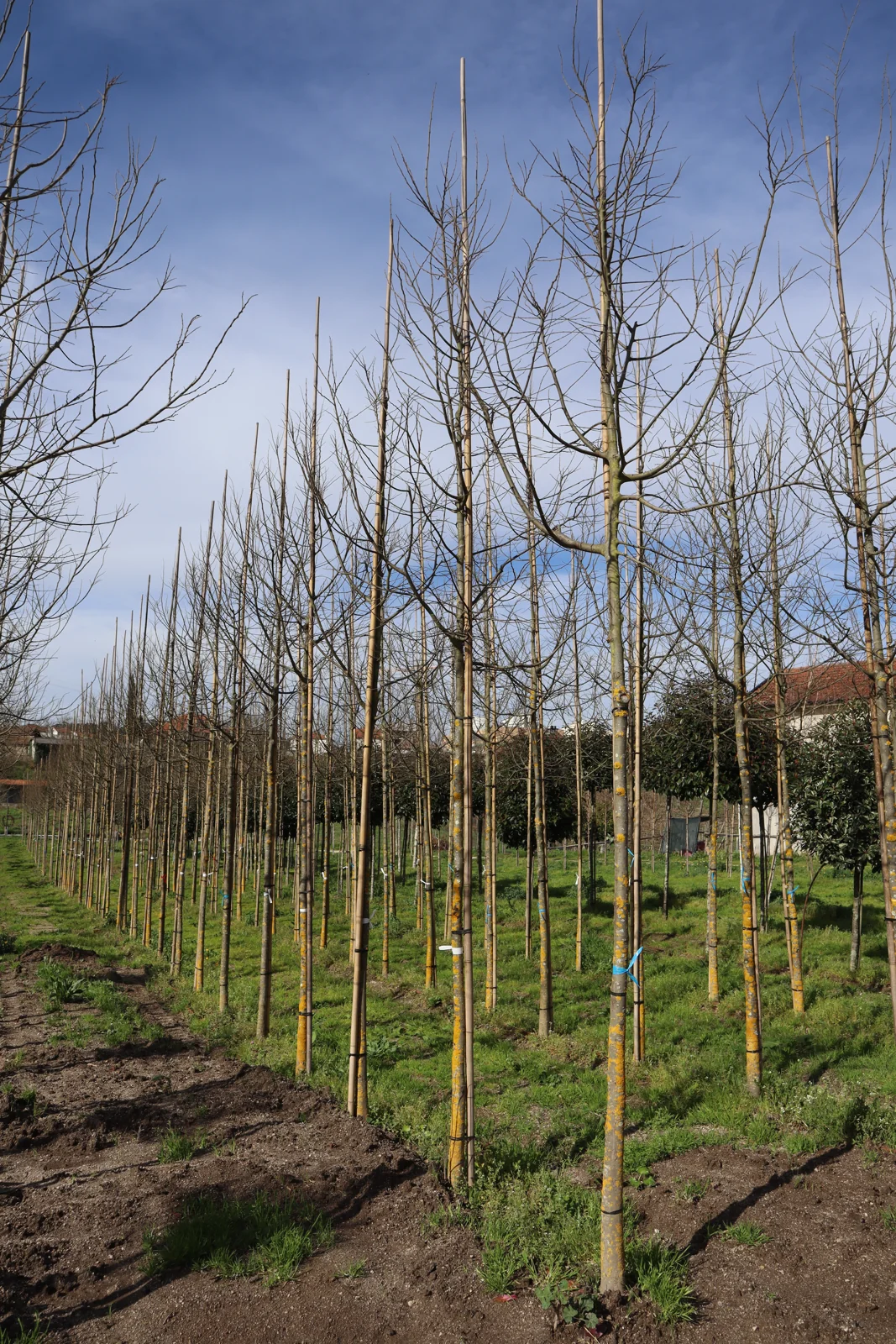
Mature specimens in Portuguese conditions reach 15 to 20 metres in height with a 10 to 15 metre rounded to slightly spreading crown, on a single straight stem with smooth pale-grey bark that retains the beech-like character throughout the tree's life. Growth rate is medium, with formative pruning over six to ten years producing the clear stem and lifted…
Read more
Show less
Mature specimens in Portuguese conditions reach 15 to 20 metres in height with a 10 to 15 metre rounded to slightly spreading crown, on a single straight stem with smooth pale-grey bark that retains the beech-like character throughout the tree's life. Growth rate is medium, with formative pruning over six to ten years producing the clear stem and lifted crown required for arruamento or praça specification. Useful life in an urban setting is long; the species is documented as a street tree across the central and southern Mediterranean over several centuries.
The species is native to Portugal and the wider Mediterranean basin, which is the technical foundation for its drought tolerance and heat tolerance. Coastal Algarve schemes on calcareous or sandy soils suit it without supplementary irrigation once established, and it accepts the moderate salt loading of estuarine Lisbon. In interior Alentejo, deep planting and a single establishment irrigation cycle are advisable; the species tolerates the continental summer profile but reaches its limits where soils are shallow over schist with no profile depth. In the humid Minho and Douro, performance is reliable on well-drained granitic soils.
Soil preferences are broad provided drainage is adequate: well-drained loams, sandy substrates, and calcareous soils are all accepted, including nutritionally poor profiles. The species requires full sun and does not tolerate shade. Air pollution tolerance is high, which supports use in heavily trafficked alignments where plátano (Platanus × acerifolia) would otherwise be the default specification.
Maintenance implications are modest. The small dark drupes are taken by birds and rarely persist as paving litter in quantities comparable to morus or ligustrum. Root behaviour is restrained relative to plátano, which makes the species defensible near services and hard surfaces.
For specifiers seeking a deciduous secondary canopy that performs across the four main Portuguese climate zones with a documented Mediterranean track record, lódão-bastardo is a defensible alternative to plátano in alignment, square, and parking applications. The combination of heat tolerance, pollution tolerance, and restrained roots supports specification in contexts where plátano would otherwise be the default.



Advice on this species
Want to know more about Celtis australis?
Tell us about your project and we'll advise you on this species — where it thrives, which size makes sense, and what to expect once planted.
- Produção própria
- Exemplares adultos
- Resposta em 1–2 dias
Sem compromisso · orçamento personalizado