

A sculptural weeping conifer for a long-view garden
Deodar Cedar ‘Pendula’ · Cedrus deodara ‘Pendula’
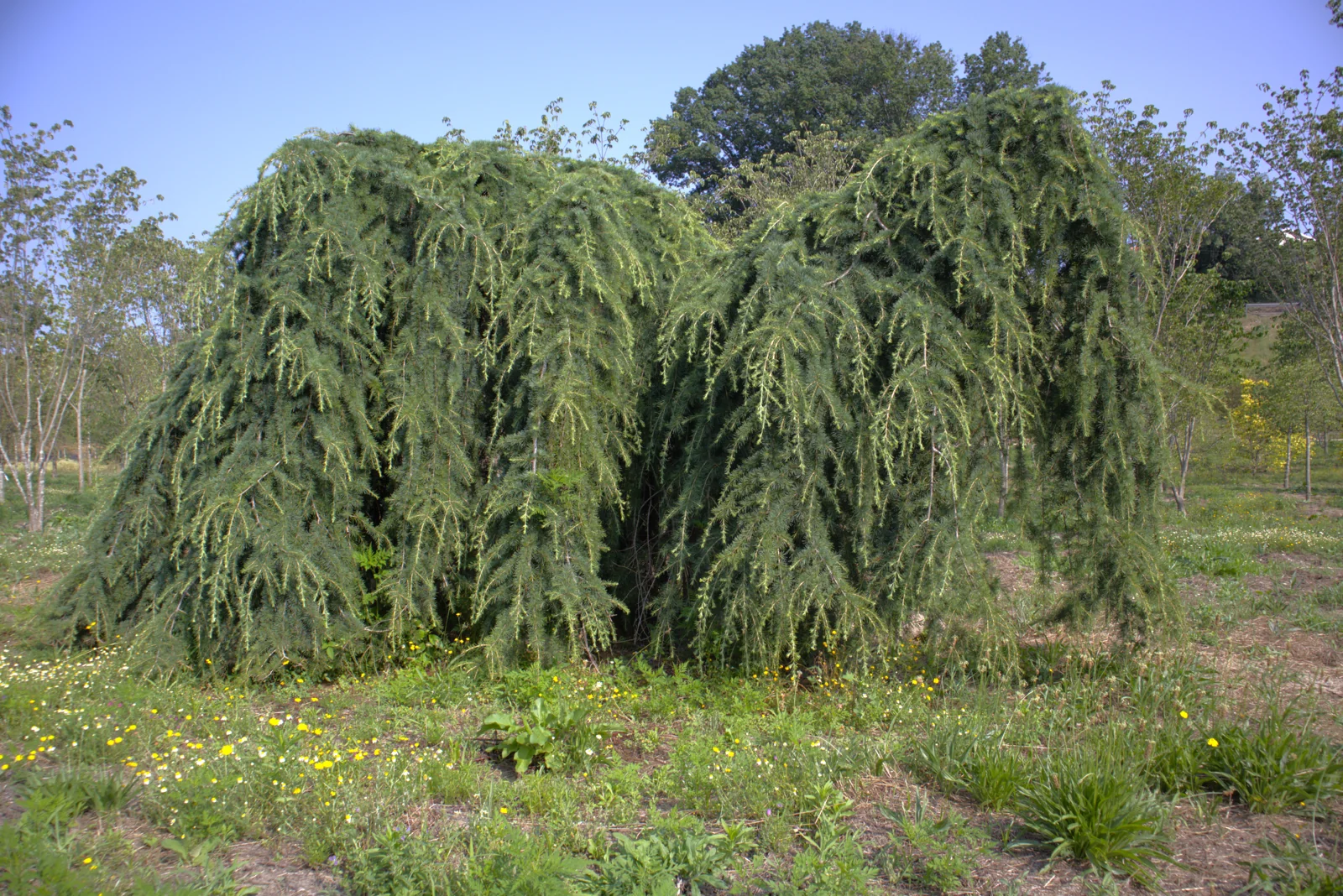
A weeping cultivar of the Himalayan cedar specified where a project needs a single sculptural focal point. The pendulous habit and grey-blue evergreen needles give year-round structural presence in parks, large gardens, and quinta entrances.
- Sculptural weeping form suited to a focal position in the round
- Reliable on both acidic schist and alkaline clay in full sun
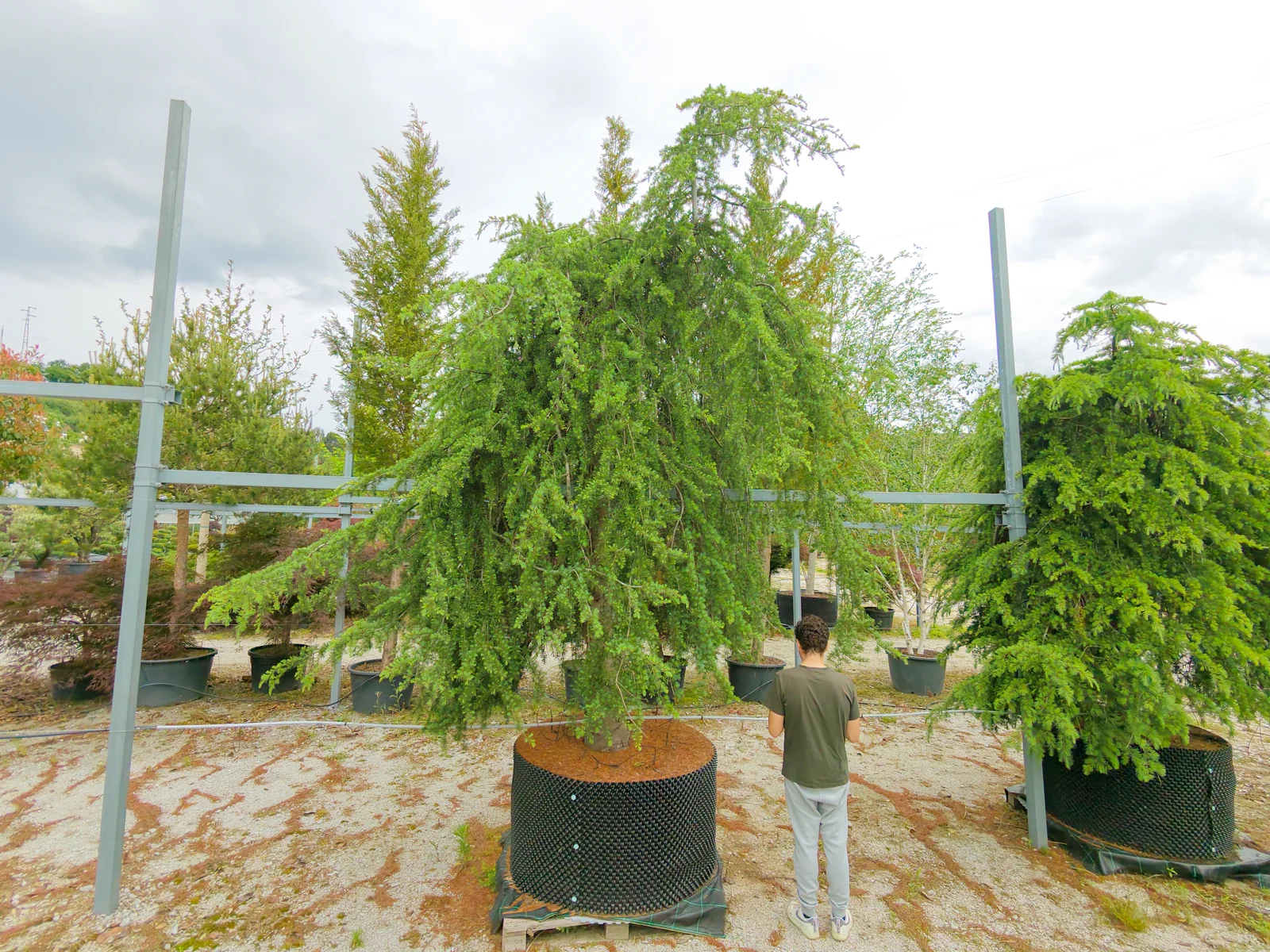
- Reaches six to ten metres trained, or two to three metres spreading
Key Facts
About this Cultivar
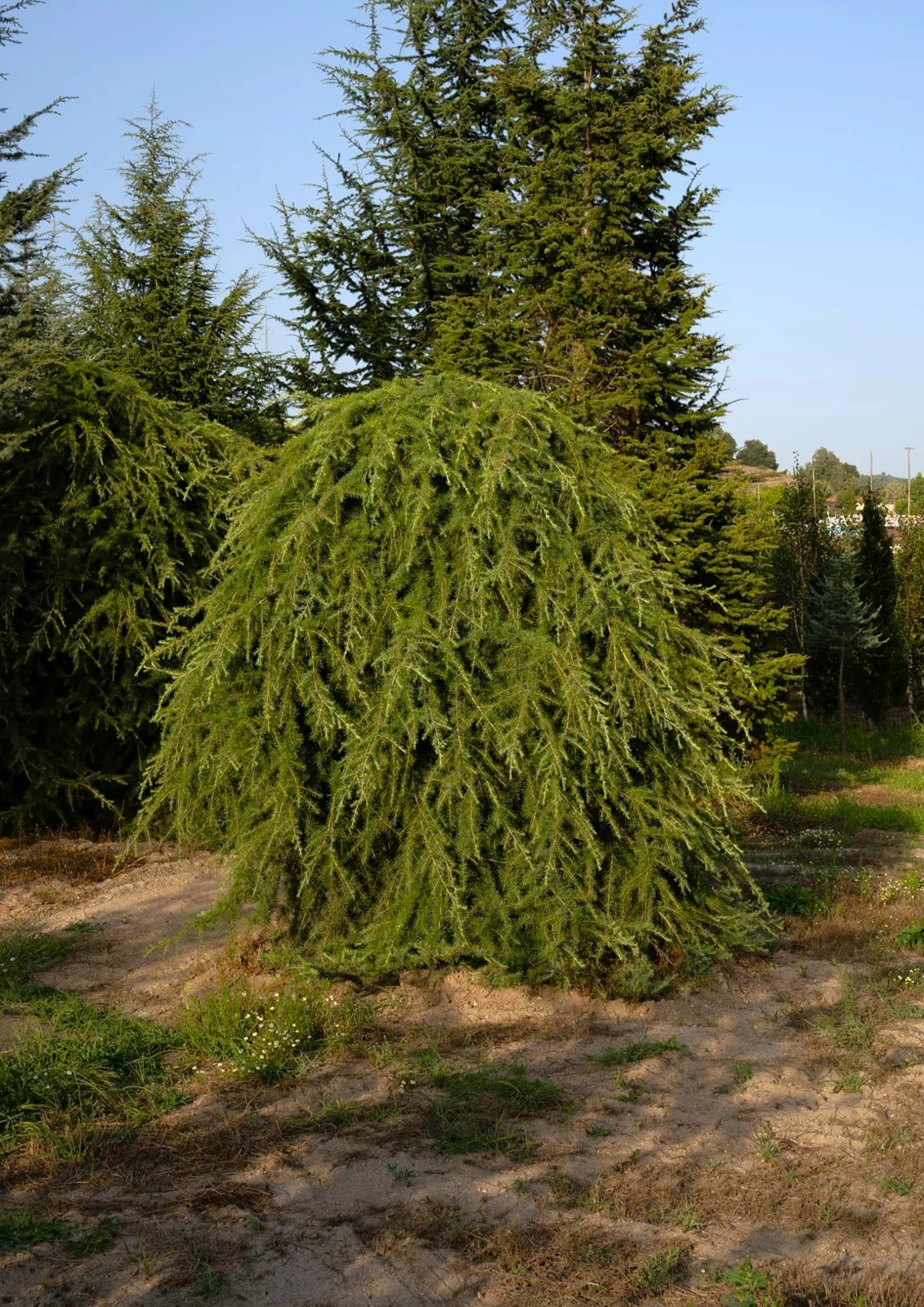
Cedrus deodara 'Pendula' carries the parent species' fine-textured grey-green to blue-green needle clusters on long, gracefully descending branches. Held as a shrub of 2 to 3 m or trained on a stake into a tree of 6 to 10 m, the cultivar's final form is determined by initial conduction: spread frequently exceeds height, producing wide, irregular…
Read more
Show less
Cedrus deodara 'Pendula' carries the parent species' fine-textured grey-green to blue-green needle clusters on long, gracefully descending branches. Held as a shrub of 2 to 3 m or trained on a stake into a tree of 6 to 10 m, the cultivar's final form is determined by initial conduction: spread frequently exceeds height, producing wide, irregular silhouettes. The crown reads as sculpted rather than uniform, which is why specifiers use the cultivar as a feature specimen rather than as repeat structure.
Growth is slow to moderate, so the buyer should specify a finished caliper rather than wait for canopy mass. Diaplant's field stock is grown in Amarante under roughly 950 mm of annual rainfall and dry summers, which is the closest commercial reference for behaviour across Greater Porto, the humid Minho, and inland Trás-os-Montes. In urban Lisbon and on calcareous soils the cultivar performs reliably in full sun with regular irrigation through the establishment phase; in interior Alentejo, deep planting and an establishment irrigation cycle are advisable, as heat tolerance is moderate rather than absolute.
The species accepts a wide soil range, including acidic, alkaline, sandy, and clay profiles, provided drainage is genuine. Waterlogged sites are excluded. Salt tolerance is low, so coastal Algarve and Costa Vicentina schemes should site the cultivar inland of the first dune line rather than in direct salt spray. Disease and pest pressure in Portuguese cultivation is low, with no recurring issues comparable to those affecting sobreiro (Quercus suber) or pinheiro-manso (Pinus pinea).
Maintenance is straightforward once the leader is established. Formative pruning during the first three to five years sets the line of the pendulous branches; thereafter the cultivar requires only light tidying. Needle drop is modest and not problematic on paved areas, though the wide spread should be planned against the praca or arruamento it sits within. As a focal-point specimen for parks, monastic gardens, historic quintas, and contemporary entrance compositions, the cultivar gives a structural reading that the upright forms of Cedrus atlantica and Cedrus libani cannot.
Advice on this species
Want to know more about Cedrus deodara 'Pendula'?
Tell us about your project and we'll advise you on this species — where it thrives, which size makes sense, and what to expect once planted.
- Produção própria
- Exemplares adultos
- Resposta em 1–2 dias
Sem compromisso · orçamento personalizado