

An evergreen presence for the long-considered Portuguese garden
Atlas Cedar · Cedrus atlantica
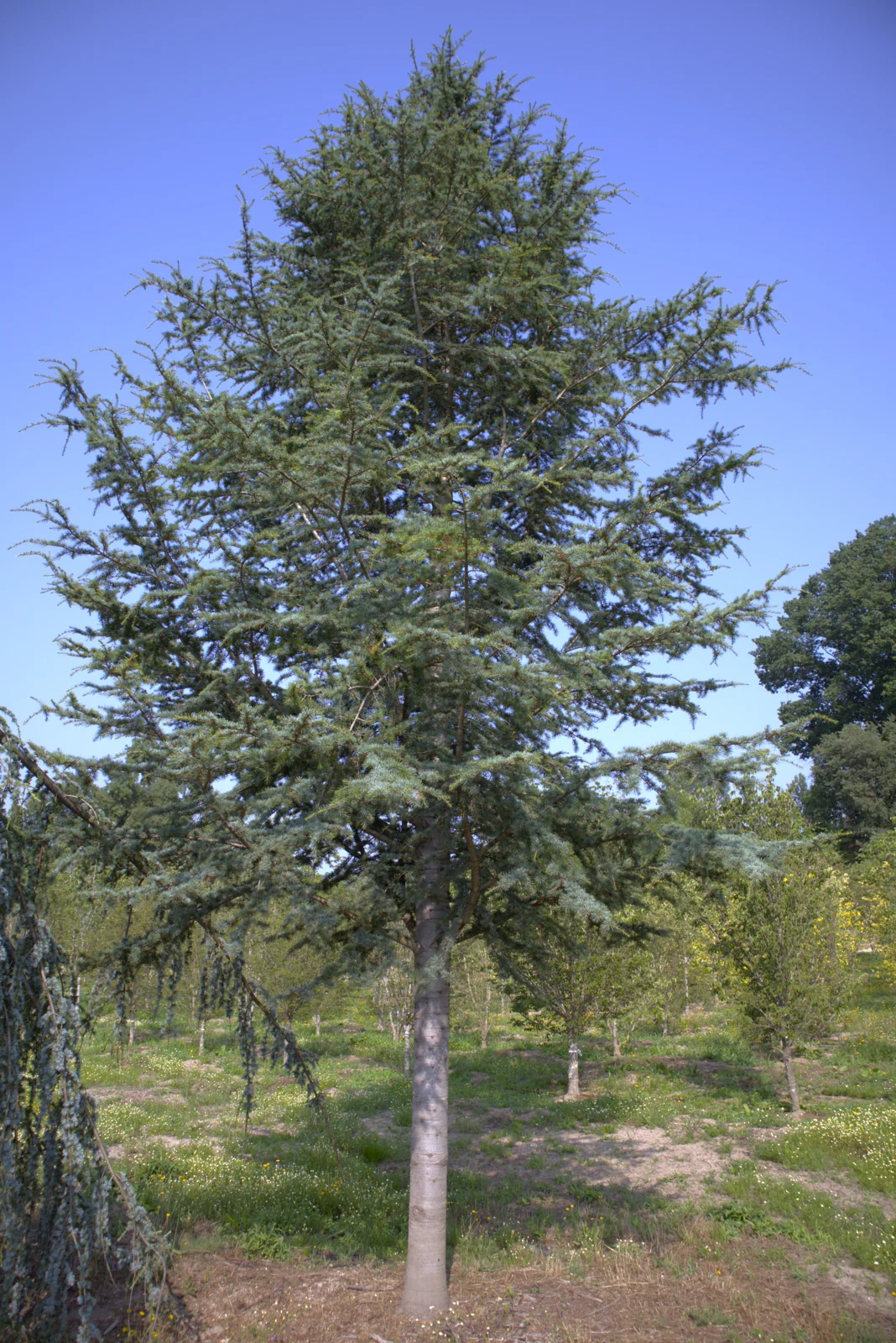
A long-lived evergreen conifer for projects with the ground area to host a tree that reaches 20 to 35 m in mature stature, the cedro-do-atlas works as a feature specimen, never as alignment material.
- Reliable across Greater Lisbon, the Silver Coast, and the Alentejo interior
- Tolerates heat and prolonged drought better than most large conifers
- Self-sufficient once the taproot is down, typically by the third or fourth summer
About this Species
The species develops a broad pyramidal crown in youth, then opens with age into the flat-topped, horizontally tiered silhouette familiar from the historic gardens of Sintra and the older quintas of central Portugal. Foliage is a short, stiff needle in tufted clusters on dwarf shoots, blue-green to silver-blue in the Glauca Group seed lines that dominate…
Read more
Show less
The species develops a broad pyramidal crown in youth, then opens with age into the flat-topped, horizontally tiered silhouette familiar from the historic gardens of Sintra and the older quintas of central Portugal. Foliage is a short, stiff needle in tufted clusters on dwarf shoots, blue-green to silver-blue in the Glauca Group seed lines that dominate Portuguese cultivation. Female cones sit upright on the upper branches, ripening from green through purple to brown.
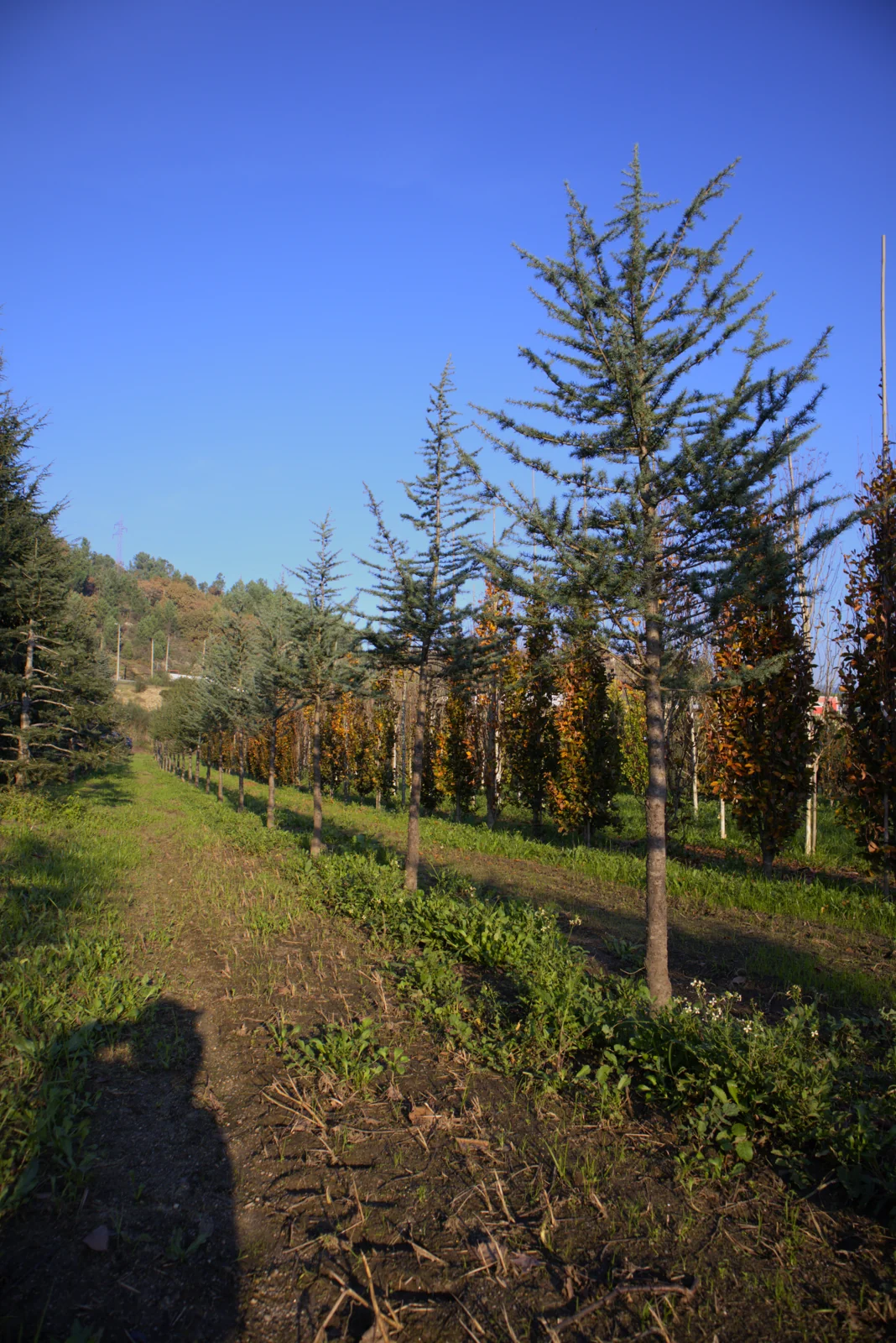
Provenance from the Atlas and Rif mountains of Morocco and Algeria, at 1,170 to 2,200 m, gives the species a temperament well matched to Portuguese conditions. It withstands hot, dry summers, accepts limestone or schist soils provided drainage is real, and tolerates winter minimums well below those recorded anywhere on the Portuguese mainland. In Diaplant's Amarante fields, at around 950 mm annual rainfall, the species grows reliably and anchors a deep taproot within the first establishment cycles.
The tree suits estate landscapes, large private gardens, and the deeper municipal parks of Greater Lisbon and Greater Porto where a single evergreen specimen is wanted as a framework tree. It performs across the interior Alentejo on deep soils, and across calcareous Algarve sites where drainage is sharp. It is not a street tree: the horizontal lower branching and the eventual 10 to 15 m crown spread rule out an arruamento role, and the deep taproot makes the species poorly suited to pavement vaults. Avoid waterlogged ground, where Phytophthora pressure rises sharply.
Maintenance after establishment is low. Formative pruning to a single leader in the first decade pays back across a working life that can exceed a century. Mature specimens require no routine intervention, and litter is light, limited to shed needles and broken cones, both manageable on a praca or estate paving. Pest and disease pressure in Portuguese cultivation is low, with tip blight and root rots on poorly drained ground the principal risks. For a paisagista briefing a municipal arborisation department under the Plano Director Municipal, or briefing a private client at a Sintra or Alentejo quinta, the cedro-do-atlas reads as a tree of permanence. Account for the species' deep taproot and known transplant difficulty in the specification: site selection and root-ball handling are the two variables that govern early performance.



Advice on this species
Want to know more about Cedrus atlantica?
Tell us about your project and we'll advise you on this species — where it thrives, which size makes sense, and what to expect once planted.
- Produção própria
- Exemplares adultos
- Resposta em 1–2 dias
Sem compromisso · orçamento personalizado